Name/Title
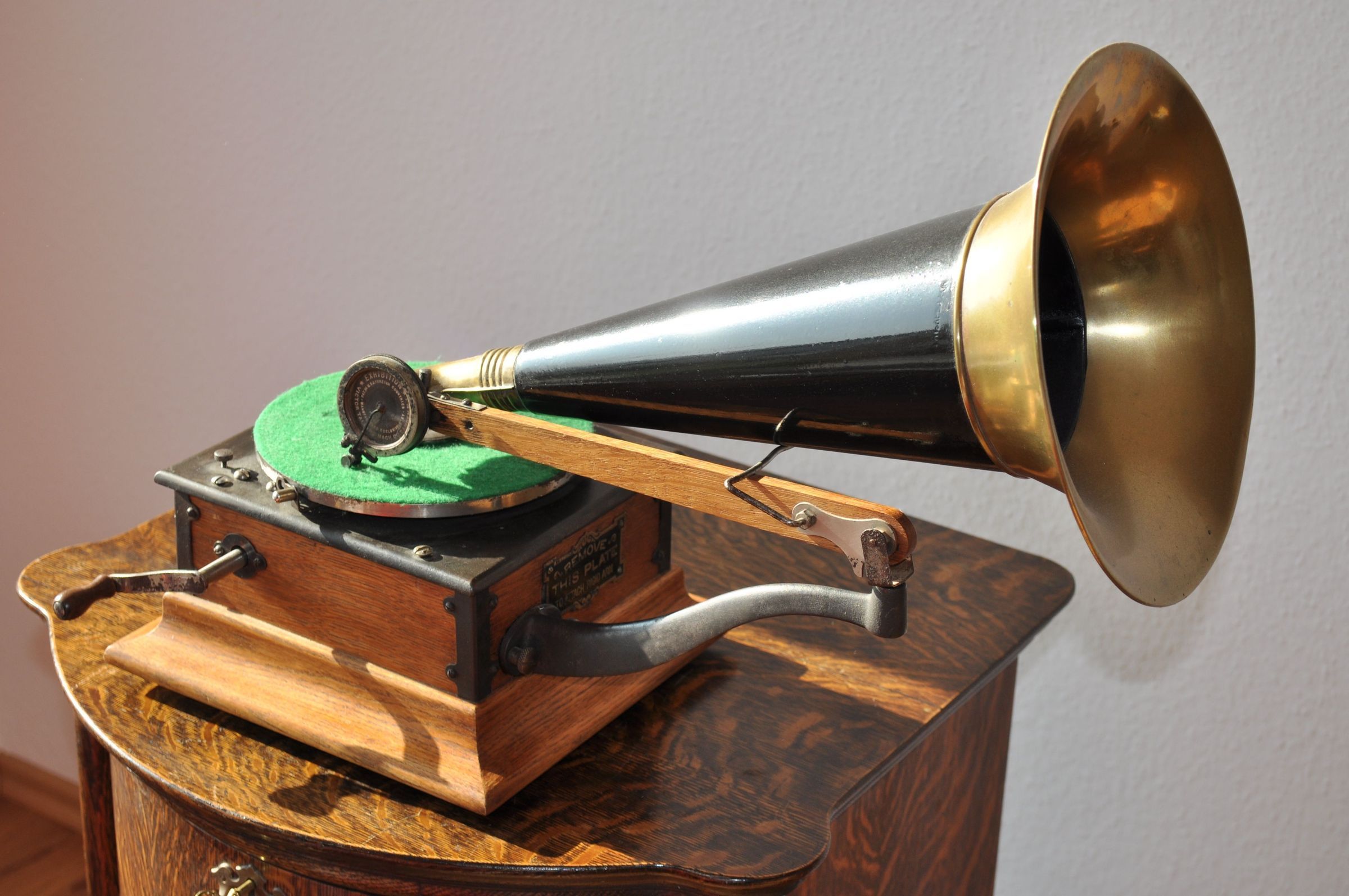
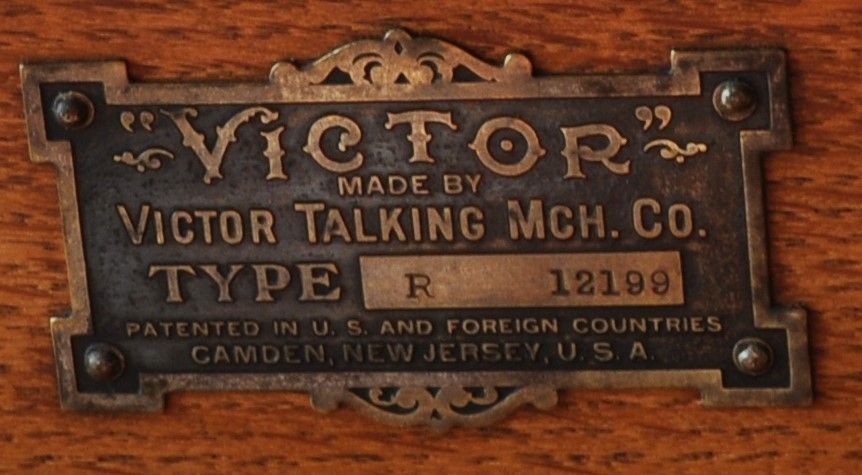
Victor "Royal" Type REntry/Object ID
247Description
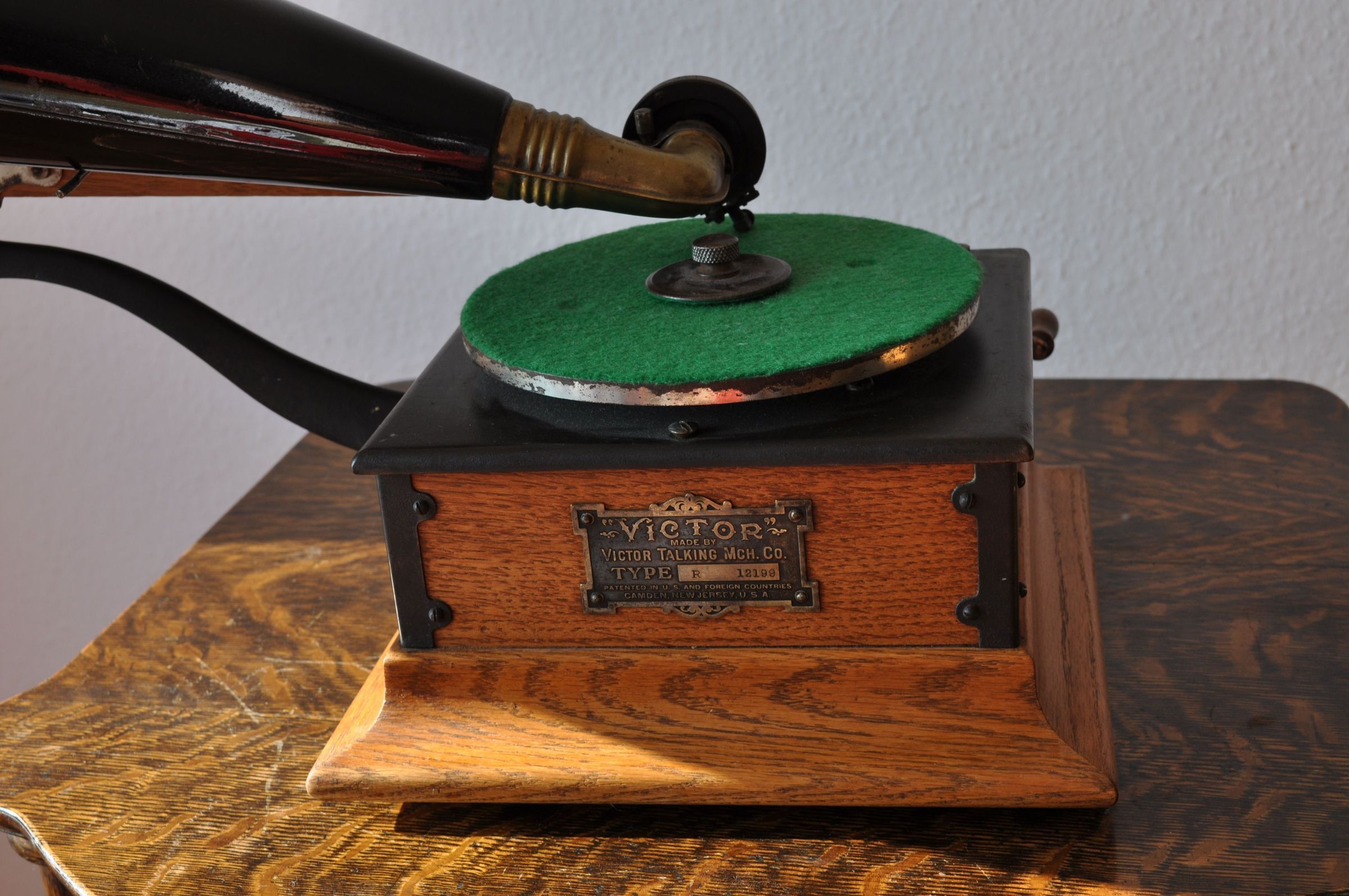
Victor Talking Machine Co., Camden, New Jersey (USA)
Year of manufacture: ca. 1903/1904
Early version with wooden traveling arm
Historical Background
This device is an early example of the Victor "Royal" series – one of the most affordable and successful disc phonographs of the early 20th century. The Victor Talking Machine Company, founded in 1901 by Eldridge R. Johnson, quickly became the leading manufacturer of phonographs and records in the United States. The company competed directly with Columbia and Pathé, relying on high quality and mechanical precision. Even today, Victor is famous for its iconic “His Master’s Voice” logo featuring the dog and gramophone.
To undercut Columbia's pricing, Victor introduced the Victor Royal in April 1902 at a retail price of just $15 – a deliberately simplified spring-driven machine designed to play 7" and 10" records.
Features of the Displayed Unit
Model: Victor Royal Type R
Serial Number: 12199
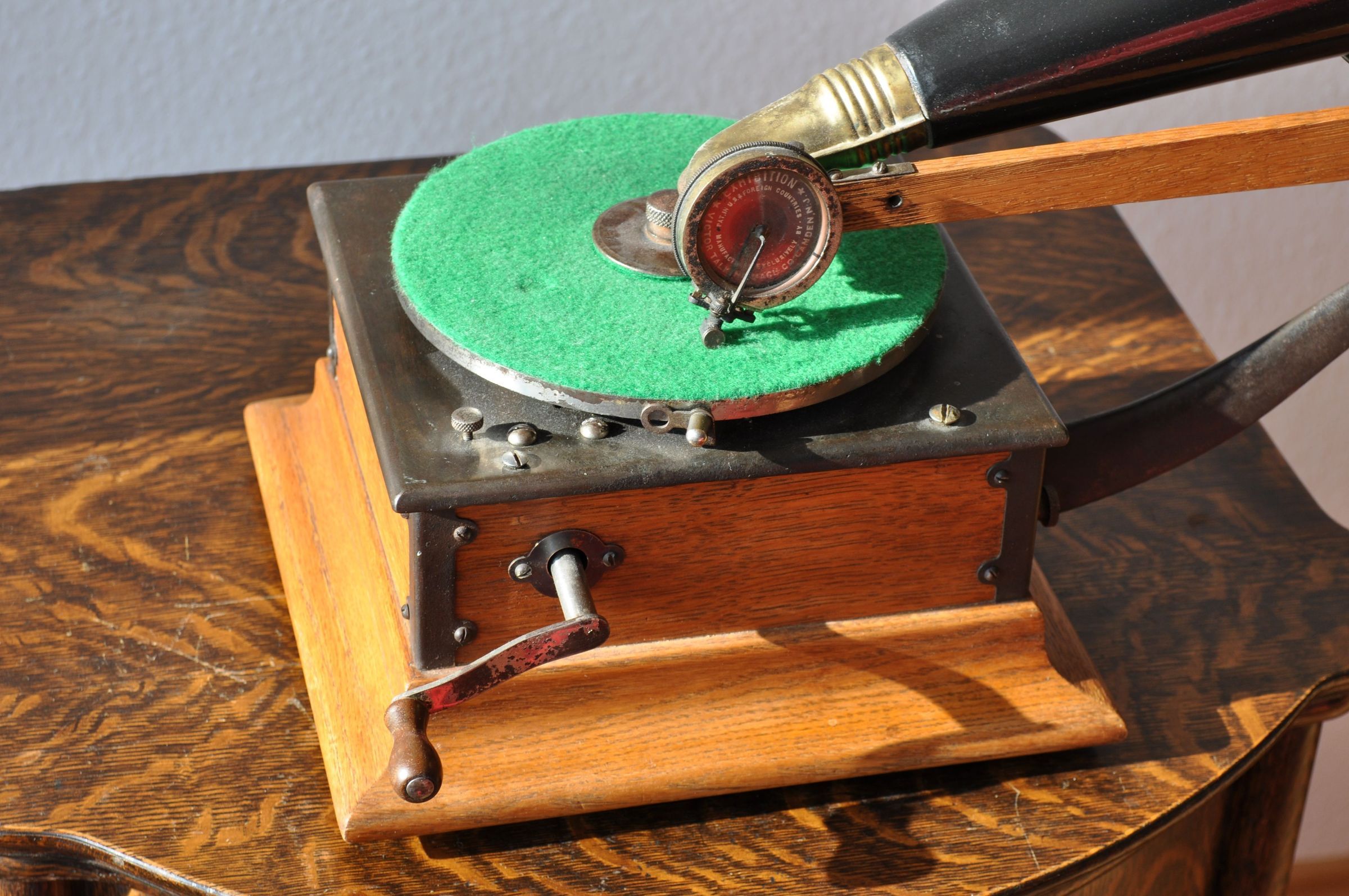
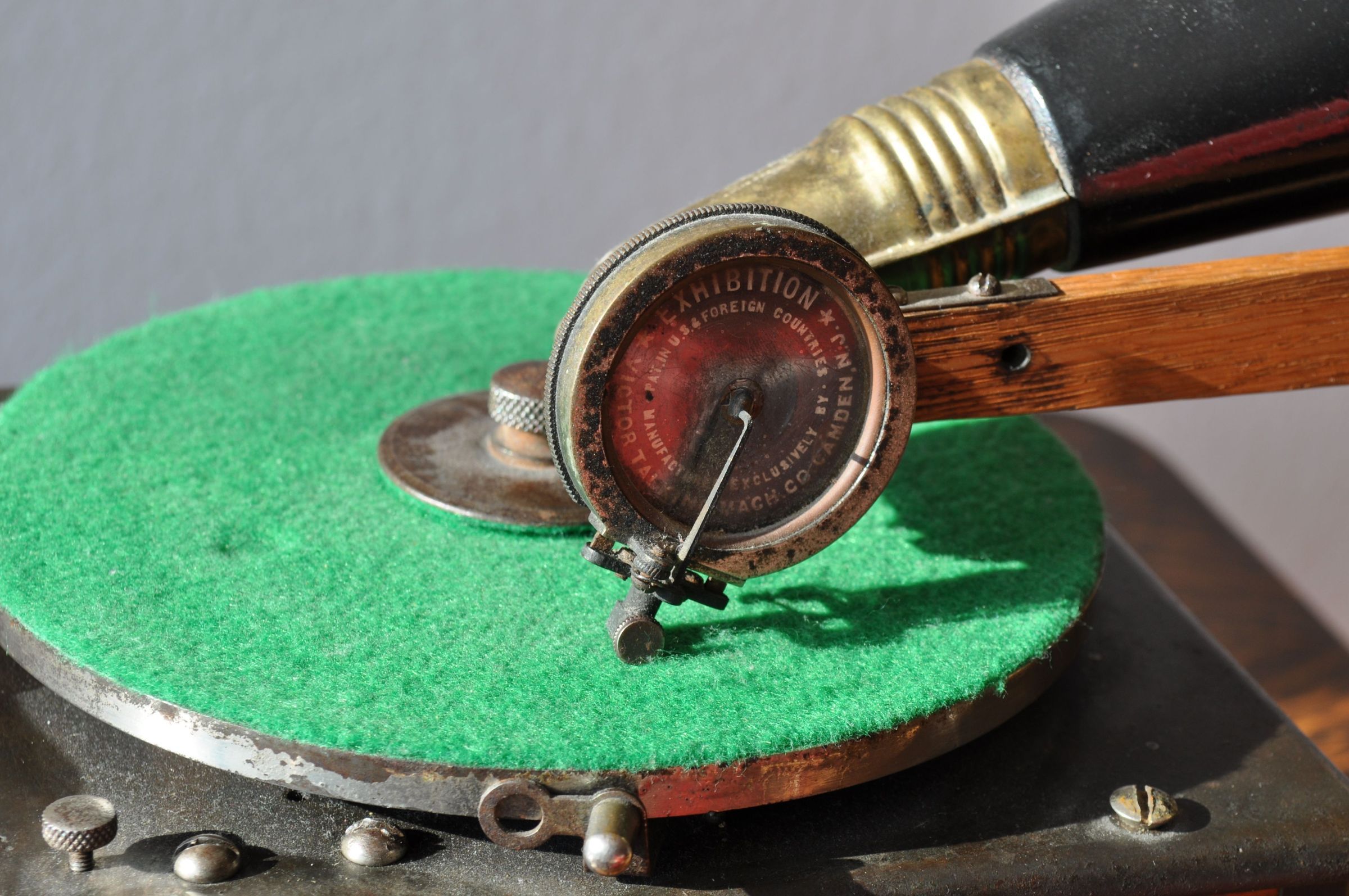
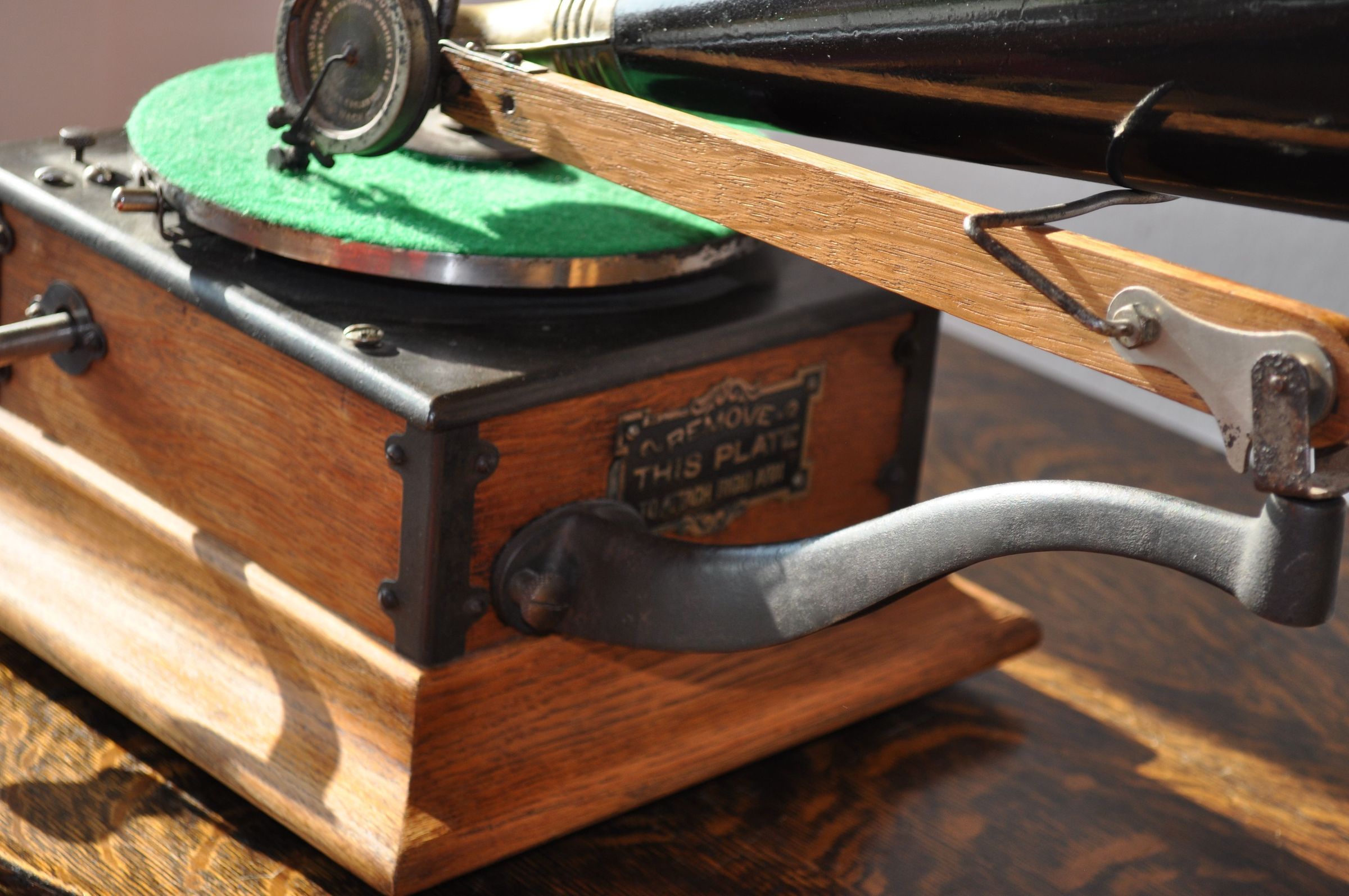
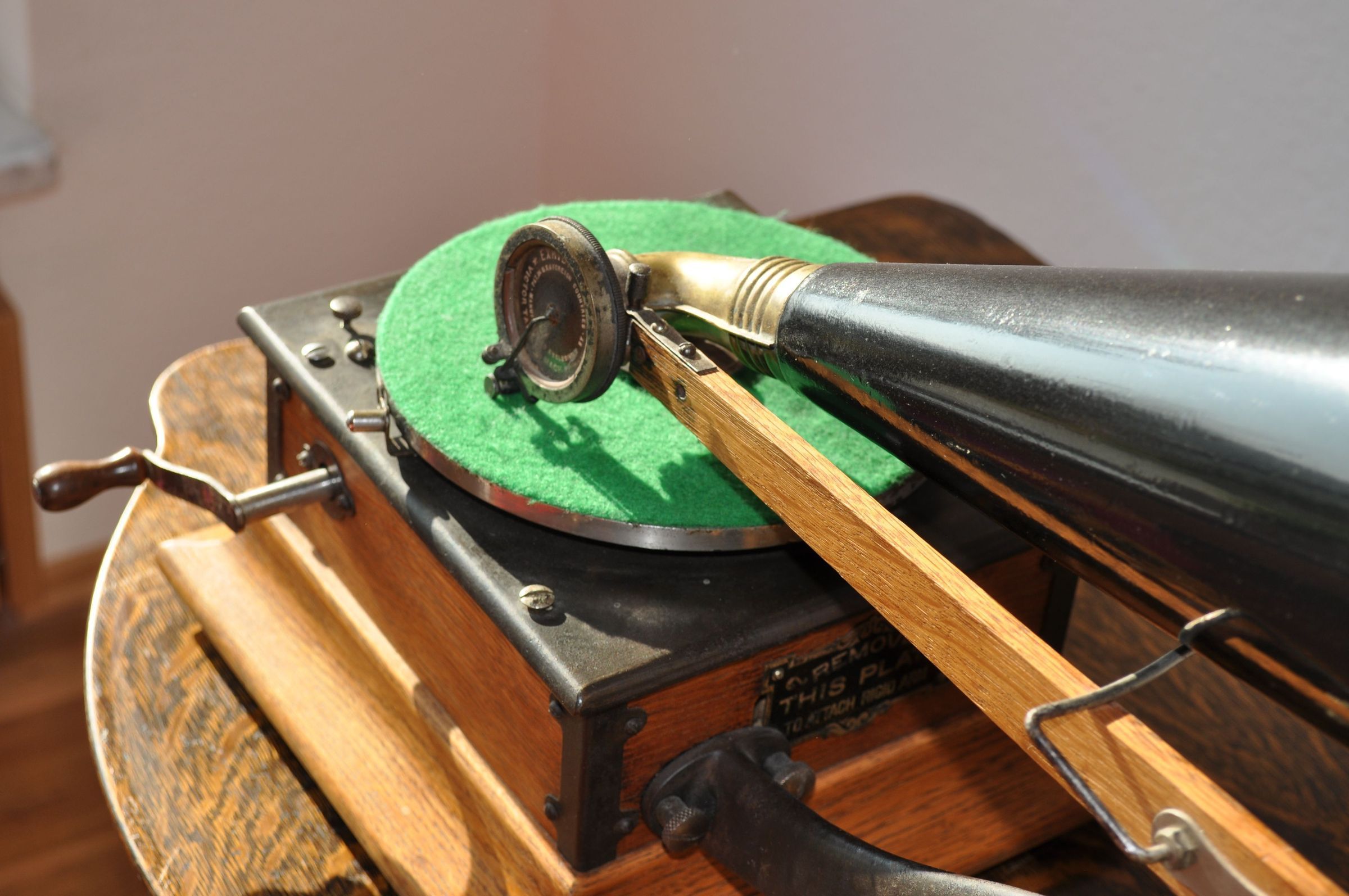
Tonearm: Early wooden traveling arm
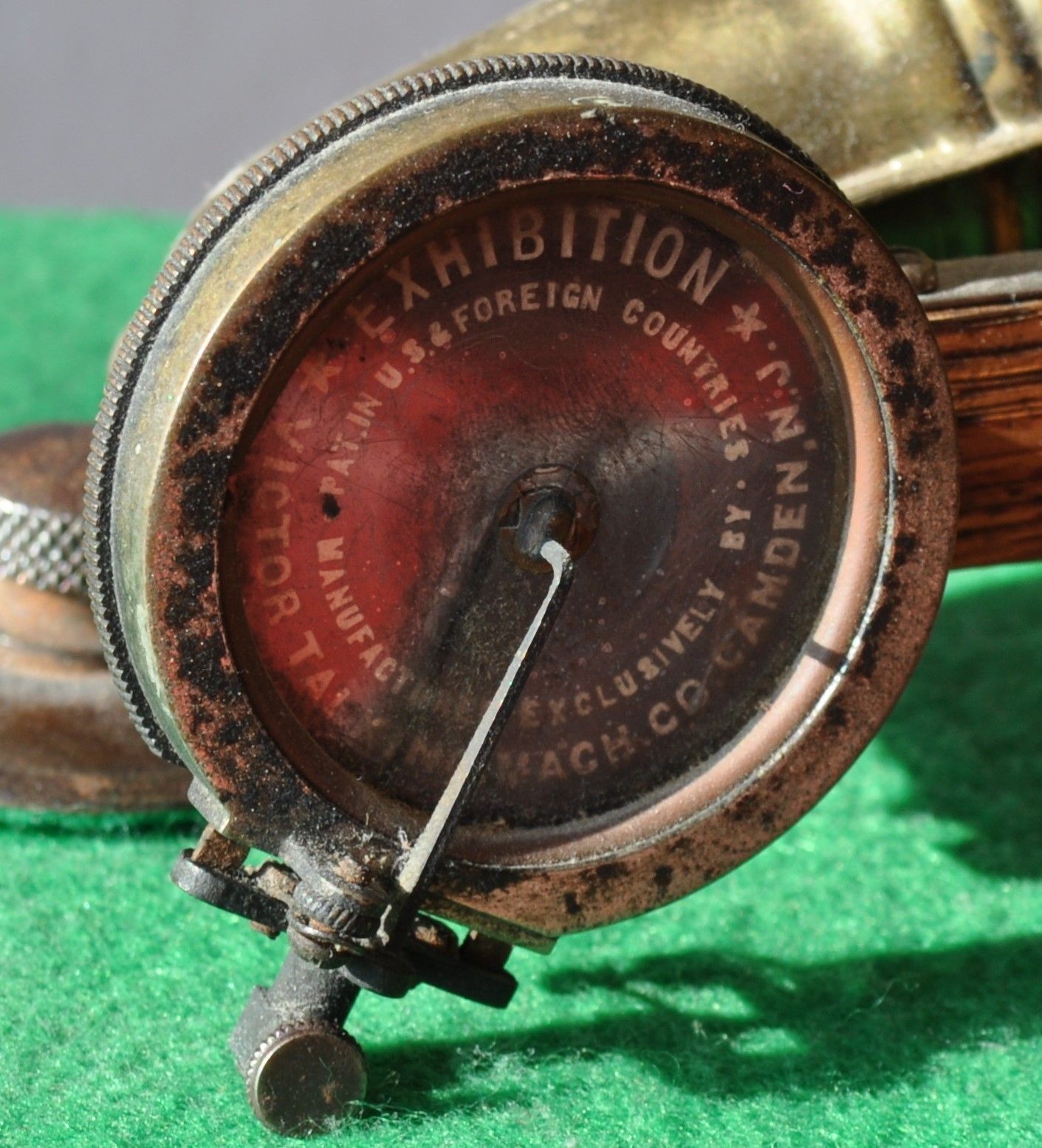
Soundbox: Victor Exhibition Junior
Turntable: 7" aluminum with green felt
Cabinet: Oak base with early grey metal frame, flat top version
Motor: Single-spring motor with hand crank
Special Characteristics
The Type R was the last Royal version to feature a wooden traveling arm – starting around serial number #2200, this was replaced by a stamped metal version. With its serial number 12199, this machine is among the final examples of the first-generation design.
The originally installed Exhibition Junior soundbox was replaced around 1903 by the standard Exhibition model – this transitional phase is authentically represented in this unit.
Significance
While the Victor Royal was not a prestige product, it played a crucial role in the early success of the Victor Talking Machine Company. With over 44,000 units sold, it became the company's best-selling model before 1905. Its combination of affordability, reliability, and decent sound quality made it popular in households, shops, and educational institutions alike.
The Victor Royal shown here is a particularly well-preserved example of this era – an acoustically and historically significant machine from the dawn of the disc phonograph age