Name/Title
Rosenfield Illustrated Song MachineEntry/Object ID
104Description
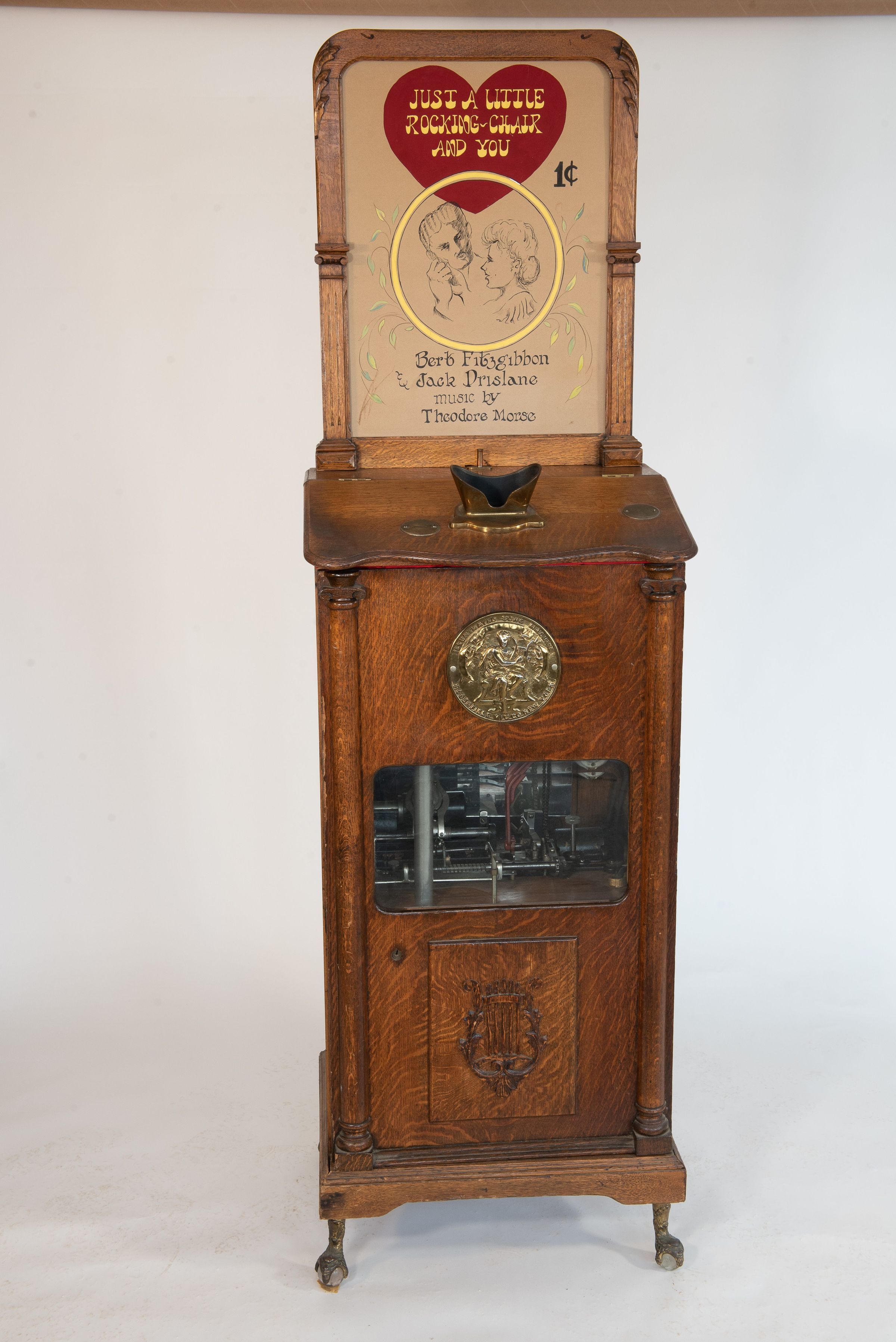
ca. 1905. One of the world's first multimedia machines – combining sound, image, and automation
This remarkable device stands among the earliest known machines to unite sound and sequential images in a single, fully automatic unit – a true forerunner of multimedia entertainment and the talking cinema. It was invented by American engineer William W. Rosenfield, who filed multiple U.S. patents between 1900 and 1909 for what he called the Illustrated Song Machine.
The concept was based on the hugely popular format of the time: illustrated songs – ballads or spoken monologues accompanied by a changing sequence of projected images. Rosenfield's invention aimed to automate this theatrical experience without the need for a human operator, delivering synchronized sound and image from a single coin-operated cabinet.
How the machine worked:
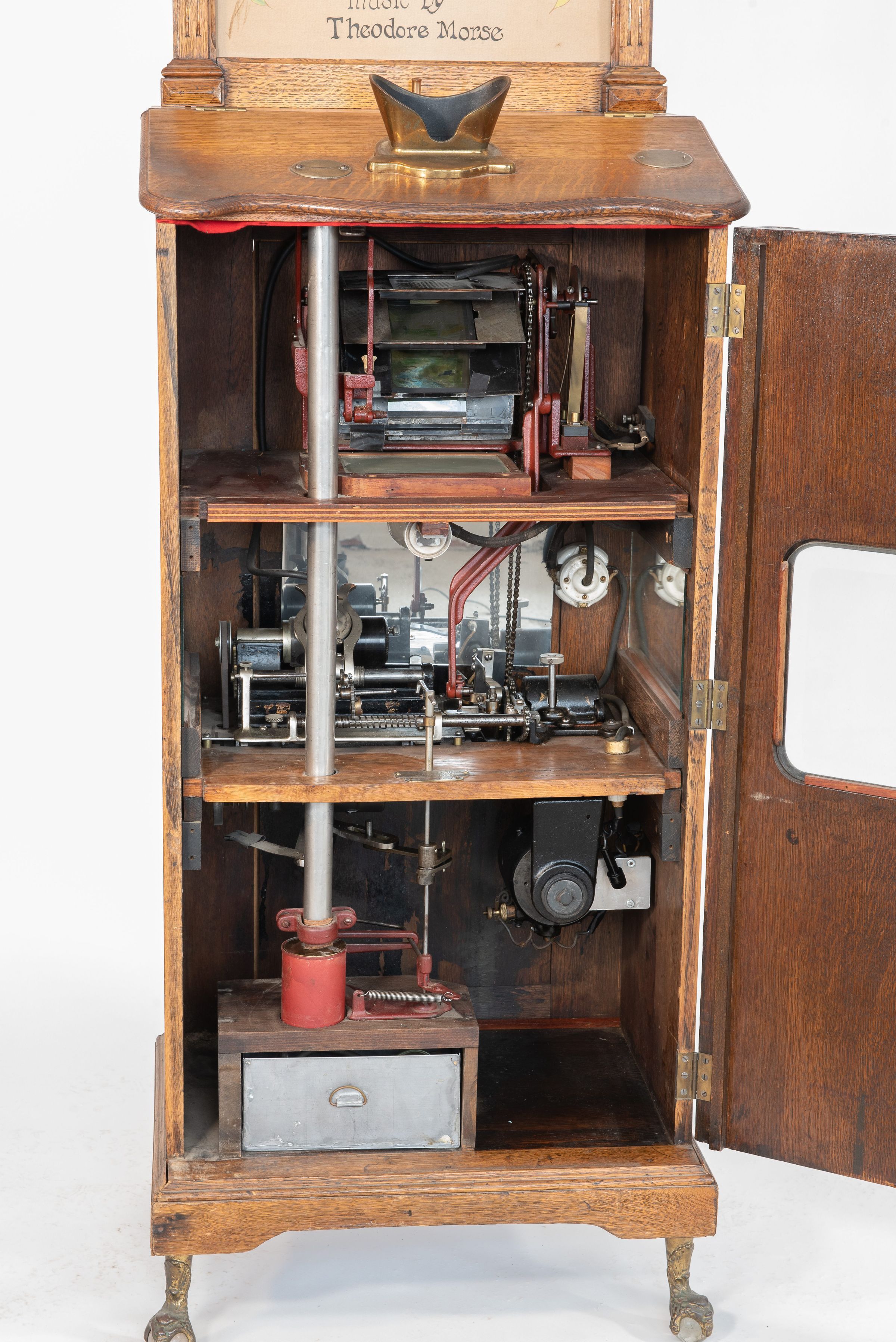
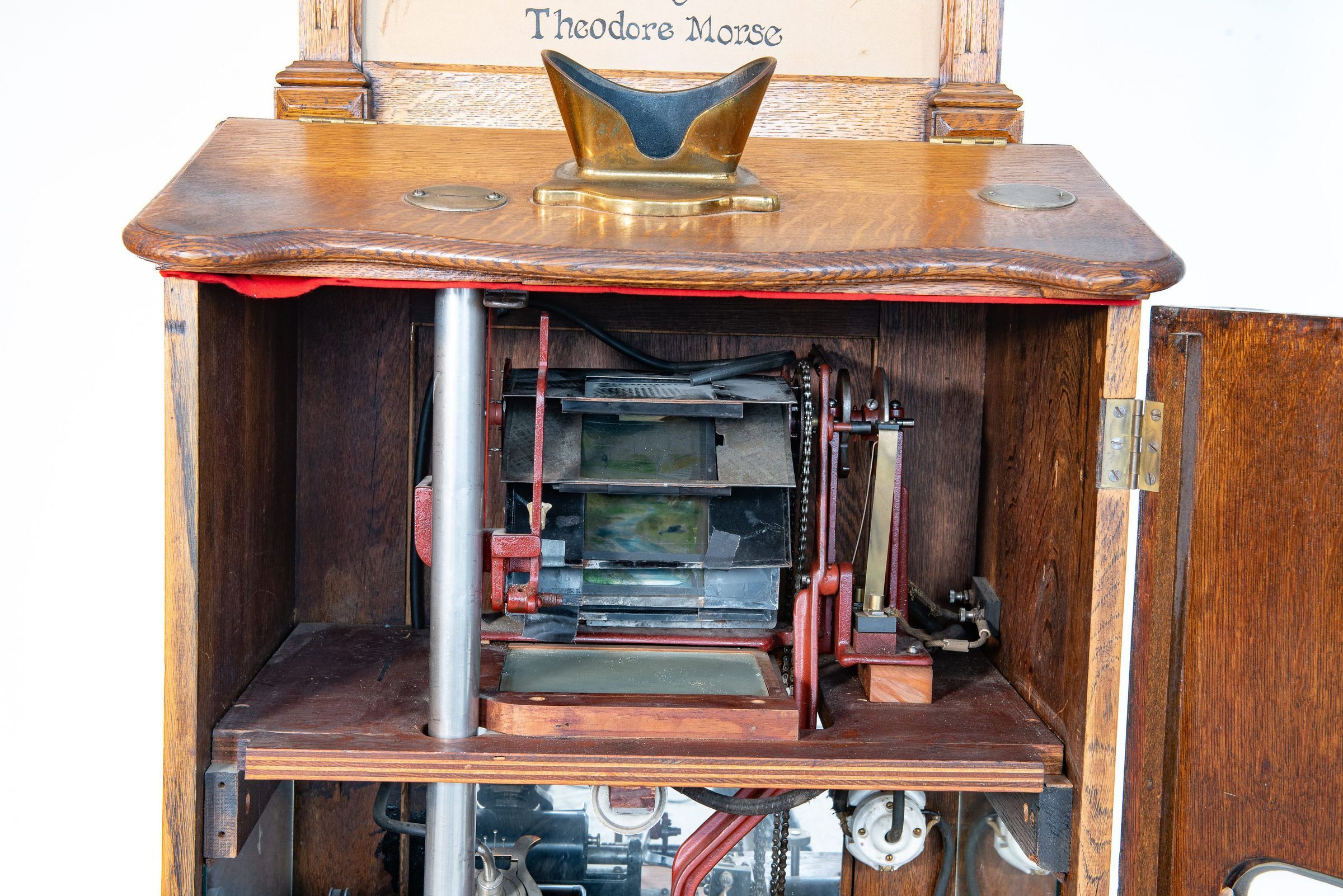
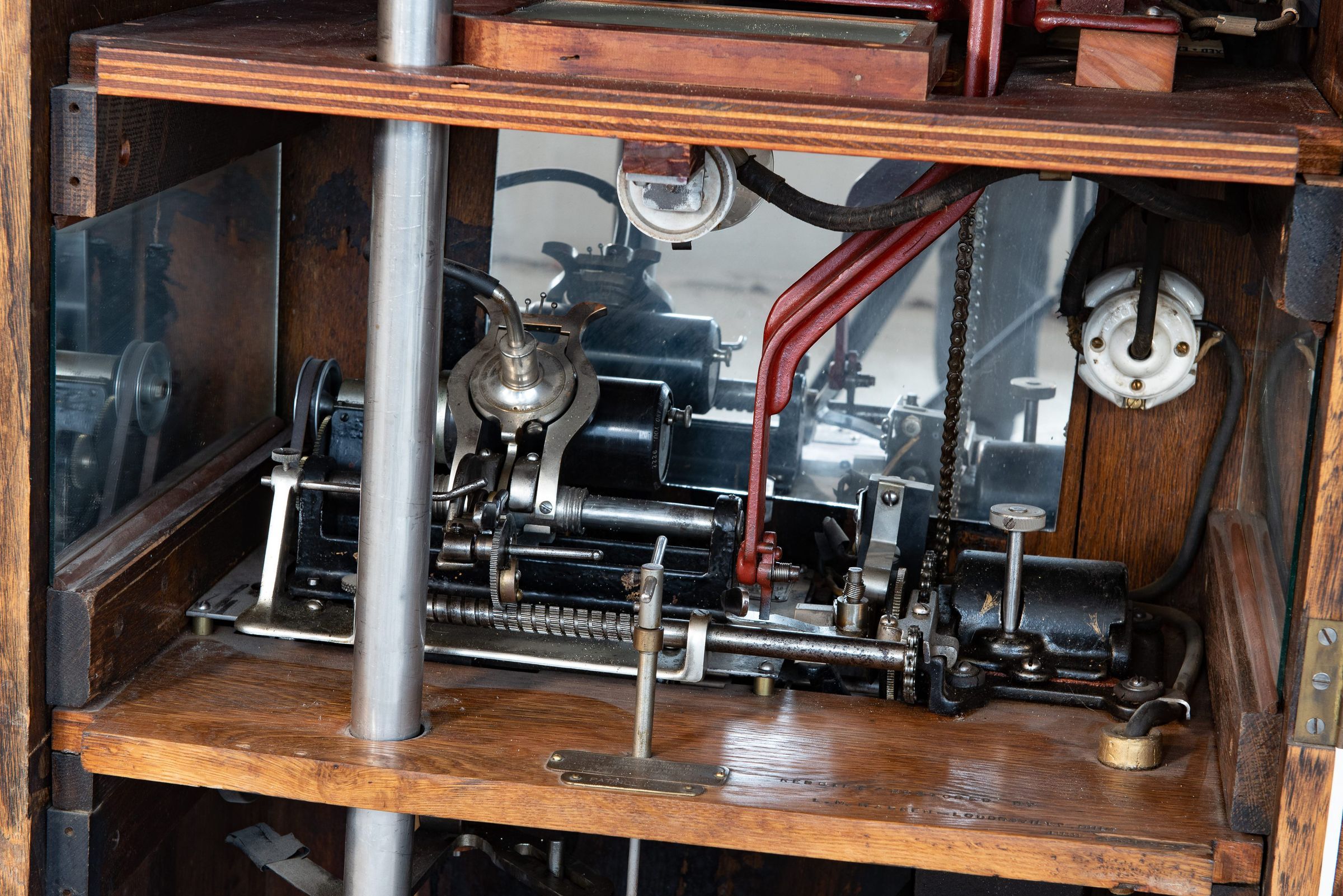
After inserting a coin, a spring-wound motor was activated, driving a Columbia Graphophone Type "AZ". At the same time, a chain-driven picture drum began to rotate, moving a set of stereoscopic slides or glass images into place – much like a Ferris wheel.
A brass cam and contact system inside the mechanism was precisely timed: a few seconds after the Graphophone began playing, a contact closed to illuminate a light bulb, projecting the image as the record played. The result was a perfectly synchronized sound and visual experience.
Rosenfield emphasized the importance of using two separate motors:
A mechanical spring motor as the primary drive (for both audio and visuals)
An electric motor dedicated solely to rewinding and resetting the mechanism
This ensured that fluctuations in voltage would not affect the playback speed, a common problem with early electrically driven machines from Edison, Mills, and others.
An automatic theater show – just drop a coin
Contemporary advertising proudly declared:
“An Automatic Theatre – You See and Hear the Whole Show.”
Indeed, the machine required no levers or buttons to be pressed. Once the coin was dropped, the entire show began on its own – offering music, moving stereoscopic pictures, and electric lighting, fully automated. These machines were used in amusement parks, such as Coney Island, and other entertainment venues around the United States.
On display at the Edisonium:
A fully preserved original unit featuring:
Type AZ Graphophone
Original stereoscopic picture drum and chain drive
Working electrical lighting and contact mechanism
Accompanied by a restored original press photo, patent documents, and sample slide images
This machine is regarded as one of the earliest and rarest examples of synchronized audio-visual technology – a true precursor to the multimedia age.