Name/Title
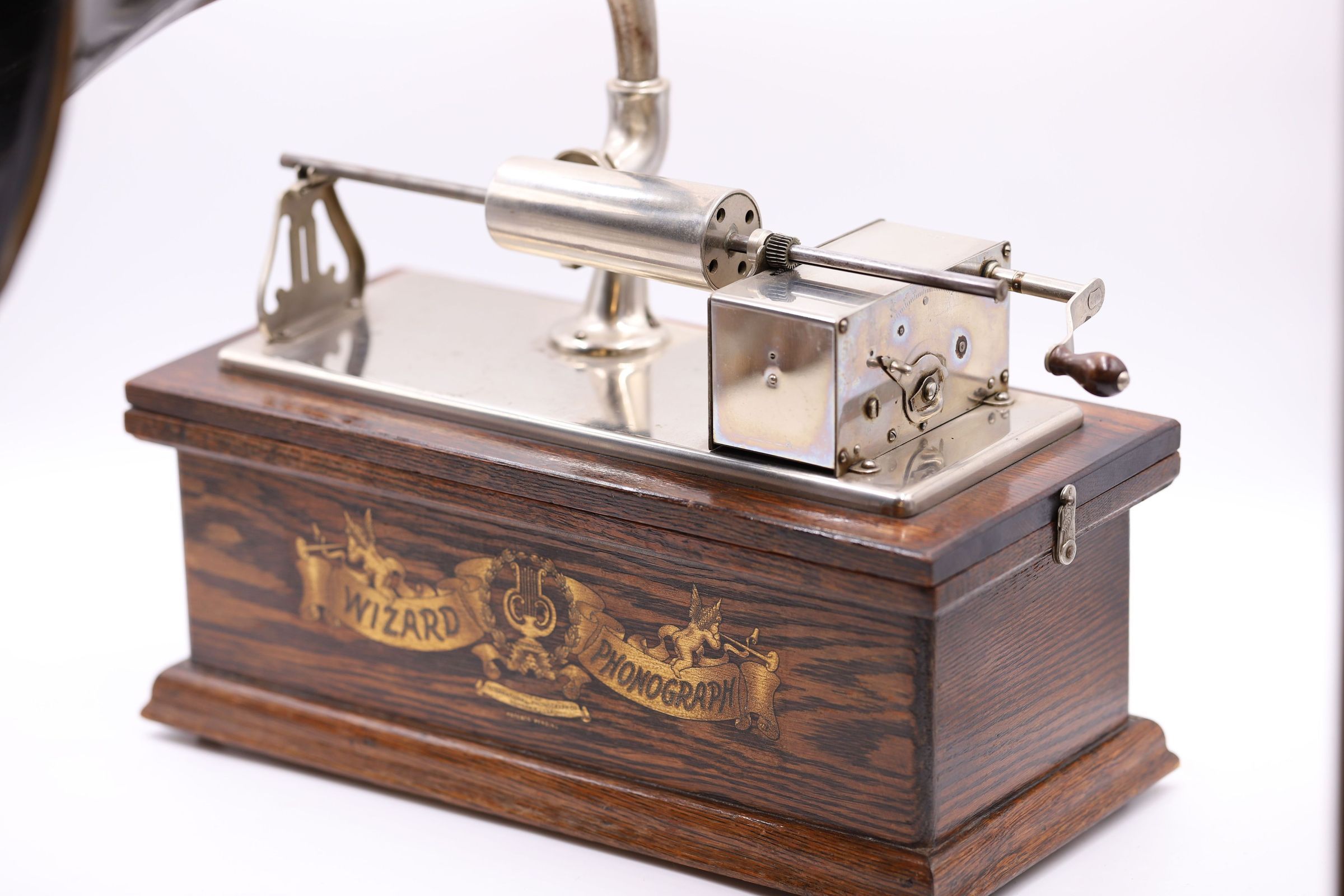
Phonograph „Wizard“Entry/Object ID
126Description
International Phonograph Company, Newark, New Jersey, 1908
A fixed reproducer and a detachable mandrel – a brilliant attempt to outwit Edison
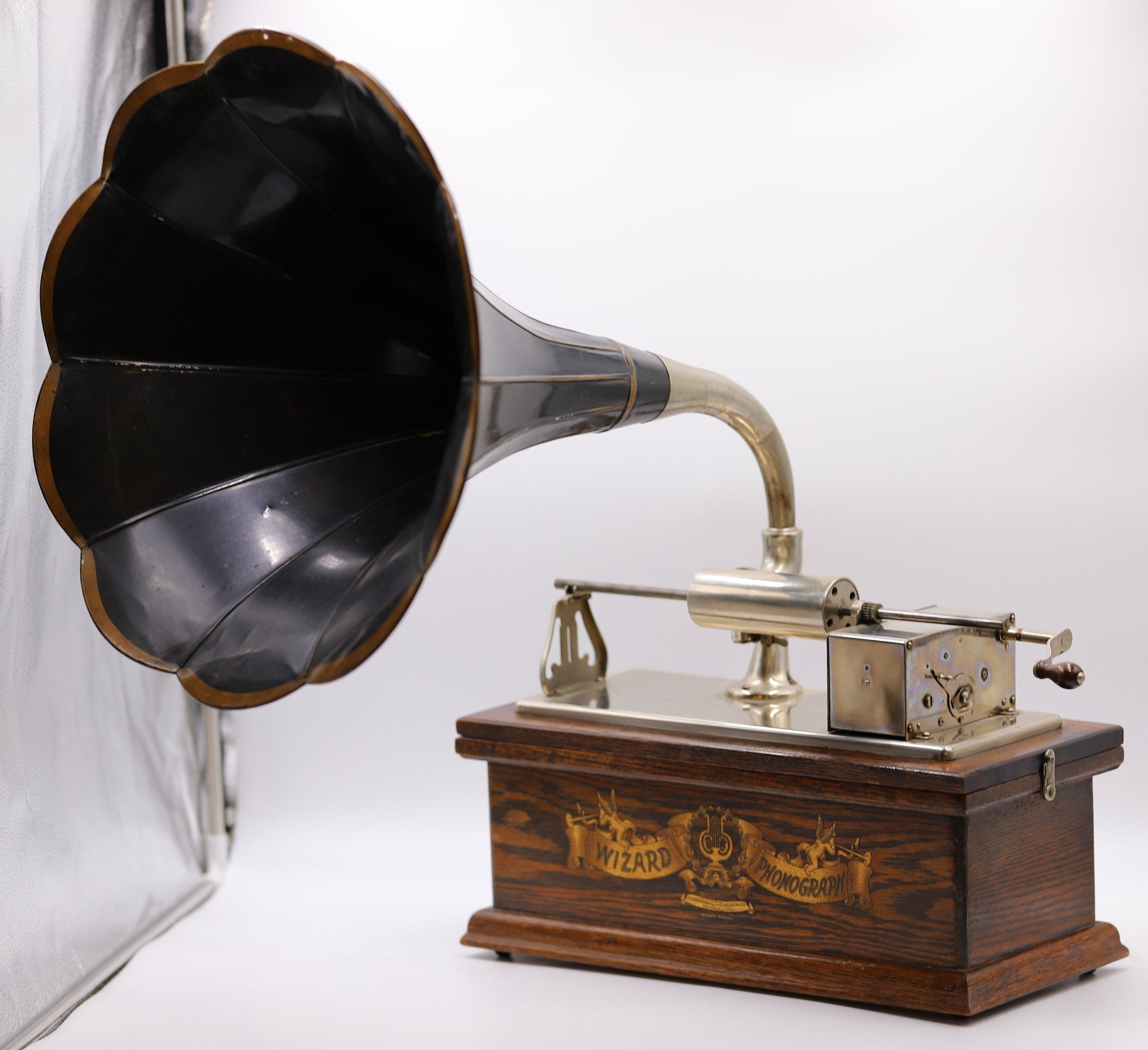
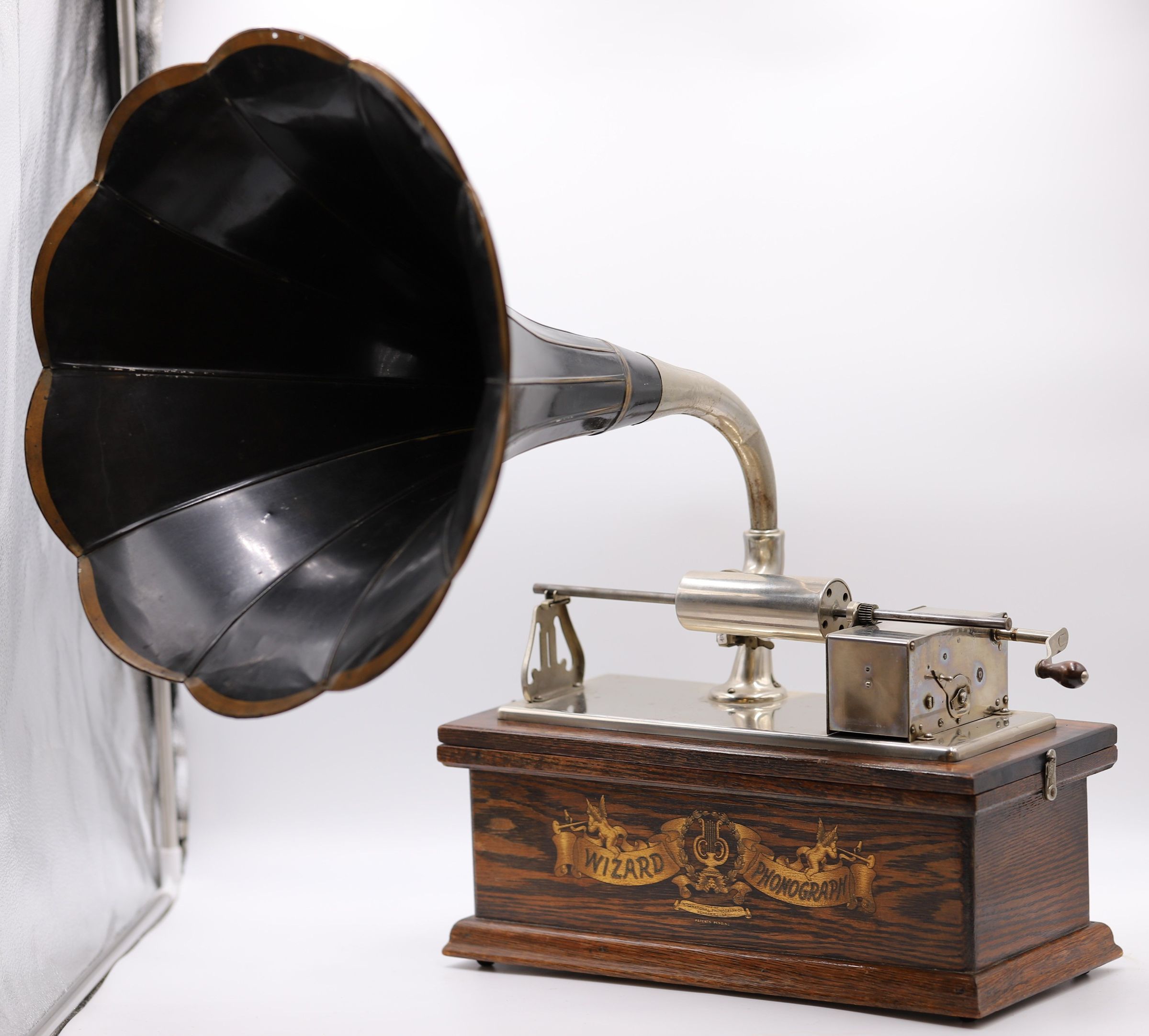
The “Wizard” phonograph was developed in 1908 by the International Phonograph Company of Newark, New Jersey. Both its name and design strongly suggest European—particularly French—influences. Most notably, the machine’s architecture appears to have been a conscious departure from the classic Edison layout, presumably to avoid infringing existing patents.
Technical Features:
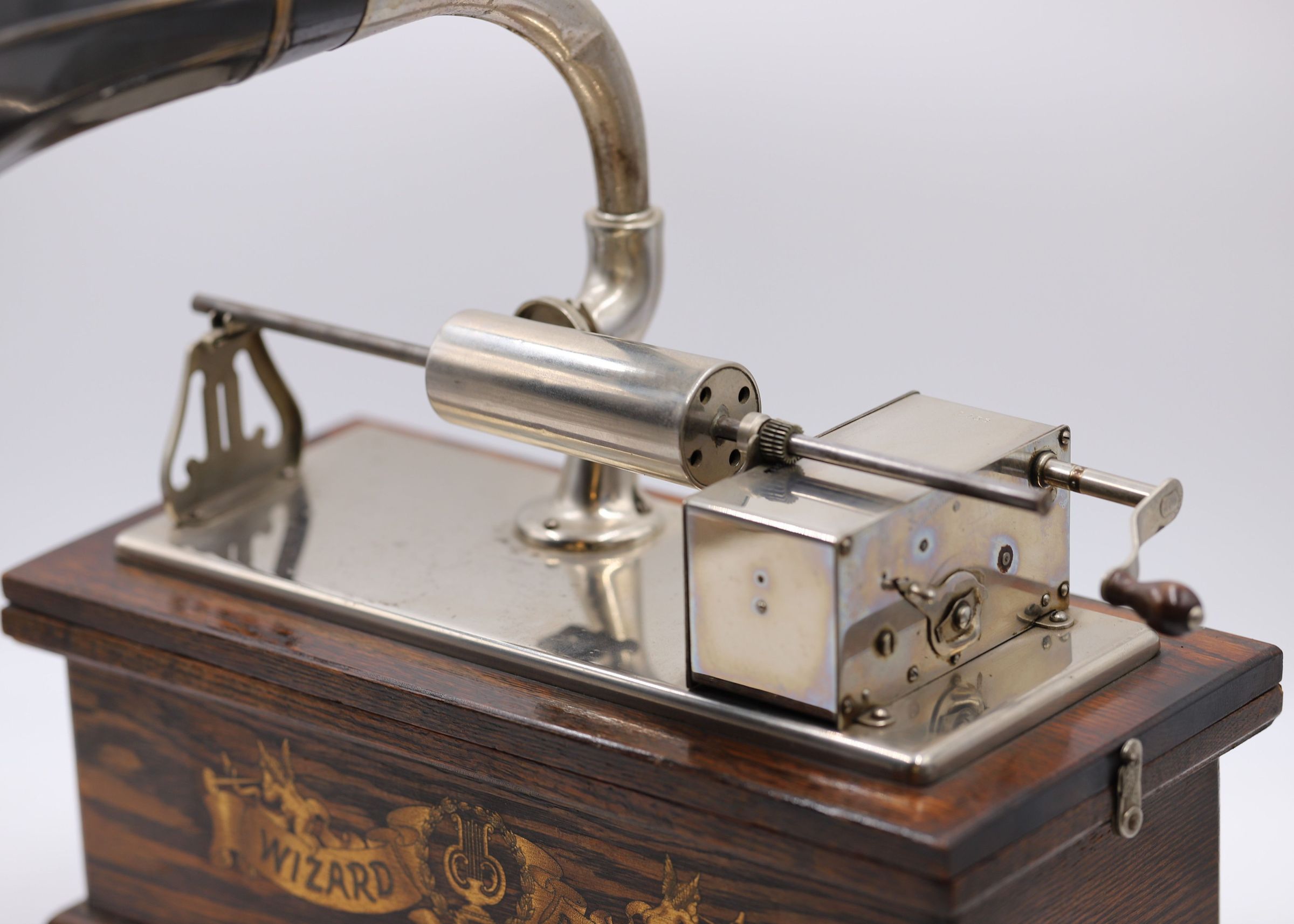
Fixed reproducer: Unlike most cylinder phonographs, the sound head (reproducer) is stationary—it does not travel with the mandrel. This concept is strongly reminiscent of the later Edison Opera, which adopted a similar approach.
Detachable mandrel (cylinder holder): The cylinder mandrel is completely removable and not rigidly connected to the reproducer. This unusual design allowed for independent placement of the cylinder and sound head—a rare and innovative solution.
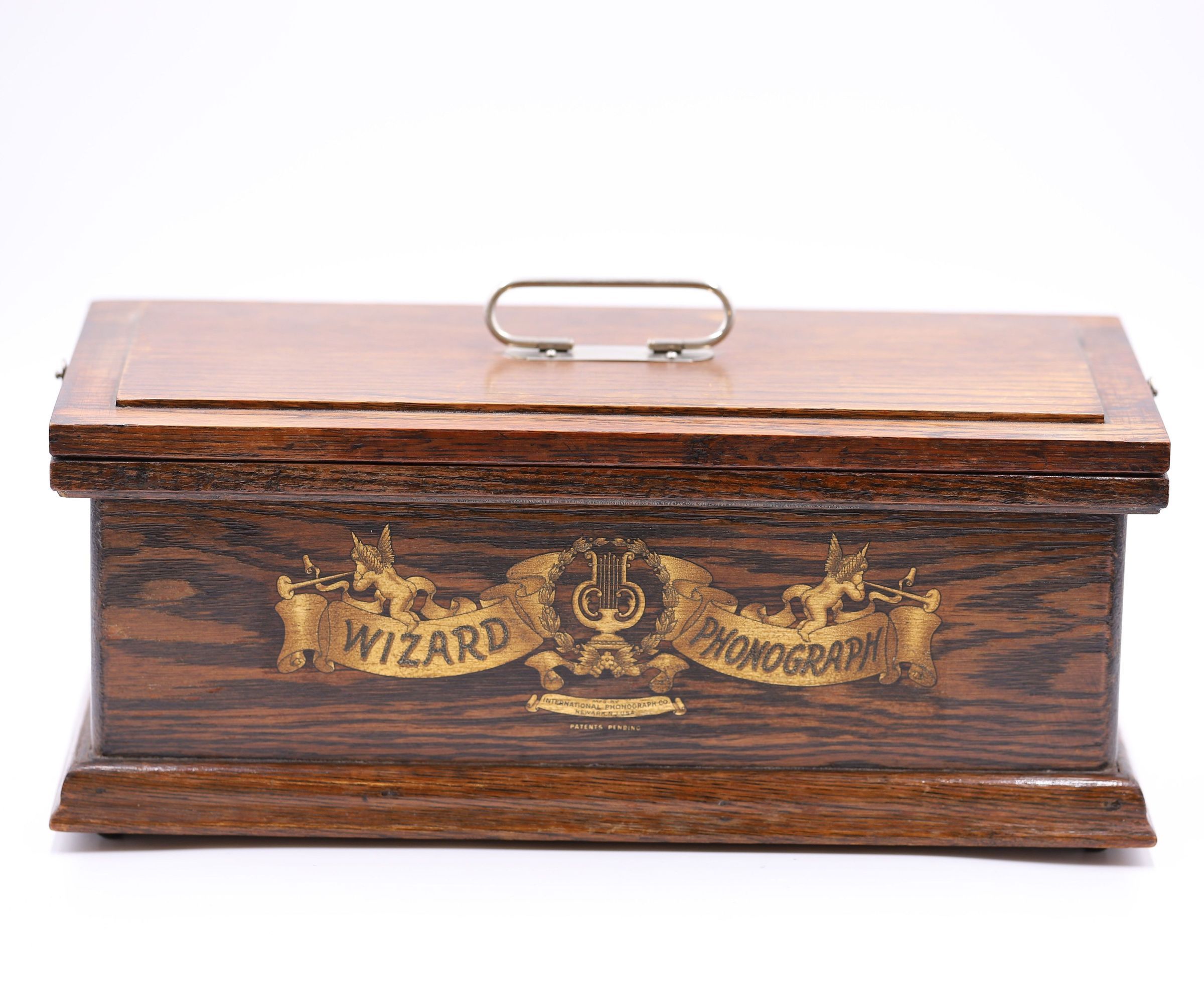
Inverted stowable mechanism: The entire works can be flipped upside down and stowed inside the cabinet, which is specially constructed to safely accommodate the unit’s weight and dimensions. This made the machine highly portable and self-contained.
French-style horn: The horn features a large, floral design reminiscent of a “cor de chasse” (French hunting horn). The machine was offered with either a black horn and oak cabinet or a red horn and mahogany cabinet.
Patent Situation and Legal Context:
The unconventional construction suggests that the design was a deliberate workaround to avoid Edison’s patents—particularly those covering reproducer movement and synchronization mechanisms. By separating the mandrel from the tonearm, the designers created a functional playback system that circumvented costly patent licensing.
No definitive patent filed by the International Phonograph Company for the “Wizard” has yet been documented. However, there are references to patent applications filed around 1907/1908 for fixed-position reproducers and alternative mandrel systems. Related designs can be found in U.S. patent archives and may have inspired or paralleled this model.
Historical Significance:
The name “Wizard” was likely a tongue-in-cheek reference to Edison himself, often called the “Wizard of Menlo Park.” At the same time, the machine presented itself as a creative alternative to Edison’s phonographs, enriched by European design sensibilities.
The International Phonograph Company was a short-lived enterprise, and its products are now extremely rare. The “Wizard” stands out as one of the most technically intriguing phonographs of its era.
The Example at the Edisonium:
The Edisonium Mariazell collection includes a well-preserved “Wizard” model with a black horn and oak cabinet. Its refined craftsmanship, striking front decal (“Wizard Phonograph”), and unconventional mechanics make it a highlight of the collection—a fascinating example of ingenuity at the intersection of design, law, and sound technology.