Name/Title
Family Phonograph “Triumph” – Eisemann SystemEntry/Object ID
186Description
Ernst Eisemann, Stuttgart, Germany – c. 1896
Only known example in a museum context
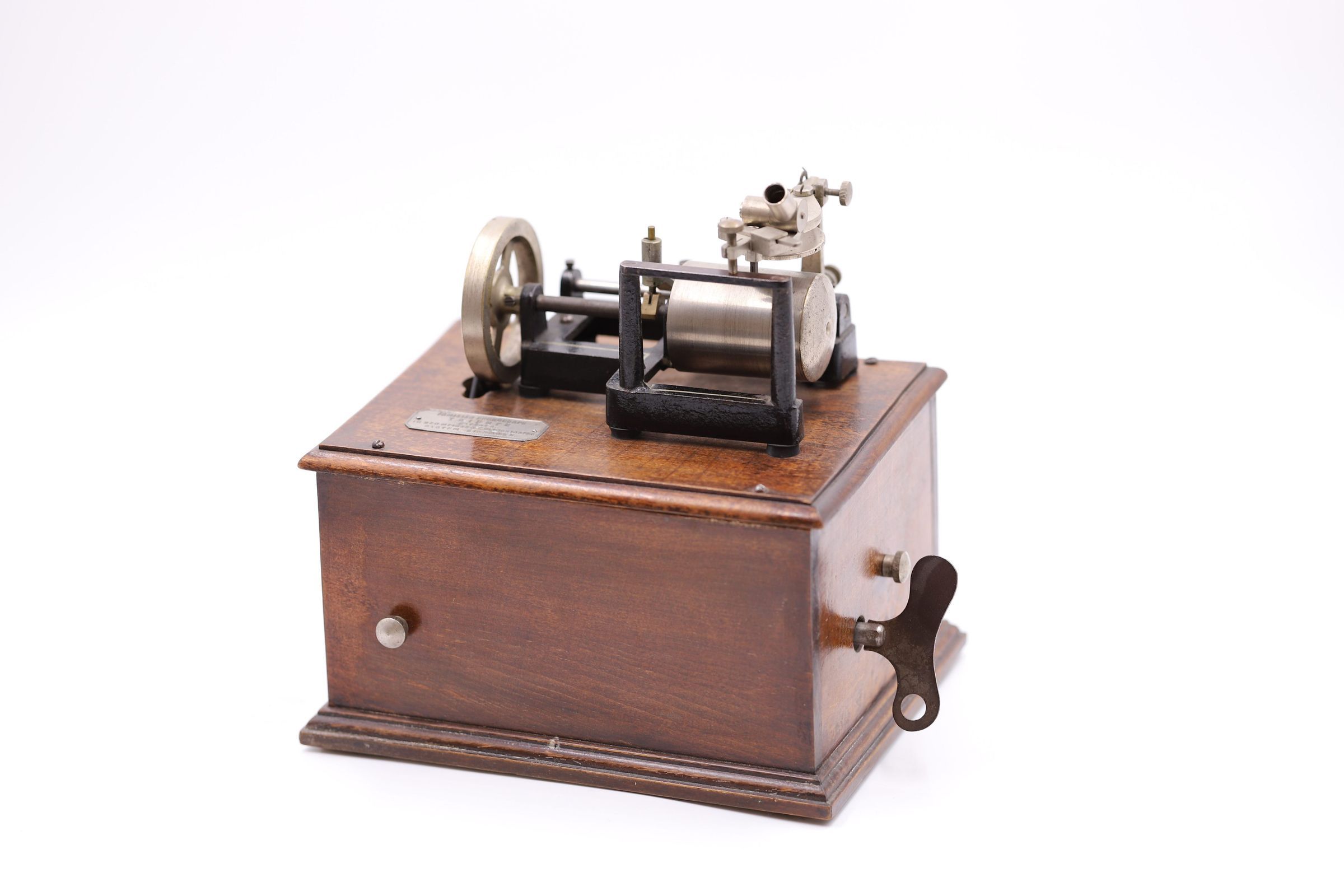
The Family Phonograph “Triumph” is among the very earliest phonographs manufactured in Germany. Produced around 1896 in the workshops of Ernst Eisemann, it was introduced at a time when the first series‑produced Edison Home Phonograph models were just appearing in the United States.
Whereas most early phonographs in Germany were still imported from the USA, the Triumph represents one of the first successful attempts to manufacture this technology domestically — and crucially, based on a wholly patented, original German design.
The Plaque – A Key to Its Identity
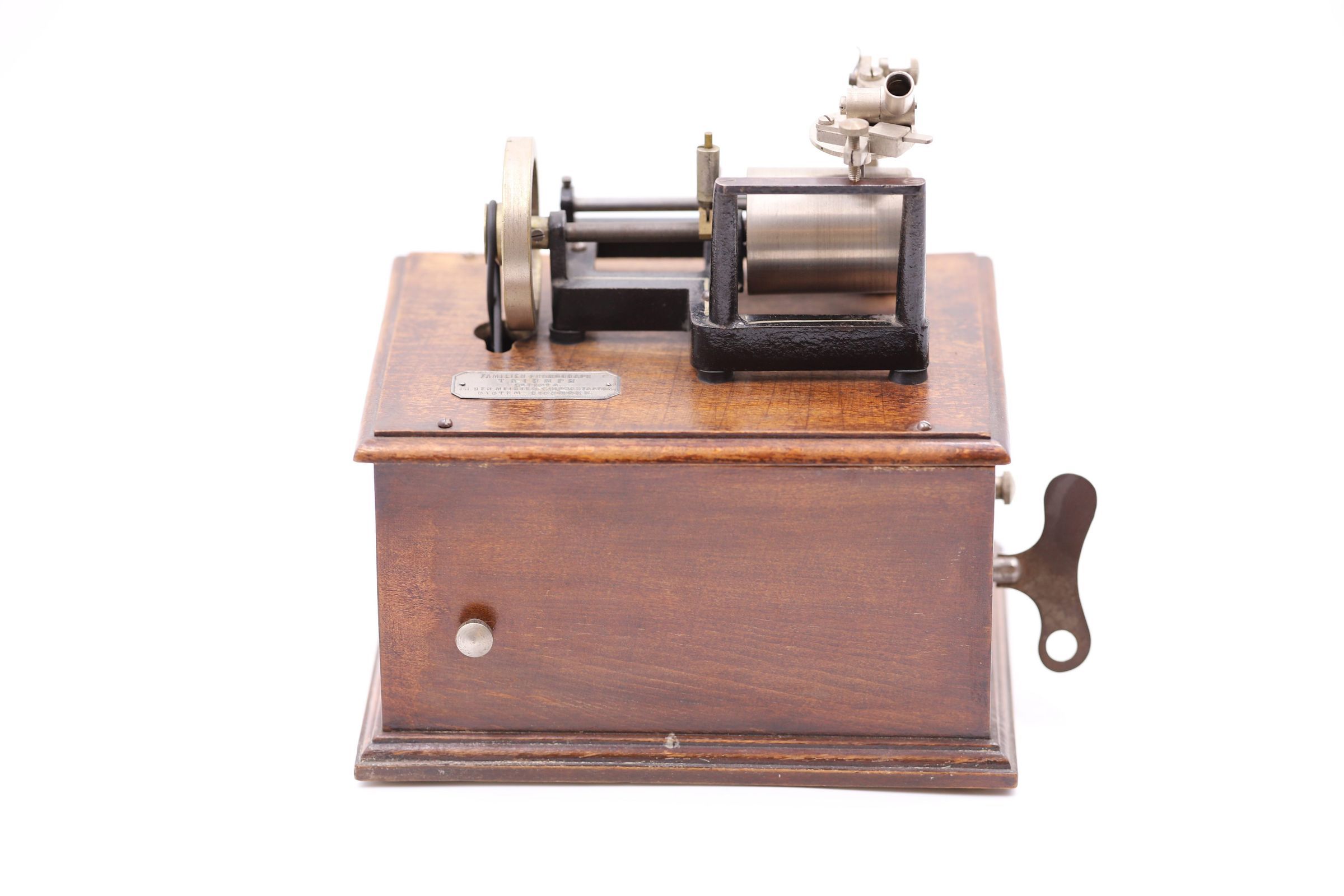
The original rectangular metal nameplate on the cabinet reads:
“FAMILIEN PHONOGRAPH TRIUMPH – Patentiert in den meisten Culturstaaten – System Eisemann”
This inscription reveals several important facts:
Model name “Triumph” – deliberately chosen to underscore the innovative spirit and technical ambition of the product.
“Patented in most civilised nations” – evidence of broad international patent protection sought by Eisemann for his design.
“Eisemann System” – confirming that this was no mere copy of American machines, but a fully independent, patented German development.
Patent & Technical Features
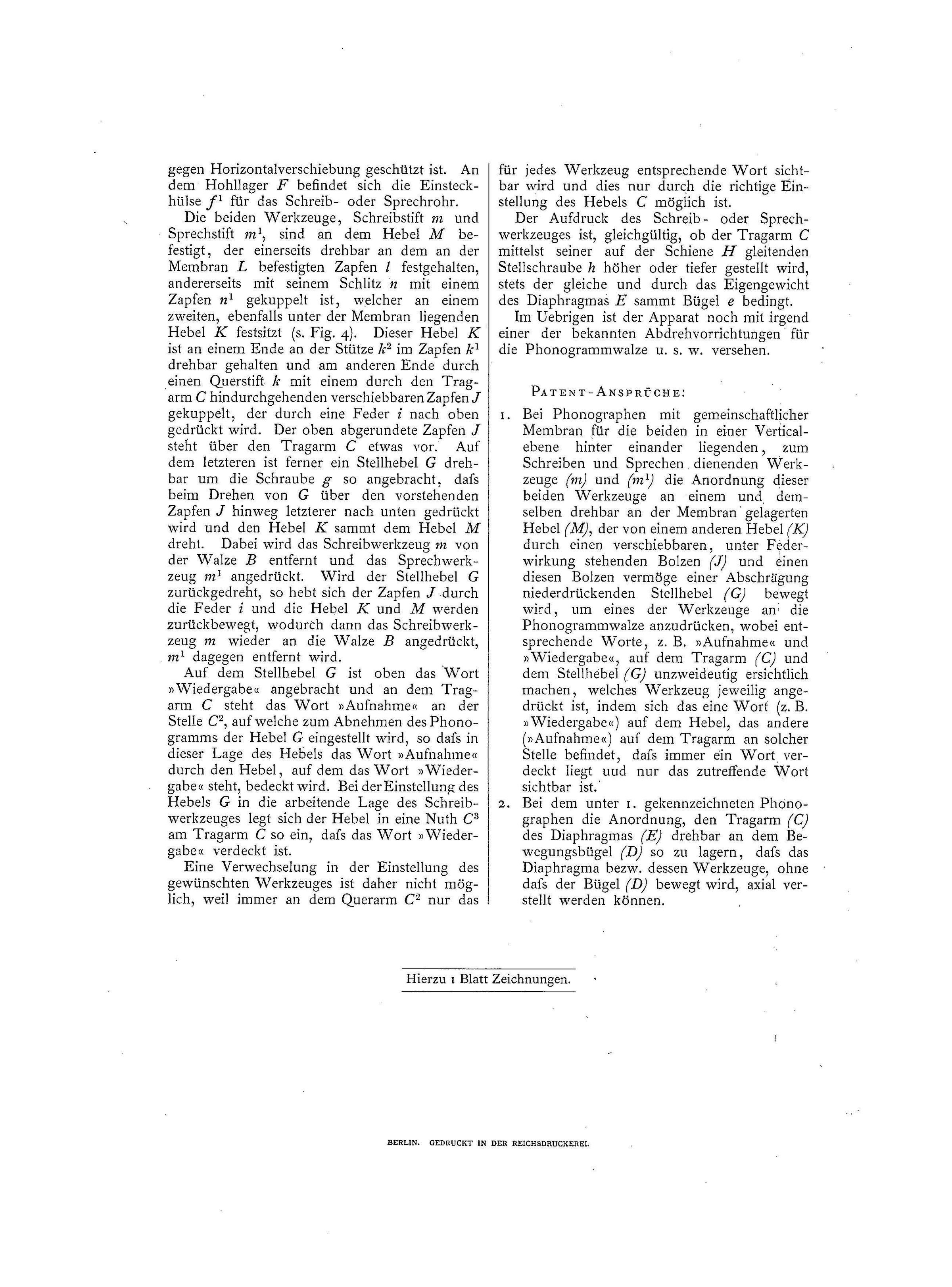
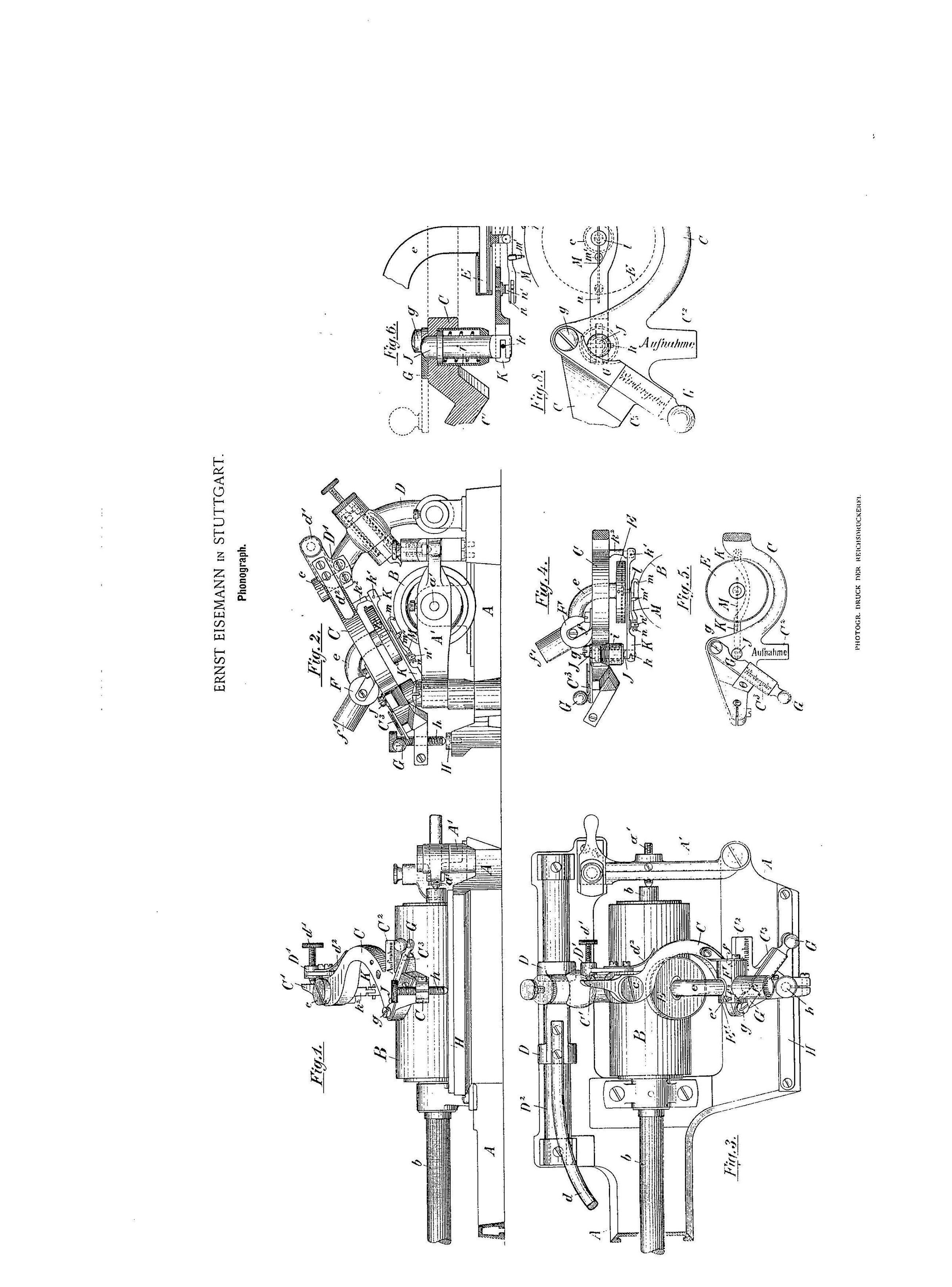
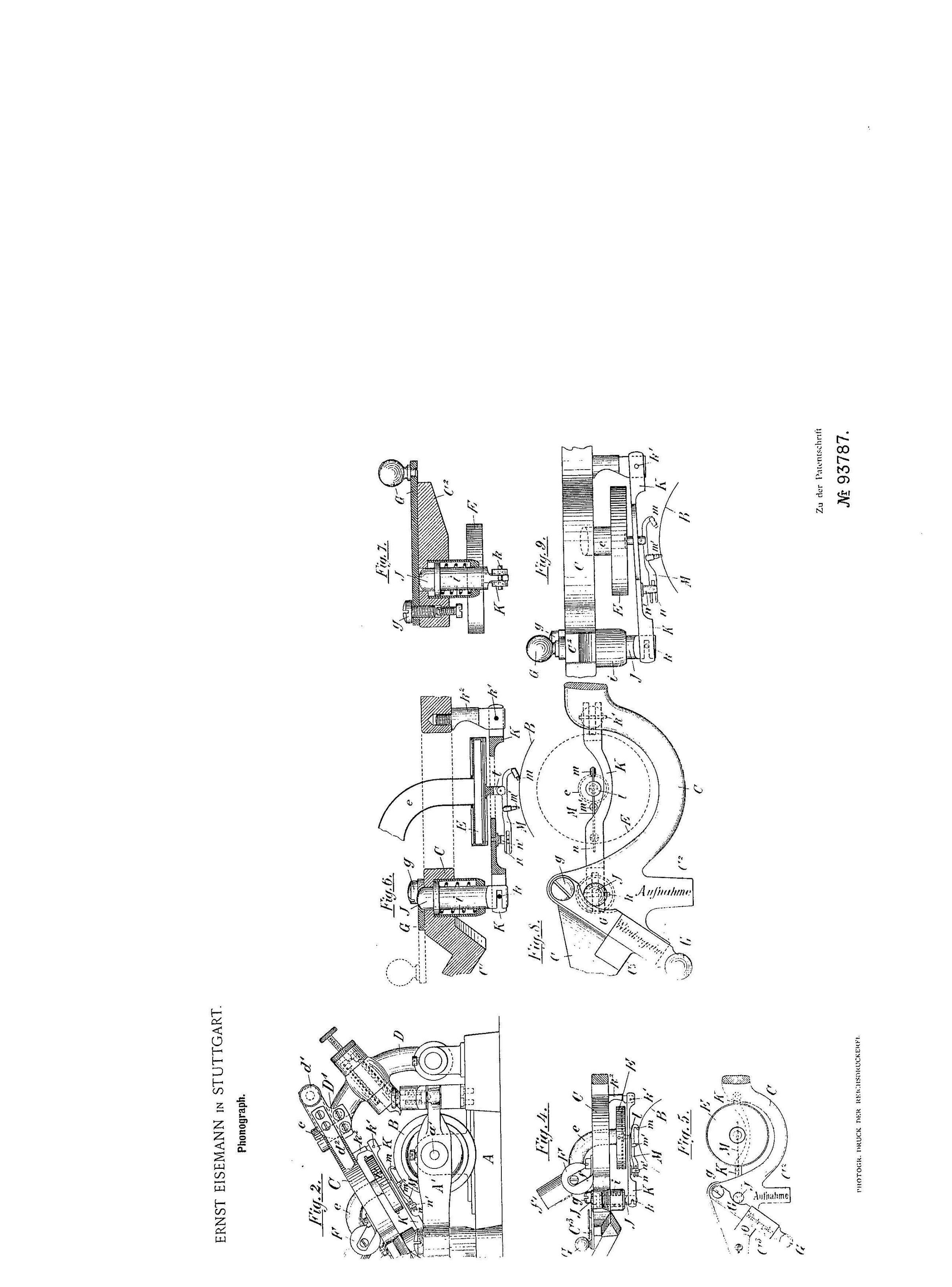
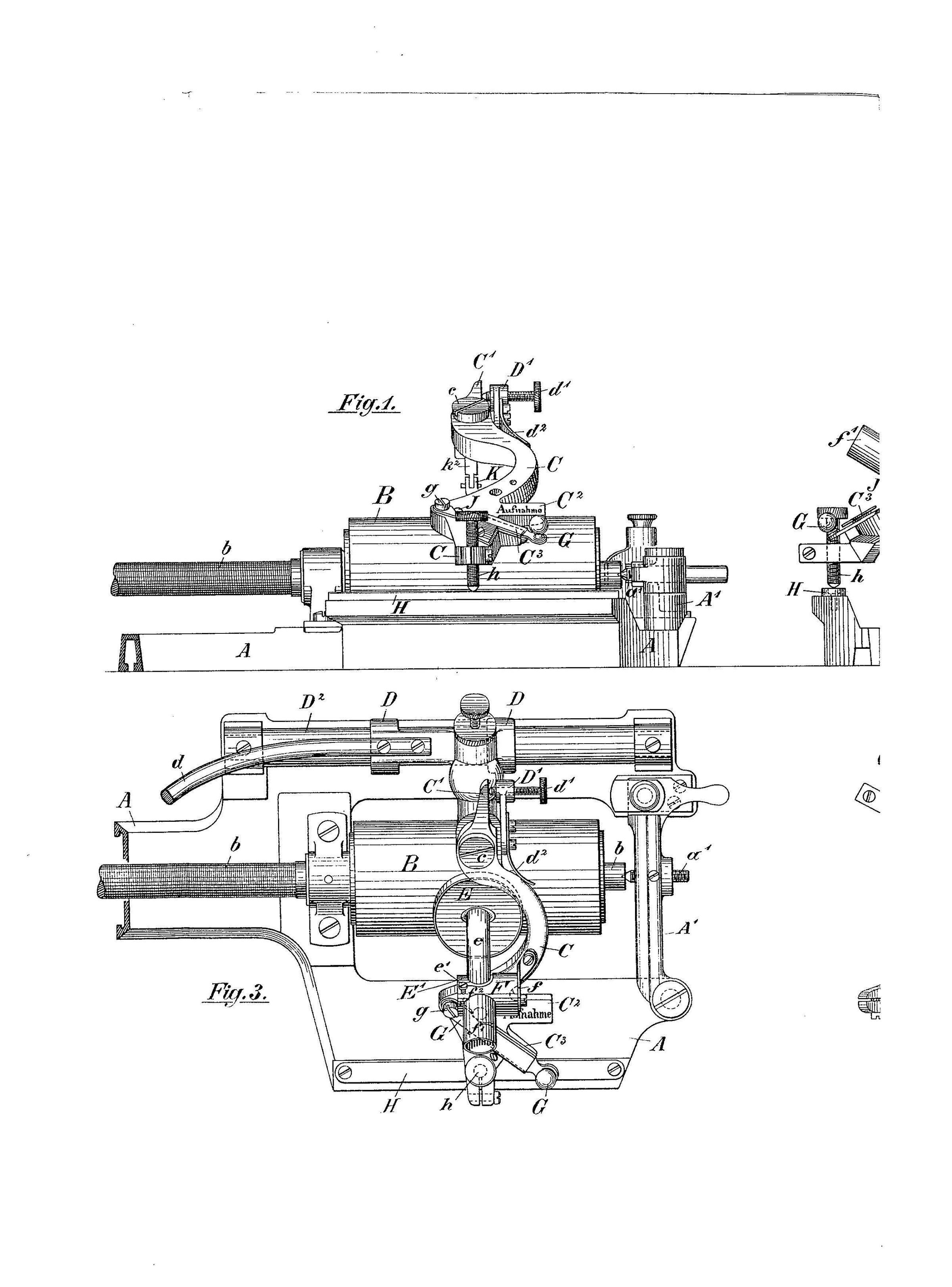
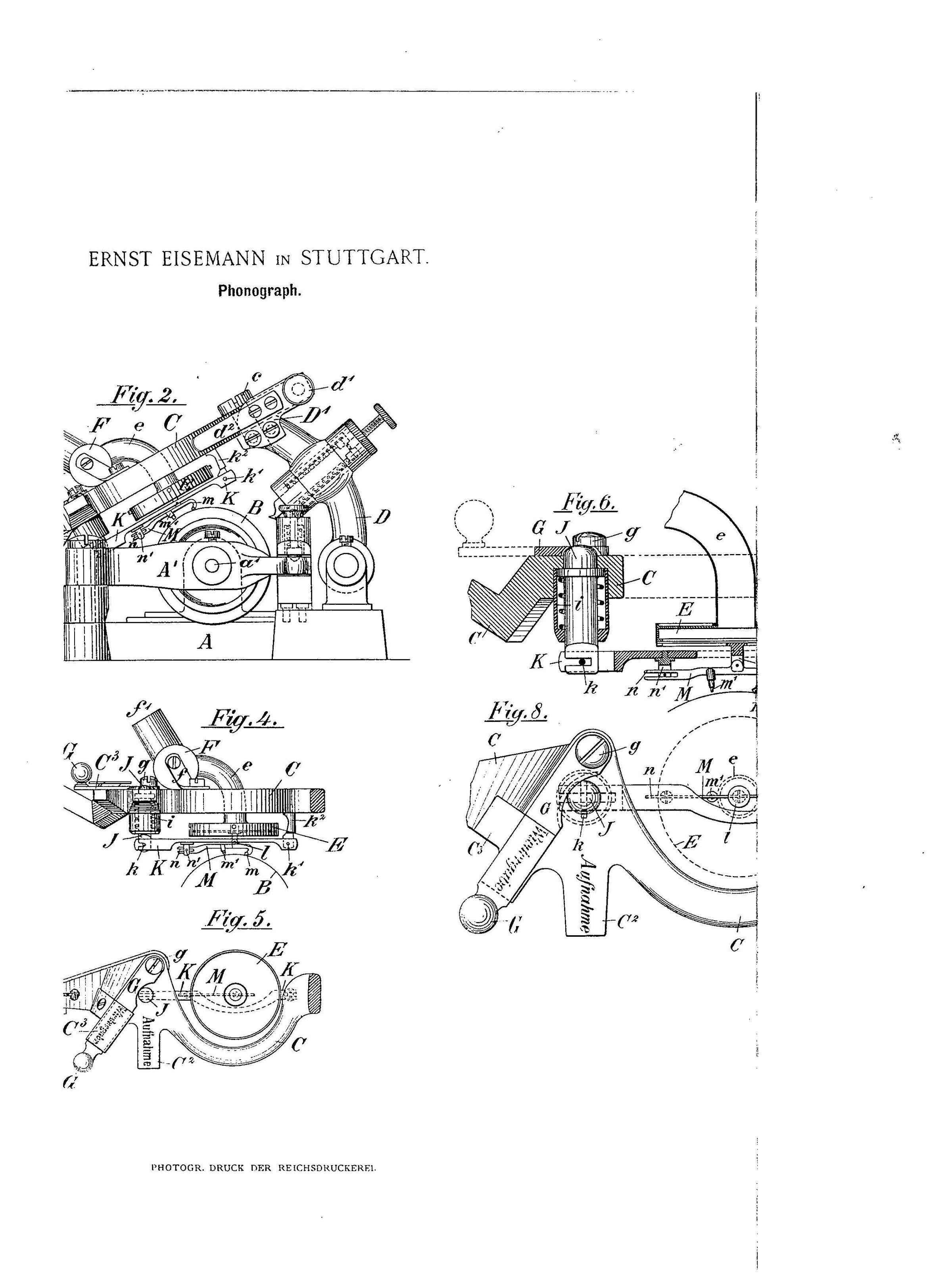
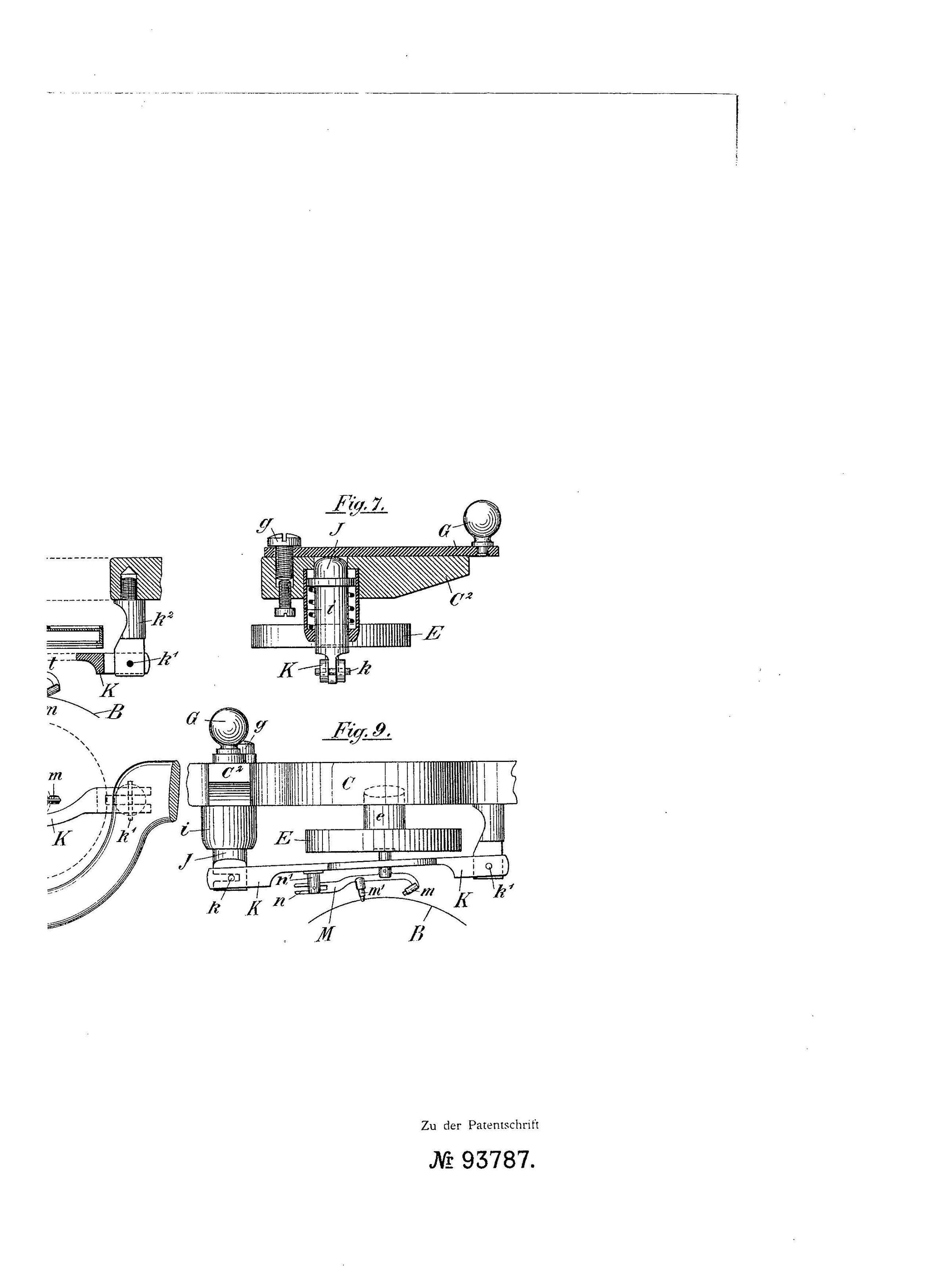
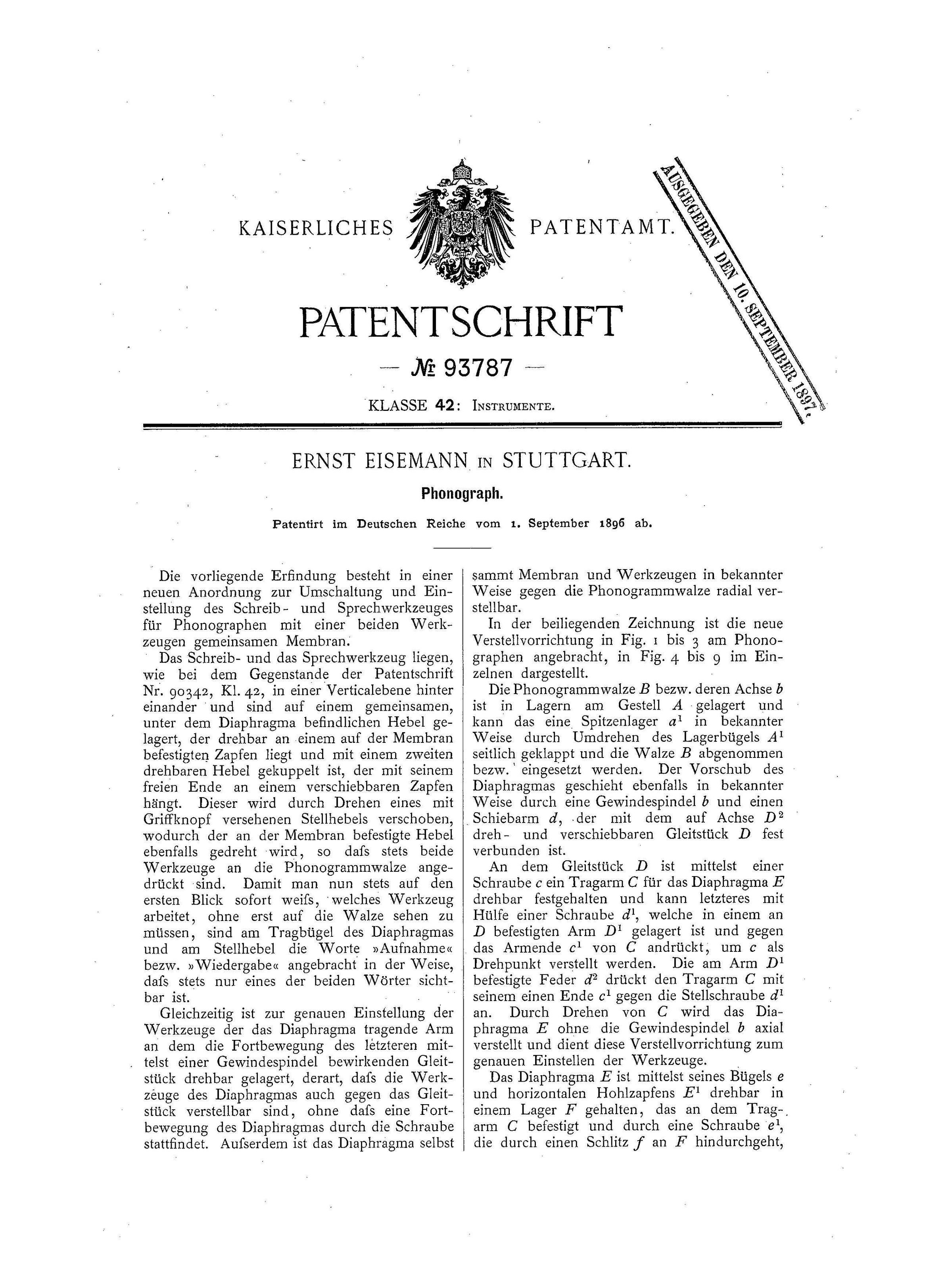
German Patent No. 93 787, filed by Ernst Eisemann in 1896, details a series of mechanical improvements to phonograph mechanisms, including:
Reinforced, vibration‑resistant drive system for a smoother, more consistent cylinder rotation.
Improved carriage guidance for the recorder/reproducer to ensure more accurate tracking and reduced background noise.
Optimised sound box mounting for easier adjustment and improved sound transmission.
With this patent, Eisemann successfully defended his invention against claims from the North American Phonograph Company and even Edison’s European representatives.
The Ernst Eisemann Company
In 1889, Ernst Eisemann founded Eisemann & Jung, Elektrotechnische Werkstätte in Stuttgart together with Eugen Jung. In addition to low‑voltage electrical systems, the firm began experimenting with phonographs as early as the early 1890s.
Following Jung’s death, Eisemann partnered with Rudolf Wölz and, on 1 September 1897, established Ernst Eisemann & Co., Fabrik elektrischer Apparate.
While Eisemann achieved success in other areas — later producing ignition magnetos and pioneering electric hair clippers — his phonograph production remains one of his most intriguing technological ventures.
Construction of the Triumph
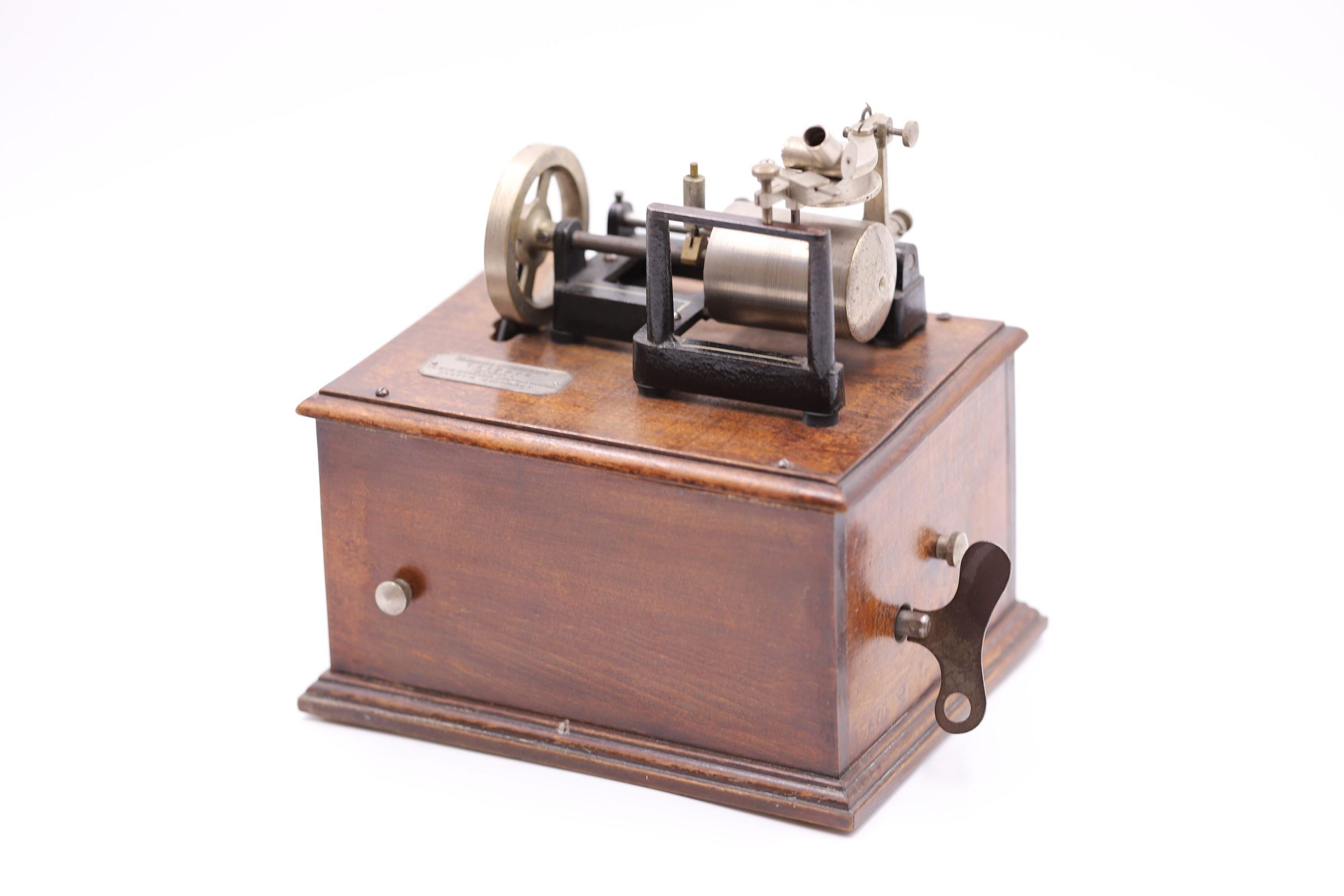
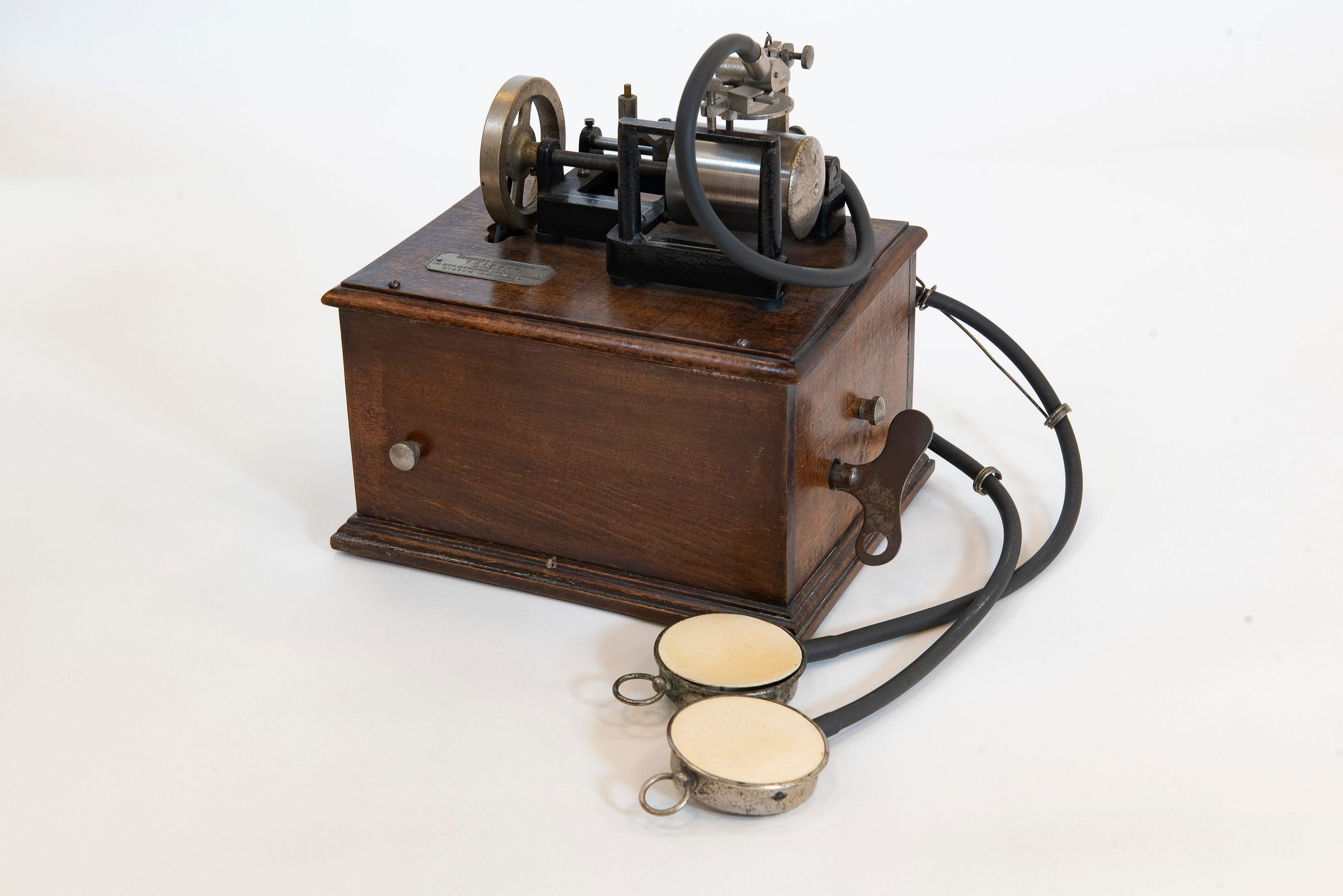
Cabinet: Solid, clear‑varnished hardwood, finely crafted.
Mechanism: Spring motor with side‑mounted crank; large flywheel for steady running.
Cylinder mechanism: Precisely mounted mandrel for small wax cylinders.
Sound box: Original form, specifically adapted for the “Eisemann System.”
The device is purely mechanical, powered by a robust spring motor. Its layout clearly indicates a design intended for home use and demonstration purposes — hence the name Family Phonograph.
Historical Significance
The Triumph marks an important milestone in early German phonograph production:
Demonstrates that, before the turn of the century, German manufacturers were moving from importing American machines to producing their own designs.
Embodies high craftsmanship and inventive engineering.
Through its international patent coverage, Eisemann positioned himself as a confident competitor to the dominant American manufacturers.
Rarity
Original, German‑made Eisemann phonographs are exceptionally rare today. Of the “Triumph” model, this is the only known example in a museum collection.
It stands as a tangible reminder of a nearly forgotten chapter in German phonograph history — proof that, even in the 1890s, world‑class sound recording technology was being developed on German soil.