Name/Title
Lioret “Modèle C” – Luxury Cylinder Phonograph in a Travel CaseEntry/Object ID
168Description
Henri Lioret, Paris – ca. 1899–1902
Historical Background
Henri Lioret (1848–1938) was one of the most creative pioneers of early sound recording. In the 1890s, he made his name with his celluloid cylinders – an extremely durable and dimensionally stable recording medium that, unlike fragile wax cylinders, was virtually wear‑free.
With the “Modèle C,” introduced around 1899, Lioret brought to market a compact, luxurious travel model designed for wax cylinders only. This marked a turning point in his production, as until then Lioret had worked exclusively with celluloid.
Design and Features
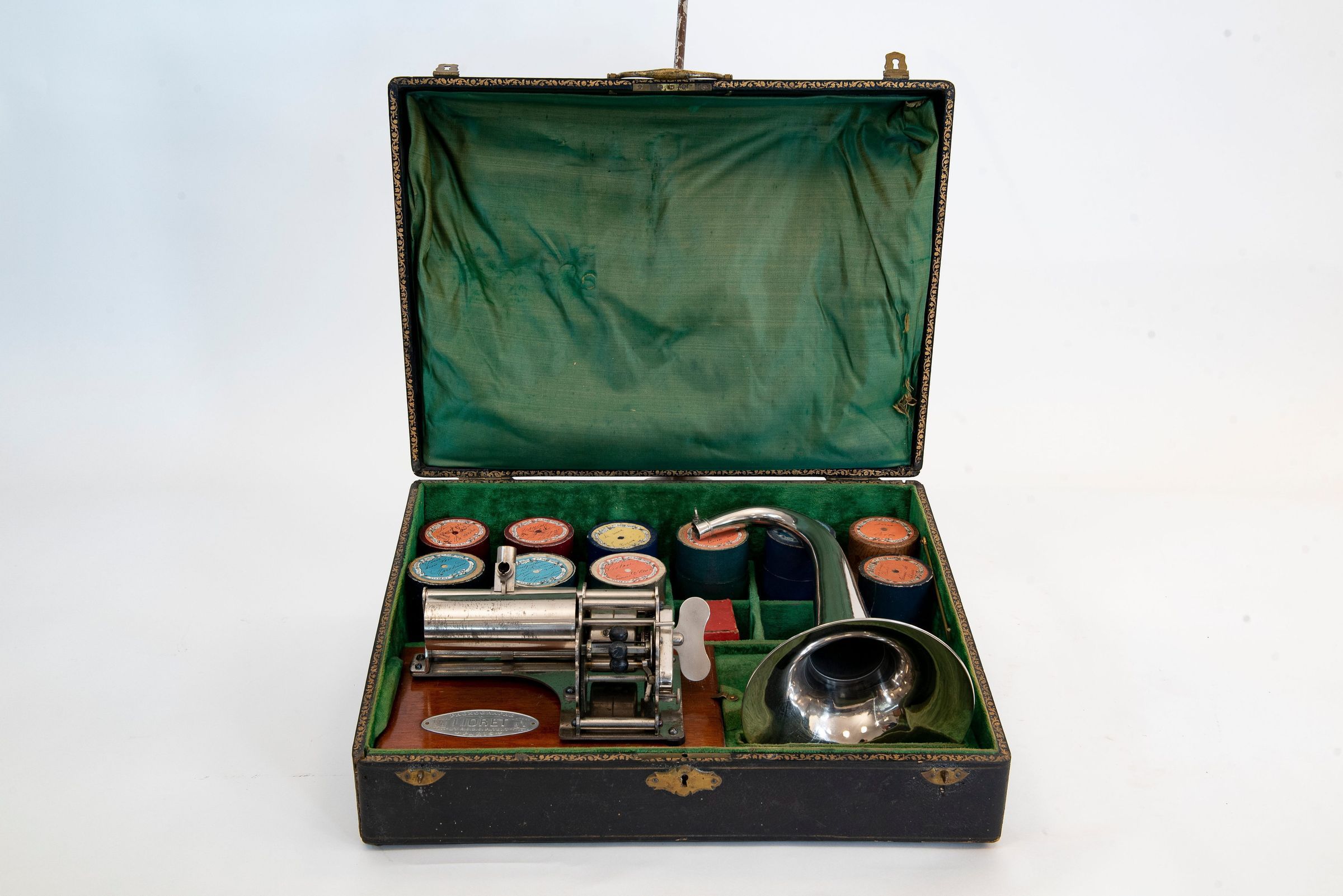
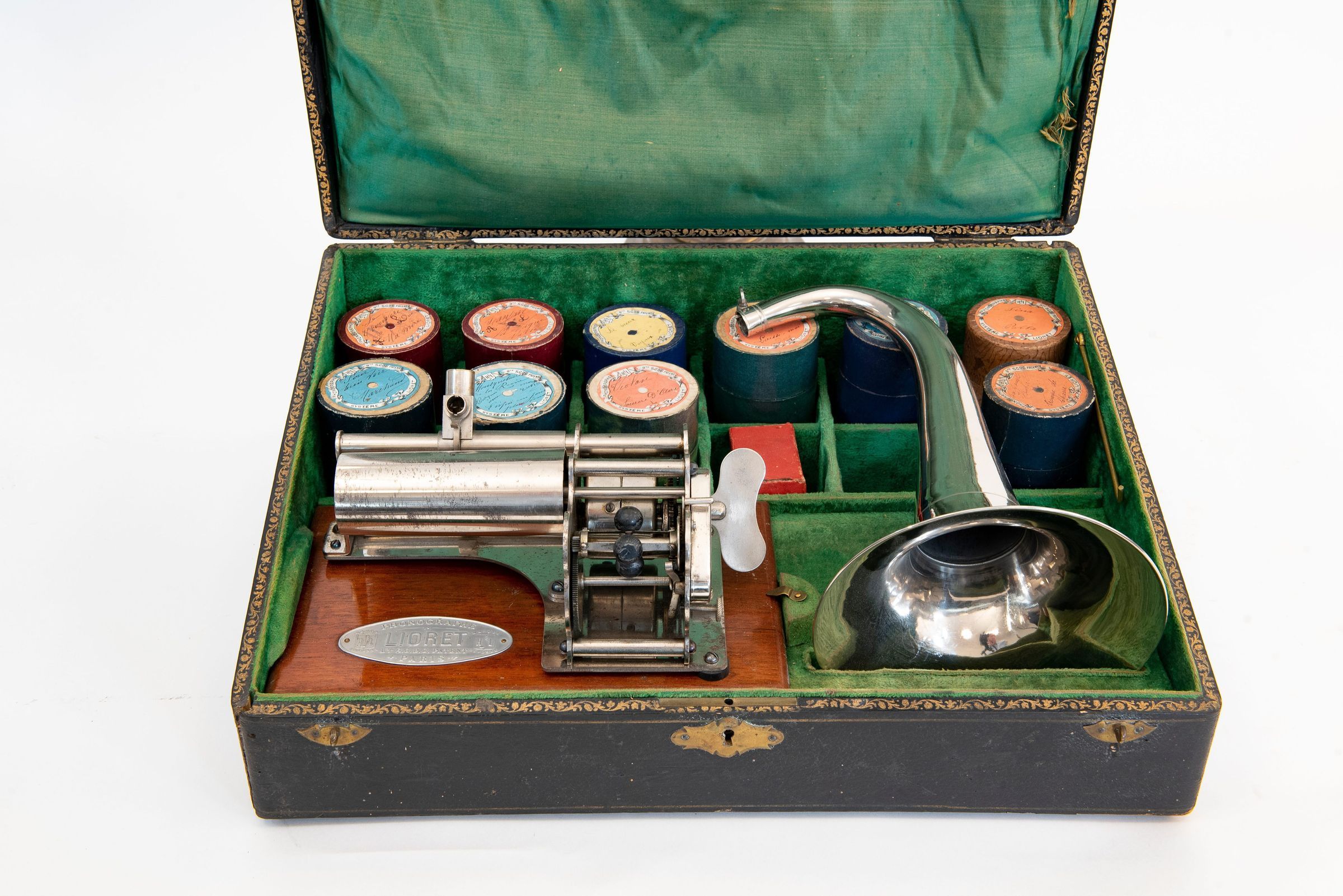
The “Modèle C” was housed in an elegant leather‑covered wooden case – fully lined throughout. Each component had its own fitted compartment, allowing the machine and accessories to be transported easily and securely.
The set included:
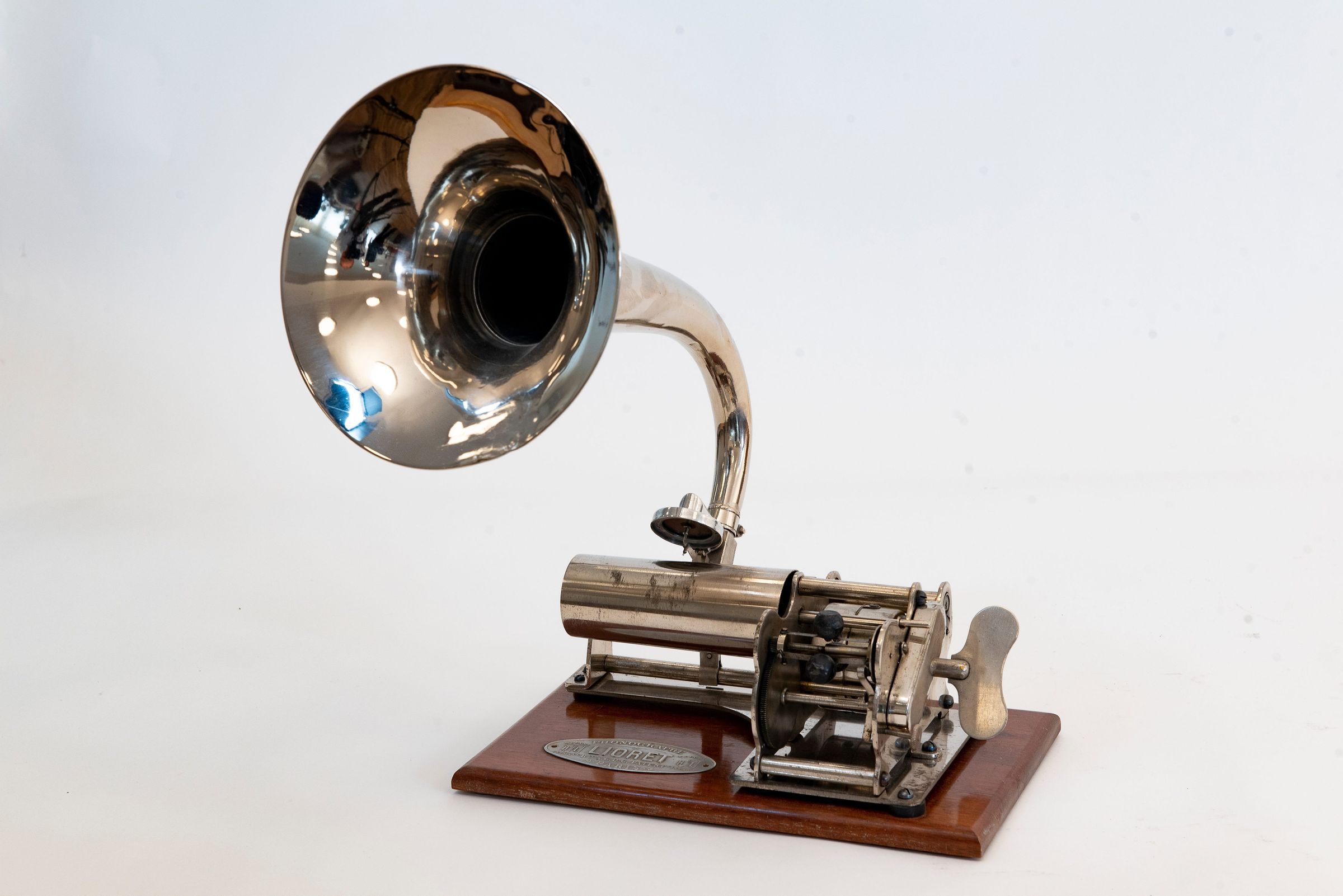
Mechanism: Spring motor with crank winding.
Horn: Nickel‑plated “Cor de chasse” (hunting horn‑style) horn.
Reproducer: Special reproducer for wax cylinders.
Accessories: Separate recording and playback diaphragms, a listening tube for two persons, a cylinder shaving knife (“rabot”), and both blank and pre‑recorded wax cylinders.
The example shown here is the most luxurious version – priced at 100 Francs – and provided space for a larger number of cylinders stored in the lid. Simpler versions with fewer accessories were available from 55 Francs.
Advertising and Market Position
Period advertisements highlighted the fine craftsmanship – a mahogany motor board, richly decorated case, precise mechanical construction, and elegant nickel fittings. The phonograph was promoted as the perfect travel companion for businessmen and music lovers alike: robust, powerful in sound, and easy to transport.
Rarity
Today, fully preserved “Modèle C” sets are extremely rare, especially in near‑mint condition such as this example in the Edisonium.
Significance
The Lioret “Modèle C” stands as a prime example of the transition from stationary salon phonographs to portable, luxury music devices of the Belle Époque. It combines technical precision, portability, and aesthetic refinement – representing a true high point in French phonograph craftsmanship around 1900.