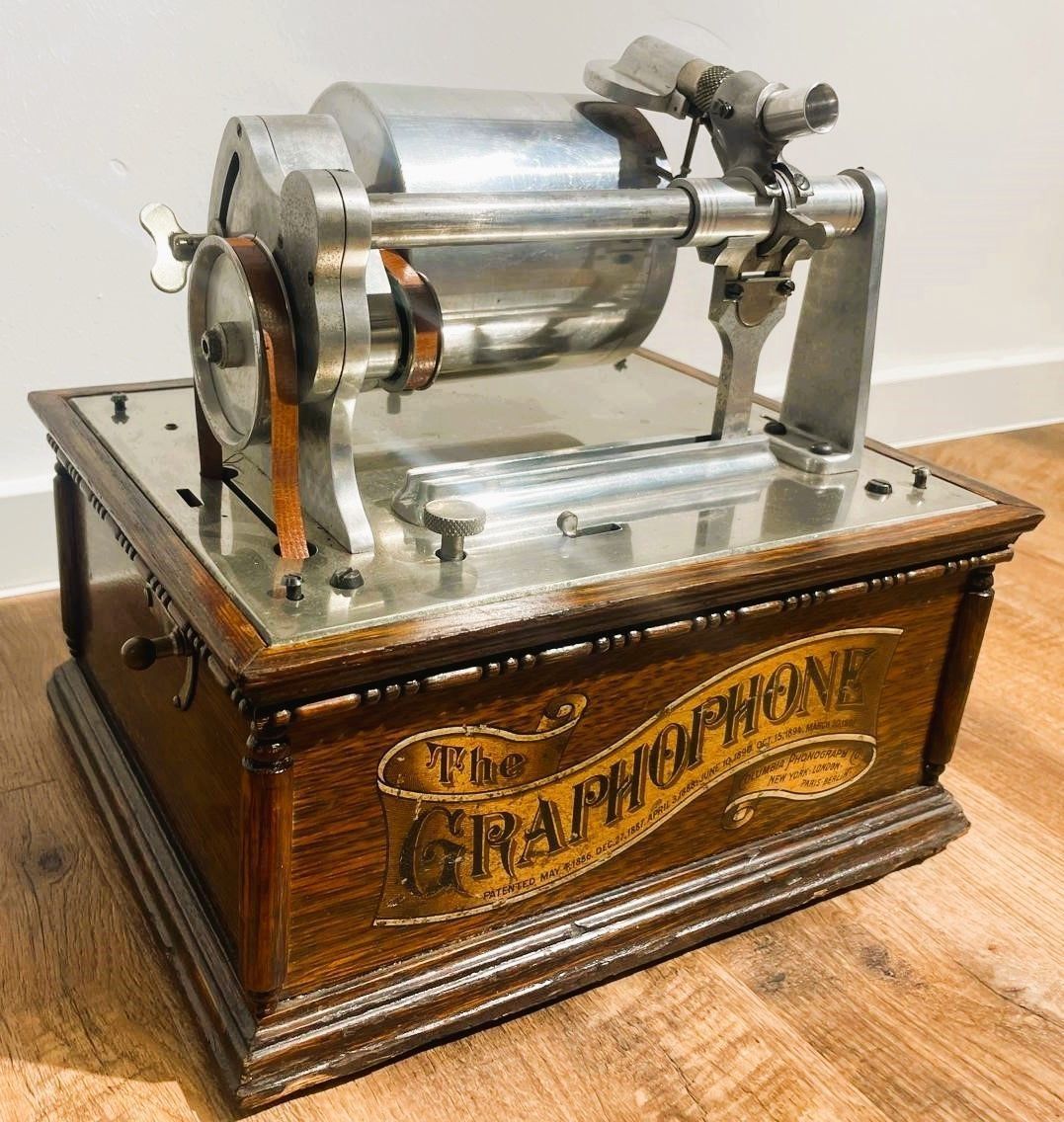
Name/Title
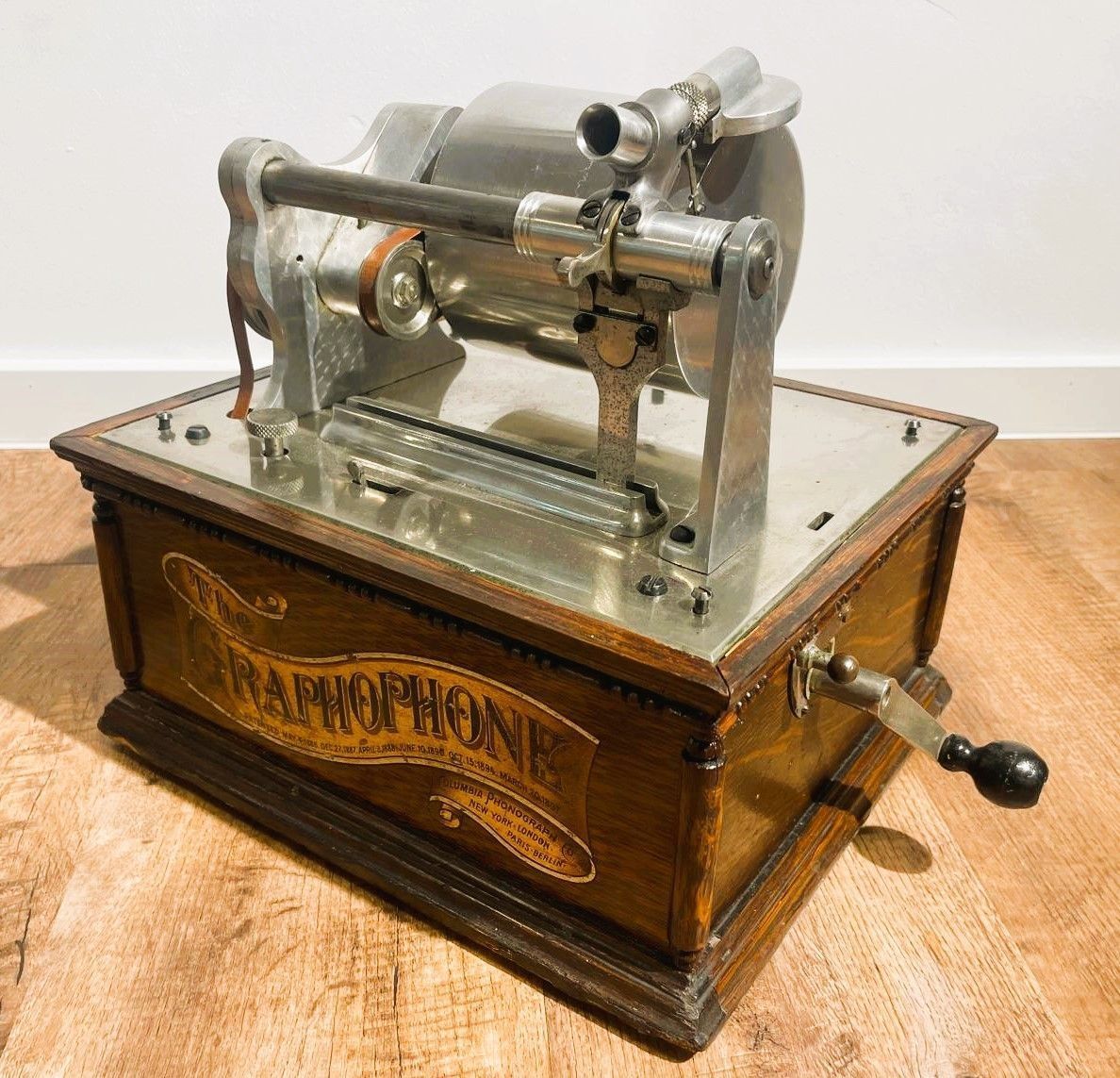
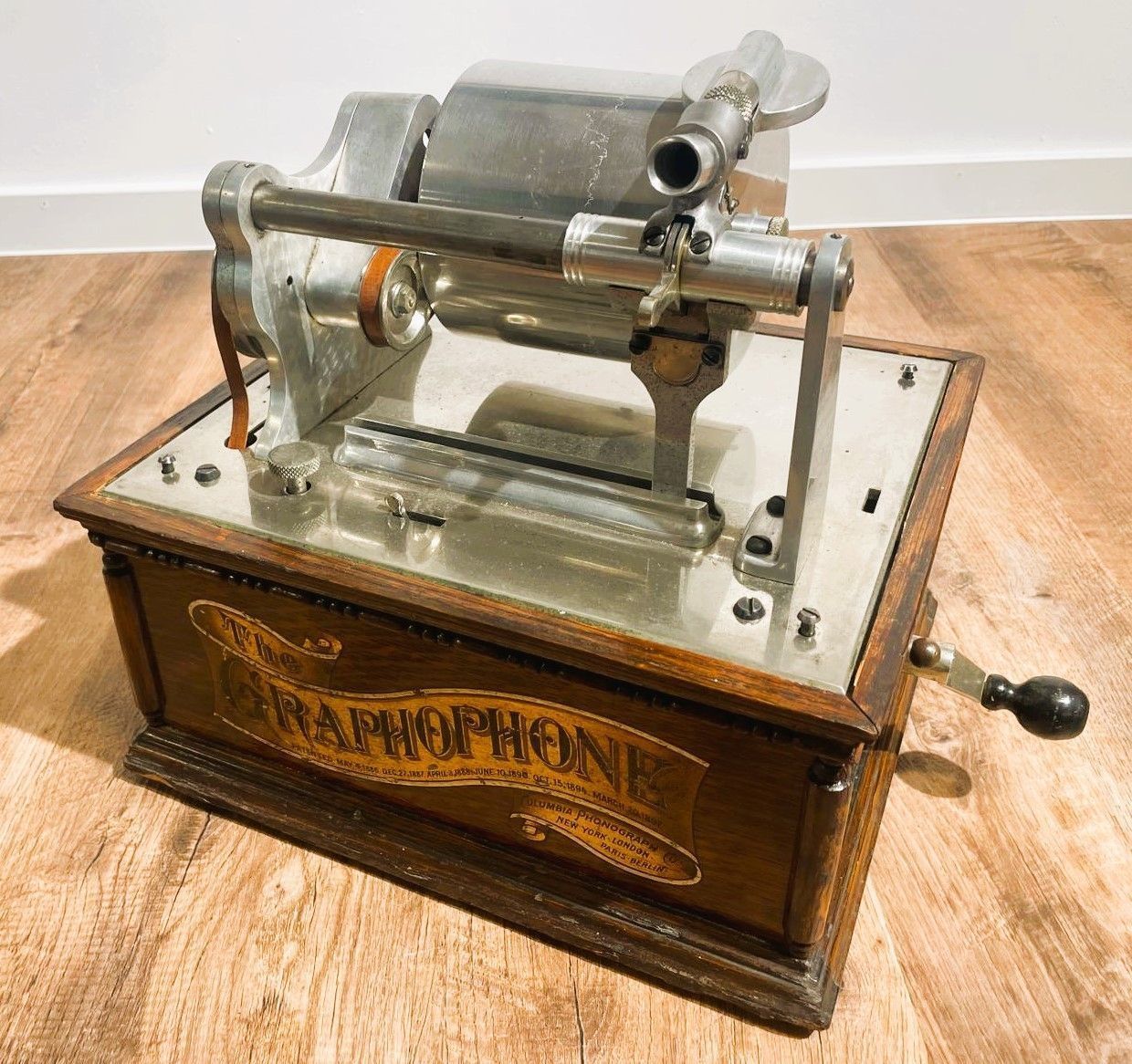
Graphophone "Type AF – Combination Grand”Entry/Object ID
287Description
American Graphophone Company, New York
ca. 1901–1902 | Price: $50.00 | No serial numbers assigned
Historical Background
The Type AF was one of three models introduced by the American Graphophone Company in 1901, designed to play both standard 2" cylinders and the larger 5" “Grand” cylinders.
The least expensive model was the Type AB at $25.00 – essentially a more elaborate version of the “Eagle” Graphophone.
The luxurious Type AD sold for $75.00 and featured a massive six-spring motor with an elaborate cabinet.
The Type AF occupied the middle position at $50.00, employing the motor and cabinet of the Type AG.
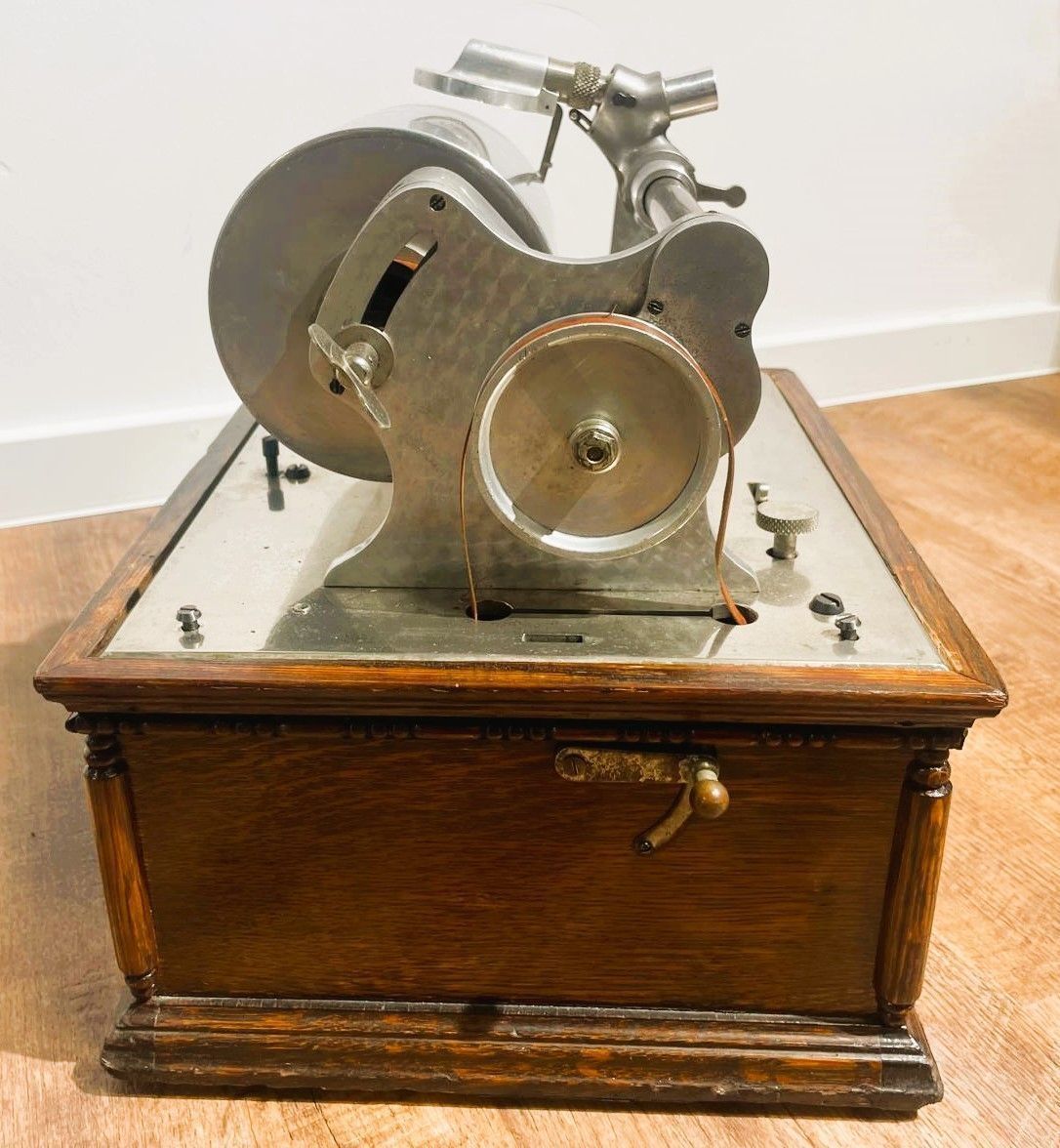
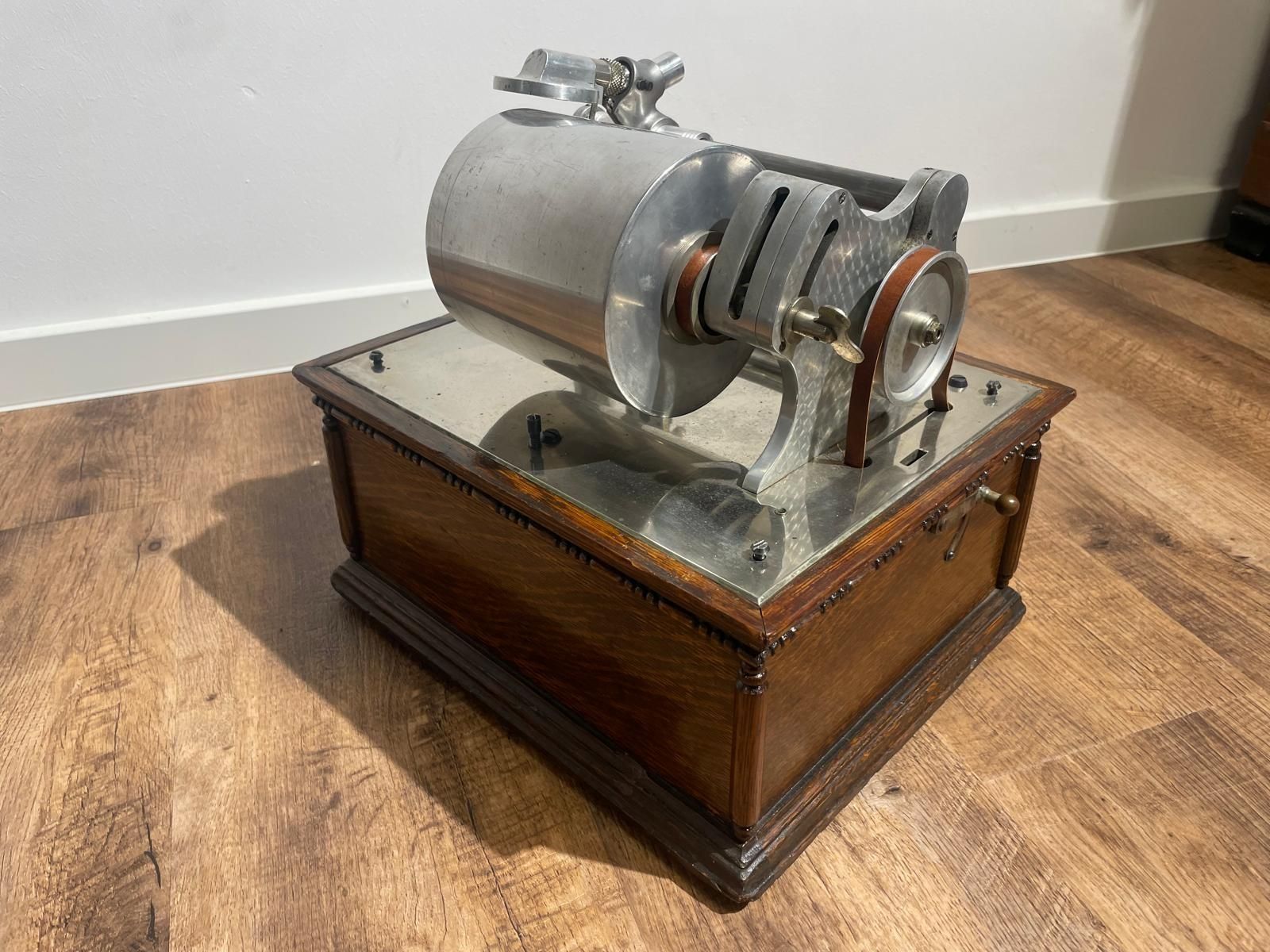
The AF, together with the AD, was the only Graphophone model that used two separate drive belts – one for the mandrel and one for the feedscrew.
Technical Features
Chassis: polished aluminum with decorative jewelling on the sides
Motor: two-spring motor (as used in the AT, AG, and early HG), capable of playing three cylinders per winding
Mandrel: combination of fixed 2" mandrel and removable 5" mandrel
Reproducer: originally fitted with the #4 “Grand” aluminum reproducer; later often upgraded to the improved #5 (introduced in 1903 for $5.00, with Columbia offering a $2.00 trade-in allowance for older reproducers)
Cabinet: oak, similar to the Type AG, with ornamental trim and large gold “The Graphophone” banner decal
Horn: standard R-1, 14" nickel-plated; optional recorder and shaving device available
Use
The Type AF was aimed at ambitious private users and small exhibition halls, offering the ability to play both regular music and speech cylinders as well as the larger “Grand” cylinders.
It was also suitable for public demonstrations, sales presentations, and semi-professional applications, bridging the gap between a home entertainment machine and a large exhibition phonograph.
Significance and Rarity
The Graphophone Type AF is among the rarest Columbia machines. Since it carried no serial numbers and was produced for only a short time, very few authentic examples survive today.
The specimen preserved in the Edisonium is fully original. It illustrates the experimental spirit of Columbia’s engineers around 1900, who attempted to broaden the market through technical innovation (such as dual drive belts) and versatile cylinder formats.