Name/Title
Early Echophone with Wooden MandrelEntry/Object ID
176Description
Edward H. Amet, USA – ca. 1895
Predecessor of the later “Puck” phonographs
This early Echophone is one of the most interesting examples of the 1890s efforts to create an affordable, mass‑market talking machine. It was developed by Edward Hill Amet (1860–1948), a pioneer of sound and film technology, who in 1891 patented the first commercially available, spring‑driven phonograph mechanism in the United States.
Design Features
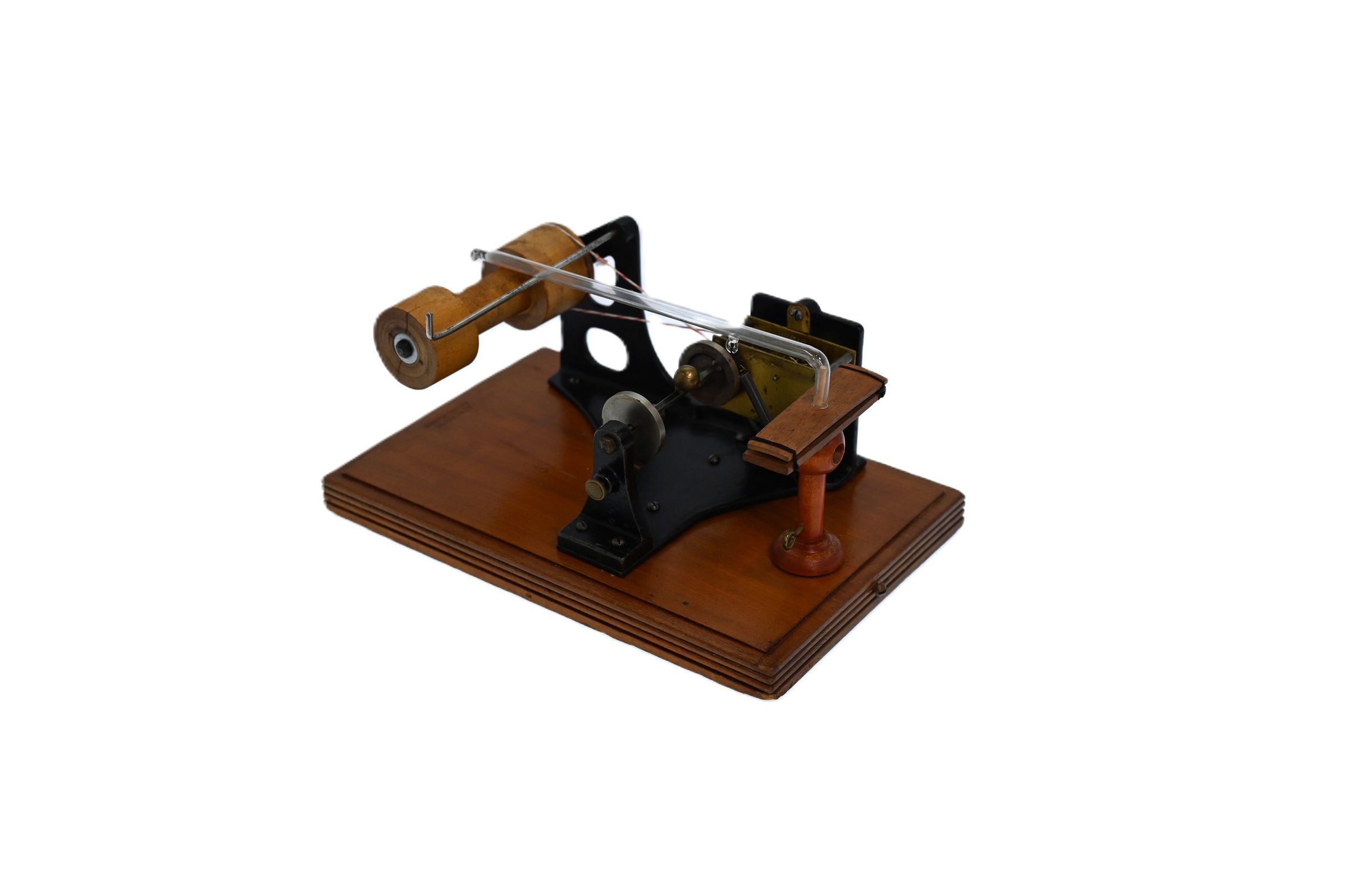
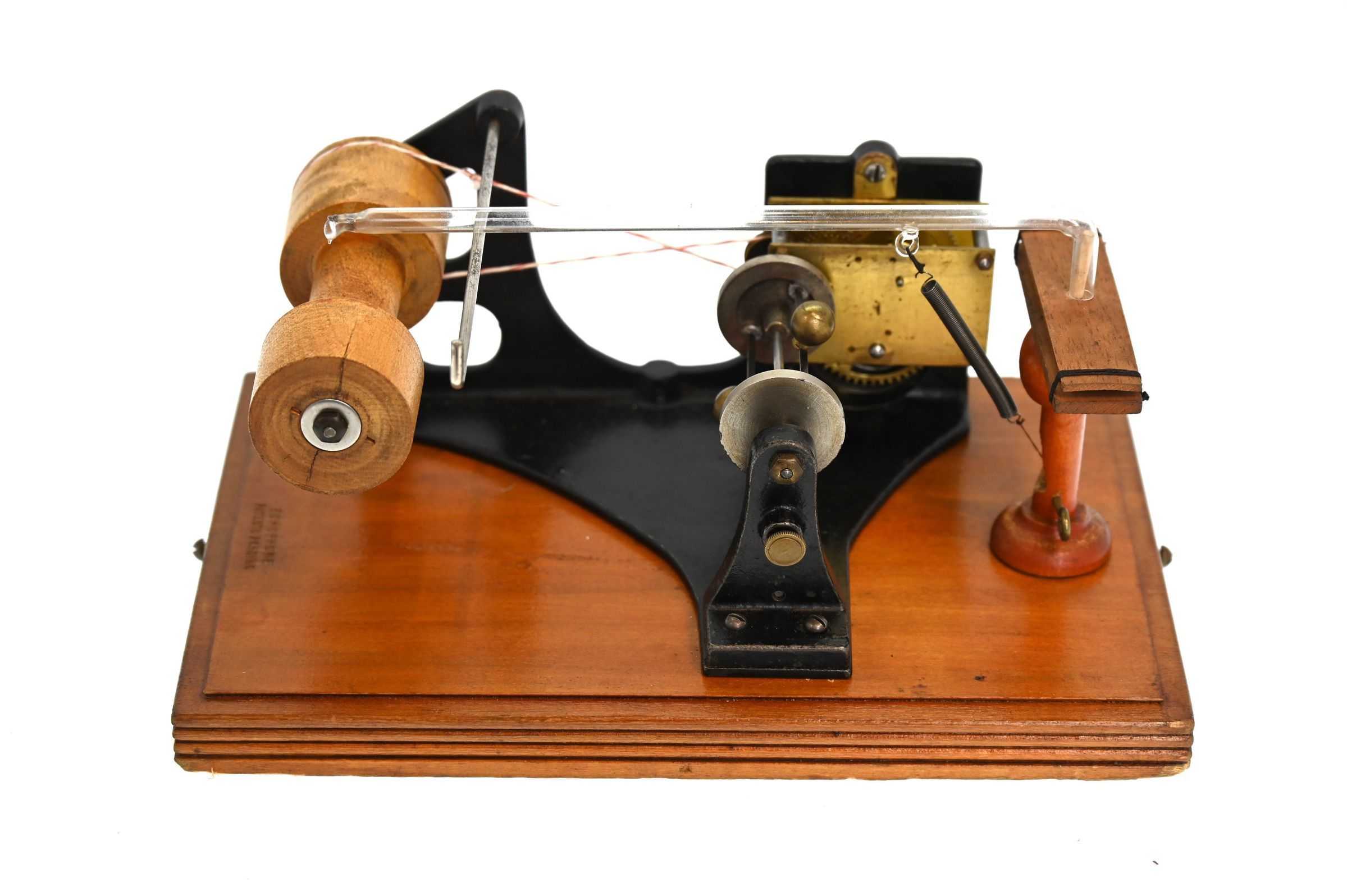
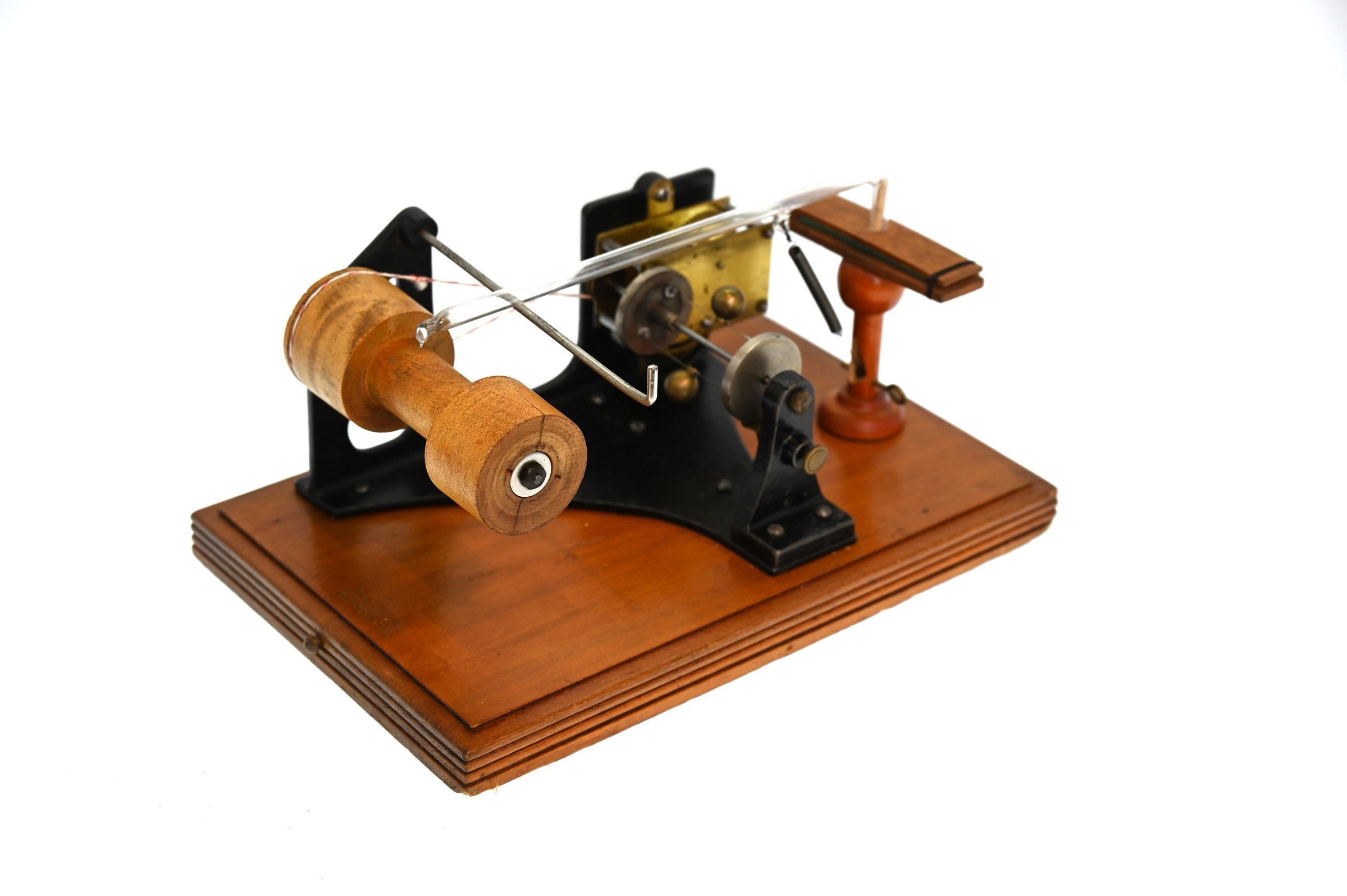
Wooden Mandrel – Unlike most contemporary phonographs, which used metal cylinder cores, this early version employed a wooden cylinder mandrel. This was likely an attempt to avoid Edison’s patent on tapered metal mandrels.
Spring Motor with Clockwork Mechanism – Manufactured by the Waterbury Clock Company, featuring a simple, low‑cost construction.
Sound Delivery via Listening Tubes – Sound was not projected through a horn, but via a glass tone tube and flexible listening tubes.
Patents and Legal Dispute
Amet sought to offer a low‑cost alternative to Edison and Columbia phonographs with his “Metaphone” (later “Echophone”). Despite technical modifications such as the wooden mandrel, he quickly came under legal attack from the major manufacturers.
April 1896 – The American Graphophone Company won a key patent infringement lawsuit against Amet.
The court not only prohibited Amet from selling his spring‑driven phonographs, but also awarded damages to the American Graphophone Company and granted them the right to seize remaining stocks of his machines.
This ruling was reaffirmed in early 1897.
Marketing and Later Developments
Before the sales ban, the Echophone was actively marketed as an inexpensive talking machine:
Price – Around $5–8, far cheaper than Edison’s standard models.
Often sold in combination with magazine subscriptions, such as Leslie’s Weekly.
After the lawsuit, variants appeared under other names (e.g., “Lyraphone,” “Euphonic Talking Machine”), some assembled from modified Echophone stock.
In Germany, parts from the Echophone bankruptcy stock were also put to use: Berlin dealer Költzow imported Echophone components from late 1898 and assembled them into the model known as the “Practicus.” Költzow was known for purchasing surplus stock from bankrupt manufacturers, sometimes modifying the machines technically, sometimes simply re‑badging them with his own nameplate and selling them under his brand.
Later Echophone versions replaced the wooden mandrel with a gutta‑percha mandrel – a hard natural material that was more durable and less prone to damage.
Significance
The Echophone with wooden mandrel represents an early attempt to bring the phonograph out of its expensive niche into the mass market. At the same time, it illustrates how heavily the development of this technology in the 1890s was shaped by patent strategies and legal disputes. Very few of these early wooden‑mandrel versions have survived, making them highly sought‑after collector’s items today.