Name/Title
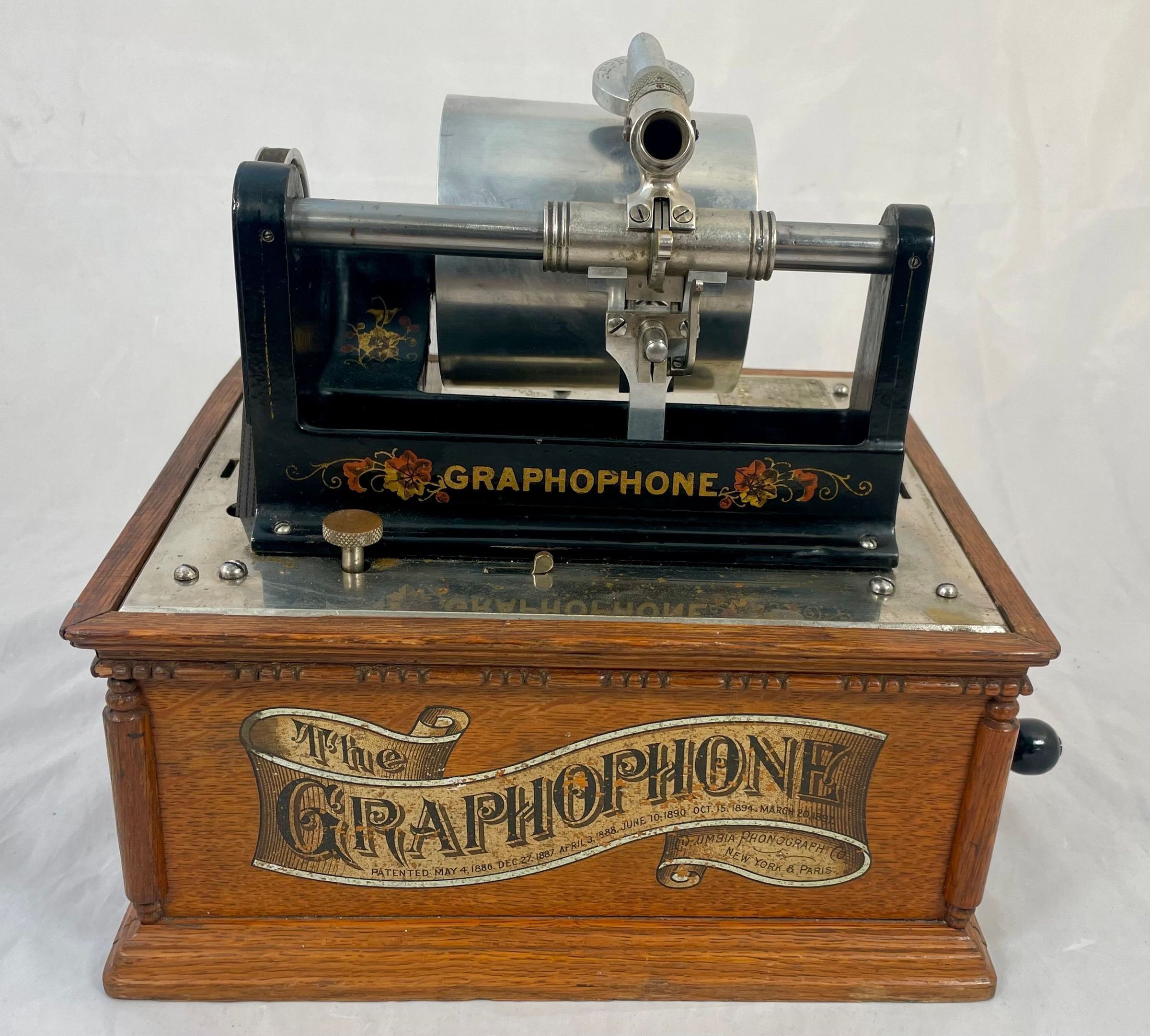
Graphophone Type AG – “Columbia Grand”Entry/Object ID
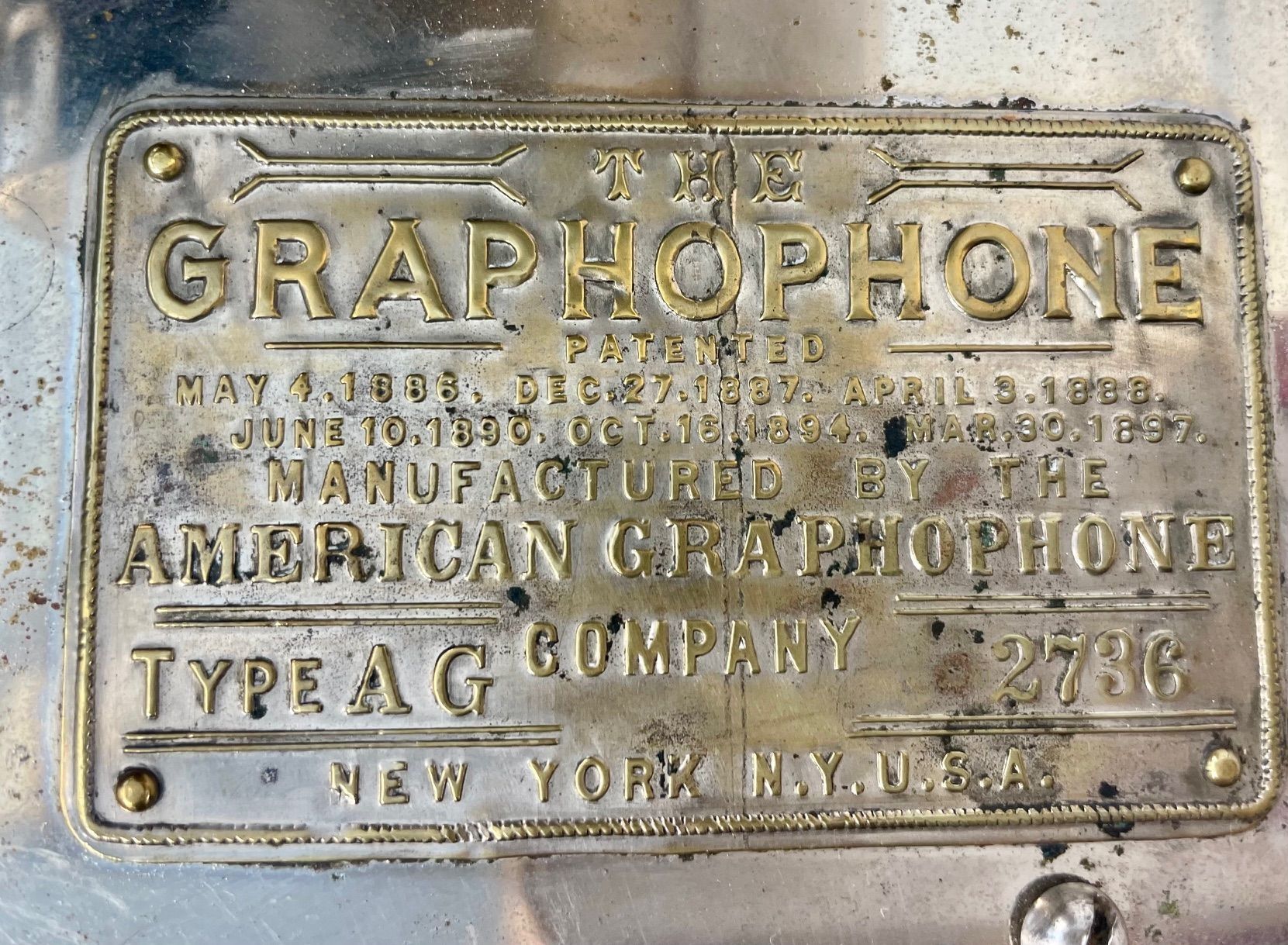
286Description
American Graphophone Company, New York
ca. 1900 | Serial No. 2736 | Price: approx. $75, later $50
Historical Background
The Graphophone Type AG was developed and built around 1900 by the American Graphophone Company in New York. It was a more compact version of the well-known “Home Grand”, but with the same technical ambition: this machine was designed specifically to play the larger Concert (or Grand) cylinders, measuring about 5 inches (12.7 cm) in diameter.
Produced during a transitional period, the AG reflects Columbia’s effort to improve sound quality and playing time by adopting larger cylinder formats. Concert cylinders offered up to 4–5 minutes of performance and noticeably improved volume – but they were costly and fragile. As a result, their commercial success remained limited.
Technical Features
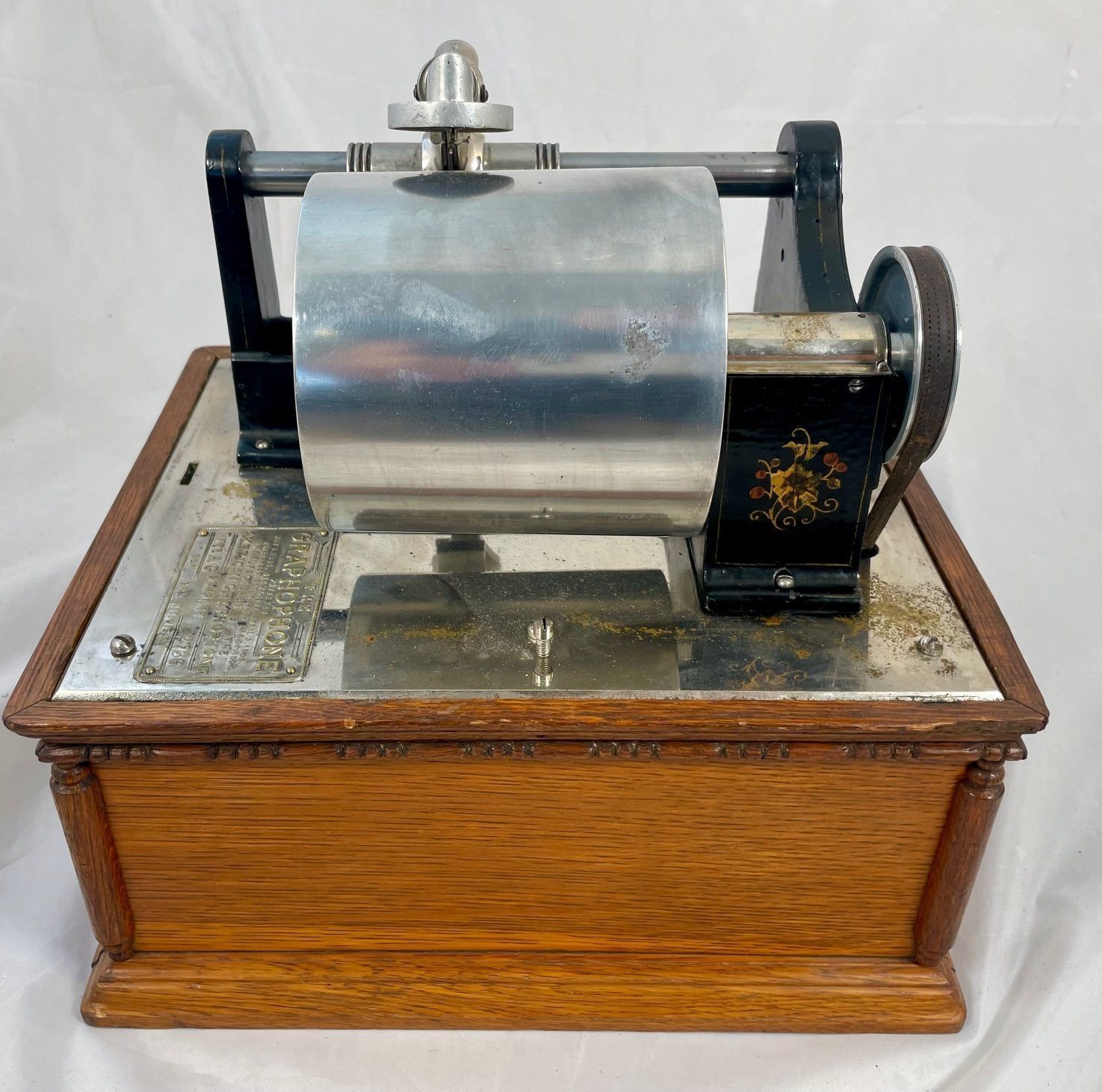
Cylinder format: exclusively designed for Columbia Concert wax cylinders (5" diameter)
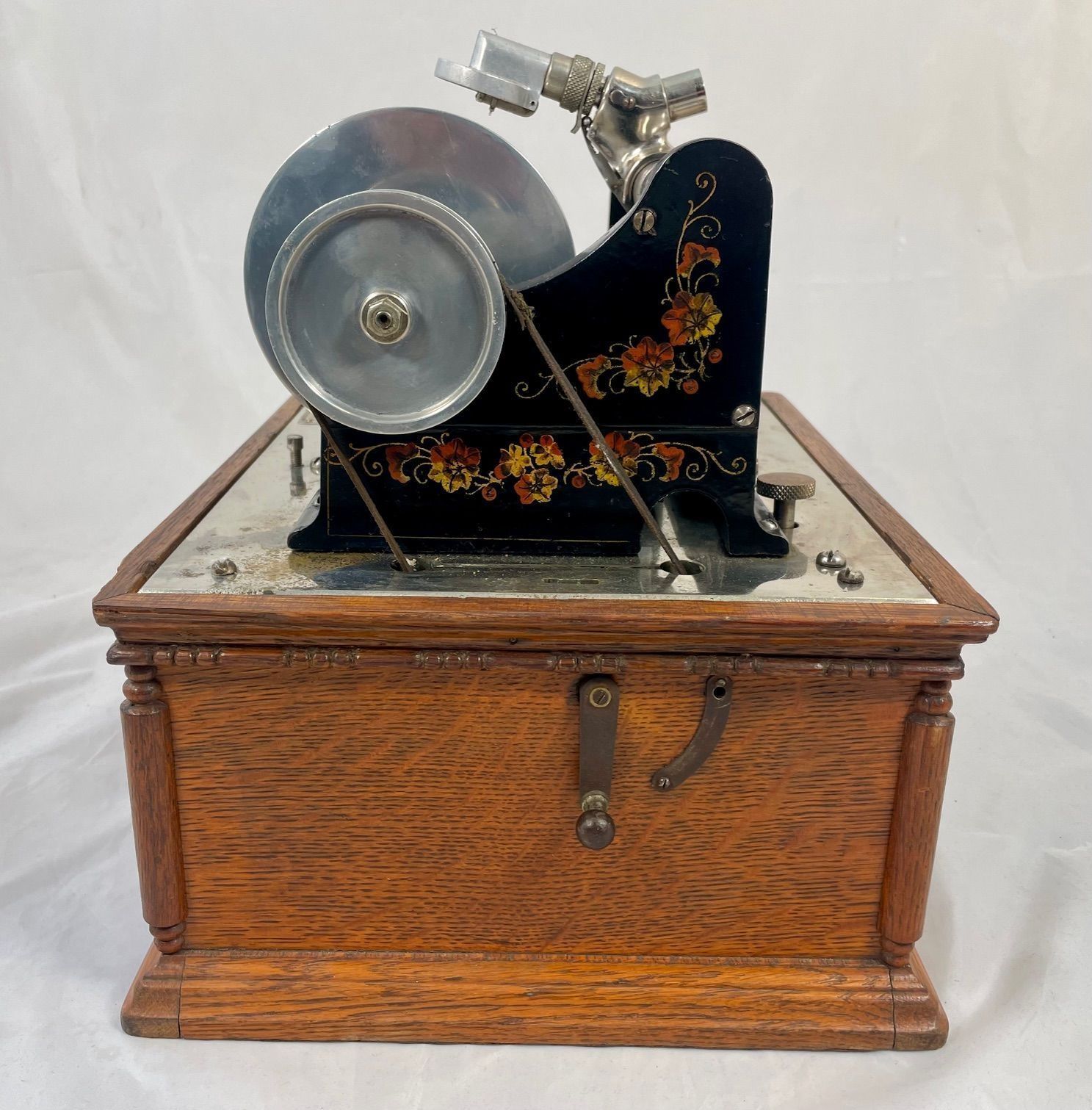
Drive: powerful double-spring motor (“Concert Motor”) with hand crank
Reproducer: typical Columbia Floating Reproducer for Concert cylinders
Chassis: black enameled bedplate with gilt lines and floral decorations
Cabinet: solid oak with decorative front panel
Nameplate: nickel-plated bedplate tag with serial number and patent dates
Significance
The Type AG represents Columbia’s attempt around 1900 to push the phonograph forward technologically and to achieve new levels of sound quality with large-format cylinders. It exemplifies Columbia’s ambitious mid-range class of machines: technically refined, suitable for smaller concert halls and affluent private households, but never a long-term commercial success.
Context in the Edisonium
The specimen on display, serial number 2736, is completely preserved with its original reproducer and crank. It stands as an excellent example of this short but technically significant phase in phonograph development.