Name/Title
Experimental Edison Home Phonograph, Model A – mit Powell-RepeaterEntry/Object ID
386Description
Serial No. H25591 | ca. 1898–1899 | Prototype
Historical Background
This machine is one of only two known examples worldwide. Both are preserved today in the Edisonium (the second carries exhibition number 164).
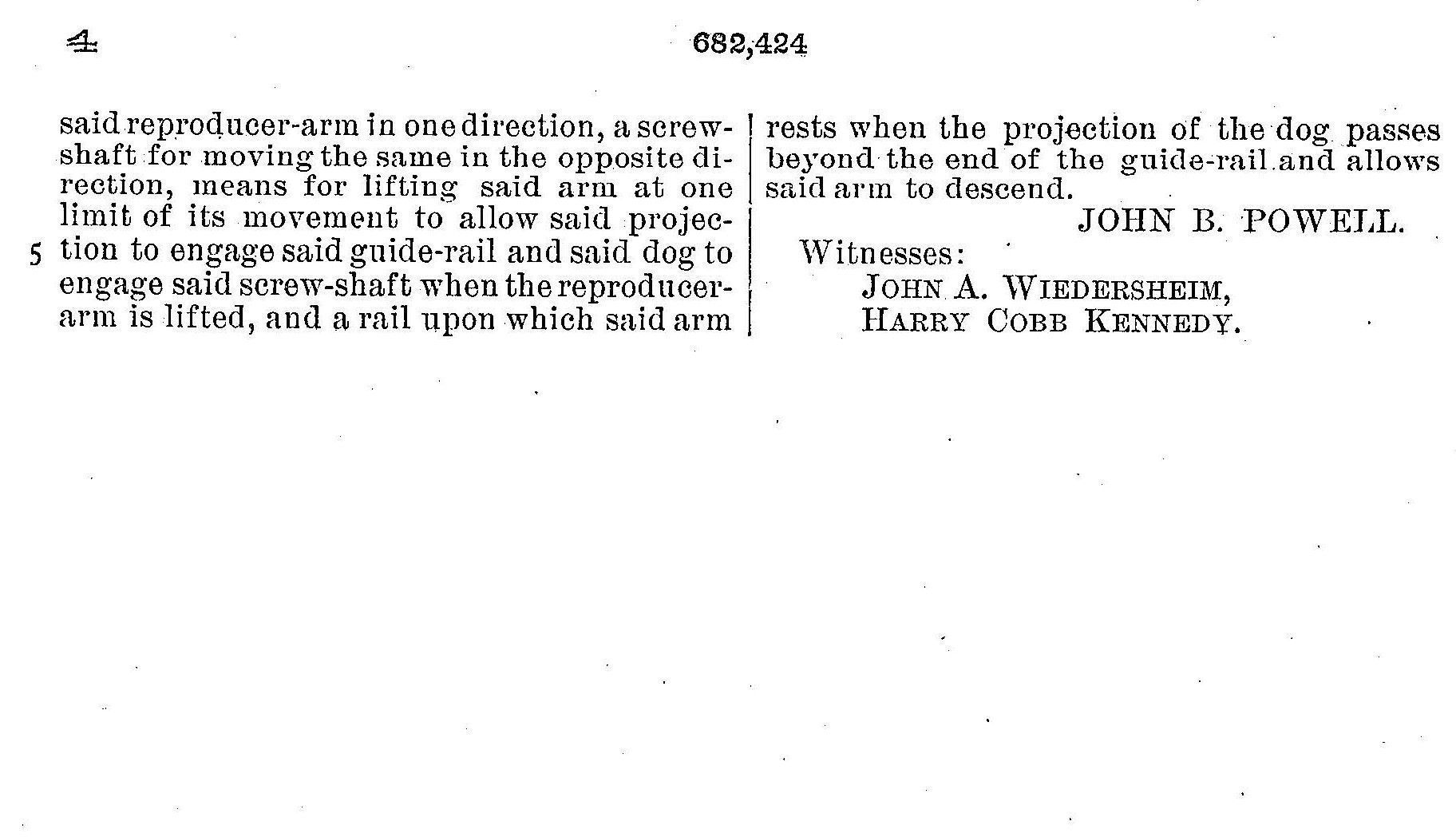
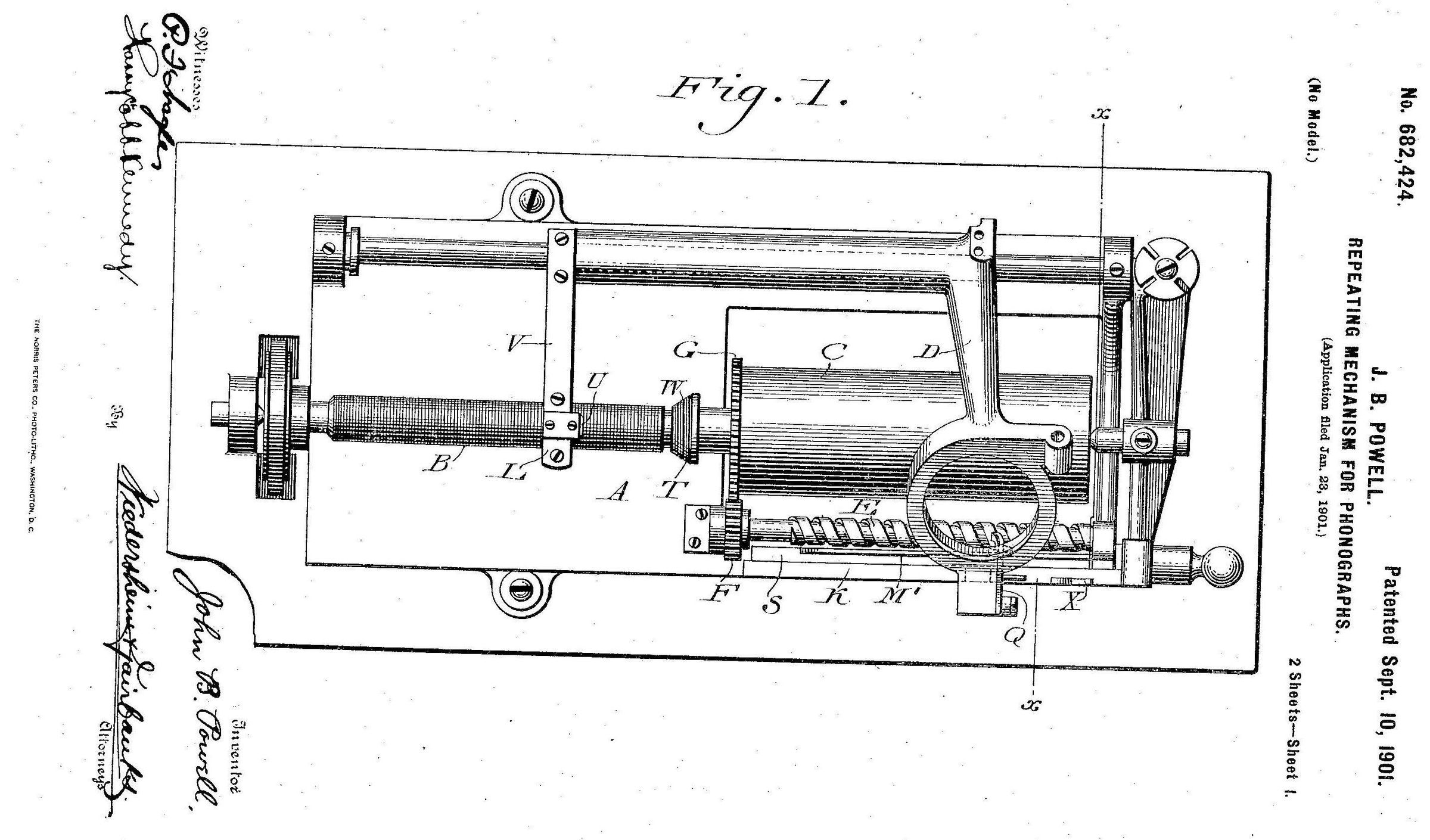
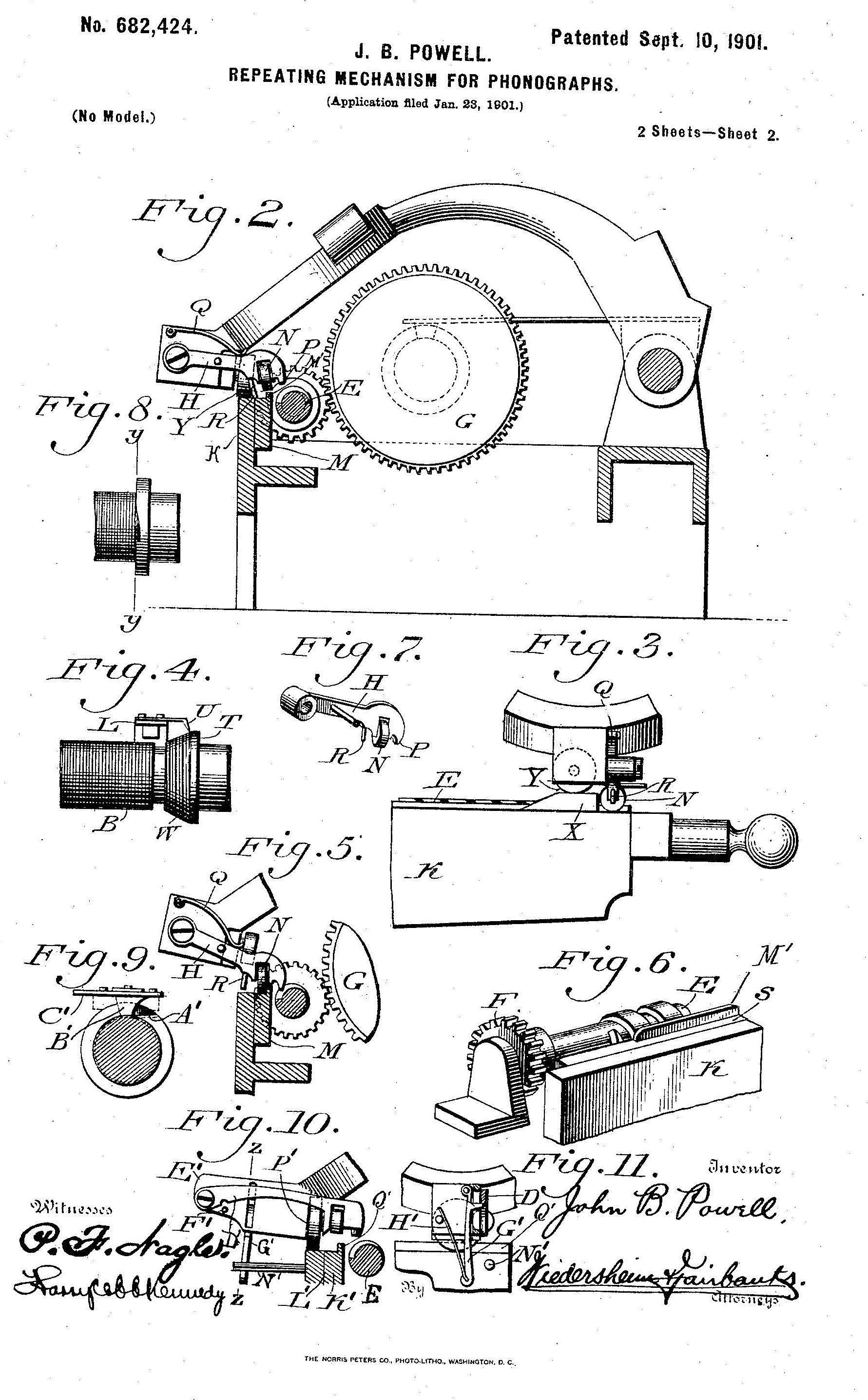
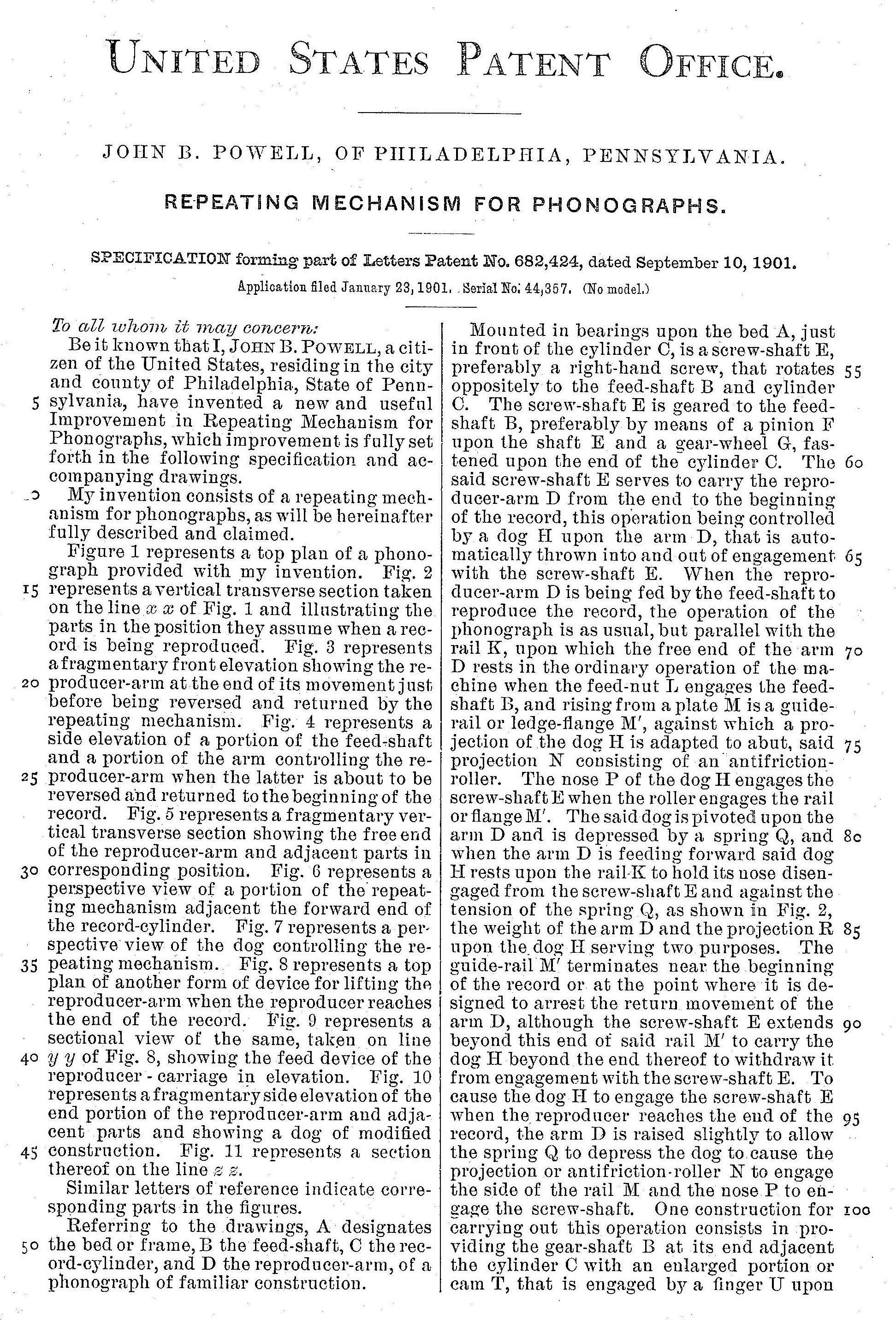
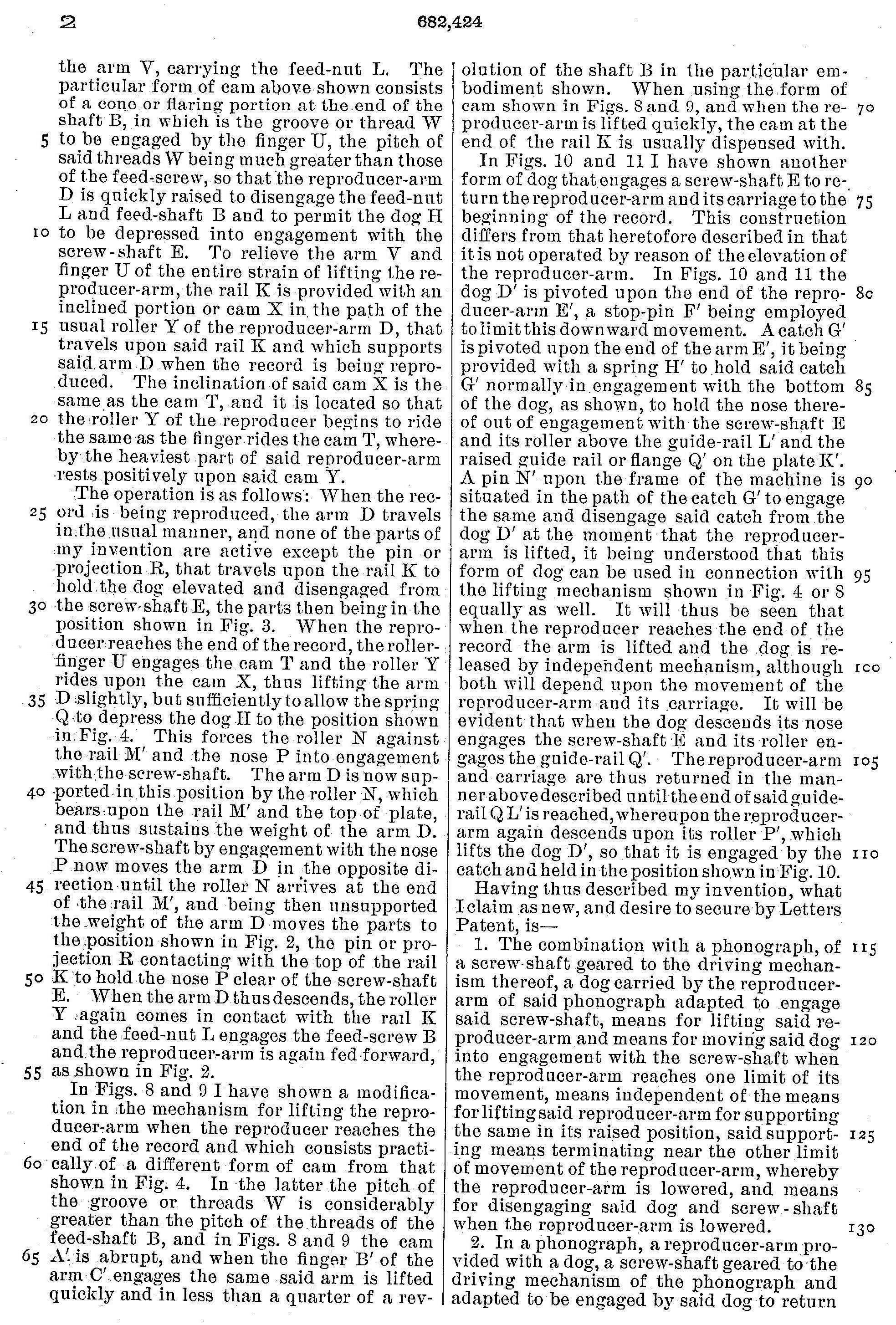
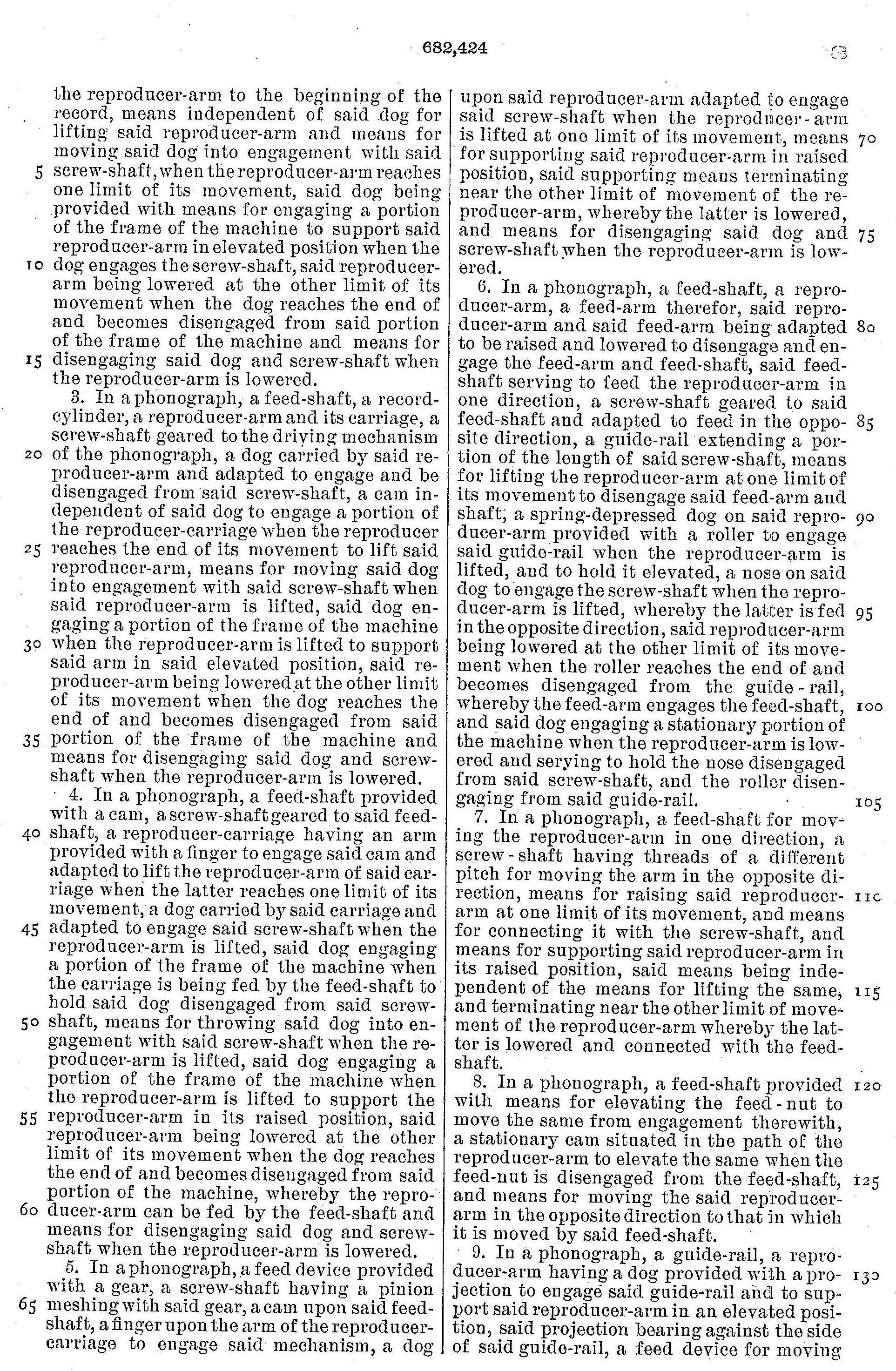
The Welsh-American inventor John Beamish Powell (1828–1911) developed numerous patents for spring motors and phonograph accessories. Most significant was U.S. Patent 682,424 of September 10, 1901 (“Repeating Mechanism for Phonographs”), which allowed a cylinder to be played back automatically in repetition. A corresponding British patent was GB 5778 of May 18, 1901 (“Improvements in Repeating Mechanism for Phonographs”).
Powell had previously worked on powerful spring motors (including U.S. Patents 219,015 [1879], 246,197 [1881], 293,193 [1884], 299,849 [1884], 332,000 [1885], 367,234 [1887], 382,663 [1888], 638,851 [1899]). These developments culminated in the four-spring motor used here, providing the long running time required for a repeating system.
Technical Features
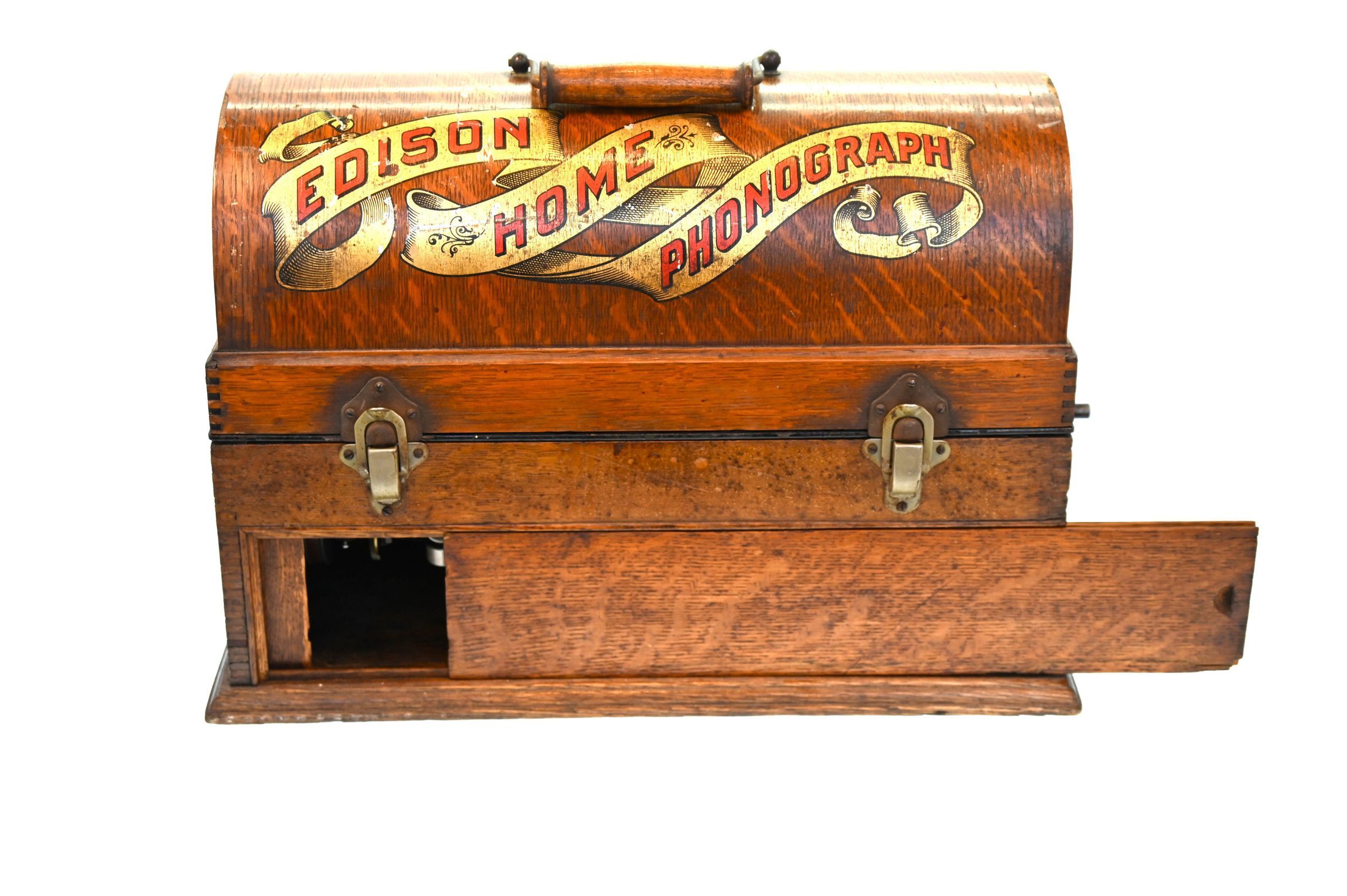
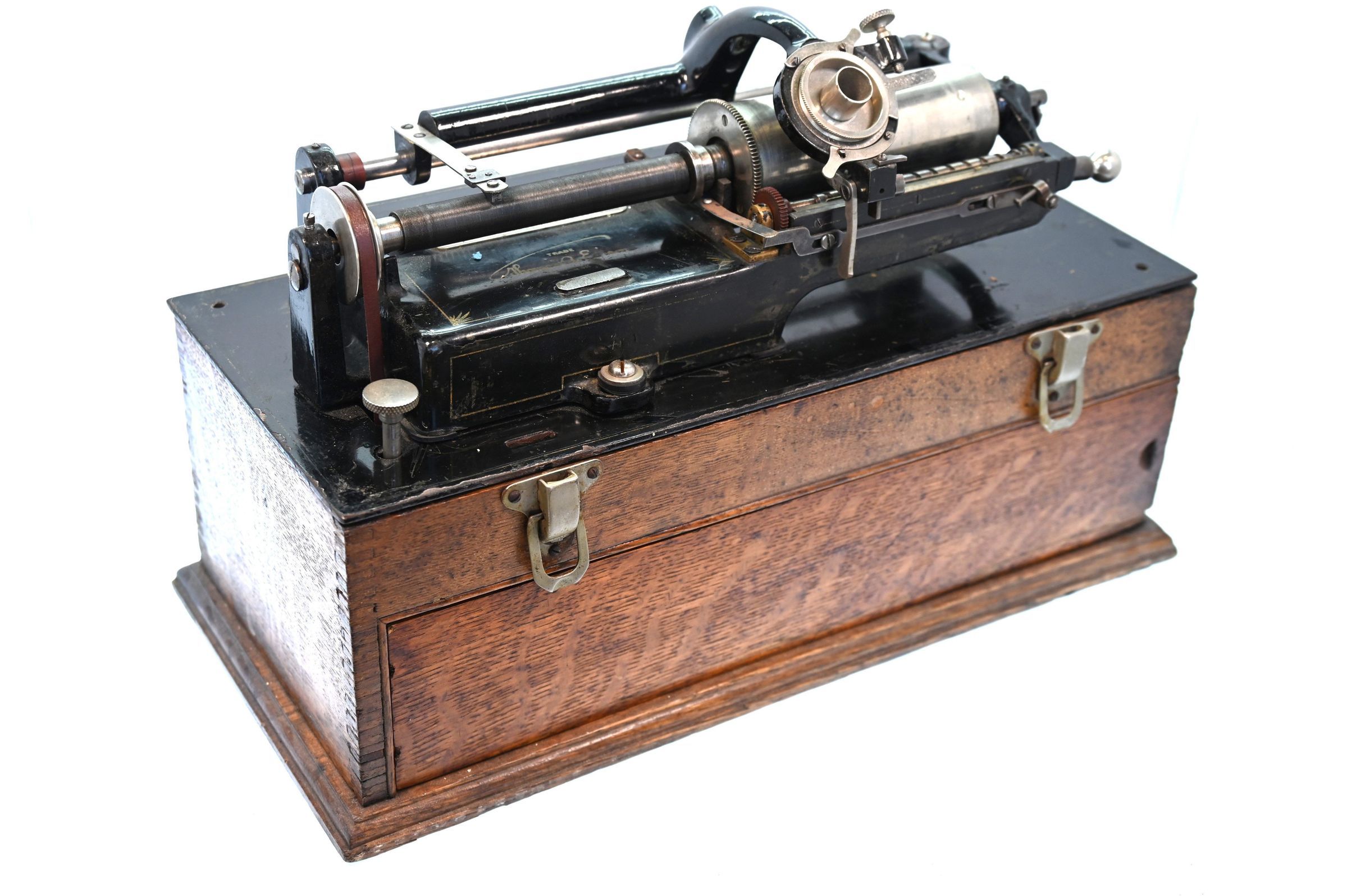
Base machine: Edison Home Phonograph, Model A (“Suitcase Home”)
Serial number: H25591 (ca. 1898/99)
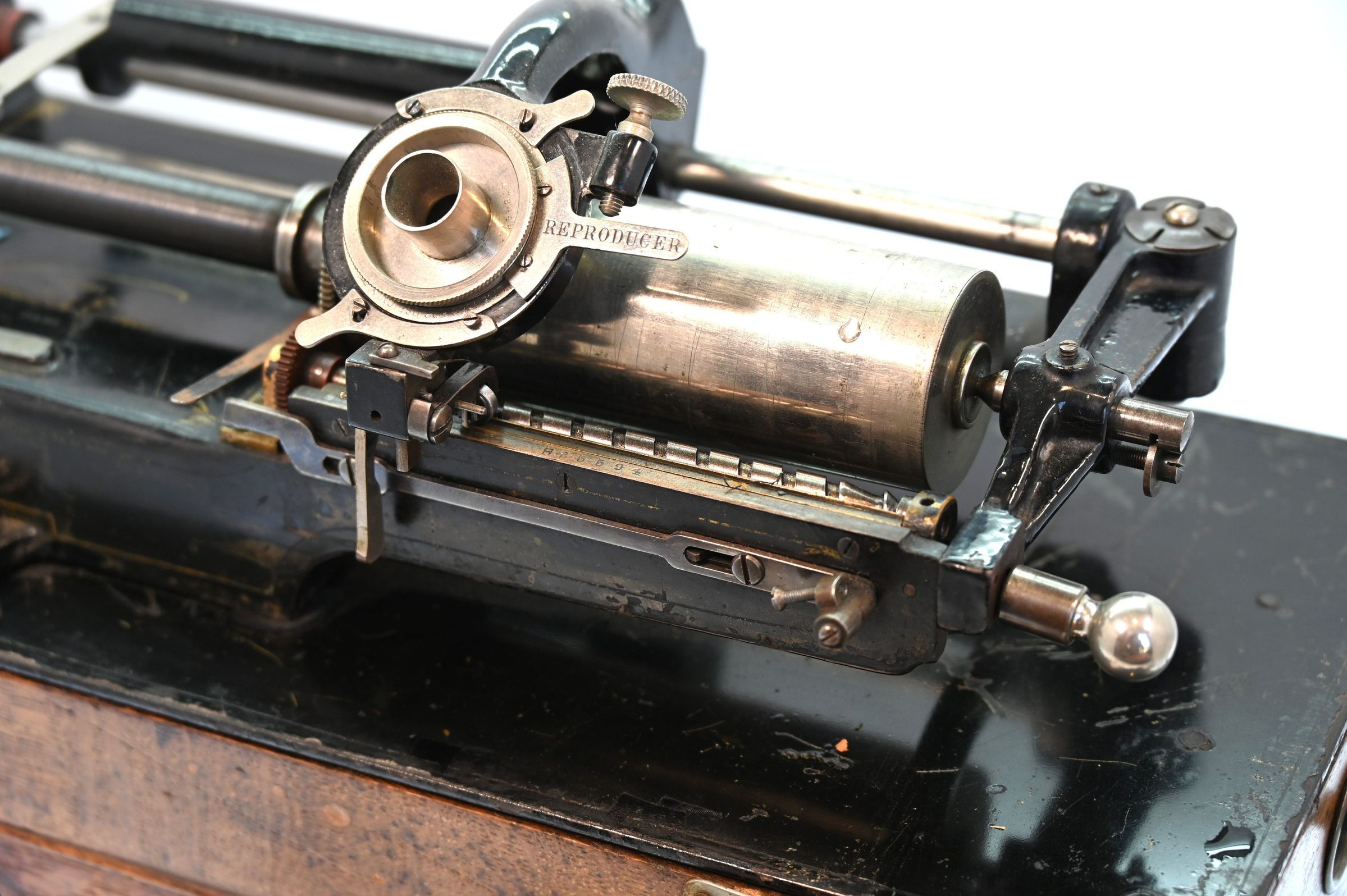
Mandrel: nickel-plated (the sister machine H28572 has a brass mandrel)
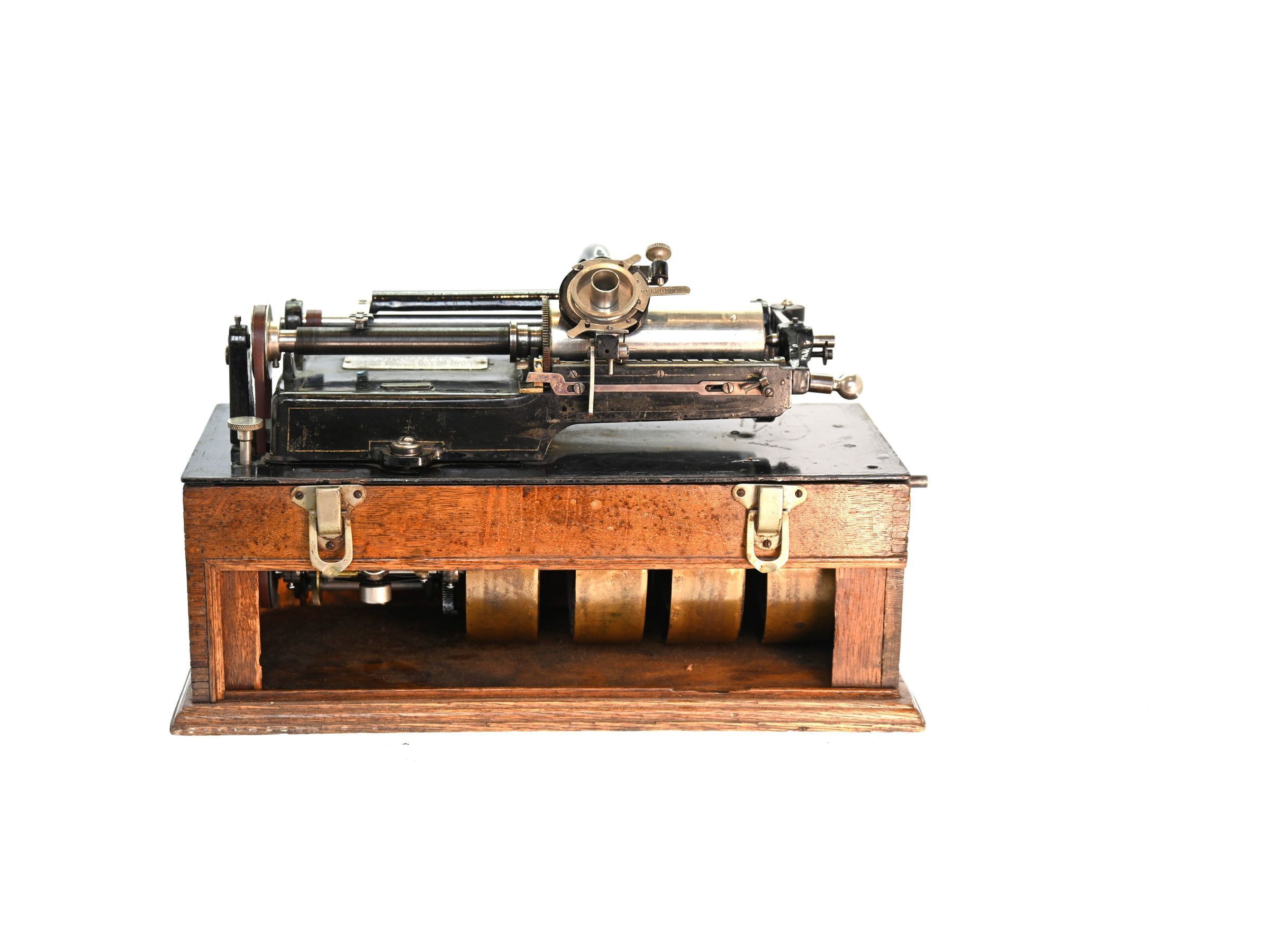
Motor: special four-spring assembly, all barrels in brass → significantly longer running time than a standard Home motor
Repeater: based on U.S. Patent 682,424 – mechanism to lift and return the carriage, enabling automatic replay of the cylinder
Cabinet: suitcase-style Home cabinet with a large inspection window on the front, fitted with a sliding cover
Special feature: considered a later prototype than H28572, as all four spring barrels are of brass construction (rather than mixed “caged” barrels)
Purpose and Use
The Powell Repeater was intended for continuous public demonstration, especially:
in stores and shop windows for advertising messages
at exhibitions and trade fairs for product demonstrations
in any location where a song or announcement needed to be repeated endlessly without constant manual restarting
This made the phonograph an automatic playback system for the first time – a clear precursor of later jukeboxes and endless-loop devices.
Significance
This machine is a unique rarity: only two Edison Home Phonographs fitted with Powell’s repeater are known to exist – both preserved in the Edisonium. They document the experimental efforts around 1900 to enhance the phonograph with new convenience features such as automatic repeat playback.
The Powell Repeater never reached the market – likely due to mechanical complexity and the rapid rise of disc records. This makes the surviving prototypes of inestimable historical value.