Name/Title
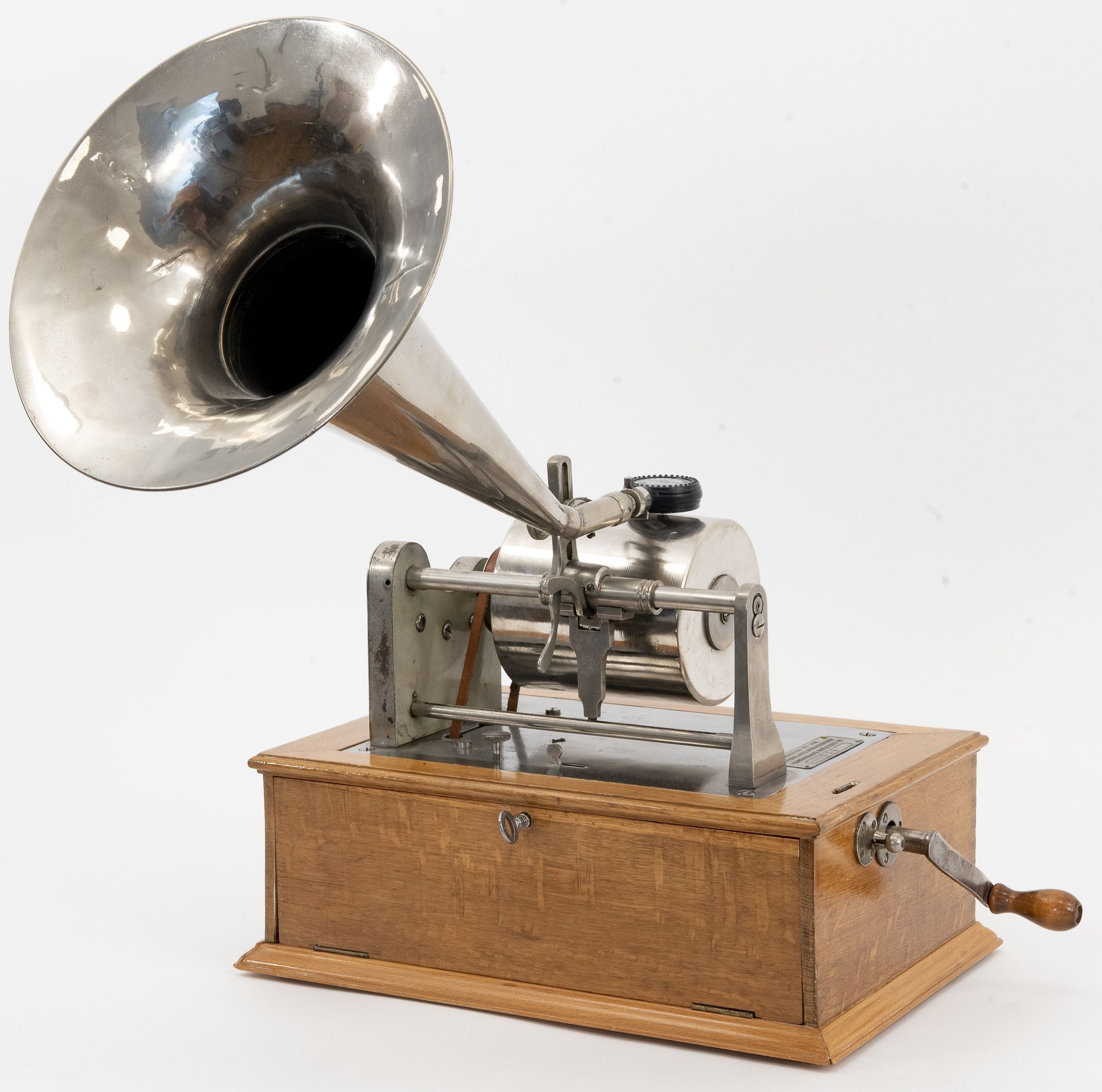
Allgemeine Phonographen Gesellschaft Krefeld – “Model 1900”Entry/Object ID
218Description
ca. 1900 | Serial No. 364 | Licensed for Edison-Bell
Historical Background
The Allgemeine Phonographen Gesellschaft m. b. H. (APG) in Krefeld was one of the very first phonograph manufacturers in Germany. As early as 1893, the company filed patents and, despite strong domestic and international competition, managed to hold its ground through innovative designs. By 1901, APG employed around 150 workers, making it the largest company in the field within the German Empire.
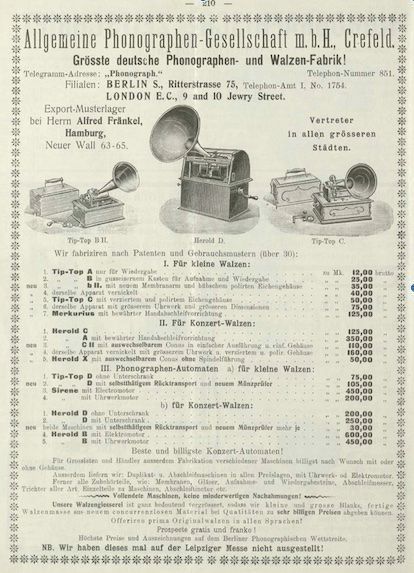
APG marketed its own brand “Herold”, but also supplied instruments to the British company Edison-Bell, as confirmed by the license plaque on this machine. In addition to phonographs, APG also produced duplicating machines for mechanically copying cylinders – at the time the only method of reproduction, until the gramophone disc finally gained dominance. By 1904, the company went bankrupt.
Technology and Features
Model 1900 with license plaque “Licensed by the Edison-Bell Consolidated Phonograph Company Ld.”, serial number 364
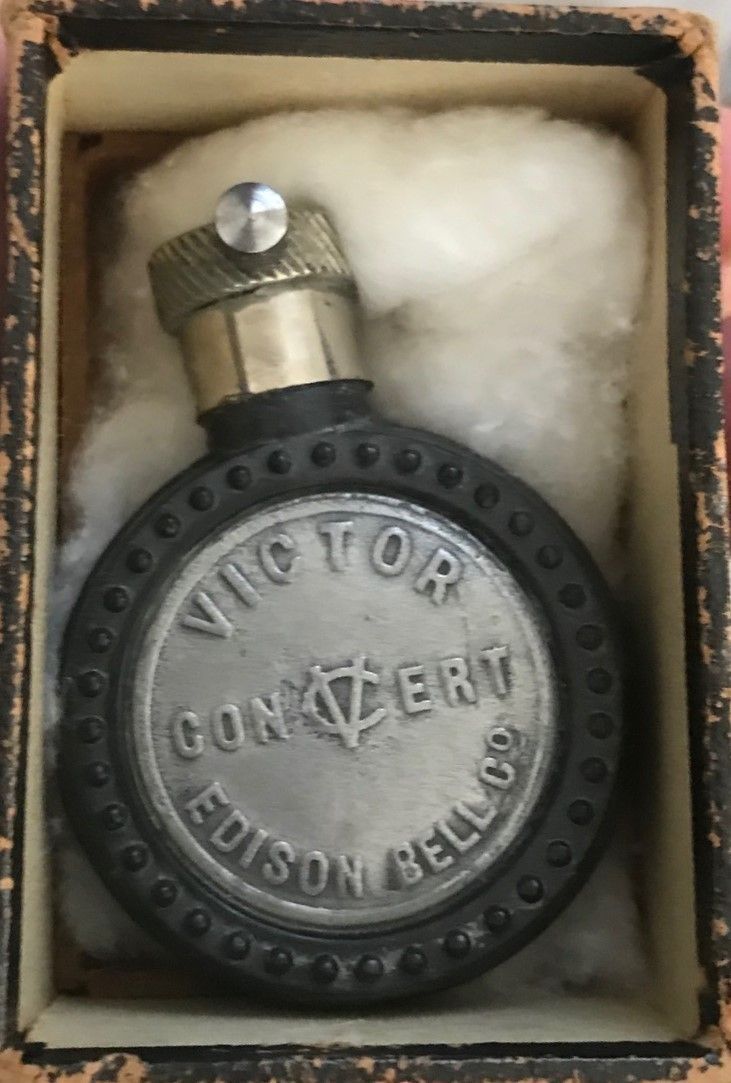
Reproducer: “Victor Concert” by Edison-Bell, licensed and branded
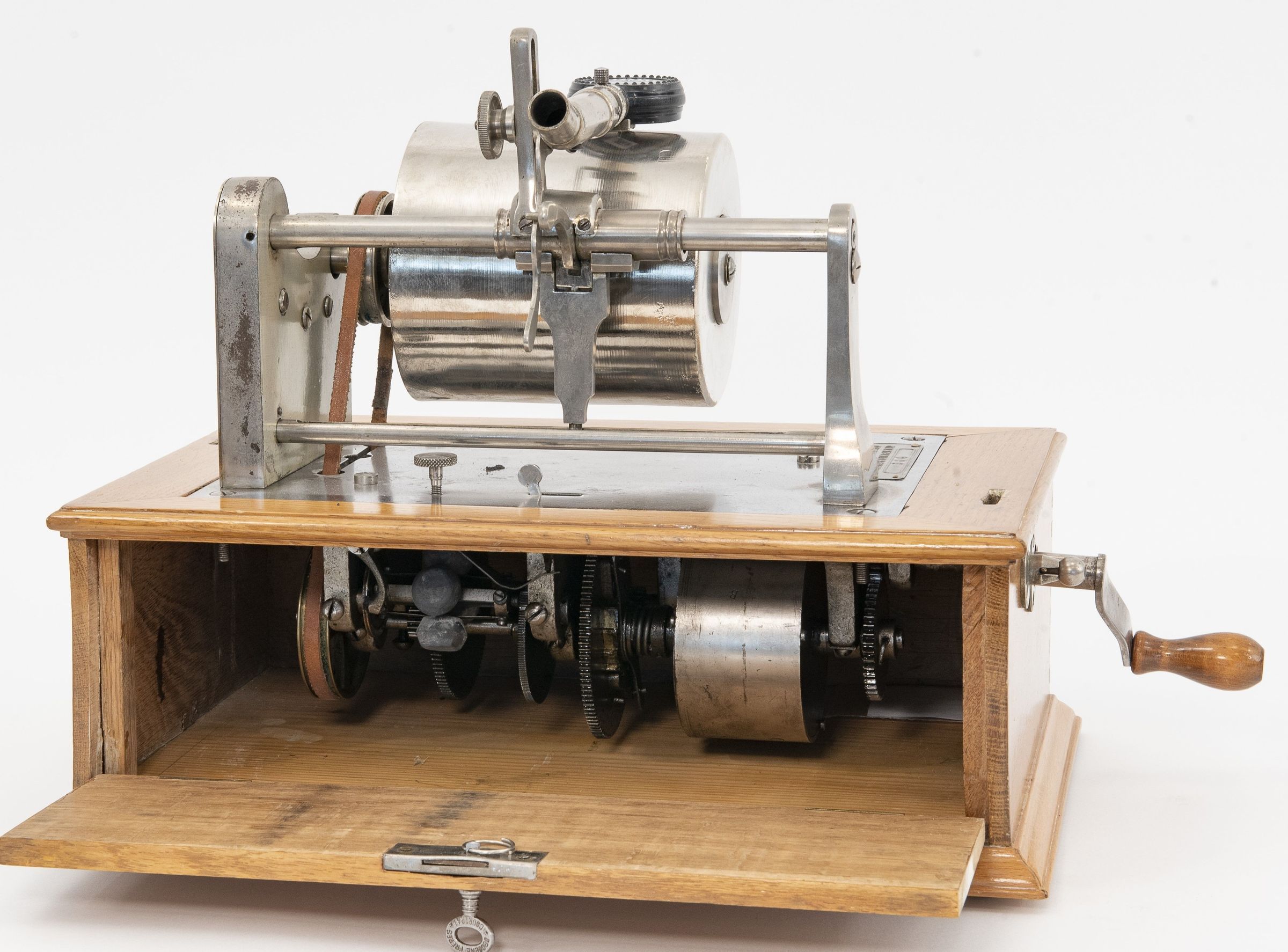
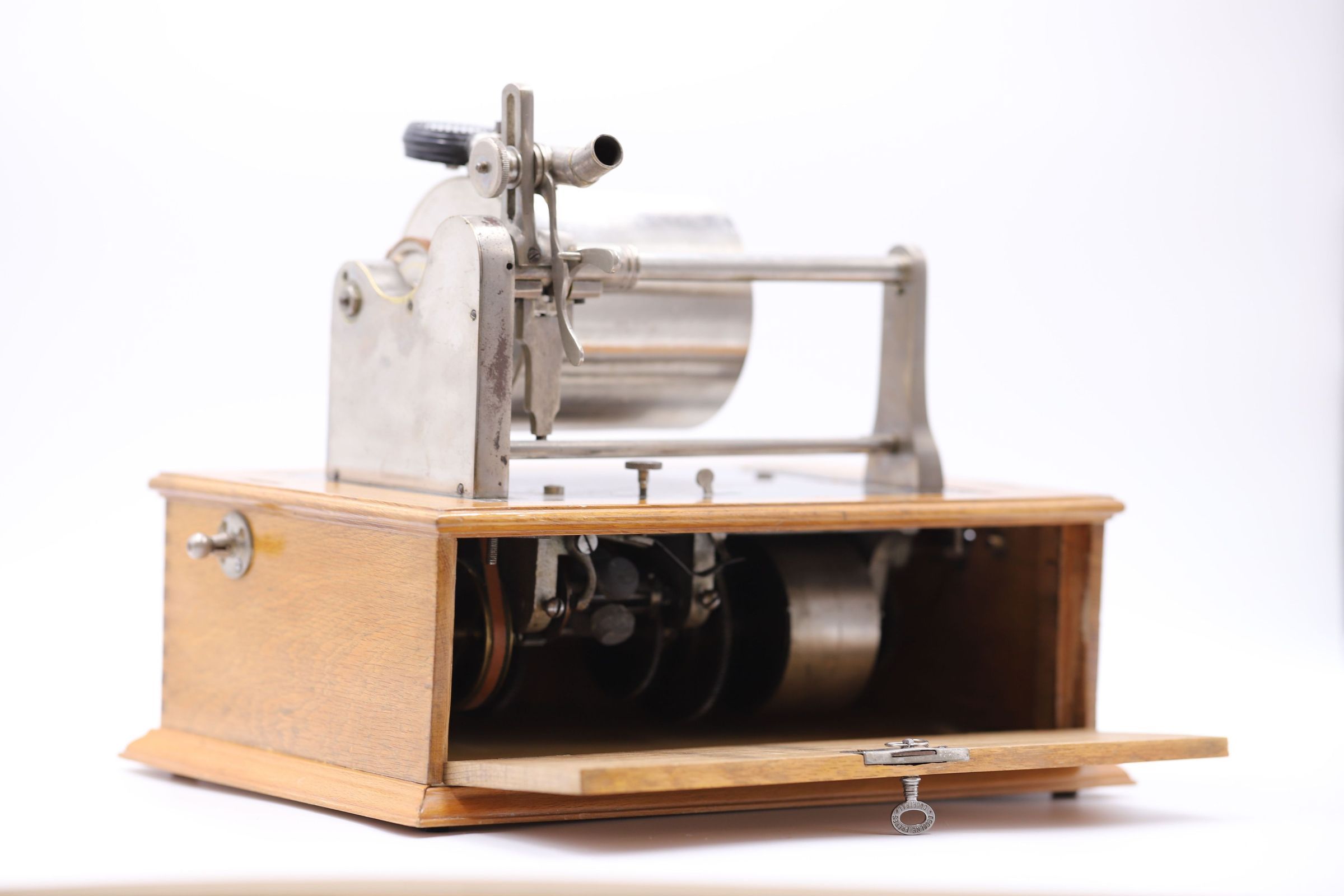
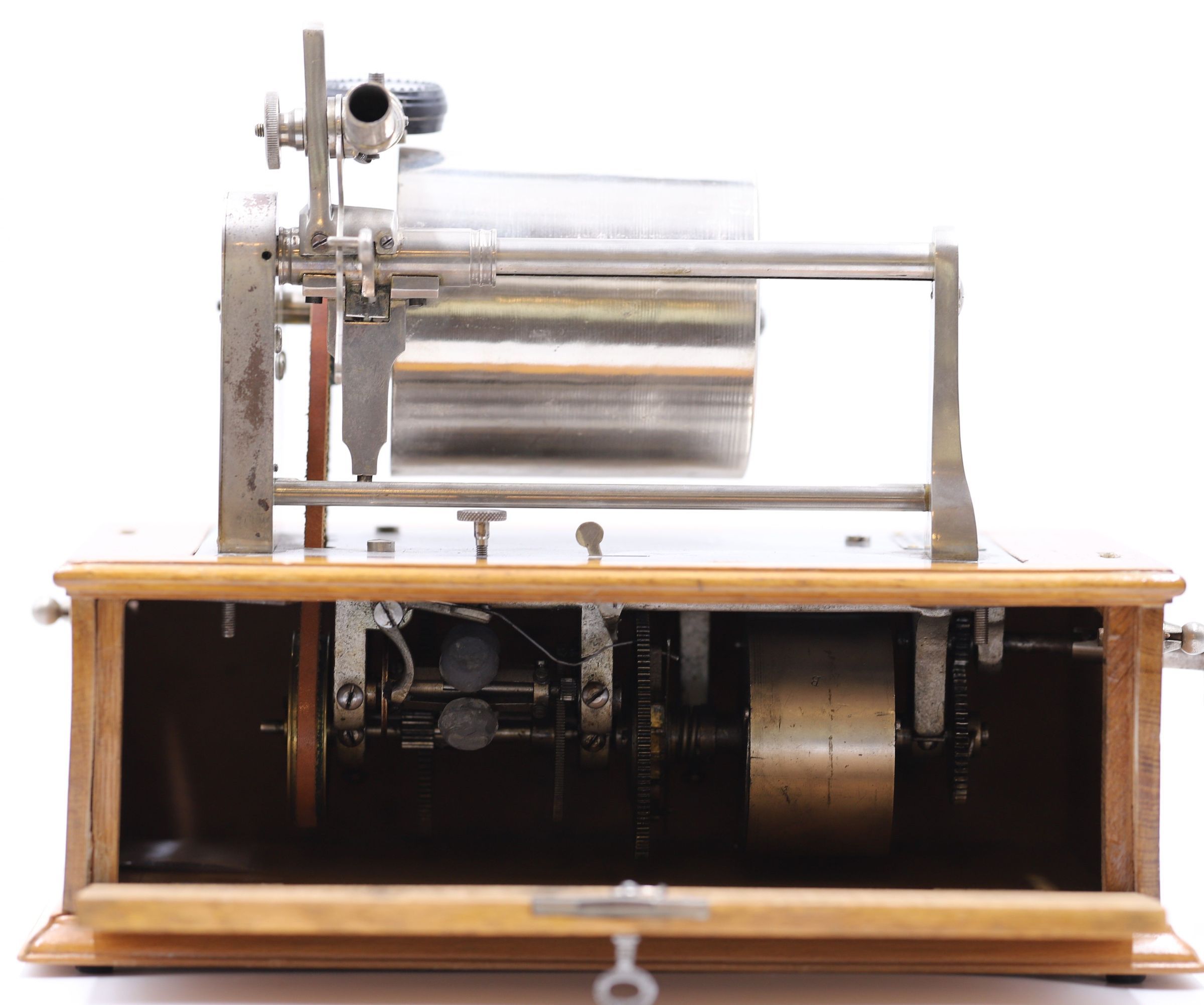
Drive: clockwork mechanism with feedscrew guidance
Cylinder carriage: interchangeable – allowing playback of two cylinder sizes
Cabinet: solid wood construction, robust and designed for everyday use
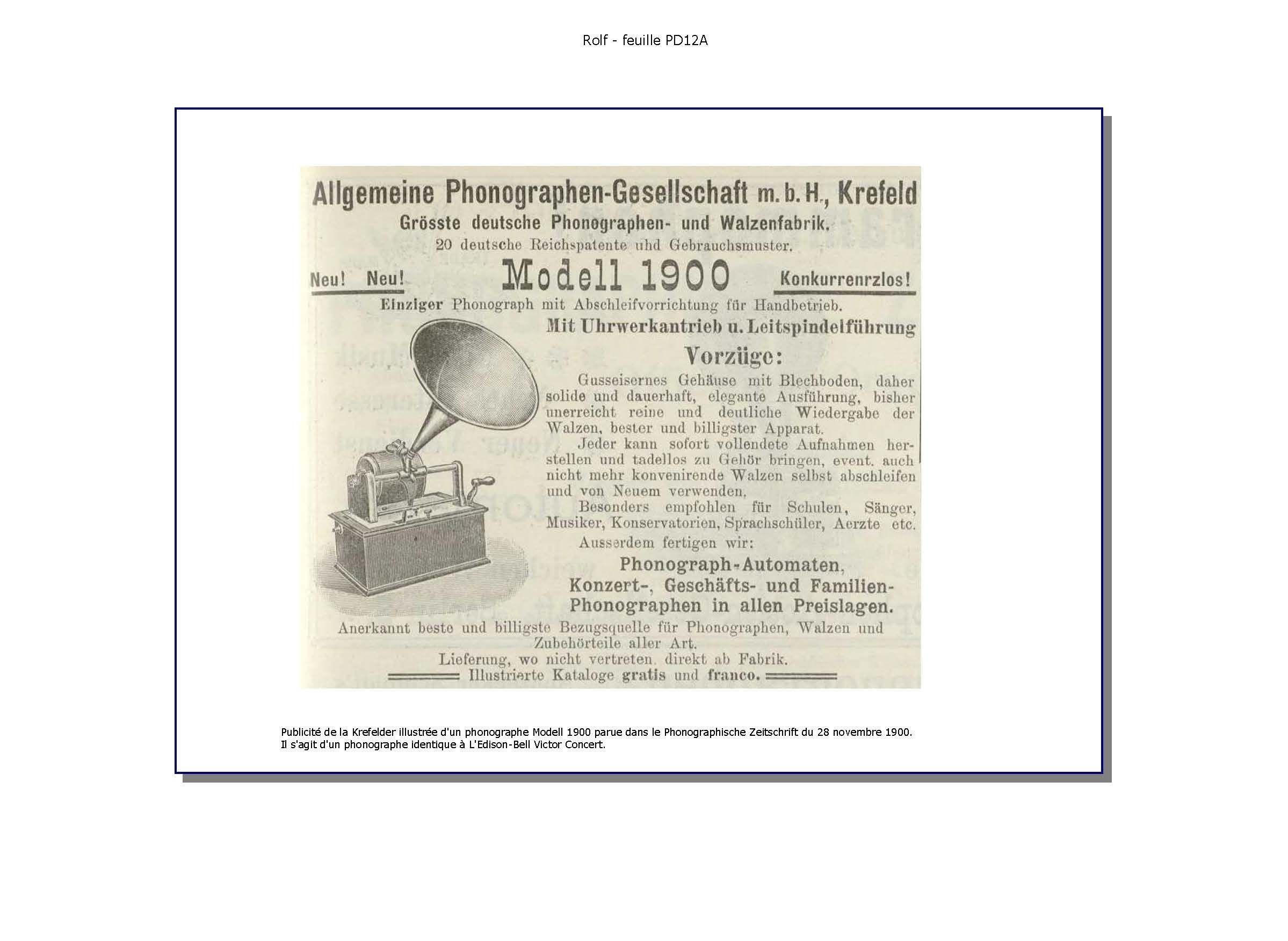
Contemporary Advertisement (APG, Krefeld, 1900)
The promotional material emphasized:
Cast-iron frame with tin-plated base – “solid and durable”
“Unsurpassed pure and clear reproduction of cylinders”
Ability to shave and reuse cylinders for new recordings
Particularly recommended for schools, musicians, conservatories, language students, and doctors
Significance and Rarity
The Model 1900 is a remarkable example of German phonograph production at the turn of the century. It reflects both APG’s technical ambitions and its close ties to international markets (Edison-Bell).
The machine on display, with its early serial number 364, is a rare survivor of this short-lived but historically important German production line.