Name/Title
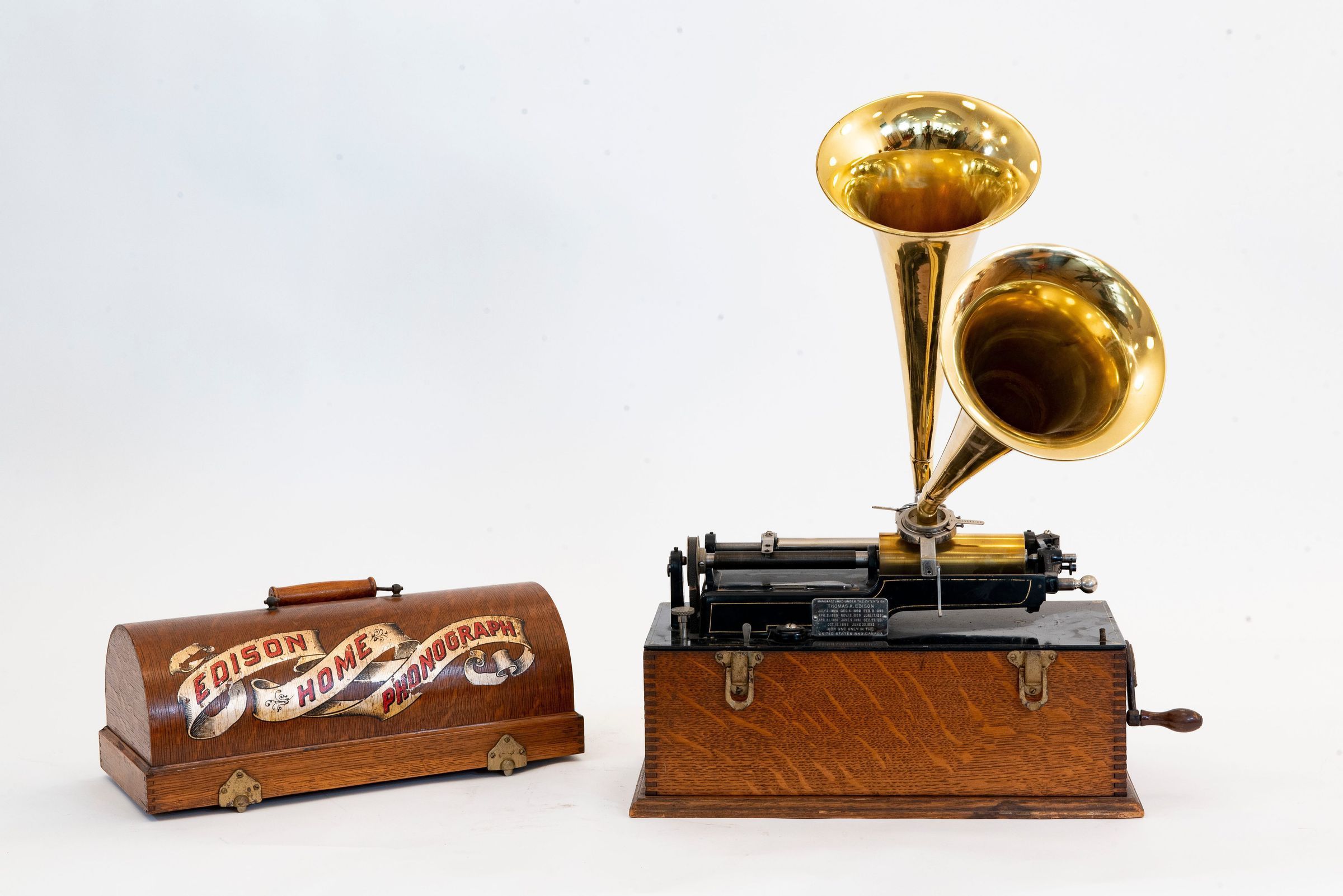
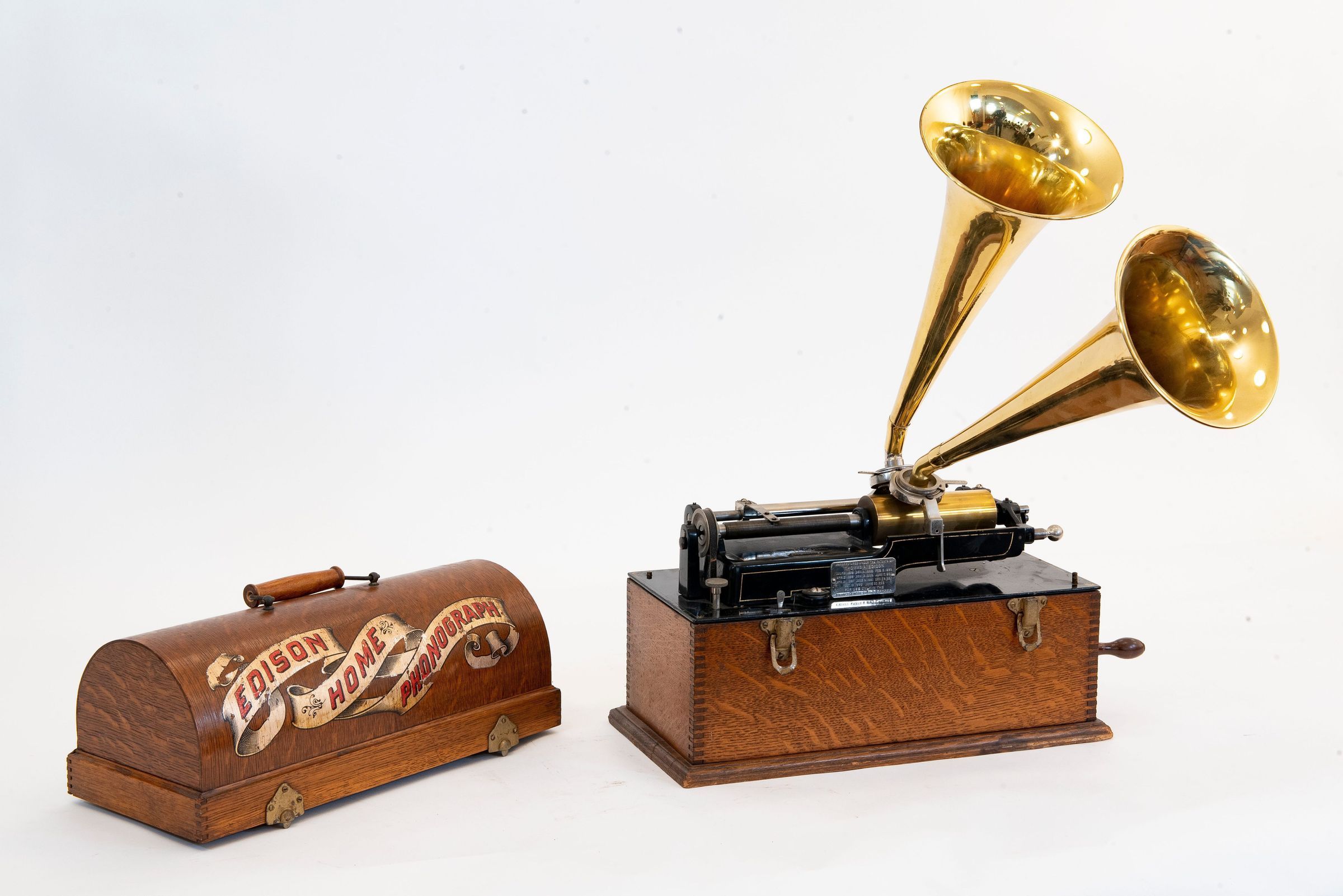
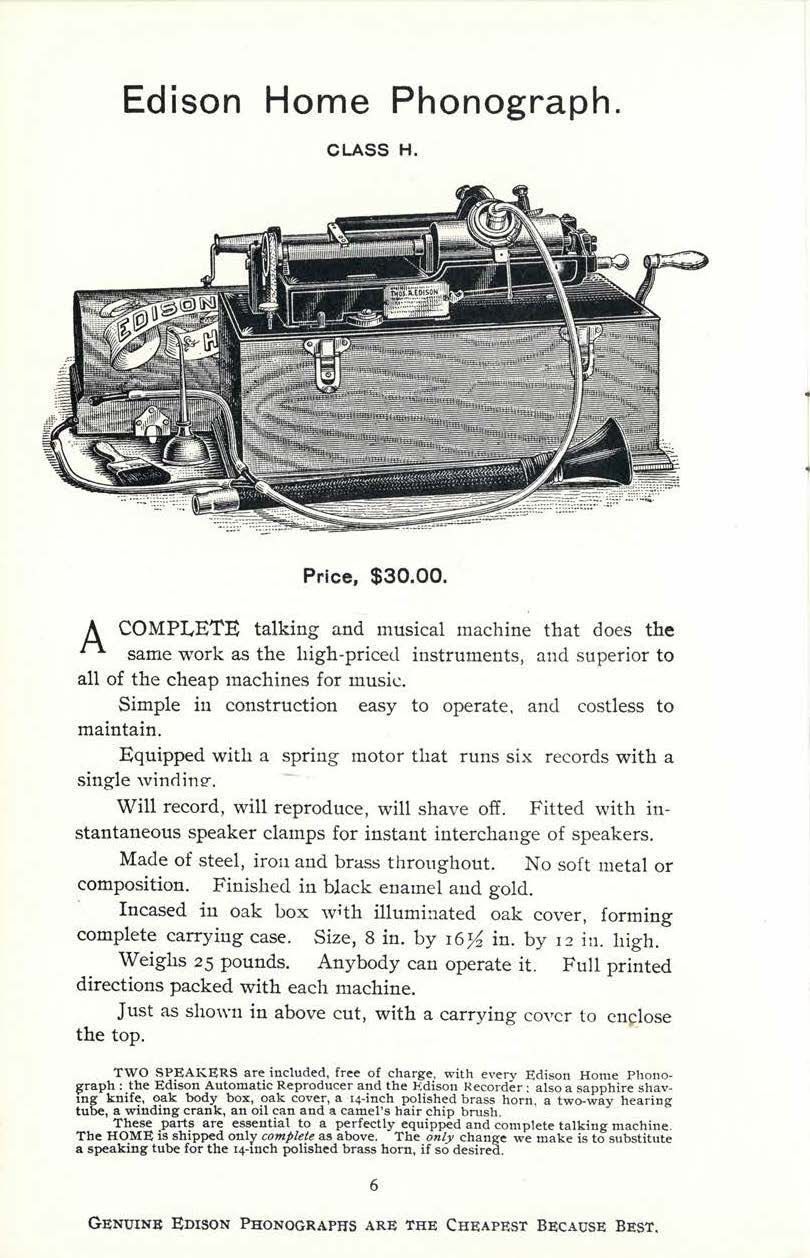
Edison "Home" Phonograph with Polyphone AttachmentEntry/Object ID
260Description
(USA, ca. 1899–1901). Two Reproducers – One Sound Concept
This rare phonograph system combines an Edison "Suitcase"-style Home model with the legendary Polyphone attachment, invented around 1898 by Leon F. Douglass. The goal was to achieve increased volume when playing brown wax cylinders by using two sound reproducers simultaneously.
Patent:
Leon Douglass applied for his invention on December 6, 1898. The corresponding U.S. Patent was granted under the number US No. 638,567 on December 12, 1899, Title: “Sound Reproducing Apparatus”
Technology and Concept:
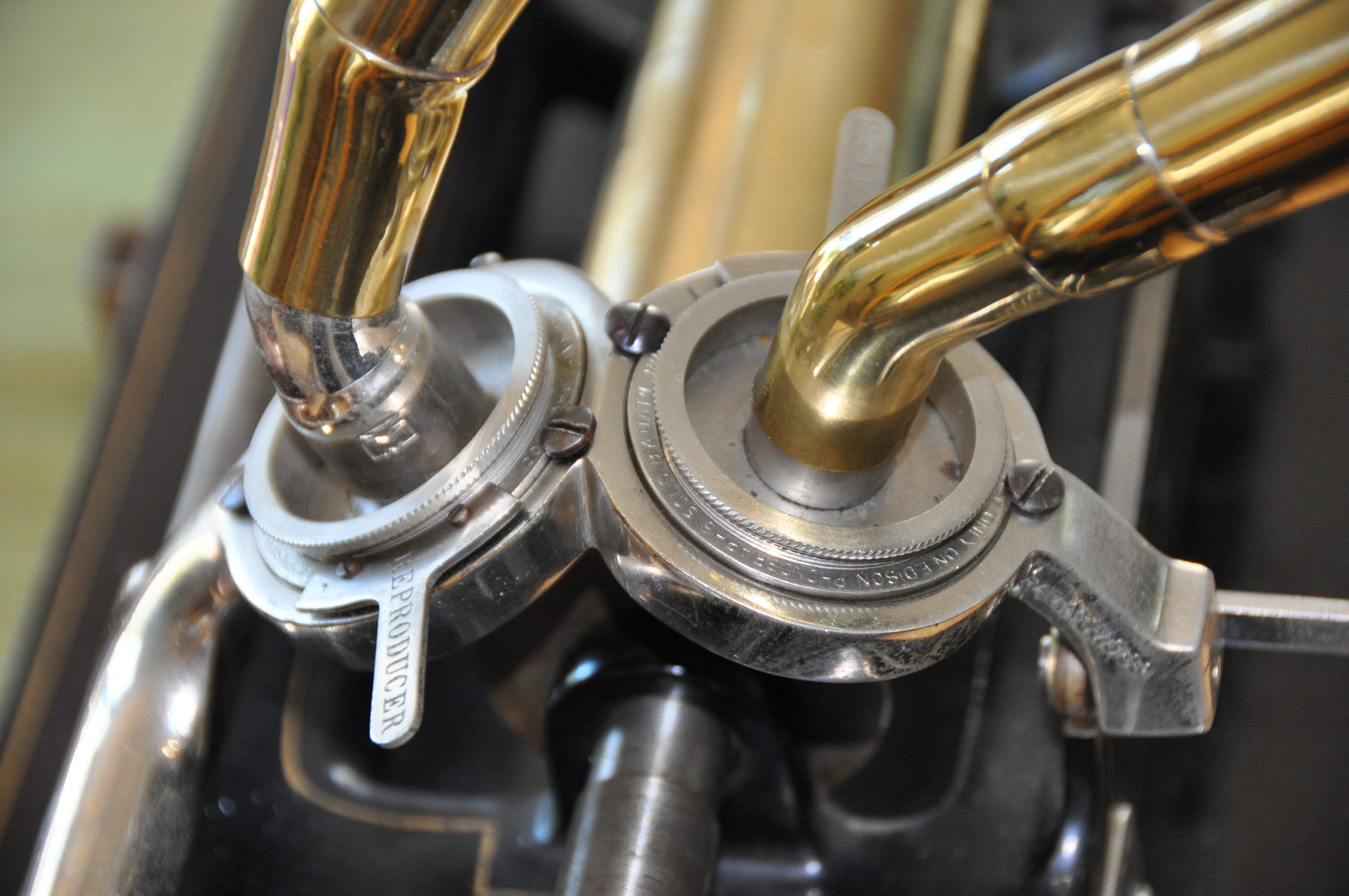
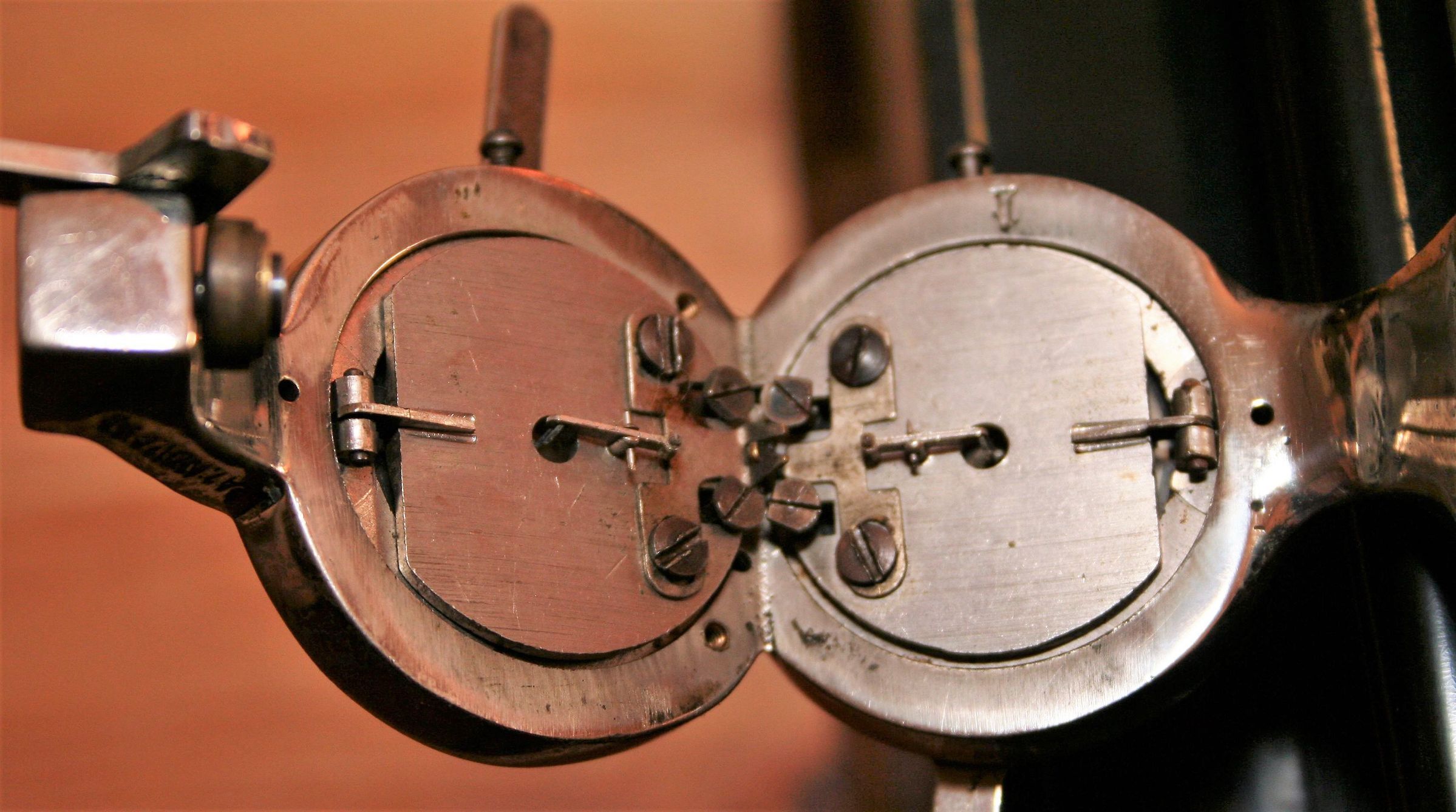
Two reproducers ("Automatic Speakers" by Edison), mounted in precise synchronization.
Both styli run simultaneously in the same groove without interfering with each other – a novelty at the time.
The effect: Doubling the diaphragm surface → significantly increased volume when using the relatively quiet wax cylinders of the 1890s.
The Polyphone was mounted using a special carriage system and could be easily added to an existing Edison Home phonograph.
Marketing:
The system was distributed by the Talking Machine Company of Chicago.
Price for the add-on kit: approximately $12–$15.
Complete set (Edison Home + Polyphone + 2 horns + oil can + chip brush): around $35.
Sound evolution and market context:
With the introduction of the louder black wax cylinders (around 1902), demand for the Polyphone dropped rapidly. Production soon ceased, which is why today only a few original units survive – especially in this full configuration with two original brass horns.
Significance in the Edisonium Mariazell:
The example on display here is a particularly well-preserved original featuring a complete Polyphone mechanism, two Edison Automatic Speakers, brass horns, and accessories. It represents an extraordinary early attempt to mechanically amplify sound – long before the advent of electrical amplification.