Name/Title
Autophone-ConcertEntry/Object ID
365Description
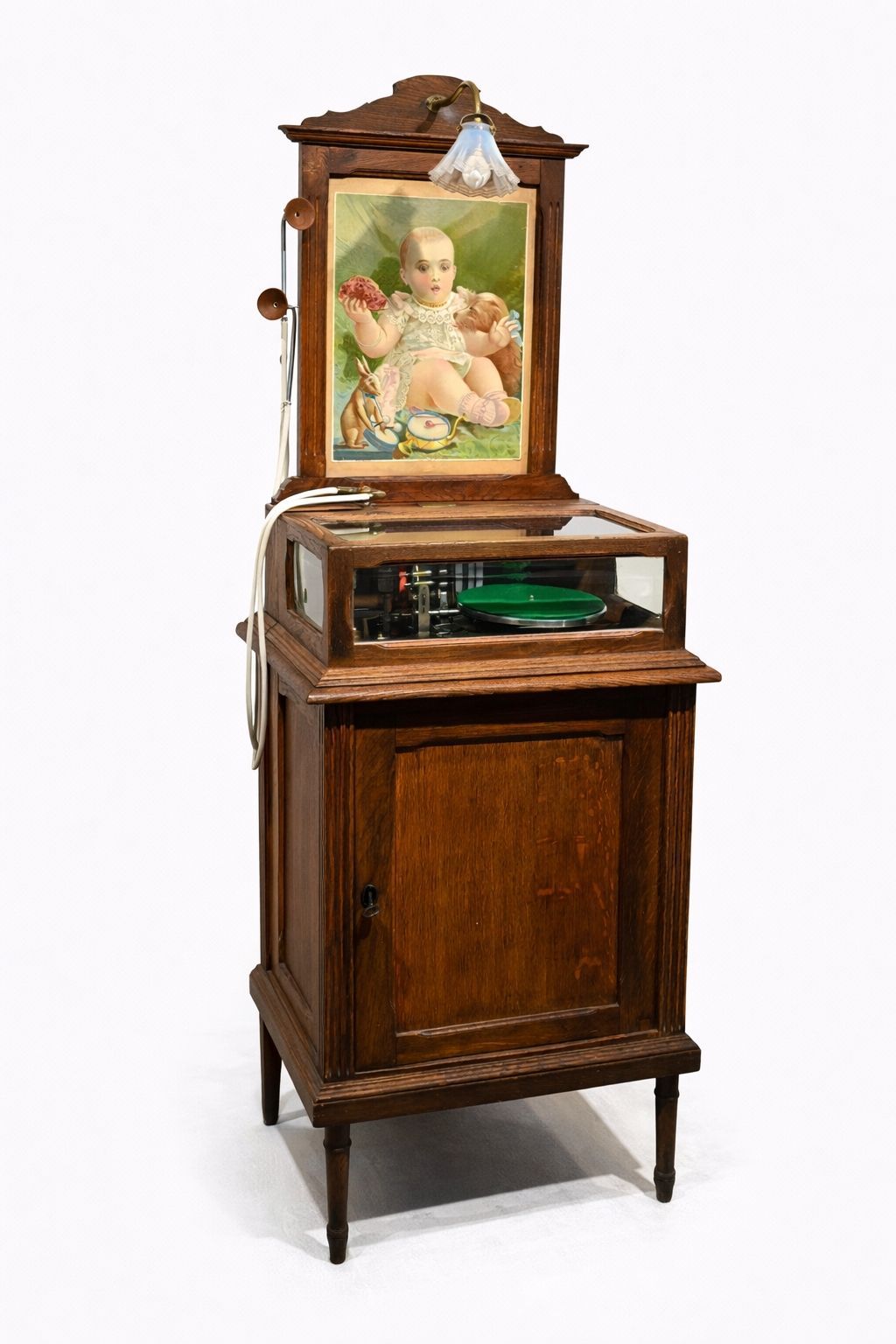
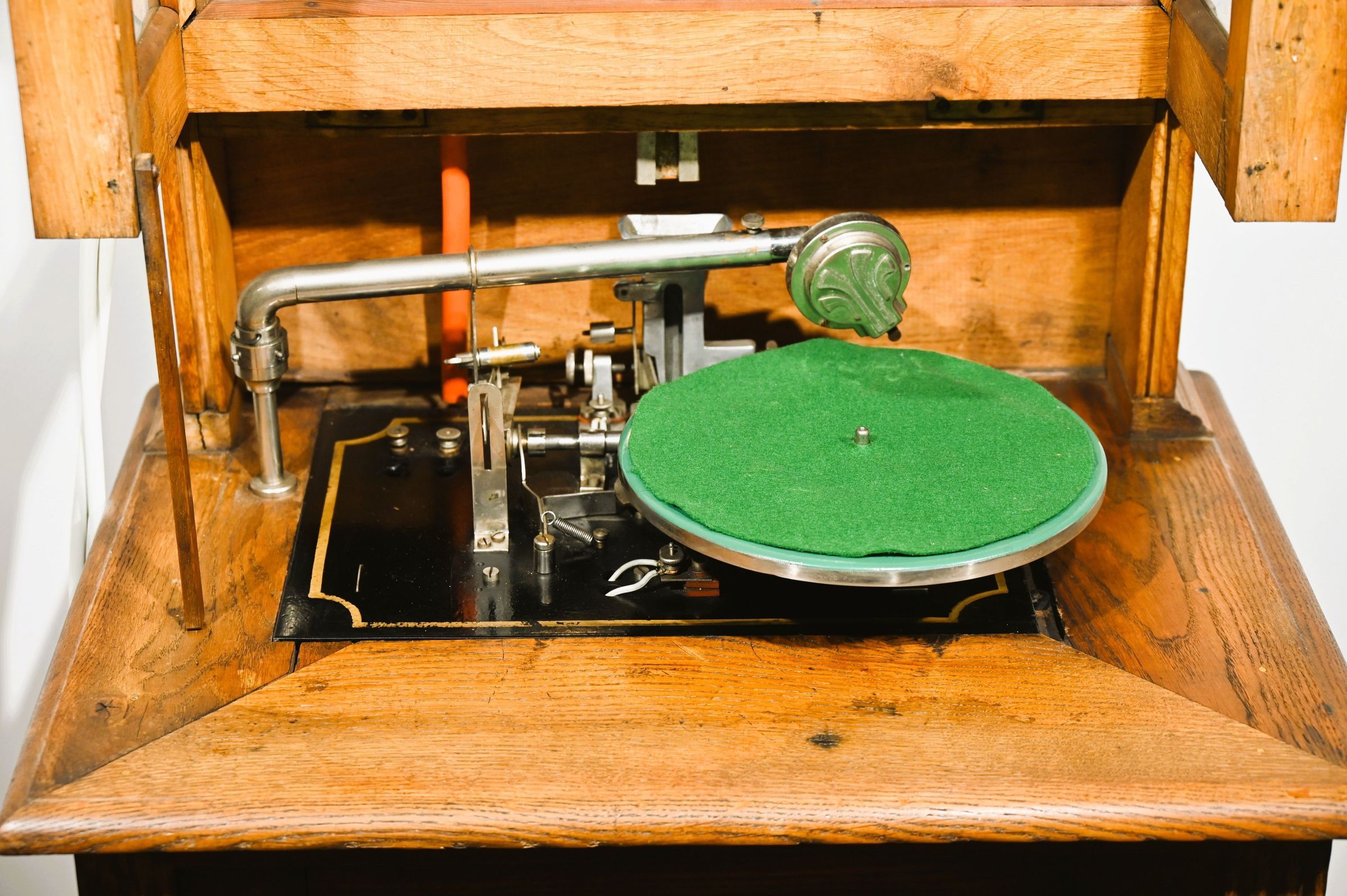
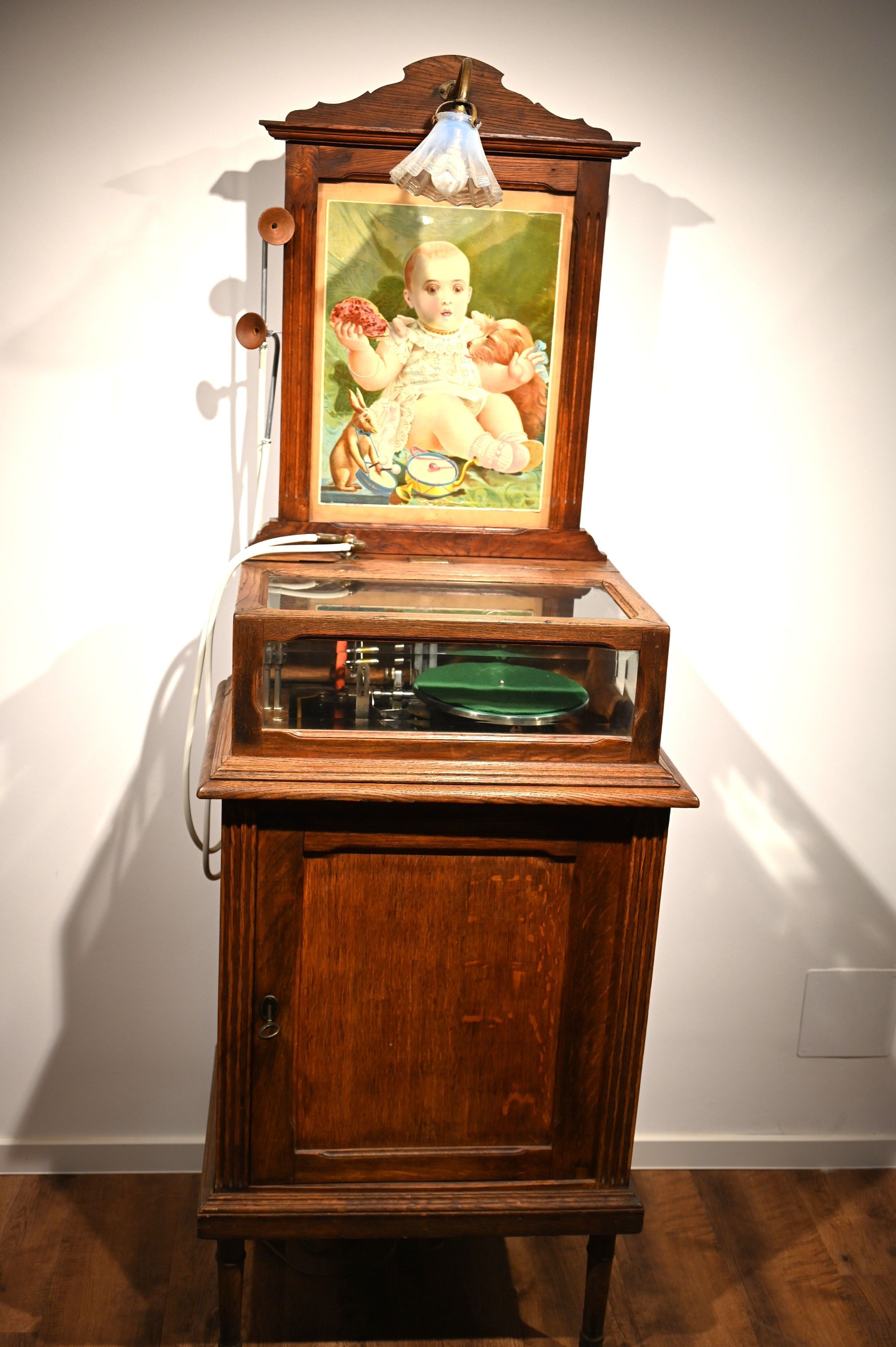
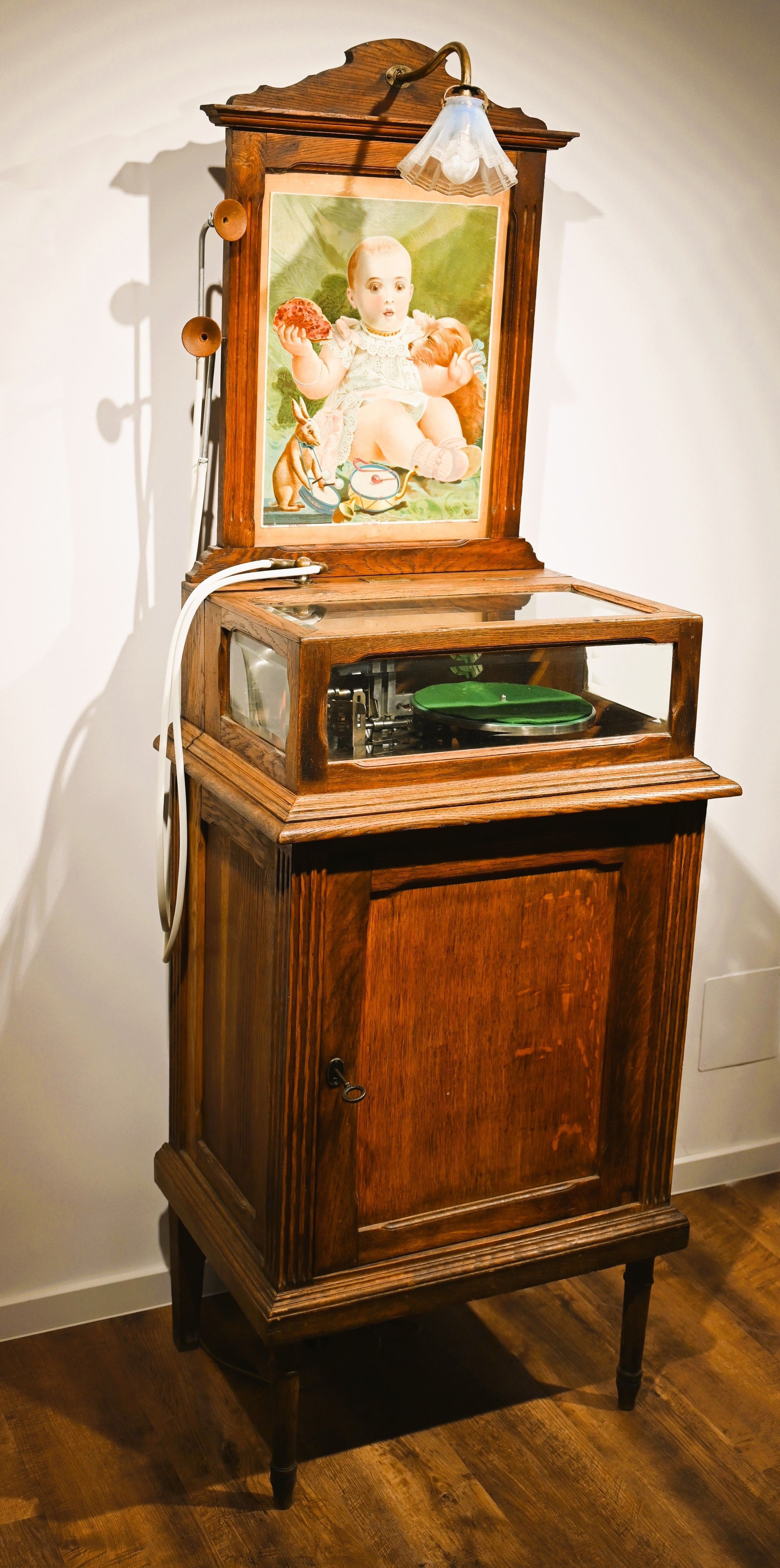
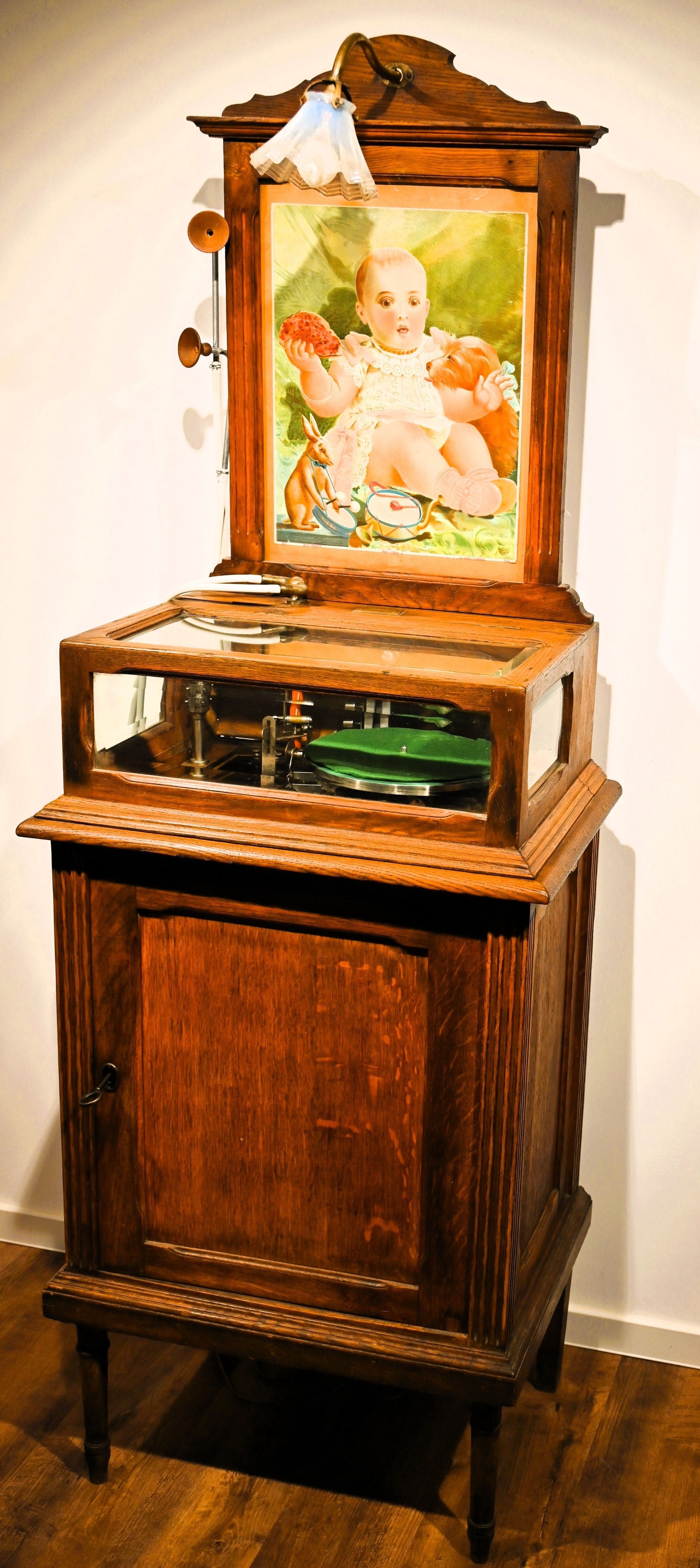
Coin-operated disc-playing machine with listening earpieces
France, ca. 1905–1910
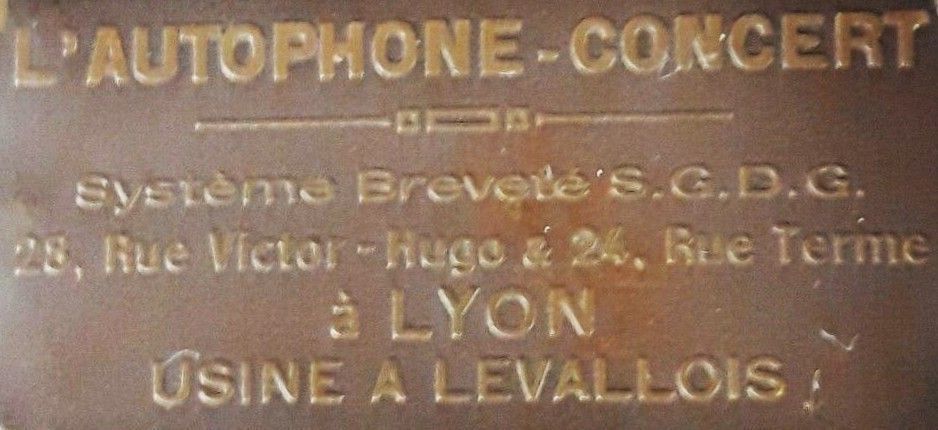
System: Autophone-Concert – Système breveté S.G.D.G.
Addresses: 23, rue Victor-Hugo & 24, rue Terme, Lyon
Manufacture: Usine à Levallois (near Paris)
Historical Context
The Autophone-Concert is an early French coin-operated disc-playing machine designed for use in cafés, bars, and entertainment venues of the Belle Époque. Such machines made it possible, for the first time, to listen to music individually in public spaces in exchange for a coin—long before the emergence of the classic jukebox.
Devices of this type were particularly widespread in Parisian entertainment districts, especially around Pigalle and Montmartre, where they were appreciated as quiet, space-saving alternatives to horn-equipped machines.
Technology and Operation
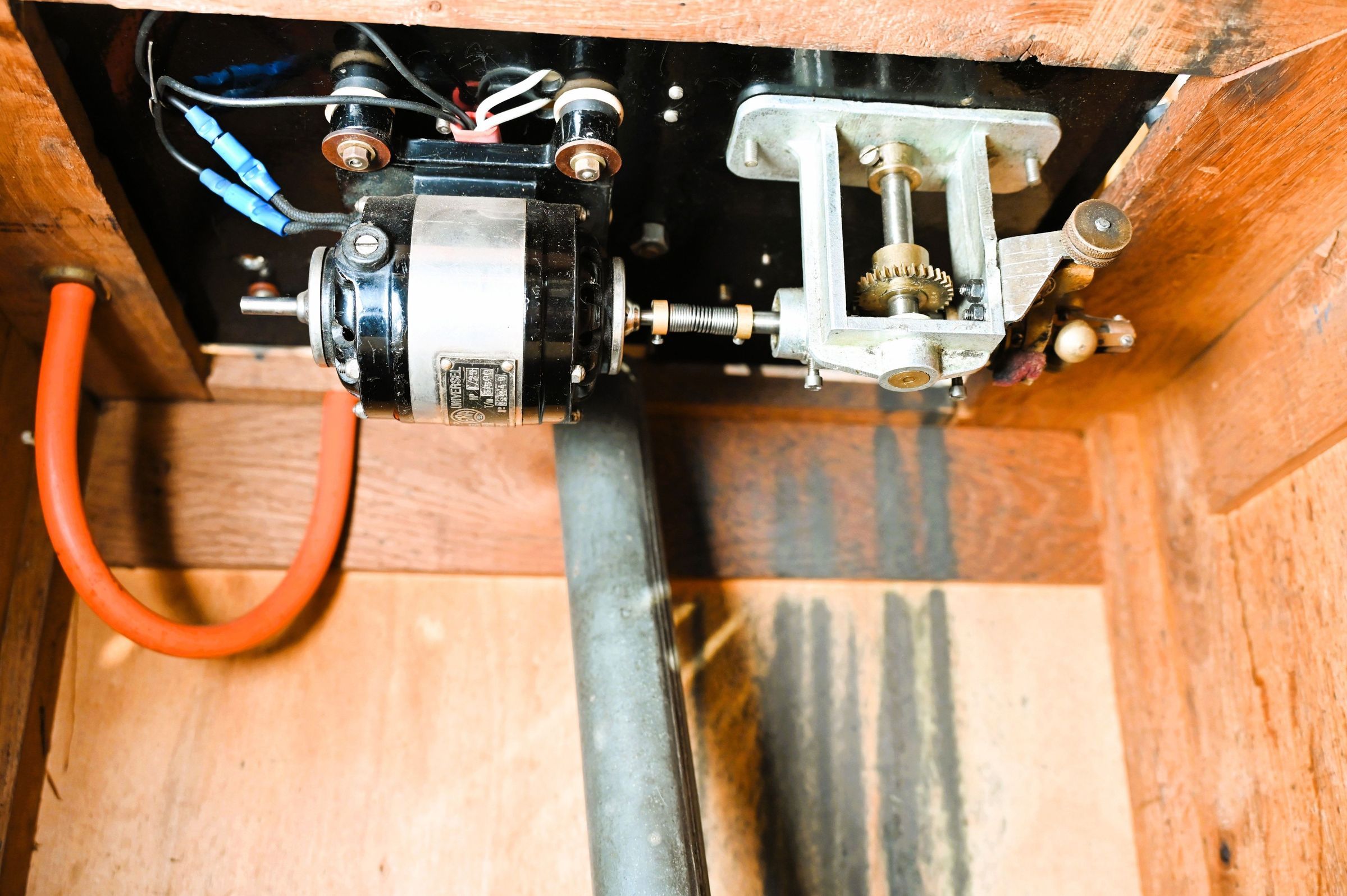
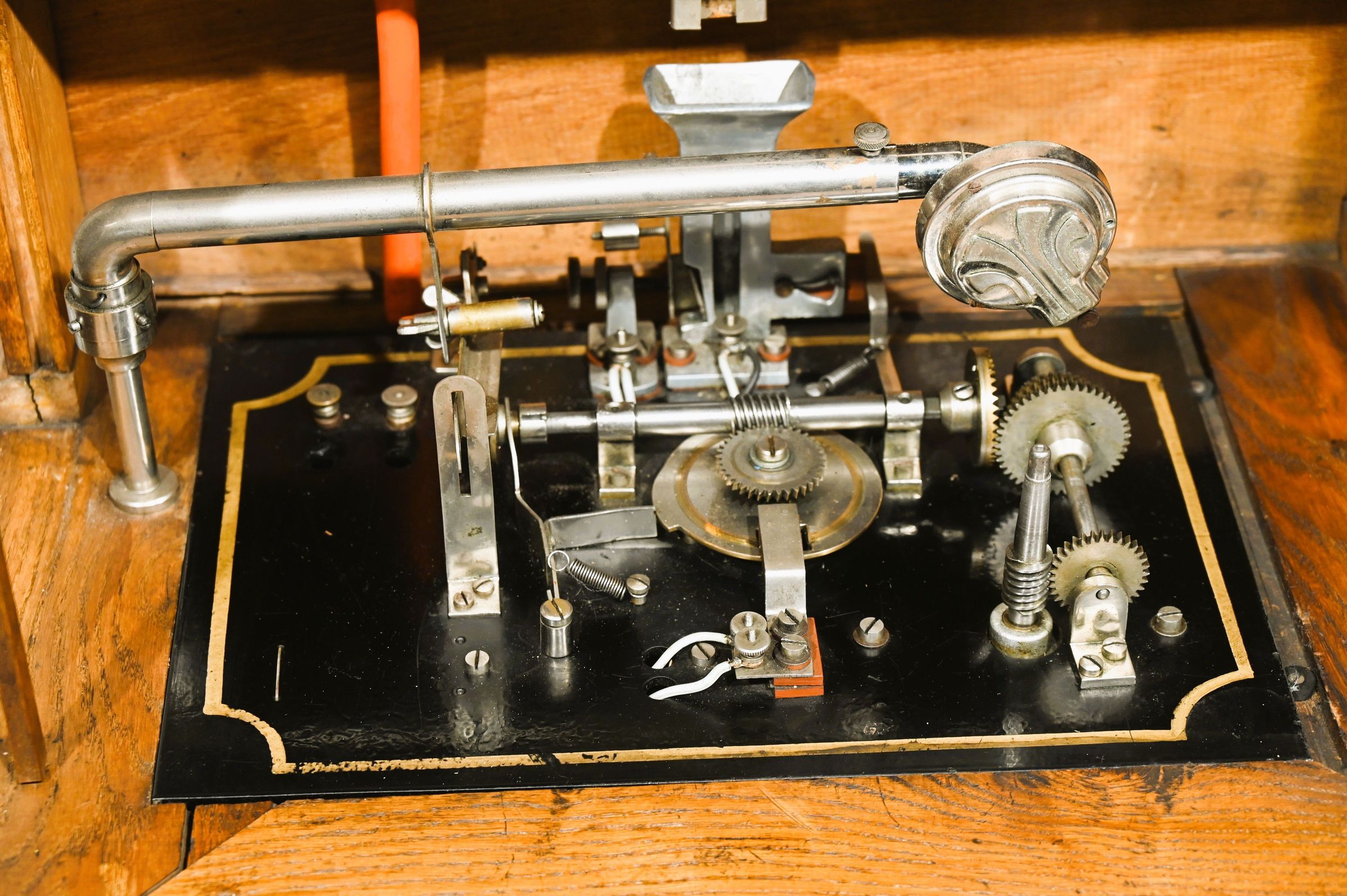
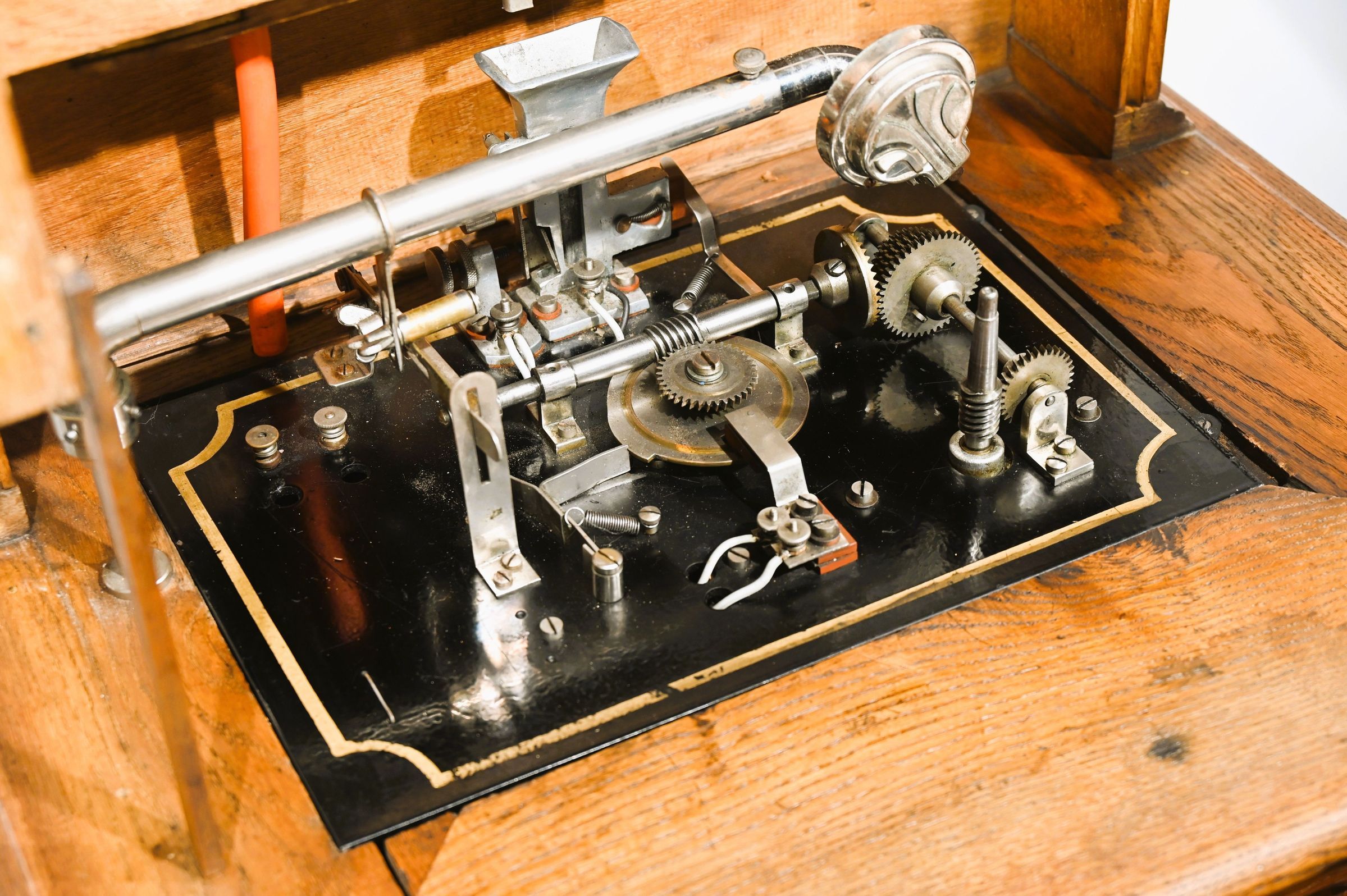
The Autophone-Concert operates fully automatically, clearly distinguishing it from many contemporary devices.
After a coin is inserted:
the electric motor starts automatically
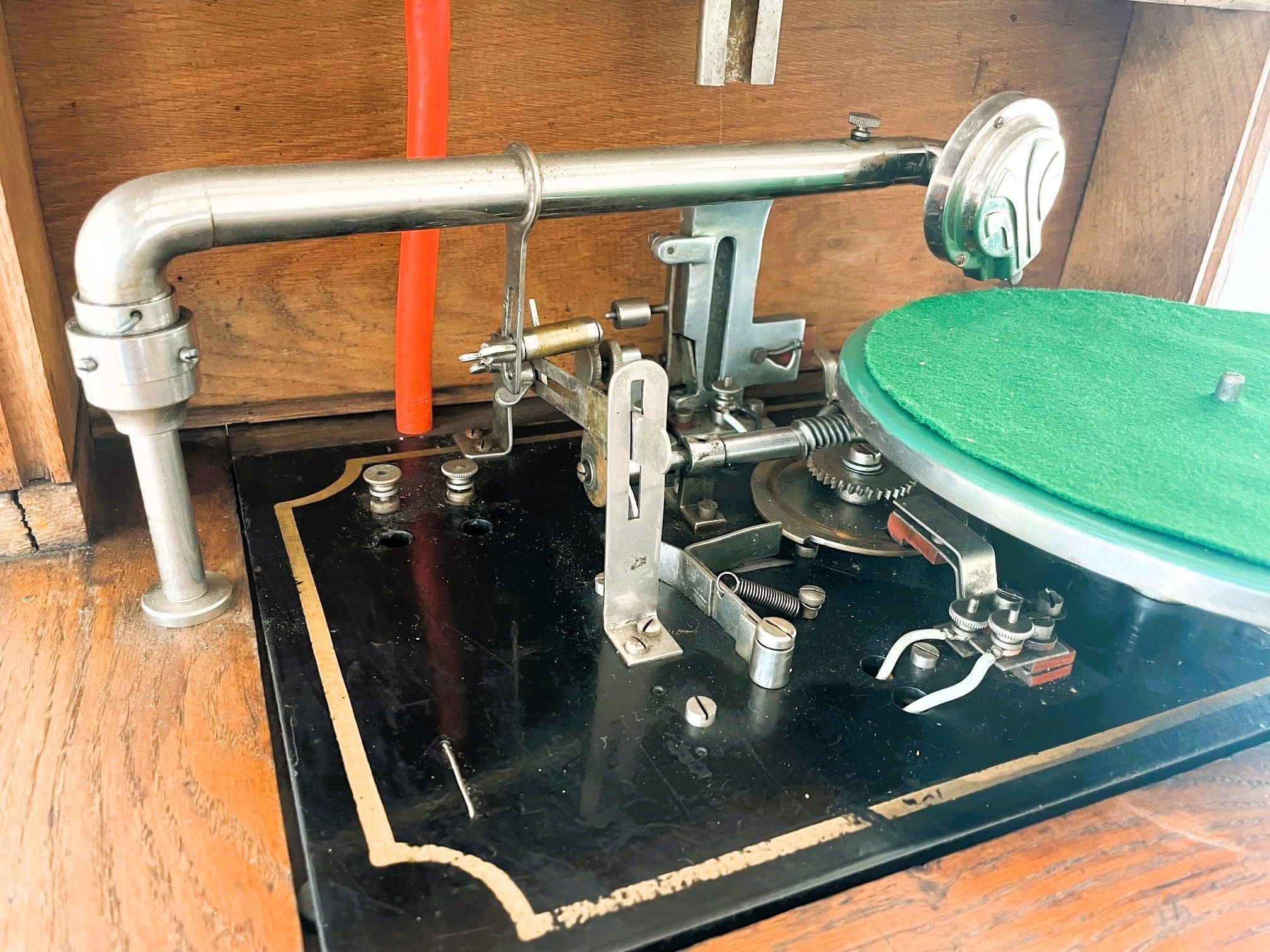
the tonearm lowers itself onto the record
the recording is played in full
at the end of playback, the tonearm lifts automatically
all mechanisms return to their starting position, ready for the next coin
At no point is manual intervention by the user required.
Unlike horn-equipped machines, the Autophone-Concert has no built-in sound horn, but instead features:
two wooden listening earpieces for individual, quiet listening
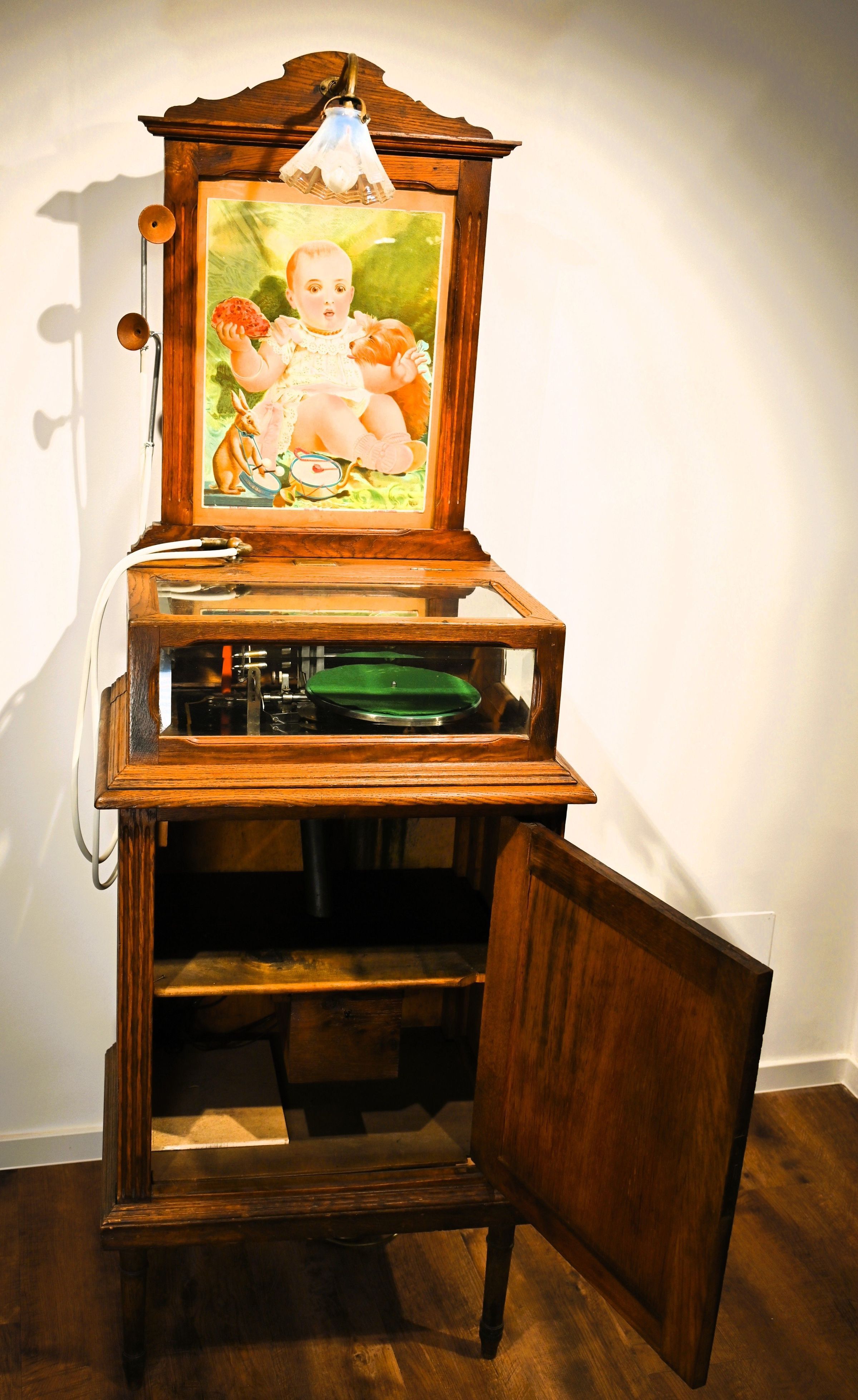
a glazed front panel allowing the coin mechanism and turntable to be viewed
This design made the machine especially suitable for cafés and indoor venues with multiple guests.
Design and Visual Impact
The tall, finely crafted wooden cabinet combines technical sophistication with furniture-like elegance.
The illustrated front panel served as both an eye-catching attraction and an advertising surface, while the visible mechanism inspired confidence in the machine’s reliability—an important feature of early coin-operated devices.
Significance
The Autophone-Concert represents an important milestone in the history of recorded music:
fully automatic disc playback activated by coin insertion
transition from loud horn machines to individual listening
early integration of electricity, coin mechanisms, and disc records
a European precursor to later jukebox concepts
Interpretation
This machine exemplifies the urbanization of music listening in Europe:
music was no longer performed or demonstrated, but consumed privately, automatically, and reproducibly.
A rare surviving example and a technically as well as culturally significant witness to the early history of music machines.