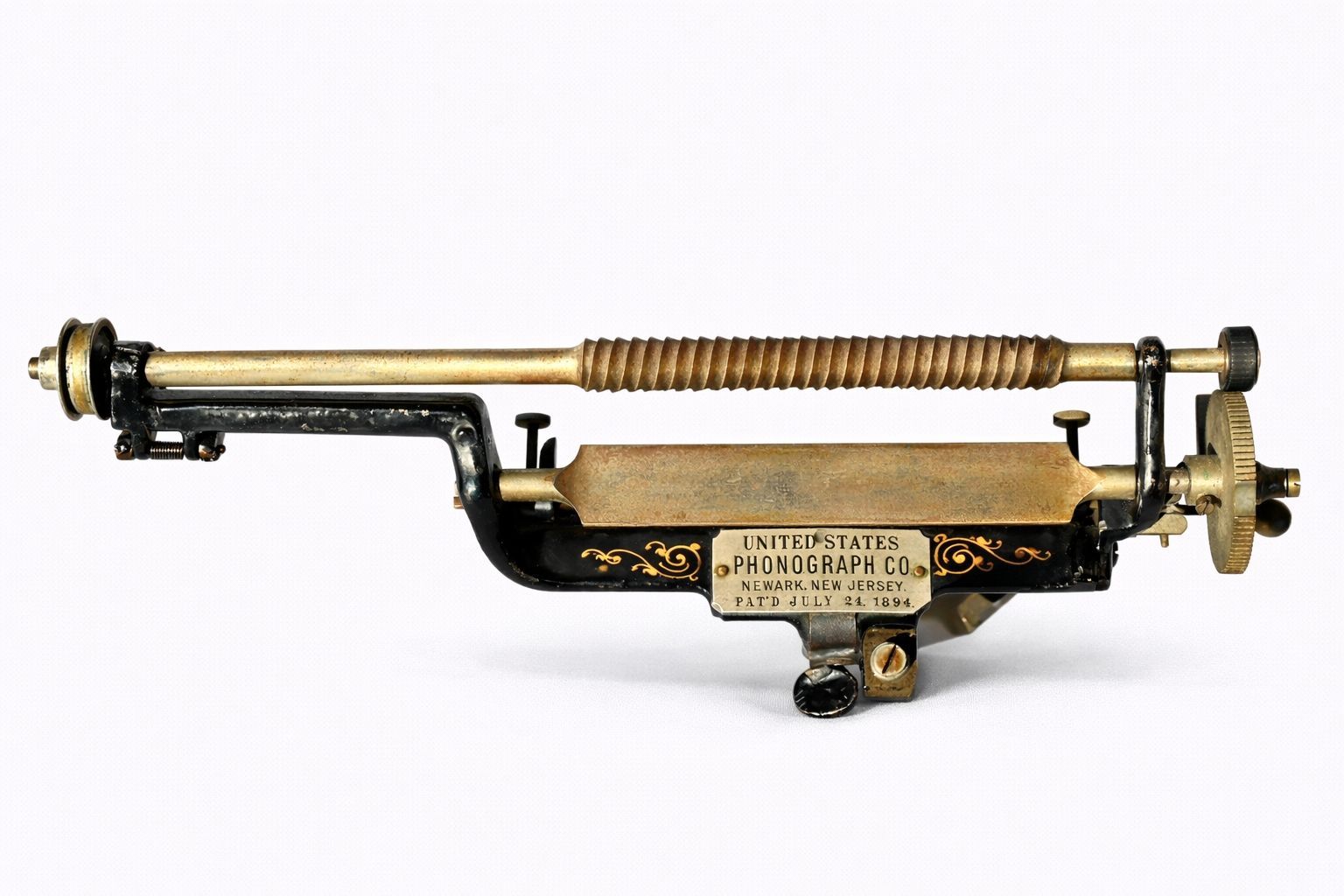
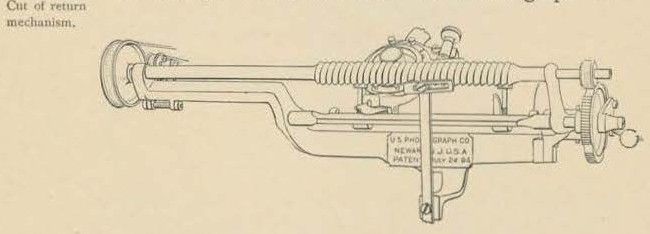
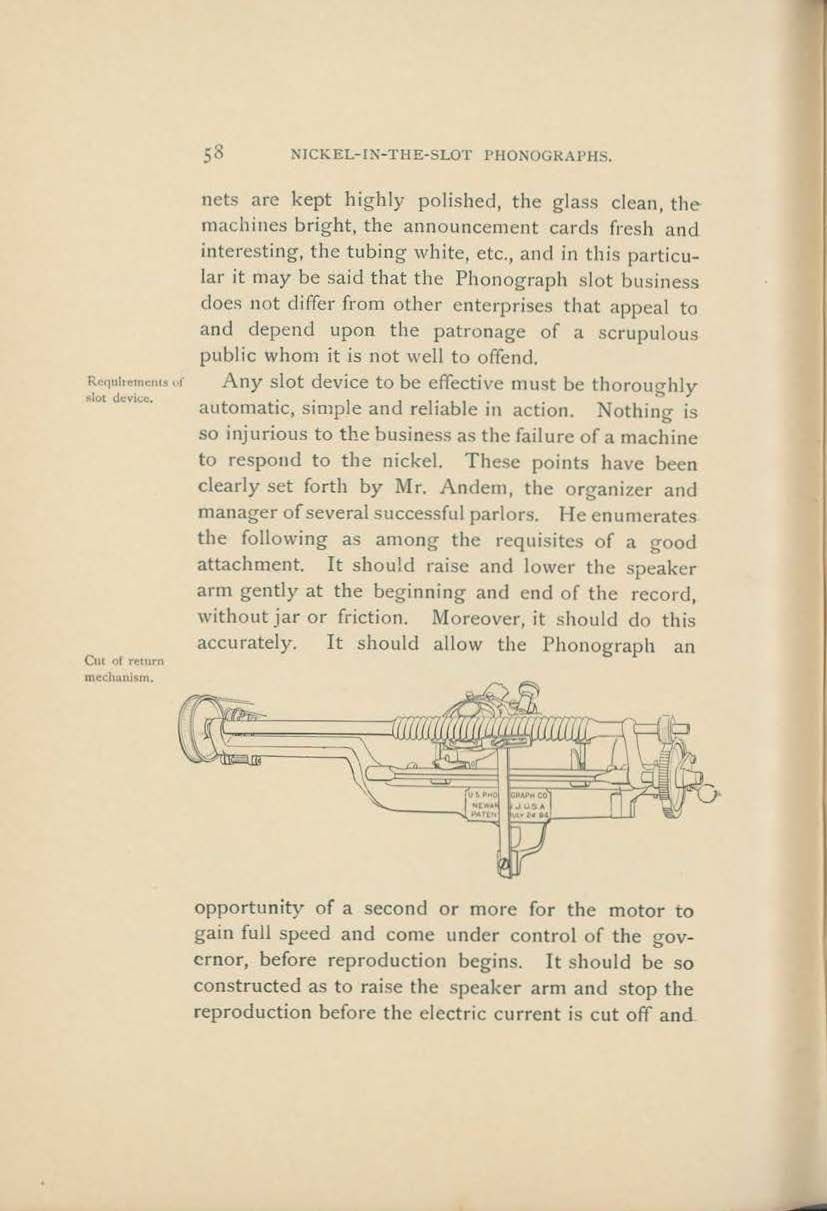
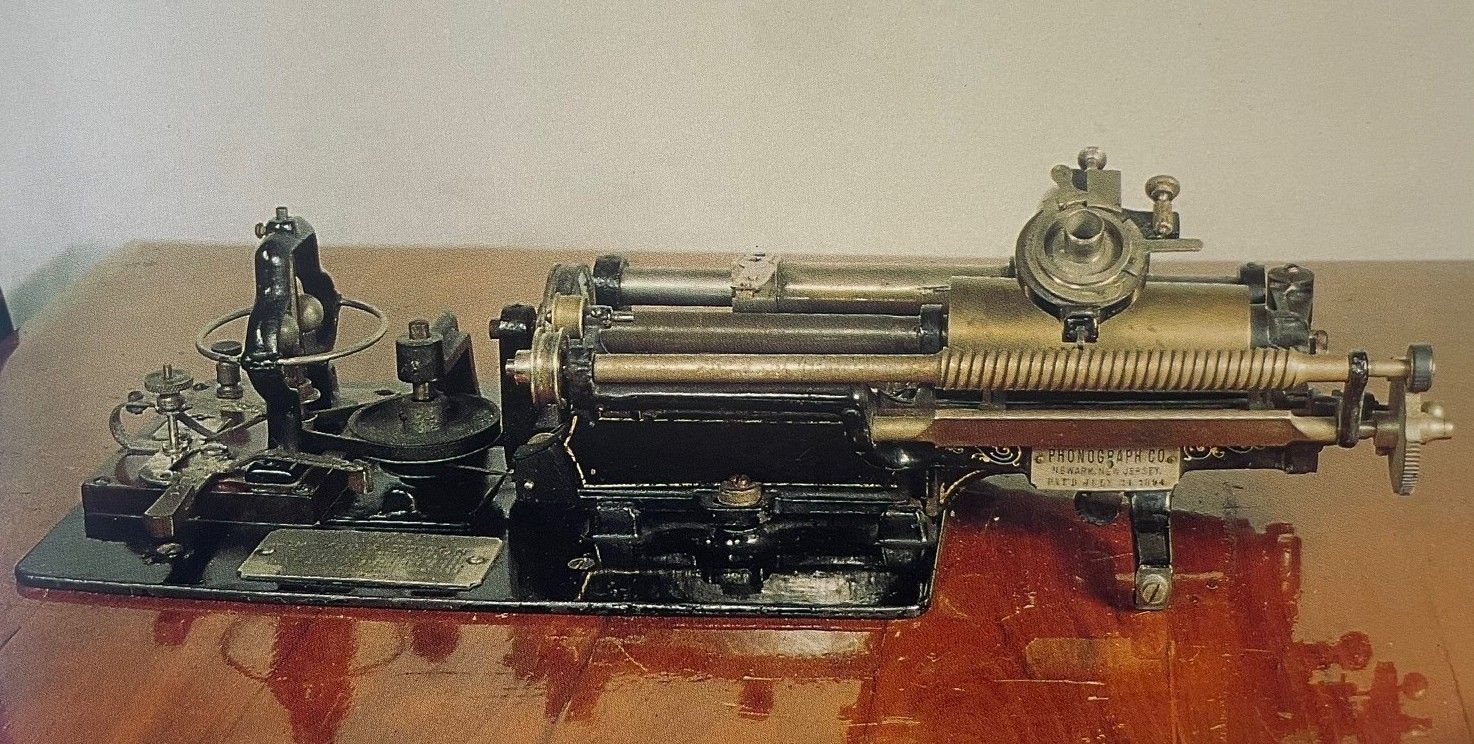
Cut-Off Return Mechanism (“Repeating Attachment”) for early Class-M`s
Entry/Object ID
367
Description
for early Edison Class M coin-operated phonographs
USA, patented 1894
Inventor: George Tewkesbury
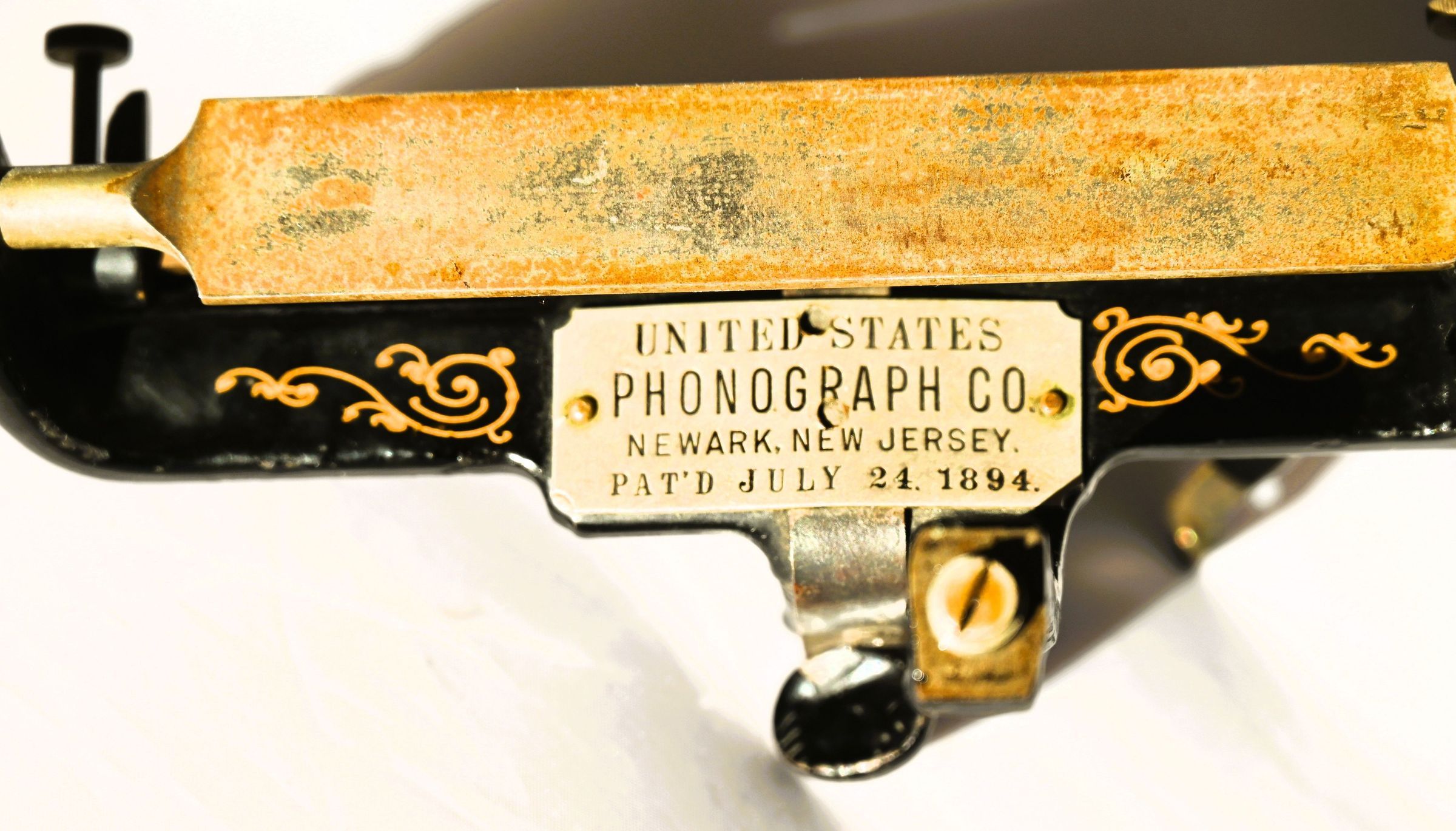
Distributed by: United States Phonograph Company, Newark, New Jersey
Historical Context
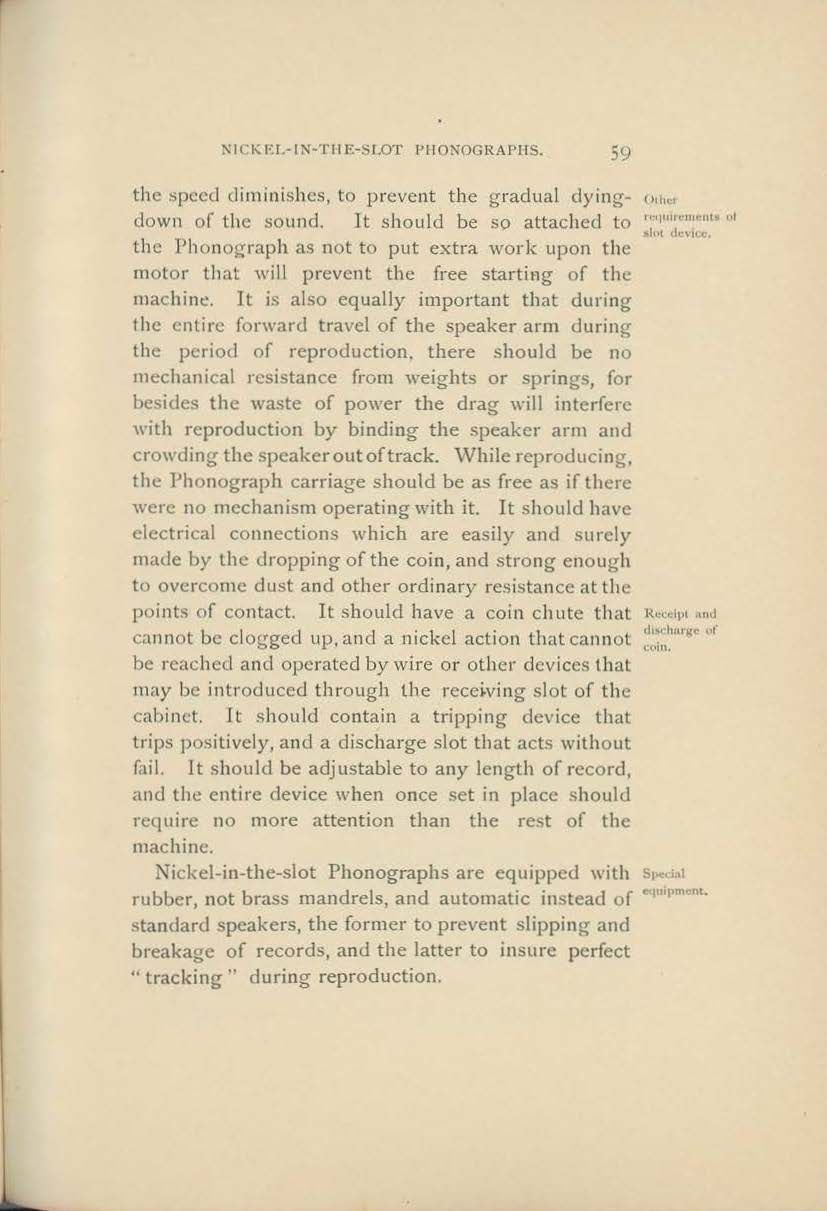
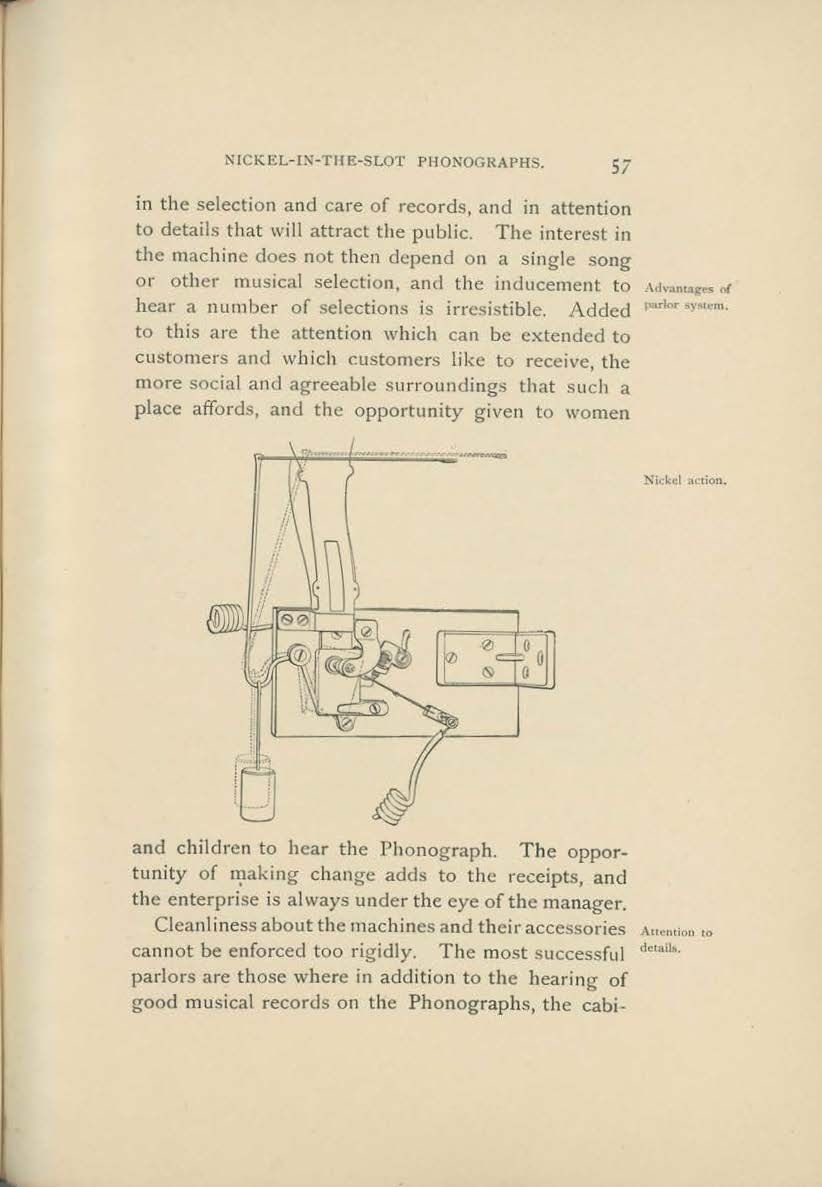
This rare cut-off return mechanism, also referred to as a repeating attachment, belongs to the earliest known automatic return systems for coin-operated phonographs of the Edison era.
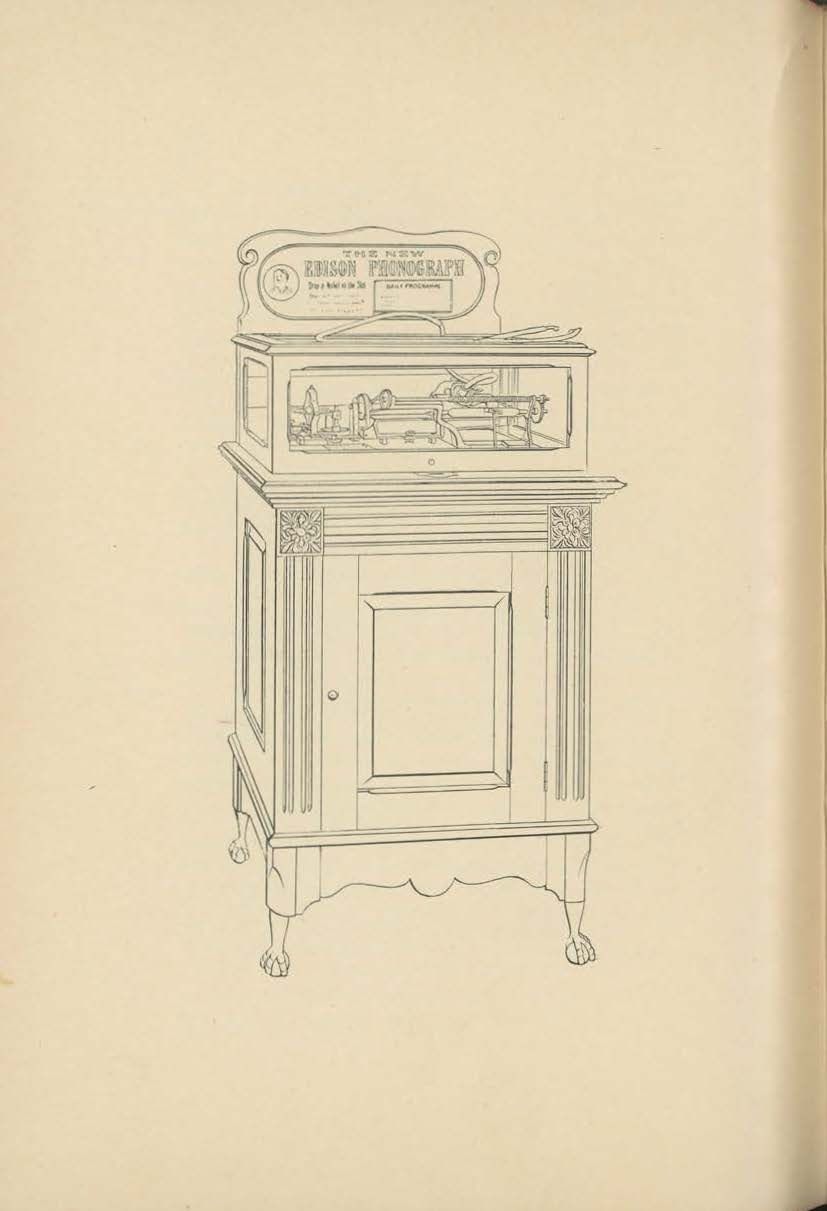
It was originally developed for use in early Edison Class M phonographs adapted for coin operation and was employed in particular in the so-called “Kansas” coin-slot machines.
The mechanism was not developed by Thomas A. Edison himself, but by the American inventor George Tewkesbury, who was granted a patent for this return and cut-off system in 1894. Commercial distribution was handled by the United States Phonograph Company of Newark, New Jersey.
Machine Types Using This Mechanism
This type of repeater was used in:
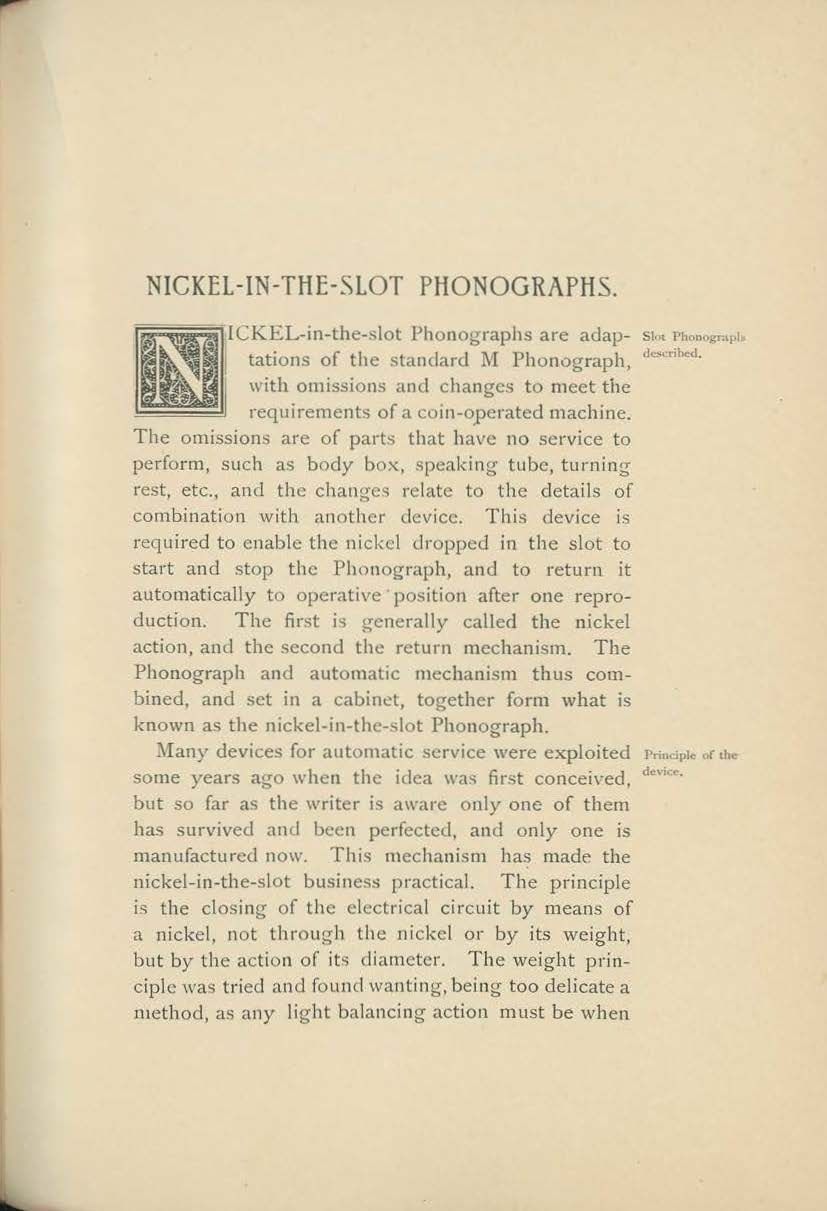
Edison Class M phonographs
specifically adapted for coin-operated service
very early “Kansas” nickel-in-the-slot phonographs
of the 1890s (named after Tewkesbury’s patent application and mechanical design)
It therefore belongs to the earliest generation of fully functional automatic coin-operated phonographs, predating the later standardization of Edison coin-op machines.
Function and Technical Significance
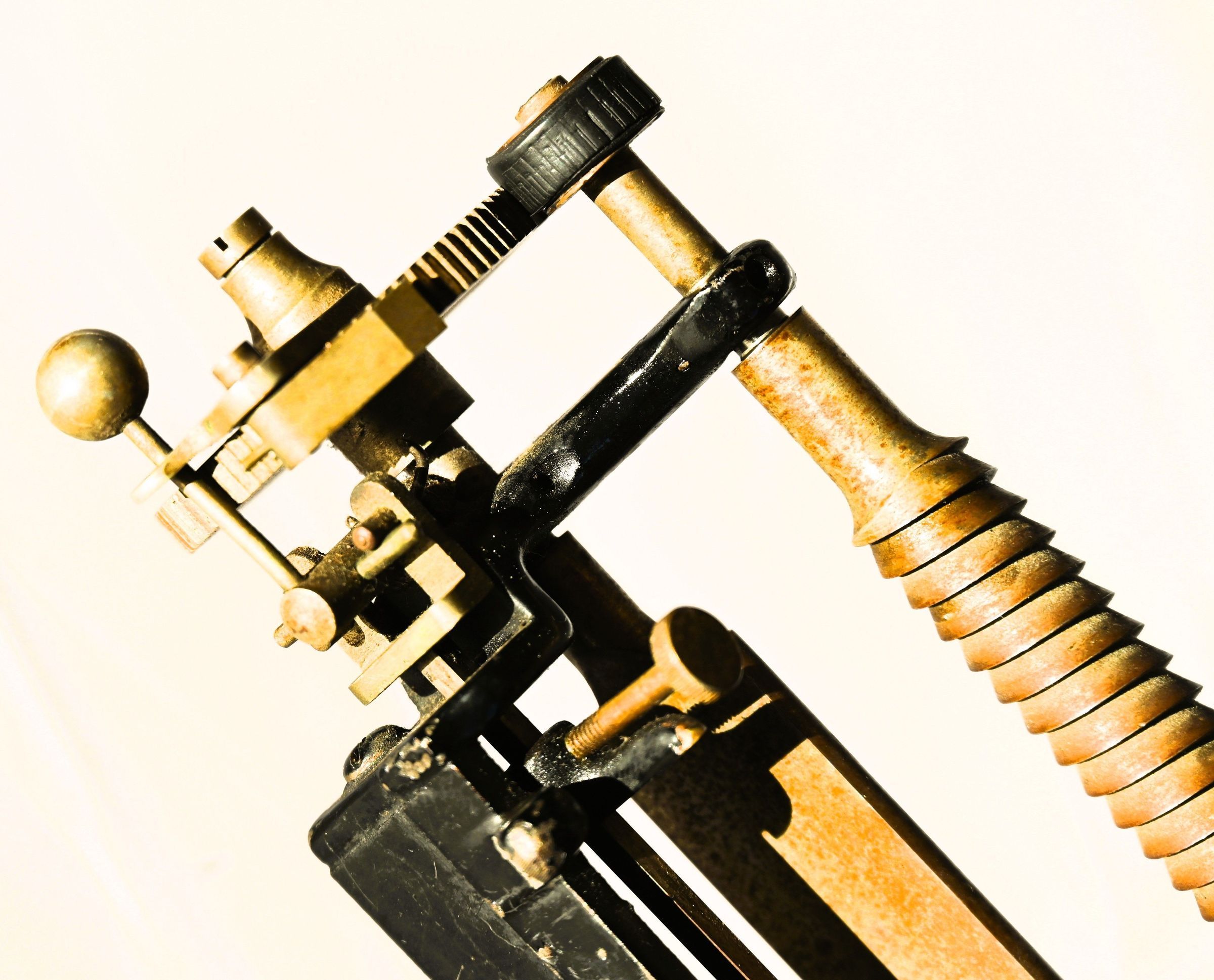
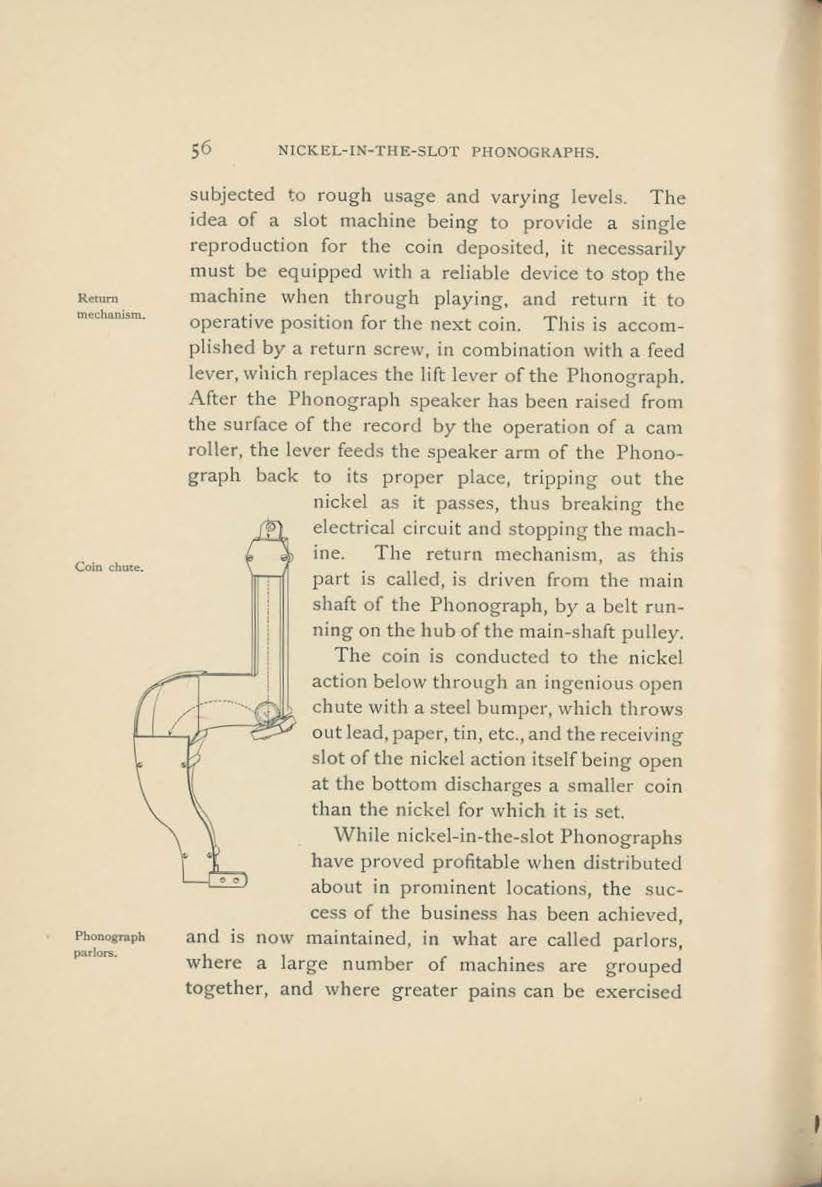
The cut-off return mechanism performed several essential tasks in a purely mechanical sequence:
automatic lifting of the reproducer at the end of the cylinder
return of the carriage to the starting position
interruption of the electrical circuit
preparation of the machine for the next coin insertion
The motion was taken directly from the main shaft of the phonograph and transmitted via belts, levers, and cams. At this time, electronic control systems did not yet exist — the entire operational logic was embodied in the mechanical design itself.
Contemporary technical literature explicitly describes such return systems as a fundamental prerequisite for economically successful coin-operated operation.
Rarity and State of Preservation
Cut-off return mechanisms of this early type are today extremely rare:
they were produced in only small numbers
many were later replaced by more advanced systems
others were lost through wear or modification
Original surviving examples with documented provenance are scarcely known.
Significance
This component documents a decisive step in the development of sound reproduction:
transition from supervised operation to fully automatic playback
an early form of “pay-per-play” logic
the foundation for all later coin-operated phonographs and jukeboxes
Interpretation
The George Tewkesbury cut-off return mechanism (1894) marks the beginning of the technical evolution that transformed the phonograph from an experimental apparatus into a reliable public entertainment machine.
A small and seemingly inconspicuous component — yet a key artifact in the early history of media and mechanical engineering.
From the collection of Charley Hummel.