Name/Title
Lioretograph No. 2 – Early French Clockwork PhonographEntry/Object ID
167Description
Lioretograph No. 2 – Early French Clockwork Phonograph
Henri Lioret, Paris, France – ca. 1898
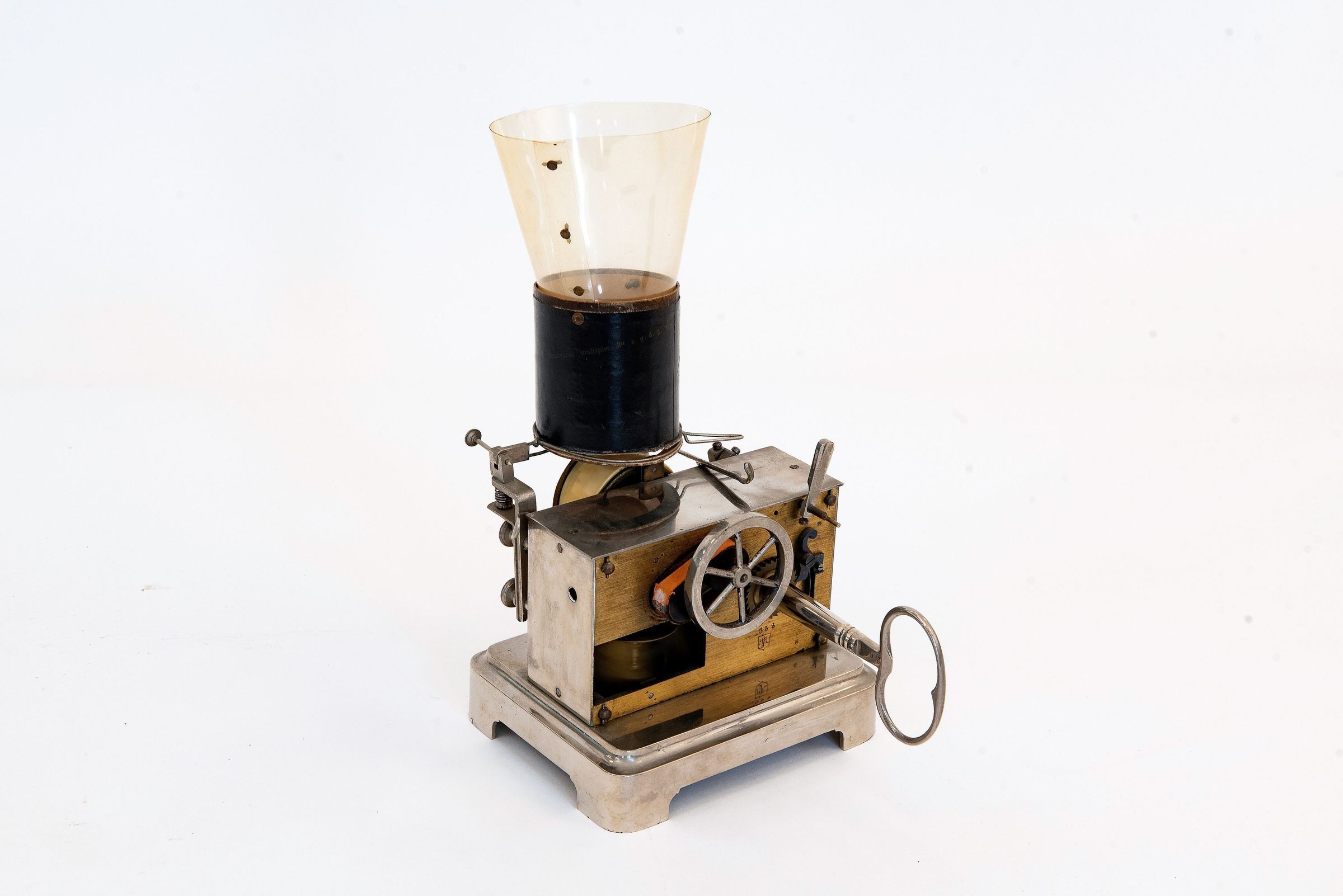
The Lioretograph No. 2 ranks among the most unusual and technically interesting phonographs of the 1890s. It was created by the French watchmaker and inventor Henri Lioret (1848–1938), who had already gained international attention for his talking dolls.
Historical Background
Henri Lioret met Thomas Edison at the 1889 Paris Exposition Universelle and studied Edison’s phonographs in detail. Inspired by this encounter, he combined his horological skills with the emerging phonograph technology. Initially, Lioret incorporated miniature talking mechanisms into high‑quality dolls, which became a flourishing business. He soon developed independent phonograph models whose mechanisms closely resembled fine watch movements.
The Lioretograph No. 2, introduced around 1898, is partially based on precision clockwork mechanics:
Key‑wound spring motor
Wing‑shaped centrifugal governor for constant speed
Fine‑toothed gear train similar to that of high‑grade pocket watches
Technical Features
Recording medium: Cylinders made of celluloid – far more durable than the wax cylinders of the time
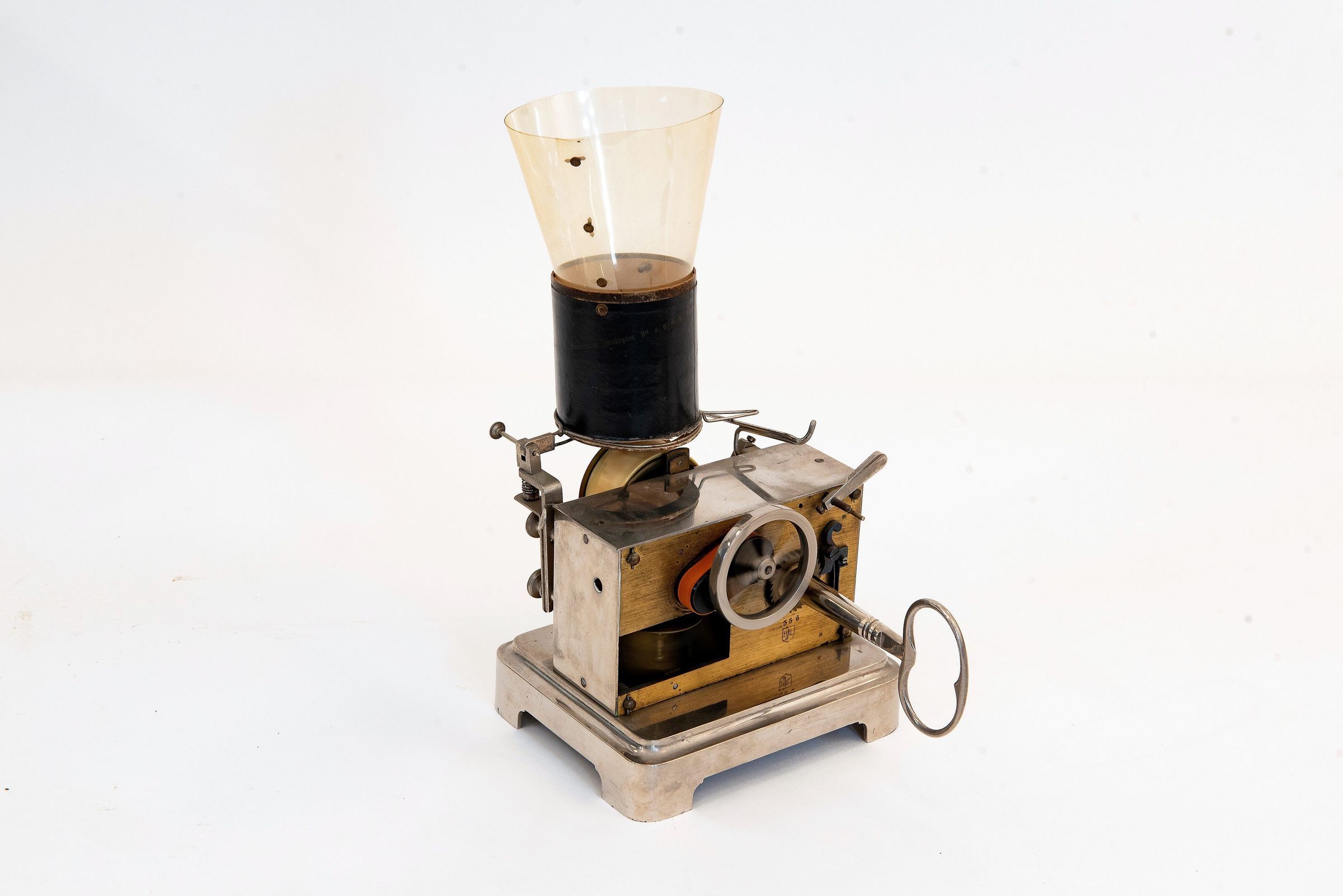
Drive: Clockwork spring motor, wound with a large wing‑shaped key
Resonator: Conical celluloid sound resonator mounted on a drum‑shaped cardboard support
Produces a remarkably strong sound for its size
Later versions were fitted with a traditional horn instead
Operation:
Wind the motor with the key
Insert the cylinder and set the lever to play position
Attach the resonator or horn – playback begins immediately
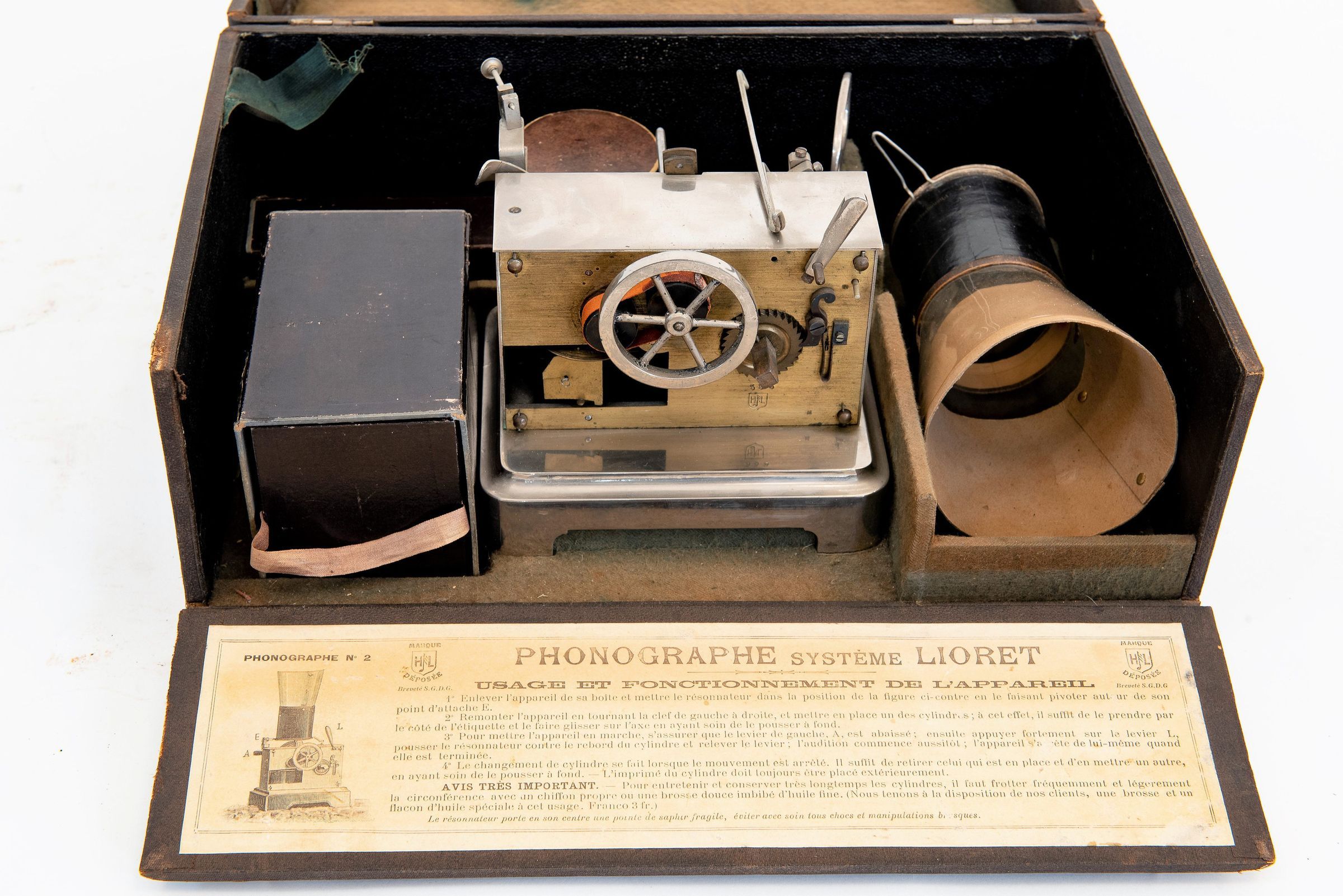
Original Instruction Sheet (excerpt from the inside of the case lid)
The printed French instructions explain in detail how to insert the resonator, wind the motor, and change cylinders. Special emphasis is placed on the care of the celluloid cylinders: they should be cleaned regularly with a fine cloth lightly moistened with oil to prolong their life.
Special Features
For this model, Henri Lioret abandoned the conventional phonograph‑style spring barrel and governor system, opting instead for a purely horological design. This not only gave the machine exceptional technical elegance but also makes it a highly desirable collector’s piece today.
Rarity
Original surviving Lioretograph No. 2 machines are extremely rare. Most sought‑after are examples retaining their complete original resonator assembly and case with intact printed instructions – as is the case with the example displayed at the Edisonium.
Significance
The Lioretograph No. 2 represents a distinct French path in the early history of recorded sound – one defined by fine watchmaking, innovative materials, and an eye for elegant, compact engineering. It stands as a hallmark of the brief but highly creative era of phonograph development around 1900.