Name/Title
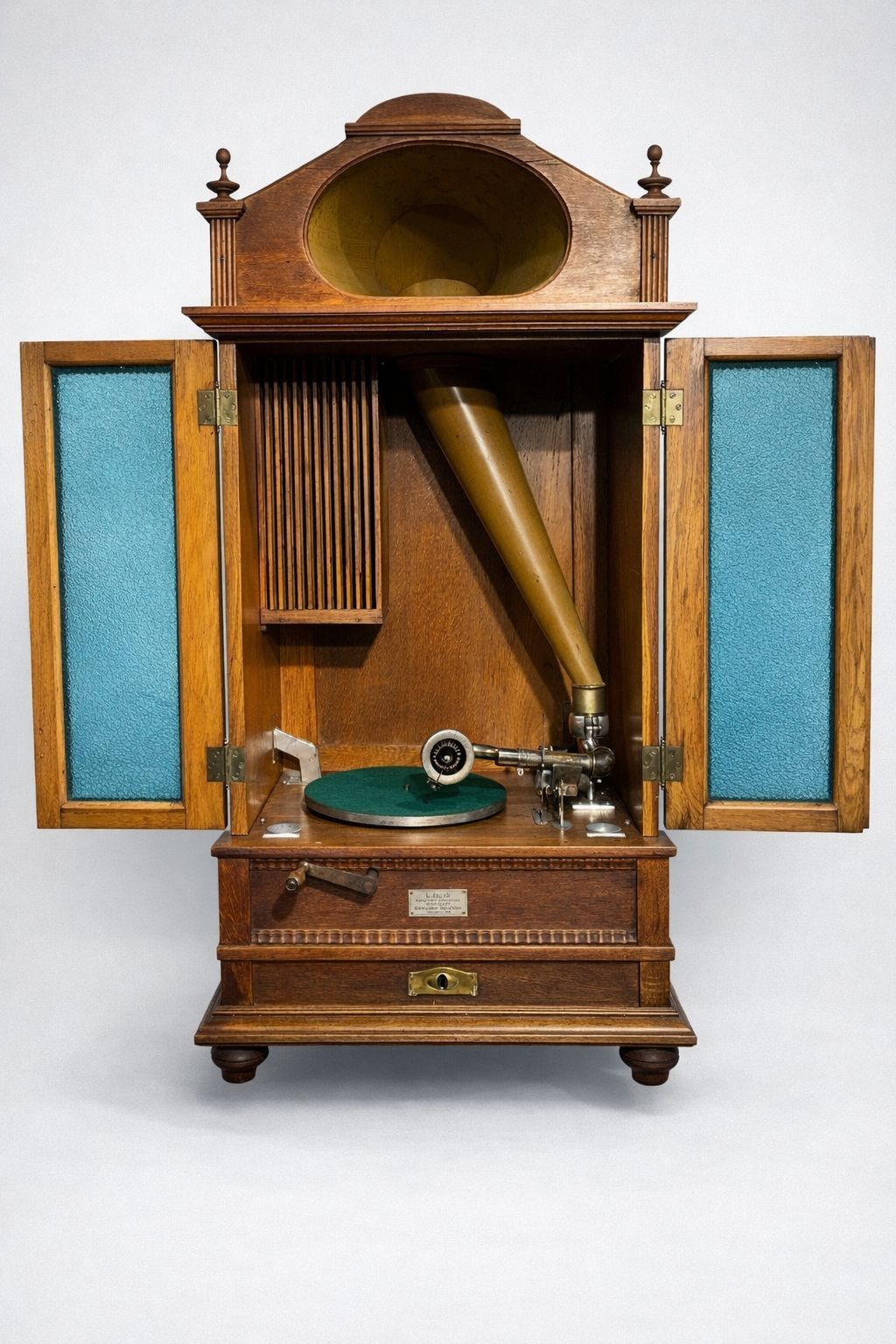
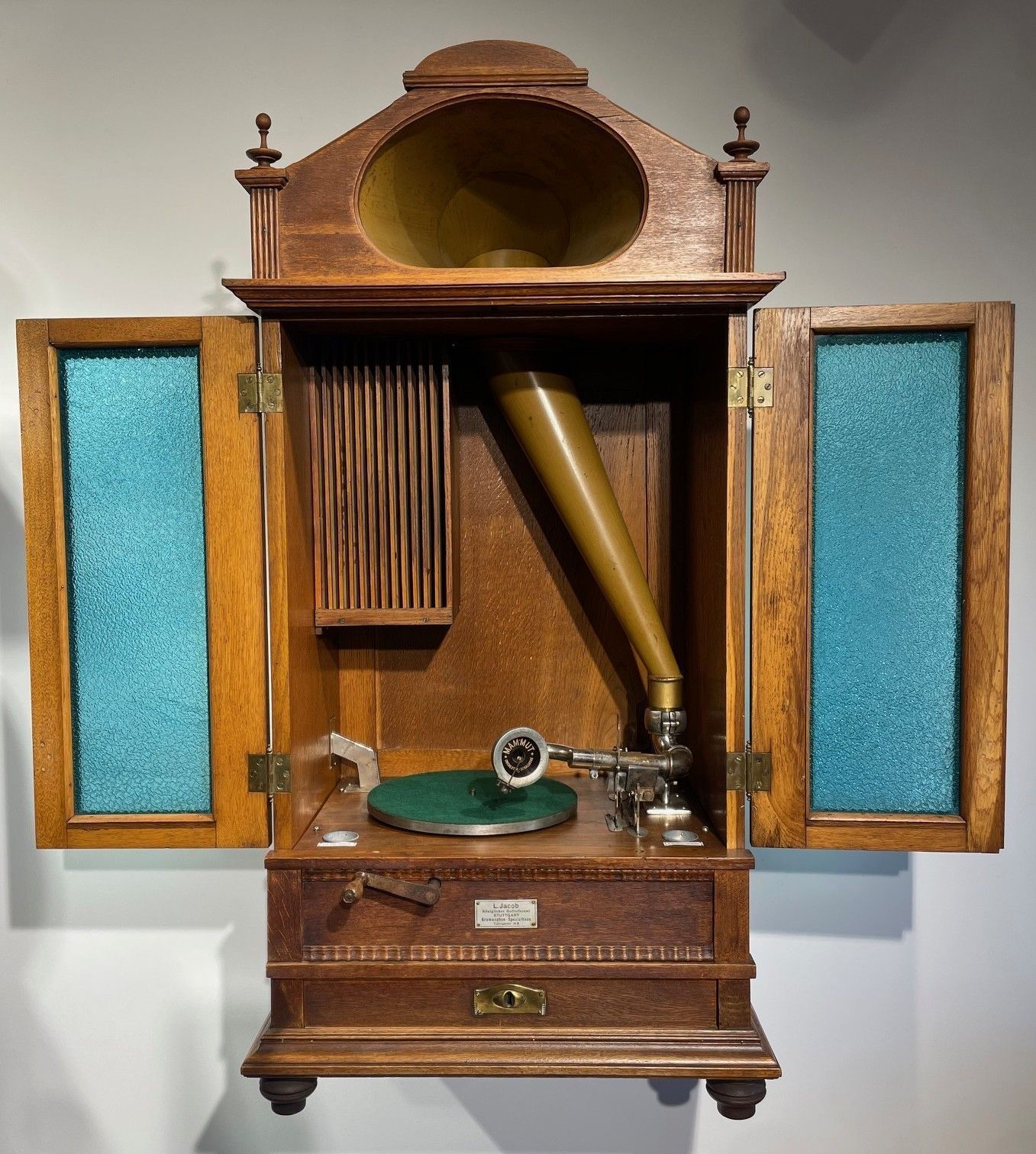
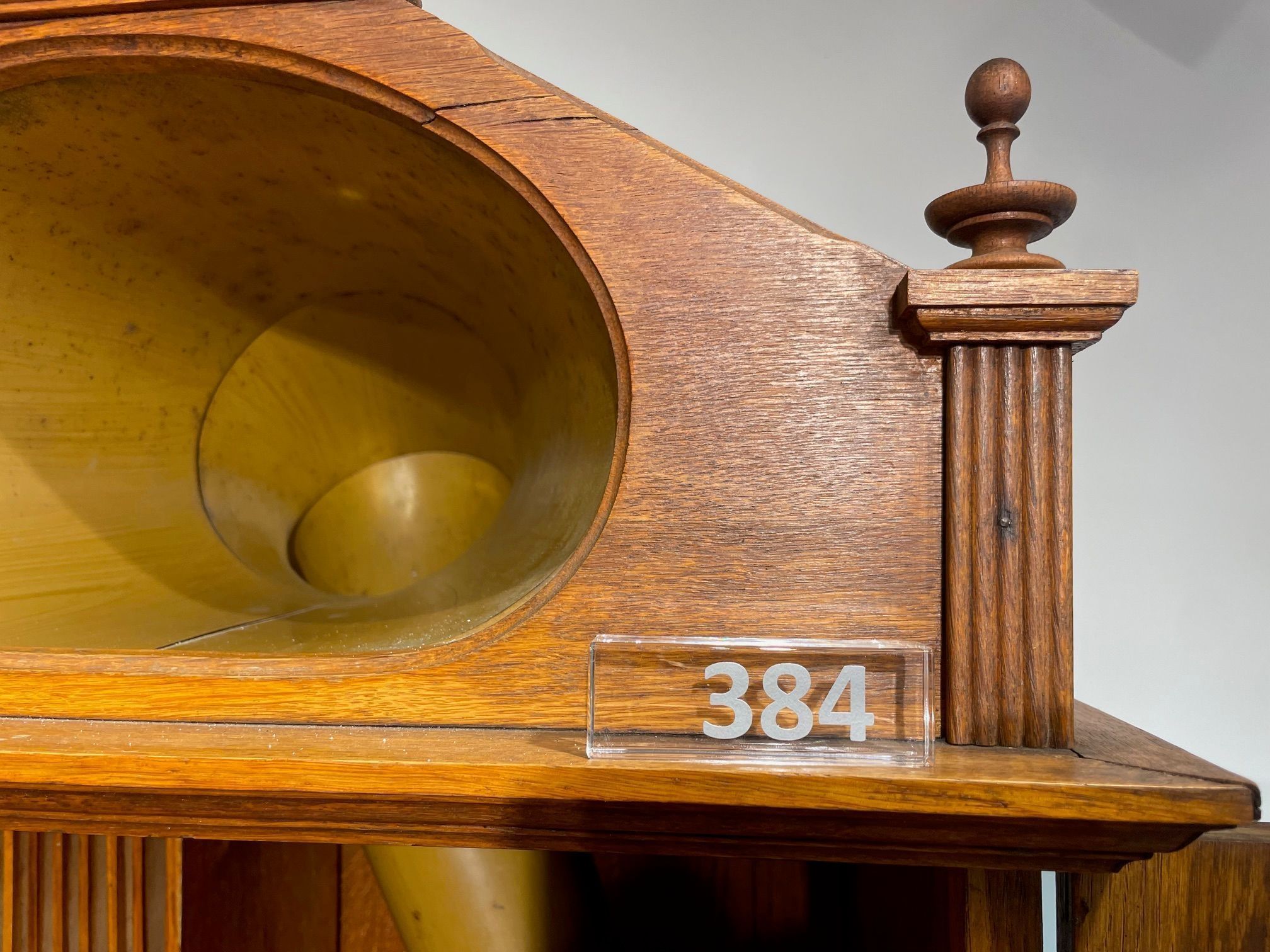
Cabinet Mammut “Siegfried”, Coin-operated cabinet gramophone with internal hornEntry/Object ID
384Description
Manufacturer: Carl Below – Mammut-Werke, Leipzig
Model: “Siegfried”
Serial number: 1000 (Edisonium collection)
Year: ca. 1911
Type: Coin-operated cabinet gramophone (10-pfennig coin mechanism)
Origin: German Empire
Historical Background
The Cabinet Mammut “Siegfried” ranks among the most elaborate and representative German coin-operated cabinet gramophones of the period around 1910/1911.
Such machines were installed in hotels, cafés, waiting rooms, social clubs, and upscale restaurants, combining entertainment, technology, and fine furniture craftsmanship in a single object.
The Mammut Works of Carl Below in Leipzig were among the most important German manufacturers of gramophones and records. With models such as the “Siegfried,” the company aimed to establish the gramophone not merely as a playback device, but as a prestigious piece of furniture and a commercial entertainment machine.
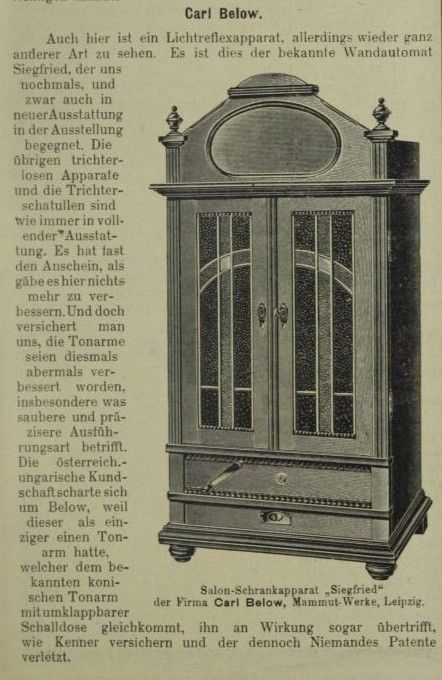
A contemporary reference to this model appears, among other sources, in the Austrian Sewing Machine Journal (Österreichische Nähmaschinen-Zeitung) of 1911, indicating the wide distribution and recognition of these devices beyond regional boundaries.
Technology and Features
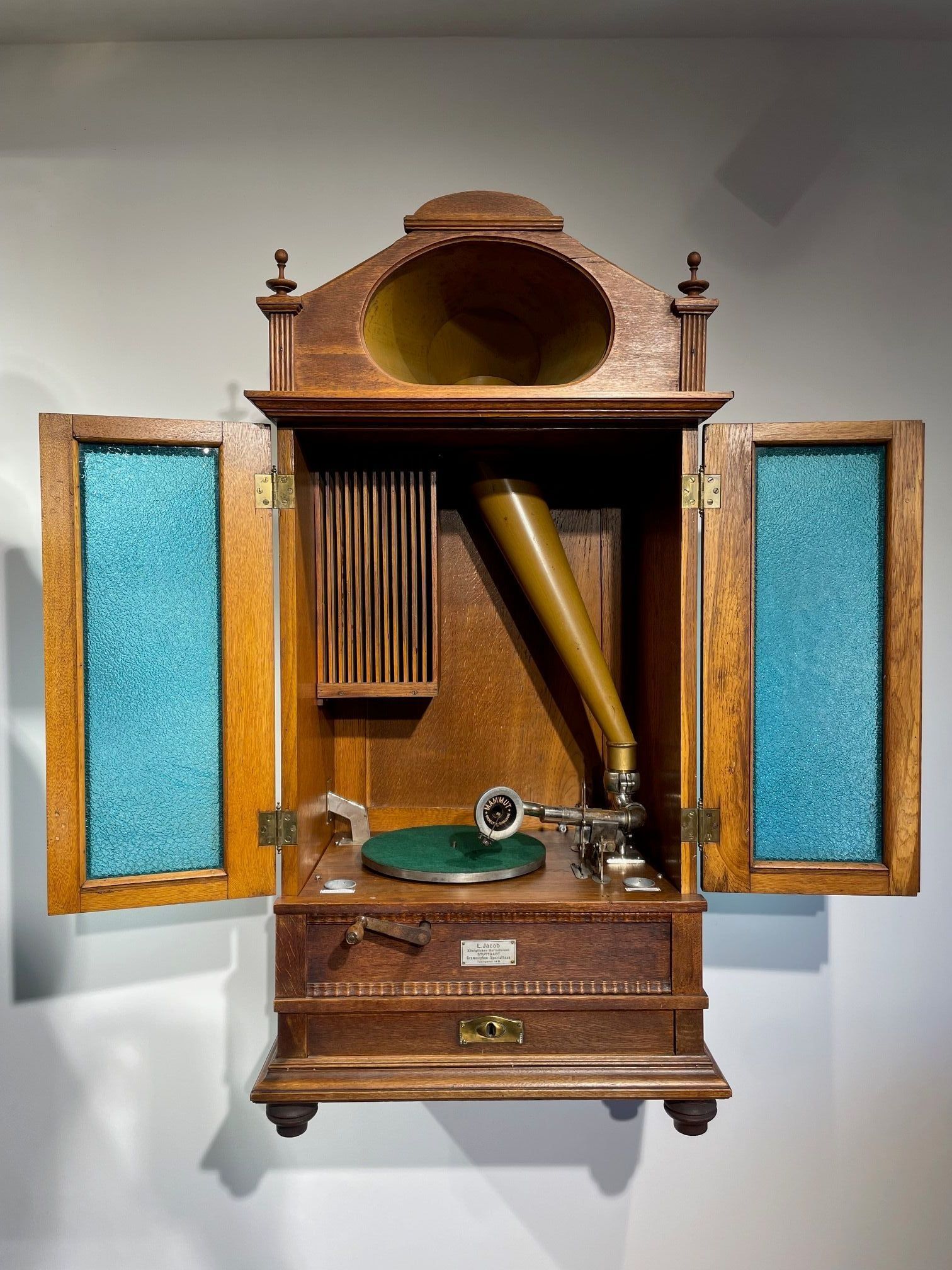
The “Siegfried” is designed as a fully functional coin-operated machine:
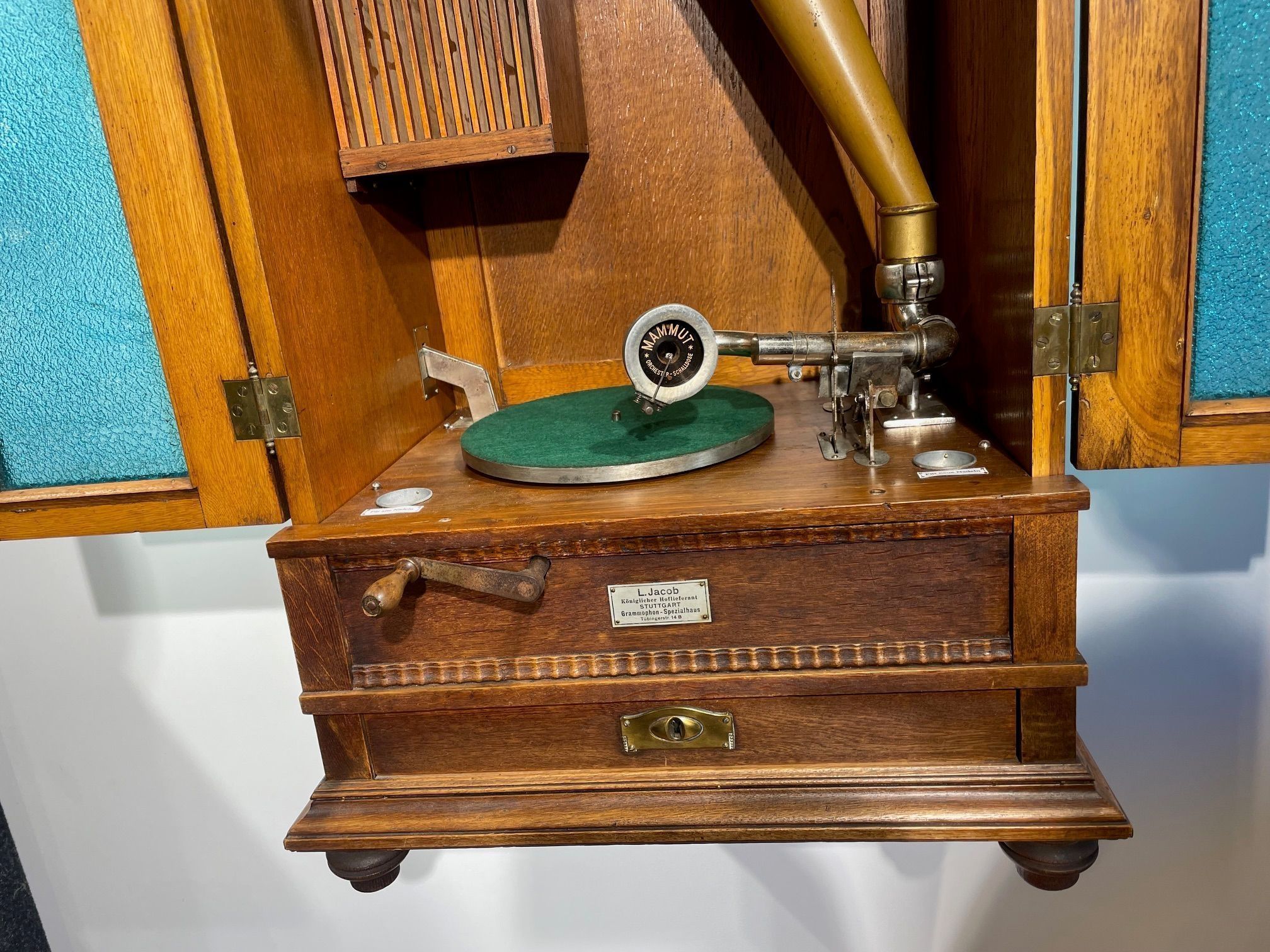
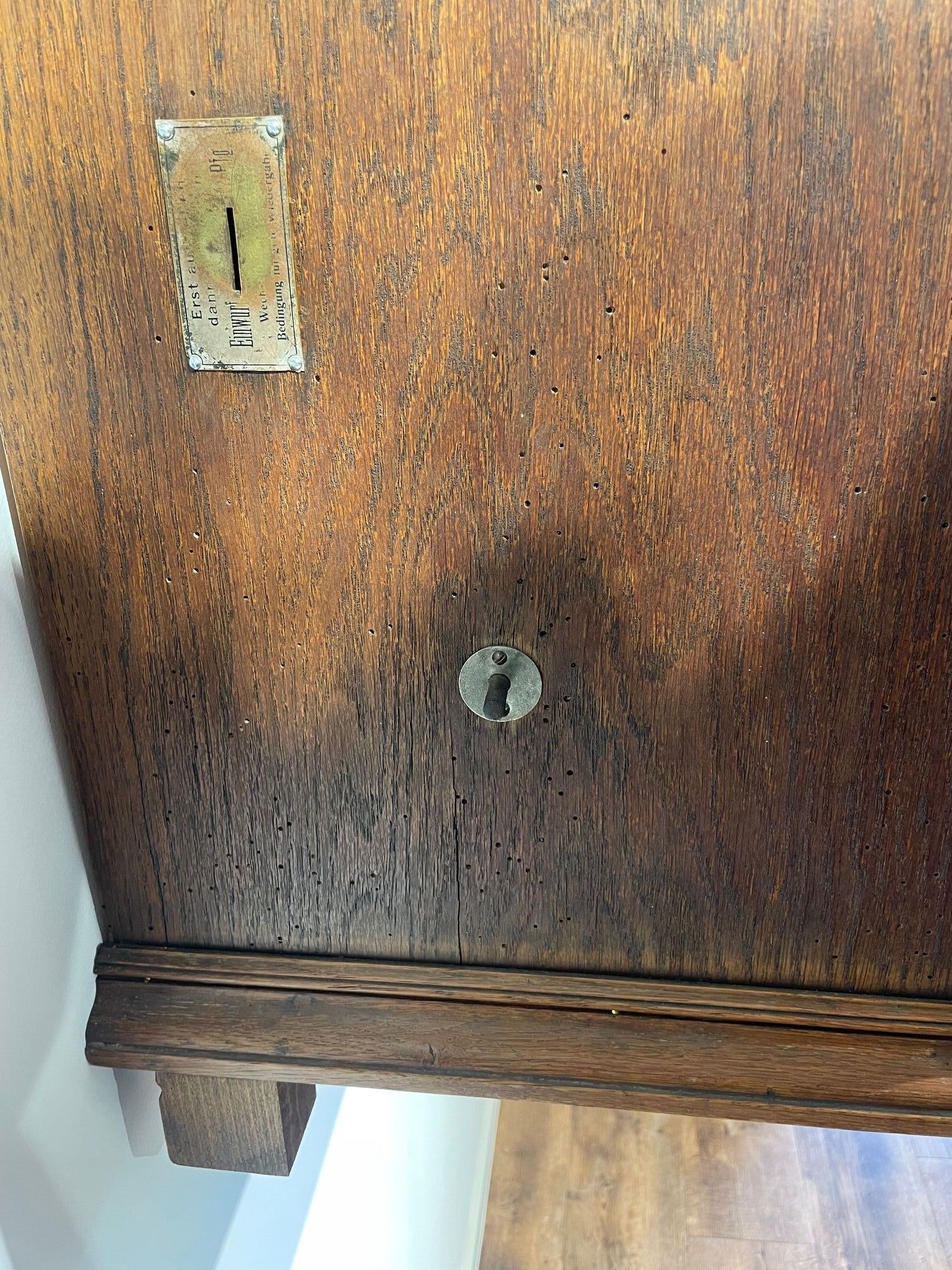
10-pfennig coin slot for playing a single record
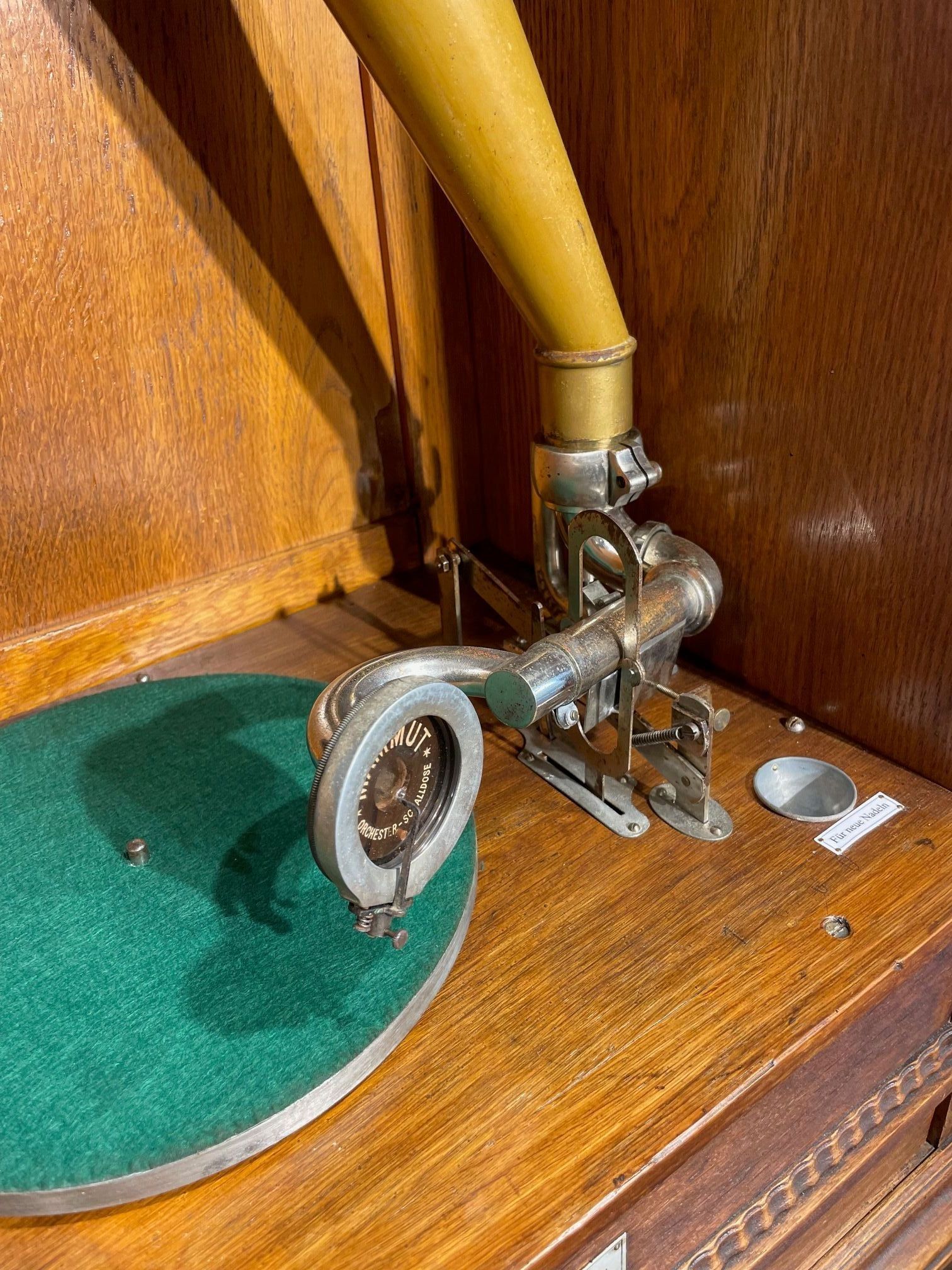
Single-spring motor with heavy cast mounting plates
Turntable approx. 25 cm in diameter
Internal sheet-metal horn integrated into the cabinet, providing high volume and clear sound projection
Mammut “Orchestra” soundbox, delivering powerful, room-filling playback
The combination of internal horn, solid mechanics, and a heavy cabinet gives the instrument the warm, full-bodied sound quality typical of high-grade cabinet gramophones.
Cabinet and Design
The cabinet is constructed of:
solid oak,
high-quality veneers,
various hardwoods and softwoods,
dark stained and executed with precise craftsmanship.
Dealer and Provenance Information
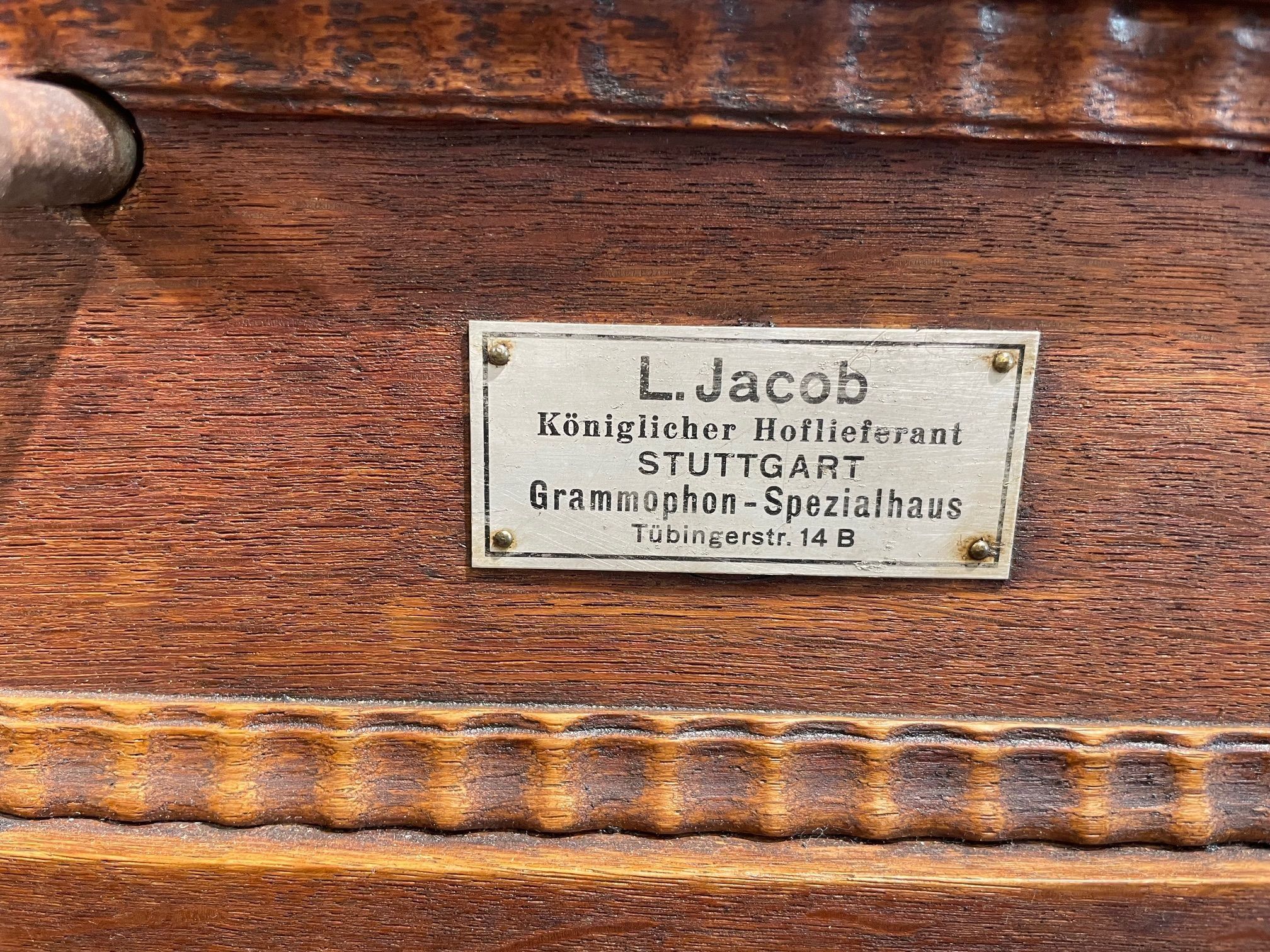
Mounted on the front of the cabinet is an original metal dealer’s plaque reading:
L. Jacob
Royal Court Purveyor
Stuttgart
Gramophone Specialist
Tübinger Street 14 B
The title “Royal Court Purveyor” was an official distinction in the German Empire, granted only to selected businesses.
This plaque documents that the instrument was sold through a renowned gramophone specialist in Stuttgart, clearly addressing a discerning and affluent clientele.
Such dealer plaques not only document the distribution channel, but also underline the high-status positioning of coin-operated cabinet gramophones of this class around 1910.
Features of the Edisonium Example
The example displayed at the Edisonium bears the serial number 1000, placing it among the early known examples of the “Siegfried” model.
Its very good state of preservation allows for an illustrative presentation of both the technical construction and the aesthetic qualities of this coin-operated cabinet gramophone.
Significance
The Cabinet Mammut “Siegfried” stands as a representative example of the golden age of mechanical music machines immediately before the First World War.
It marks the transition from the private gramophone to the commercial entertainment machine, vividly illustrating how technology, design, commerce, and everyday culture were closely intertwined around 1910.
Within the context of the Edisonium, this instrument documents the European response to American coin-slot phonographs—less industrial in appearance, yet conceived as a representative piece of furniture with high acoustic performance and clear social prestige.