Name/Title
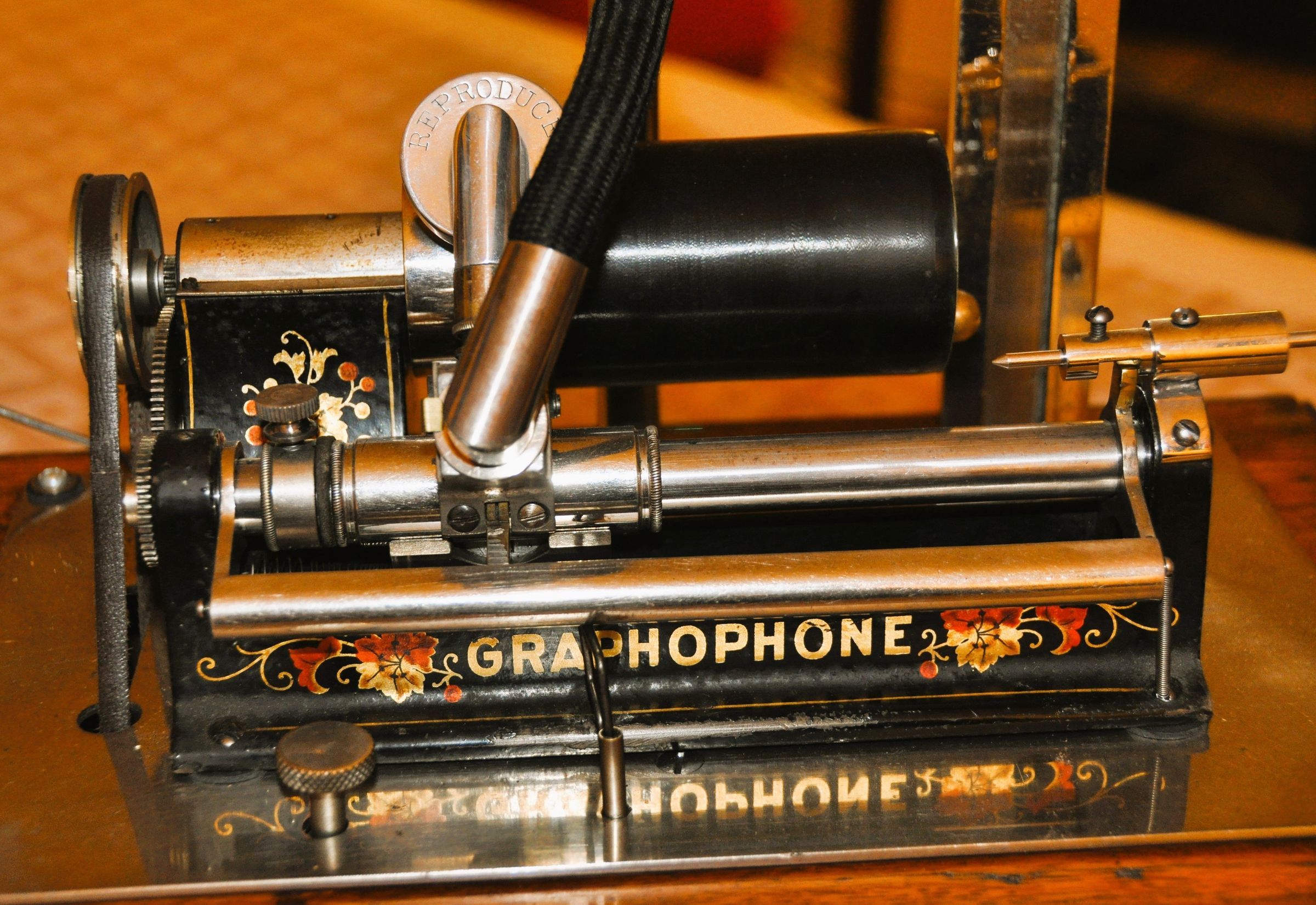
Graphophone Type “AS” – Columbia Coin‑SlotEntry/Object ID
151Description
American Graphophone Company, USA – c. 1898
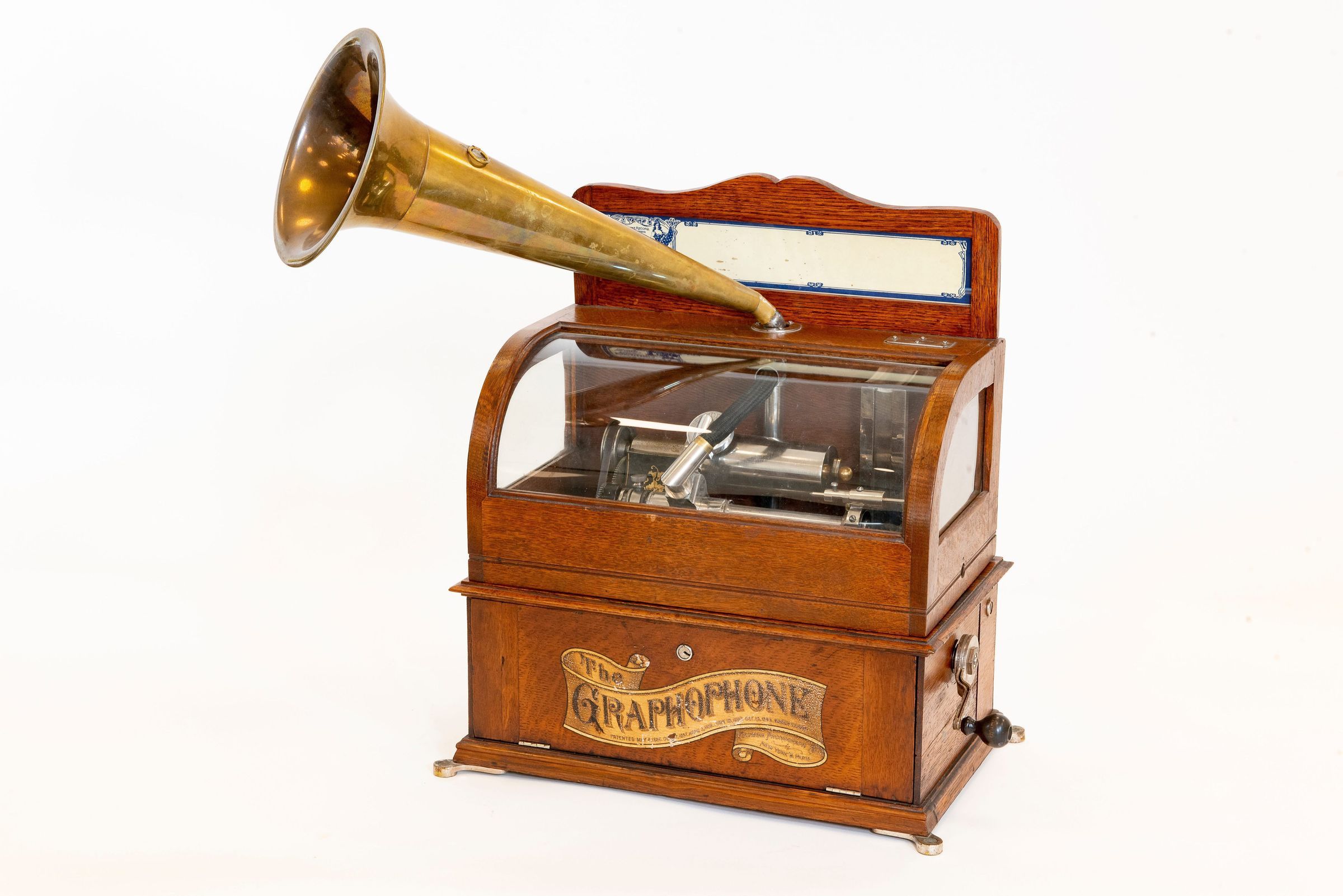
Table‑top coin‑operated phonograph with oak cabinet
Historical Background
Introduced in 1898, the Graphophone Type “AS” replaced the more expensive predecessor, the Type “N” Coin‑Slot. Priced at $35, it was more affordable than comparable coin‑operated machines from Edison (such as the Model “H” at $50) and was aimed at widespread use in public venues such as bars, hotels, restaurants, and retail stores.
Technical Design & Construction
The AS was mechanically based on the “New York” Type A but adapted for coin‑operated use.
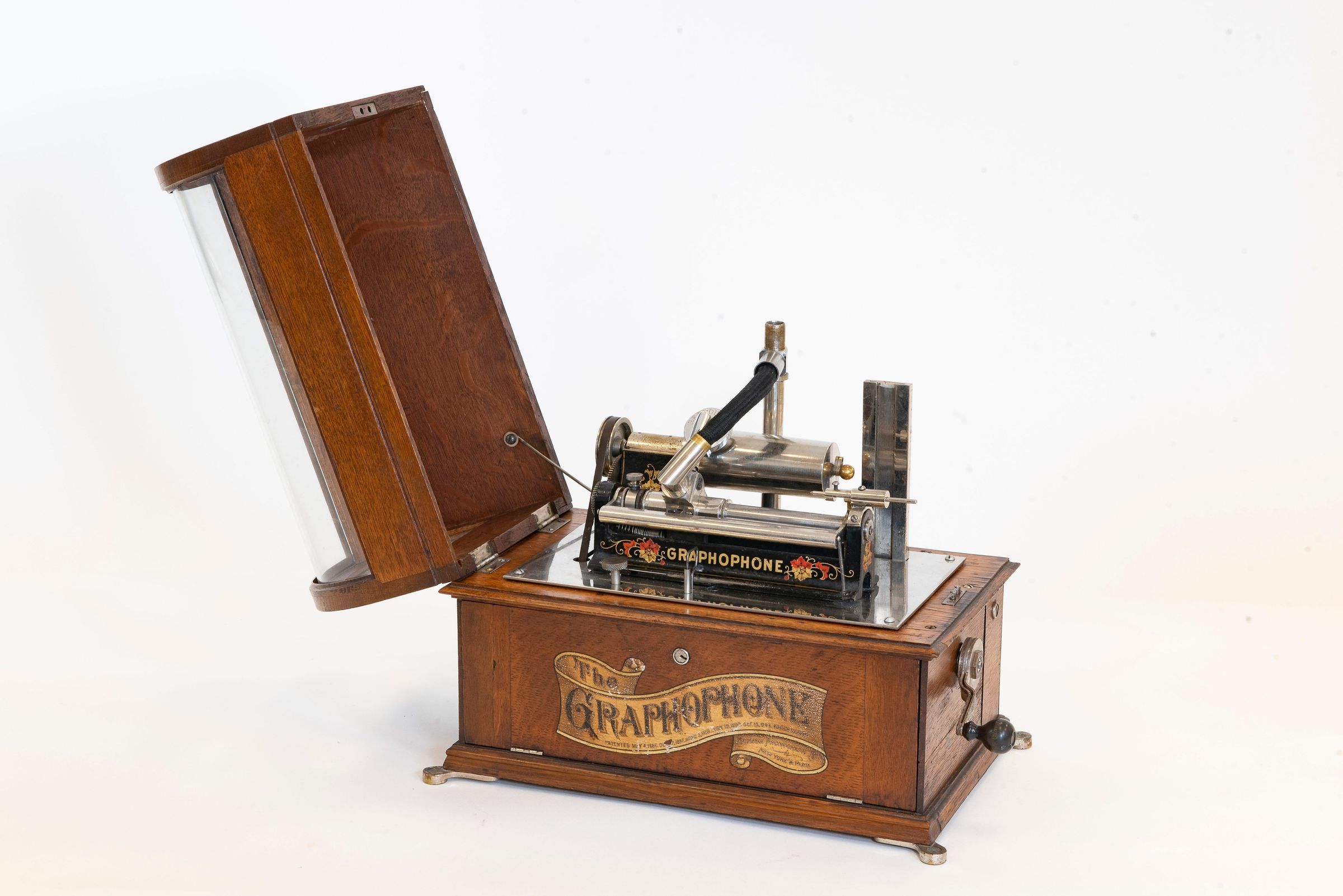
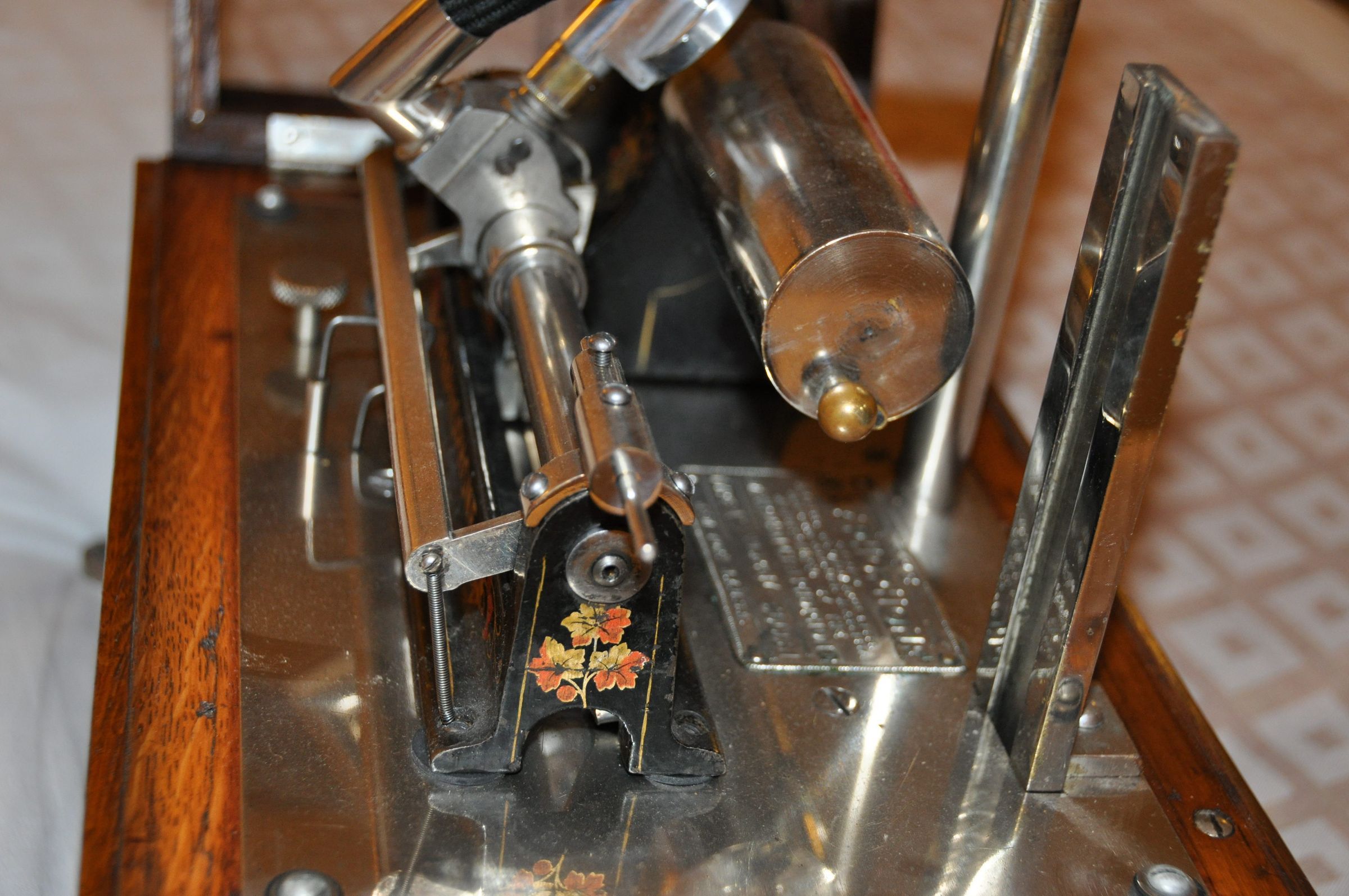
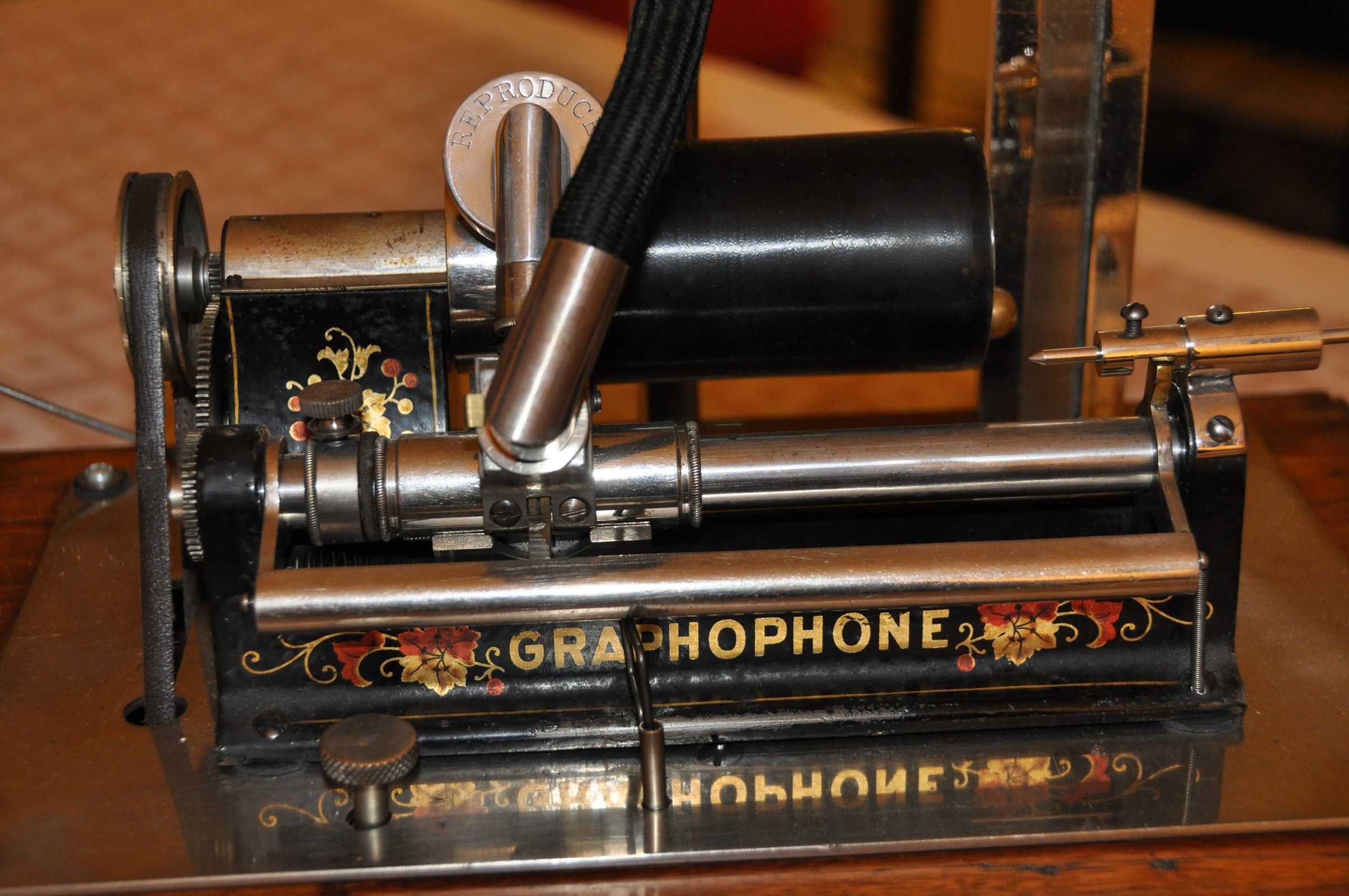
Chassis: Black‑enameled cast‑iron frame with floral and gold decorations; bedplate in nickel‑plated steel
Motor: Simple spring‑driven motor, accessible via a lockable front service door
Cabinet: Solid oak with curved glass display cover and a title card holder for the current selection
Reproducer: Columbia aluminum soundbox (#2)
Operation: Insert coin → release crank → wind motor → play to the end → automatic return of the reproducer carriage to the start position
Coin Mechanism
A lockable drawer on the right side of the cabinet collected the coins. Inserting a coin released the crank mechanism, enabling the motor to be wound. Once the record had been played to the end, the system automatically locked until another coin was inserted.
Variants
In addition to the tabletop version (AS), there was the ASL model with a larger floor‑standing cabinet. Some early AS units still carried an “S” nameplate before being updated to “AS.” The Edisonium also displays the very rare ASL version.
Significance
The Graphophone AS represents the transition from elaborate, expensive coin‑operated phonographs to simpler, more affordable machines that made music accessible to a wider audience. Its robust design and ease of maintenance made it a popular choice during the coin‑operated phonograph era around 1900.