Name/Title
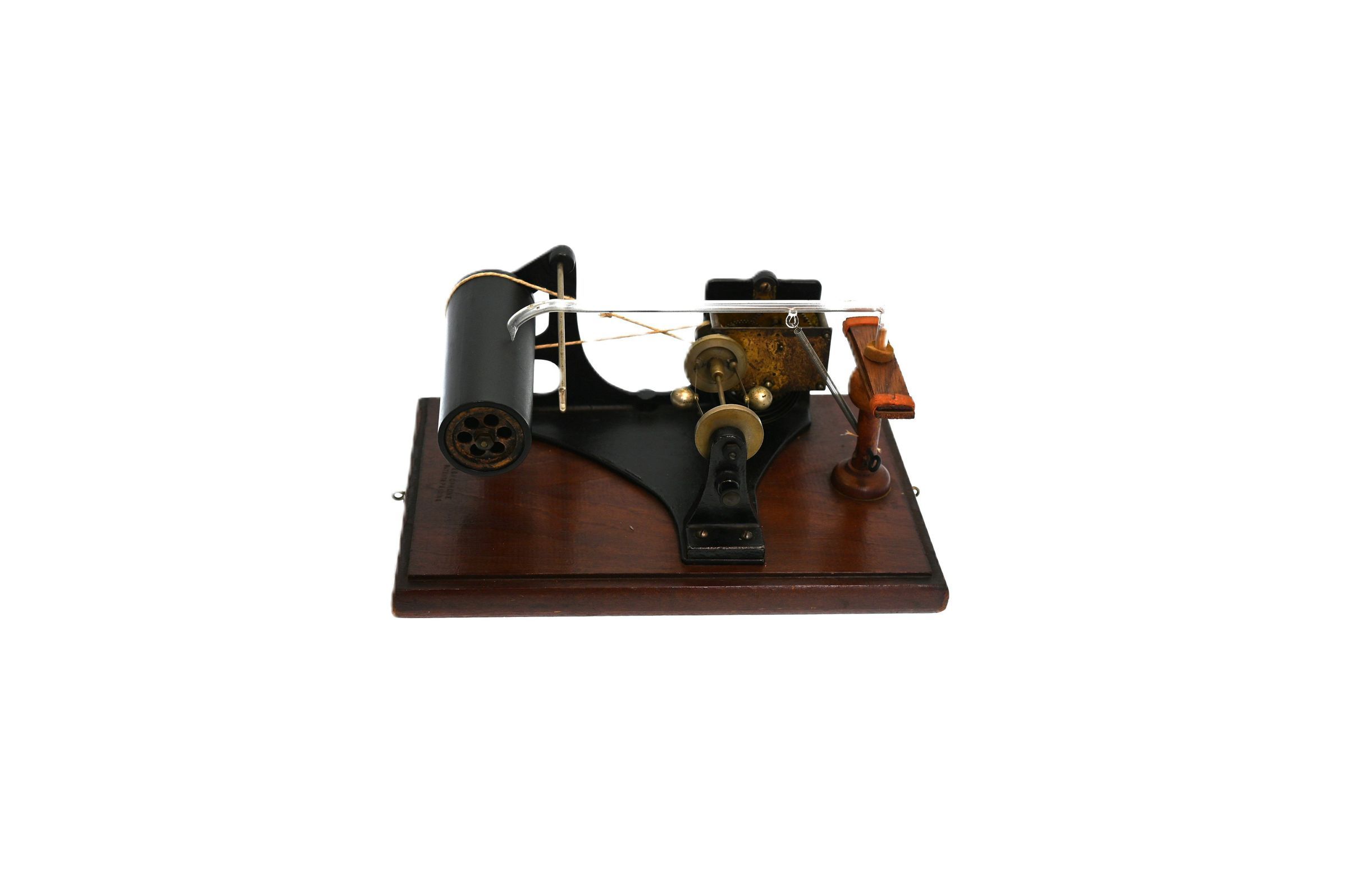
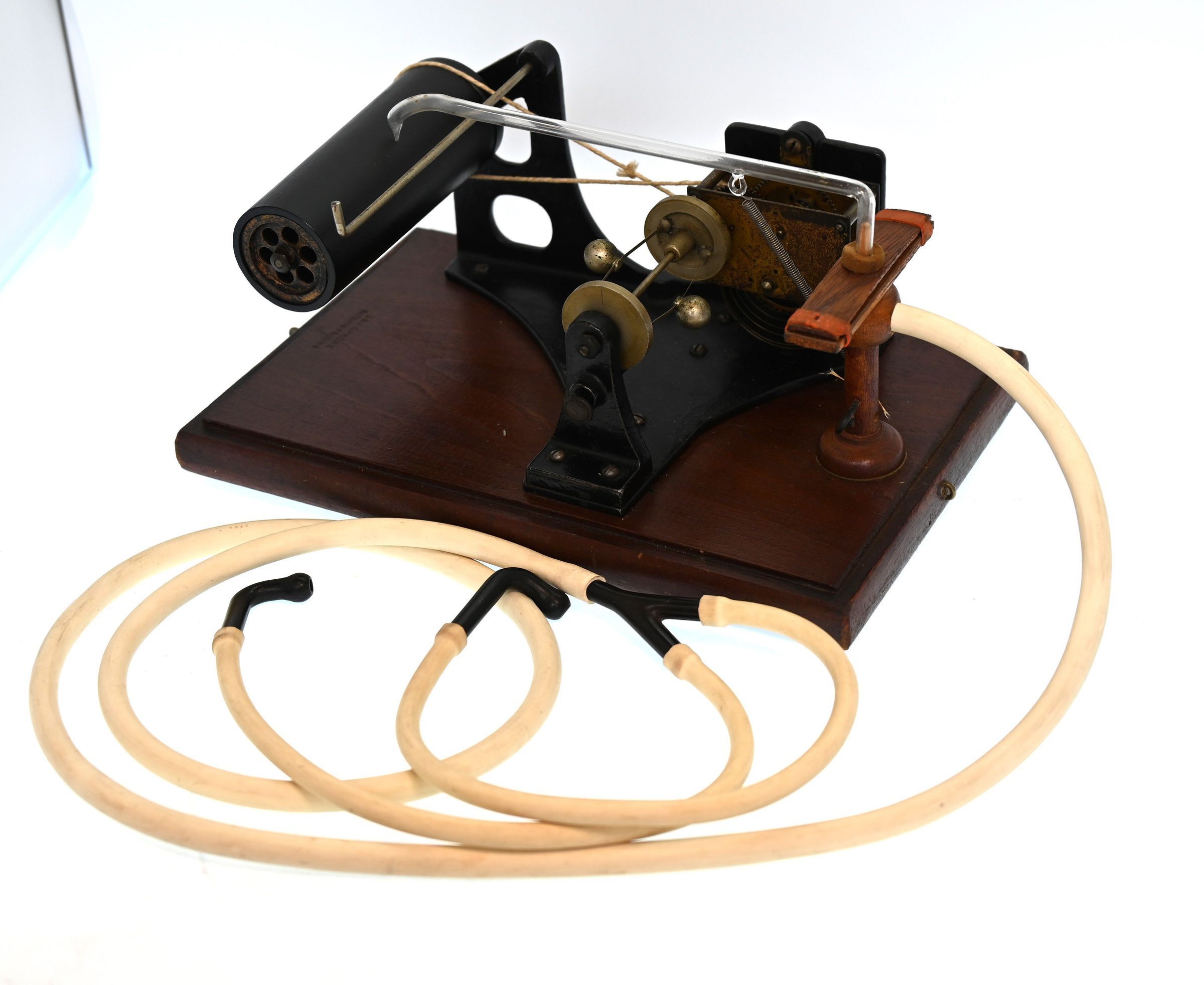
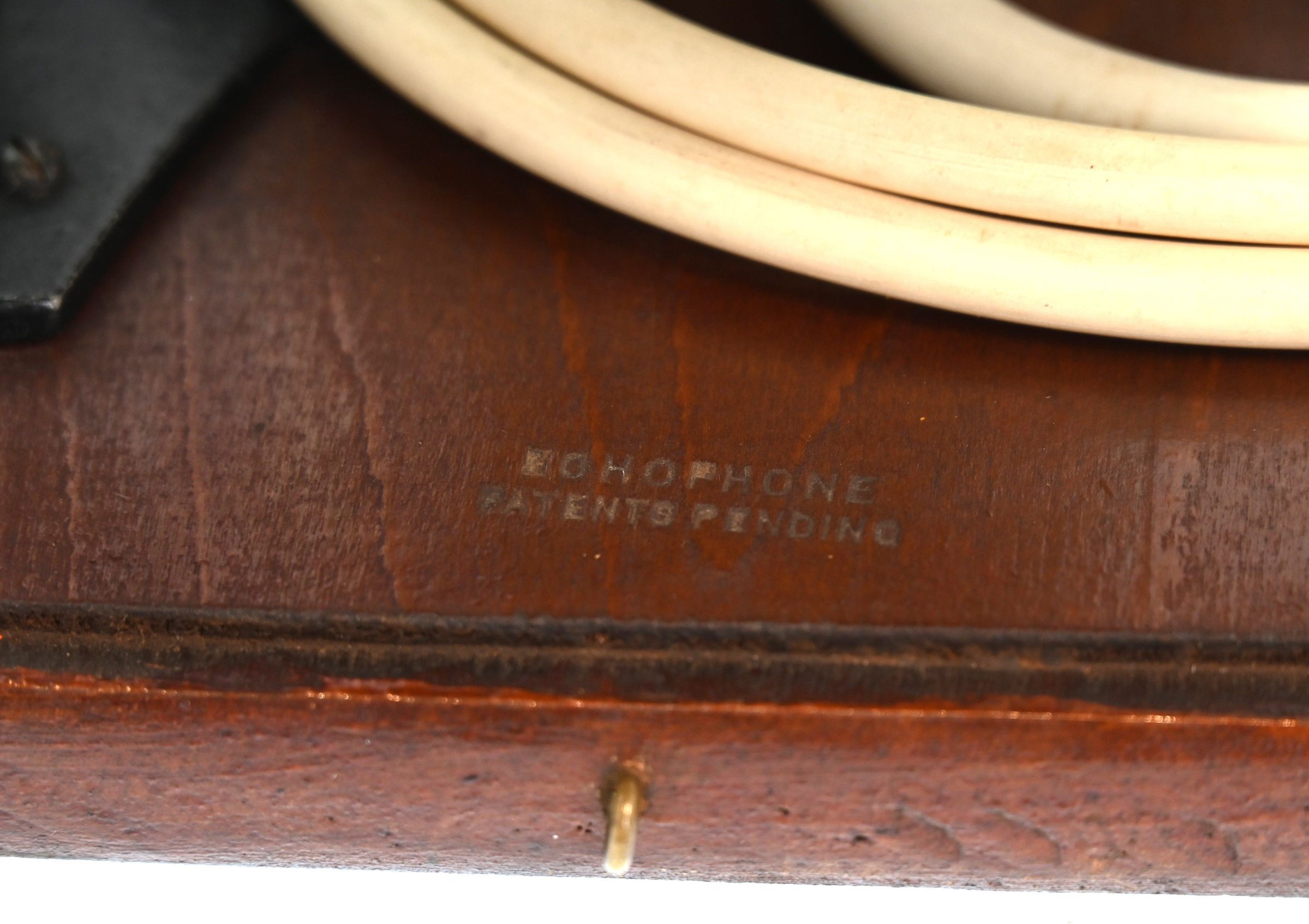
Echophone with Gutta‑Percha MandrelEntry/Object ID
177Description
Edward H. Amet, USA – ca. 1896
Predecessor of the later “Puck” phonographs
This Echophone represents the improved version of the early model with a wooden mandrel and marks an important step in the 1890s effort to produce robust and affordable talking machines for the mass market. It was manufactured by Edward Hill Amet (1860–1948), a pioneer in sound and motion‑picture technology.
Technical Improvements
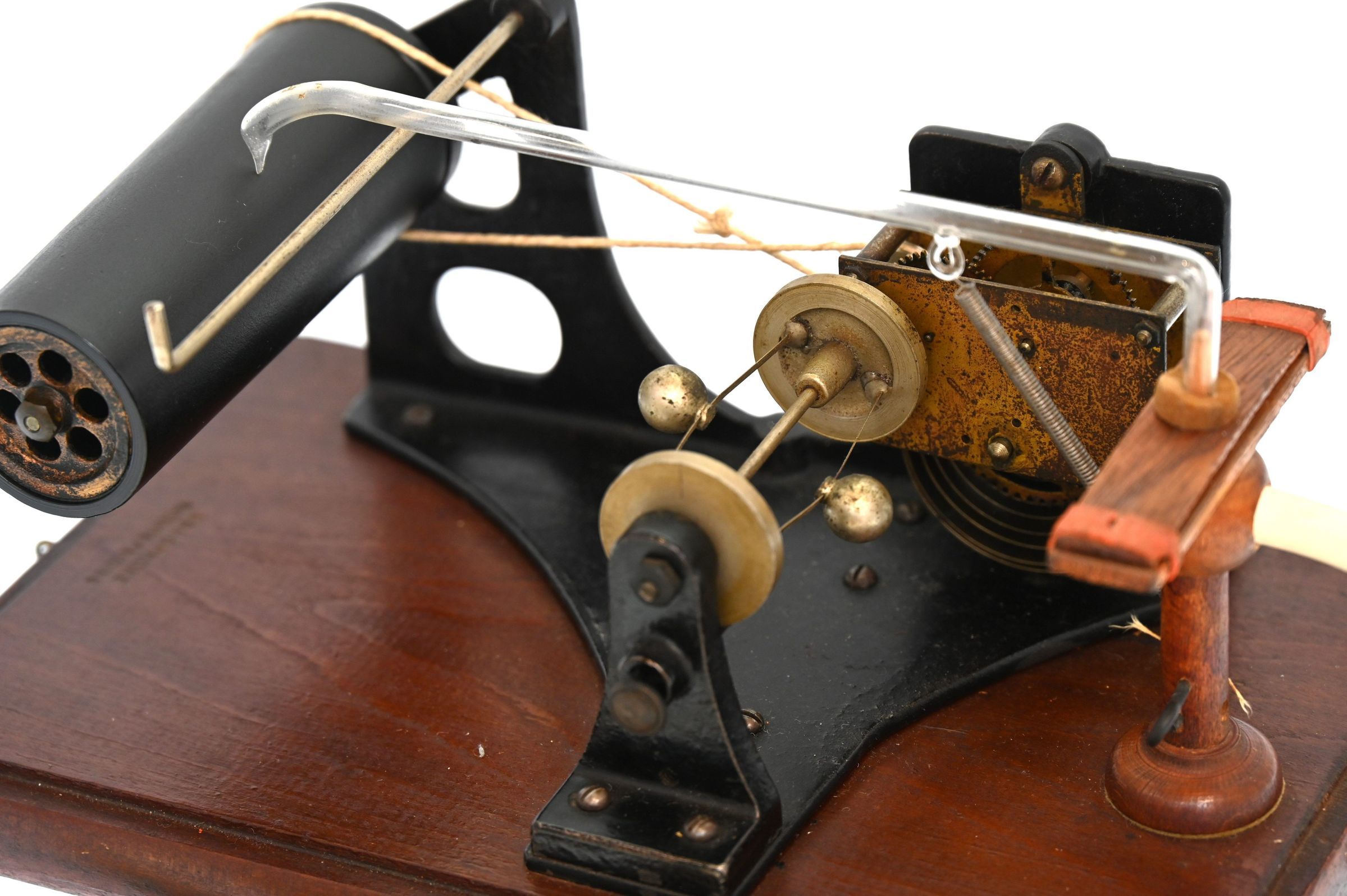
Gutta‑Percha Mandrel – Replacing the wooden mandrel of the first version, this model features a mandrel made of gutta‑percha, a hard, dimension‑stable natural material.
Advantages:
Greater durability
Less susceptible to moisture and warping
Smoother rotation, improving playback stability
Clockwork Spring Motor – Manufactured by the Waterbury Clock Company, this was a simple, low‑cost but reliable mechanism for home use.
Listening‑Tube Sound Delivery – Playback was via a glass tone tube and flexible rubber listening tubes directly to the ears; no horn was used.
Patents and Litigation
Amet marketed his Echophone as a low‑cost alternative to Edison and Columbia phonographs. Despite technical changes, he quickly drew the attention of the major manufacturers:
April 1896 – The American Graphophone Company won a major patent lawsuit against Amet.
The court not only prohibited further sales of his spring‑driven machines, but also awarded damages and gave the plaintiff the right to take possession of remaining stock.
The ruling was reaffirmed in early 1897.
Marketing and Aftermath
Before the sales ban, Amet aggressively promoted his machines at a low price:
Selling price: approx. $5–8 (compared to $20–40 for standard Edison models)
Popular marketing tactic: premium giveaways with magazine subscriptions, e.g. Leslie’s Weekly
After the lawsuit, modified Echophones appeared under other names such as the “Lyraphone” and “Euphonic Talking Machine”.
In Germany, Echophone parts from the bankruptcy stock found new life:
Berlin dealer Költzow imported Echophone components from late 1898 onward, assembling them into the model known as the “Practicus.” Költzow was known for acquiring the inventories of bankrupt manufacturers, sometimes making technical modifications or simply re‑branding them with his own nameplate.
Significance
The Echophone with gutta‑percha mandrel illustrates the attempt to combine low‑cost mass production with more durable materials.
It is also a rare example of how quickly technical design could adapt to legal and commercial pressures. Very few examples of this version survive today, making them highly desirable among collectors.