Name/Title
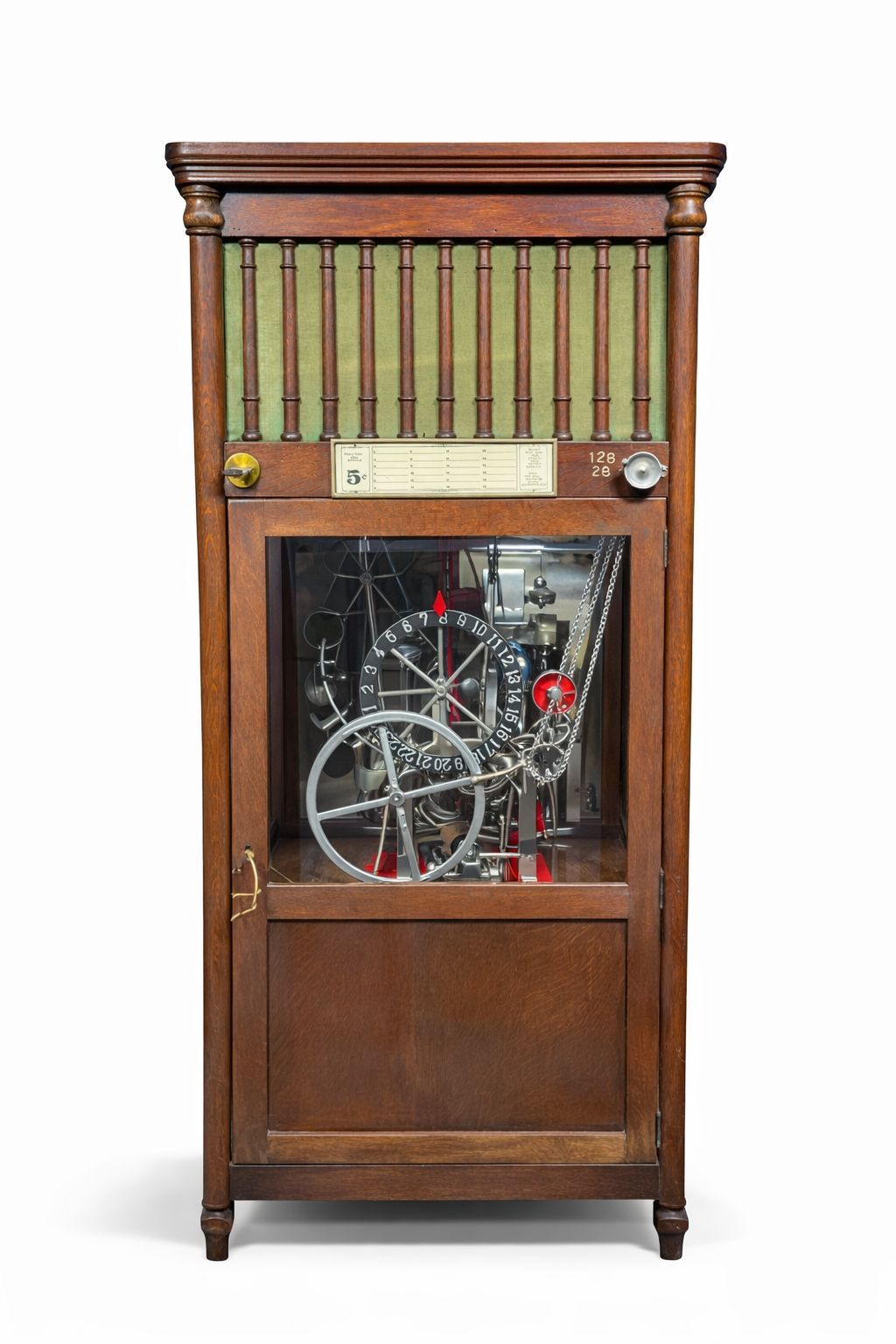
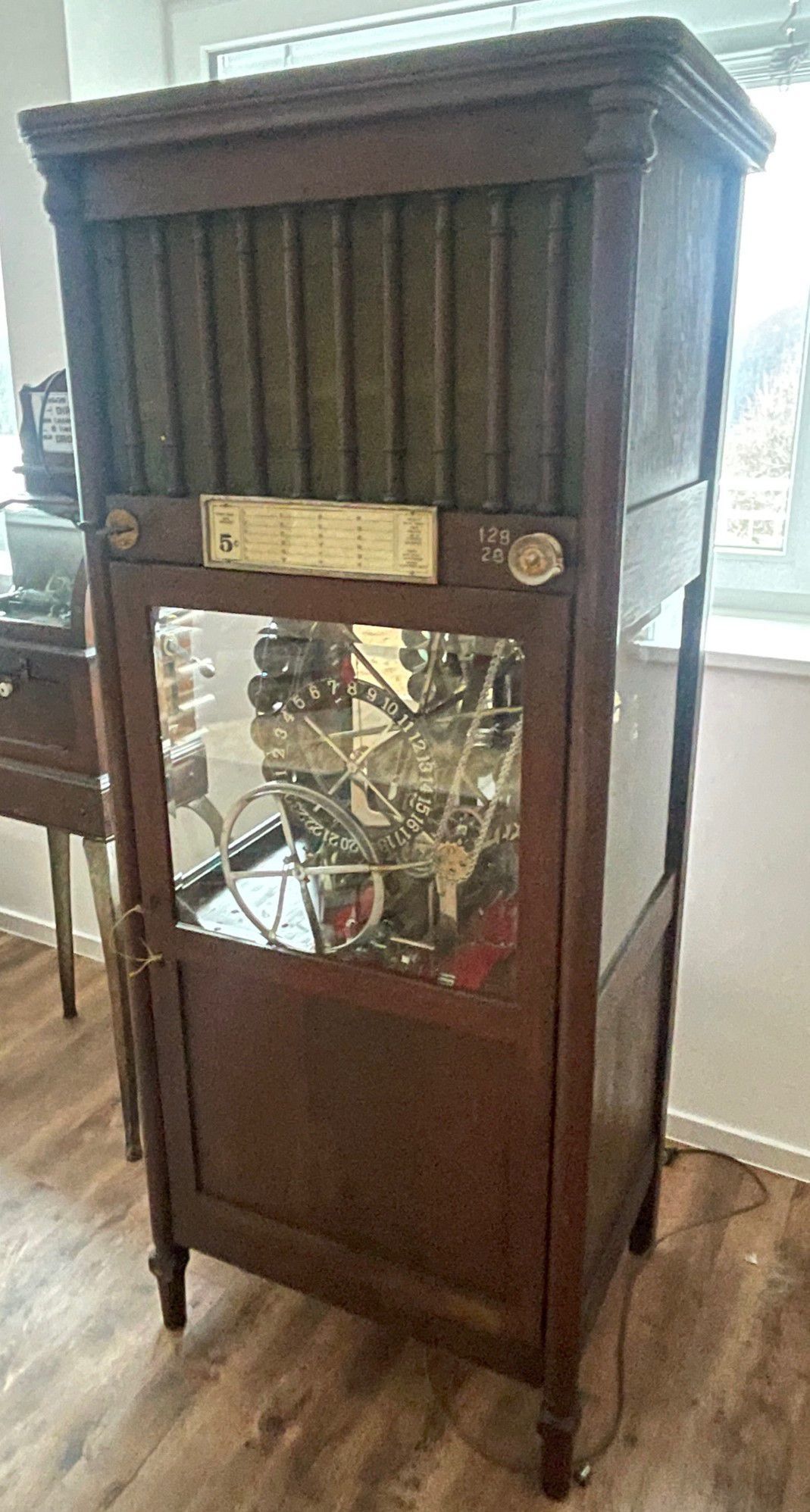
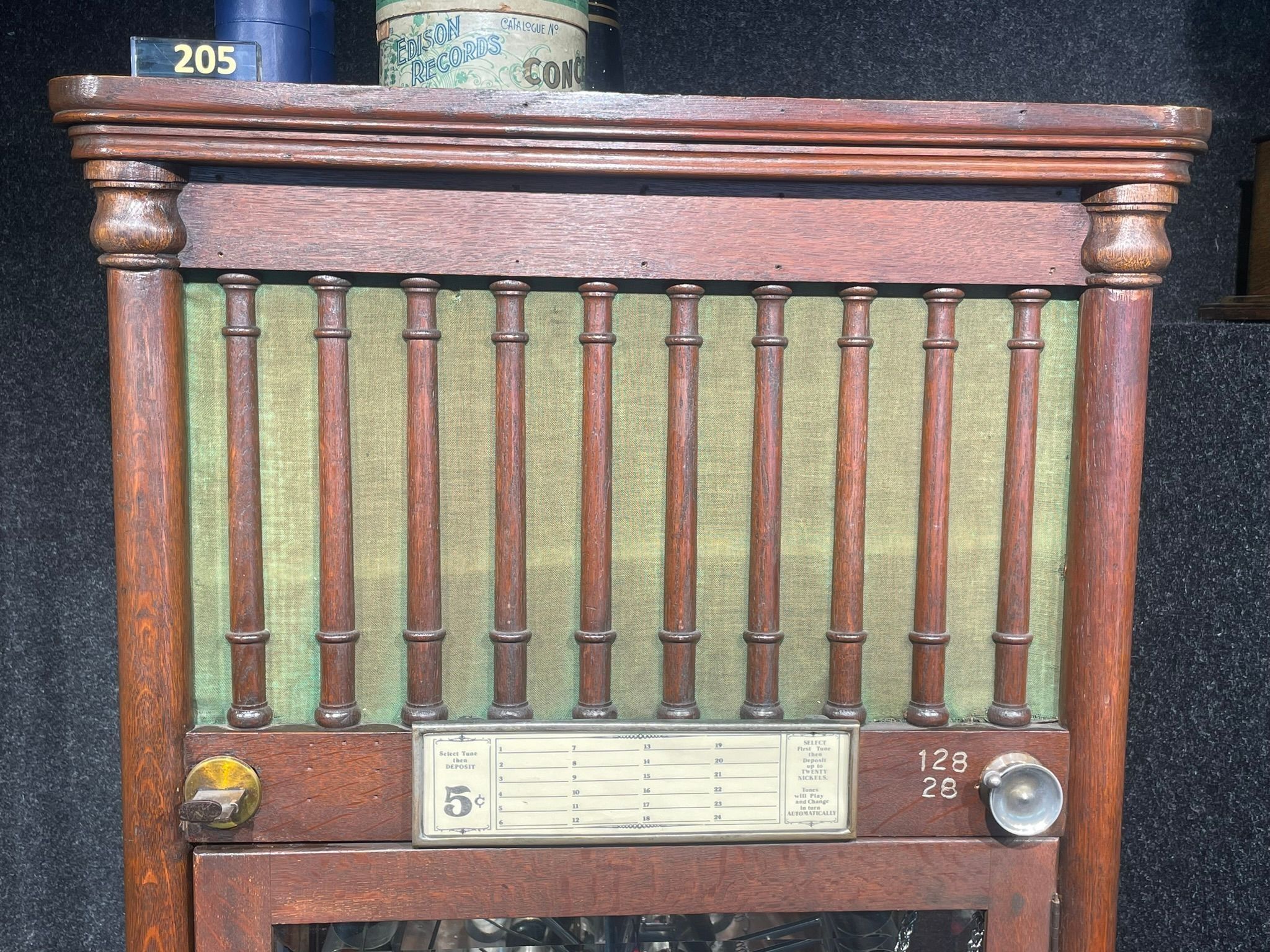
Cyrus Shigley’s Kalamazoo Electric Phonograph (USA, ca. 1917)Entry/Object ID
205Description
An Electrically Powered Music Machine with Wax Cylinders – A Late Attempt to Save the Cylinder Format
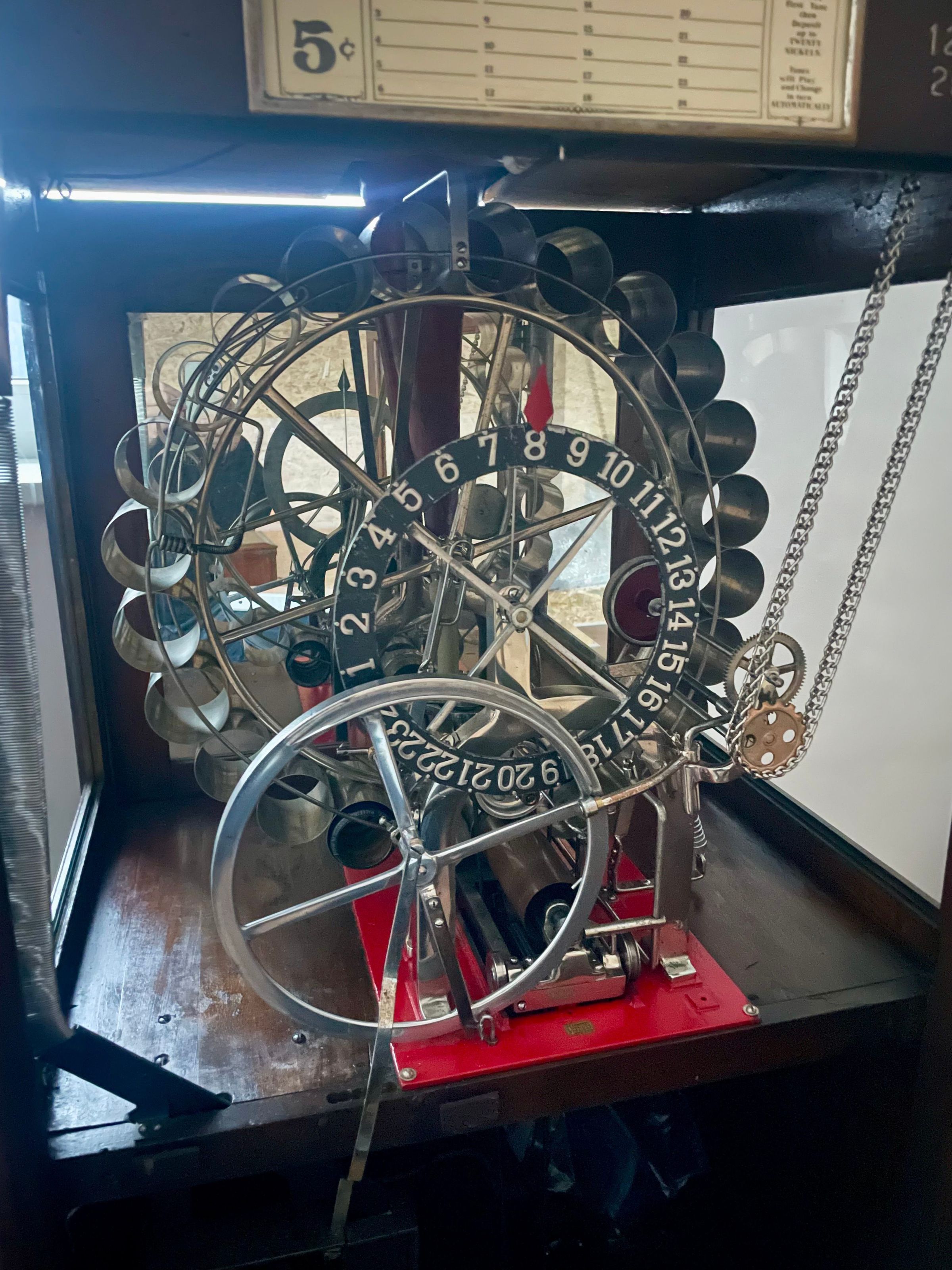
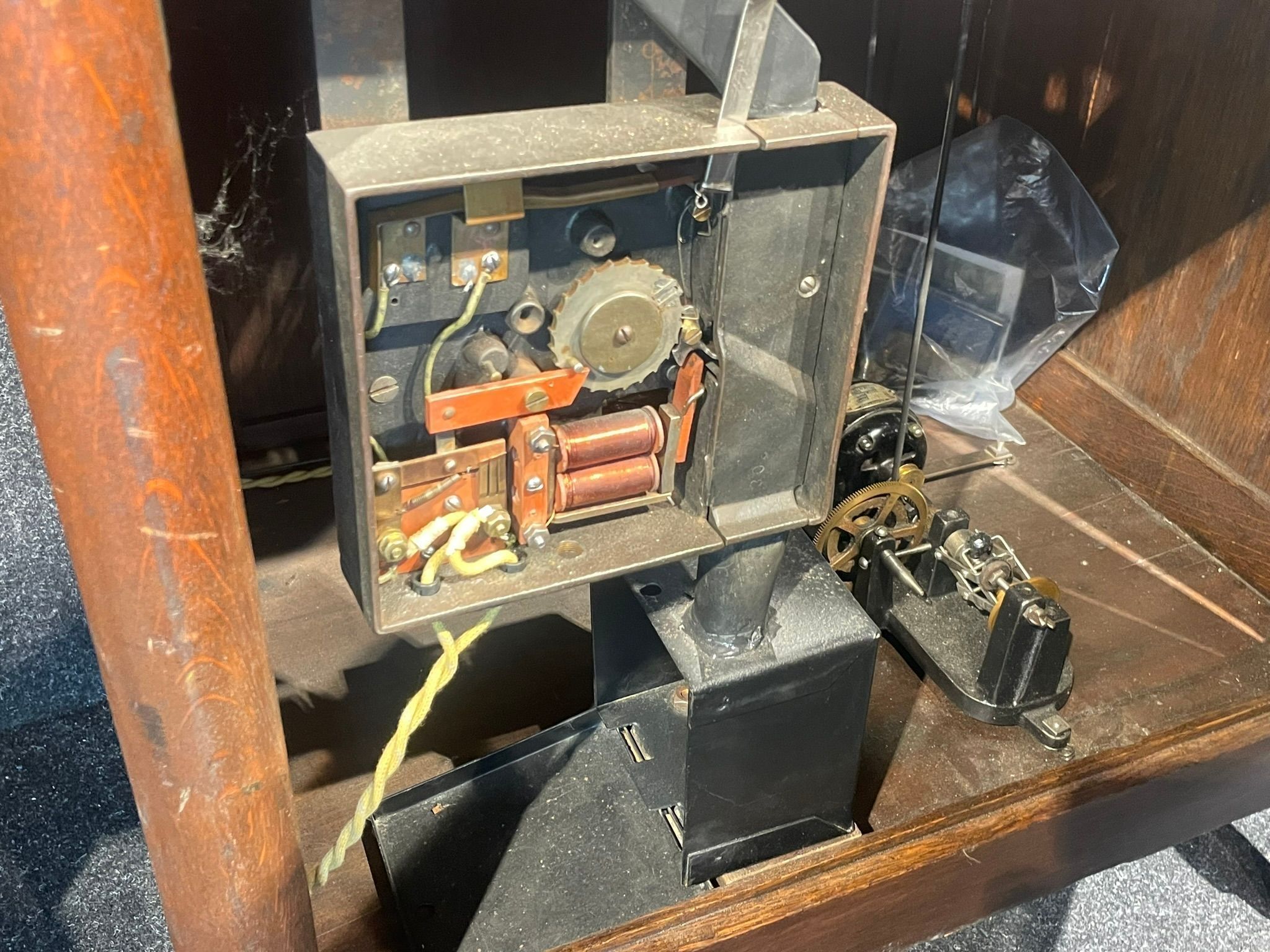
This monumental device was created by Cyrus C. Shigley, inventor of the legendary Multiphone of 1903. Unlike the purely mechanical Multiphone, this later model relies on a highly complex combination of mechanics and electrical engineering – and in many ways, it was far ahead of its time. Although built nearly 15 years after the Multiphone, it still followed the same core concept of a rotating cylinder carousel. But the technical level was raised dramatically: Instead of a hand-cranked spring motor, a powerful electric motor drives the system. Electromagnetic relays control the sequence of operations, and the playback unit moves on rails to engage with the selected cylinder – a revolutionary concept for its time.
Patents and Technology
Two U.S. patents protect Shigley’s design:
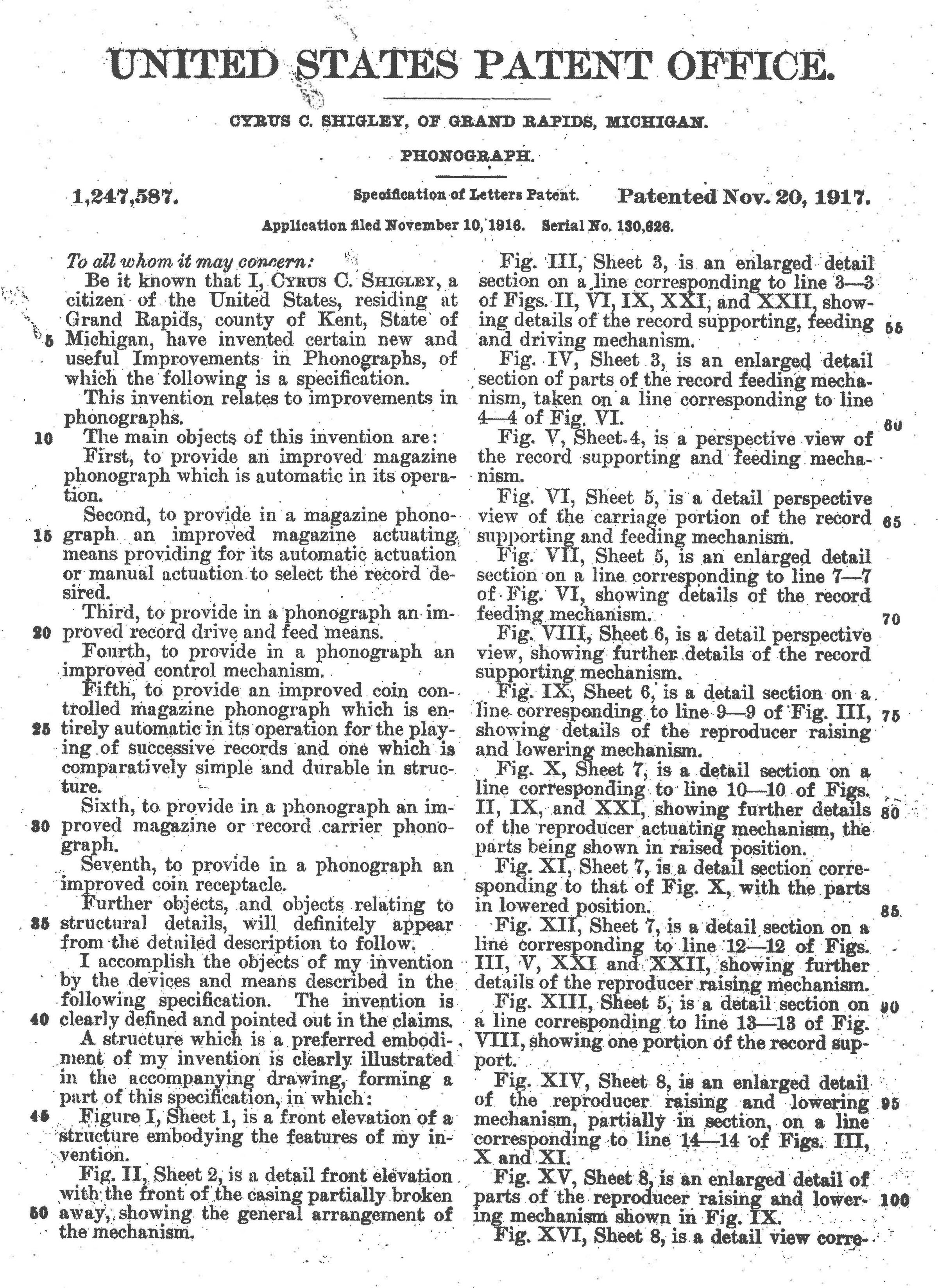
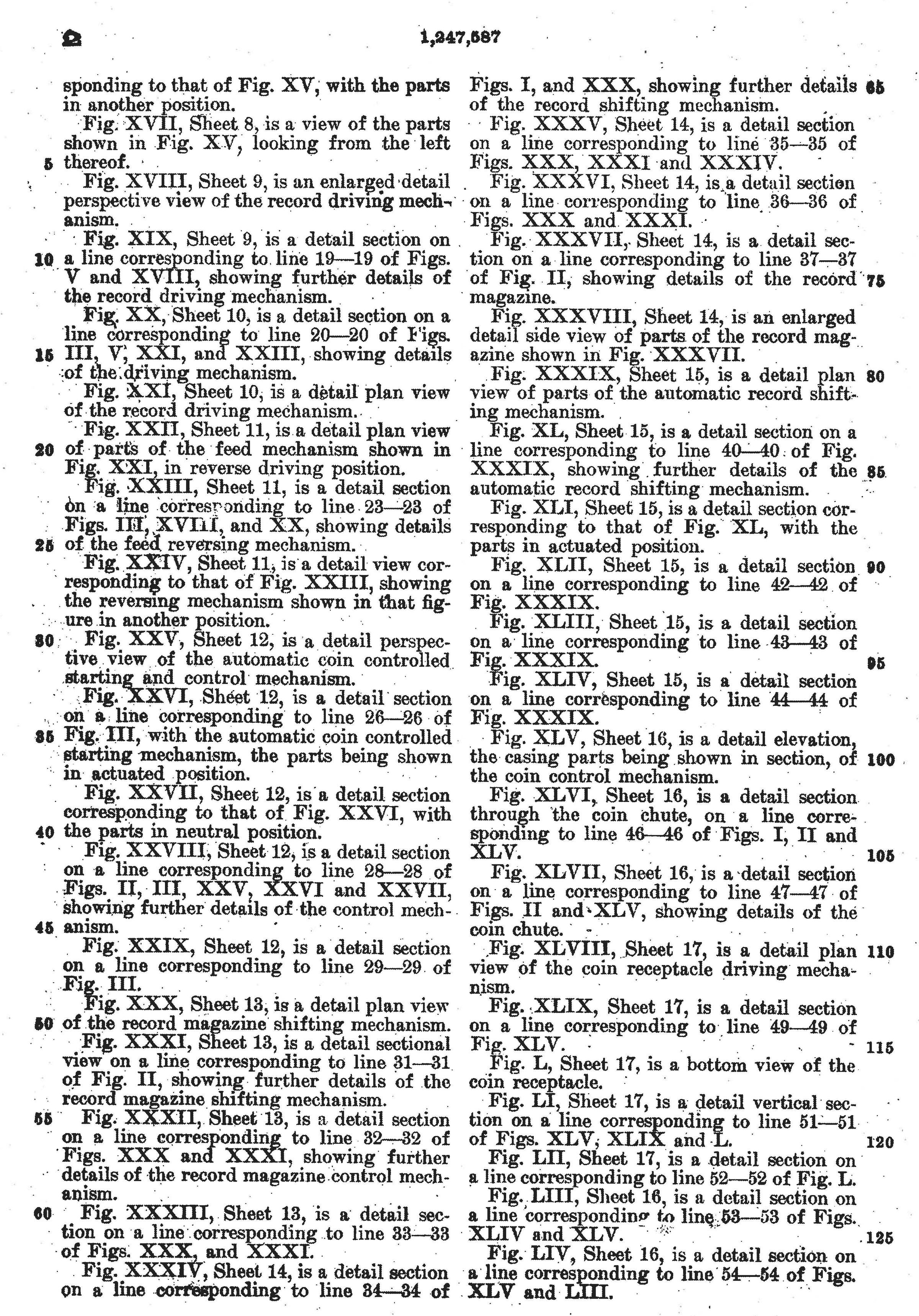
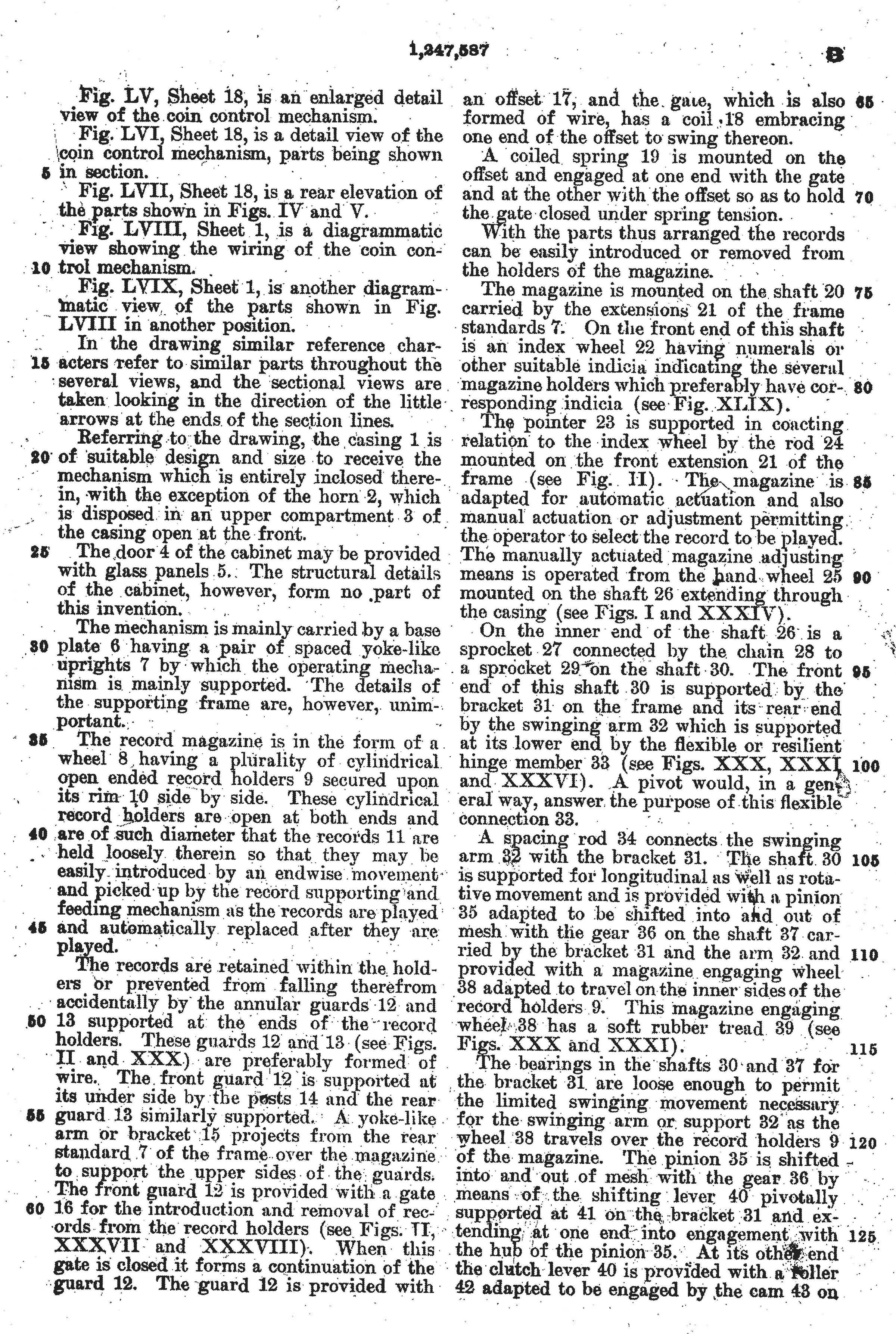
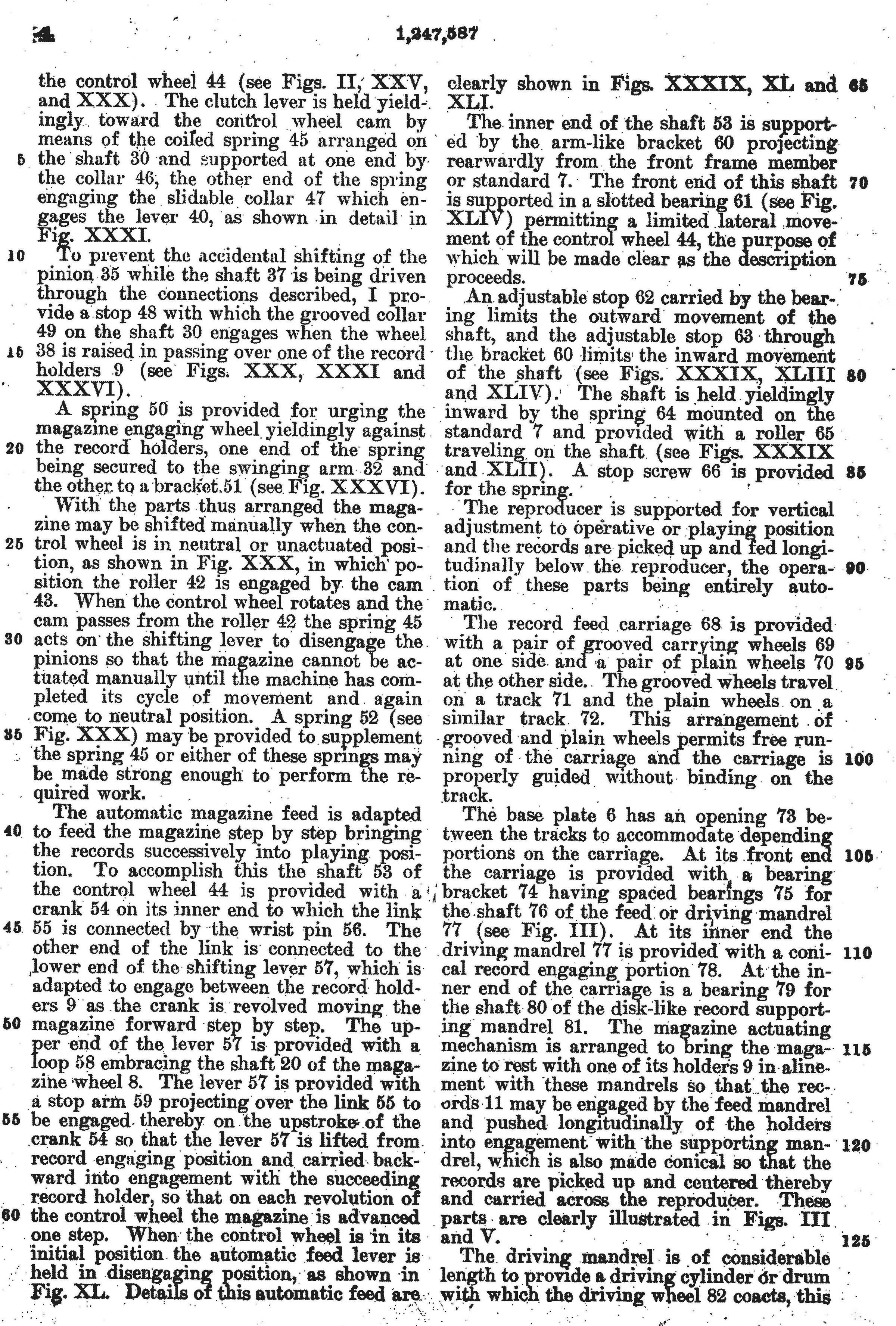
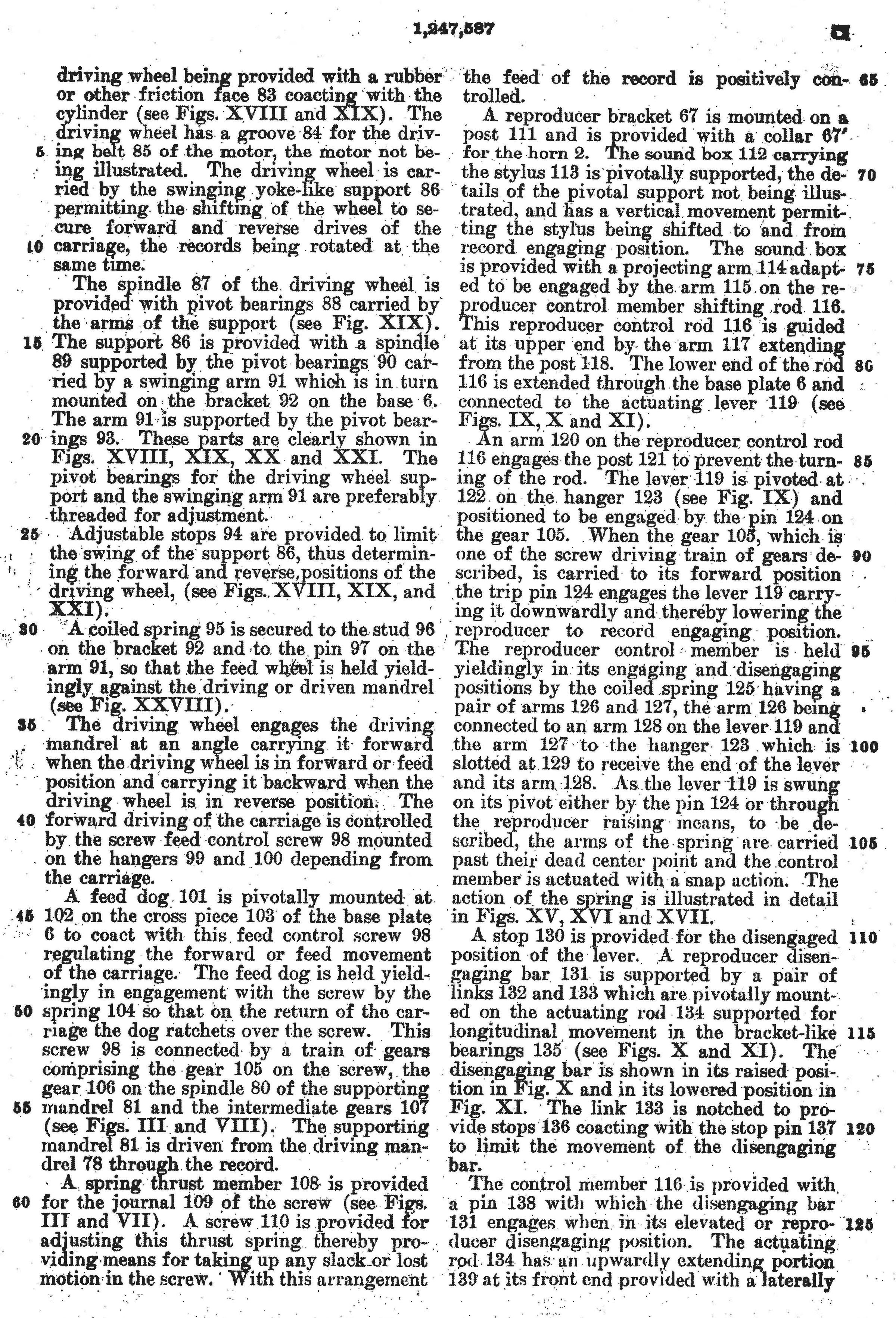
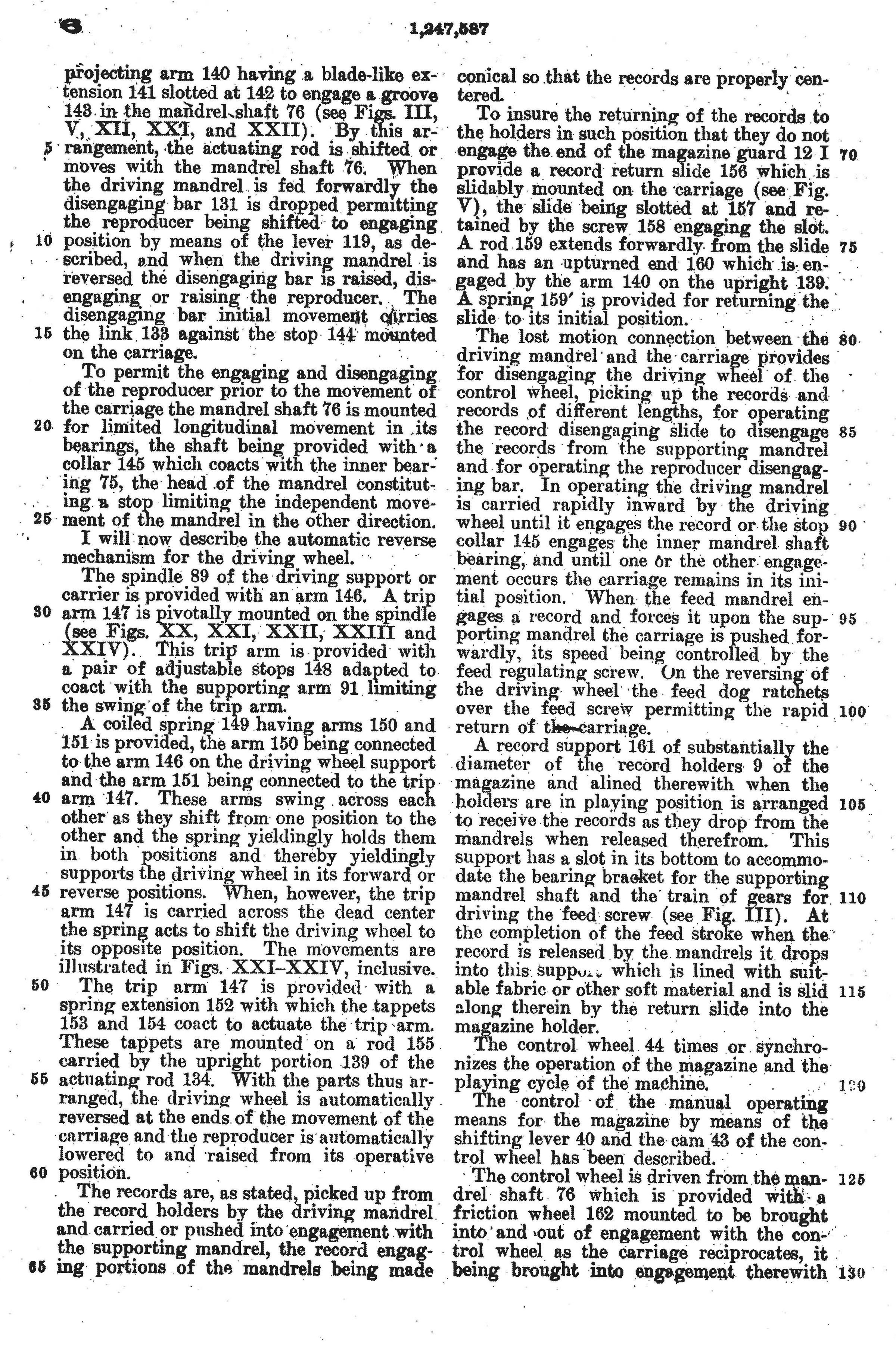
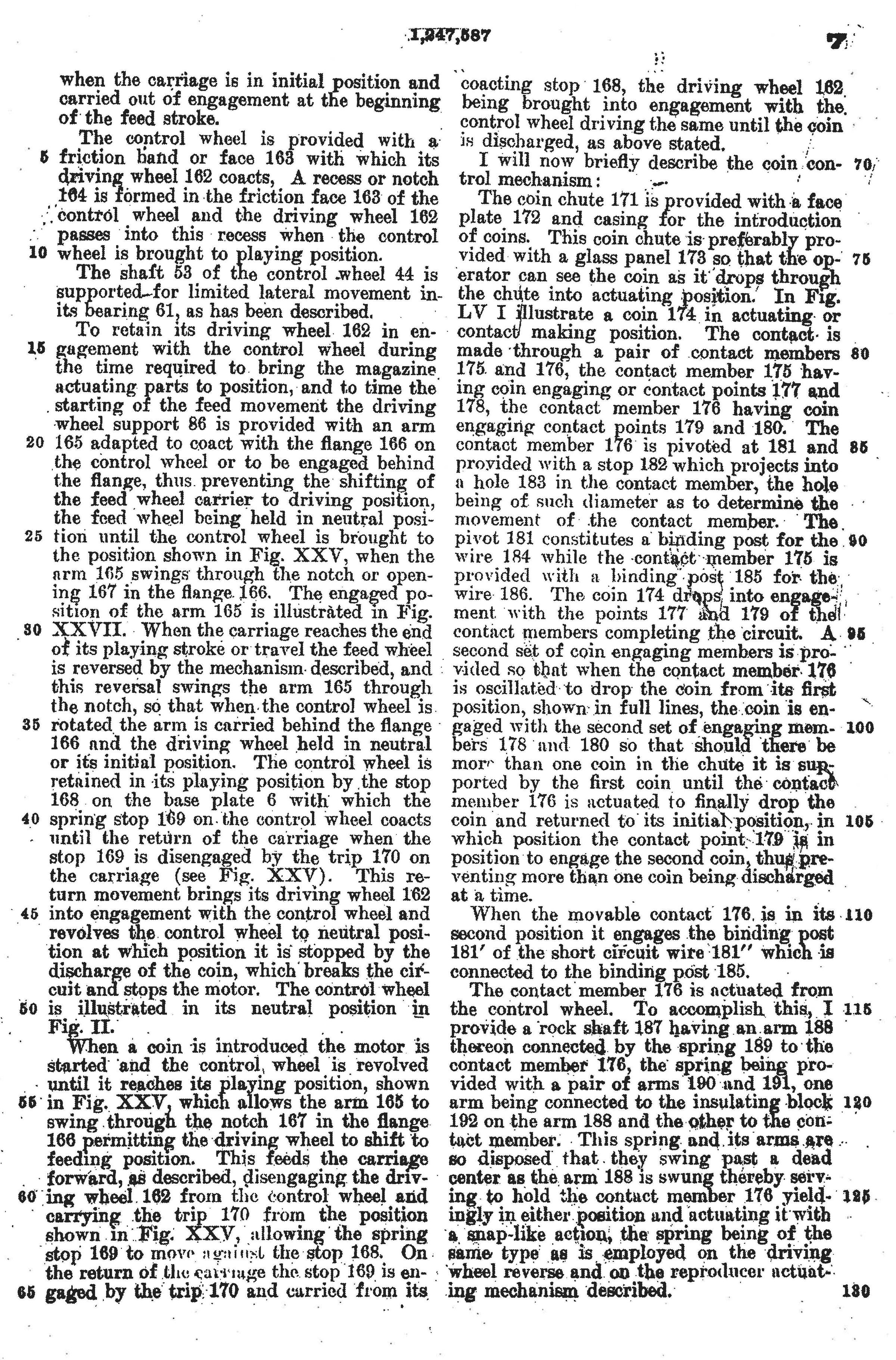
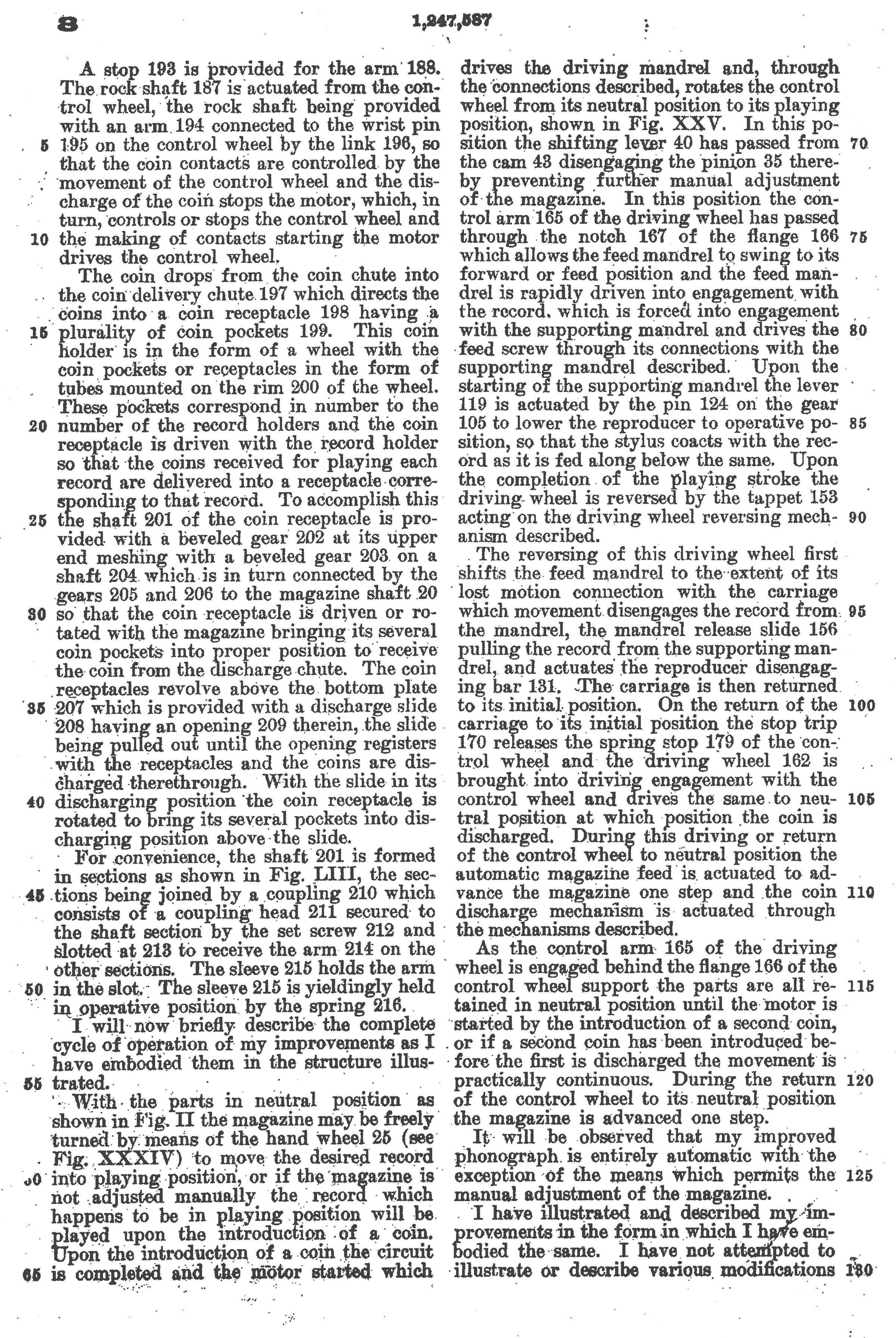
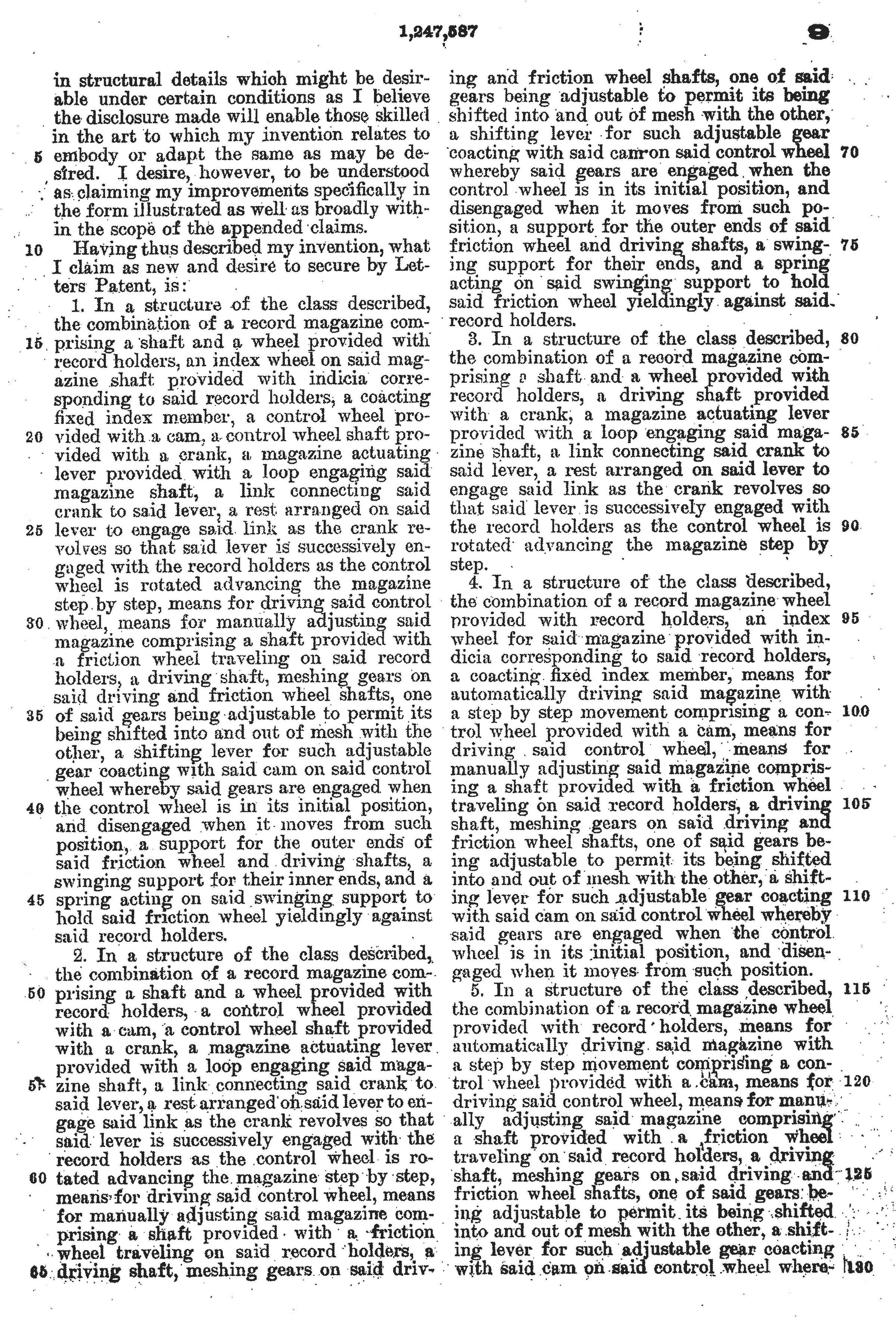
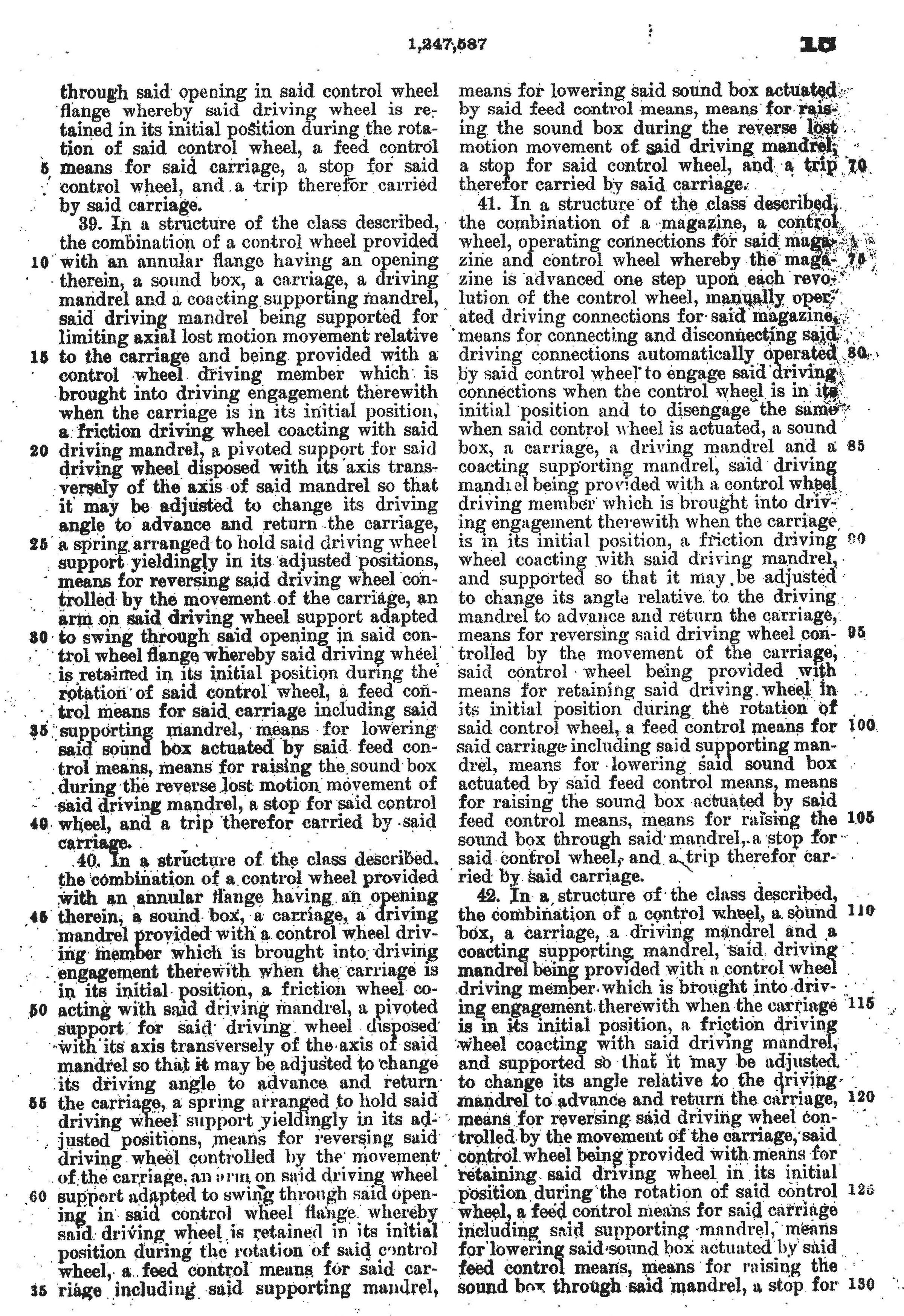
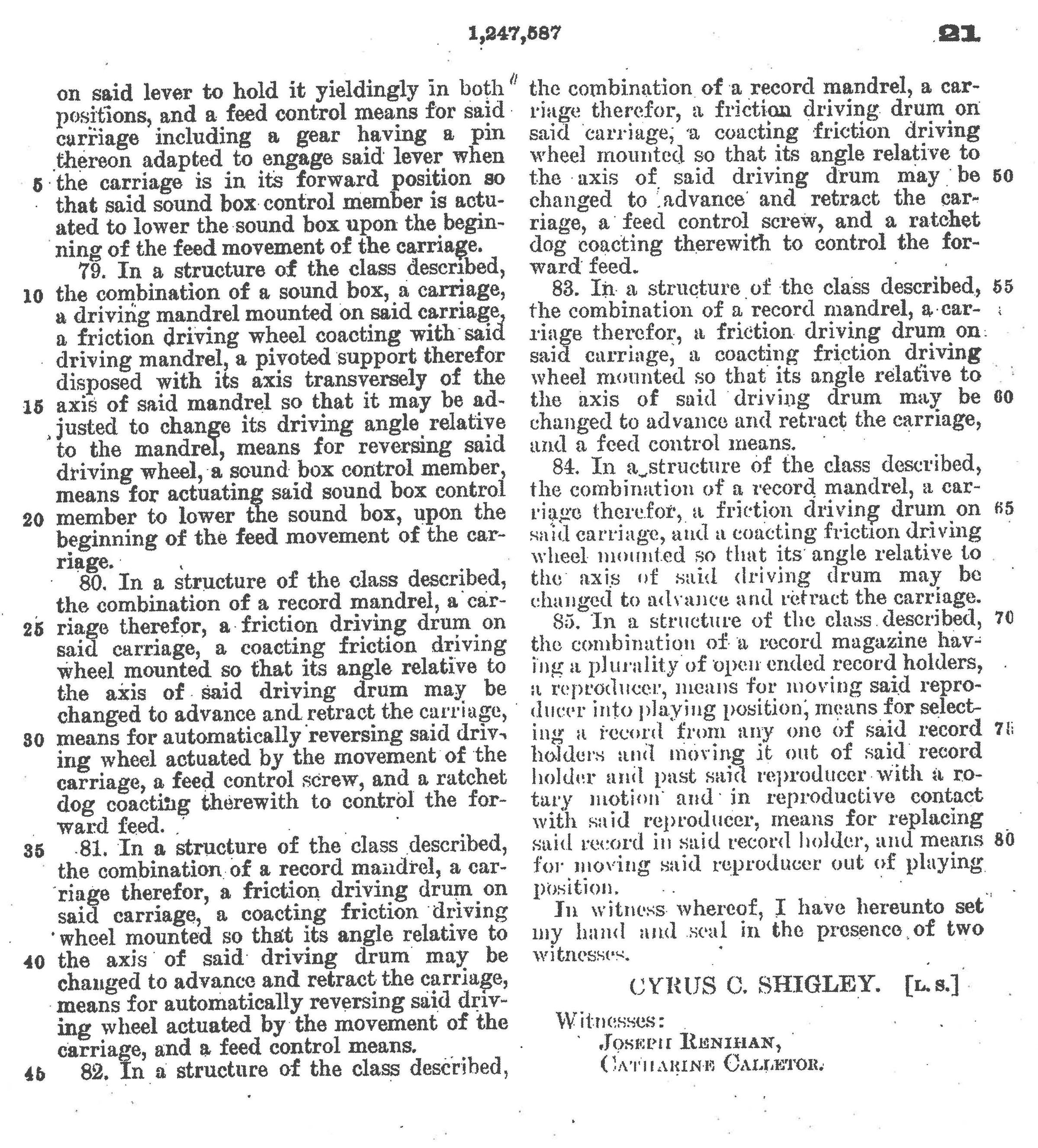
US1247587 (filed 1916, granted 1917): mechanical architecture with an electric coin accumulator
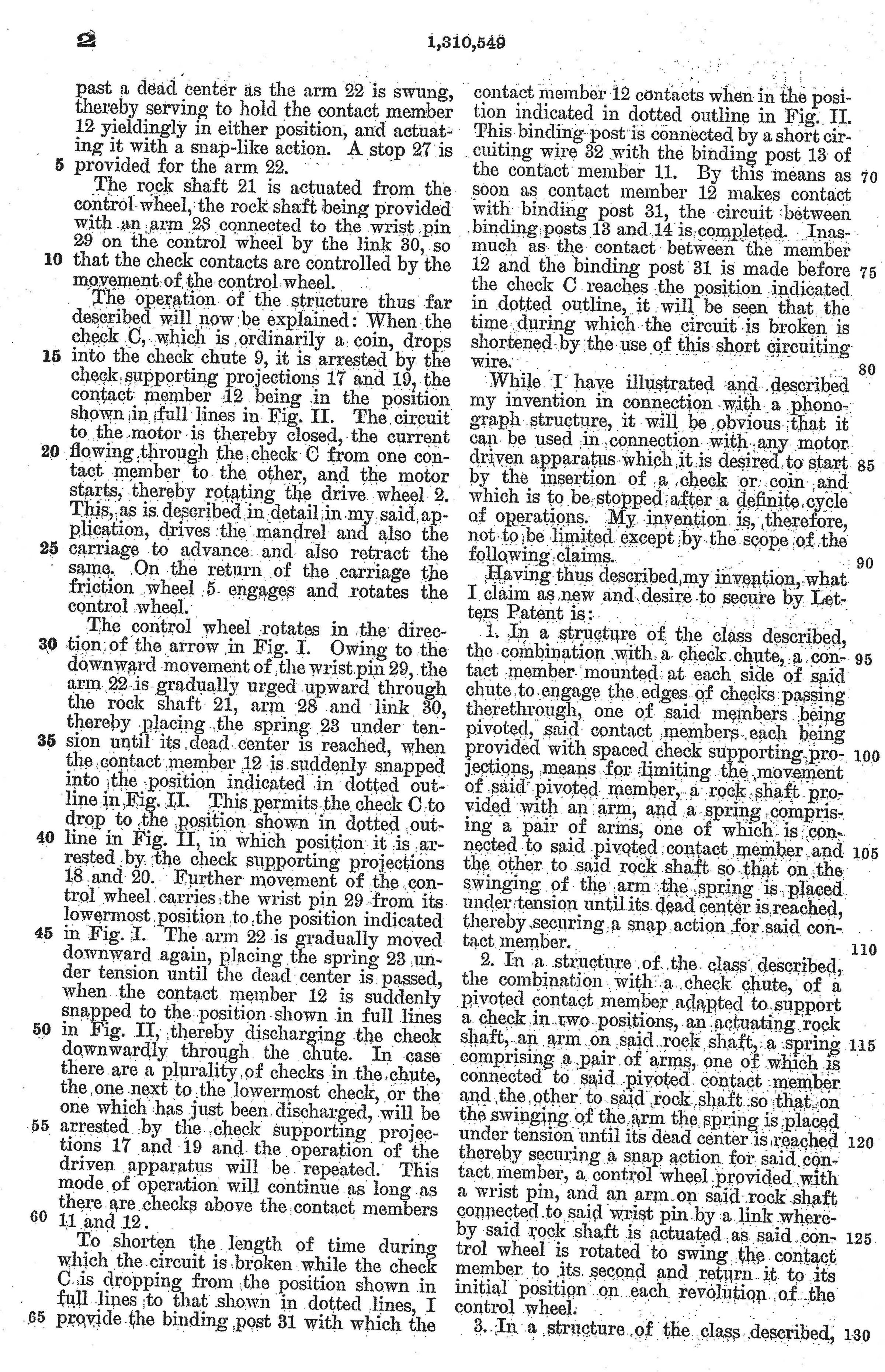
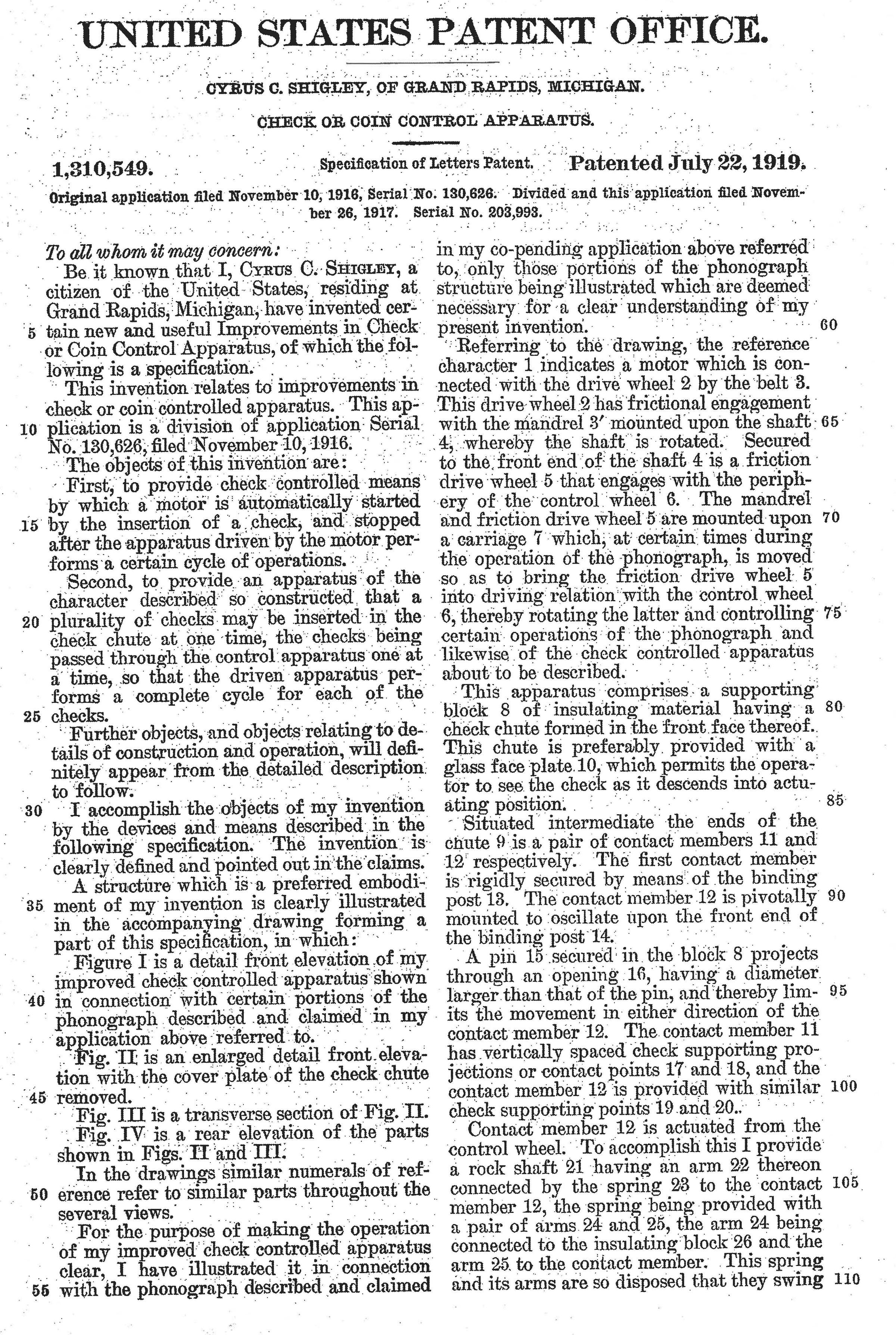
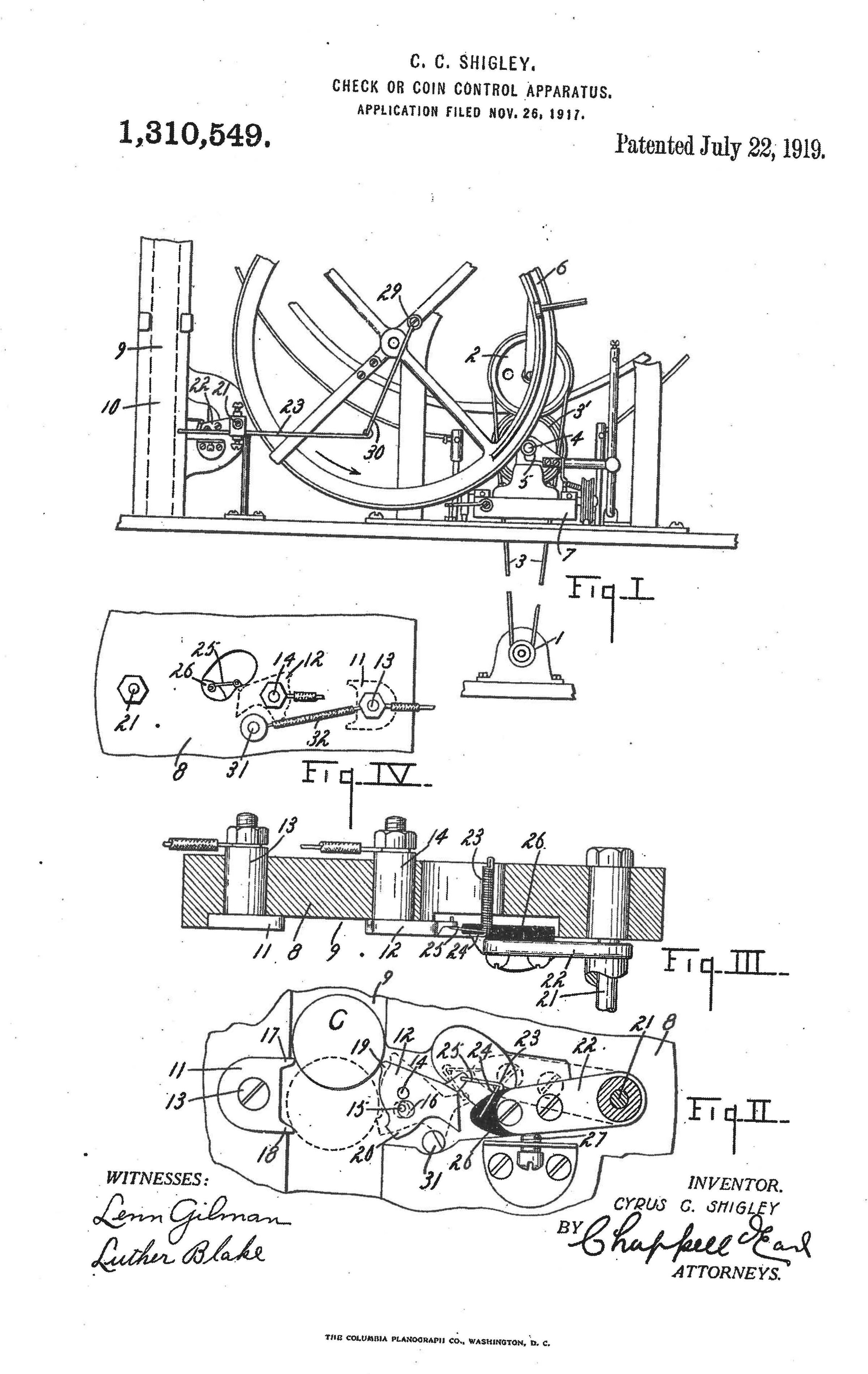
US1310549 (filed 1917, granted 1919): electromagnetic coin release and automatic start control
The technical implementation is truly remarkable:
The 24 cylinders are loosely stored in felt-lined vertical tubes.
A manual selection lever allows the user to choose a number.
An electromagnetic trigger initiates the playback process.
The entire playback unit travels on small rails to the selected cylinder – the cylinder moves, not the reproducer.
After playback, the mechanism automatically resets – or advances to the next cylinder if multiple coins have been inserted.
A Historical Mystery: Why Did It Fail?
Despite its ingenious design, the machine was not a commercial success, for several reasons:
By 1917, the cylinder format was already technologically obsolete.
Edison’s company was the last major producer – and even refused to supply Shigley with compatible cylinders (by slightly altering their design).
Construction and materials costs were extremely high.
Disc-based jukeboxes and new audio formats were rapidly taking over.
The device may have been too complex to maintain for everyday commercial use.
Only a handful of these machines were ever built.
The one preserved and exhibited at the Edisonium in Mariazell is an exceptionally rare survivor – only four examples are known worldwide.
It is a true technical treasure of early 20th-century audio innovation.
A Visionary, Yet Forgotten Inventor
Cyrus Shigley passed away in 1941 – his contributions to the history of sound playback are largely forgotten today.
Yet his machines demonstrate how much innovation, precision, and engineering courage existed in the early years of the entertainment industry.