Name/Title
Le Fontanophone – Twin-Horn Phonograph with Spatial Sound DesignEntry/Object ID
200Description
France, ca. 1910. One of the earliest experiments in stereophonic sound reproduction
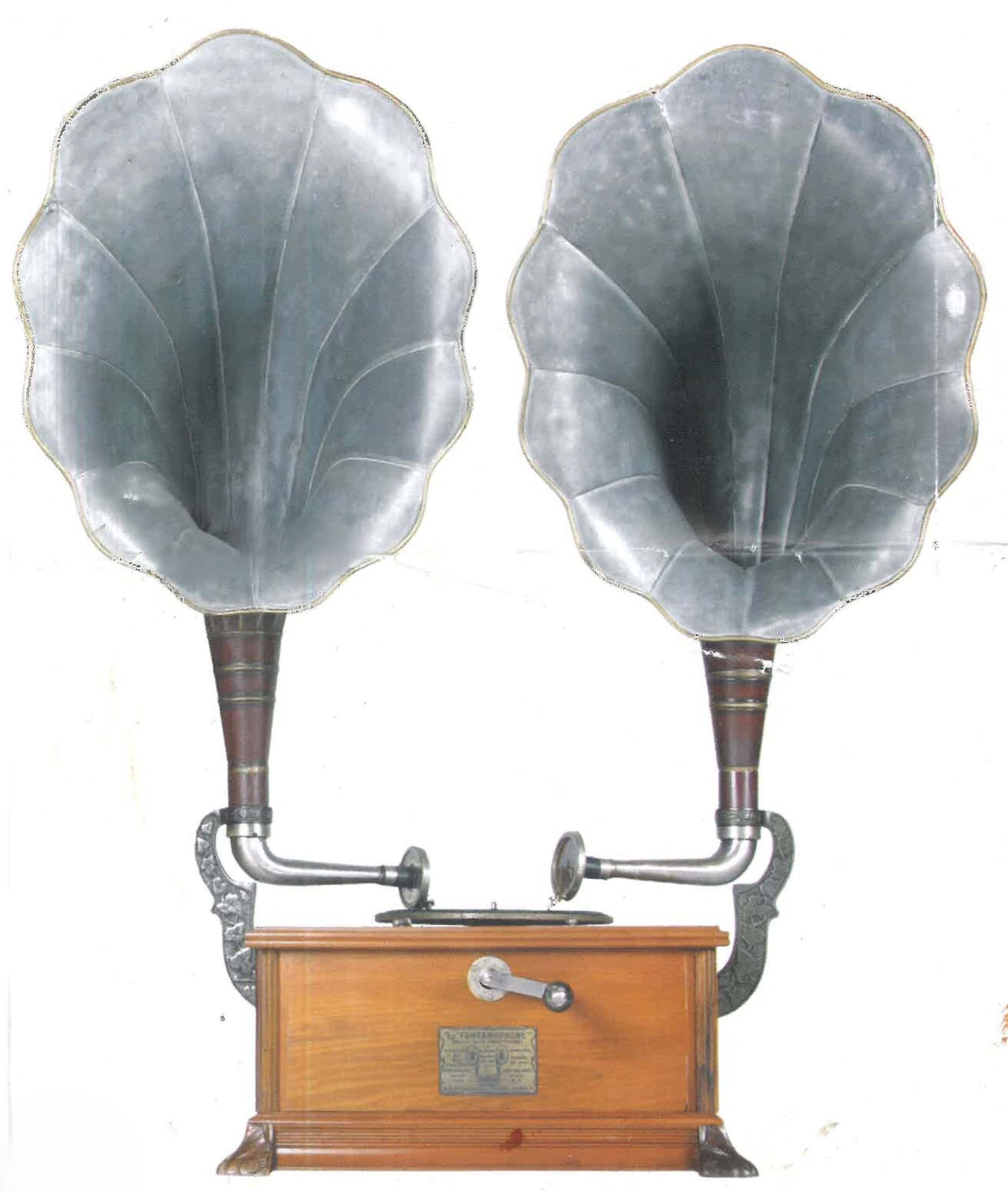
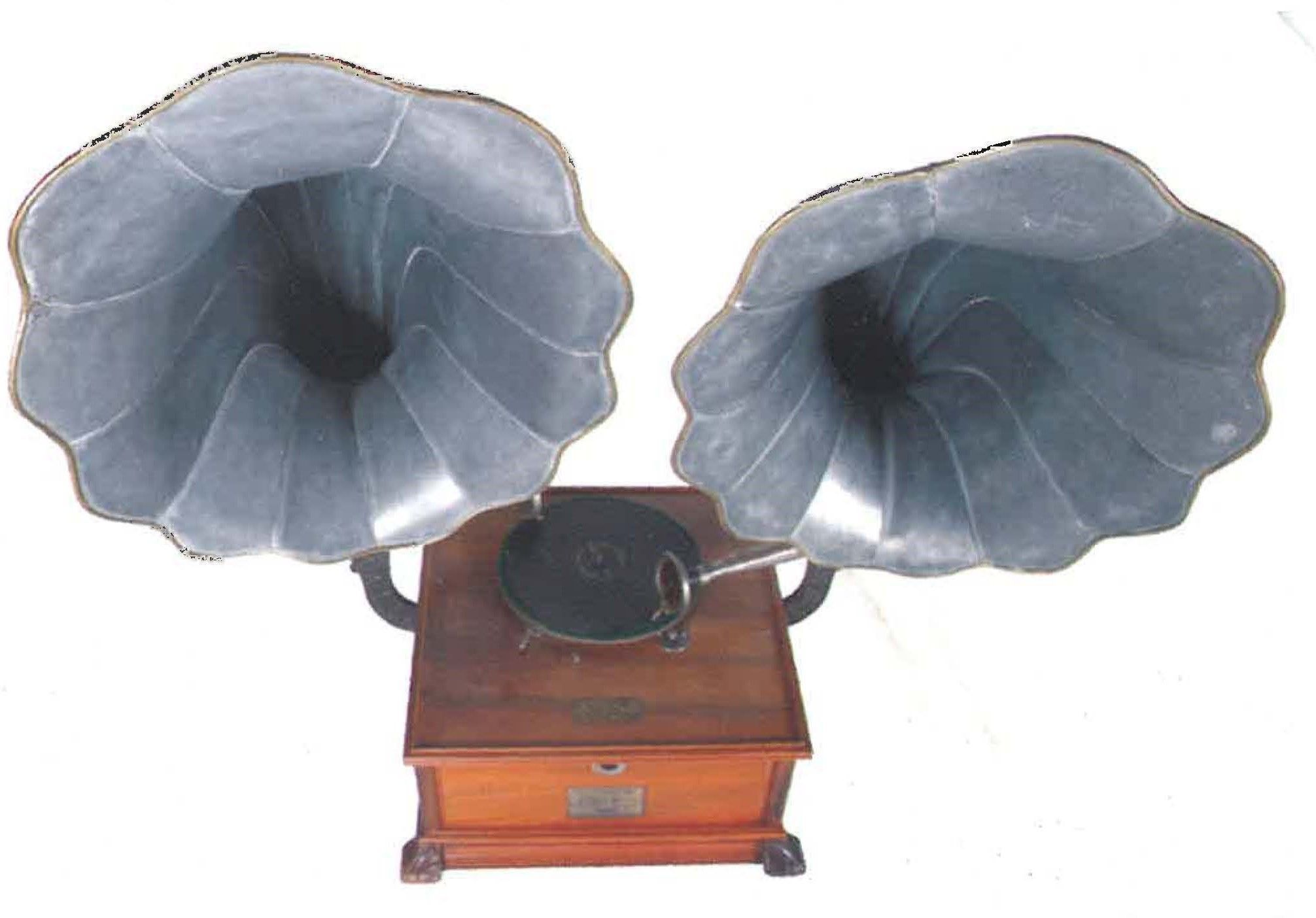
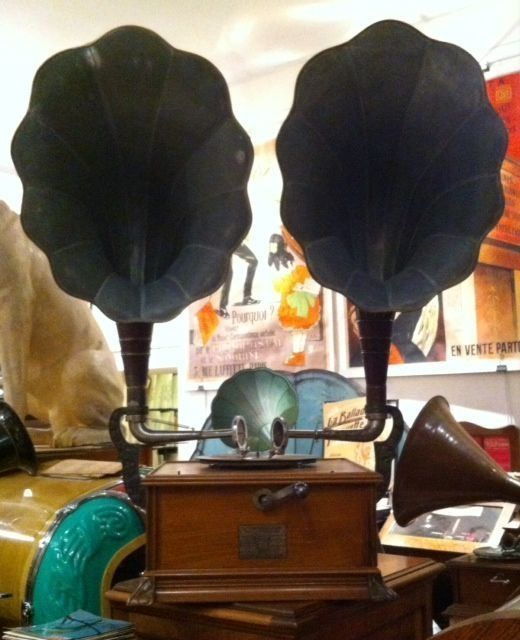
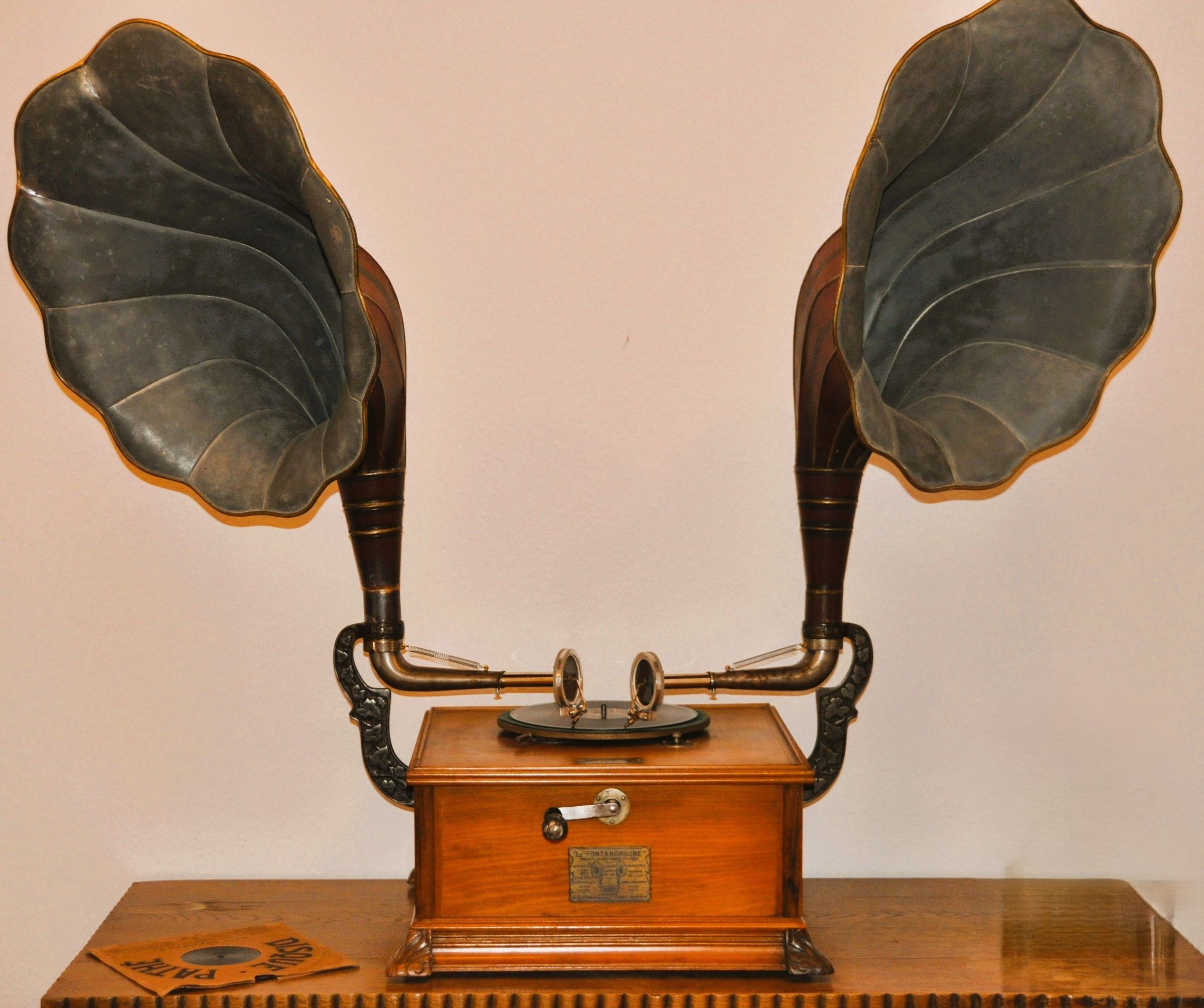
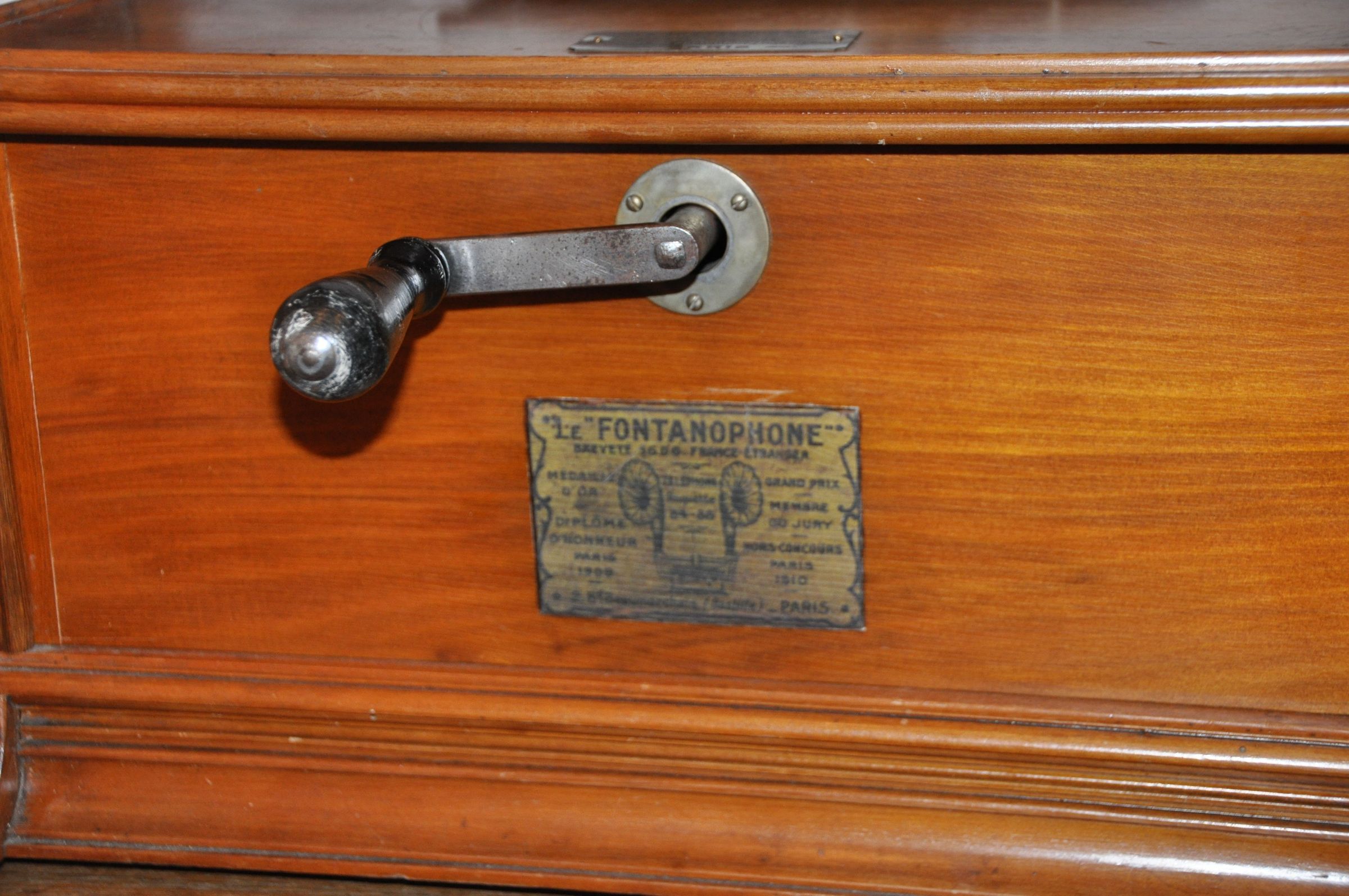
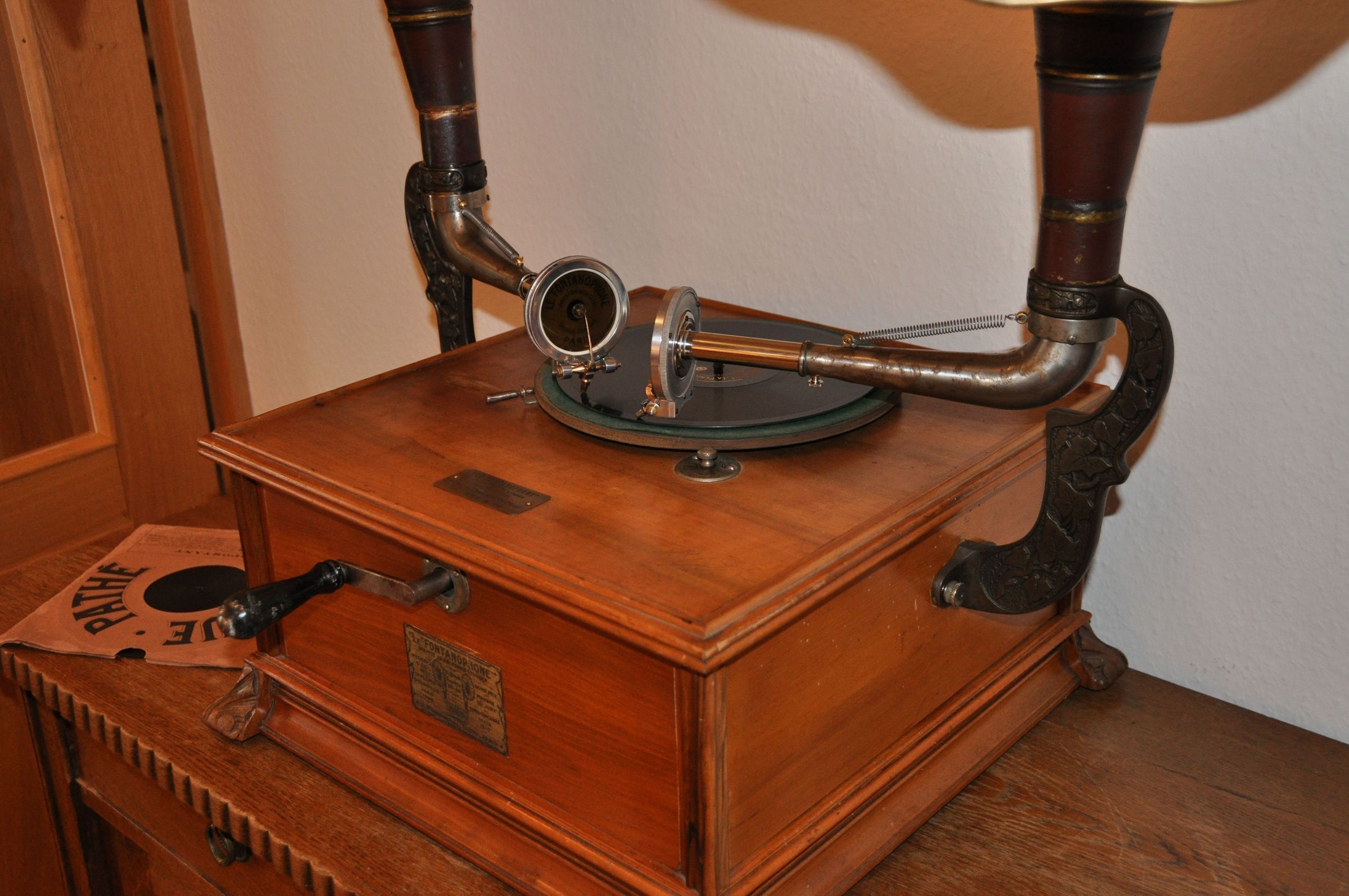
The “Fontanophone” was developed around 1910 by G. Fontana in Paris and marketed under the name Fontana & Cie, 14 Rue Bleue, Paris. Technically and aesthetically, it is an extraordinary phonograph model featuring two independent tonearms, two reproducers, and two large horns – an extremely rare configuration designed to fill the room with a broad, spatial sound.
Technical Design: Two Tonearms, Two Reproducers, Two Horns
Unlike conventional phonographs, the Fontanophone features a complete duplication of the sound path. Two parallel playback systems simultaneously track and play the same record, producing a rich, room-filling stereo effect. The sound is projected through two large zinc or aluminum horns. Synchronizing both systems required precise mechanical coordination – a true feat of fine engineering.
Patent and Protection
The construction was protected under French patent Brevet S.G.D.G. No. 436.850, likely filed around 1909 or 1910. The patent covered the combined use of two separate reproducers on a single turntable. According to the patent description, the goal was to “reproduce the richness and presence of the human voice in a manner closer to the natural listening experience.”
Awards and Public Presentation
The Fontanophone was awarded the prestigious “Hors Concours” medal at the Paris Exhibition of 1910, a distinction reserved for technical innovations outside standard competition categories. As early as 1900, the company had also received a “Médaille d’Honneur” at the Paris World's Fair.
Historical Significance
The Fontanophone is one of the earliest surviving devices to employ a stereophonic sound concept – decades before the advent of electronic stereo technology. It stands as a remarkable example of the experimental spirit of the Parisian phonograph scene in the early 20th century.
Rarity
Only a handful of original Fontanophones are known to exist worldwide today. The specimen exhibited at the Edisonium Mariazell is fully intact – featuring its original nameplate, winding mechanism, dual tonearms, and horns – and is considered one of the most significant rarities in the history of European phonograph development.