Name/Title
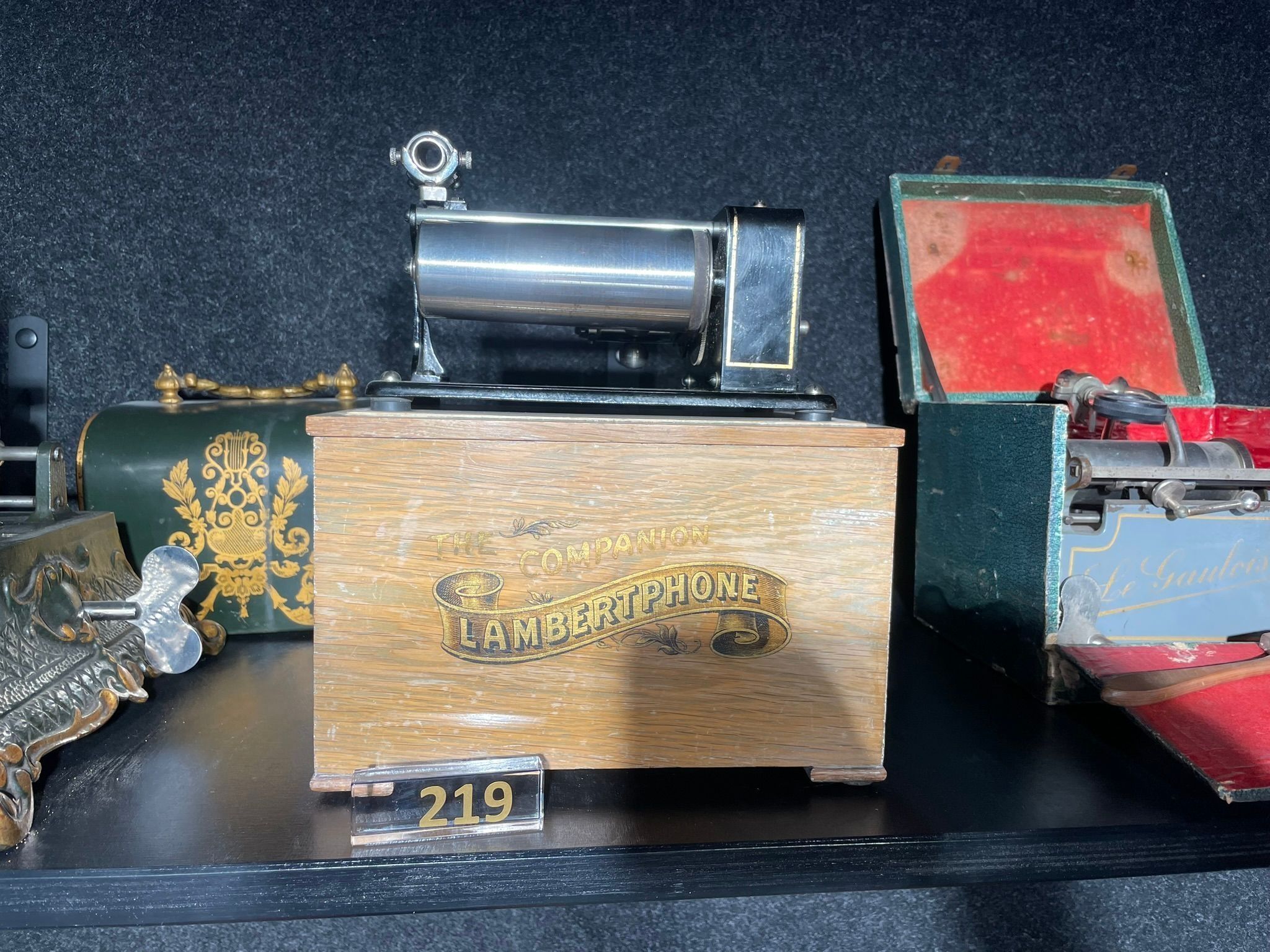
Lambertphone “Companion”Entry/Object ID
219Description
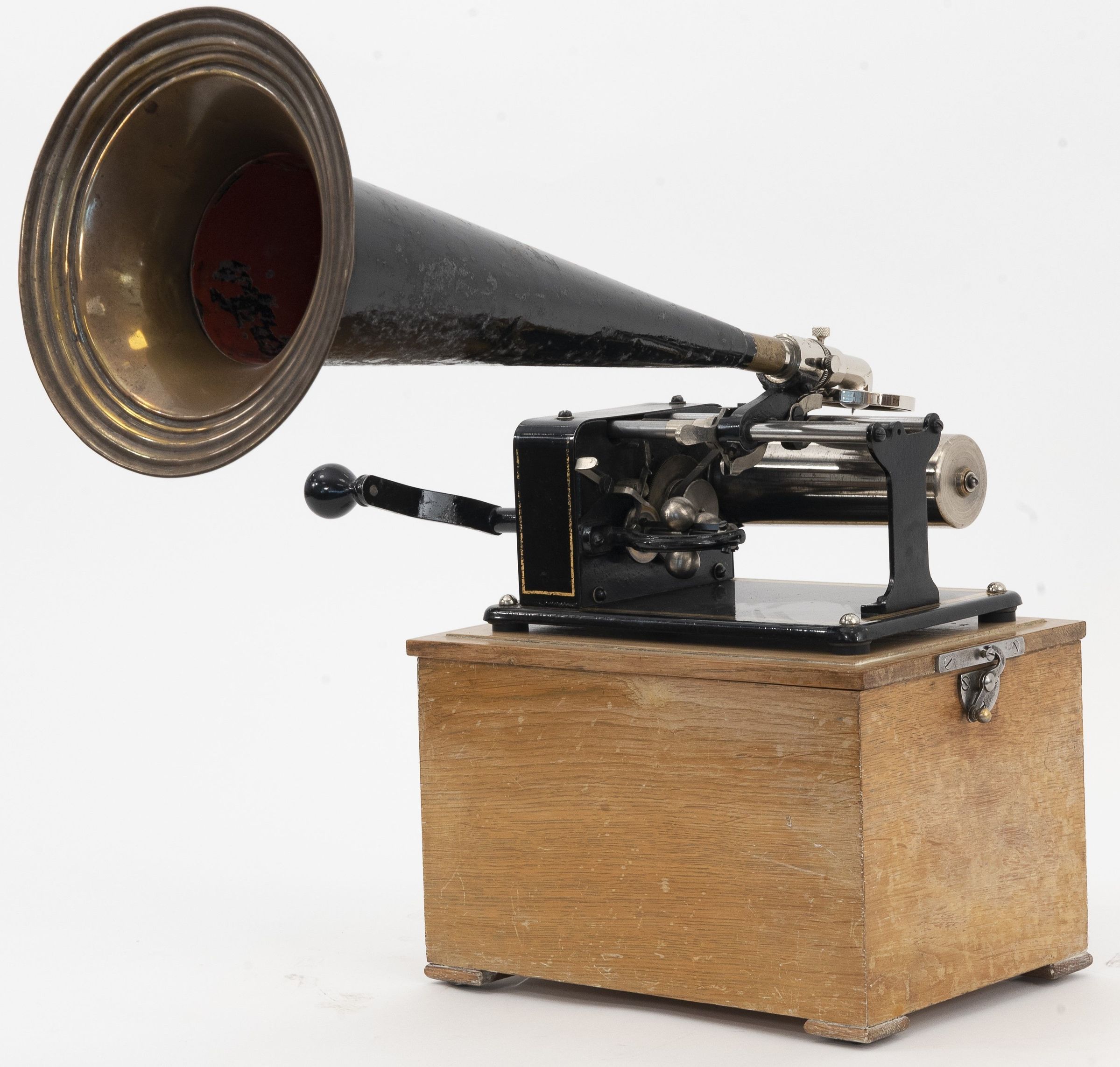
Manufactured around 1904 by Excelsior-Werke Köln (Cologne) on behalf of the British Lambert Company, London
Type: Cylinder phonograph with spring motor
Special features: Reversible mechanism, exclusive Rawlinson reproducer, wooden cabinet with company logo, likely made by Excelsior
A British-German Collaboration
This rare device is the result of transnational cooperation: The Lambert Company of London not only marketed its own celluloid cylinders (based on the process patented by Thomas B. Lambert of Chicago) but also commissioned matching playback machines under its own brand – such as this “Companion” model. It was likely manufactured by Excelsior-Werke in Cologne.
The “Companion” was part of a series introduced to the British market in 1904 in several variants: Imperial, Entertainer, and Companion. All models were designed for standard cylinder formats and advertised as “loud, clear and silent running”.
A Reversible Machine for Easy Transport
The Lambertphone Companion was designed for convenience: The mechanism could be reversed and stored upside down inside the case – making the device easier to transport.
Its mechanical layout strongly resembles the typical Excelsior construction style.
Rawlinson Patent and Custom Reproducer
One of the most technically interesting features is the reproducer: The so-called “Matthews Reproducer” uses a special articulation system (“Rawlinson Joint”) with a 90-degree elbow, connected flexibly to the horn. This design was attributed to C.K.J. Rawlinson, who later served as a director of the Lambert Company.
Advertising & Market Position
In period advertisements – such as The Talking Machine News (1905) – the “Companion” model was offered at a price of £2 10s. The ads boldly stated:
“FOUR STYLES OF MACHINES LIKE THIS – THEY ARE LOUD, CLEAR AND SILENT RUNNING” – a clear challenge to rivals like Edison and Columbia.
Historical Significance
The Lambertphone “Companion” represents the European effort to establish an independent foothold in the emerging market for sound recording devices. It is not only a symbol of inventive engineering, but also of the growing international connectivity in the early phonograph era.
A stylish, rare, and technically intriguing highlight from the pioneering days of sound reproduction.