Name/Title
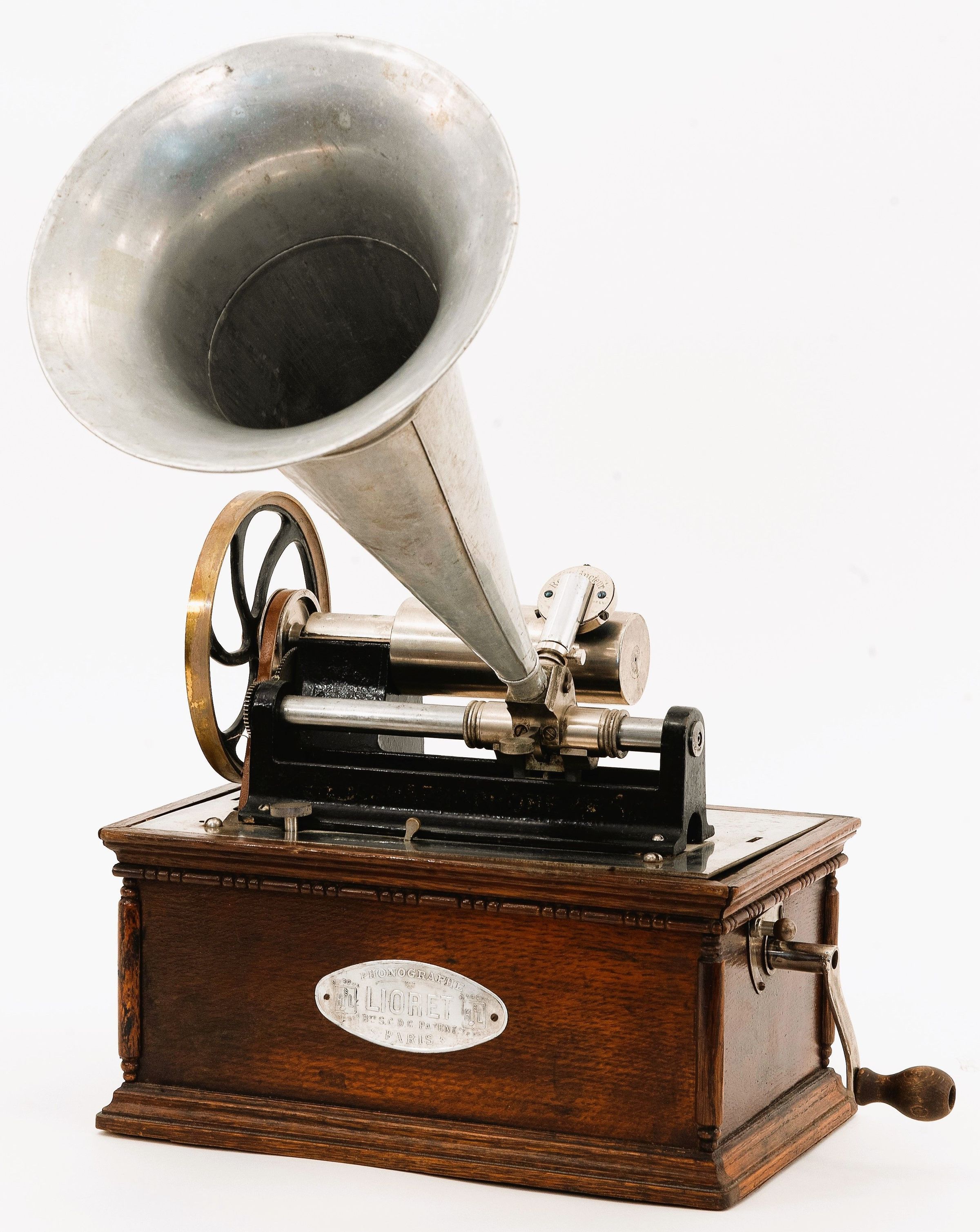
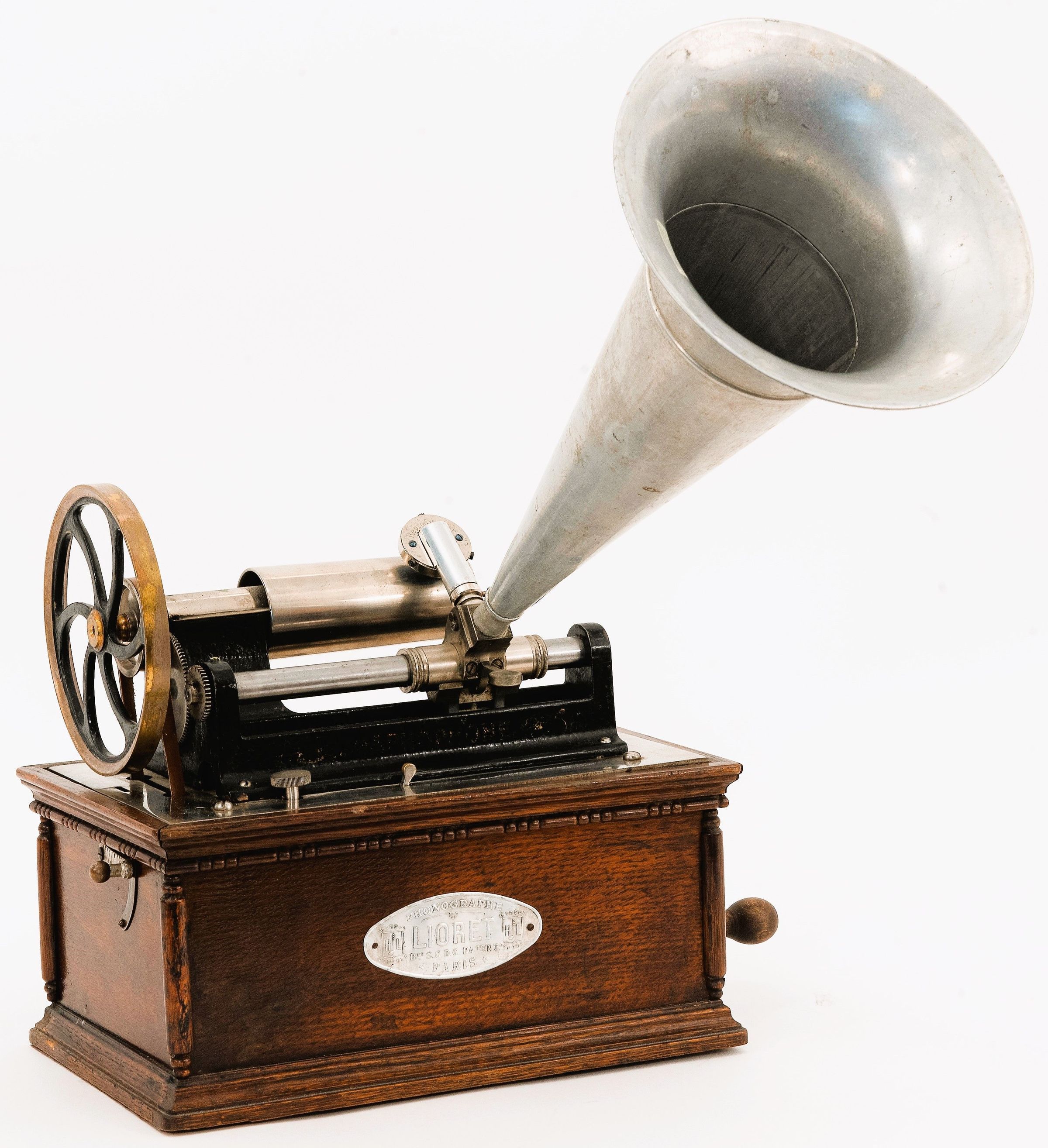
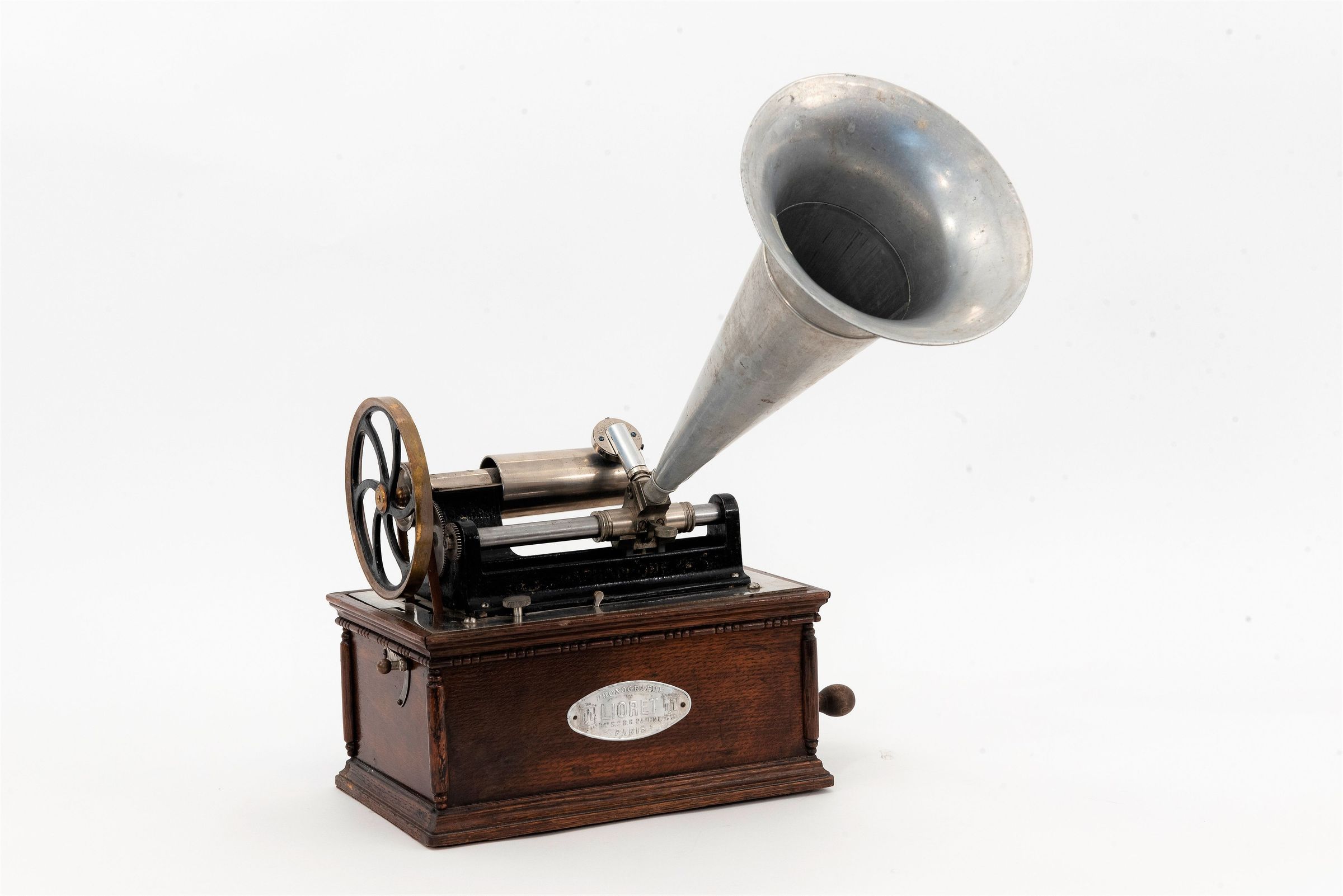
Lioret “Modèle BT” – Cylinder Phonograph with FlywheelEntry/Object ID
169Description
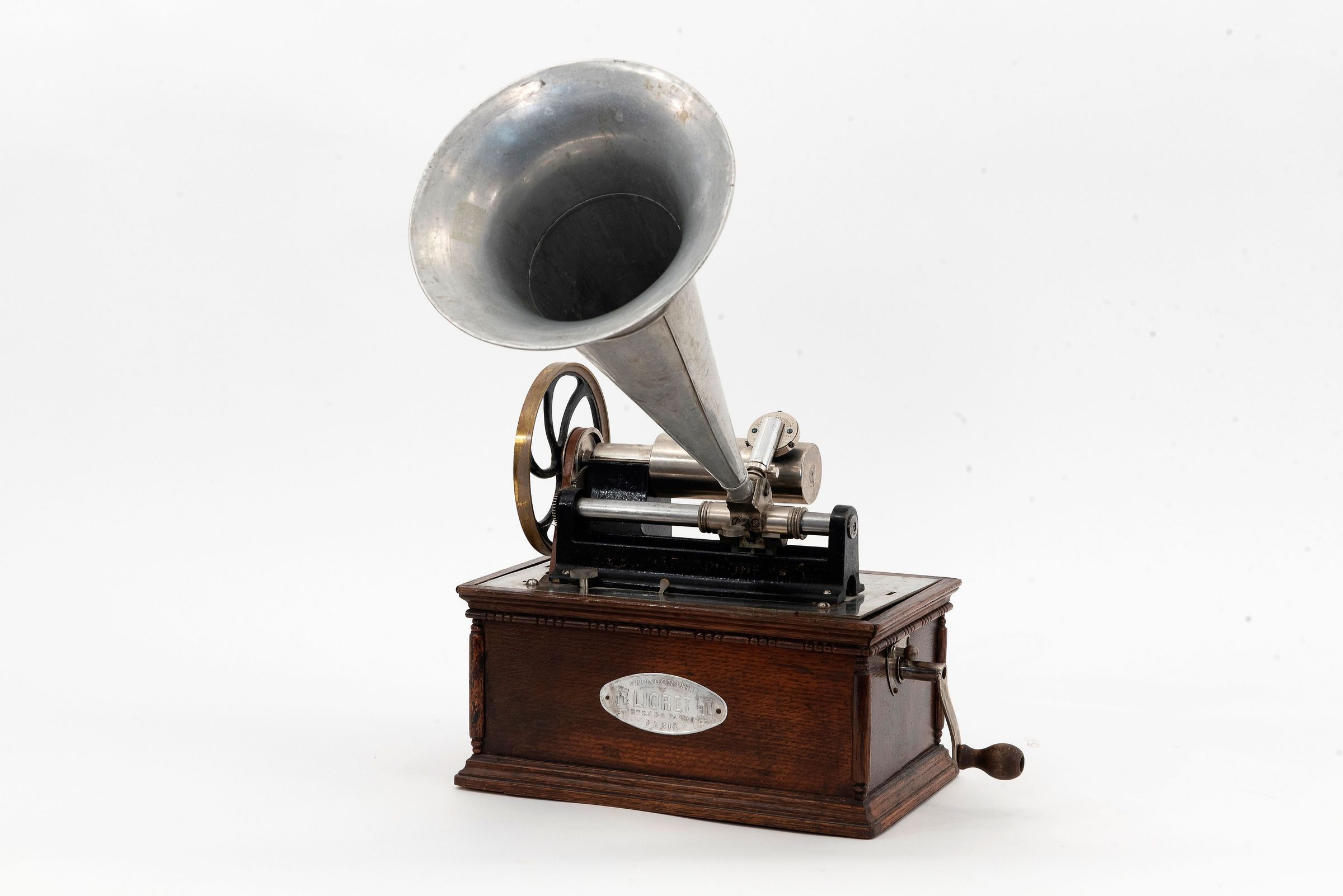
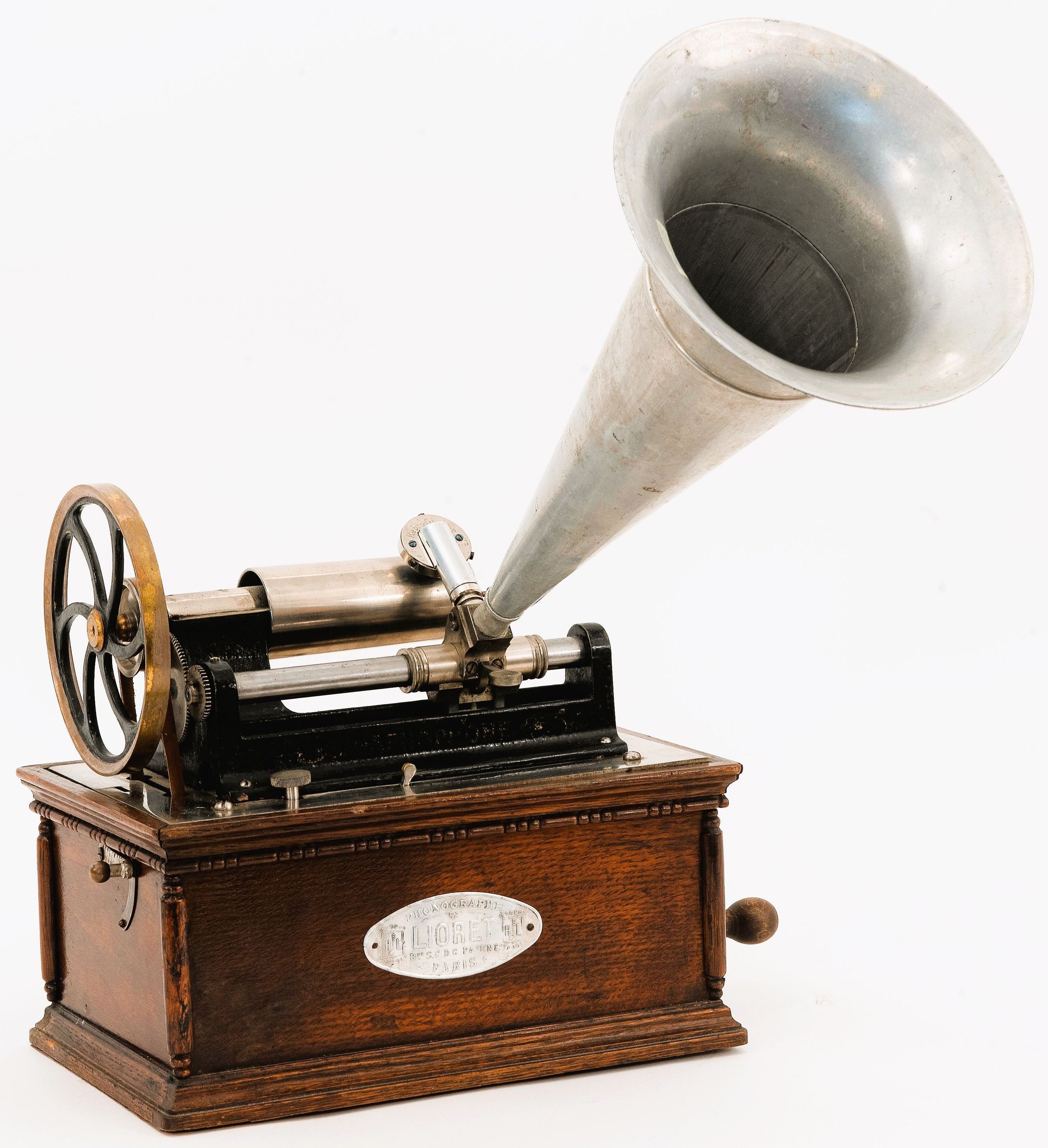
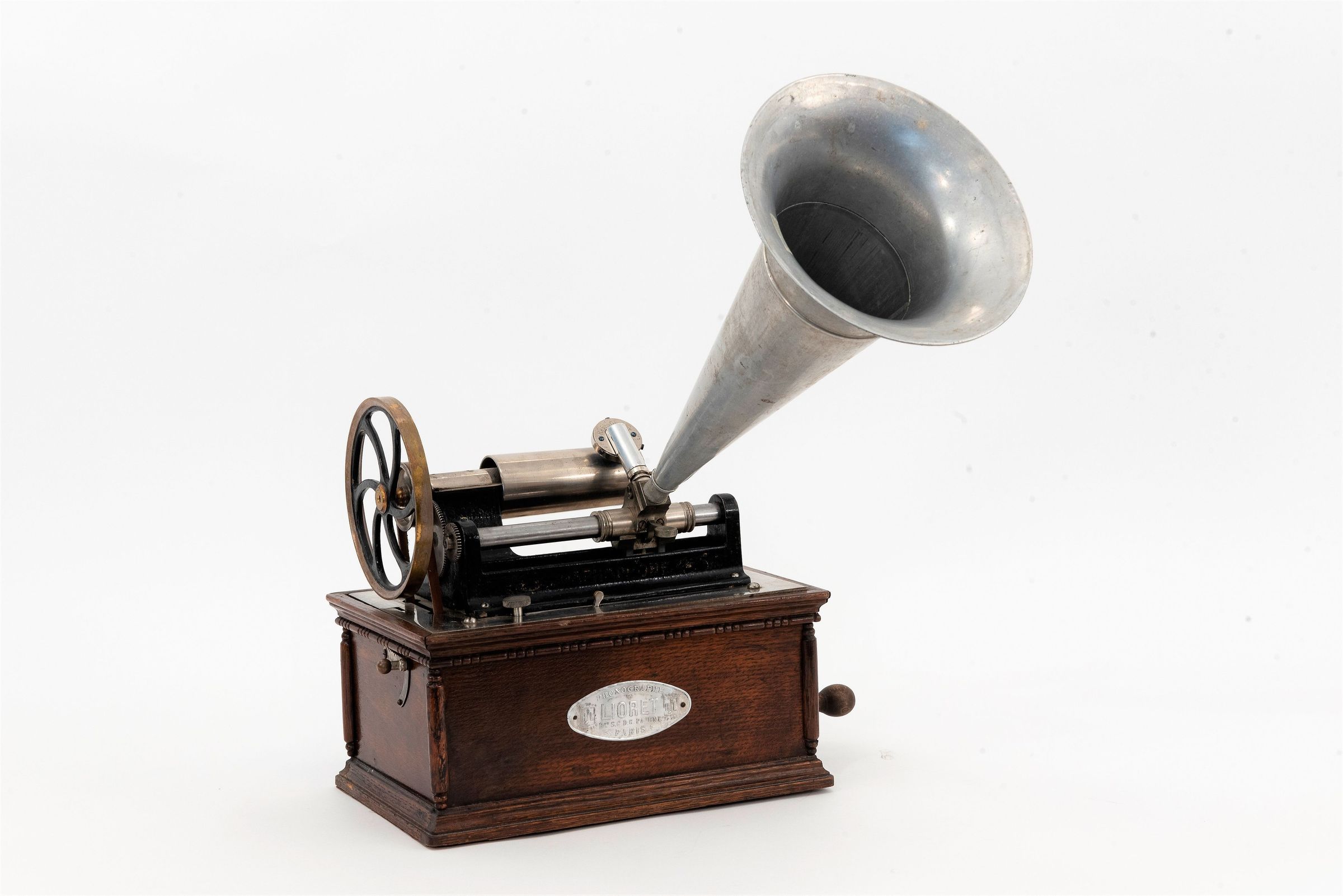
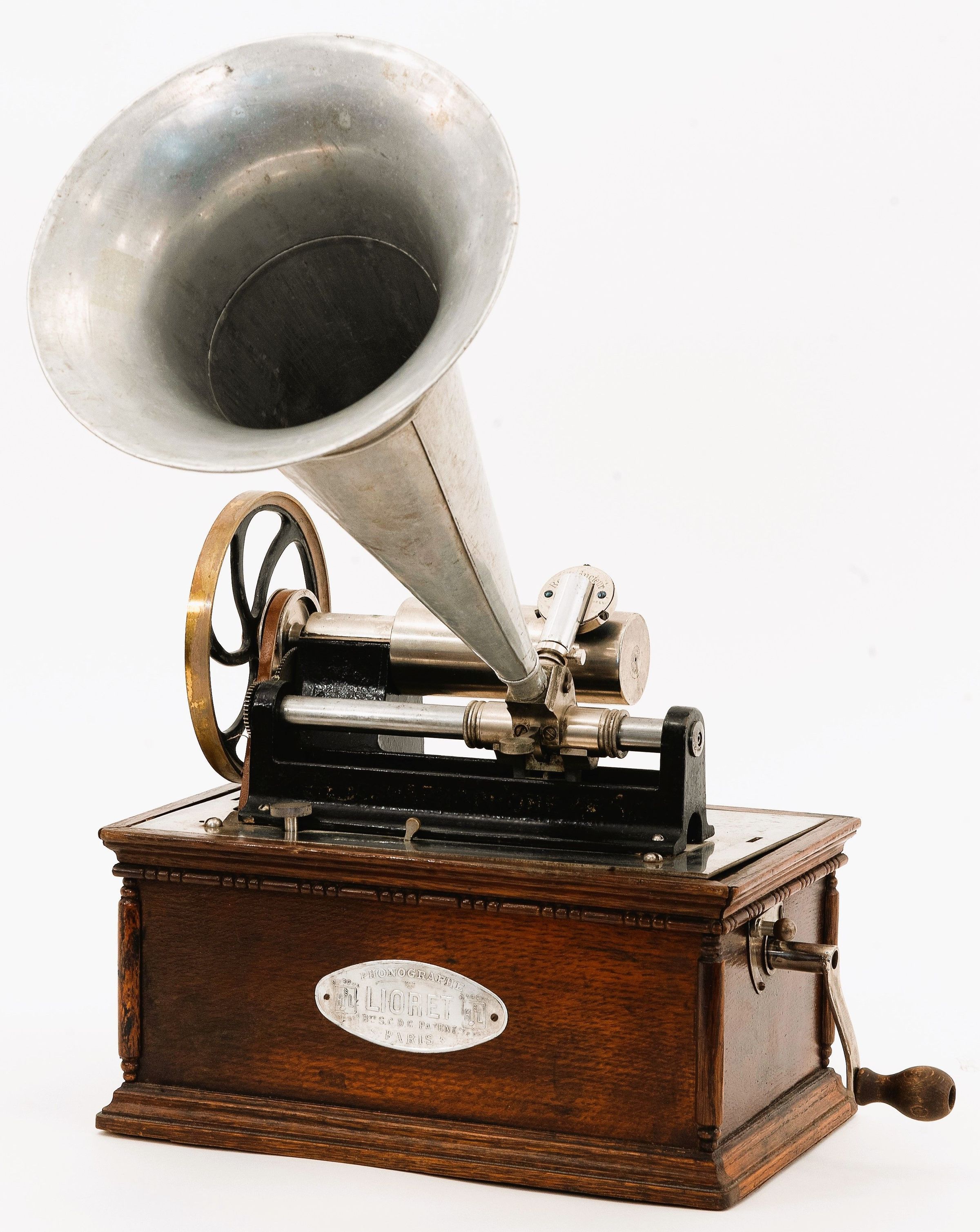
Henri Lioret, Paris – c. 1901
Historical Background
Henri Lioret (1848–1938) was one of France’s leading phonograph pioneers, best known for his durable celluloid cylinders. By around 1900, however, he faced growing competition: the Columbia Phonograph Company General was selling cheaper, mass‑produced Graphophones in Paris that played standard wax cylinders — a format Lioret could no longer ignore.
By late 1899, Lioret had converted his production to the standard cylinder format. He incorporated mechanical assemblies from the 1898 Columbia Graphophone Type AT, with its enclosed double‑spring motor, and added a distinctive six‑spoke flywheel to stabilise the rotation speed. The resulting Lioret “Eureka” appeared in 1900, capable of playing either celluloid or wax cylinders, and was mounted on a mahogany base with gilded columns.
The Modèle BT
Introduced in 1901, the Modèle BT again utilised the Graphophone AT mechanism but was now housed in a walnut cabinet of Lioret’s own design. A hallmark feature was the oval aluminium maker’s plate reading Phonographe Lioret – Paris. The large brass flywheel remained, as did the robust, belt‑driven AT mechanism.
Technical Features
Mechanism: Columbia AT double‑spring motor, adapted by Lioret
Flywheel: Large six‑spoke brass flywheel
Cabinet: Walnut with oval Lioret nameplate
Horn Options: Nickel “Cor de chasse” or aluminium horn in various sizes
Recording/Playback: Lioret reproducer and recorder for standard cylinders
Advertising and Pricing
In Lioret’s 1901 catalogue, the BT was listed at 150 francs — more expensive than many competing models, reflecting its premium construction. Buyers could choose from five different horn types, ranging from a curved copper‑nickel horn to a polished copper horn over a metre long.
Significance
The Modèle BT illustrates Lioret’s pragmatic move from his proprietary celluloid system to modified American technology — a strategic attempt to gain a foothold in the standard‑cylinder market. Its blend of Columbia engineering and Lioret design makes it a fascinating testament to the international cross‑currents of early phonograph manufacturing.