Name/Title
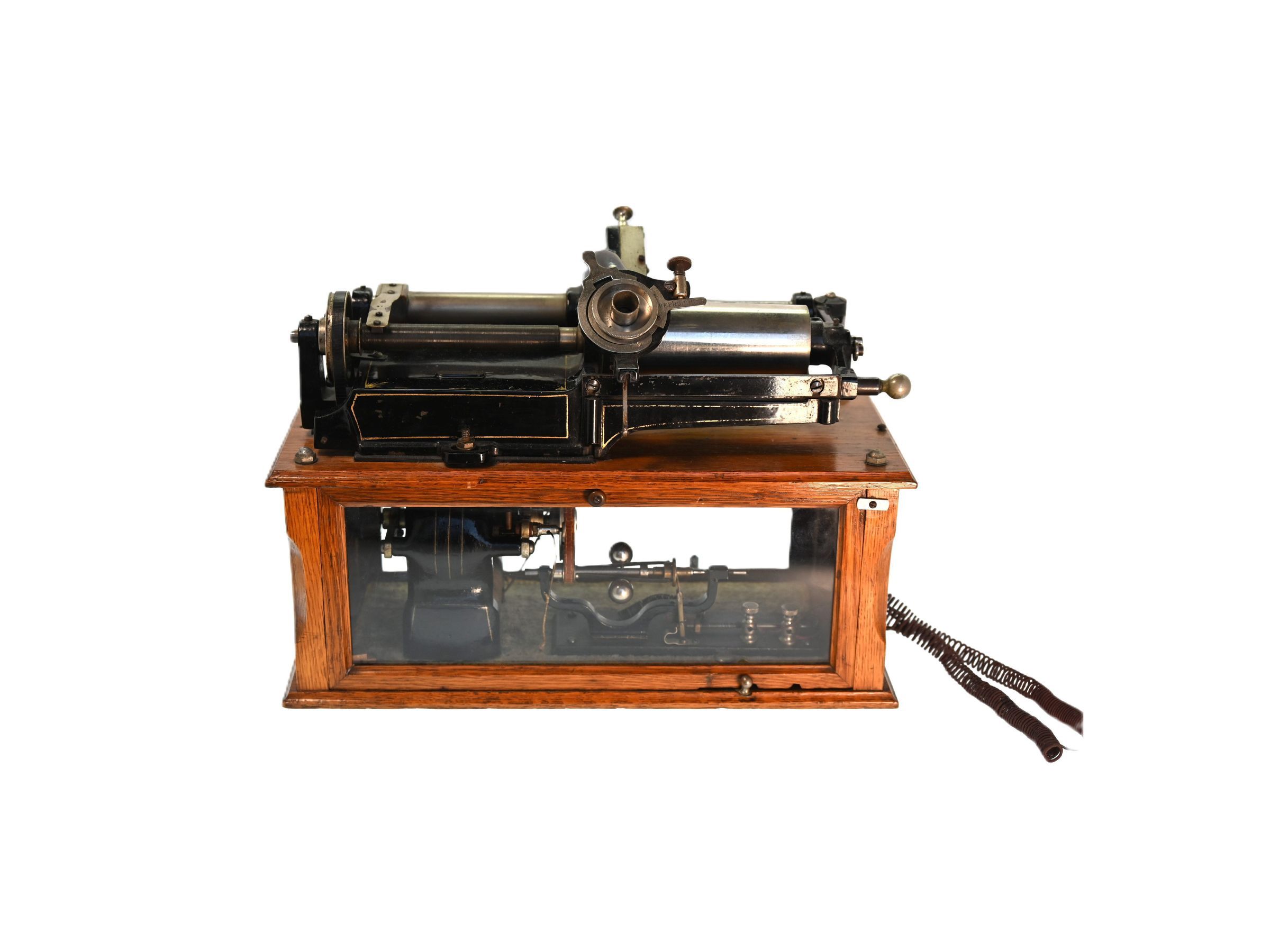
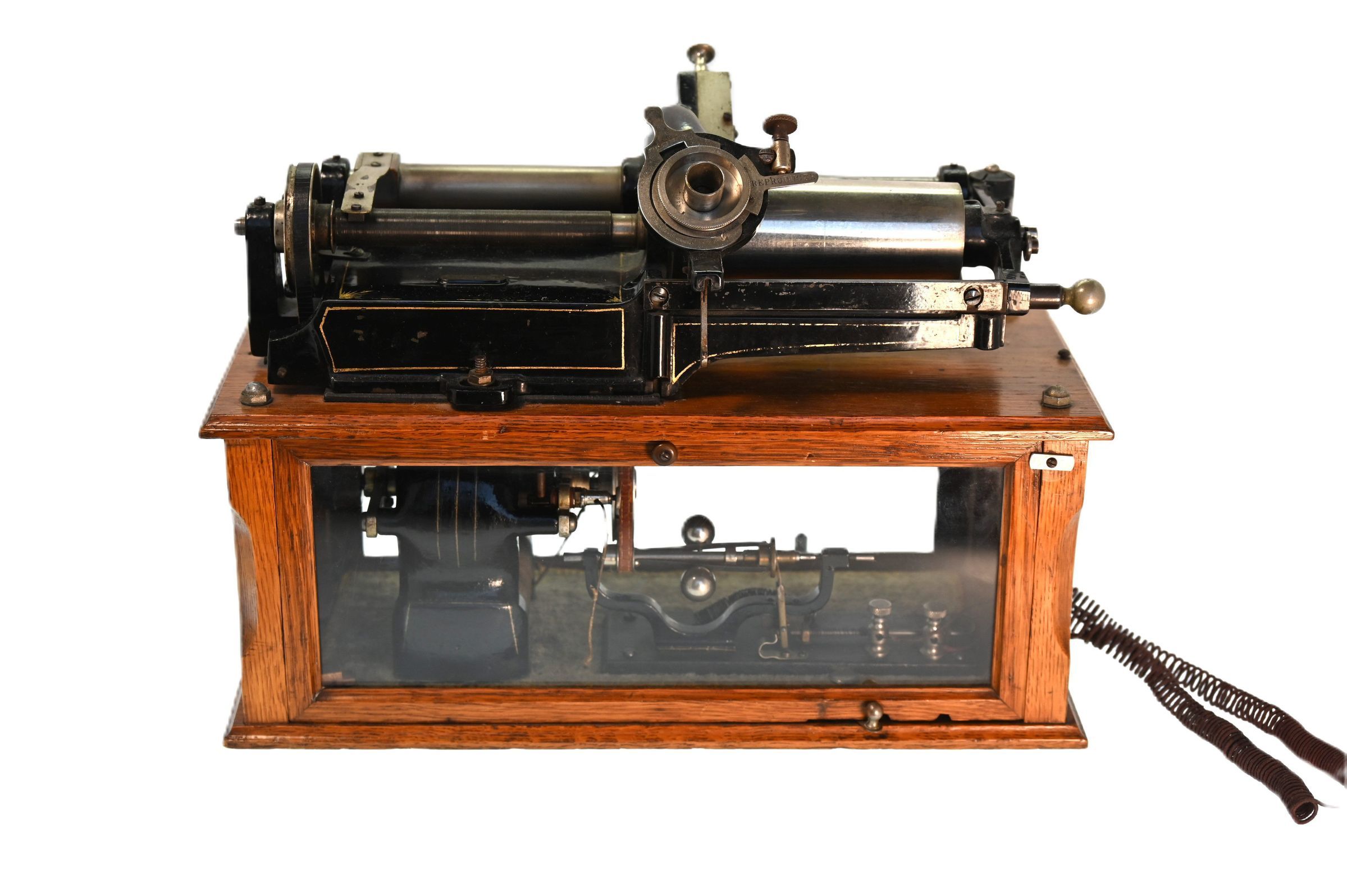
Edison Phonograph – Prototype Based on the Class M - Version AEntry/Object ID
161Description
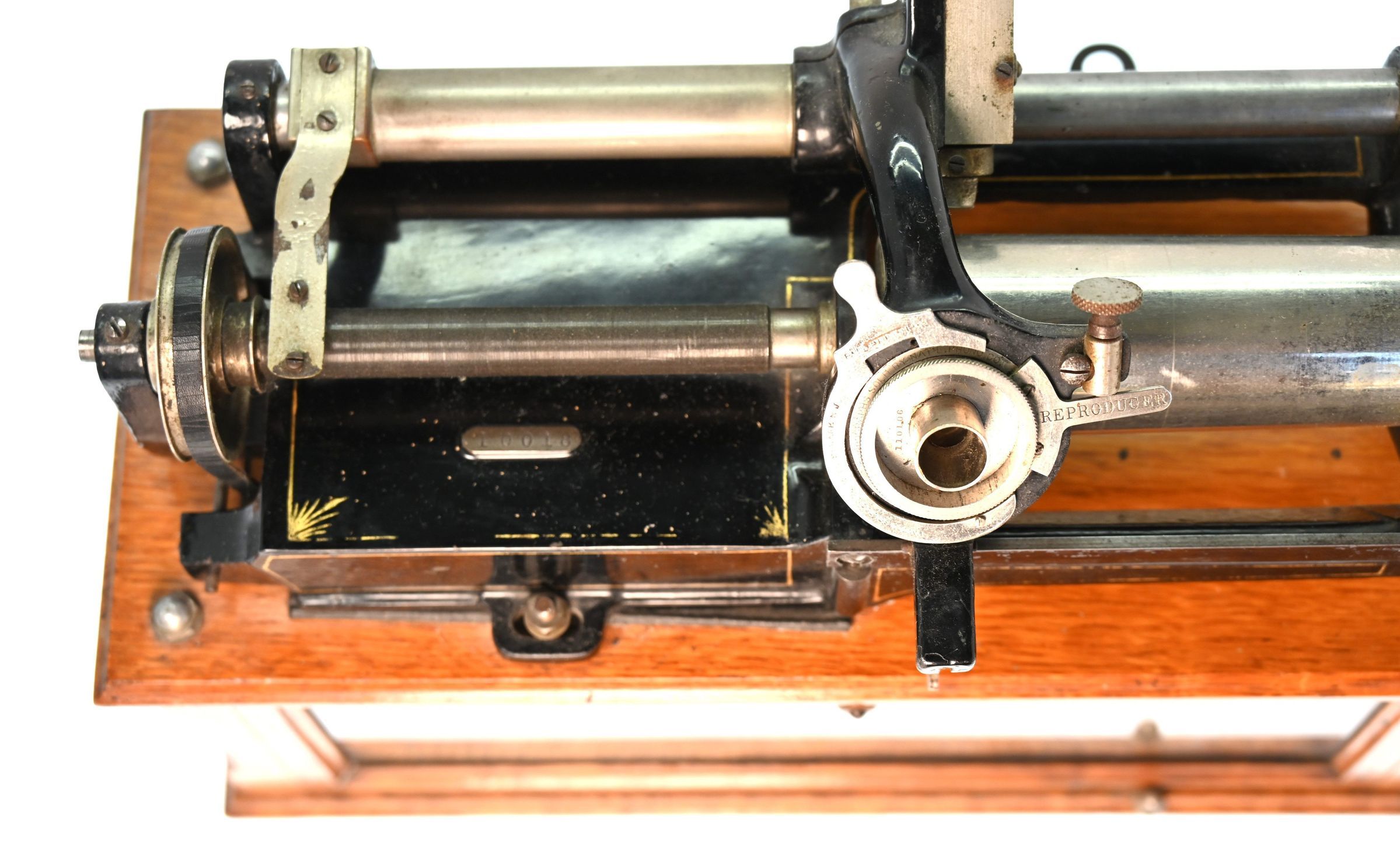
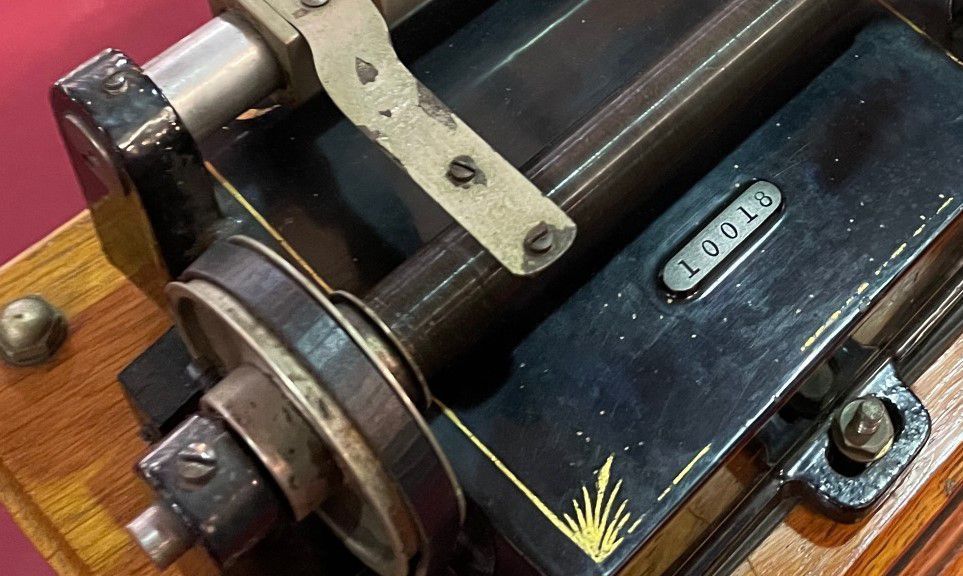
Probably American Graphophone Company / Edison’s Laboratory, ca. 1894 Serial Number 10018
Formerly the Howard Hazelcorn Collection
Historical Background
This extraordinary machine is one of only two known phonographs that were developed as experimental successors to the Edison Class M (introduced in 1888). While the original Class M was very heavy and unsuitable for transport, this variant was apparently an attempt to create a lighter, more compact version.
Only two examples are known – both preserved today in the Edisonium Mariazell:
Inventory No. 162 (ex Charley Hummel): featuring an aluminum cast upper bedplate – a unique experiment in weight reduction.
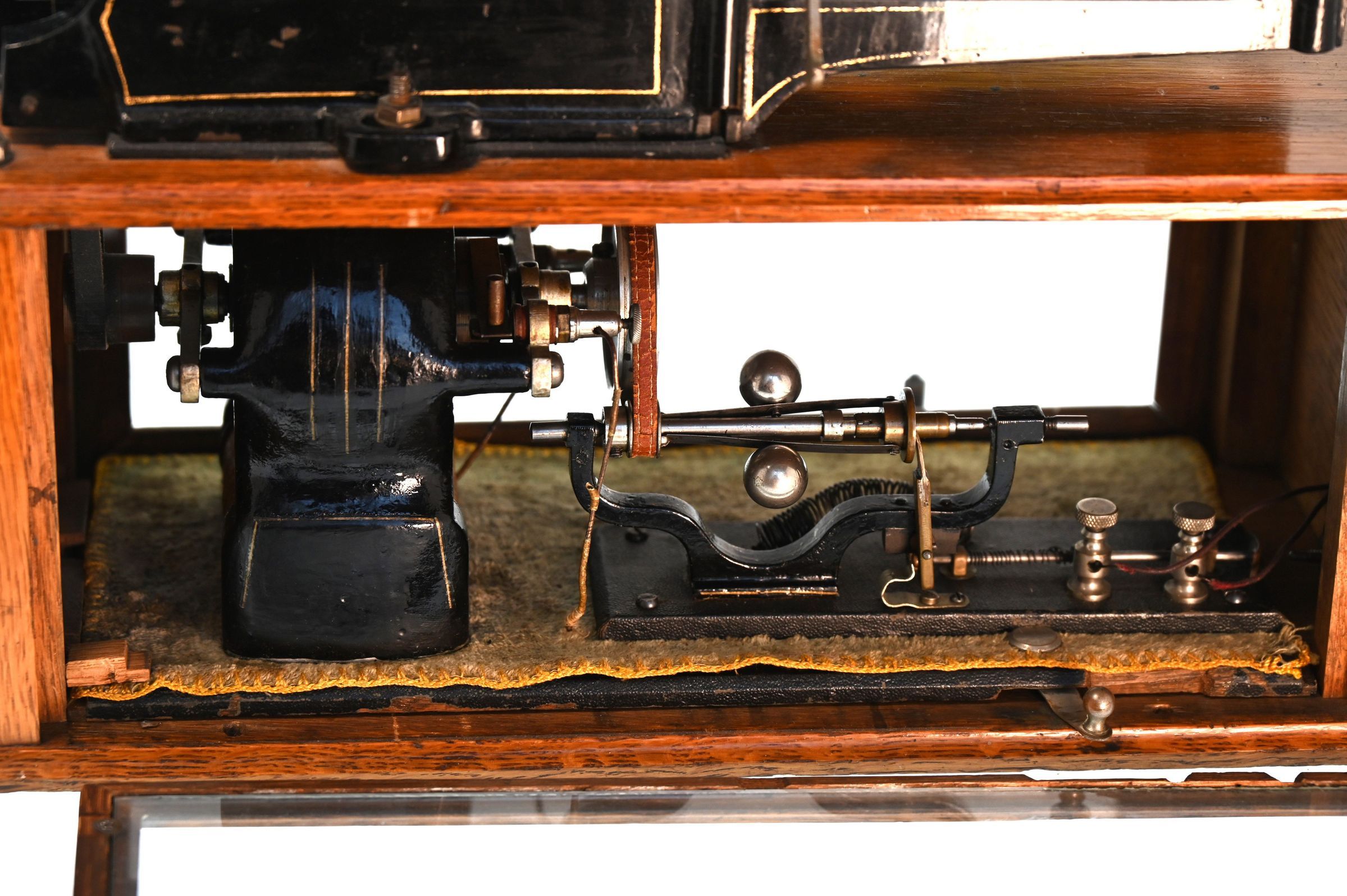
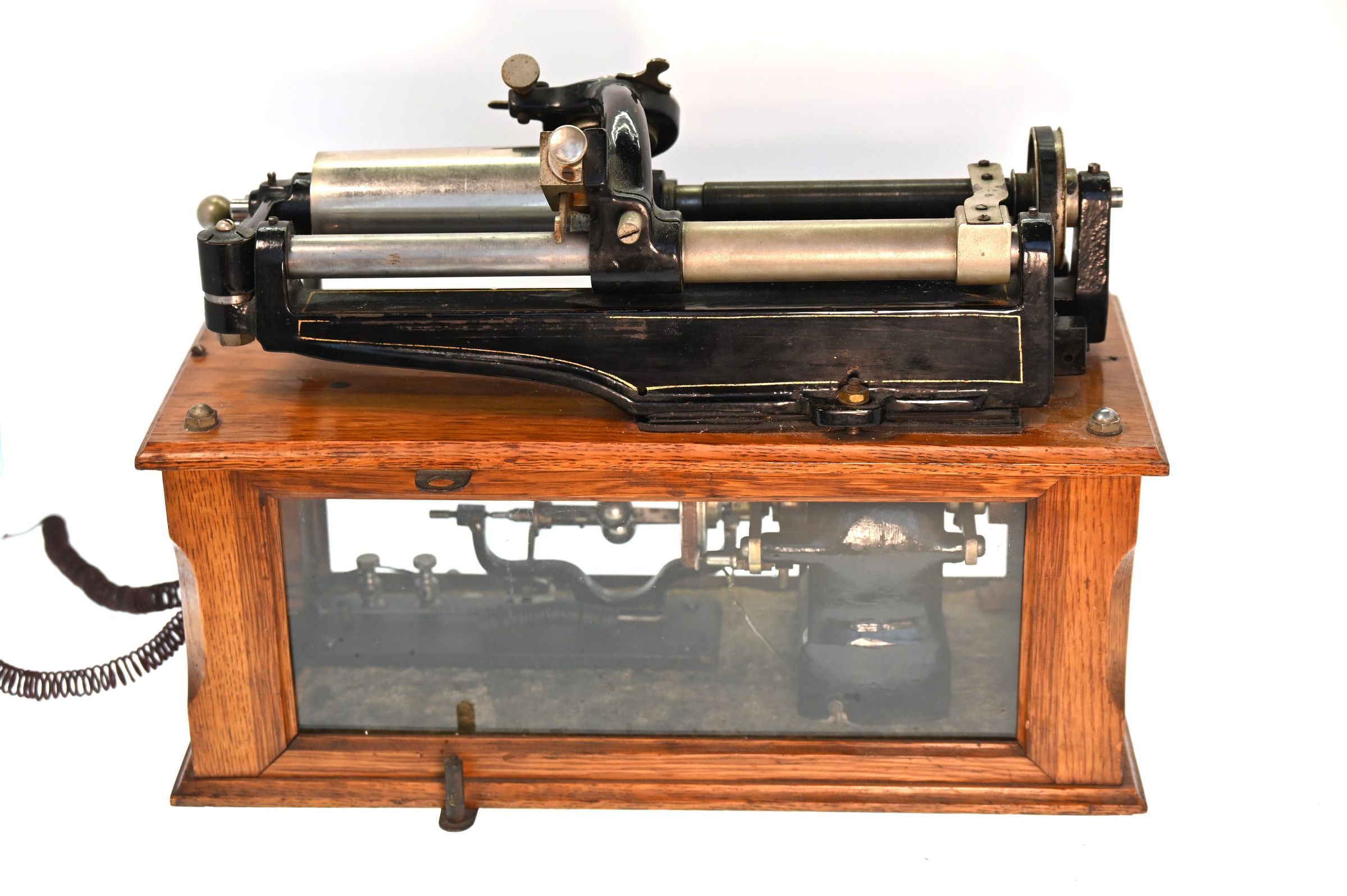
Inventory No. 161 (ex Howard Hazelcorn, shown here): retaining the original cast-iron Class M upper bedplate but fitted with a modified, smaller motor.
Both machines share an identical, finely crafted oak cabinet with removable side panels containing glass windows, allowing a clear view of the motor and mechanism.
Technical Features
Motor: smaller and lighter than the Class M motor; equipped with a different centrifugal governor.
Upper Bedplate: massive cast iron, identical to the Class M (contrasting with the aluminum casting of 162).
Cabinet: high-quality oak case with removable glass side panels.
Interior Finish: motor compartment lined with cloth – an unusually luxurious detail for an experimental model.
Accessories: unlike 162, no surrounding rail for listening tubes and no dedicated transport case are known.
Pre-Series Character
The professional workmanship, refined cabinet construction, and the fact that these machines were delivered in finished cases suggest they were more than mere laboratory prototypes. Evidence points to a small pre-production series, in which Edison or his partners tested a lighter alternative to the Class M under practical conditions.
Rarity and Significance
Together with 162, this machine represents a scarcely documented stage of development between the heavy Class M and Edison’s later, lighter phonographs.
The example shown here (161) is the only surviving machine with the original cast-iron bedplate and therefore a key artifact for understanding Edison’s early electric phonographs.