Name/Title
Echophone with Horn – “Undocumented Echophone”Entry/Object ID
374Description
Edward H. Amet / Echophone-based construction, USA, probably 1896–1897
Edisonium Exhibition No. 374
A rare transitional form between the Amet Echophone and the later small horn phonographs of the Lyrophone/Puck type
Object and Classification
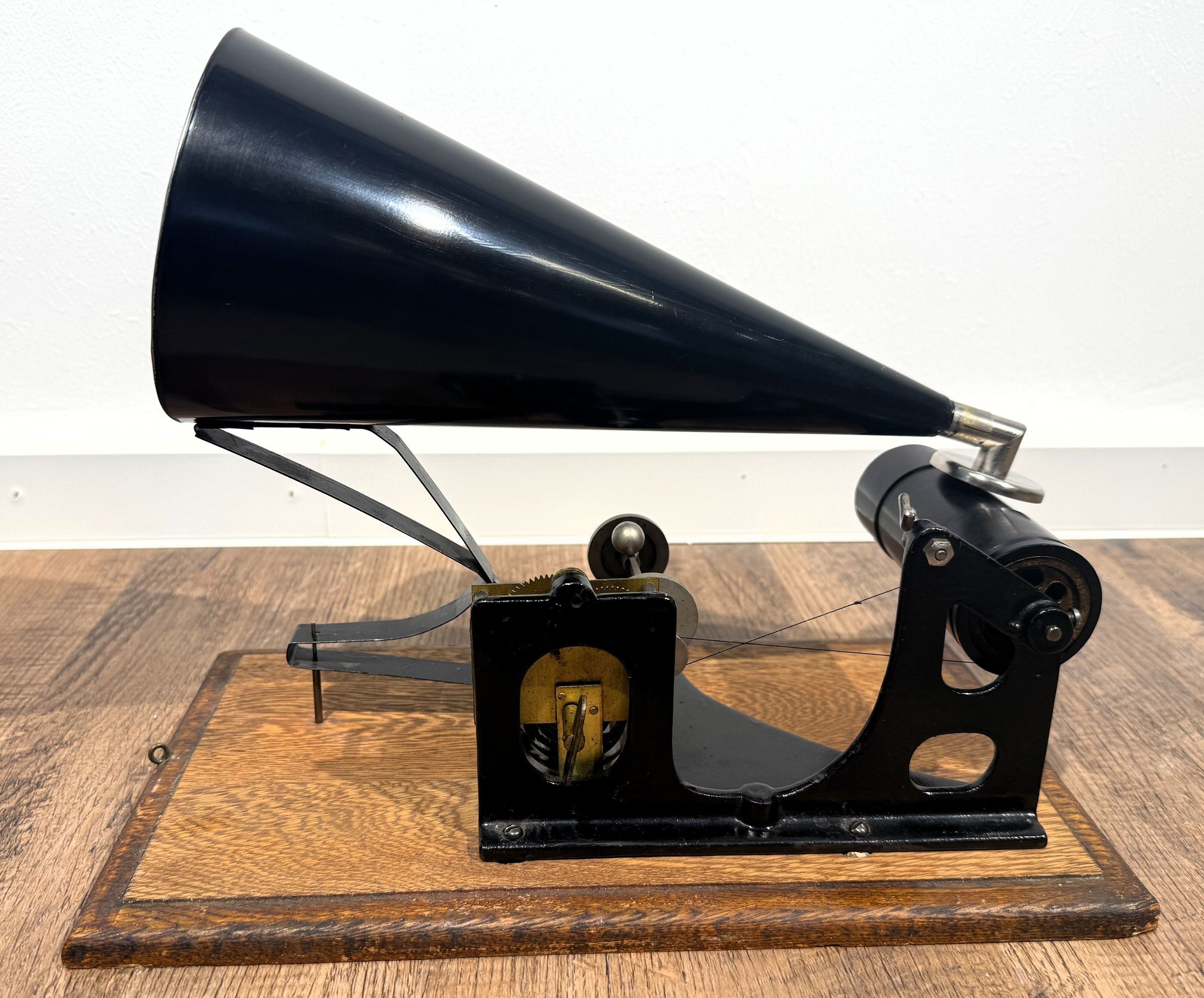
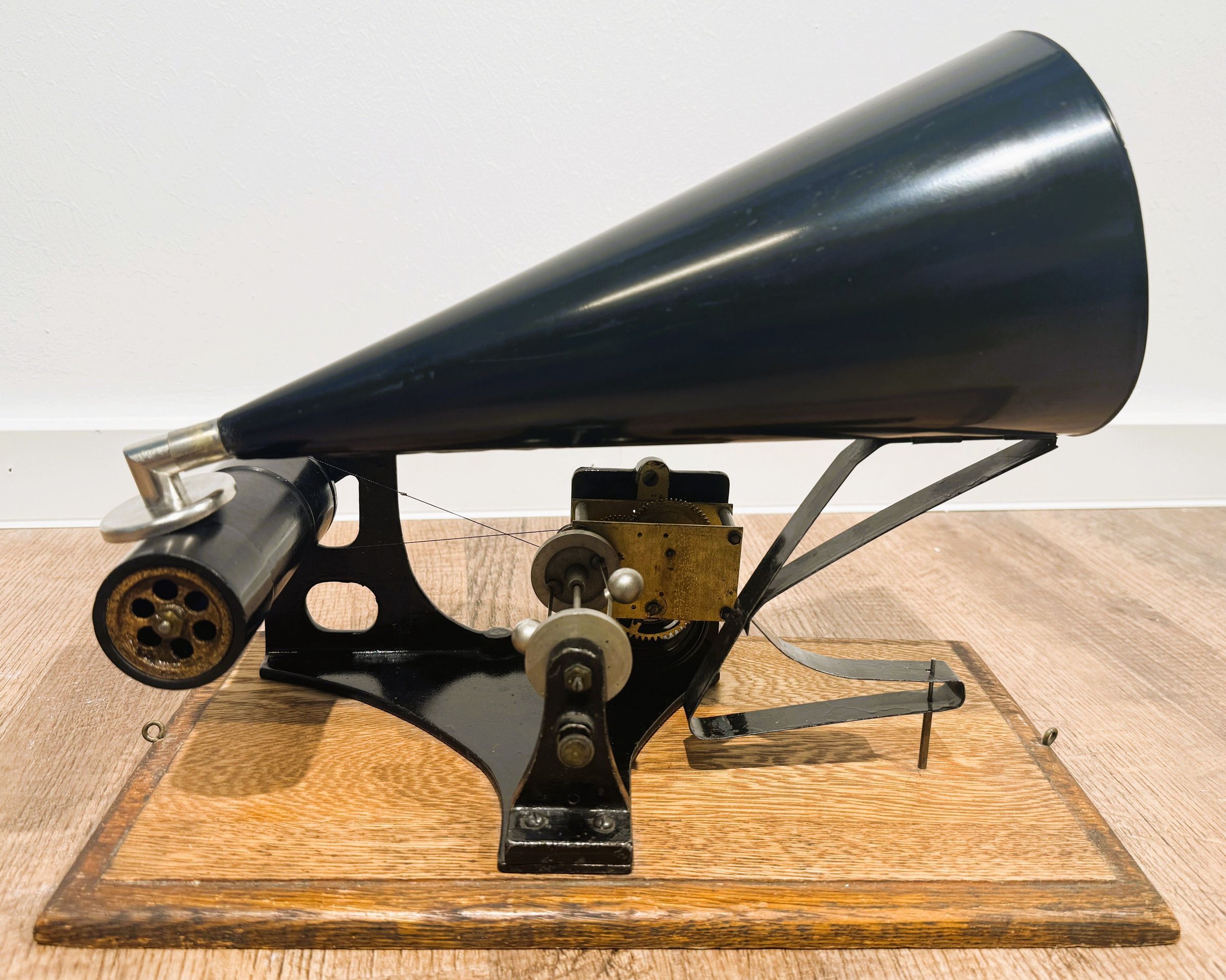
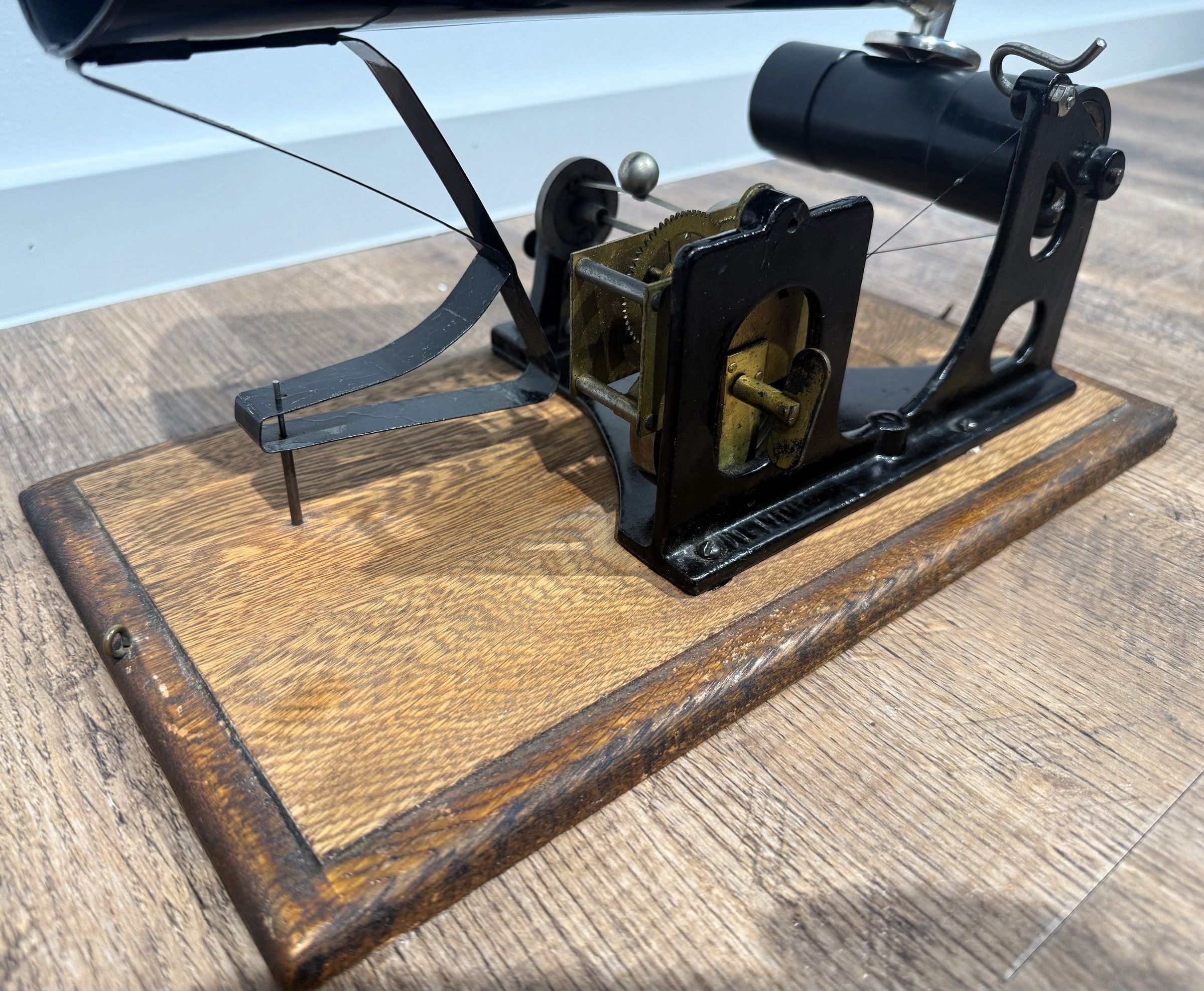
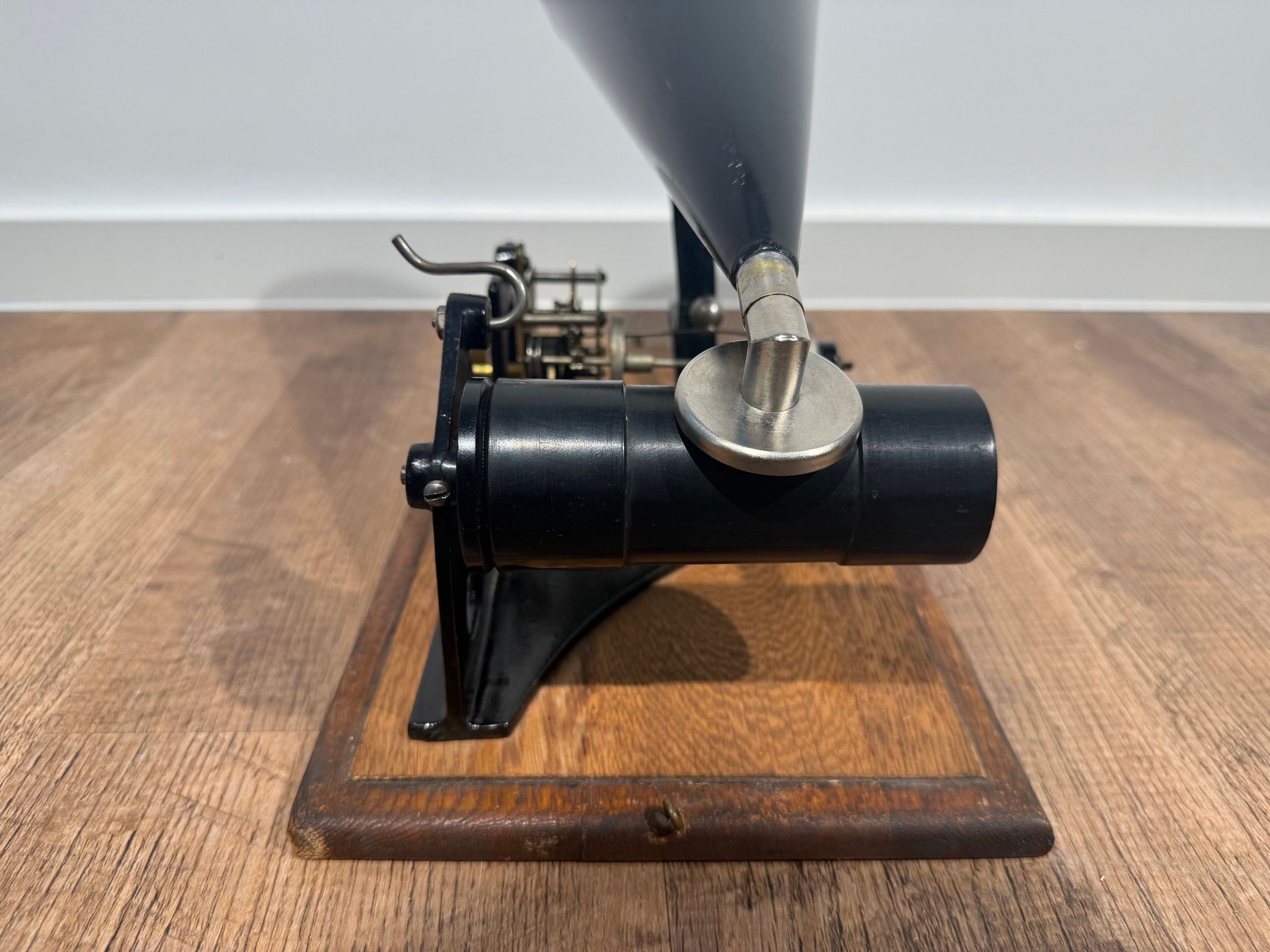
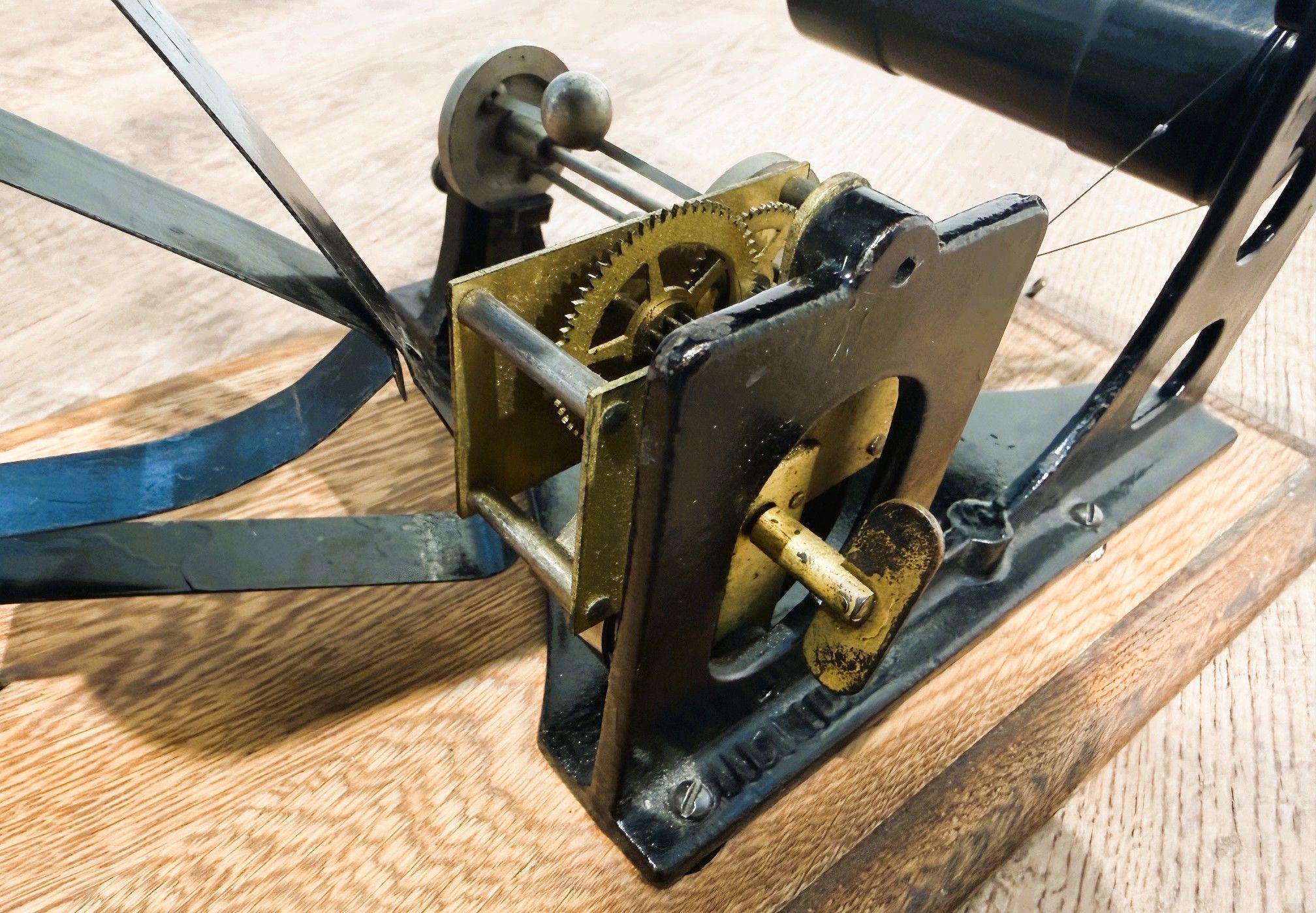
The instrument exhibited here is one of the most unusual early cylinder phonographs in the Edisonium collection. Its mechanical basis corresponds closely to the Echophone developed by Edward Hill Amet, but it differs from the known standard versions in one decisive respect: instead of the characteristic glass tone arm with listening tubes, this machine is equipped with a direct horn sound system.
This combination is historically important. It links the extremely simplified and inexpensive Echophone mechanism with a construction principle that, only a short time later, became characteristic of numerous small European “family phonographs,” especially machines of the Puck type.
No contemporary model designation for this particular version has yet been identified. It is therefore appropriately described in current research as an “Undocumented Echophone.”
Several surviving examples indicate that this was probably not an isolated private conversion, but rather a small and poorly documented production or development variant.
Edward H. Amet and the Echophone
Edward H. Amet belonged to the group of American inventors who, during the mid-1890s, attempted to transform the phonograph from an expensive precision instrument into an affordable machine for a much broader public.
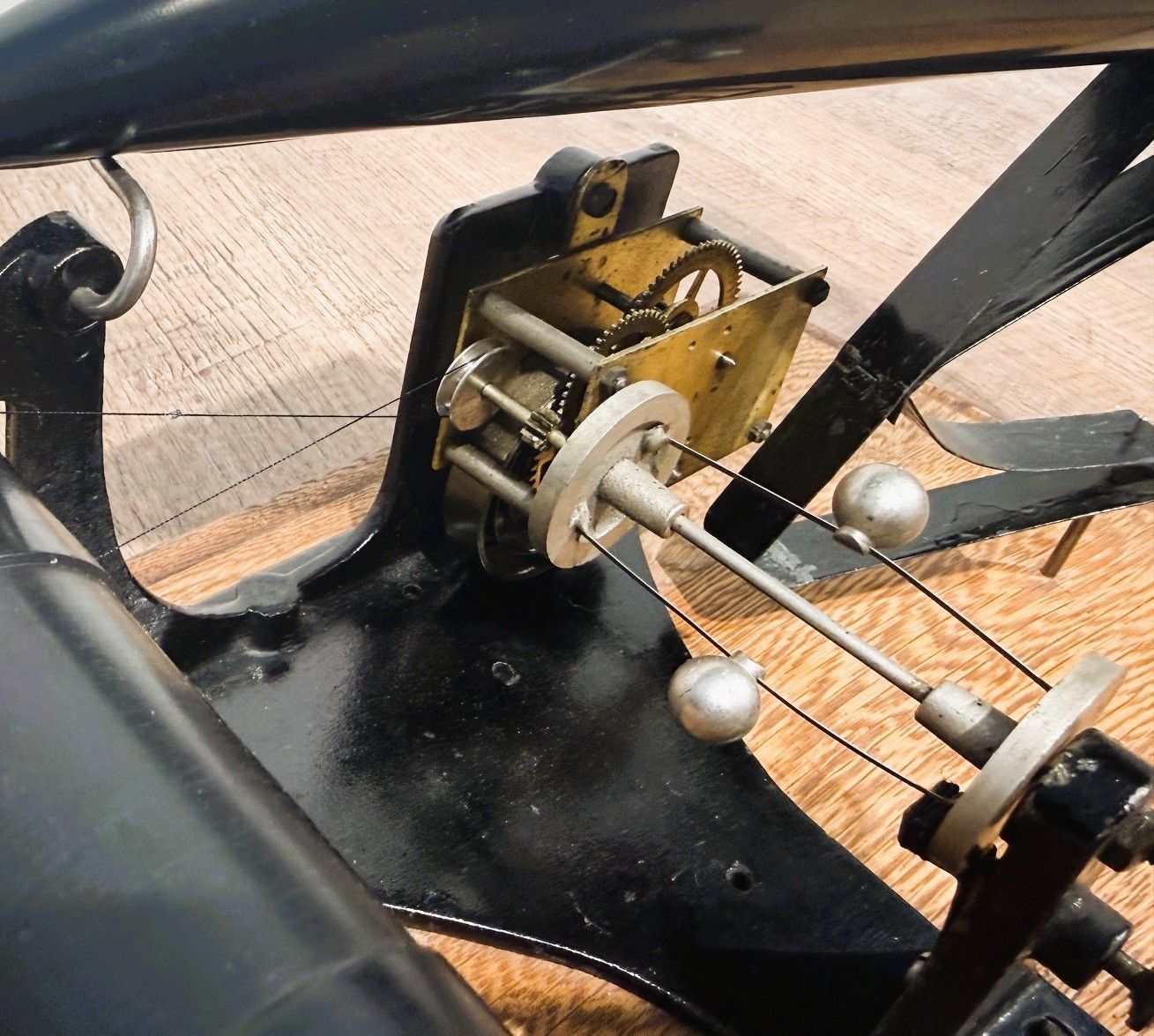
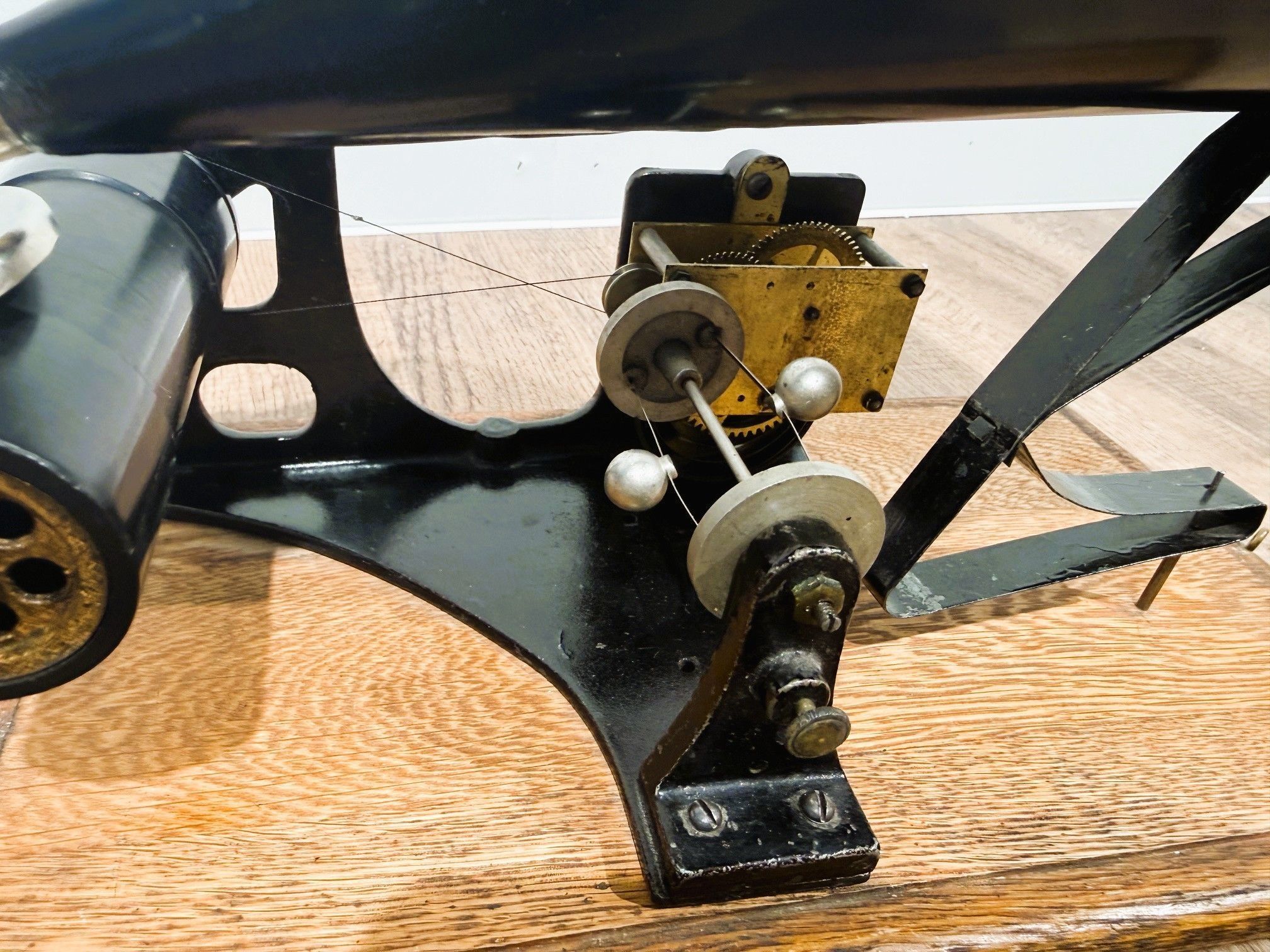
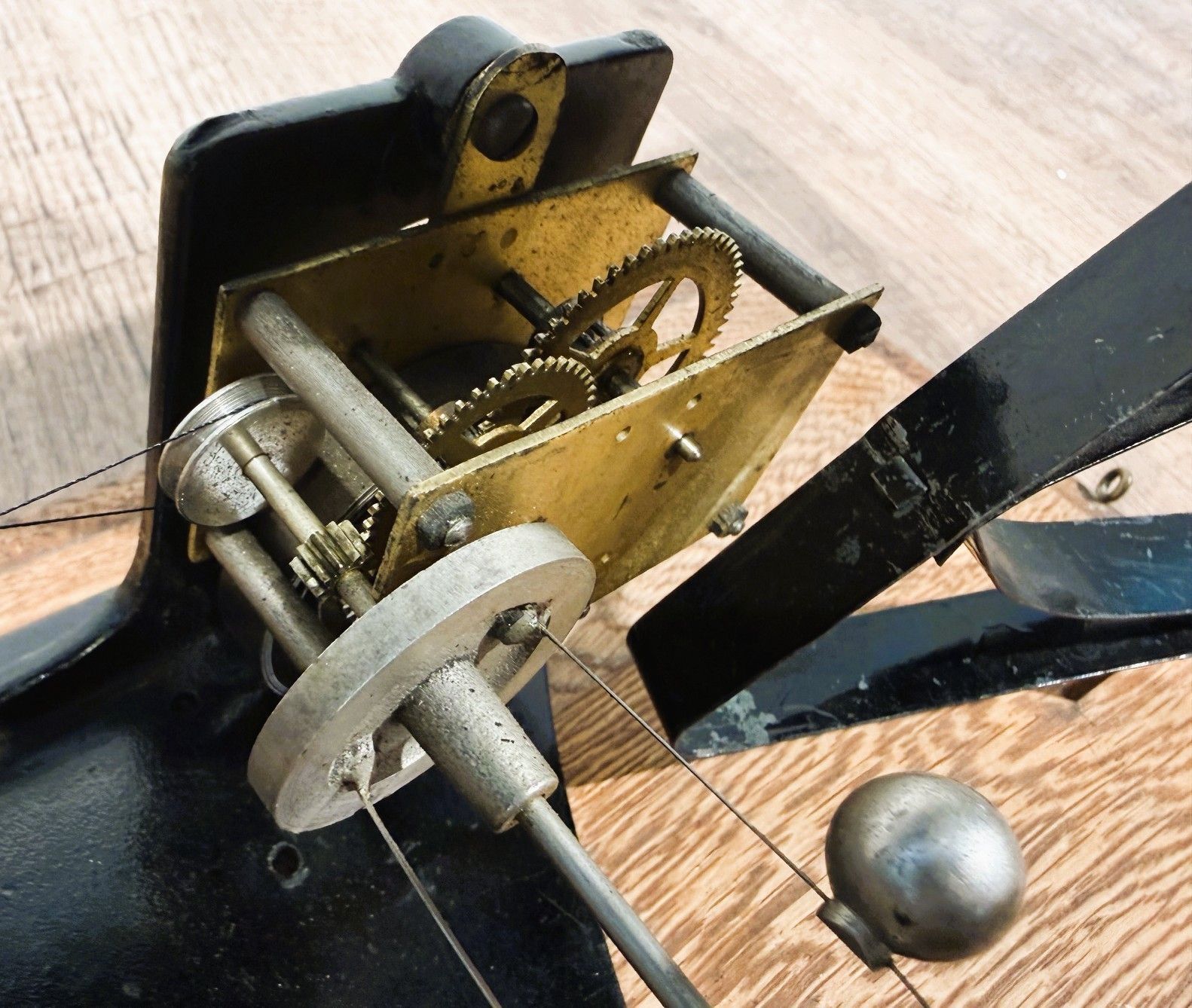
His Echophone was radically simplified. Known examples used a small clockwork spring motor, a freely guided reproducing system, and an unusual glass tone arm, the end of which effectively formed the stylus assembly. Sound was normally transmitted through listening tubes directly to the ears.
The earliest surviving Echophones used a wooden mandrel. Later examples employed a gutta-percha mandrel, a more stable and durable material. The Edisonium preserves examples of both of these major versions, making it possible to compare the evolution of the design directly.
From Listening Tubes to a Horn
The standard Echophone was essentially conceived as a machine for individual listening.
The horn version displayed at the Edisonium represents an important conceptual step. Instead of sending the sound only through listening tubes, it projects the sound directly into the room through a horn.
This changed the character of the machine completely.
It was no longer merely a personal listening device, but a small entertainment phonograph that could be heard by several people at the same time.
Several features already anticipate the later low-cost horn phonographs:
- strongly simplified mechanism,
- small spring-driven clockwork motor,
- absence of a heavy conventional phonograph carriage,
- direct connection between reproducer and horn,
- compact open construction,
- concentration on playback rather than recording.
This technical reduction was one of the essential conditions for making the phonograph affordable for a wider domestic market.
Patent Conflict and the End of the Echophone
Amet’s commercial development of the Echophone took place during a period of intense patent conflict in the American talking-machine industry.
The American Graphophone Company challenged machines of this type on the basis of patents associated with the Bell-Tainter system. Legal action in 1896 severely restricted Amet’s ability to continue marketing the Echophone, and the dispute effectively brought the short-lived commercial phase of the machine to an end.
This helps explain why the Echophone survives today in only very small numbers and why certain variants are poorly documented.
It also created a situation in which completed machines, components, mechanisms, or remaining stock may have entered other commercial channels.
The horn version may have emerged precisely during this transitional phase.
Possible Origins of the Horn Version
At present, three interpretations appear possible.
The first is that the horn machine represents a late development by Amet himself, intended to transform the Echophone from an individual listening device into a small room-filling entertainment phonograph.
The second possibility is a connection with the Lyrophone. Machines marketed under this name appeared shortly afterwards and shared several characteristics with the simplified Echophone principle: reduced mechanics, a spring motor, no conventional feed screw, and a direct connection between reproducer and horn.
A direct identification of the Edisonium machine as a Lyrophone, however, cannot presently be proven.
The third possibility is that the instrument was assembled after the end of normal Echophone production using original Echophone components combined with a newly developed horn system.
This interpretation would fit the known history of the period, when components from unsuccessful or discontinued phonograph ventures were frequently reused in later machines.
The Relationship to the Lyrophone and the Puck
The relationship between this machine and the later Puck phonograph is particularly important.
The documented history of the German Puck leads through Gianni Bettini’s Lyrophone.
The Lyrophone was a simplified playback-only cylinder phonograph. It had no conventional feed screw, and its reproducer was directly connected to the horn. This produced a short and efficient acoustic path and relatively high volume.
After the American Graphophone Company ceased licensing the Lyrophone, Bettini found a manufacturer and distributor in Germany in Wilhelm Bahre.
Bahre registered the name “Puck” in Germany on 25 August 1897 and began producing a small, inexpensive phonograph based on the same general principle.
The Puck soon became one of the most important families of inexpensive European phonographs.
For this reason, it would be too strong to state that the Puck developed directly from the Amet Echophone.
What can be said with greater confidence is that the horn-equipped Echophone already demonstrates, at almost exactly the same time, the same general technical philosophy:
a simplified mechanism, a direct acoustic path, a small spring motor, a lightweight construction, and a horn projecting sound into the room.
The Edisonium instrument can therefore be regarded as a technical and typological precursor of the Puck principle, even though a direct corporate or patent lineage has not yet been established.
A Possible Transatlantic Connection
The question becomes even more interesting when early German phonographs are considered.
During the late 1890s, numerous simple and inexpensive horn phonographs appeared in Germany. Some machines associated with dealers and manufacturers such as Albert Költzow show constructional similarities to American low-cost phonographs.
Surviving evidence also indicates that components and remaining stocks from American phonograph ventures were reused in Europe.
It is therefore possible that American Echophone mechanisms or parts contributed, directly or indirectly, to the development of later German machines.
At present, however, there is insufficient evidence to demonstrate a direct transfer of complete tooling, moulds, or production rights from Amet to the German Puck manufacturers.
This uncertainty is precisely what makes the Edisonium machine so important for further research.
Dating
A date of approximately 1896–1897 appears plausible.
The machine still retains the basic construction of the later Echophone generation, including the type of mandrel associated with the improved versions, while at the same time introducing a horn arrangement similar to those found on simplified machines from 1897 onward.
It therefore belongs exactly to the short transitional period between the final development of the American Echophone and the emergence of the first European Lyrophone- and Puck-type machines.
An exact manufacturing date, however, cannot presently be established.
Rarity
Only a very small number of machines of this unusual horn-equipped Echophone type are presently known.
The existence of several surviving examples is important because it strongly suggests that the design was more than a single later modification.
At the same time, the extremely small surviving number demonstrates that it was never produced on a large scale.
The horn-equipped Echophone therefore belongs to the rarest surviving representatives of the first generation of inexpensive cylinder phonographs.
Significance within the Edisonium
The particular importance of the Edisonium example lies in the possibility of placing it directly within a wider developmental sequence.
The collection includes:
an early Echophone with wooden mandrel,
a later Echophone with gutta-percha mandrel,
and this rare horn-equipped version.
Together, these machines illustrate the rapid transformation of the phonograph from an expensive precision apparatus into a simplified domestic entertainment machine.
The horn version occupies the crucial position between the classic Amet Echophone and the small European horn phonographs that followed only a short time later.
Scientific Assessment
The Echophone with Horn, Edisonium Exhibition No. 374, documents a phase in the history of the phonograph that remains only partially understood.
Its close mechanical relationship to the Amet Echophone is clear.
It is also clear that, only shortly afterwards, Bettini’s Lyrophone and Wilhelm Bahre’s Puck established a highly successful European tradition of inexpensive horn phonographs.
What remains uncertain is how directly these two development lines were connected.
For this reason, the instrument should neither be described merely as an unusual Echophone nor too quickly identified as the “first Puck.”
Its true historical importance lies elsewhere
.
It represents a rare surviving example of the moment when the basic concept of the low-cost horn phonograph was already taking shape: simplified mechanics, direct sound transmission, compact construction, and a design intended primarily for affordable domestic entertainment.
The “Undocumented Echophone” is therefore an important material witness to the transition from the early American low-cost phonograph to the European family phonograph and the later Puck tradition.