Name/Title
Columbia "Graphophone BS" – Coin-Operated Cylinder PhonographEntry/Object ID
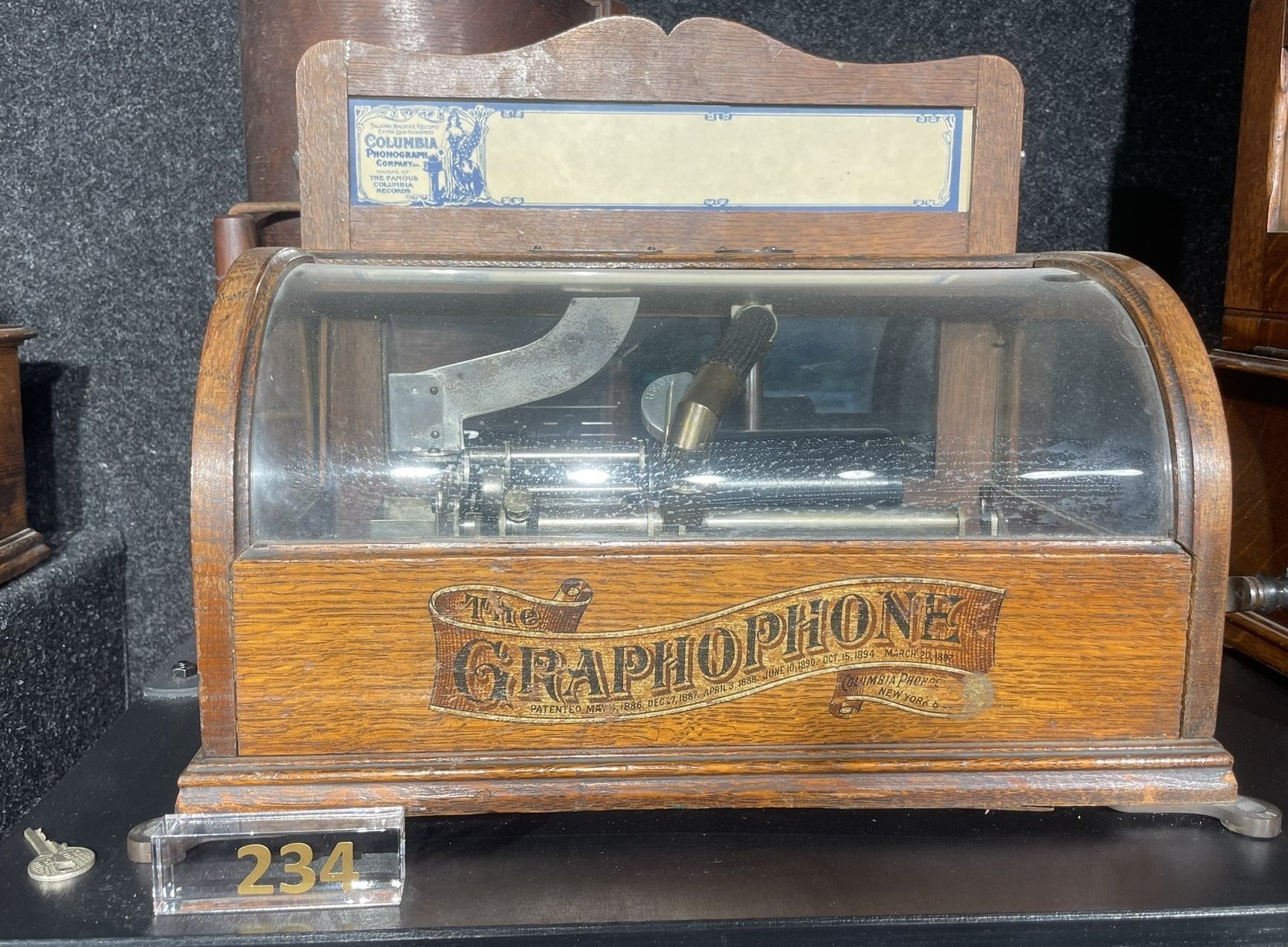
234Description
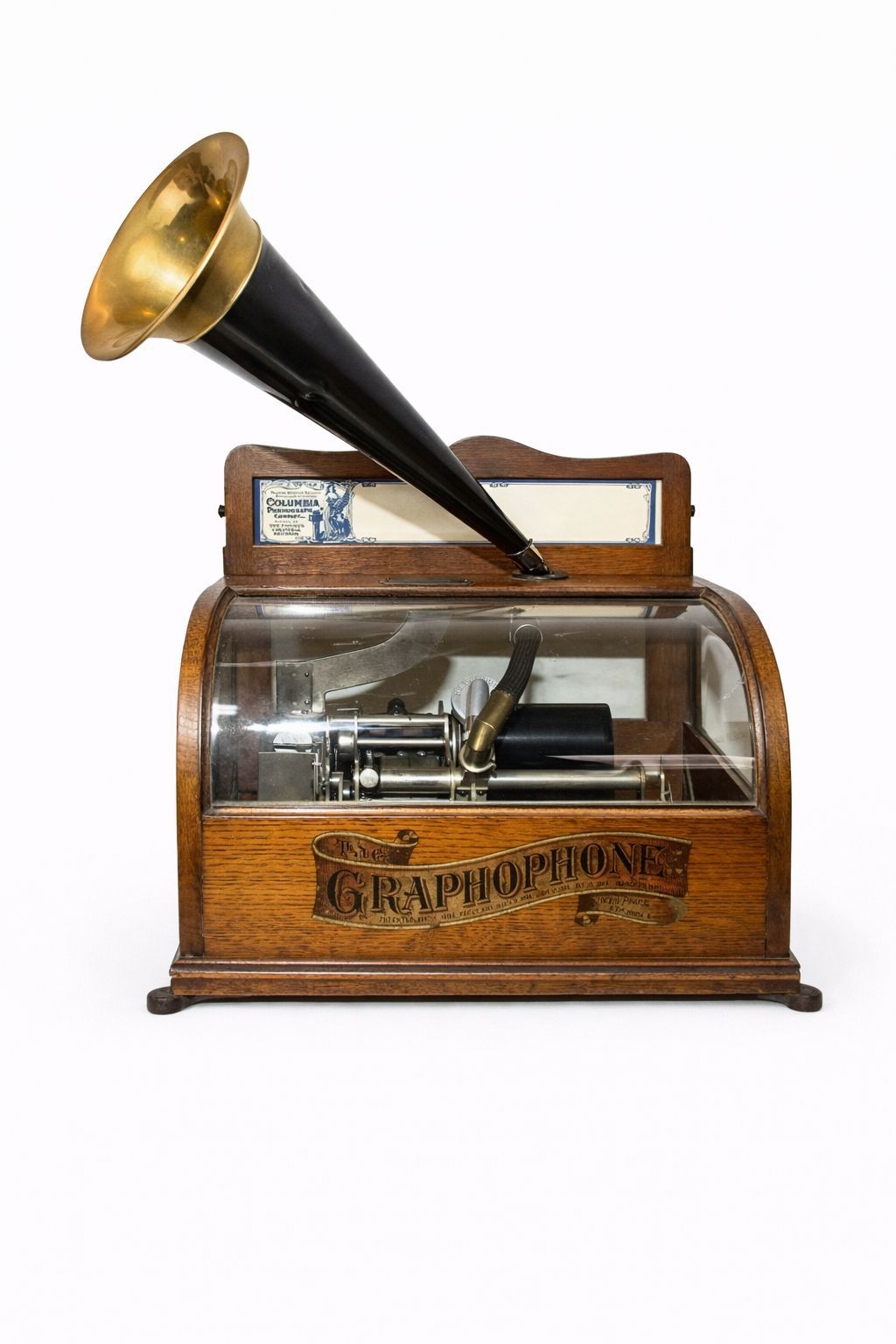
Columbia Phonograph Company, New York
Manufactured: approx. 1898–1902
Historical Background
The Columbia BS was one of the most compact and refined coin-operated phonographs of the early era – a milestone in automated sound reproduction around 1900. Based on the popular Columbia Graphophone "Eagle," the BS model was specially designed for use in public spaces such as saloons, drugstores, bars, or waiting rooms – wherever customers could enjoy music via coin operation.
The designation "BS" likely stands for "Base Model" and "Spring Motor." The machine was powered exclusively by a spring-driven motor; no electric version was produced. It was available for both 5-cent (nickel) and 1-penny coins and was frequently exported, especially to the UK.
Technical Features
Drive Mechanism: Spring motor
Cylinder Type: Standard 2-minute wax cylinders
Horn: Original Columbia horn (13", nickel-plated, with angled elbow)
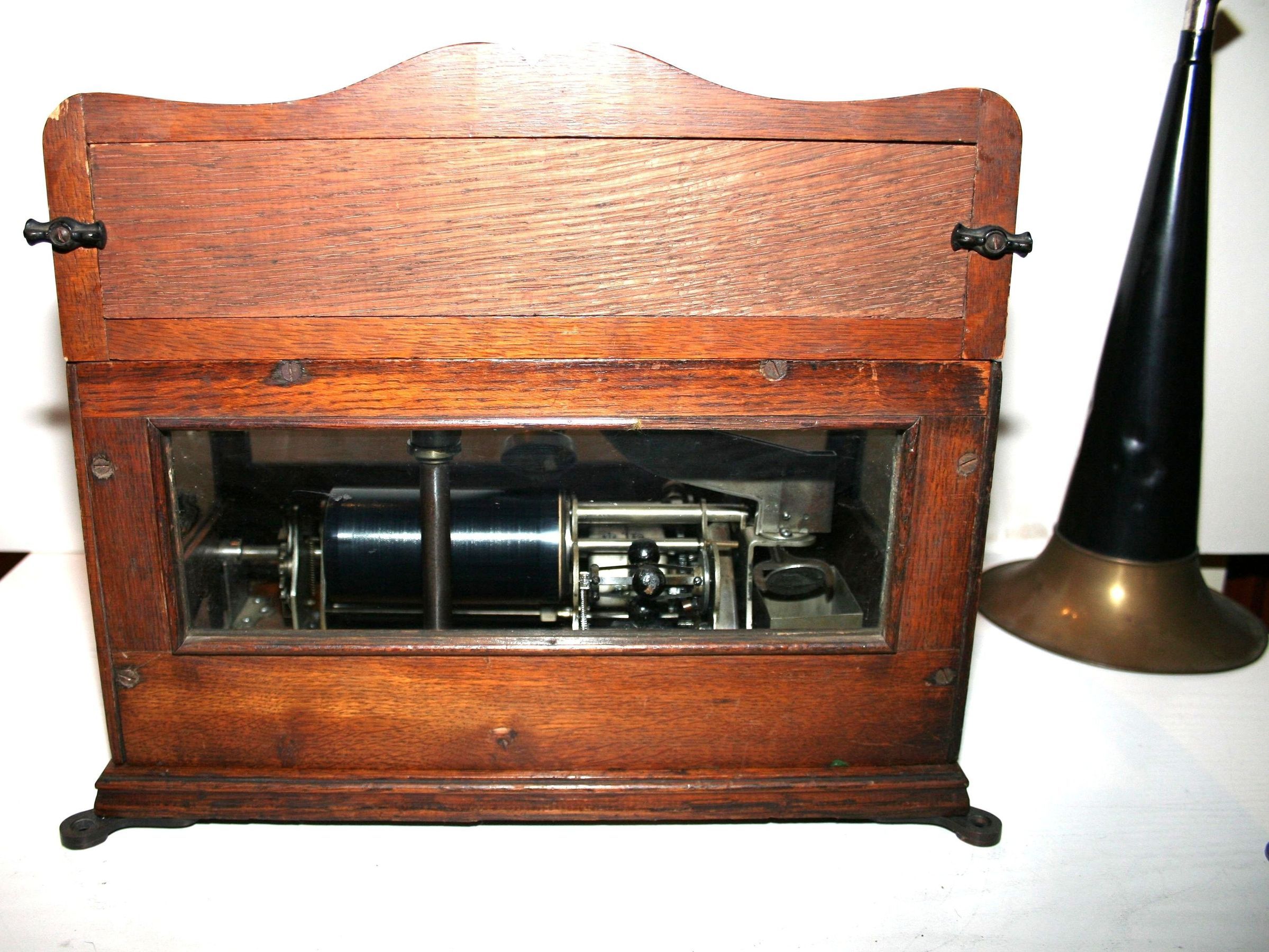
Cabinet: Oak with curved glass lid and metal anchor points for theft protection
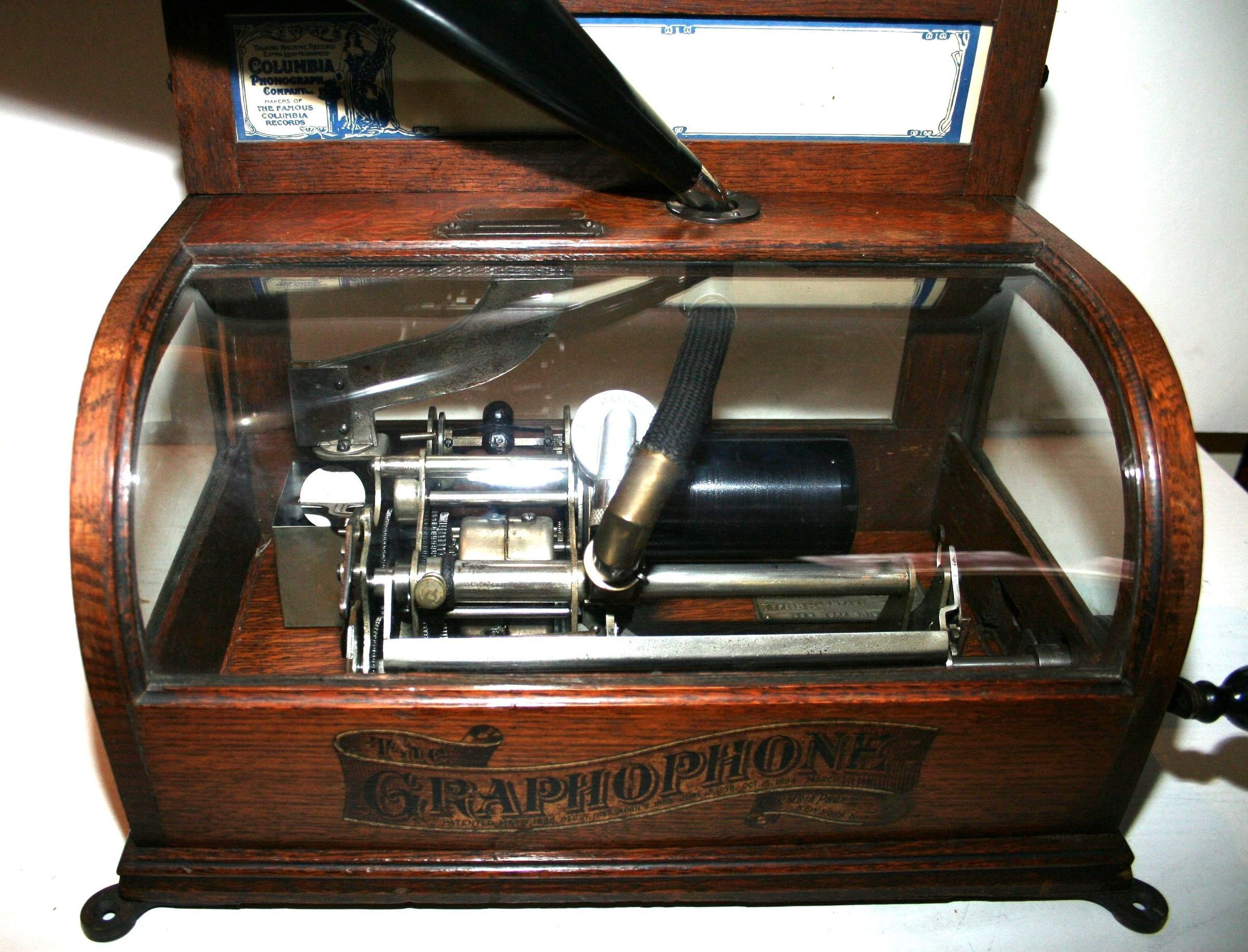
Coin Mechanism: Complex system with coin chute, ratchet gear, and coin fork lever
Soundbox: Modified reproducer with set screw to prevent shaking loose
Special Feature: Fully visible inner mechanism for easy maintenance and inspection
How It Works
Coin Insertion: The inserted coin drops through the chute onto the coin fork lever.
Release: The weight of the coin lowers the lever, releasing the lock mechanism.
Winding: The user turns the crank until it reaches the mechanical stop.
Start: The cylinder begins to rotate, and the reproducer lowers onto the wax record.
Playback: The cylinder rotates, and the music is played.
Stop & Reset: After the timed playback ends, the mechanism stops automatically, and the carriage is returned by spring tension – ready for the next coin.
Significance
The Columbia BS is a representative example of the first generation of mechanical self-service machines. A forerunner of the jukebox, it combined technology, business innovation, and entertainment value in a compact format.
The unit on display at the Edisonium is well preserved, retaining all original coin mechanisms.