Name/Title
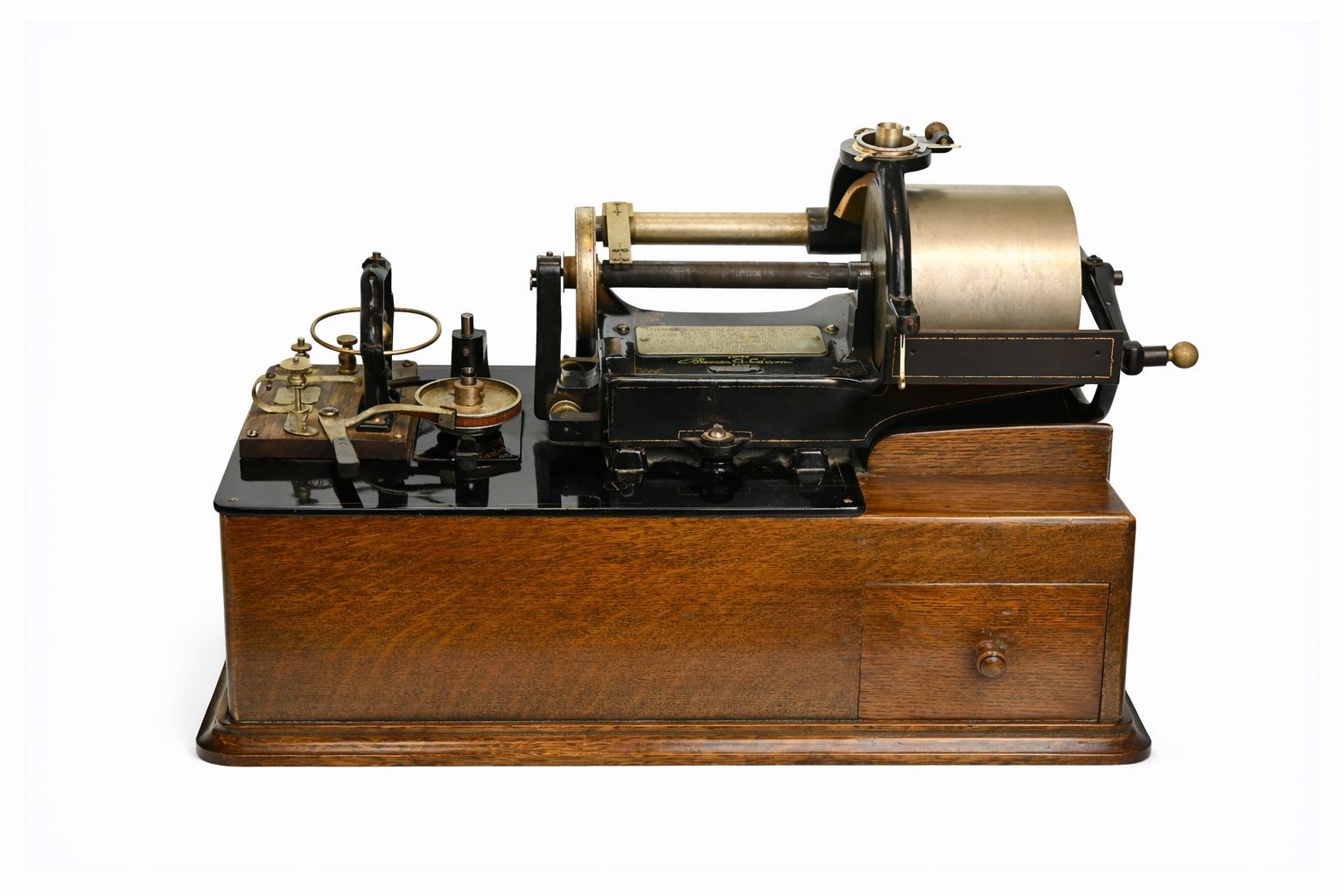
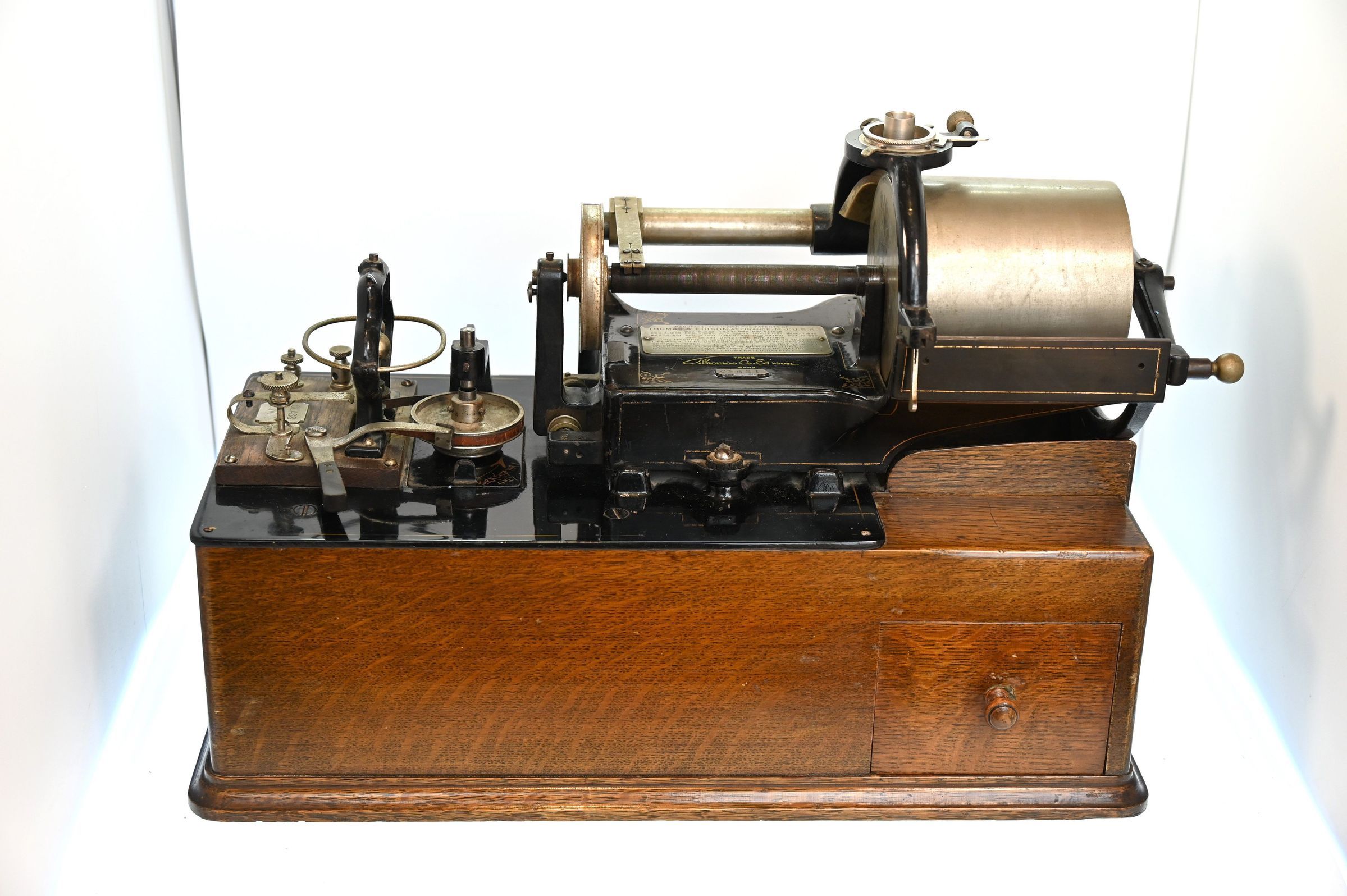
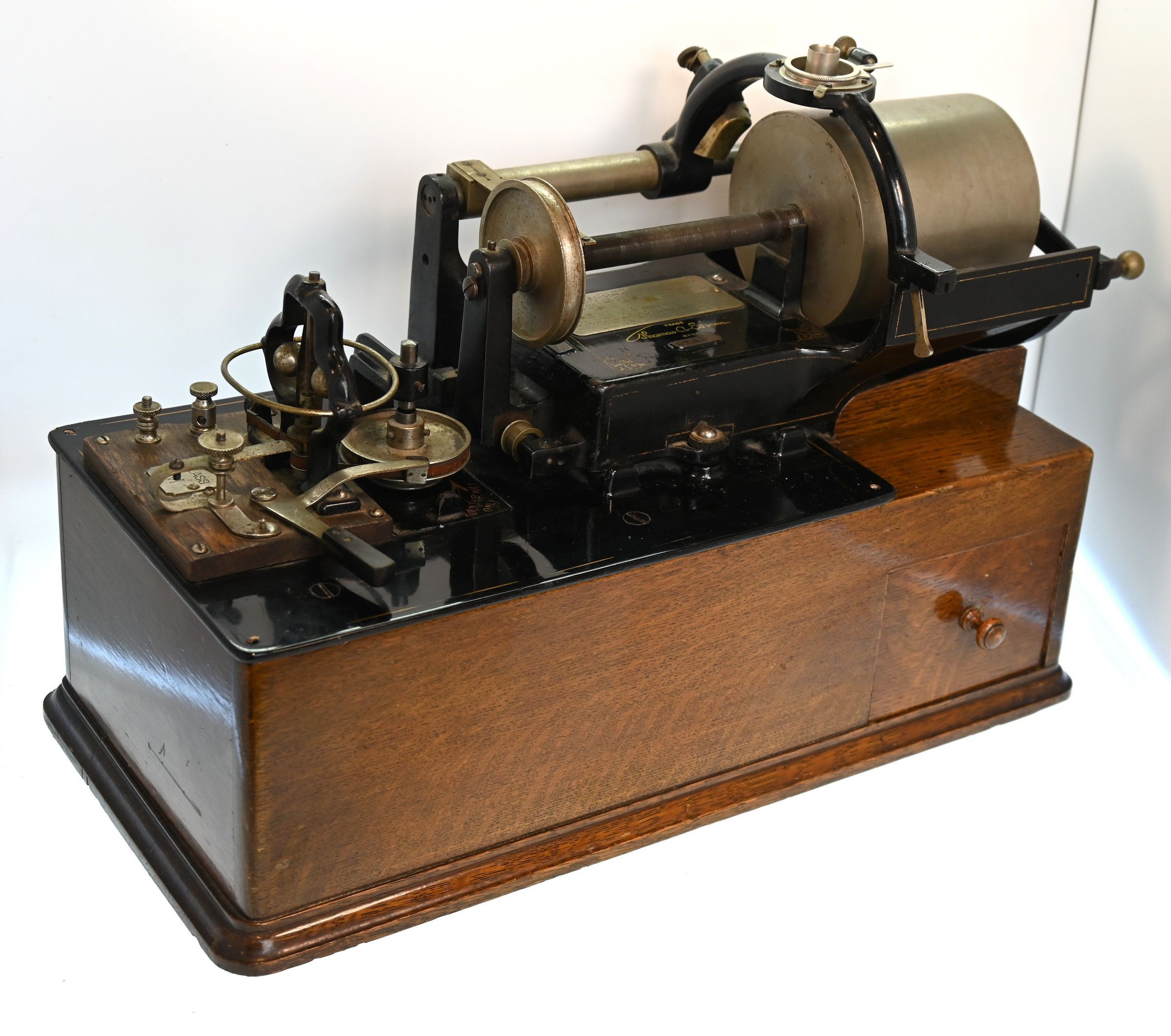
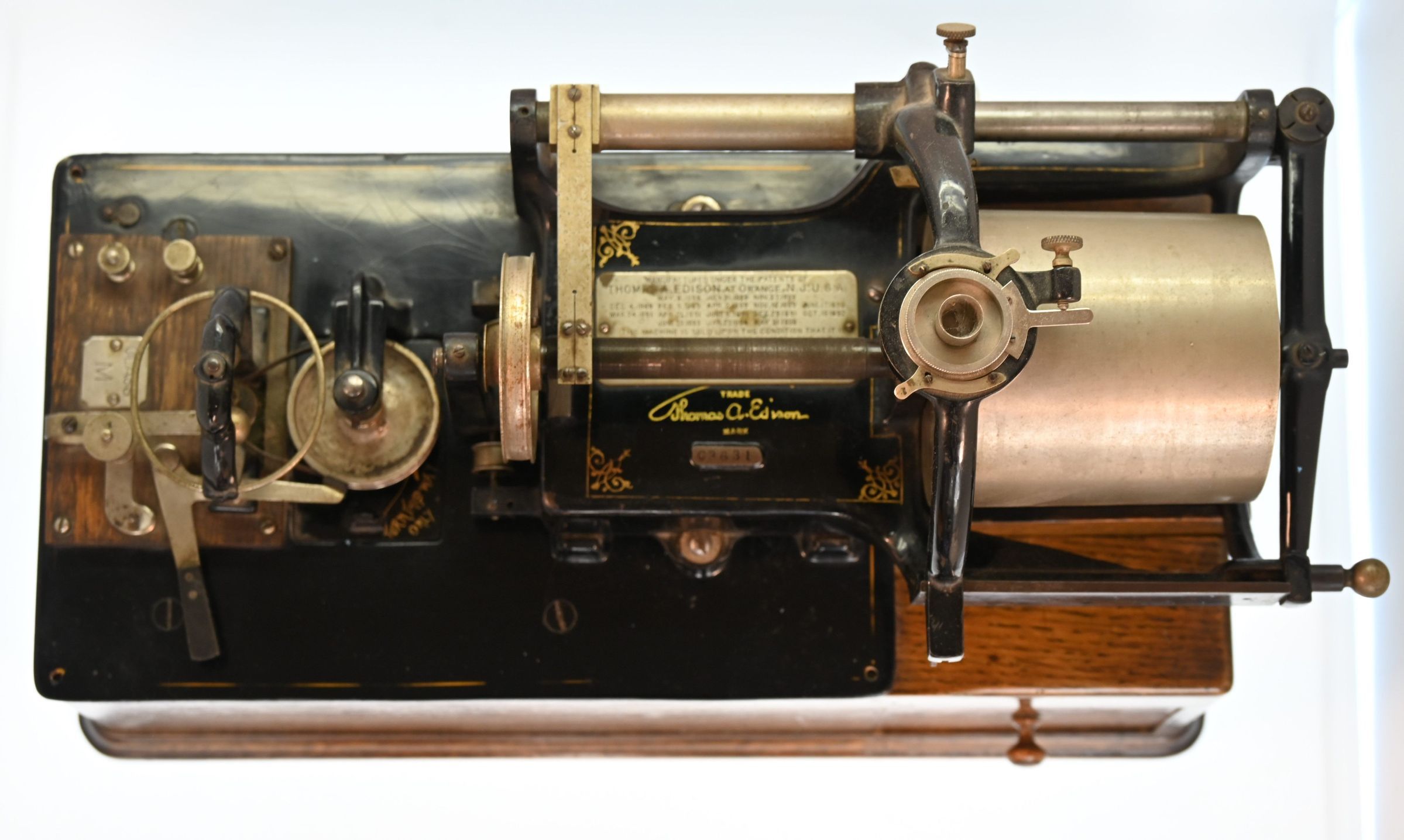
Edison Class M “Opera” PhonographEntry/Object ID
114Description
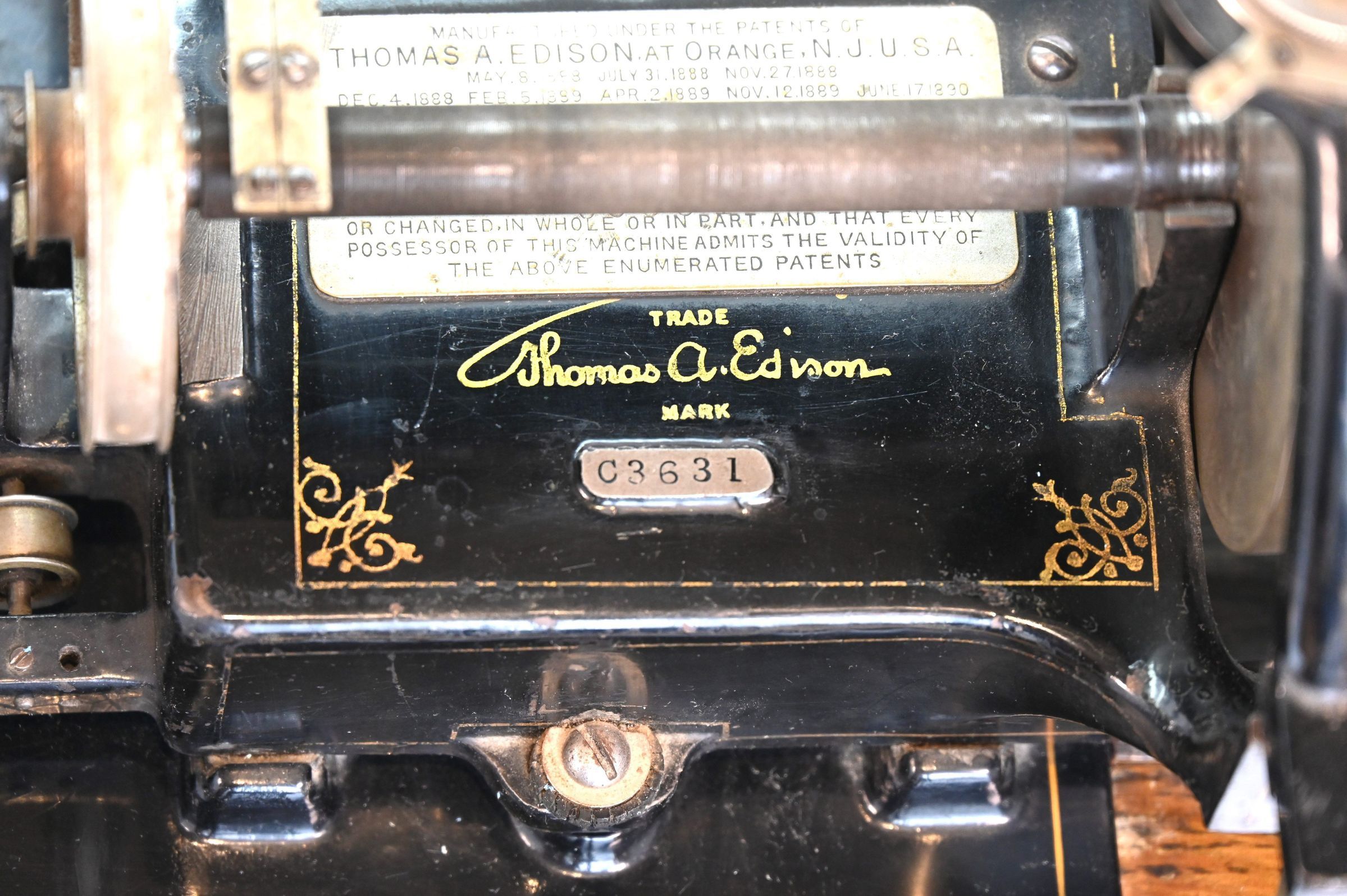
Edison Phonograph Company, USA – ca. 1899–1901
Rare battery‑powered machine for Concert Cylinders
Historical Overview
The “Opera” Phonograph is a special variant of the Edison Class M, designed specifically for playing the large‑format Concert wax cylinders. These cylinders, with a diameter of 2¼ inches, offered significantly greater volume, an extended frequency range, and longer playing time compared to standard cylinders. Their size and fine groove structure made them ideal for high‑quality music and vocal performances.
However, they also had notable drawbacks: production was expensive, and the soft wax was extremely susceptible to wear, temperature fluctuations, and moisture. With the introduction of more durable and affordable Gold Moulded cylinders around 1902, pure wax Concert cylinders quickly disappeared from the market – and with them the demand for machines such as the Opera.
Technical Features
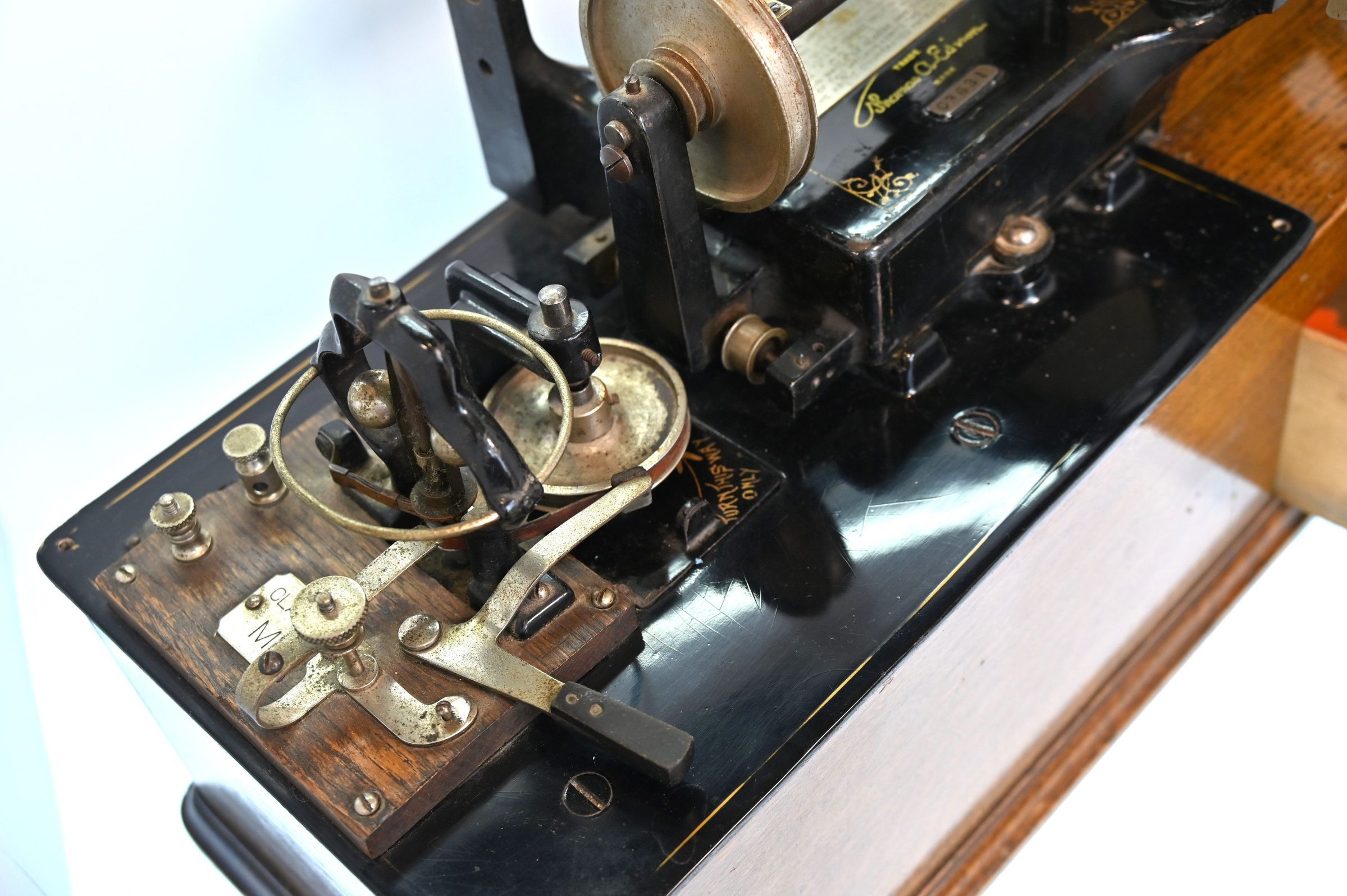
Motor: Battery‑powered electric motor
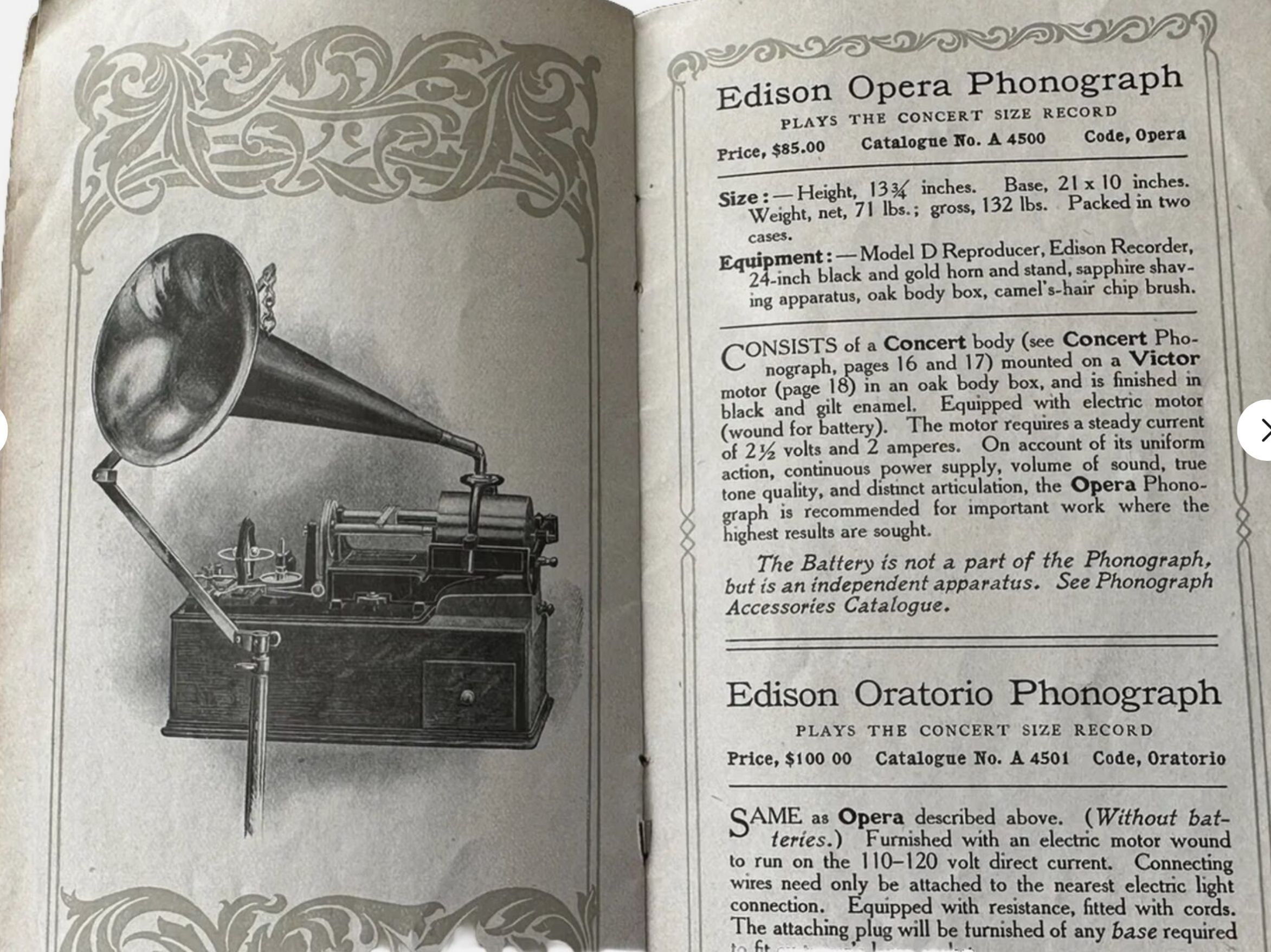
Power Supply: Direct current, 2.5 volts / 2 amperes (separate battery required)
Drive: Direct electric drive – providing a constant speed without manual winding
Cabinet: Solid oak base, black‑lacquered upper works with gold decoration
Reproducer: Edison Model D – optimised for Concert cylinders
Dimensions & Weight: Height approx. 35 cm; base approx. 53 × 25 cm; weight approx. 32 kg
Original Price: US $150 – one of Edison’s most expensive models of the era
The original package included a large 24‑inch black‑and‑gold Concert horn, horn stand, sapphire shaving device, recorder, and a set of maintenance tools (including a brush).
Significance
The Edison “Opera” was intended primarily for professional use – in recording studios, for public recording sessions, or for high‑quality demonstrations. Its electric motor provided the advantage of perfectly steady speed, essential for accurate recording and playback.
It is among the rarest battery‑powered Edison machines and represents the technical pinnacle of the Class M line. Due to its very short production run – caused by the rapid decline of the Concert cylinder format – only a handful of examples are known to exist today.
The Edisonium Example
The example displayed at the Edisonium Mariazell comes from the prestigious Charles Hummel Collection (USA) and survives in exceptionally complete and original condition. It is one of the few known specimens worldwide and demonstrates the high level of technical sophistication and craftsmanship Edison achieved around 1900.