Name/Title
Edison Bell “Commercial” PhonographEntry/Object ID
118Description
Distributed by Edison Bell Company, London, UK – c. 1893
Manufactured by Edison Phonograph Works, West Orange, New Jersey, USA (presumed)
A Transatlantic Edison Machine with Cultural Legacy
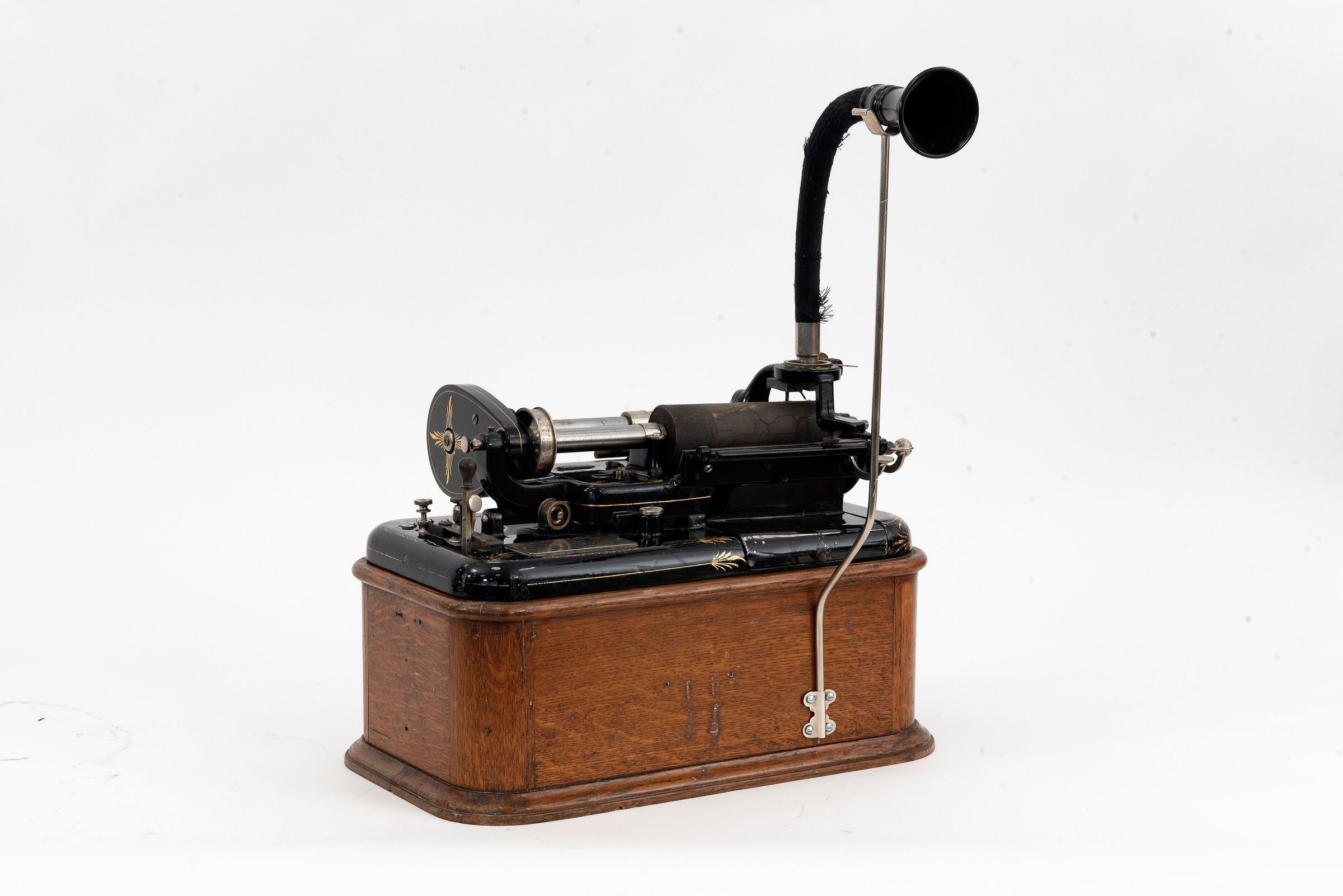
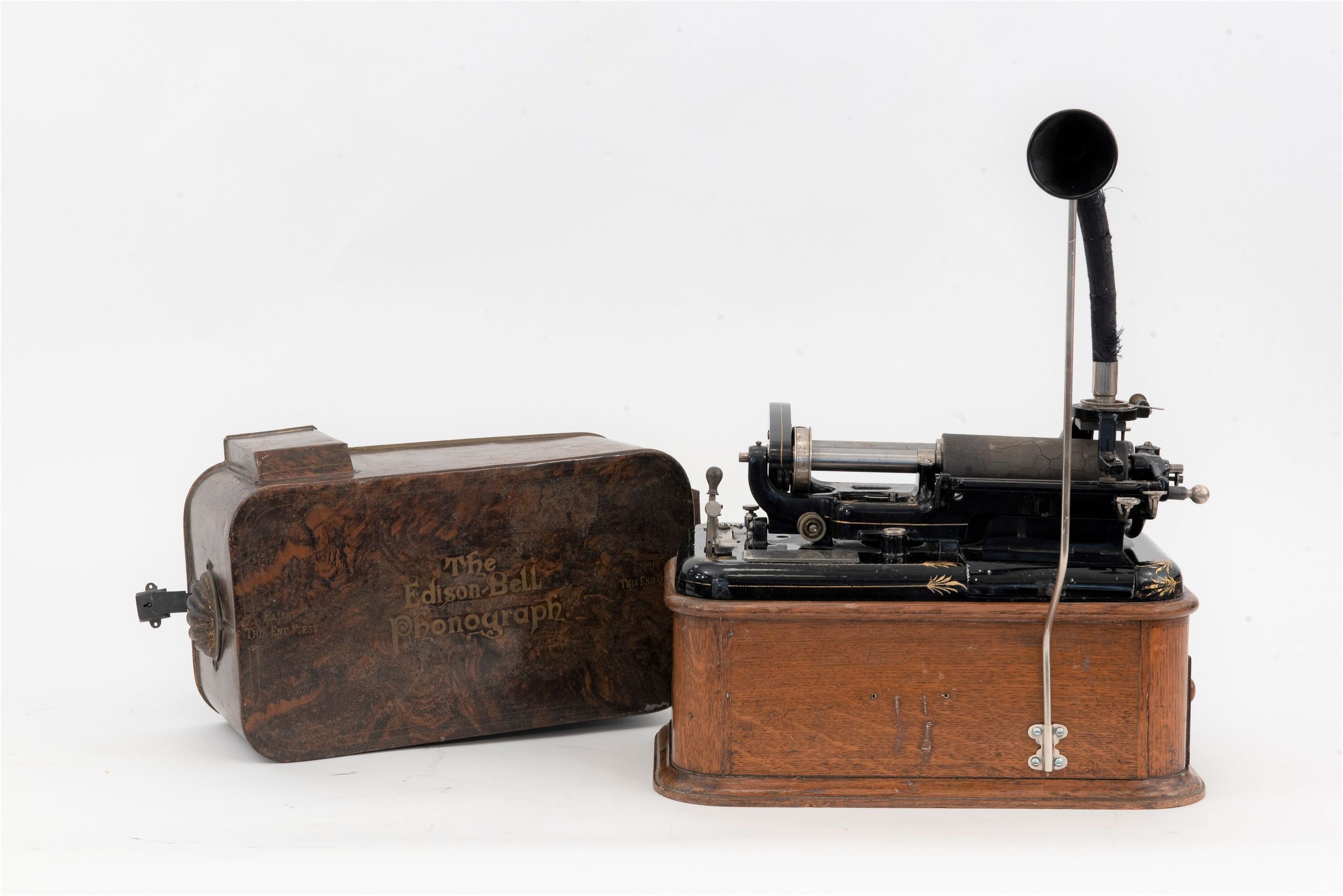
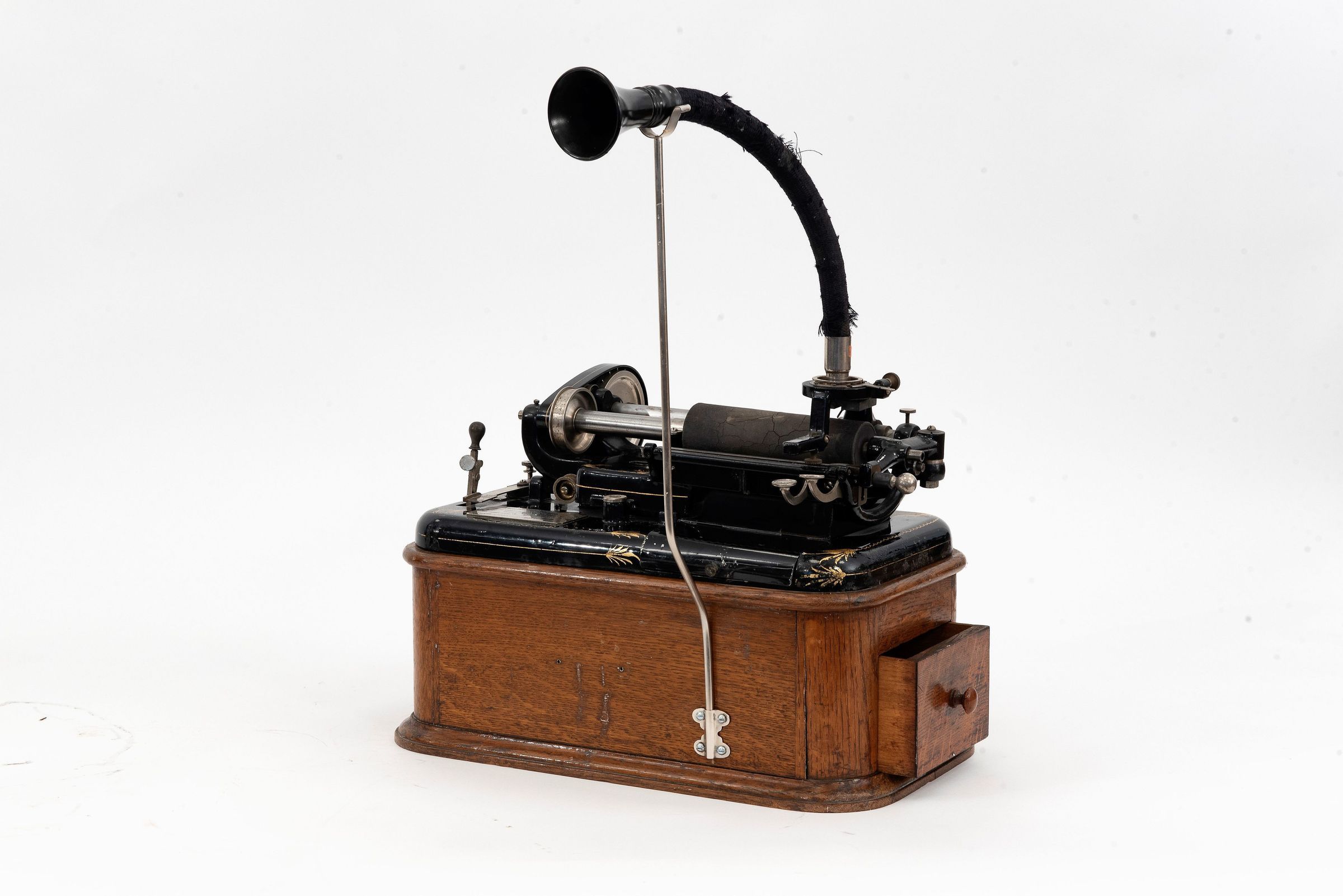
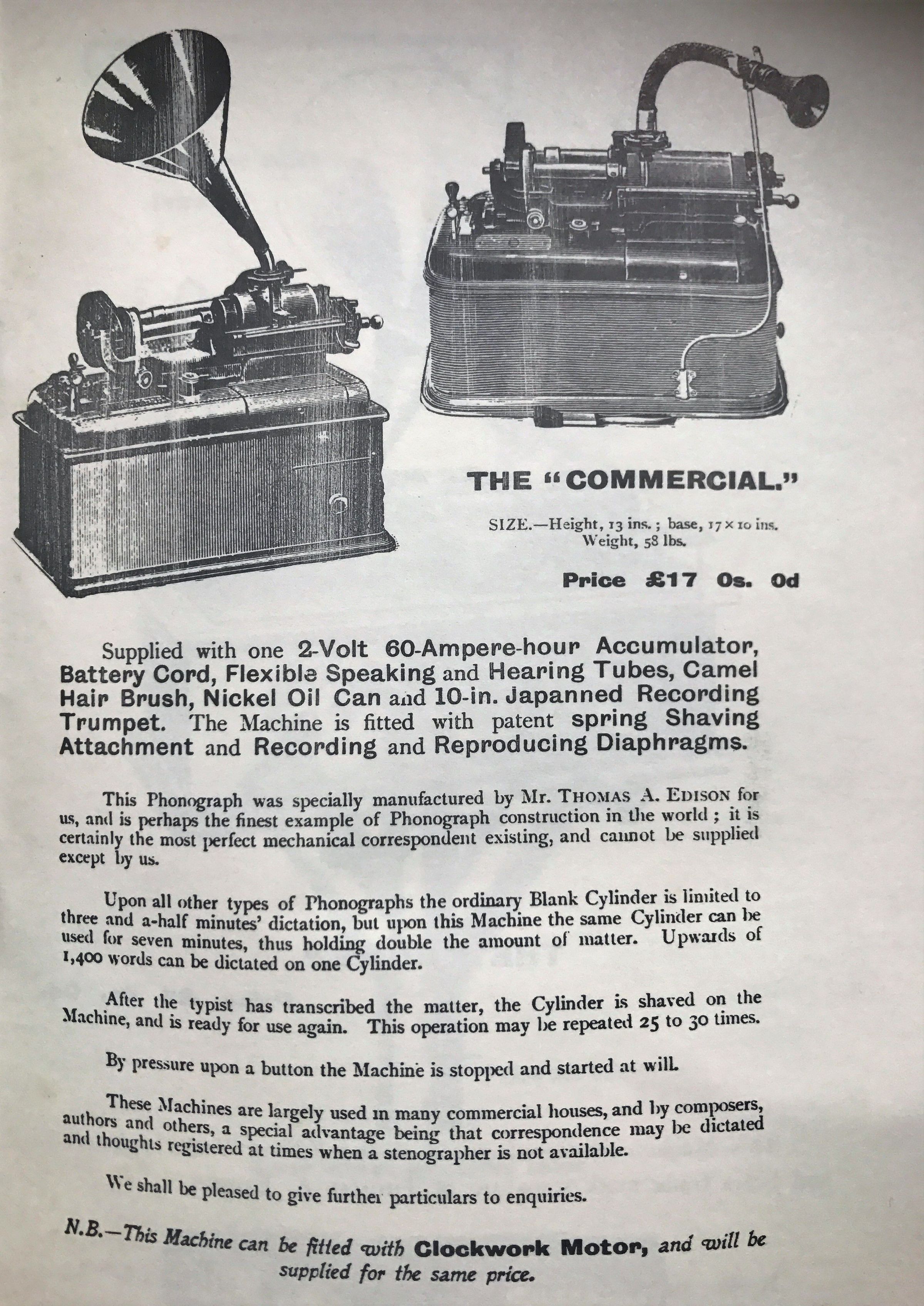
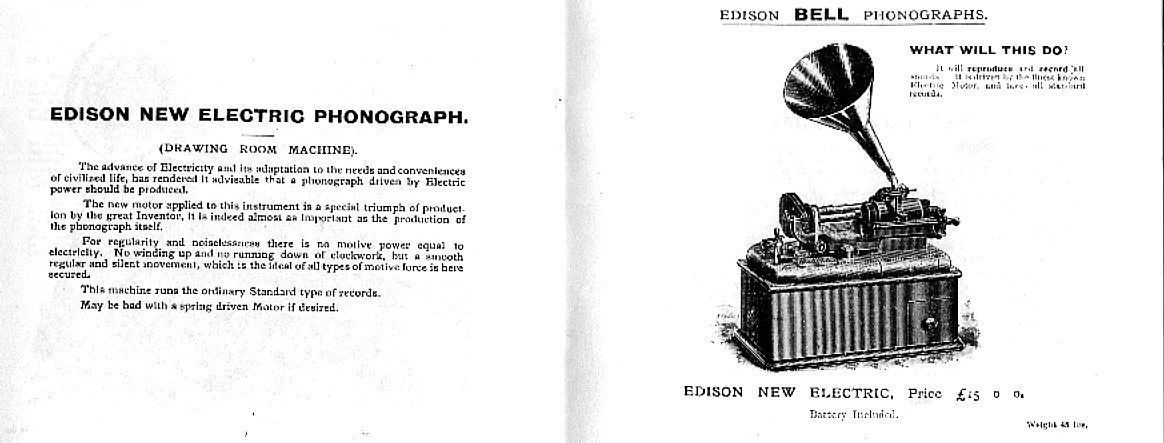
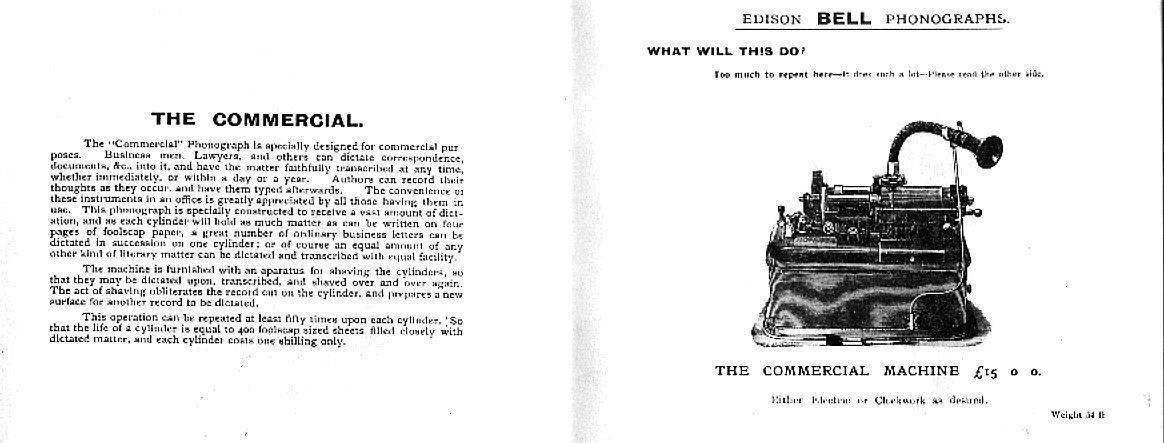
This exceptionally well-preserved Commercial Phonograph, exhibited here at the Edisonium, was sold around 1893 by the British Edison Bell Company – one of Edison’s earliest licensees in Europe. However, production likely took place at the Edison Phonograph Works in West Orange, New Jersey. It was marketed as a professional dictation device for office and business use, incorporating technology derived from the Edison Class M phonograph.
Mechanics and Operation
The machine is powered by a direct current motor, rated at 2 volts, as specified in original documentation. It was typically operated with a 60 ampere-hour battery (accumulator). This motor is identical to the one used in the Edison Class M and delivered consistent torque for precise recording and playback – a crucial factor in reliable dictation.
The Commercial came with an impressive accessory kit, including:
– Flexible speaking and hearing tubes
– Spring-driven cylinder shaving device
– Camel-hair brush, nickel oil can
– 10-inch japanned metal recording horn
– Recording and reproducing diaphragms
Cylinders could be recorded, shaved smooth, and reused up to 25 to 30 times. Thanks to its extended format, each blank cylinder could hold up to 7 minutes of content – nearly twice the capacity of conventional 3½-minute cylinders – or approximately 1,400 dictated words.
A Link to "His Master’s Voice"
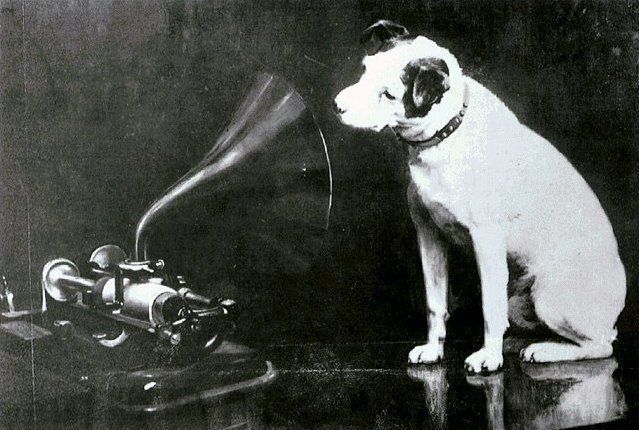
This model is famously associated with the iconic painting His Master’s Voice by Francis Barraud, depicting the dog Nipper listening to a cylinder phonograph. Barraud’s original canvas featured a Commercial-style phonograph like this one. Though Edison Bell rejected the painting, it was later adopted by the Berliner Gramophone Company and became one of the most recognized trademarks in music history.
Design and Features
– Solid oak case with rounded base
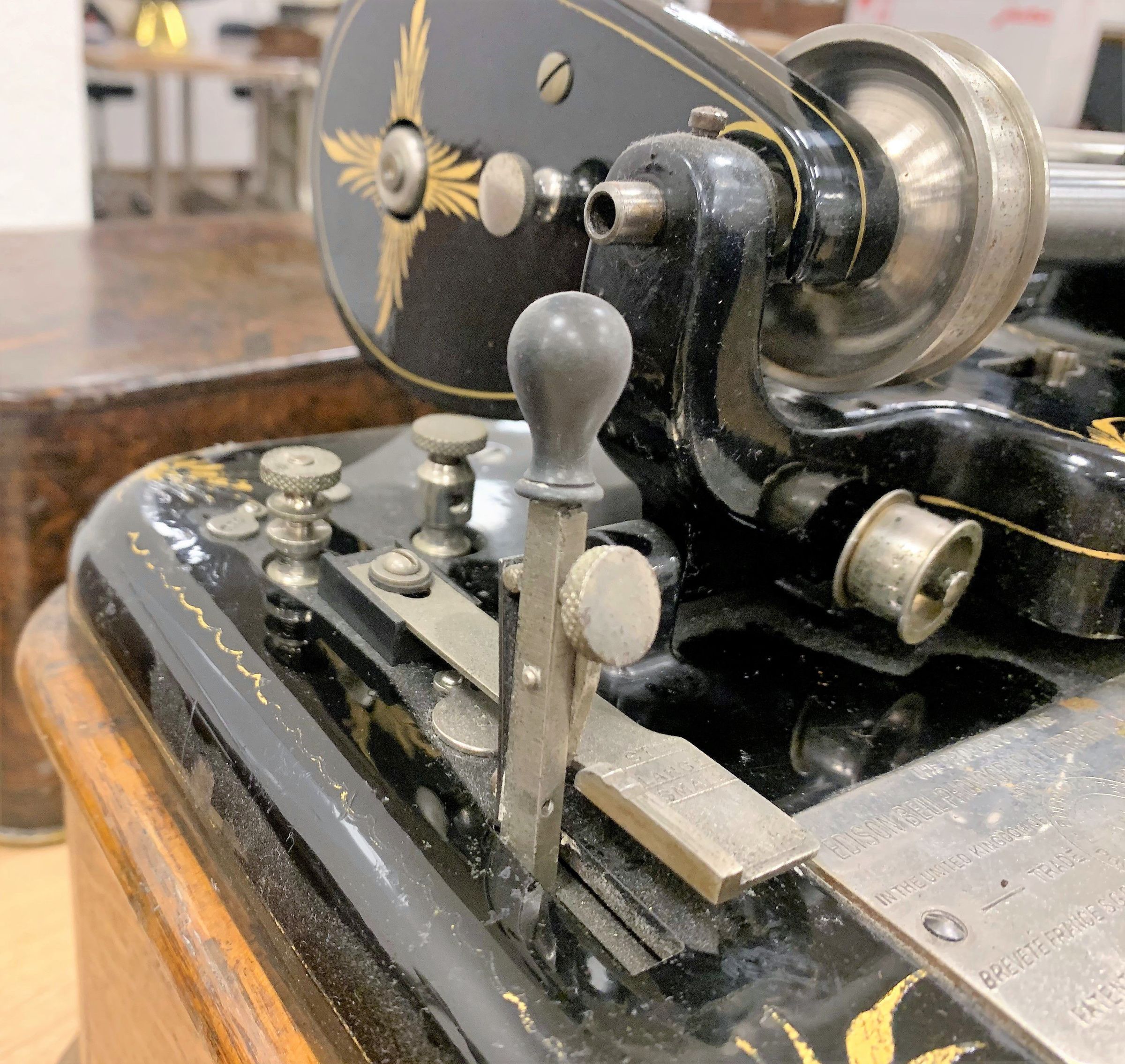
– Cast-iron motor plate with decorative pinstriping
– One-piece rubber-covered mandrel on some examples
– Precision-engineered mechanism: push-button activation for instant start/stop
– Integrated shaving device for cylinder reuse
Target Market and Applications
The Commercial was designed for professionals: businessmen, lawyers, authors, and composers could dictate letters, notes, or drafts for later transcription – even when stenographers were unavailable. It represented a major advancement in office automation and was used in commercial houses, editorial offices, and government departments.
Historical Context
Following the 1894 collapse of the North American Phonograph Company, Edison reorganized his production and marketing strategy. The Commercial model reflected this transition: a high-quality business machine exported to Europe and tailored to meet professional needs. Though sold under the Edison Bell name, the engineering and assembly were likely handled in the United States.
Conclusion
The Edison Bell Commercial Phonograph is a remarkable fusion of technical refinement and cultural impact. It illustrates Edison’s efforts to expand phonograph usage beyond entertainment into business and communication – while simultaneously standing at the intersection of art and audio history through its connection to His Master’s Voice. Its original Edison Class M motor, reusability, and professional-grade build quality make it a rare and invaluable exhibit in the Edisonium collection.