Name/Title
Berliner Gramophone Style No. 4, Early Disc Gramophone with Cast Metal Motor HousingEntry/Object ID
128Description
Manufacturer / Distribution:
The Gramophone Company Ltd., London
Distributed through European branches and authorized dealers
Model: Style No. 4
Date: November 1900 – October 1903
Type: Acoustic disc gramophone, tabletop model
Drive: Spring-driven, hand-cranked
Crank: Vertically mounted (typical Berliner construction)
Soundbox: Clark-Johnson, later in part replaced by the “Concert” type
Horn: Nickel-plated sheet-metal horn
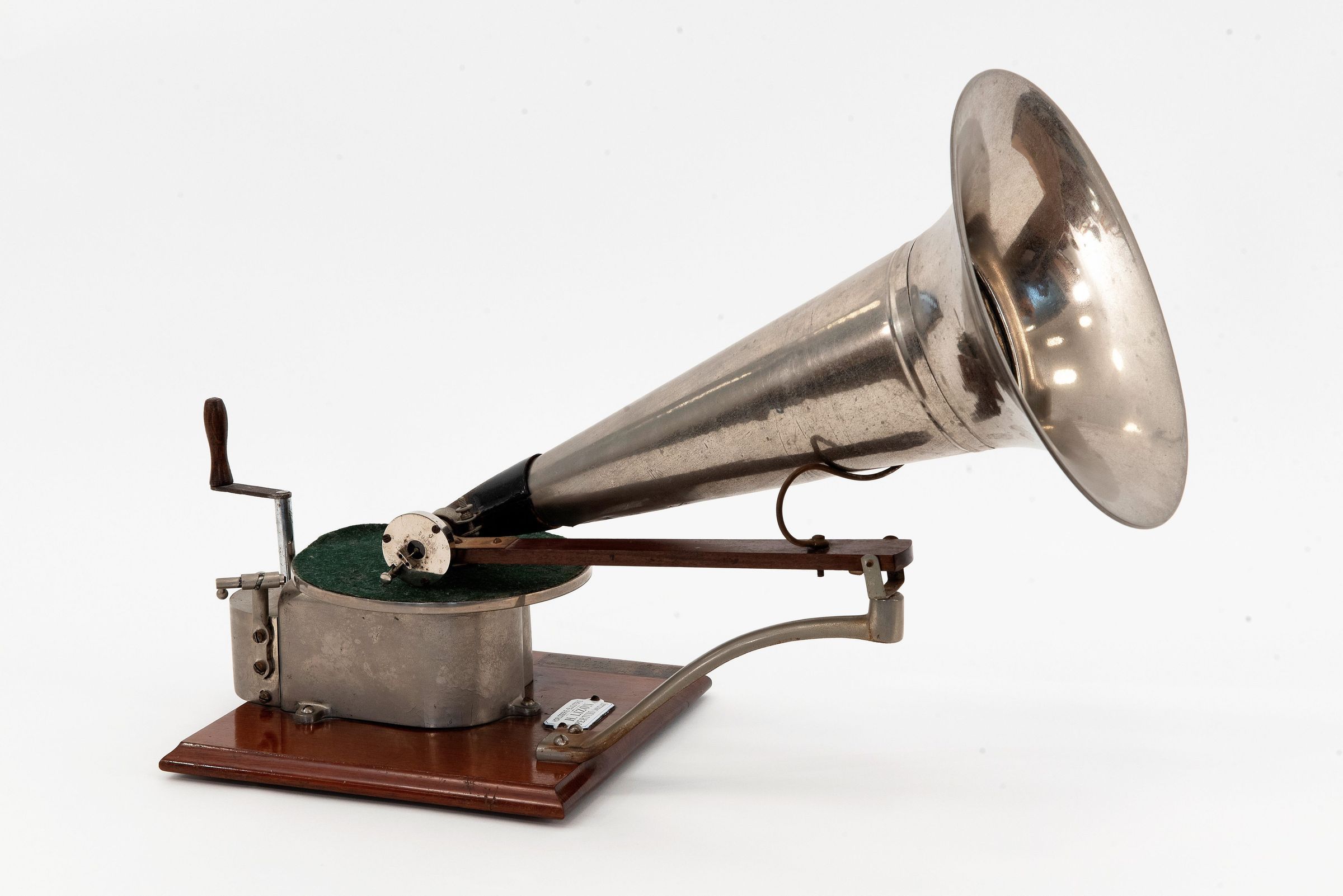
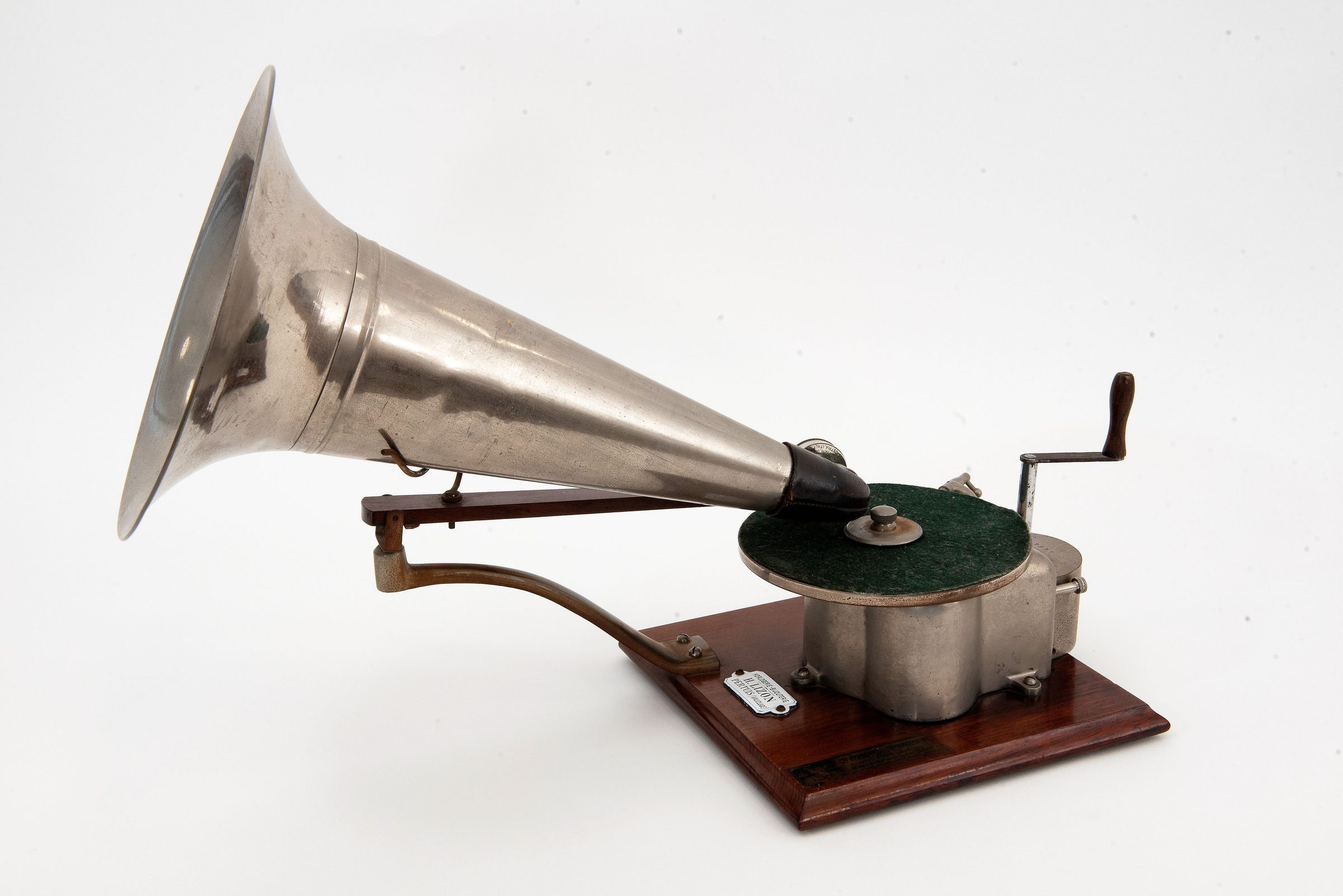
Distinctive feature: Cast metal housing enclosing the motor
Introductory price: approx. £4-4-0 (Great Britain)
Historical Background
The Berliner Style No. 4 belongs to the early generation of disc gramophones produced by the Gramophone Company and was marketed between November 1900 and October 1903. Despite its solid technical execution, this model was not a commercial success and sold in significantly smaller numbers than other Berliner models.
In a period of rapid technological development, the Style No. 4 was already regarded as comparatively conservative only a few years after its introduction, as it still lacked a modern tonearm in the later sense. By around 1903–1905, such designs appeared increasingly outdated, which contributed substantially to their limited market success.
Construction and Technical Characteristics
The defining feature of the Style No. 4 is its cast metal housing, which fully encloses the motor. This construction clearly distinguishes it from simpler Berliner models with exposed spring motors mounted on wooden baseboards.
The metal housing provides the device with:
increased mechanical stability
a distinctly industrial and technical appearance
clear differentiation from lighter wooden-base models
The drive system consists of a spring motor with centrifugal governor, while the hand crank—typical of Berliner designs—is mounted vertically. The Clark-Johnson soundbox, later in some cases replaced by the more powerful Concert Reproducer, delivers a clear and relatively strong sound reproduction.
The large external nickel-plated horn corresponds to the standard European Gramophone Company design of the period around 1901–1903.
Position within the Berliner Model Range
Within the Berliner gramophone lineup, the Style No. 4 occupies a special position:
technically more elaborate than simple baseboard models
yet less successful than later, more modernized types
a transitional model between early Berliner construction principles and subsequent, more standardized designs
Its limited sales figures explain why relatively few original surviving examples exist today.
Dealer and Provenance Note
An exceptional feature of this particular example is the enamel dealer’s plaque:
“Horlogerie – Bijouterie
H. LIZON
Pertuis (Vaucluse)”
This plaque documents the specific retail history of the machine and confirms its sale through a regional specialist dealer in southern France. Such individually applied dealer plaques are rarely preserved on early gramophones and possess high documentary value.
They vividly illustrate how gramophones around 1900 were distributed not only through central company branches but also via watchmakers’, jewelers’, and precision mechanics’ shops.
Rarity and Significance
Due to:
its short production period
limited commercial success
heavy and cost-intensive construction
the Berliner Style No. 4 is today regarded as one of the rarer early Berliner gramophones. Original examples with the correct metal housing, appropriate soundbox, original horn, and preserved dealer plaque are particularly scarce.
Significance within the Edisonium
This exhibit documents:
an early, commercially modest but technically ambitious Berliner gramophone type
the experimental phase of the Gramophone Company around 1900
international distribution reaching into the French provincial market
the role of local dealers in introducing new sound technologies
As a rare transitional model with clearly documented retail provenance, the Berliner Style No. 4 represents a highly informative object of early European gramophone history and enriches the Edisonium collection as an important link between technology, commerce, and cultural history.