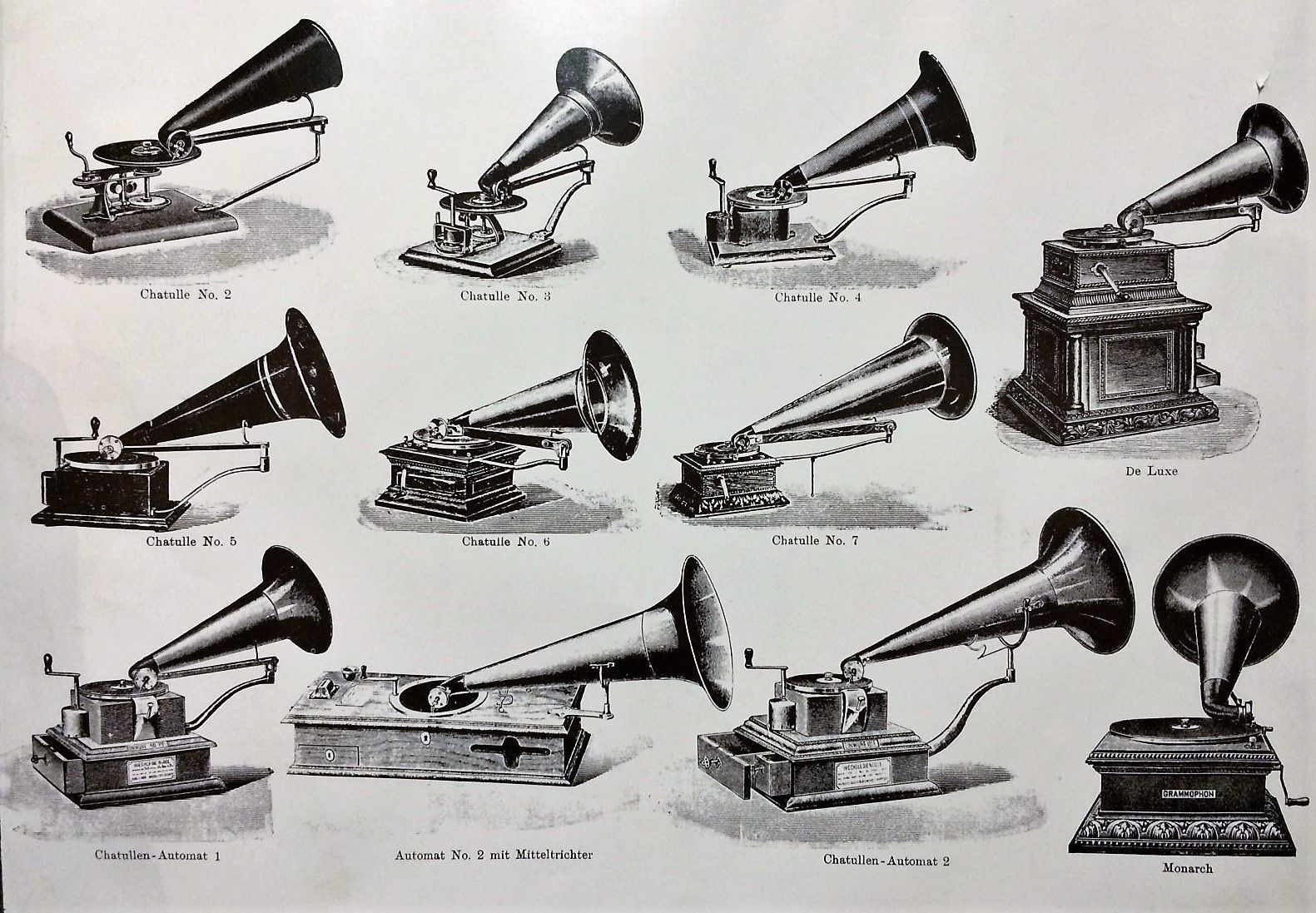
USA / Great Britain, ca. 1900–1902
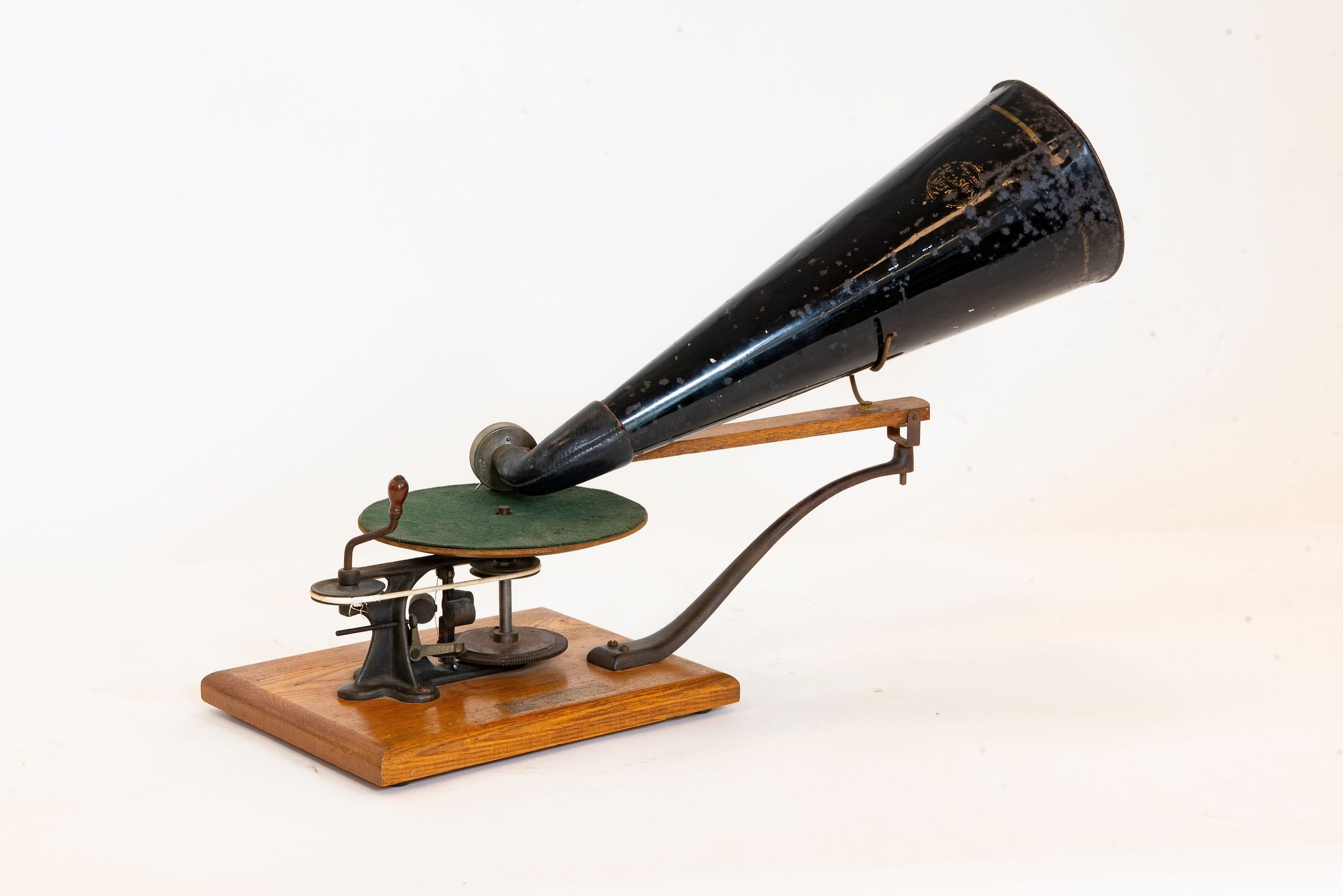
Early hand‑cranked shellac record player – affordable entry‑level model
The “Style No. 2” was introduced at the end of 1900 by the Gramophone Company (Berliner Gramophone) as the least expensive model in its range. It was marketed as an affordable alternative to the well‑known “Trade Mark” model and sold for only £2
Construction and Operation
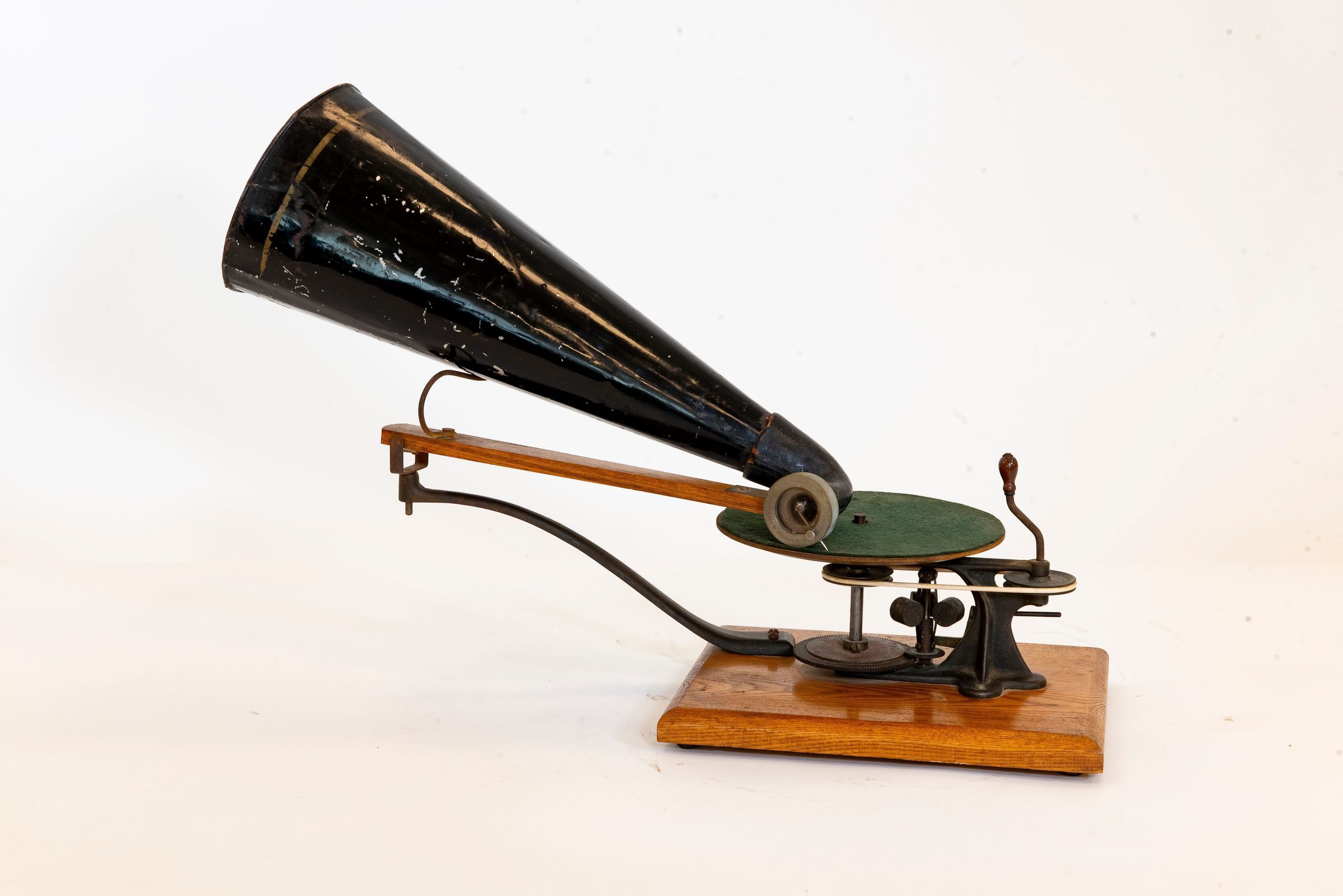
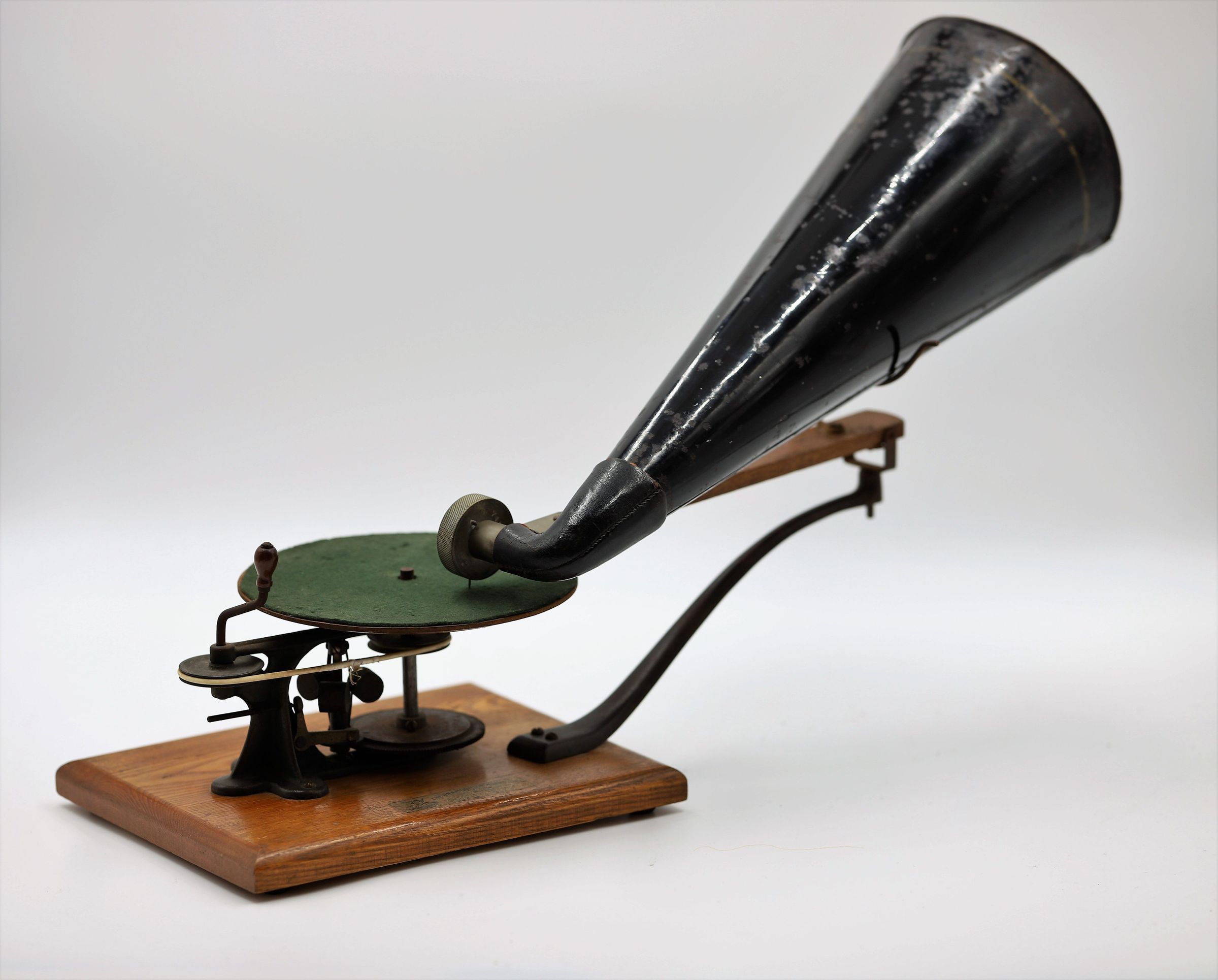
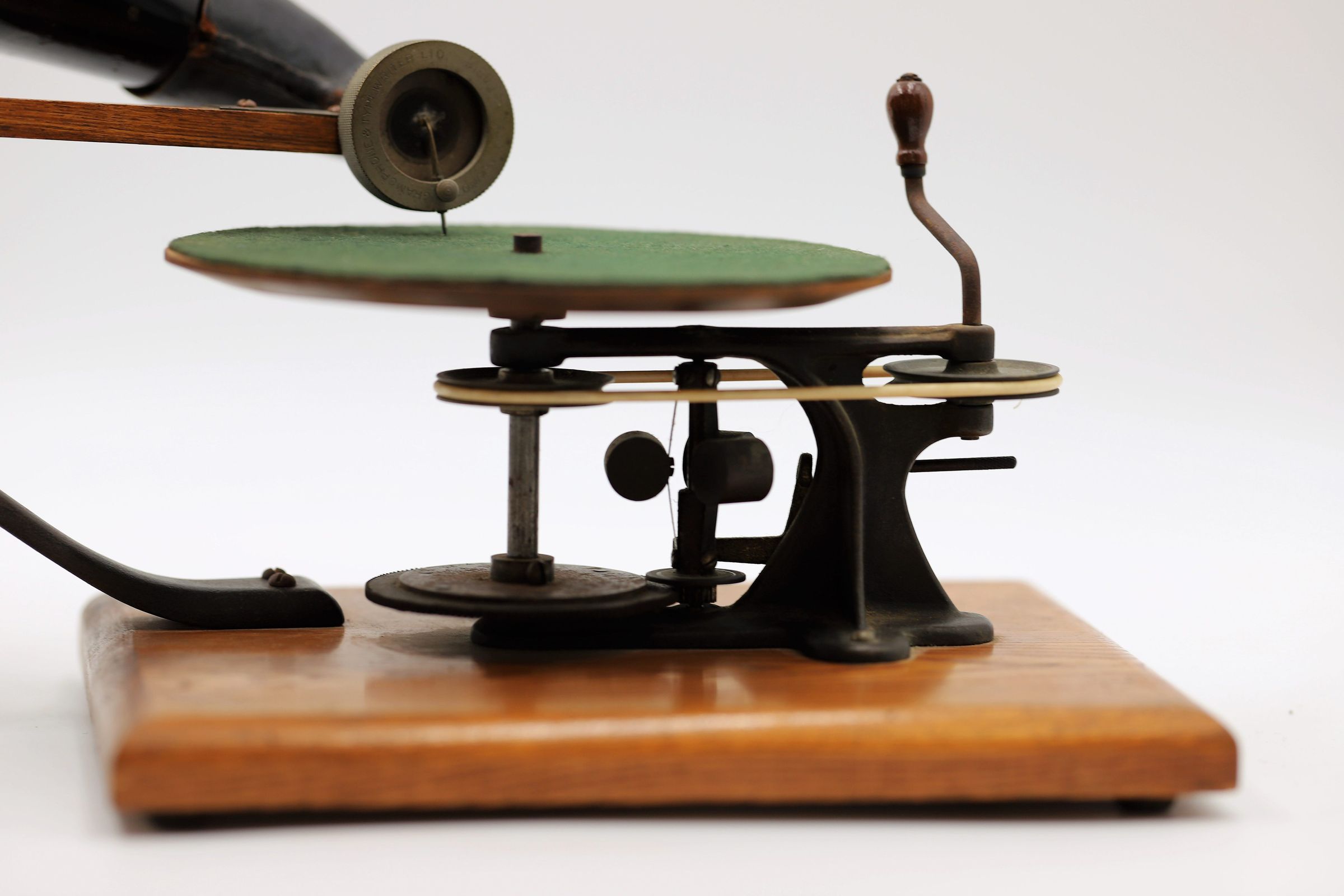
This machine had no spring motor; it was powered entirely by hand cranking. Power was transmitted via a rubber belt from a vertical crank spindle to the turntable shaft. A simple three‑weight governor helped to maintain an approximately constant speed.
Early examples (1900 to early 1901) were fitted with a simple wire tonearm resting directly on the wooden extension arm. Later versions used a cast‑iron arm, similar to those found on higher‑grade Berliner models.
Horn and Tonearm
The Style No. 2 was normally supplied with a plain black‑painted tin horn without a decorative bell flare. The horn carrier consisted of a simple wooden arm with the tonearm running “flat” along it. Most examples were equipped with a Clark‑Johnson soundbox.
Use and Target Audience
This model was aimed primarily at entry‑level buyers and households on a limited budget. Its hand‑cranked drive and open mechanism made it much simpler and cheaper to produce than the larger models. The straightforward design also made it robust and easy to maintain.
Special Features
No spring motor – hand‑cranked only
Simple, open mechanism
Early wire‑arm version, later cast‑iron arm
Small, plain horn
Wooden baseboard without cabinet
Historical Context
The Style No. 2 is one of the earliest mass‑produced shellac record players built to Emil Berliner’s disc‑playing principle. It marks the transition from the experimental and costly disc machines of the 1890s to more affordable mass‑market products for a wider audience.