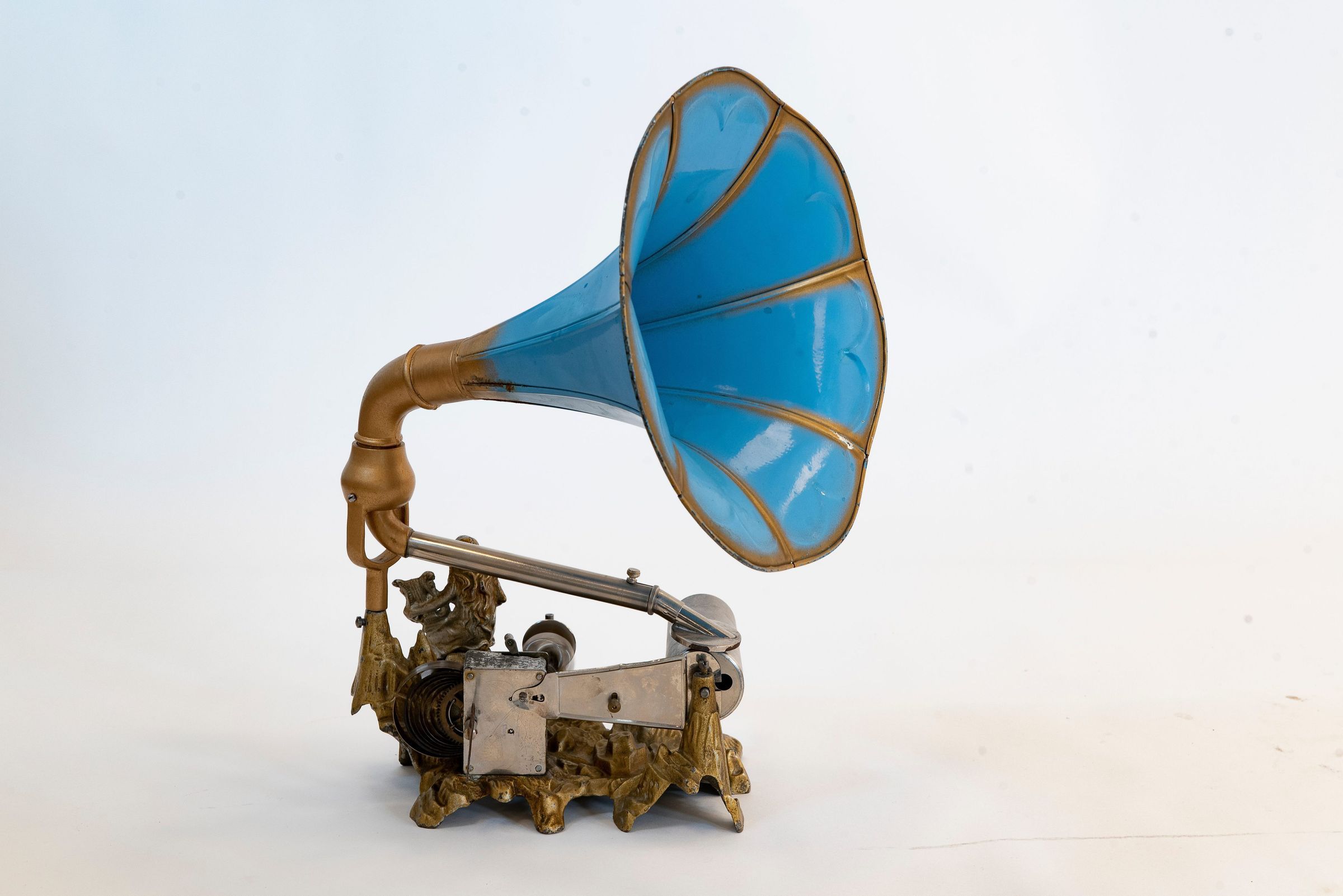
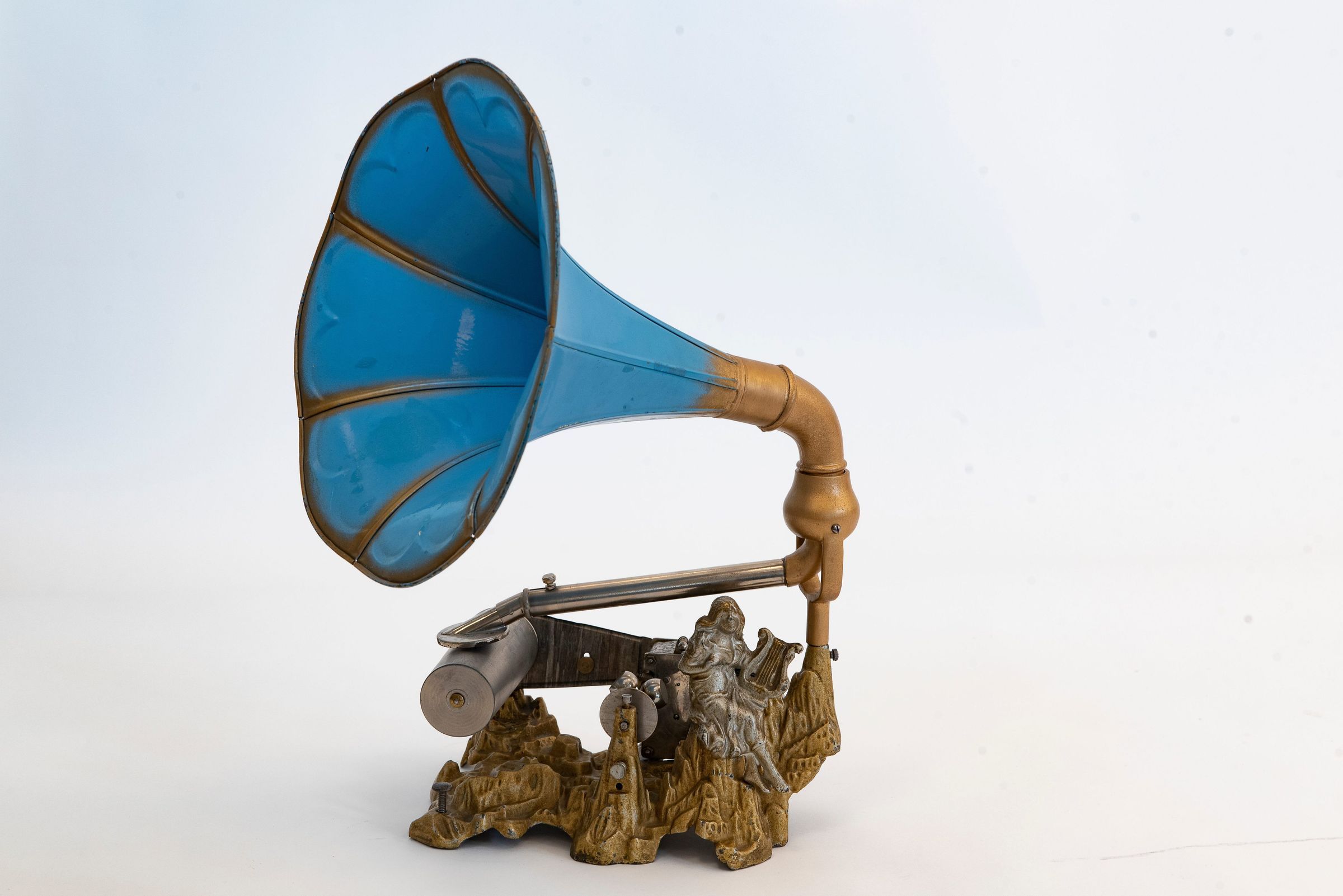
Decorative Puck-Type Phonograph with Loreley Figure
Entry/Object ID
131
Description
Fritz Puppel G.m.b.H., Berlin SO – ca. 1906
Historical Background
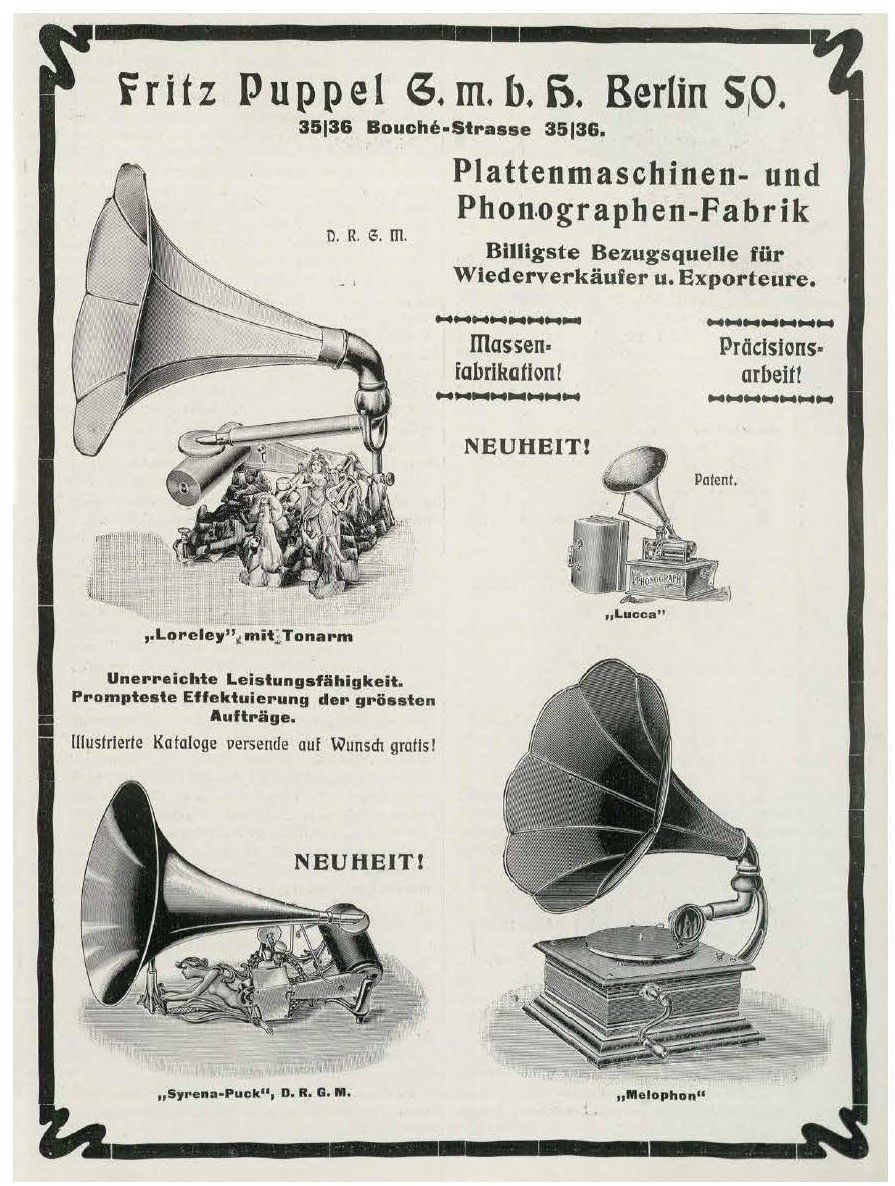
This elaborately designed Puck-style phonograph was developed around 1906 by the Berlin company Fritz Puppel G.m.b.H. The so-called “Loreley” model was advertised in the Phonographische Zeitschrift in April 1906 (Issue 14, p. 209) as a particularly decorative yet fully functional playback device, described as available “in mass production.” Several different versions were offered.
Design and Symbolism
At the center of the design is the figure of the Loreley – a mythical siren of the Rhine River, said to lure sailors to their doom with her enchanting song. On this device, she is depicted in a stylized manner, seated with a harp on an artificial rock formation. The sculpture is finely cast, bronzed, and crafted with artistic precision.
Technology and Construction
Mechanism: The phonograph is based on the familiar Puck principle, featuring a backward-running cylinder, spring-driven motor, and a simple worm gear.
Tonearm & Horn: The floral-shaped metal horn – is directly connected to the tonearm, which channels the sound from the reproducer to the horn.
Construction: The base is made of cast iron in the form of a rocky landscape with decorative detailing. The overall design seamlessly combines acoustic function with sculptural form.
Distribution and Significance
The Loreley model is one of the most visually striking decorative cylinder phonographs produced in Germany. Intended for use in affluent households, it served both as an ornamental object and a musical toy. Its unique combination of technical utility, decorative aesthetics, and mythological reference makes it a distinctive example of early 20th-century phonographic design.
The Edisonium houses a particularly well-preserved example with a colorfully enameled horn and complete working mechanism – a fine representative of Berlin’s casting and design craftsmanship from the golden age of phonograph art.