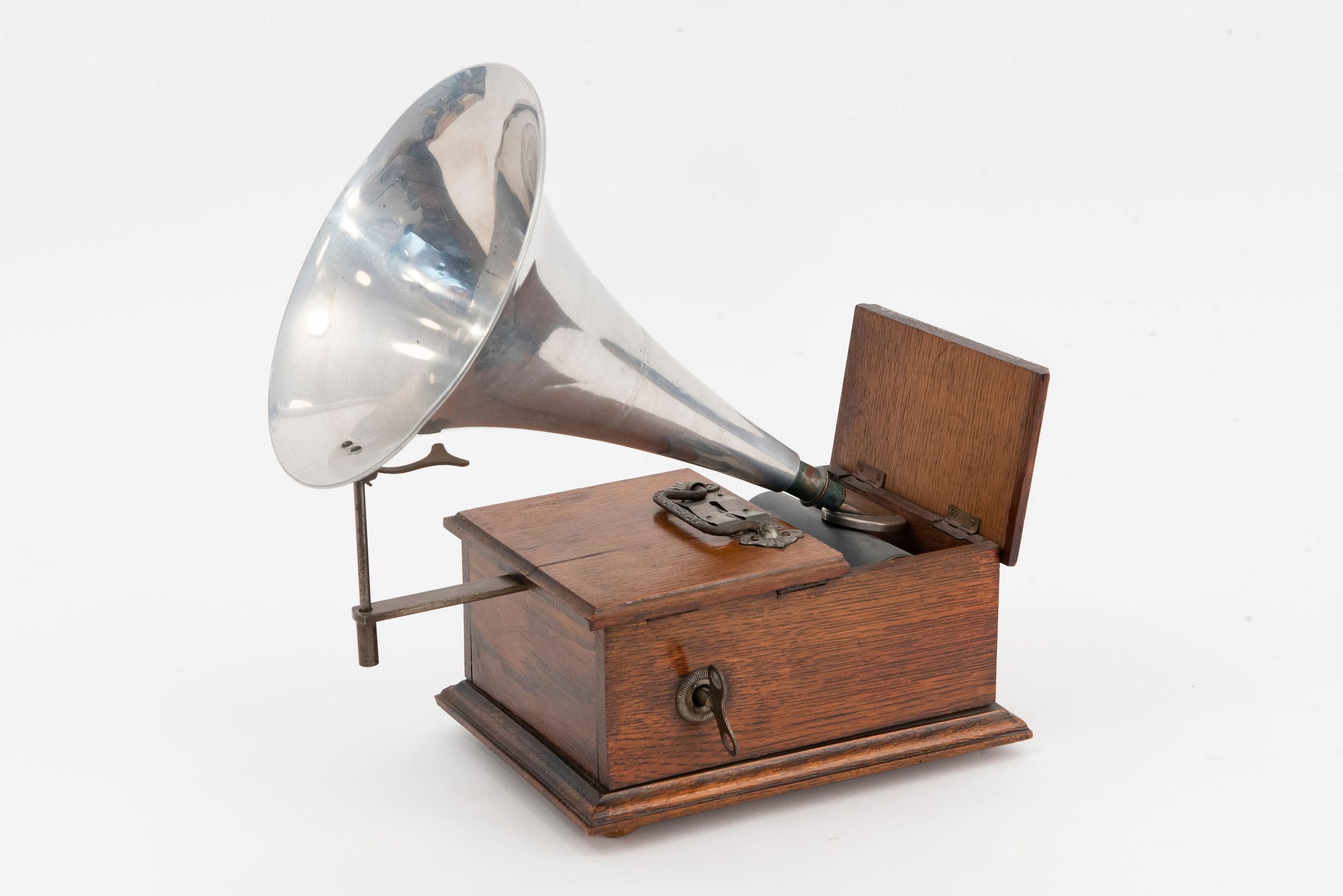
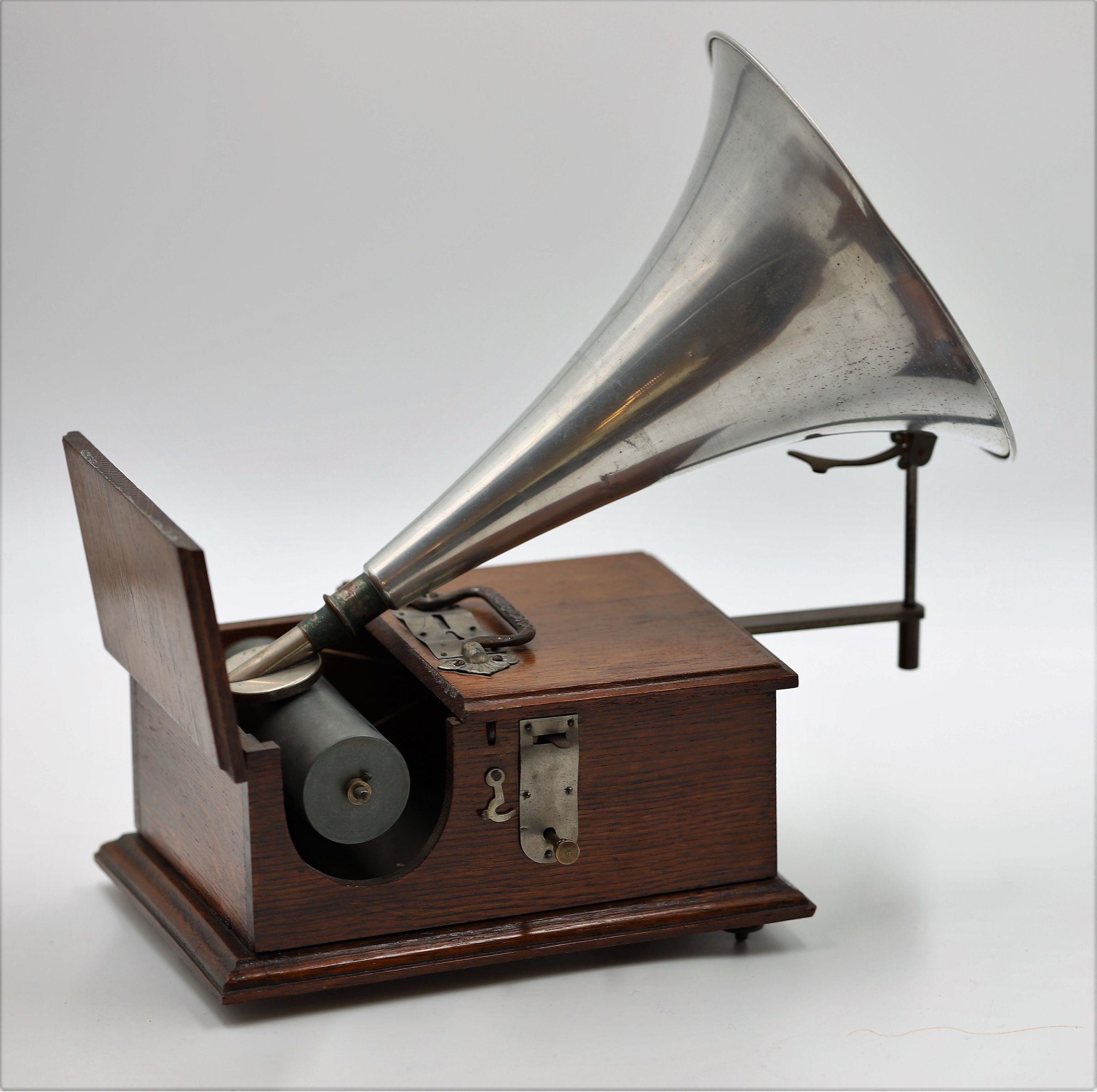
Berlin ca. 1903. Affordable cylinder phonograph for home use
Historical Background
Around 1900, numerous German manufacturers entered the growing market for affordable phonographs. The Berlin firm Brandenburg & Rengert offered an entire range of such machines in 1903 – including the “Kasten‑Puck” displayed here.
The name “Puck” referred to a simple type of small cylinder phonograph, with the mechanism usually exposed on a base plate. The “Kasten‑Puck” variant, however, was housed in a wooden case (“Kasten”), making it sturdier, more portable, and visually more appealing.
Advertisements promoted these machines as the “best and cheapest apparatus of the future” – a clear challenge to more expensive American models such as the Edison Home or Standard.
Technical Features
Drive: Spring motor with hand‑wound key
Sound carrier: Standard cylinder records (brown or black, approx. 2 ")
Horn: Straight, nickel‑plated brass horn
Reproducer: Puck standard PM‑type soundbox
Construction:
Compact wooden case with side‑hinged lid to expose the cylinder for playing
Carrying handle for easy transport
Metal top plate holding the complete mechanism
Operation: Simple cylinder change; no separate fine speed regulator as found on larger table models
Advertising Claims of 1903
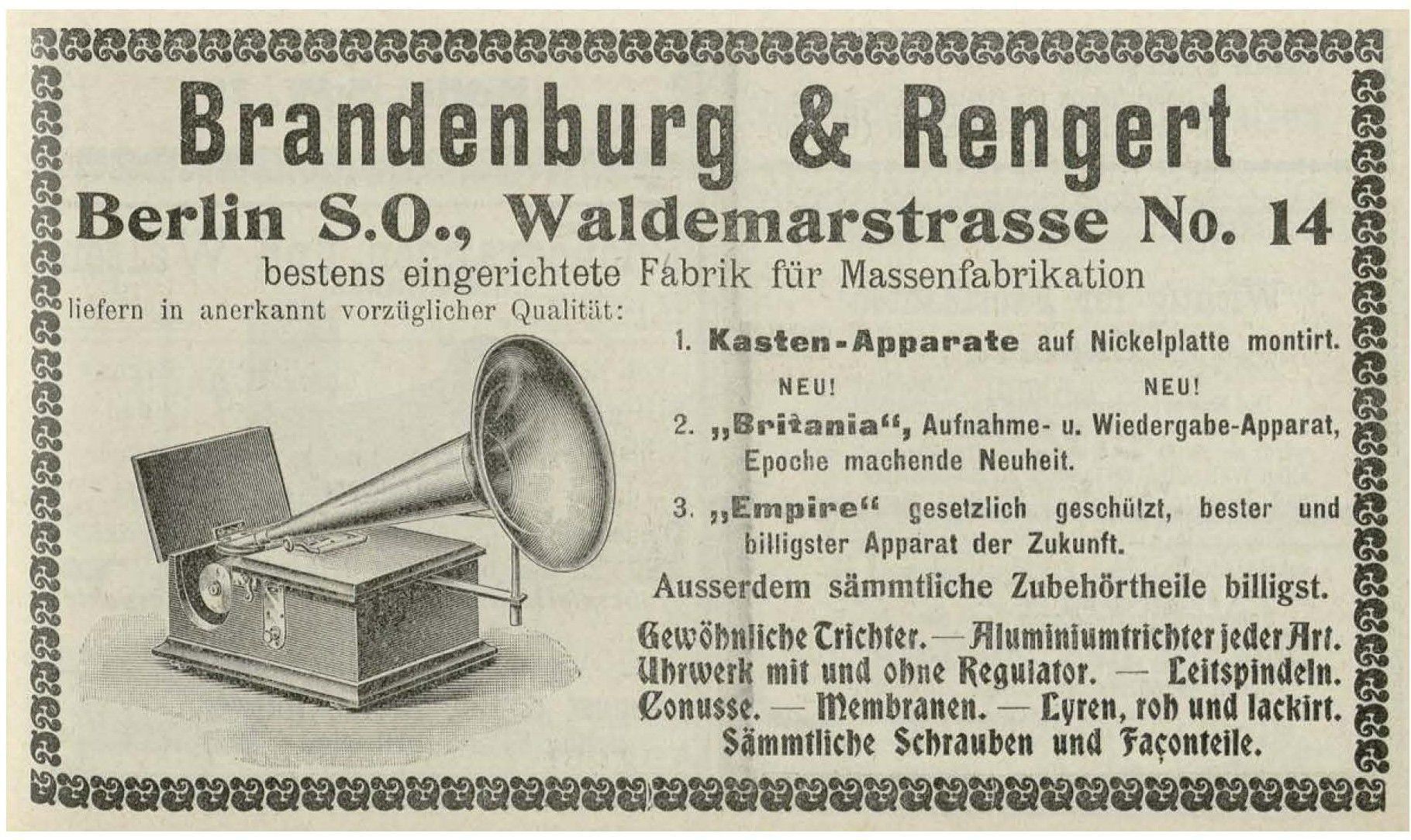
The original advertisement in Phonographische Zeitschrift (March 11, 1903) presented the “Kasten‑Apparat” as a new product and highlighted:
“Well‑equipped factory for mass production”
“Recognized superior quality”
“Legally protected”
“Cheapest apparatus of the future”
Alongside the “Kasten‑Puck,” Brandenburg & Rengert also offered more elaborate models such as the Britania (recording and playback unit) and the Empire series, as well as a full line of accessories – from horns and diaphragms to complete spring motors.
Significance & Context
The “Kasten‑Puck” is representative of the emergence of affordable, mass‑produced phonographs in Germany.
It illustrates the shift from purely luxury or demonstration machines to reasonably priced everyday devices for a broad audience.
While Edison models were often imported into Germany at high cost and subject to import duties, domestic manufacturers such as Brandenburg & Rengert could offer technically simpler but fully functional alternatives – perfectly suitable for listening to music at home.