Name/Title
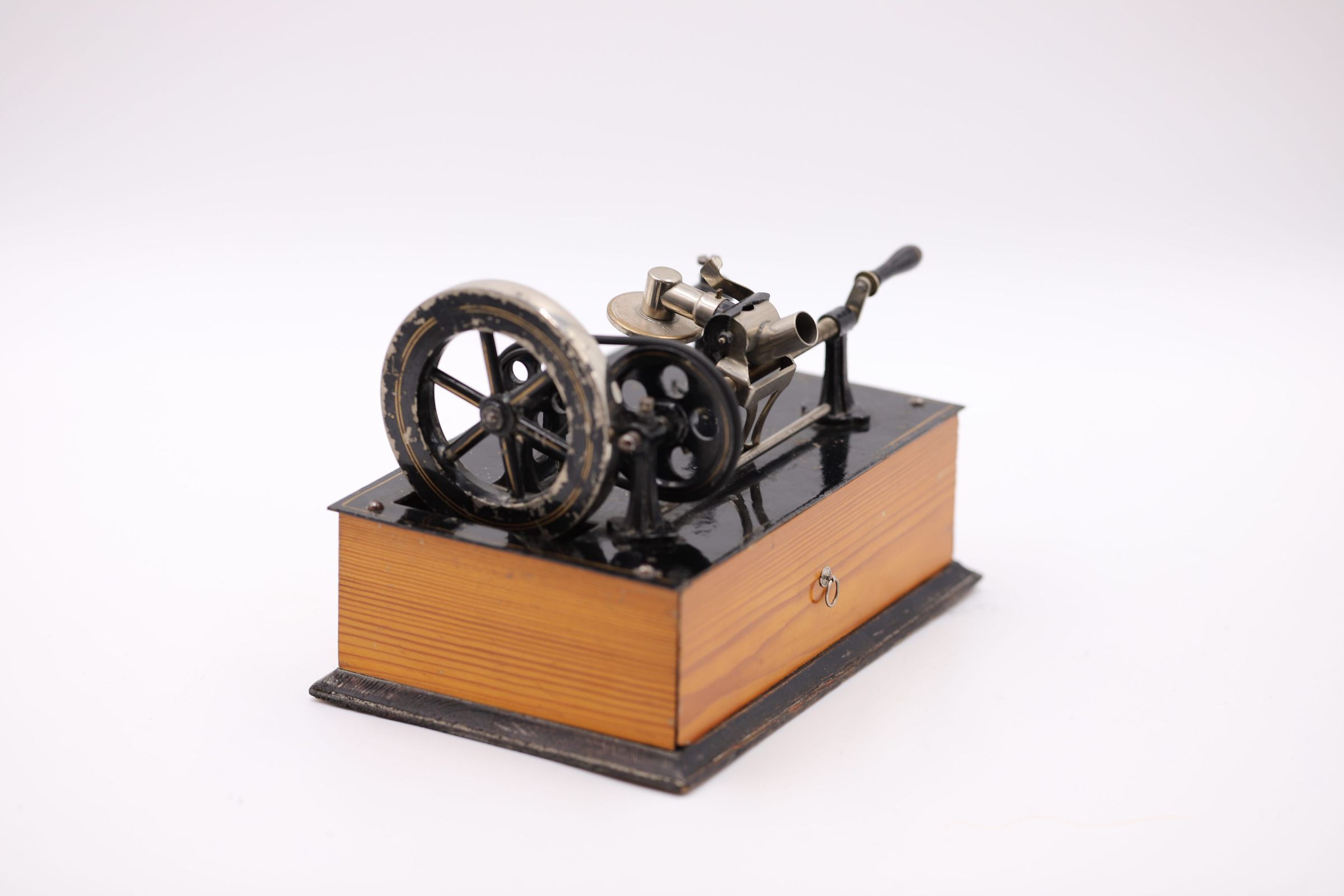
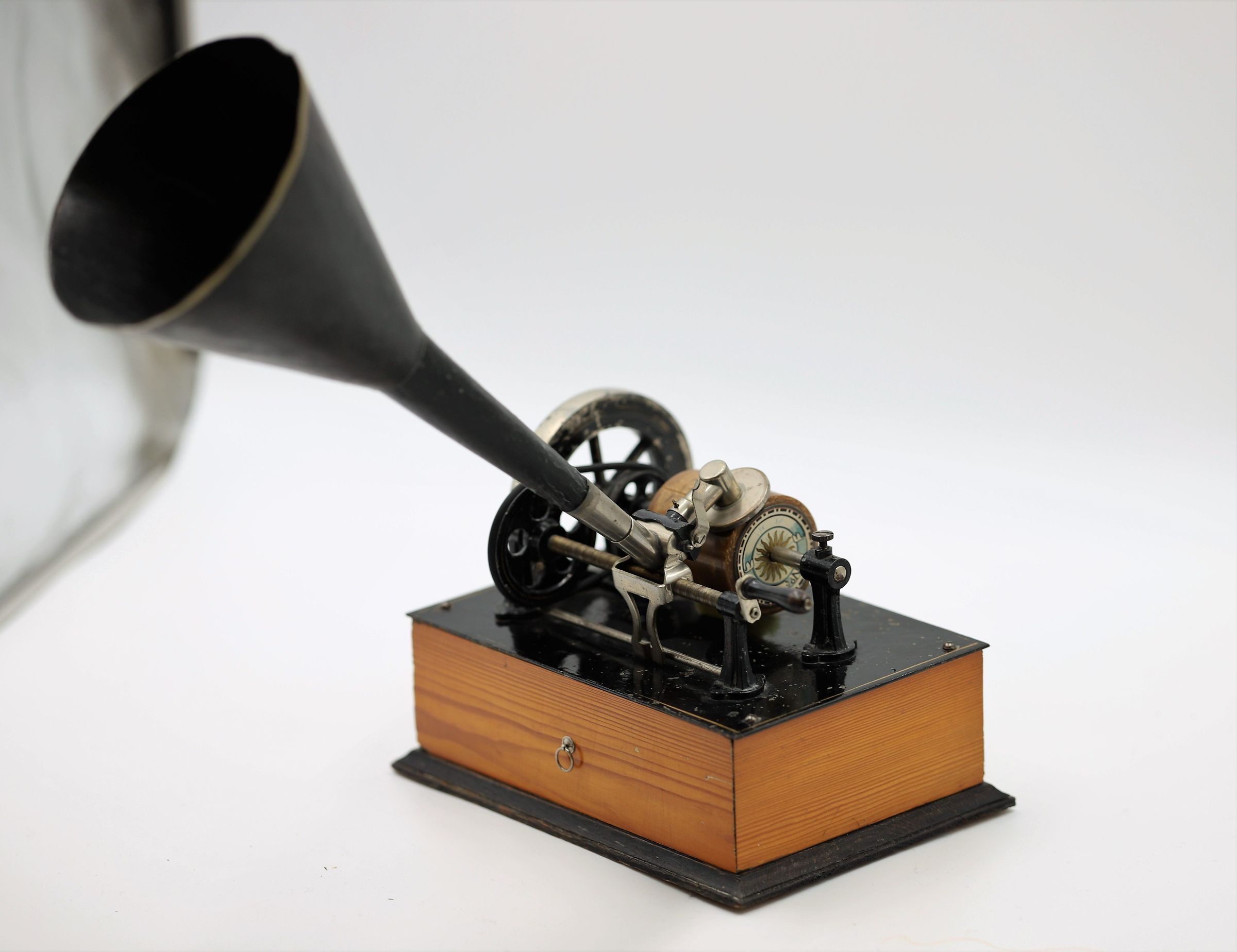
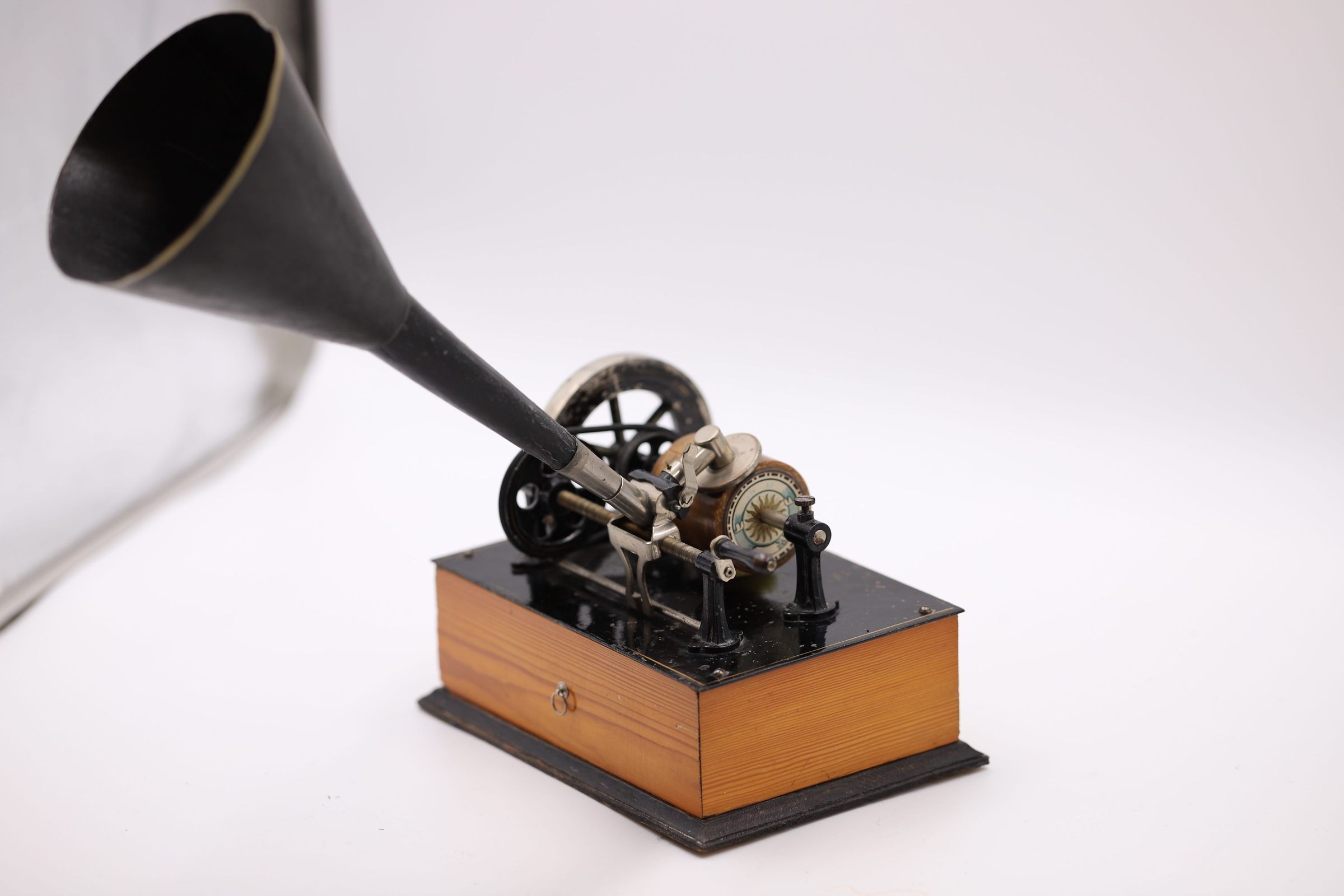
Jean Schoenner “Family Phonograph” – Model No. 54Entry/Object ID
141Description
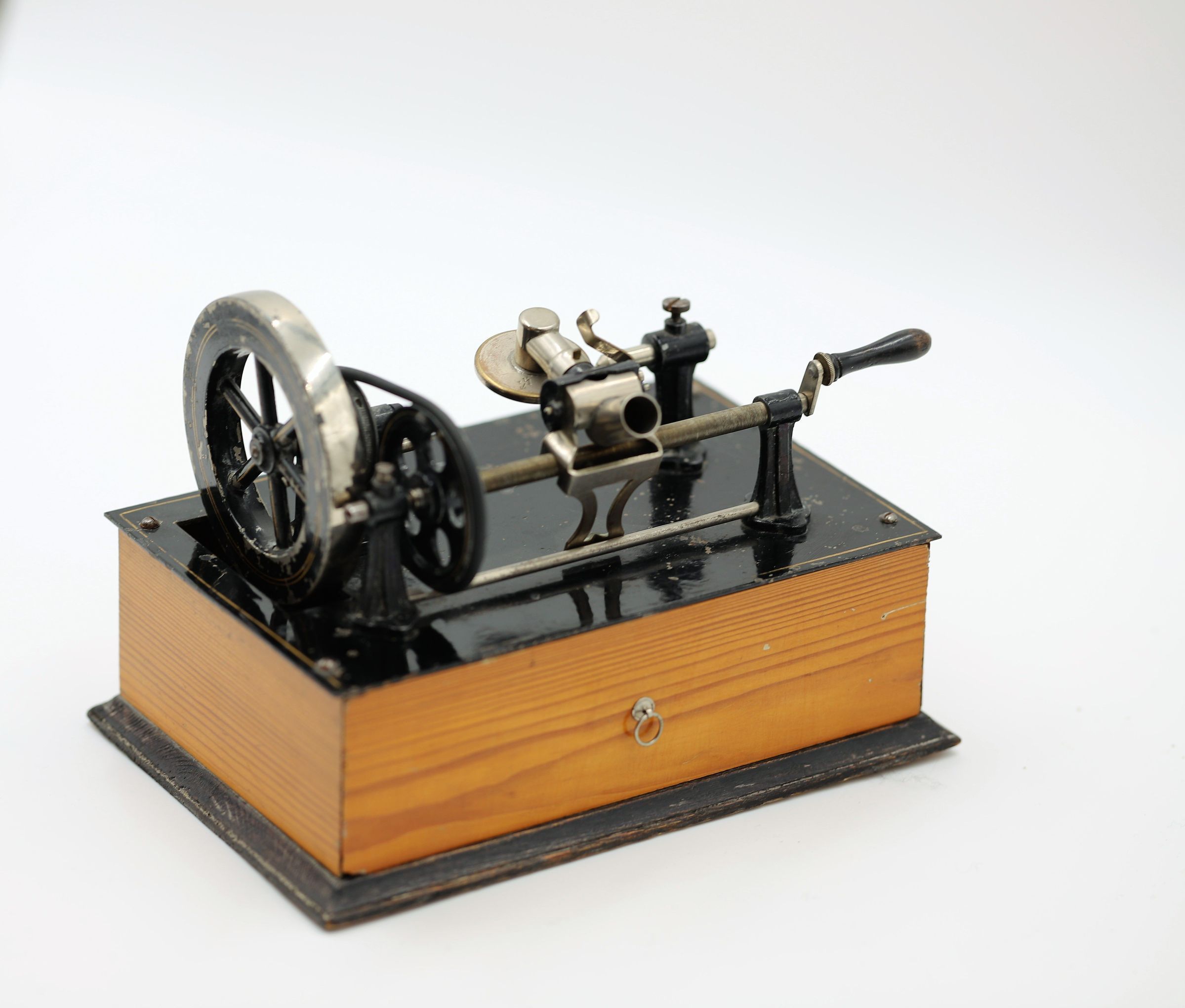
Leipziger Lehrmittelanstalt (Dr. Oskar Schneider, Leipzig) – ca. 1899–1902 One of the rarest surviving German toy and family phonographs – only two examples known worldwide
Historical Background
Nuremberg precision mechanic and toy manufacturer Jean Schoenner (1847–1917) was among the most inventive producers of mechanical educational and entertainment devices around 1900. Alongside his famous “Oratiograph,” he developed particularly simple, robust, and affordable family phonographs for home use and school instruction.
The example displayed here comes from the Leipziger Lehrmittelanstalt (Leipzig Teaching Aids Institute) of Dr. Oskar Schneider, which marketed Schoenner phonographs via catalogs – at the time under the slogan “The cheapest phonograph in the world.”
Patents & Technical Innovation
This phonograph is directly linked to two patents:
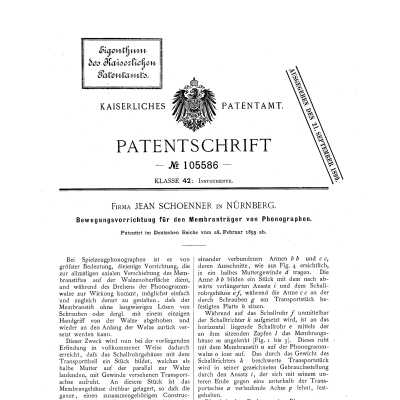
German Patent No. 105 586 (28 February 1899):
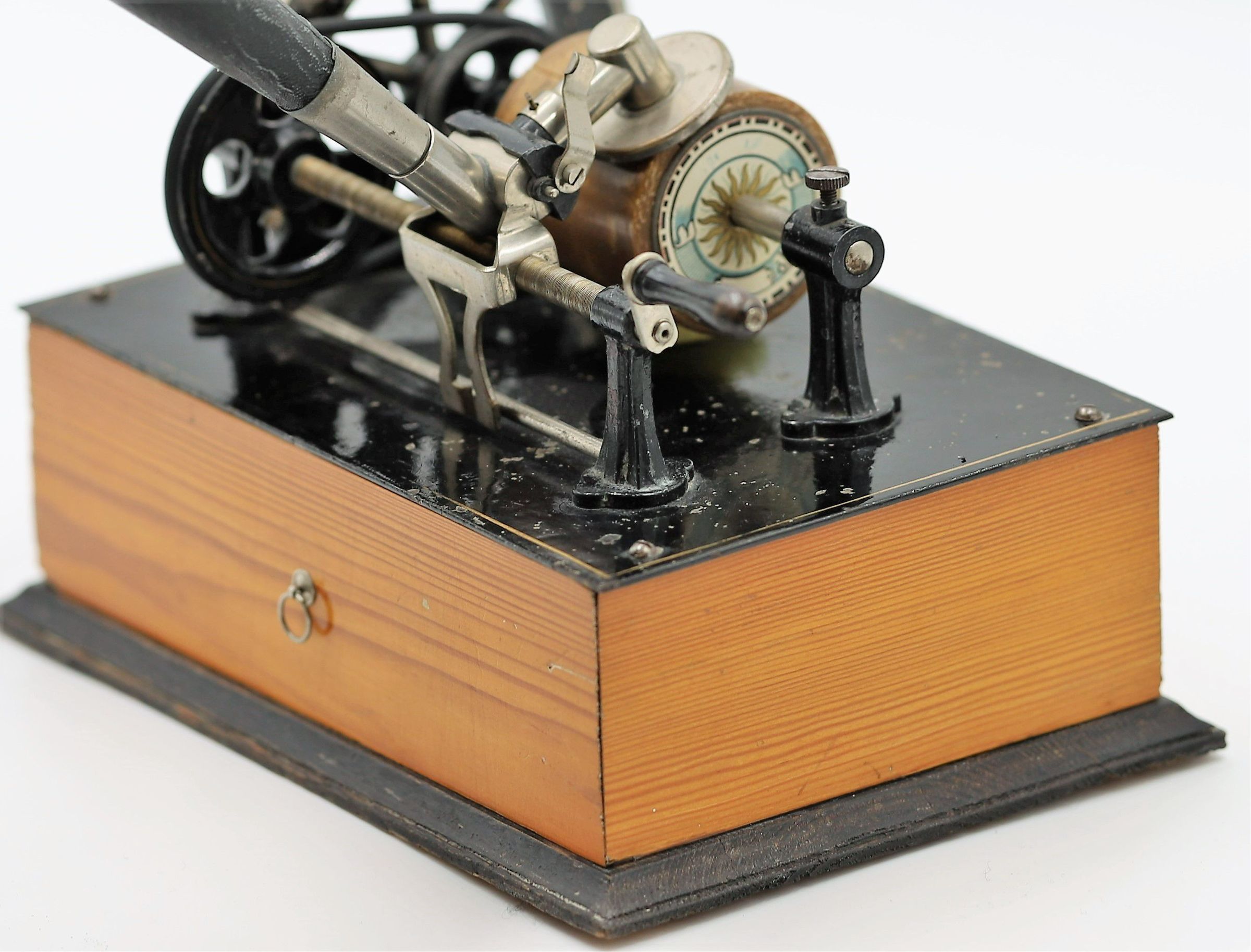
Motion device for the sound box carrier – the sound tube housing and guide piece form a single unit, functioning as a half‑nut riding on a lead screw.
→ Advantage: The sound box with guide can be lifted off the lead screw and repositioned at any point with a single hand movement – simple, quick, and ideal for instructional or demonstration purposes.
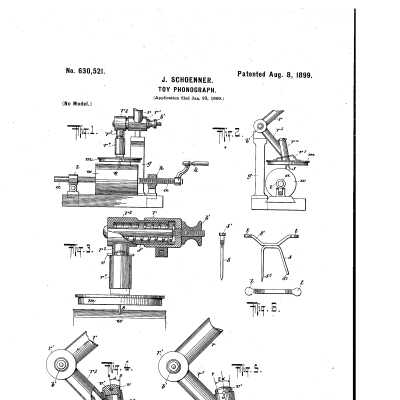
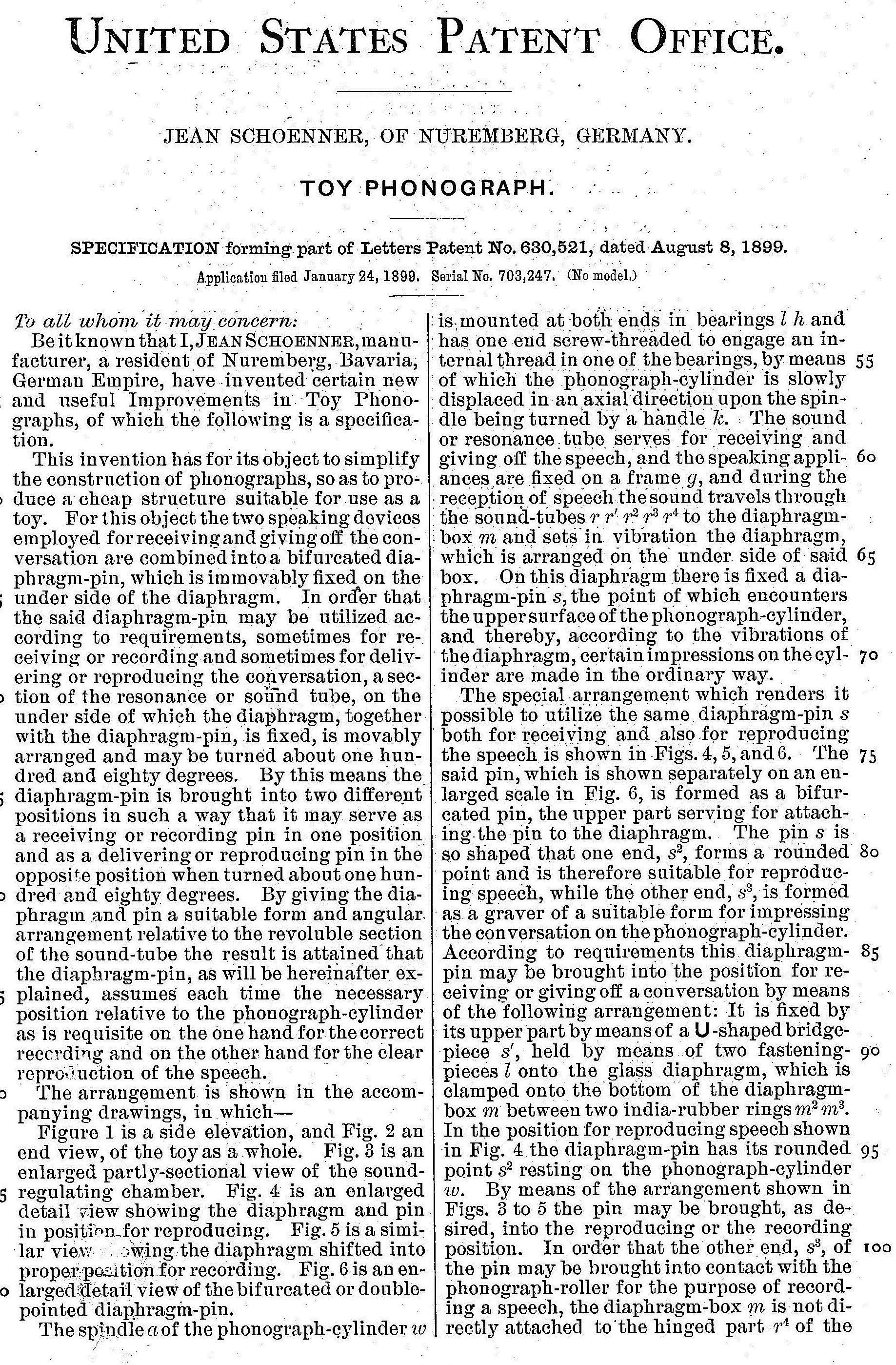
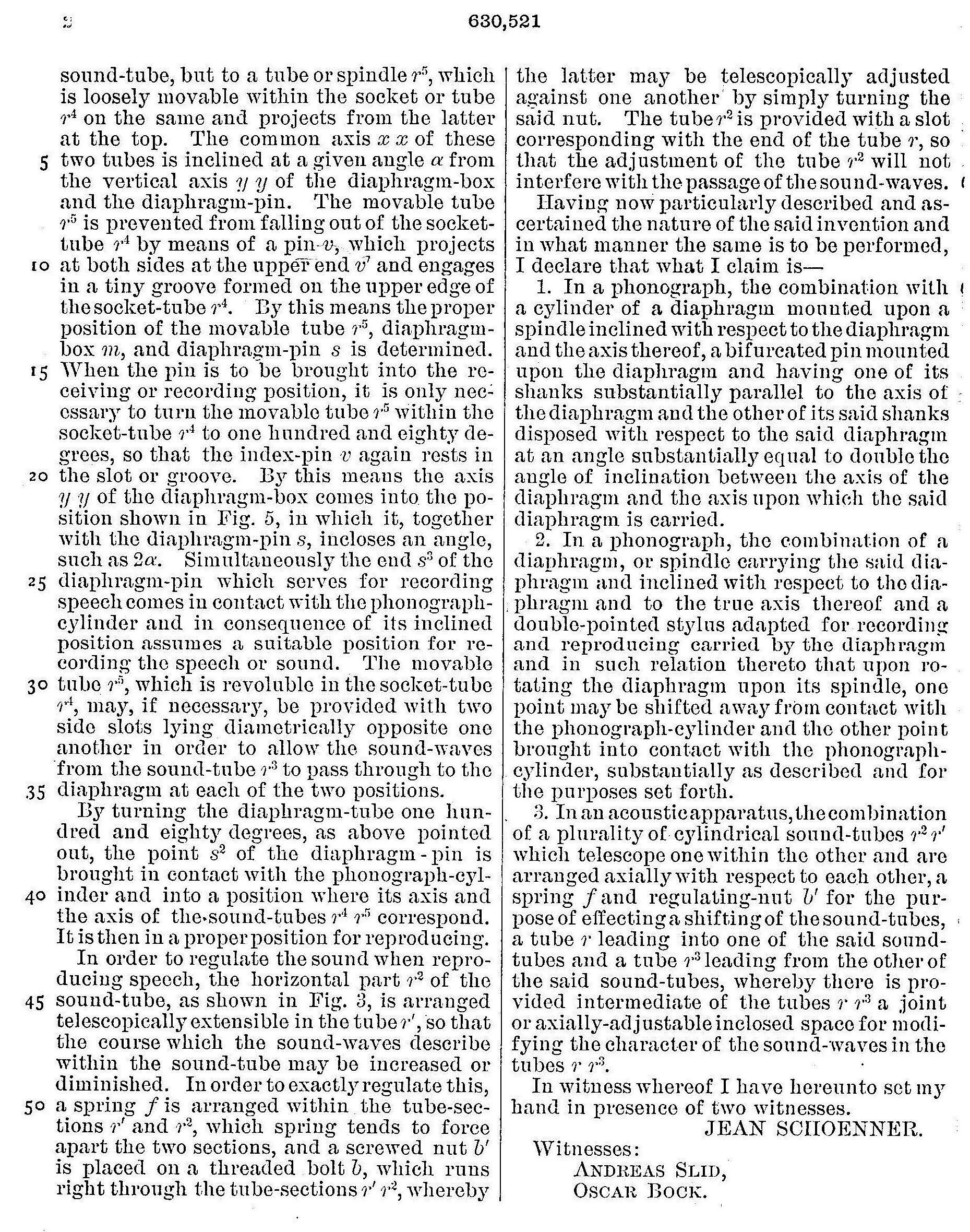
US Patent No. 630 521 (8 August 1899):
Toy Phonograph – a combined recording/playback function in a single bifurcated stylus carrier. Rotating it 180° brings either the cutting stylus for recording or the rounded stylus for playback into position.
Additionally: a telescoping sound channel for volume control.
These technical solutions made it possible to build a very inexpensive yet fully functional phonograph that avoided complex mechanisms and could easily be operated by children or non‑specialists.
Technical Features
Drive: Hand crank, flywheel
Cylinder format: Short, narrow teaching and toy cylinders (35–80 mm, depending on version)
Sound box: Combined record/playback diaphragm with 180° rotation (patented solution)
Construction:
Softwood case with black‑finished metal top plate
Integrated accessory drawer
Simple cylinder carriage with lift‑off mechanism (Patent 105 586)
Catalog price: From 8 Marks (Model I, smallest version)
Advertising & Marketing
Original advertisements promoted the devices as educational, entertaining, and “hand‑operated with the latest design.” Sets usually included:
1 blank and 1 recorded cylinder
Diaphragm, horn, crank
Knife for shaving cylinder surfaces
Brush for cleaning
Rarity & Significance
Only two original examples of this type are known today – one of them here in the Edisonium Mariazell.
The device represents:
The early popularization of phonograph technology in education and family entertainment
The transition from complex, expensive salon machines to simple, affordable everyday devices
Jean Schoenner’s ingenuity and his influence on the toy and educational apparatus industry around 1900