Name/Title
Oratiograph – Children's Phonograph by Jean Schoenner (Germany, ca. 1898–1900)Entry/Object ID
142Description
A Talking Toy from Nuremberg – Where Mechanics, Pedagogy, and Magic Meet
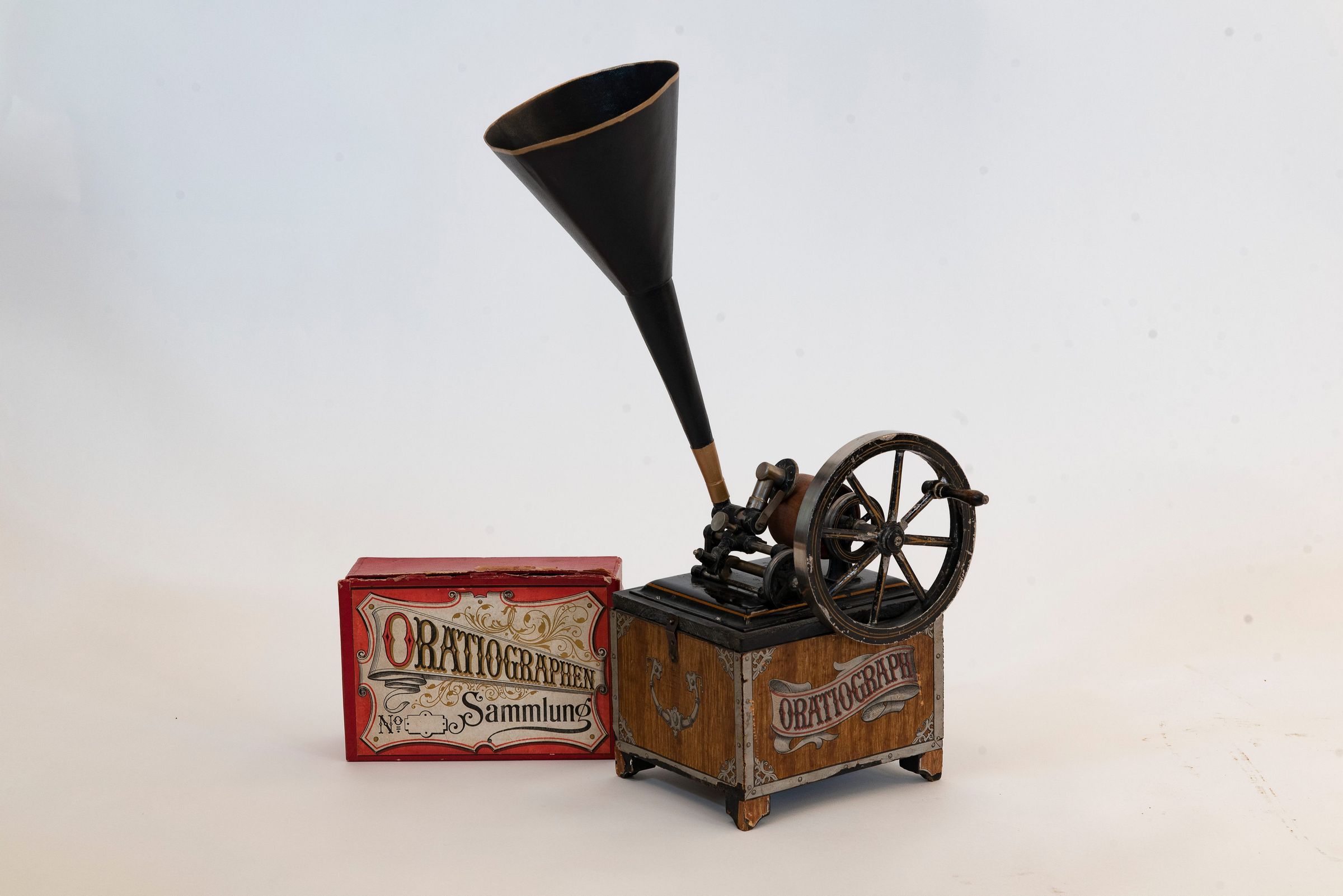
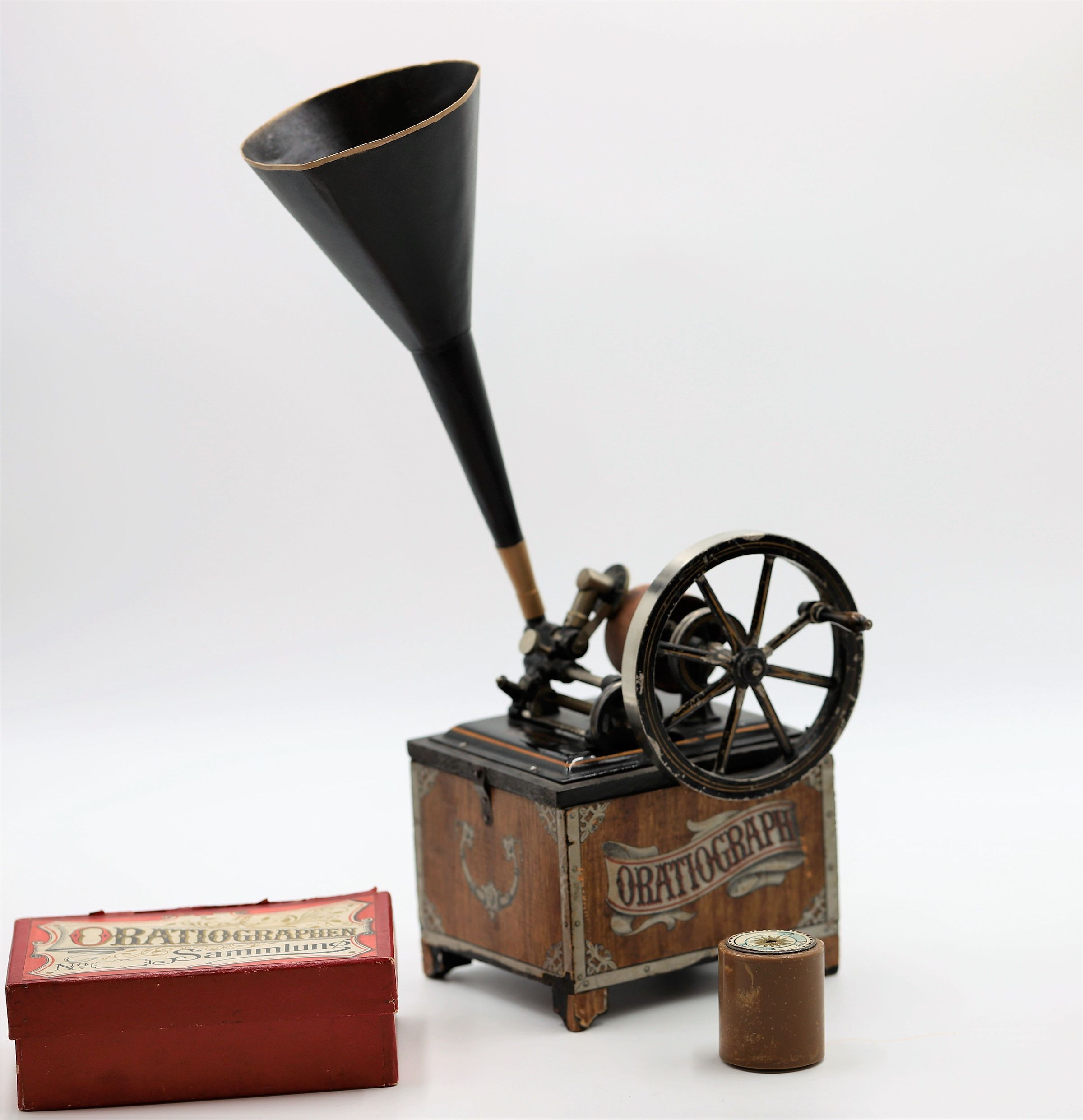
The "Oratiograph" is a fascinating example of how early sound recording, toy design, and education came together. Manufactured around 1898 by Jean Schoenner in Nuremberg, it was the creation of one of the most innovative makers of mechanical toys for children in the late 19th century.
Manufacturer:
Jean Schoenner was renowned for his steam-powered toys, miniature carousels, and technically sophisticated playthings. The Oratiograph was his contribution to the emerging world of talking machines – designed specifically as an educational and interactive toy for children.
Technical Features:
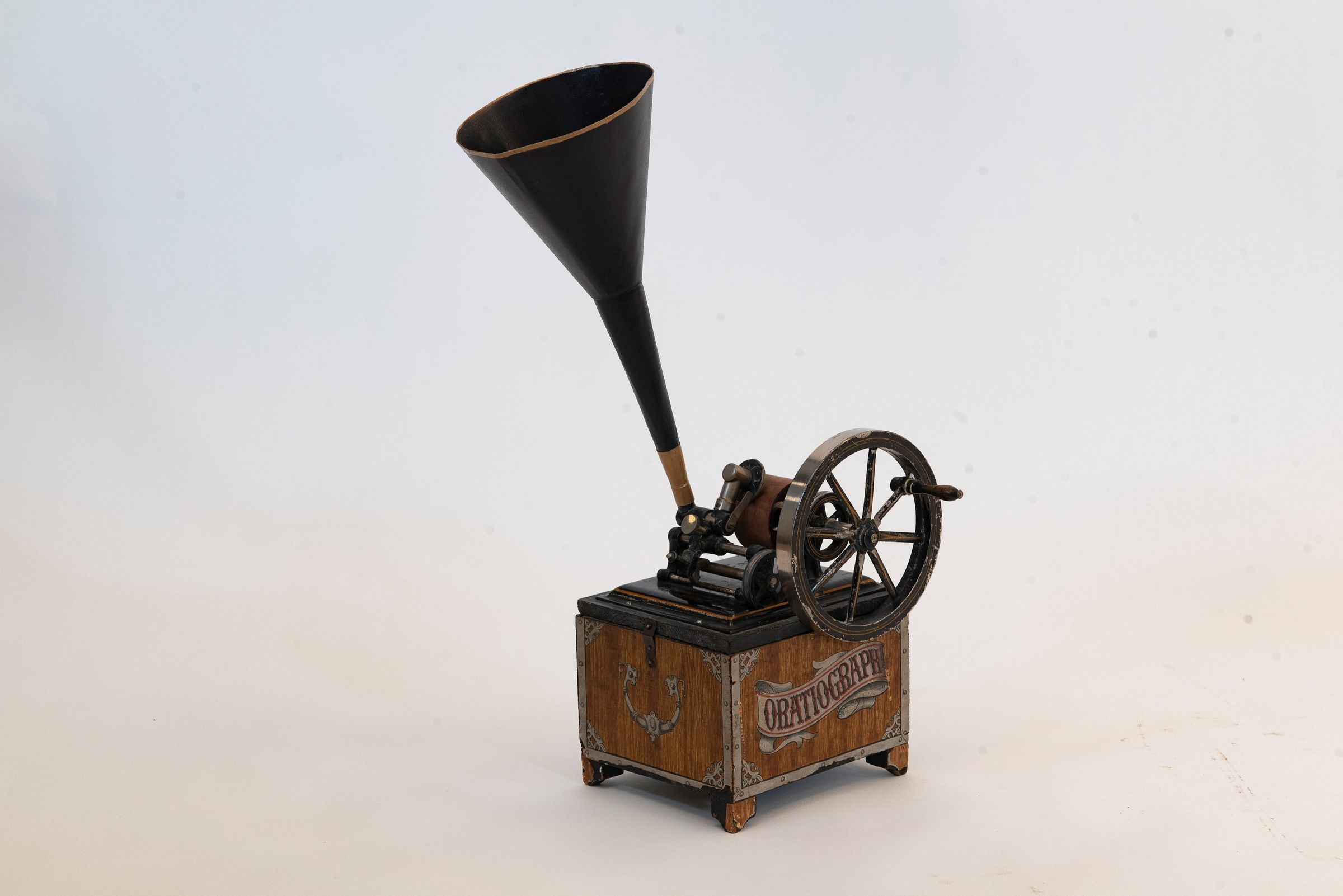
Manual Drive: Operated via a large flywheel mechanism turned by hand – no spring or motor involved.
Combined Recorder/Reproducer (patented): A single unit used both for recording and playback.
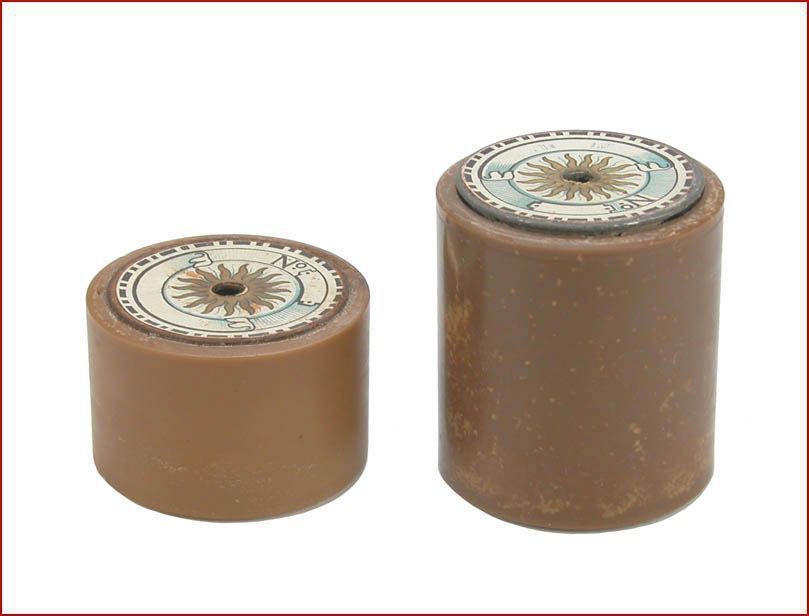
Cylinders: Custom small-size wax cylinders, available in 35 mm or 60 mm lengths – significantly smaller than Edison-standard cylinders.
Horn: Lightweight cardboard horn, typically two-piece and painted – typical of Schoenner’s toy construction style.
Case: Lithographed wooden or metal case with ornamental "ORATIOGRAPH" labels and decorative elements.
Operation:
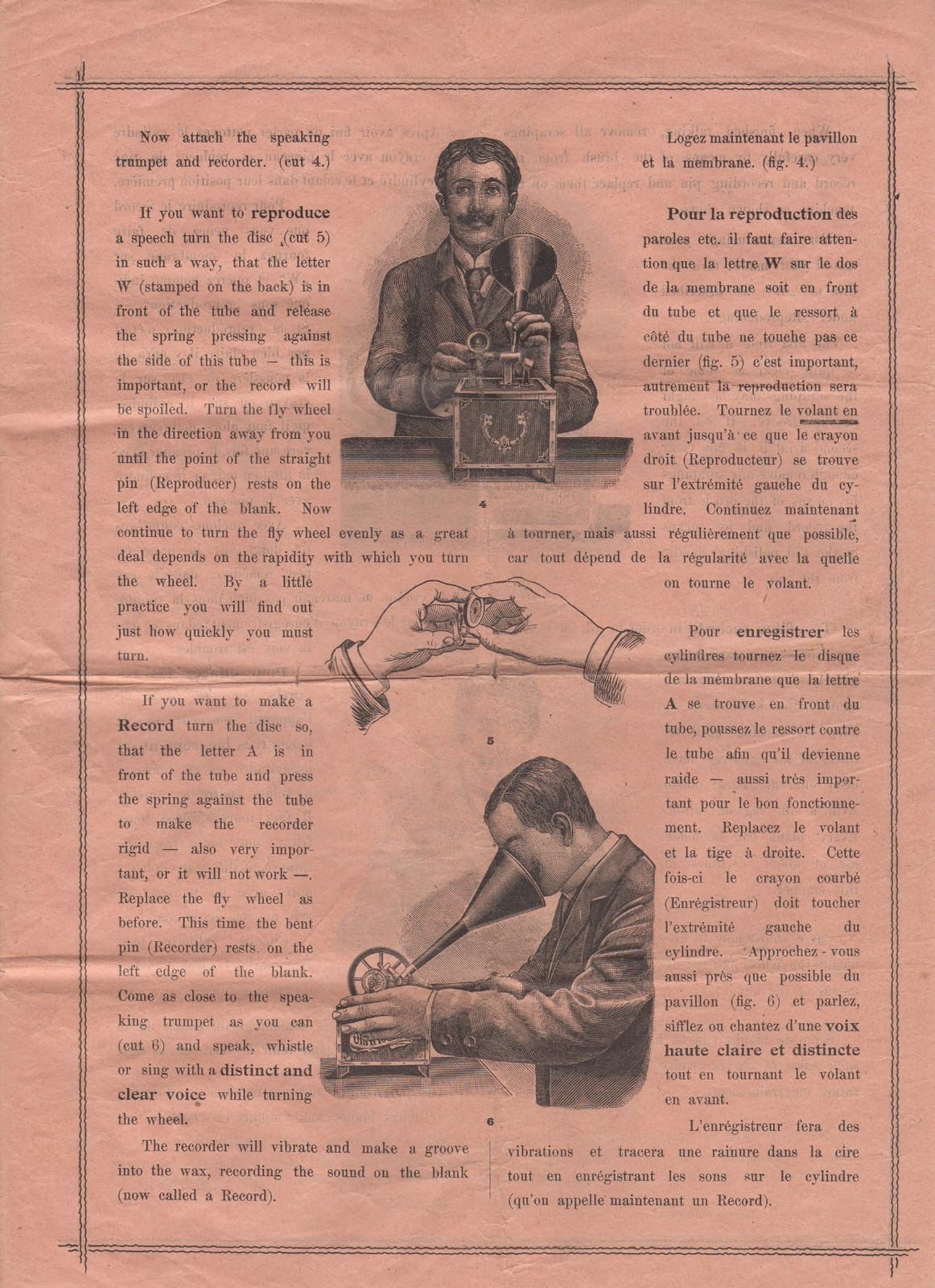
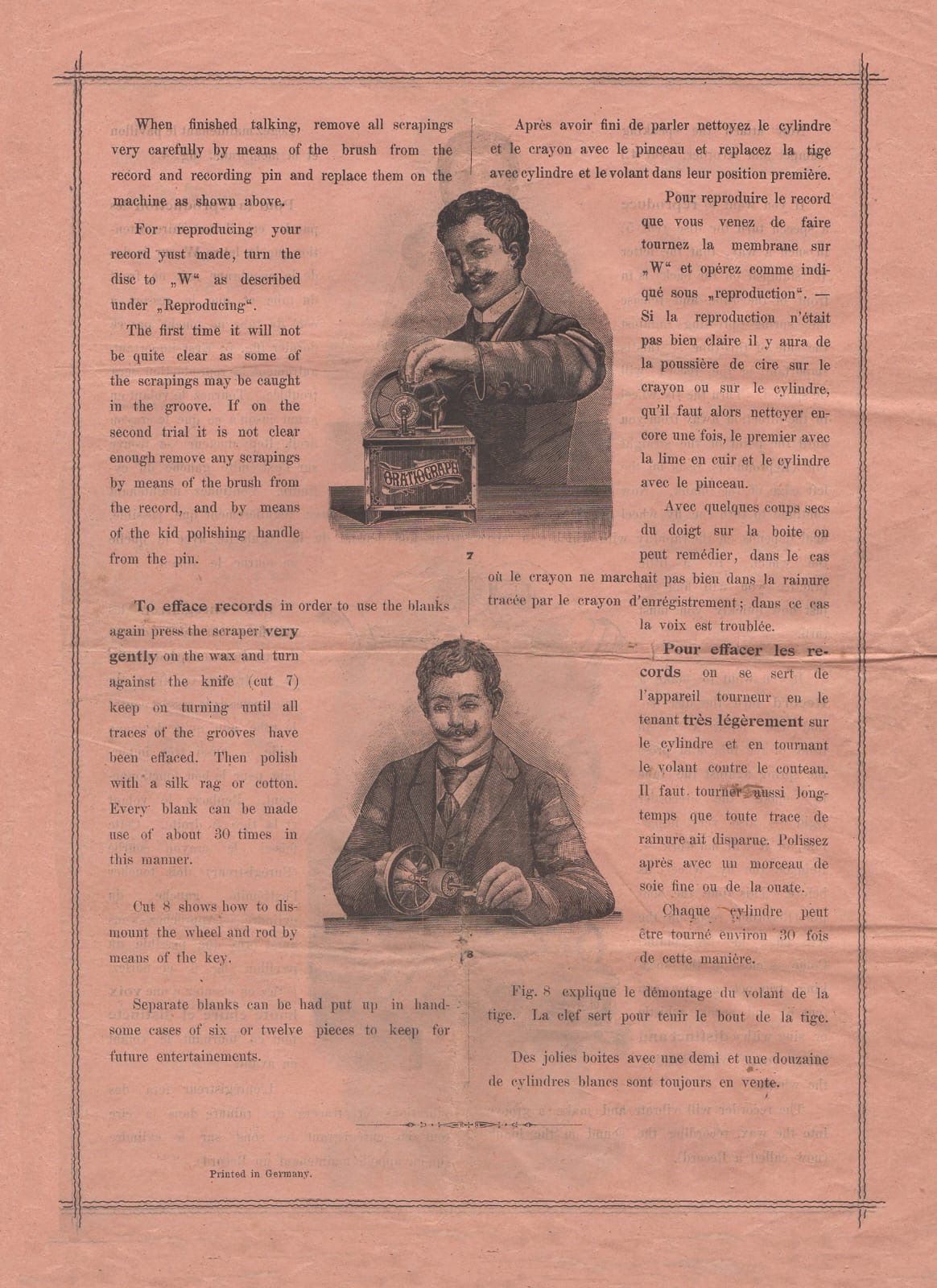
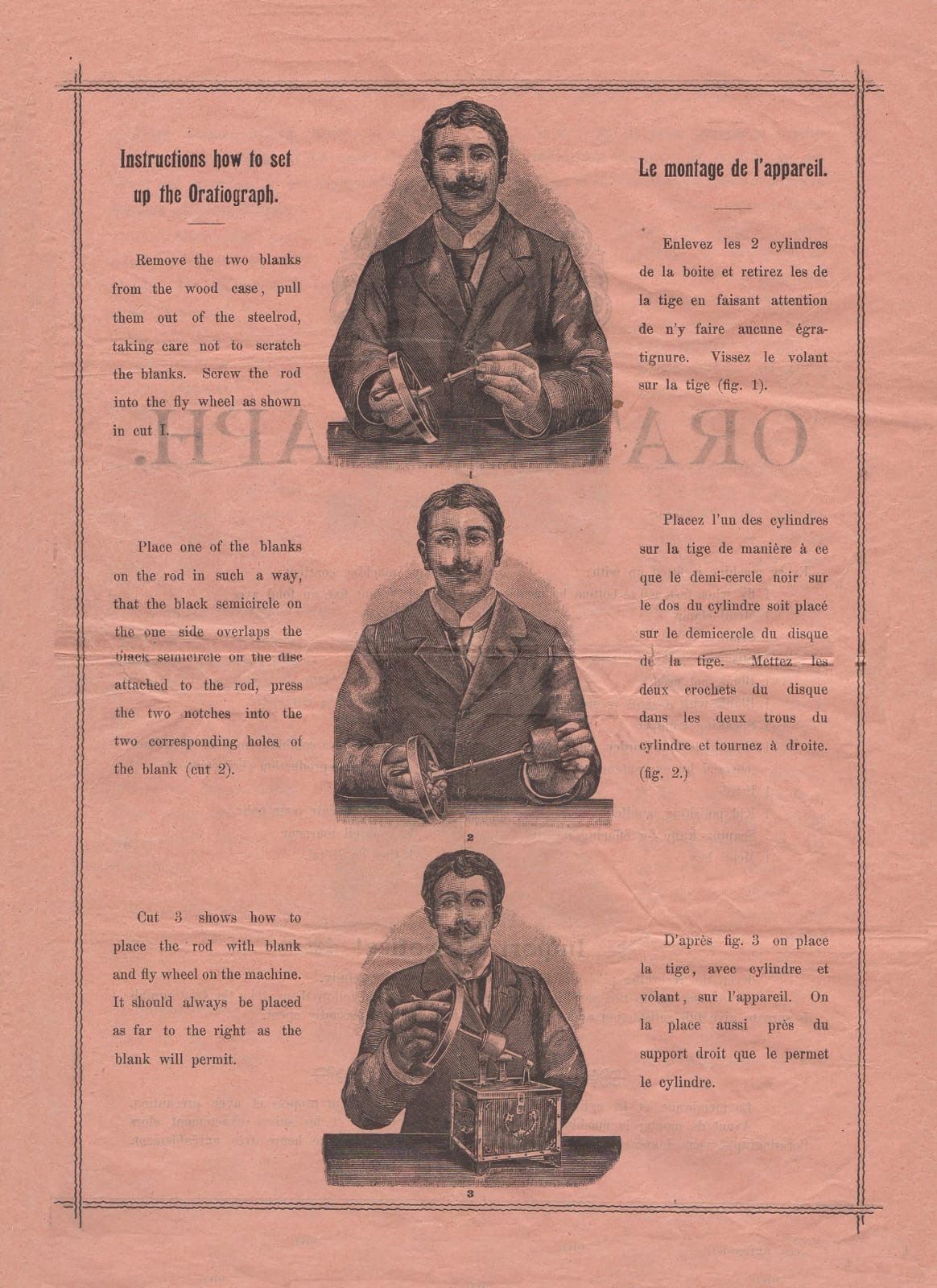
The user would speak or sing into the horn while steadily turning the flywheel. Vibrations were transmitted via a needle to engrave the wax cylinder. For playback, the position of the combination head was adjusted.
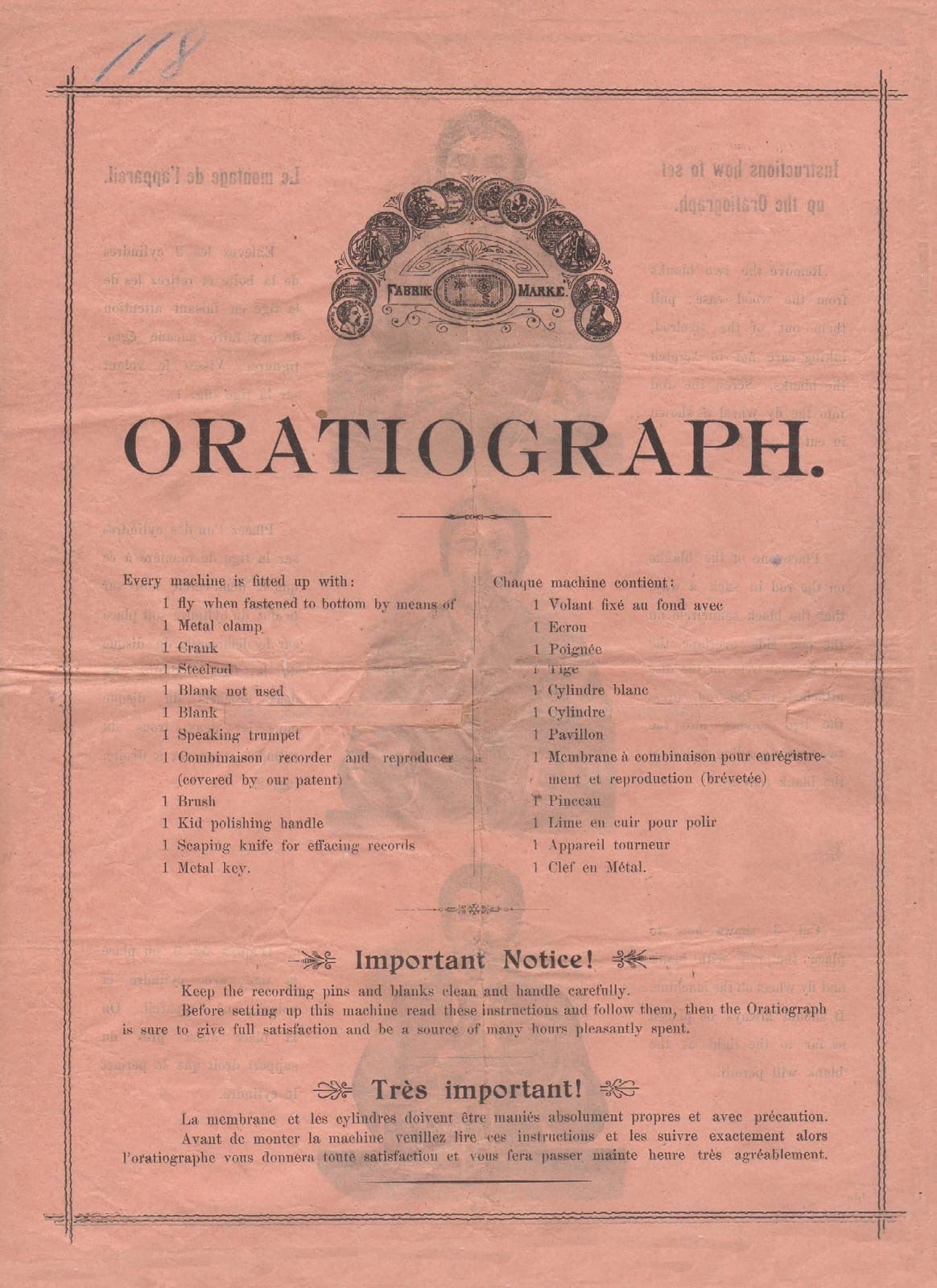
The included instruction manual featured detailed illustrations and was printed in German, English, and French – indicating that the product was intended for international export.
Historical Significance:
The Oratiograph was not a musical playback device in the modern sense, but rather an educational toy demonstrating the revolutionary technology of sound recording. Its purpose was to allow children to record and repeat short phrases and sounds, as reflected in the name “Oratio-graph” – literally a "speech-recording device."
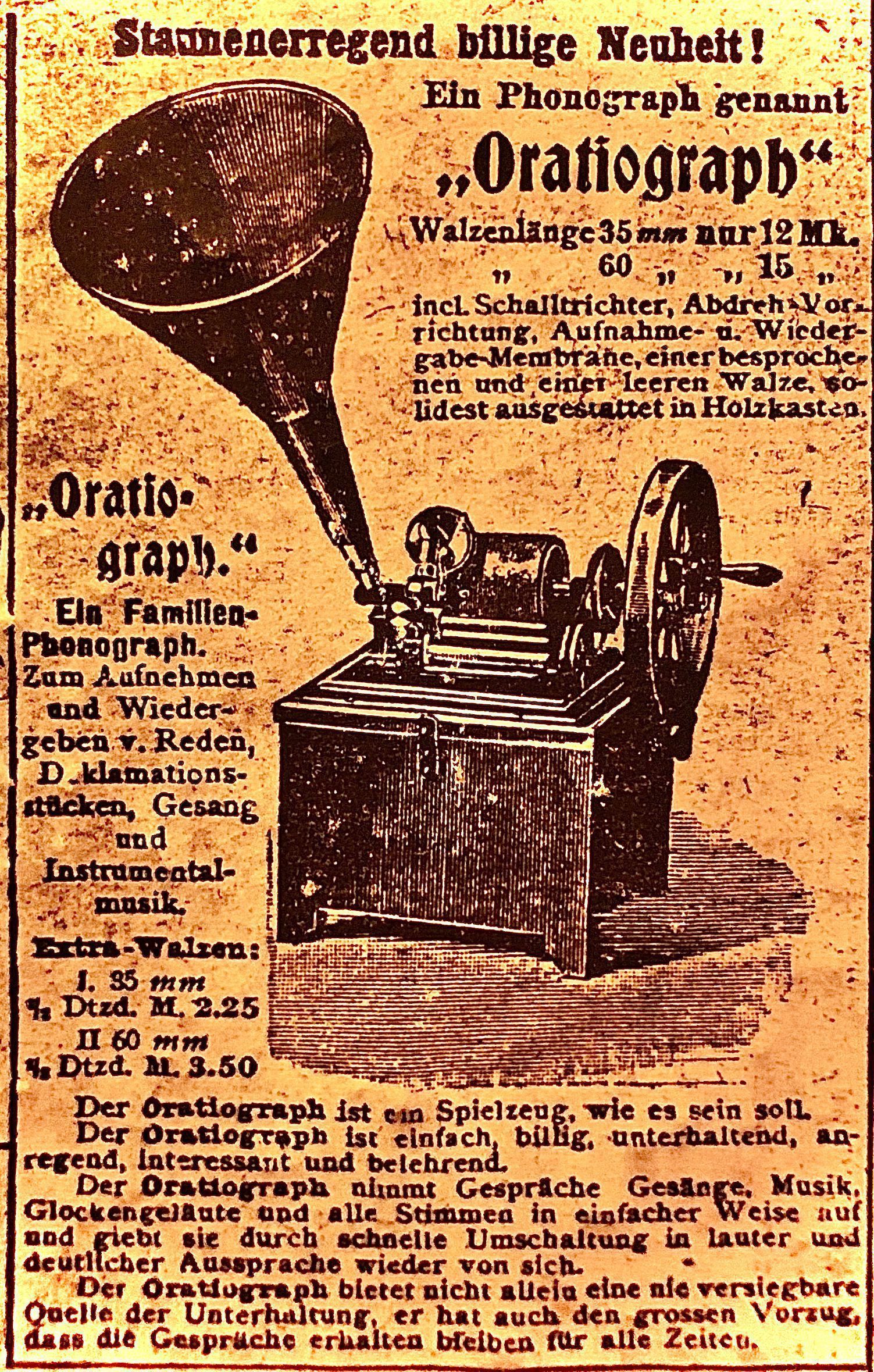
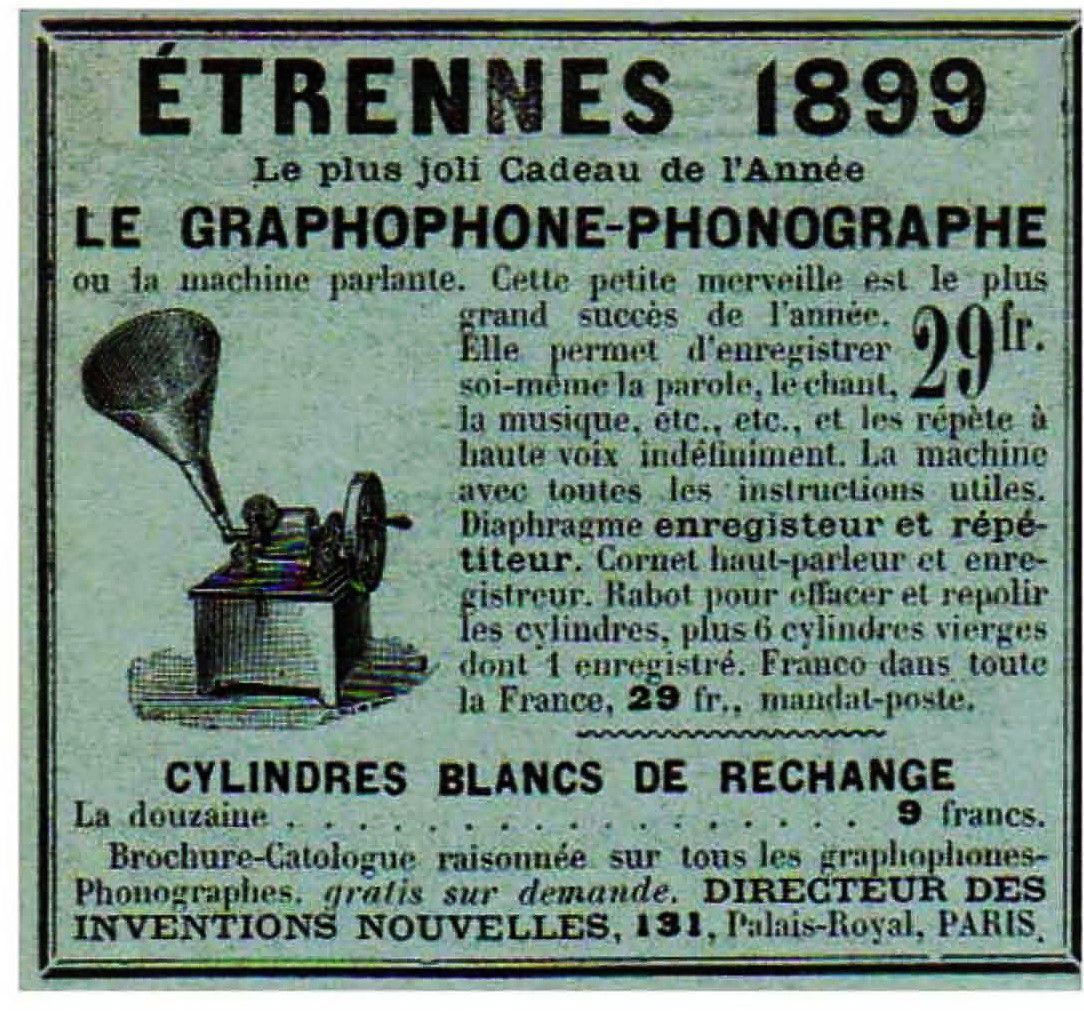
It was marketed under various names and versions, including in France by the Maison des Inventions Nouvelles in Paris, and later by Henri Lioret under the name Le Babillard. A German advertisement promoted it as a "family phonograph for recording and playback of speech, songs, and instrumental music."
Context in the Edisonium Mariazell:
The device on display at the Edisonium is a well-preserved example, complete with horn, cylinders, and original documentation. It represents a unique moment in the history of sound: when phonographs were still seen as scientific wonders – and even children could engage with the magic of recorded voice.
Quote from the Original 1899 Advertisement (Paris):
“Le plus joli cadeau de l’année … permet d’enregistrer soi-même la parole, le chant, la musique, etc.”
“The most beautiful gift of the year … allows one to record speech, song, and music oneself.”
Conclusion:
The Oratiograph is a rare and charming example of how phonographic technology entered everyday life and the world of toys. As a mechanical toy with true recording capabilities, it was a small technical marvel of its time – and today, a treasured collector’s piece.