Name/Title
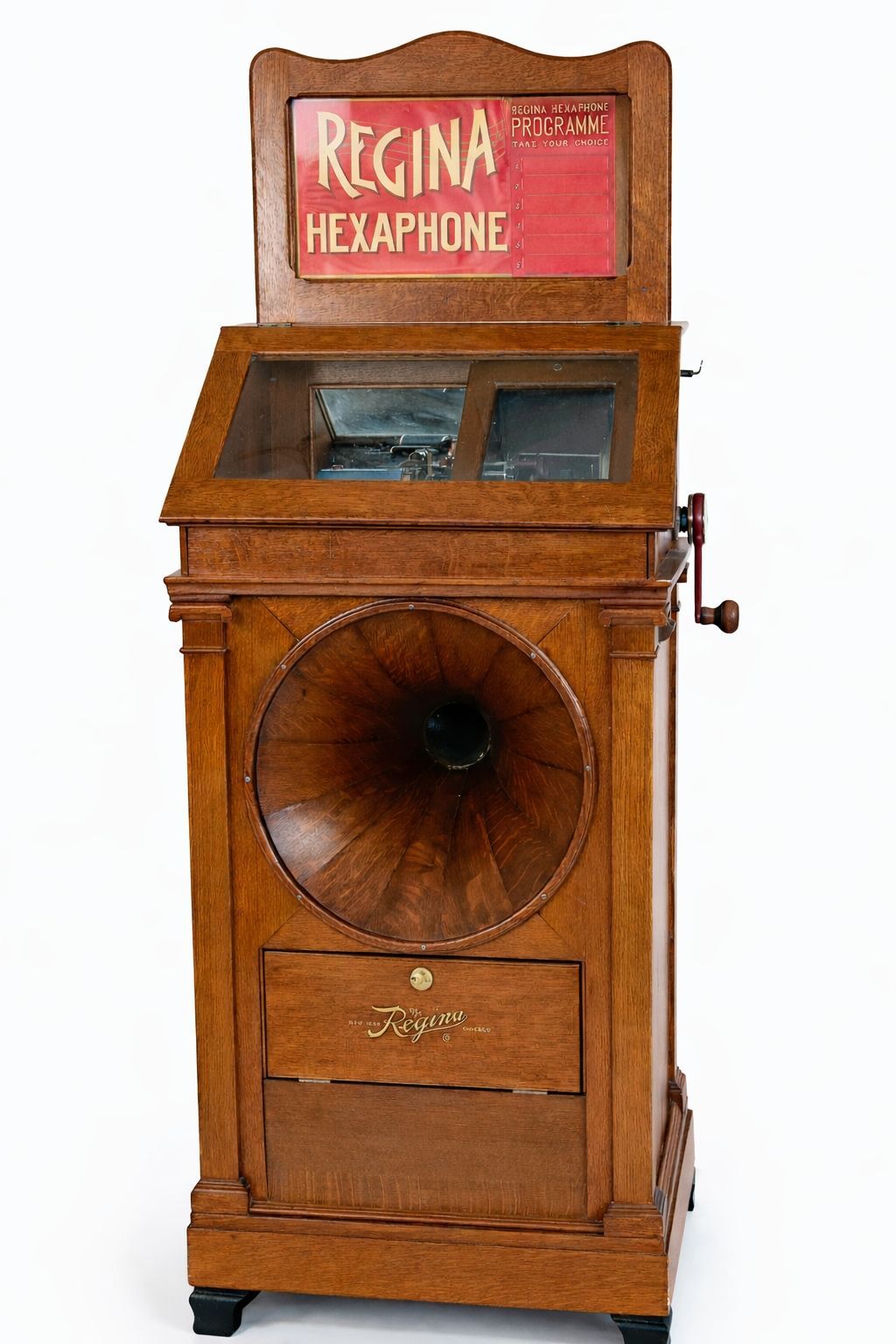
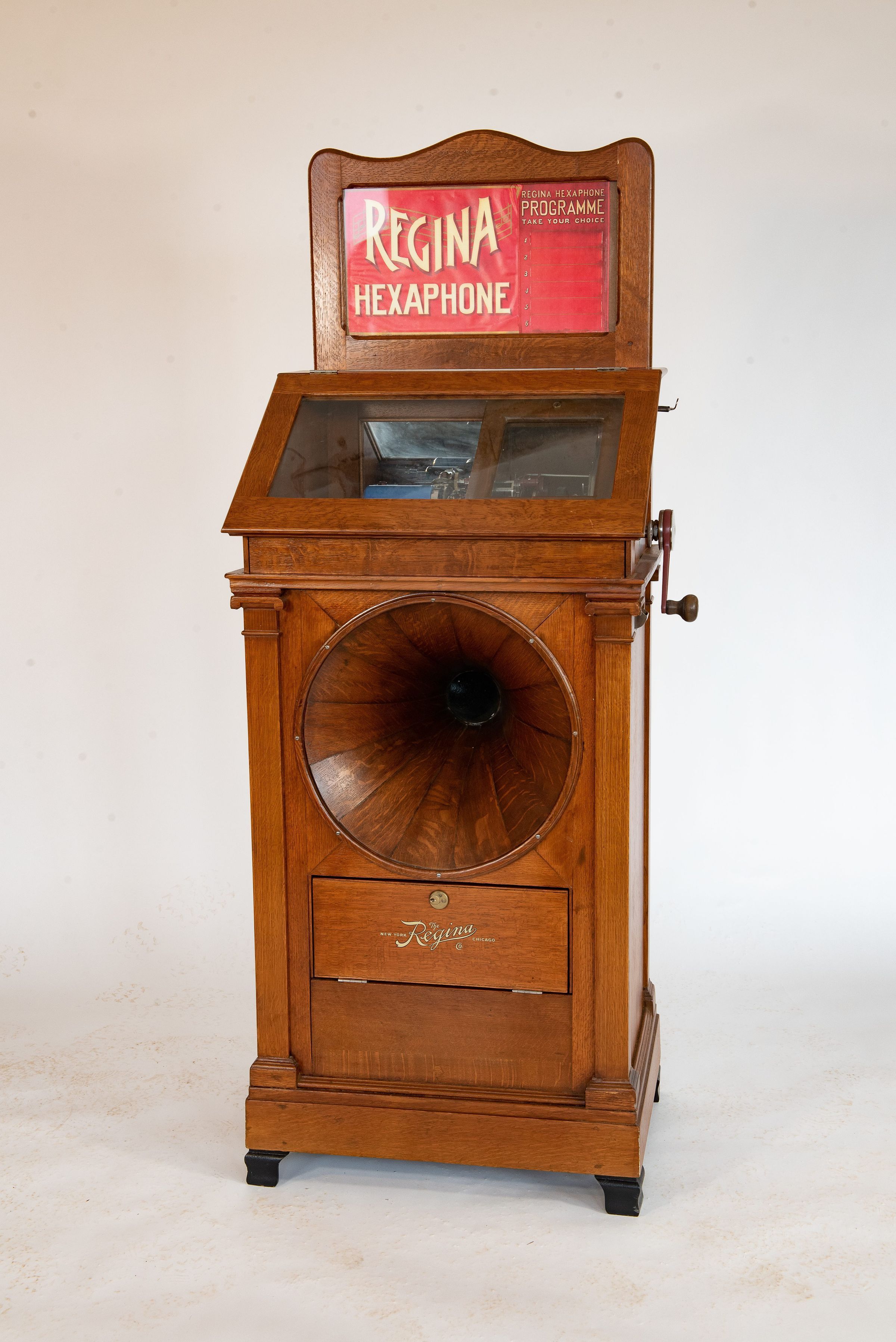
Regina Hexaphone – Coin‑Operated Multi‑Cylinder PhonographEntry/Object ID
158Description
Regina Company, Rahway, New Jersey, USA – ca. 1914
On display at the Edisonium Mariazell: 4‑Minute Version
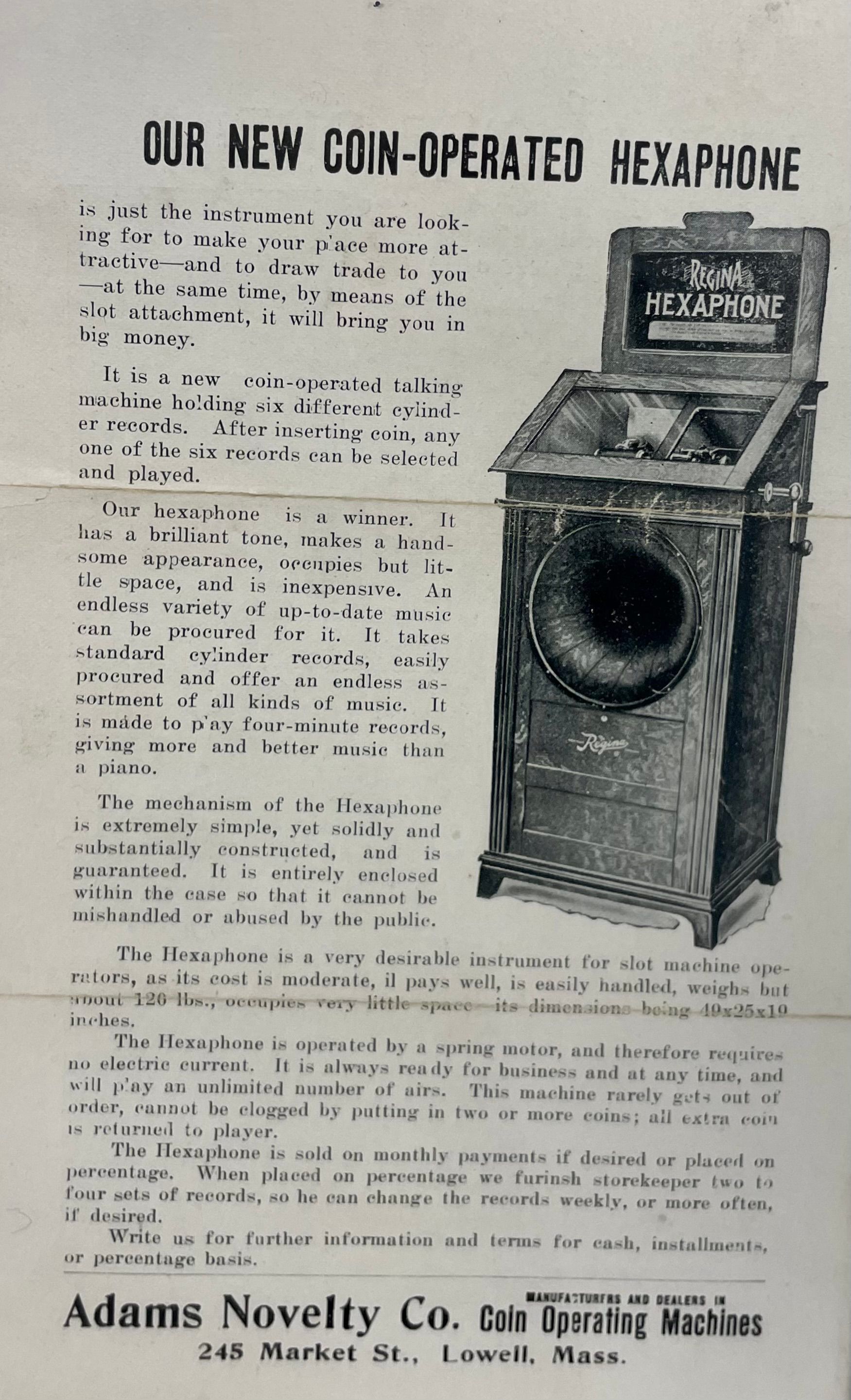
The Regina Hexaphone was a successful, rugged, and field‑proven coin‑operated phonograph that served as an early form of the jukebox. The Regina Company, originally renowned for high‑quality disc music boxes, began producing coin‑operated cylinder machines around 1907. By 1914, the Hexaphone could hold up to six Edison “Blue Amberol” cylinders, which the user could select after inserting a coin.
Technical Features:
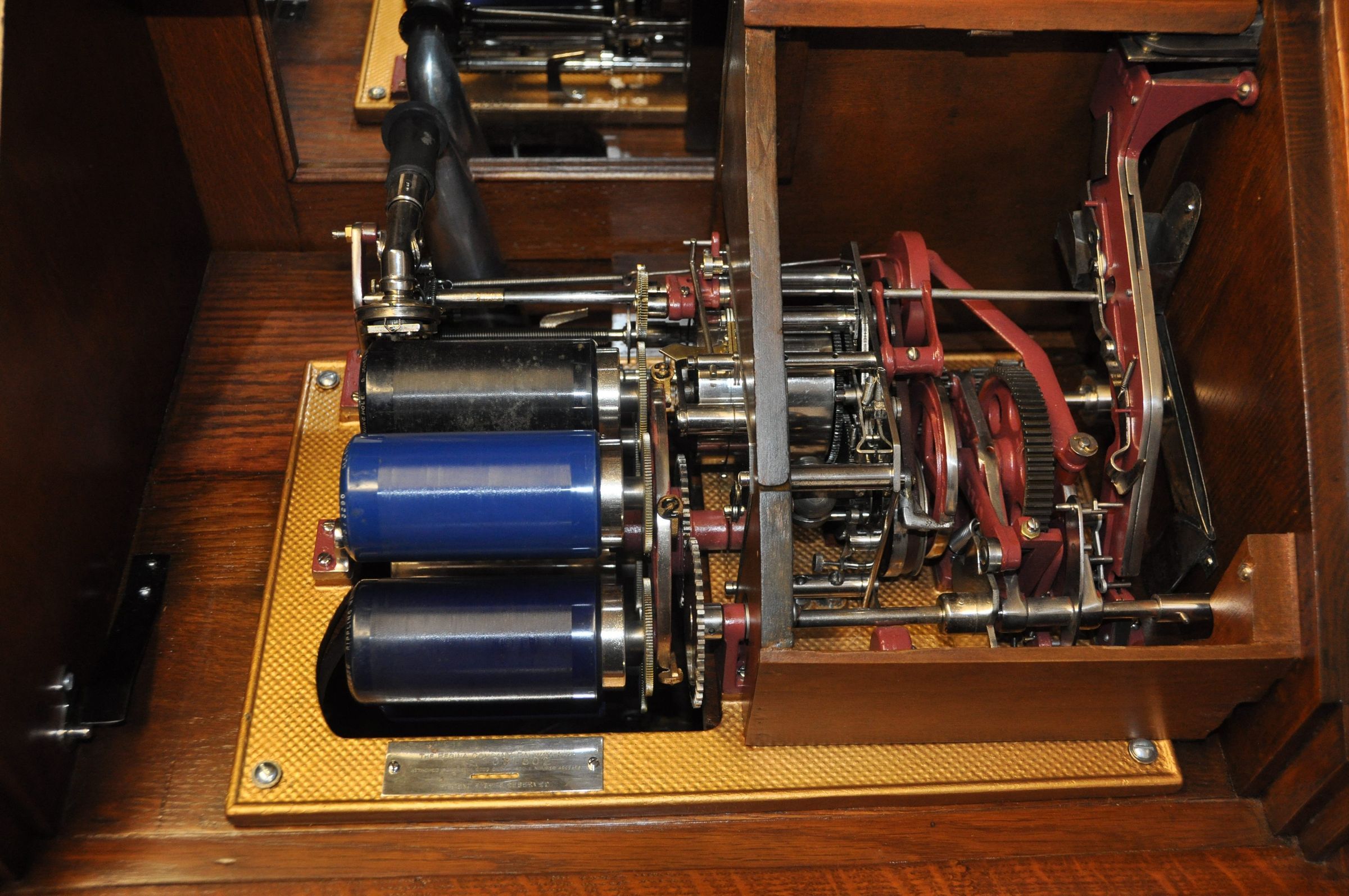
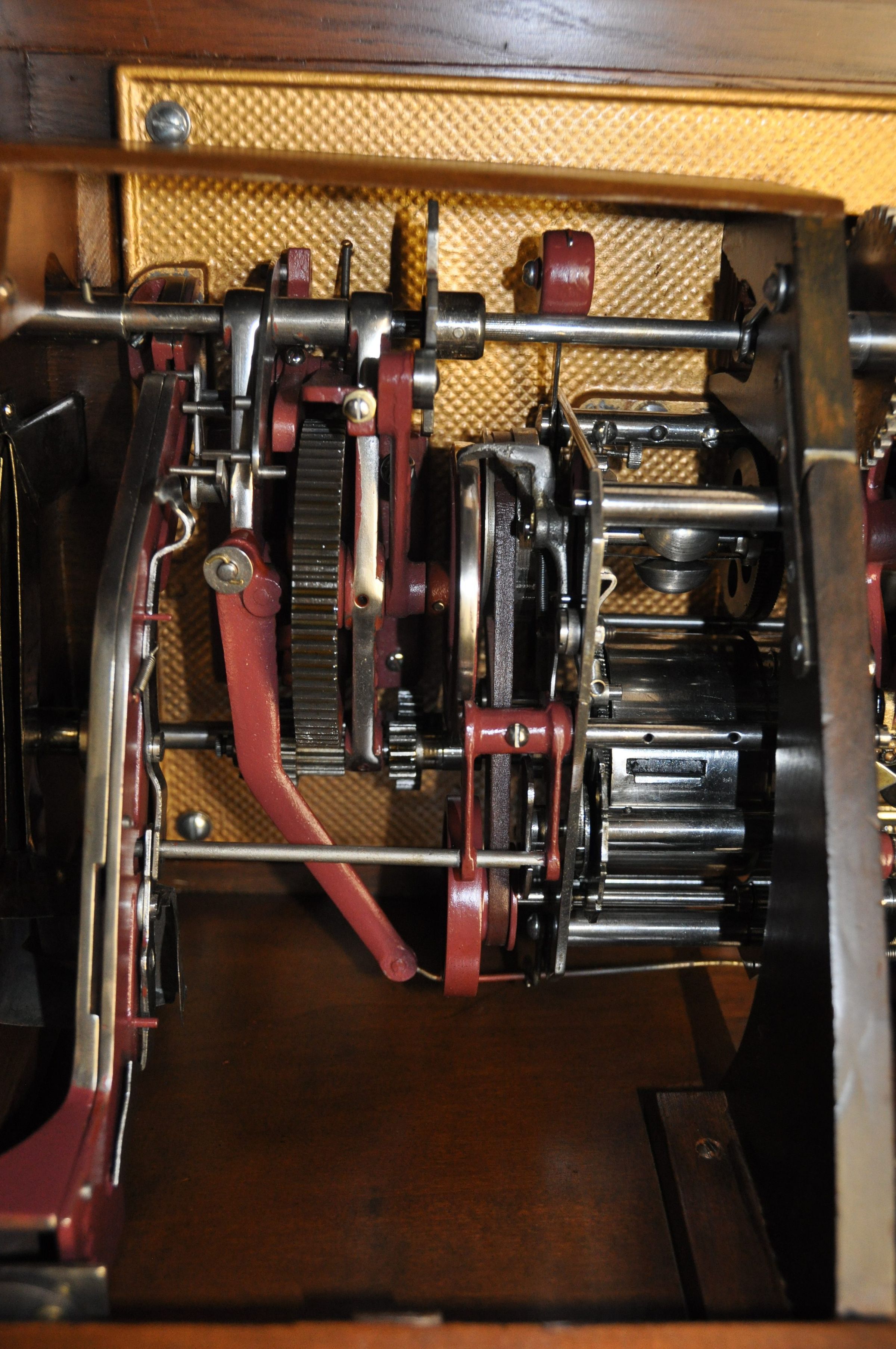
Six‑cylinder carousel with individually selectable mandrels
Cylinder formats: originally designed for 2‑minute cylinders, many later converted for 4‑minute cylinders
Spring‑driven, fully mechanical operation – no electrical power required
Safe operation: all mechanisms fully enclosed within the cabinet
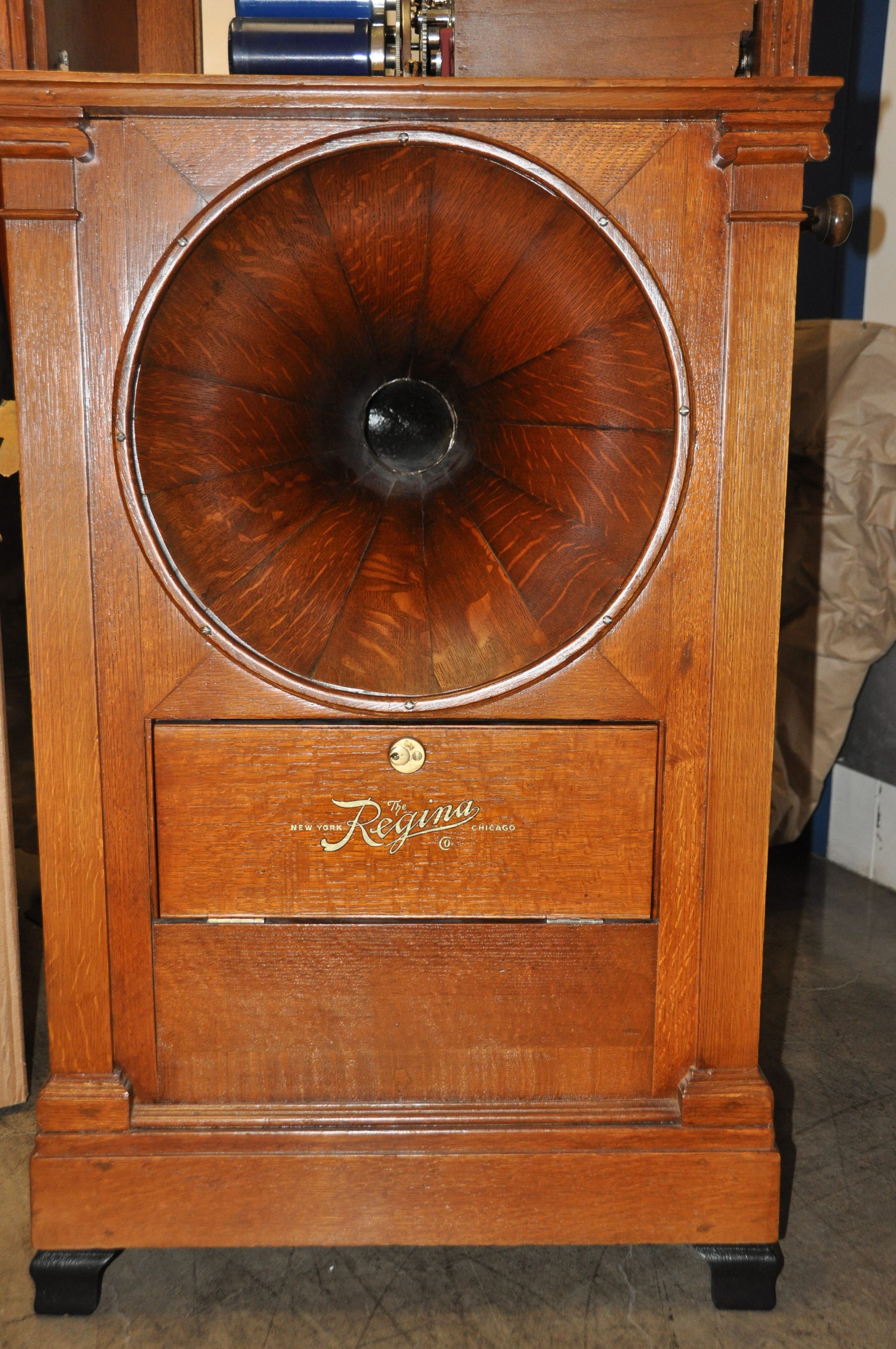
Large wooden horn for powerful, resonant sound reproduction
Operation and Function:
After inserting a coin, the user could choose one of the six stored recordings via a selection system. The mechanism would automatically move the chosen cylinder into the playing position, engage the reproducer carriage, and play the recording through the large, built‑in wooden horn.
Reliability and Significance:
The Hexaphone was regarded as one of the most reliable and low‑maintenance early jukebox designs. Often operating for many years without major issues, these machines were highly valued by operators. The ability to choose between different selections made the Hexaphone a popular entertainment fixture in cafés, public halls, and amusement venues.
Rarity Today:
Although once a widespread and popular model, fully intact and functional Hexaphones are now rare. The example displayed at the Edisonium is a complete and well‑preserved 4‑minute version, representing the legacy of one of the most dependable “jukeboxes” of its era.