Name/Title
Graphophone “AB” (MacDonald) – Concert PhonographEntry/Object ID
165Description
Columbia Phonograph Company, ca. 1899–1901
Historical Background
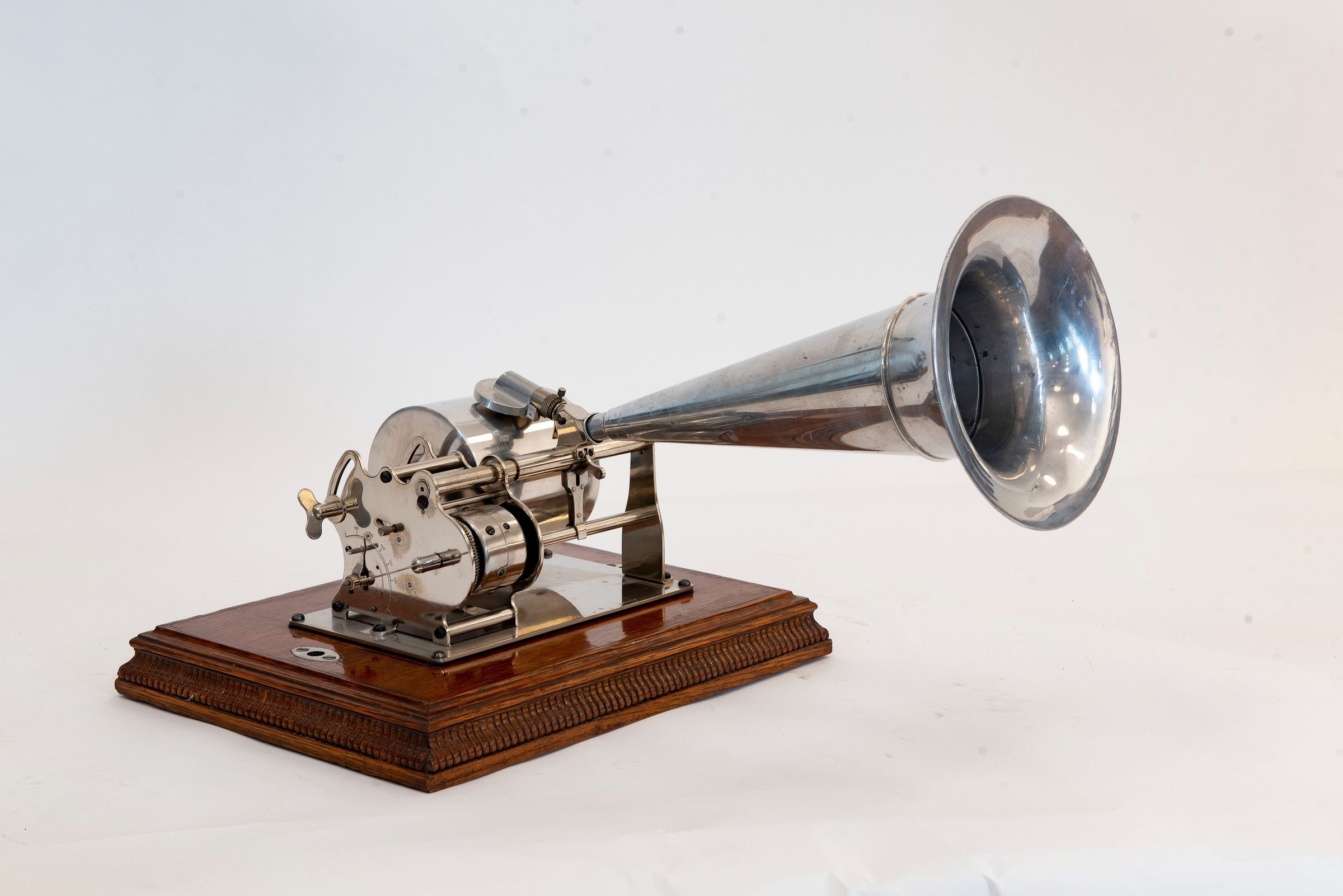
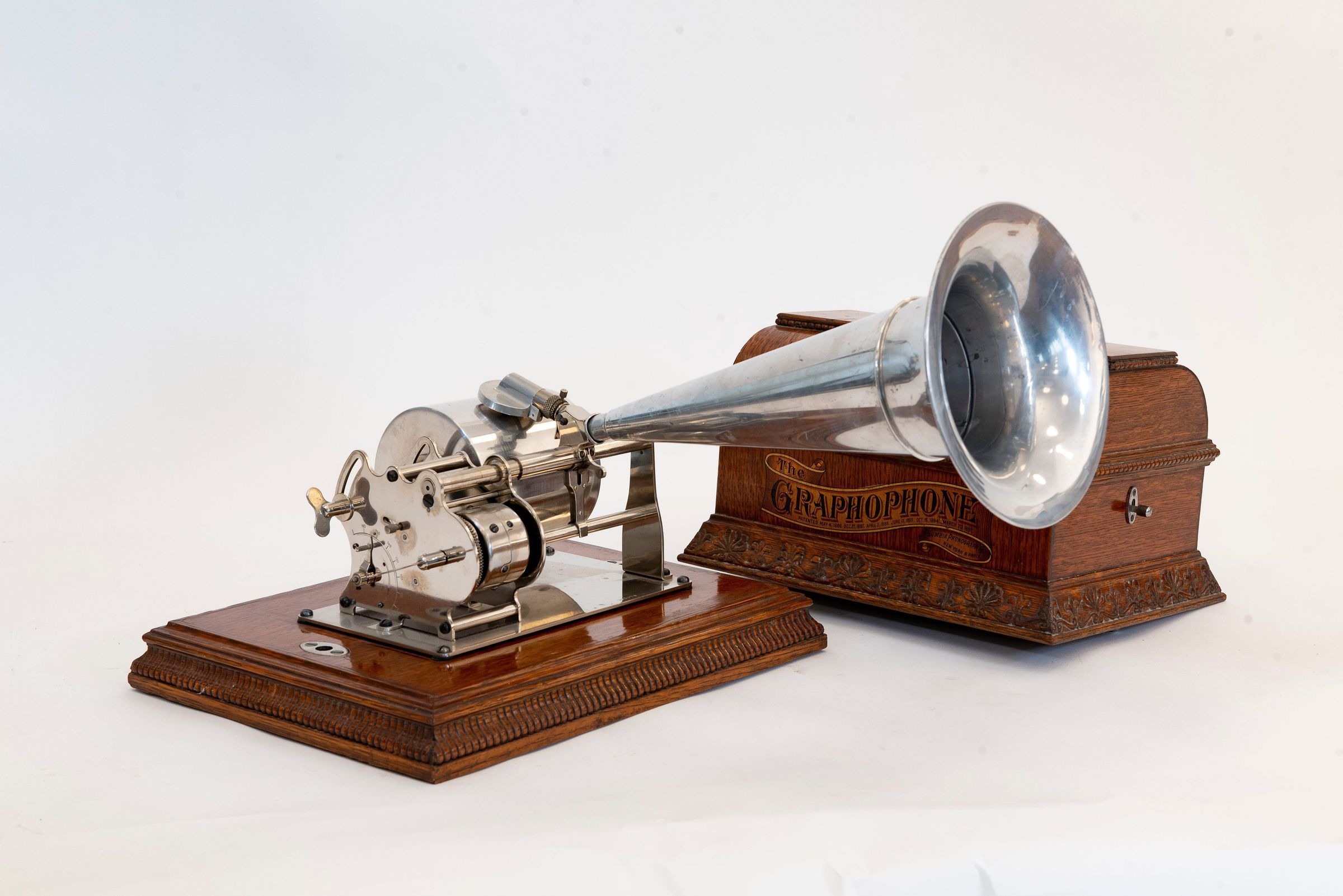
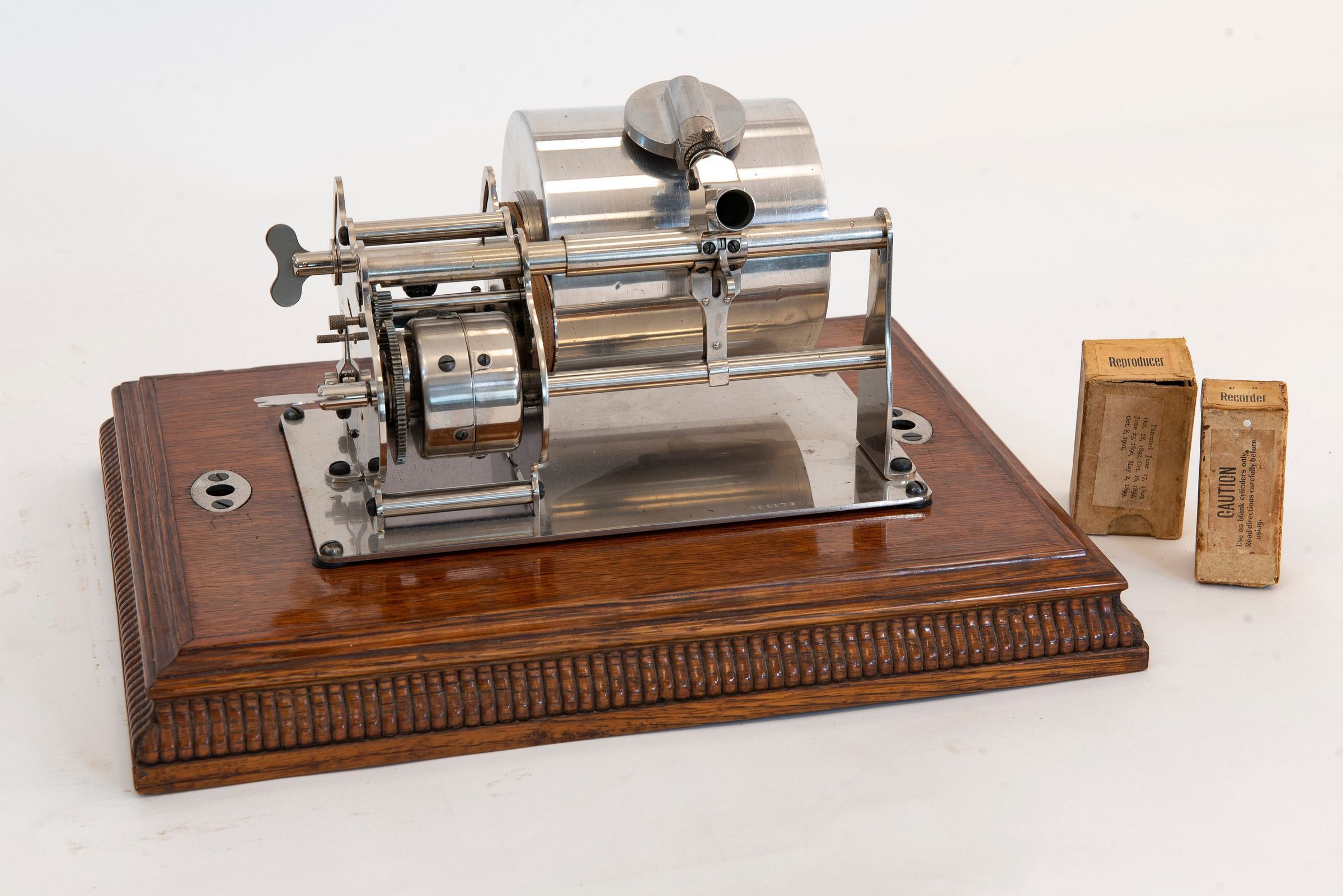
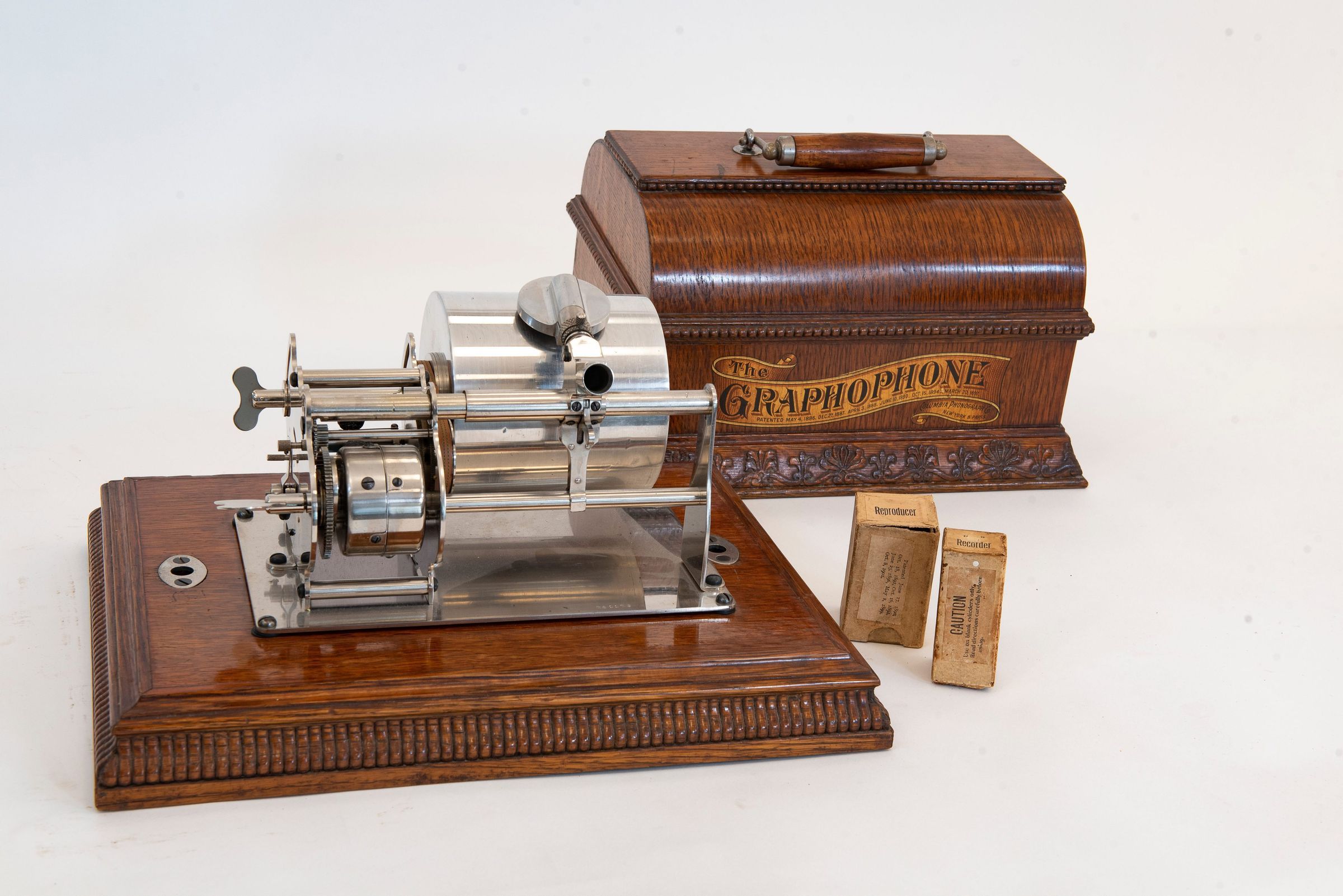
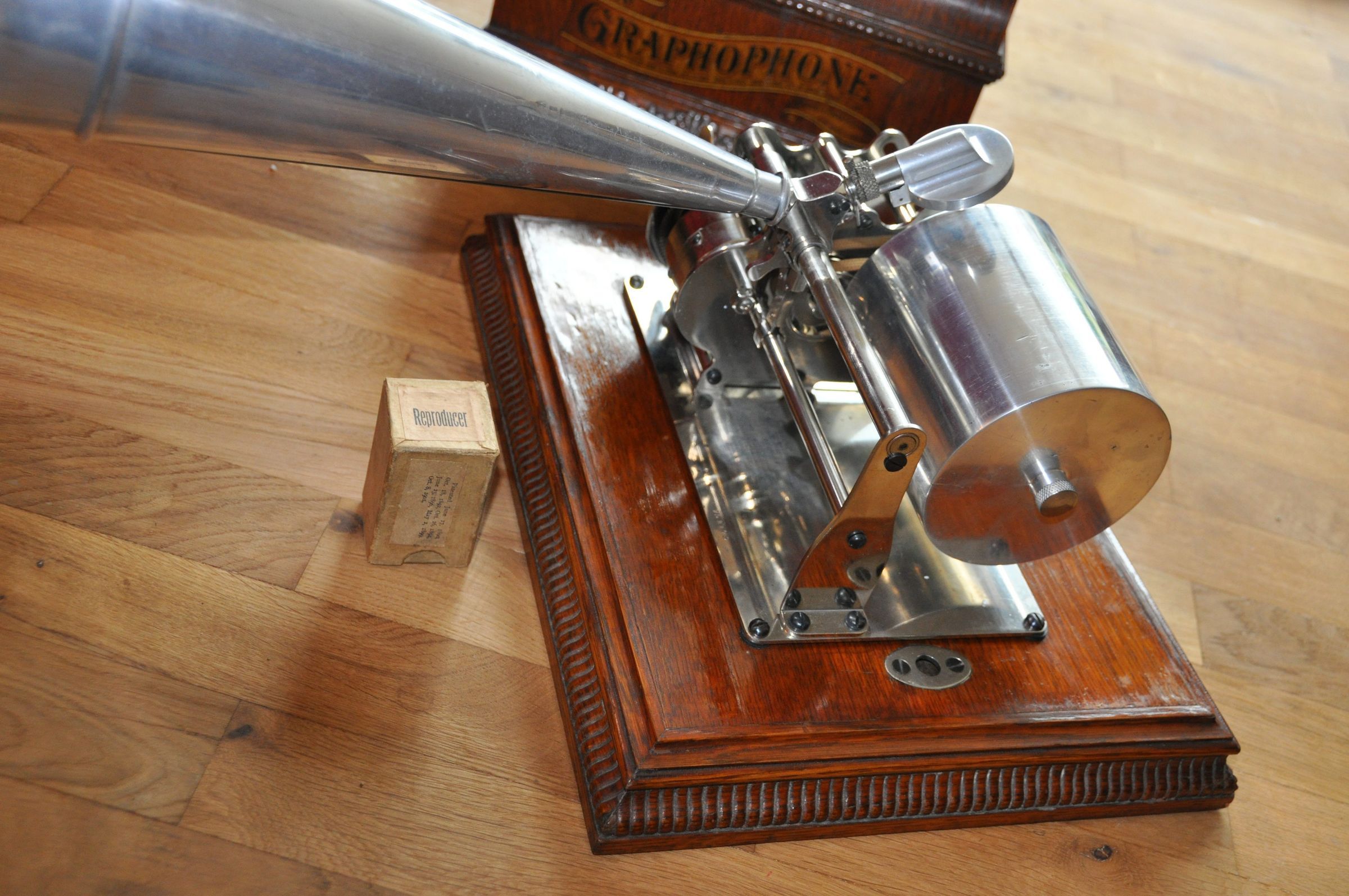
The Graphophone Type AB, also known as the “MacDonald Graphophone,” was introduced around 1899 and is considered one of the true milestones of cylinder phonographs. It was the very first commercial machine specifically designed for the new concert cylinders with a diameter of 12.7 cm – more than twice the size of the standard 5.7 cm cylinder.
The larger groove surface produced a much louder and clearer sound, making the AB ideal for concert halls, public exhibitions, and showmen. Its designer, Thomas H. MacDonald, created Columbia’s most prestigious model of the era: fully nickel-plated works, a massive oak base, and the largest open motor of any Graphophone ever built.
Technology and Features
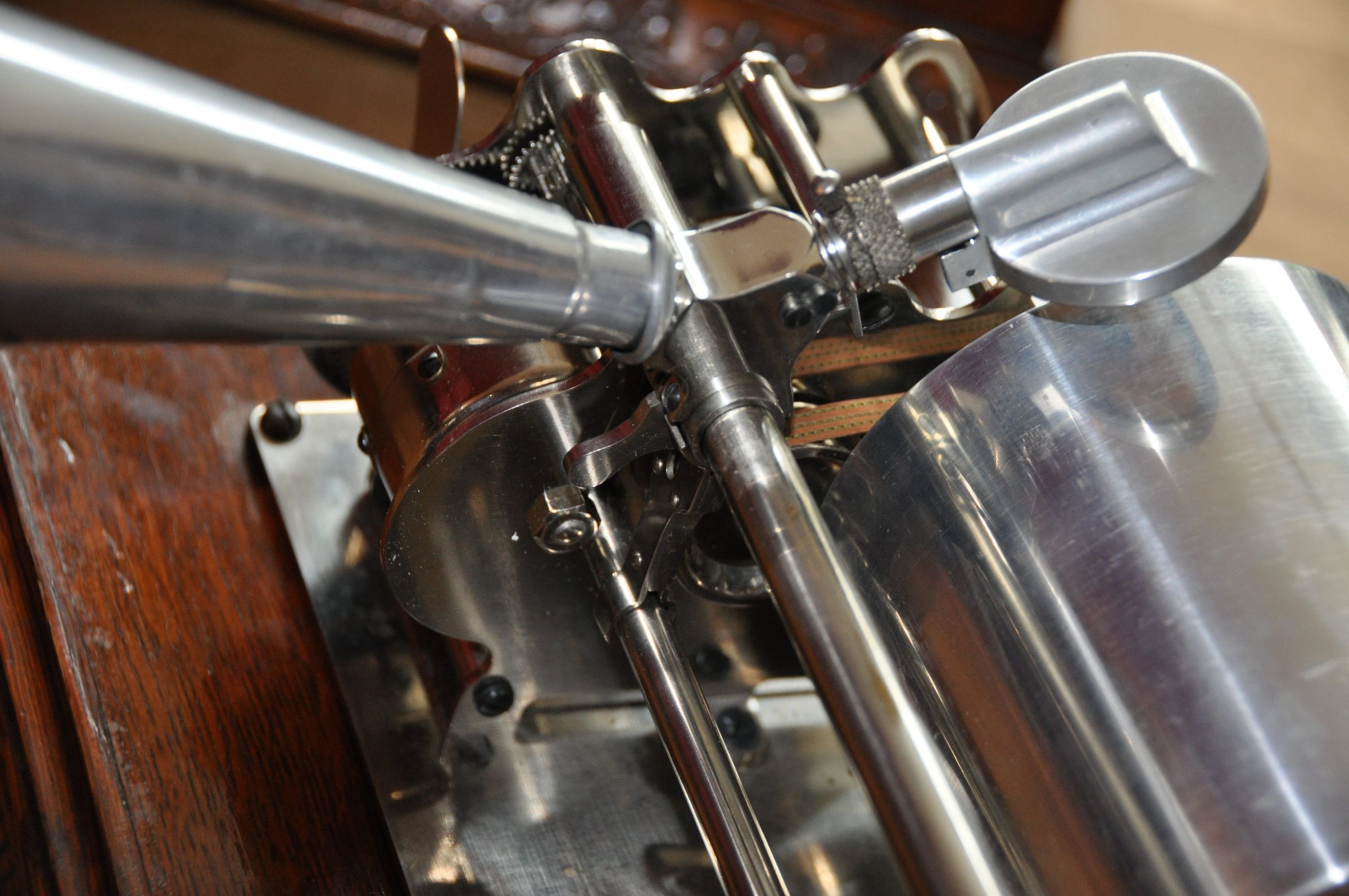
Mandrel: telescoping design – capable of playing both large concert cylinders (12.7 cm) and regular 2-minute standard cylinders.
Motor: Columbia’s most powerful open spring motor – smooth, strong, and engineered to handle the heavy concert cylinders.
Reproducer: usually fitted with the Type D for concert cylinders, but also adaptable for standard cylinders.
Horn: often supplied with very large horns to take full advantage of the increased volume.
Price: depending on configuration, 100–125 US dollars – a multiple of smaller models and a genuine prestige instrument.
Rarity and Significance
The Graphophone AB was the first machine ever built for concert cylinders, marking the beginning of this short-lived but influential format.
Its striking design and impressive sound made it famous well beyond America: numerous European makers copied the AB, making it one of the most widely imitated phonographs of its time.
Despite its technical qualities, it could not endure: concert cylinders were expensive, cumbersome, and fragile – and soon overtaken by the rapid rise of the flat disc record.
The example displayed at the Edisonium is preserved in extraordinarily fine, almost mint condition – one of the most impressive surviving testaments to the golden era of cylinder phonographs around 1900.