Name/Title
Pathé “Stentor” – French High‑End Concert PhonographEntry/Object ID
172Description
Manufacture Française d’Appareils de Précision, Paris – c. 1899–1901
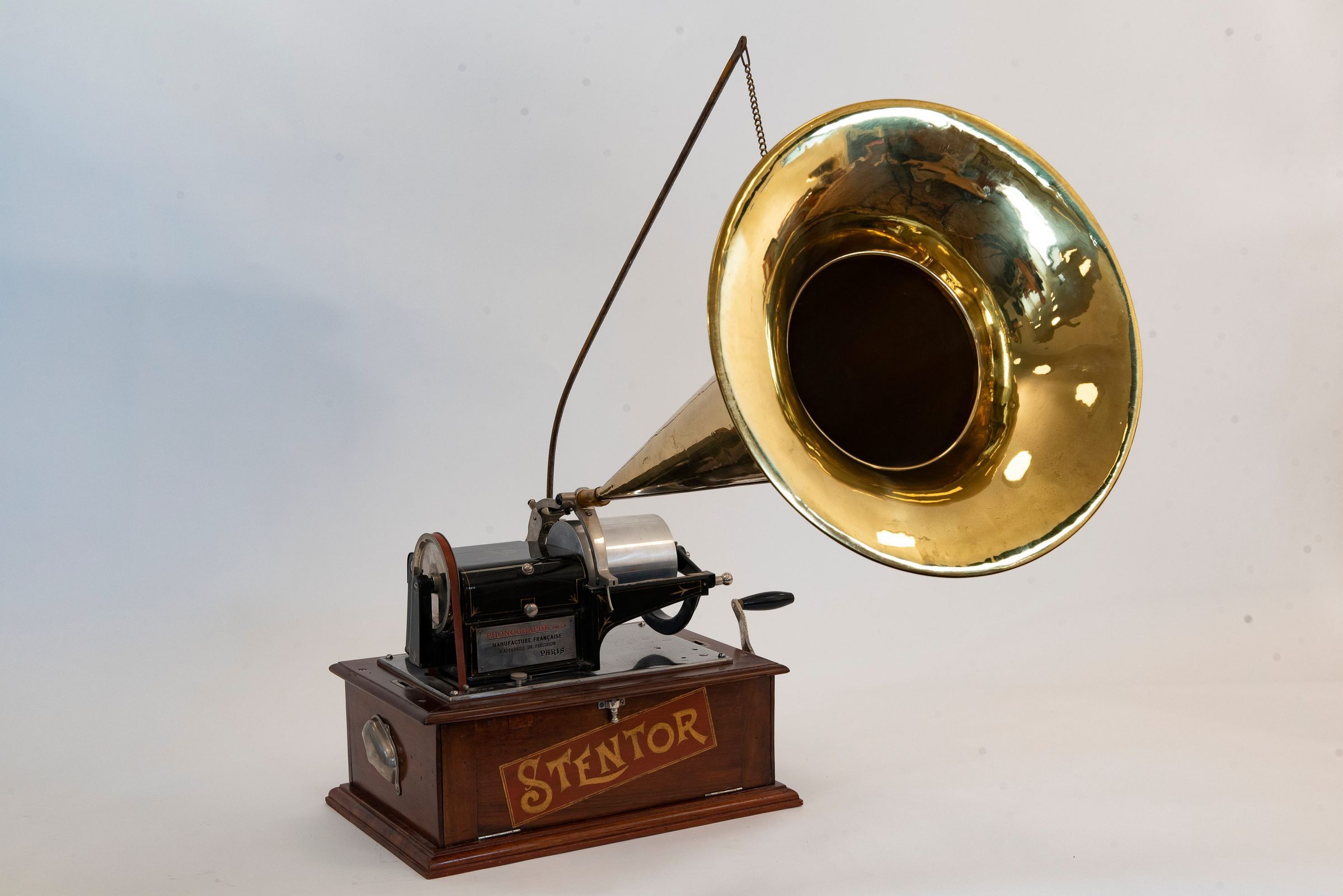
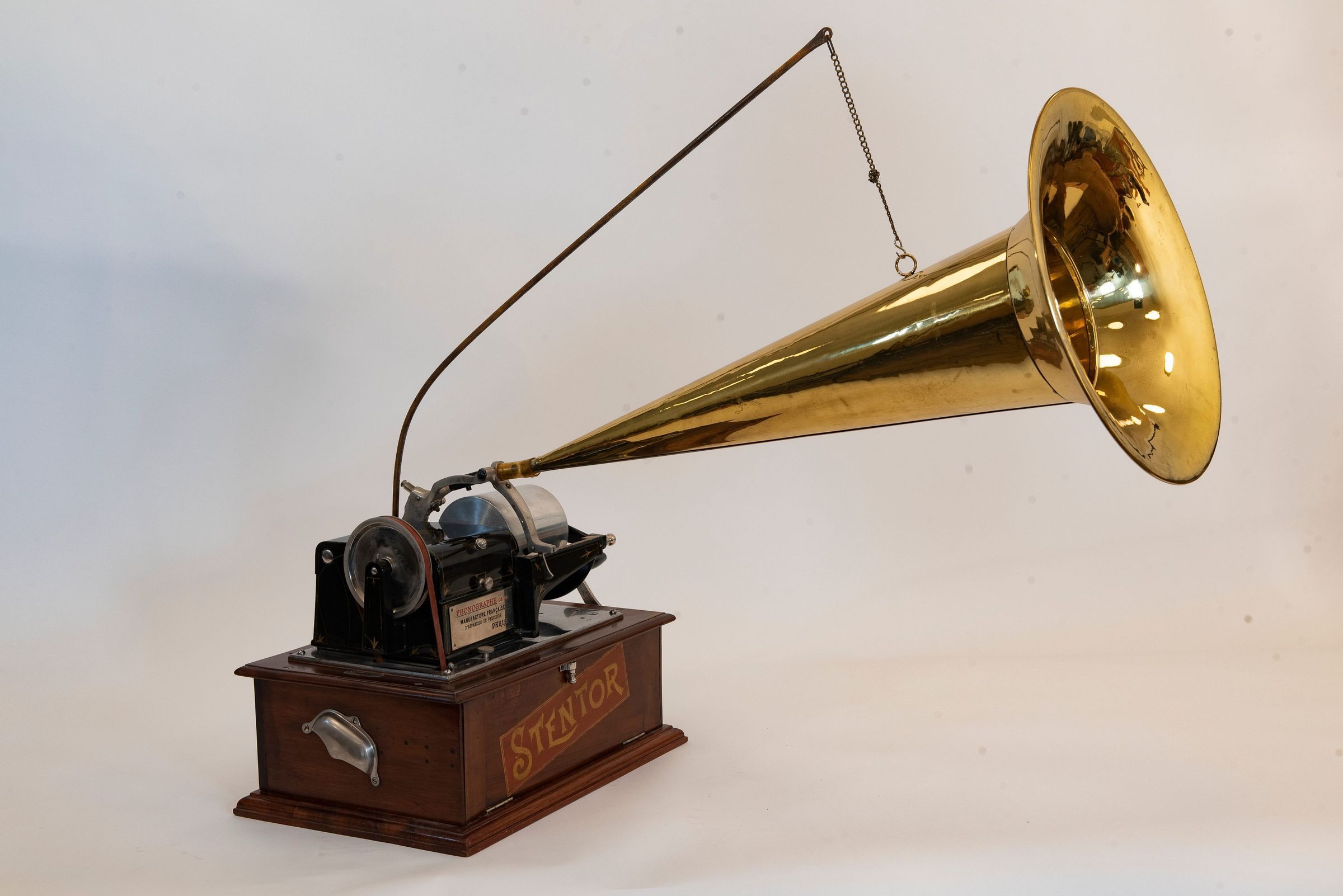
The “Stentor” is among the most prestigious and rarest Pathé phonographs of the early 1900s. With its imposing presence, large brass horn, and sophisticated mechanics, it was a true luxury instrument for affluent music lovers and high‑profile presentations.
Two of these machines were discovered in an old silent‑film cinema in Normandy, where they were used to provide background music for silent movies.
Historical Background
At the turn of the 20th century, the Pathé brothers were not only leaders in the production of cylinders and disc records, but also in the distribution of high‑quality playback equipment. In the early years, they purchased complete machines or components from American manufacturers – primarily Columbia Graphophone – and adapted them for the French market.
The example shown here is based almost entirely on the Graphophone Grand (GG), Columbia’s top‑of‑the‑line model of the era. Pathé reworked the cabinet, applied its own branding, and marketed it under the prestigious name “Stentor.” Parallel Stentor versions also existed that were built on Edison technology – notably the Edison Concert Phonograph.
Nameplate and Trademark
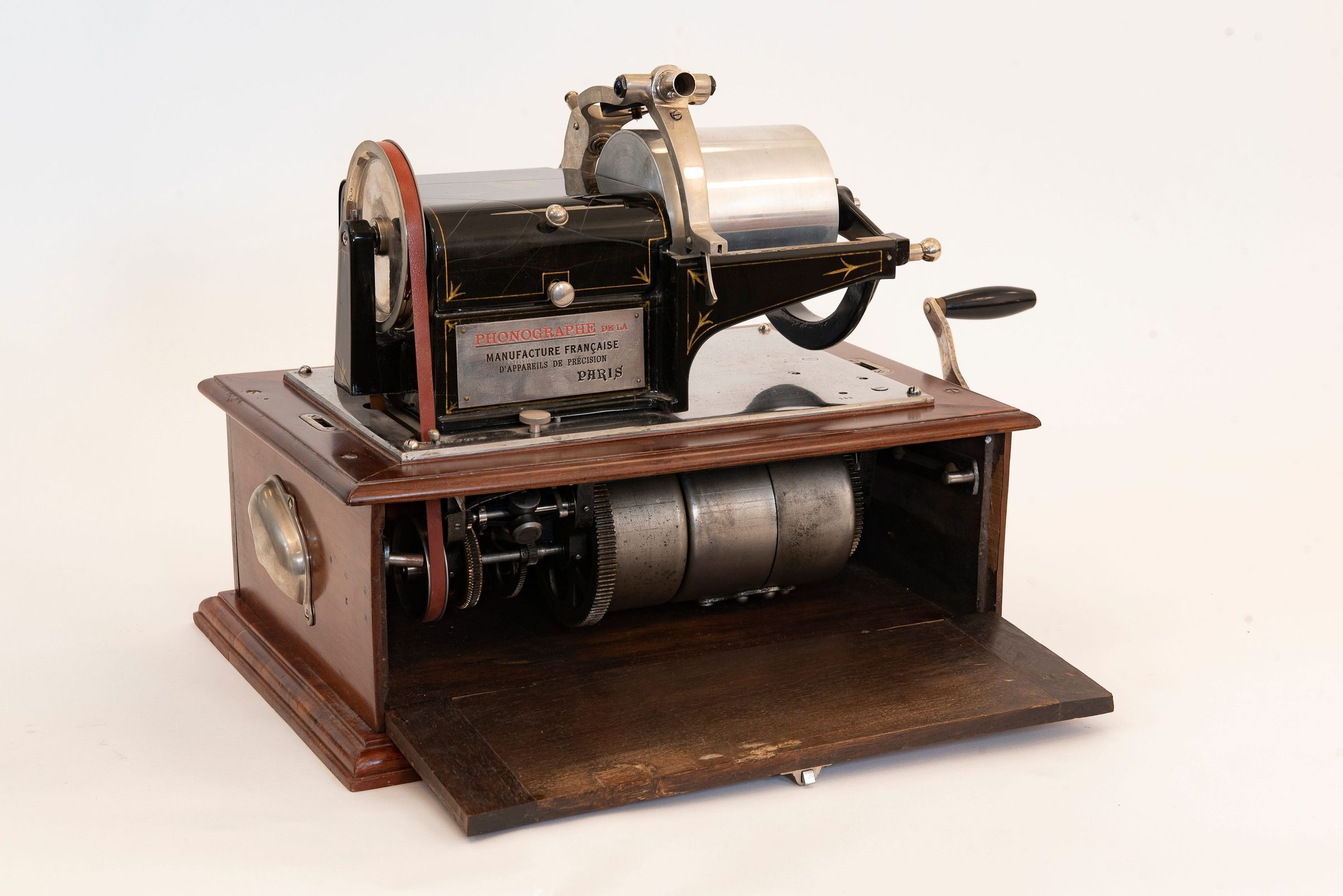
The nameplate on the front reads:
PHONOGRAPHE DE LA
MANUFACTURE FRANÇAISE
D’APPAREILS DE PRÉCISION
PARIS
This refers to Pathé’s own production and distribution facility in Paris, the Manufacture Française d’Appareils de Précision.
On the lid is the Pathé trademark: a golden rooster crowing into a gramophone horn, with the motto:
JE CHANTE HAUT ET CLAIR (“I sing loud and clear”).
This logo became one of the most recognizable emblems of the French phonograph and record era.
Technical Features
Nearly identical in design to the Graphophone GG – which you can also admire here at the Edisonium:
Cylinder format: 12.7 cm (5‑inch) “Concert” cylinders – twice the size of standard cylinders.
Drive: Precision spring motor with governor and large end‑gate mechanism, similar to Edison designs.
Reproducer: Pathé reproducer.
Horn: Large brass horn for maximum volume and tonal richness.
Cabinet: Fine wooden cabinet with large “STENTOR” lettering on the front.
Rarity
Only about 10 Stentor machines are known worldwide – two of which can be admired here at the Edisonium. Some are built on Edison chassis, others – like this one – on the Graphophone Grand platform. The Graphophone‑based versions are particularly rare.
Concert cylinders were an exclusive medium: around 1900 they initially sold for $5 each (today approx. €125), were bulky, fragile, and difficult to store. Their high cost and delicate nature limited their use, making the Stentor a purchase only for wealthy customers.
Significance
The Pathé Stentor is a unique testament to the close technical relationship between the American and French phonograph industries around 1900. It represents the high‑end culture of the late cylinder era – built for impressive sound demonstrations rather than for the mass market – and remains one of the most coveted collector’s items in early sound reproduction history.