Name/Title
Pathé “Stentor” – French High‑End Concert Phonograph (Edison‑Based Version)Entry/Object ID
173Description
Manufacture Française d’Appareils de Précision, Paris – ca. 1901–1903
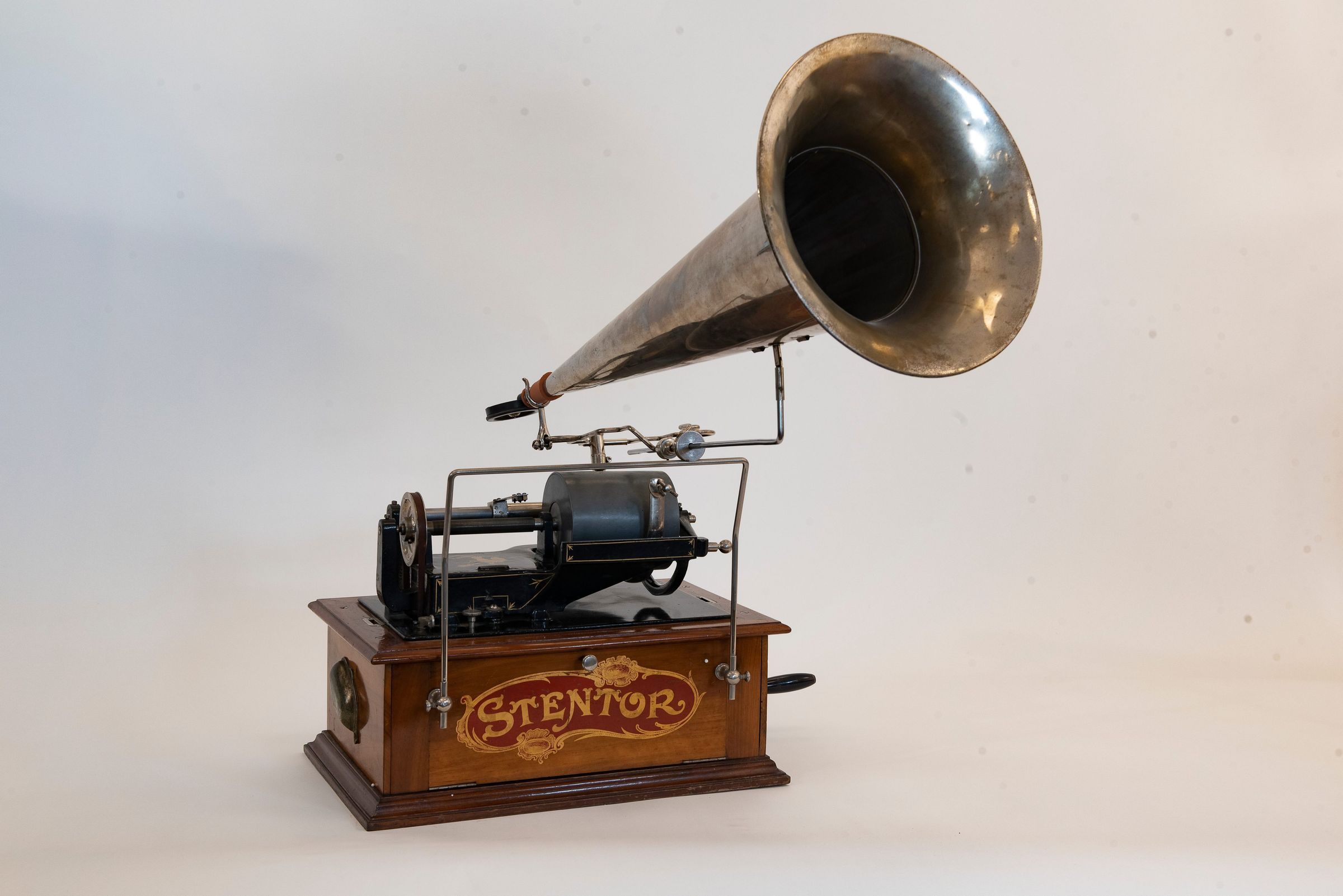
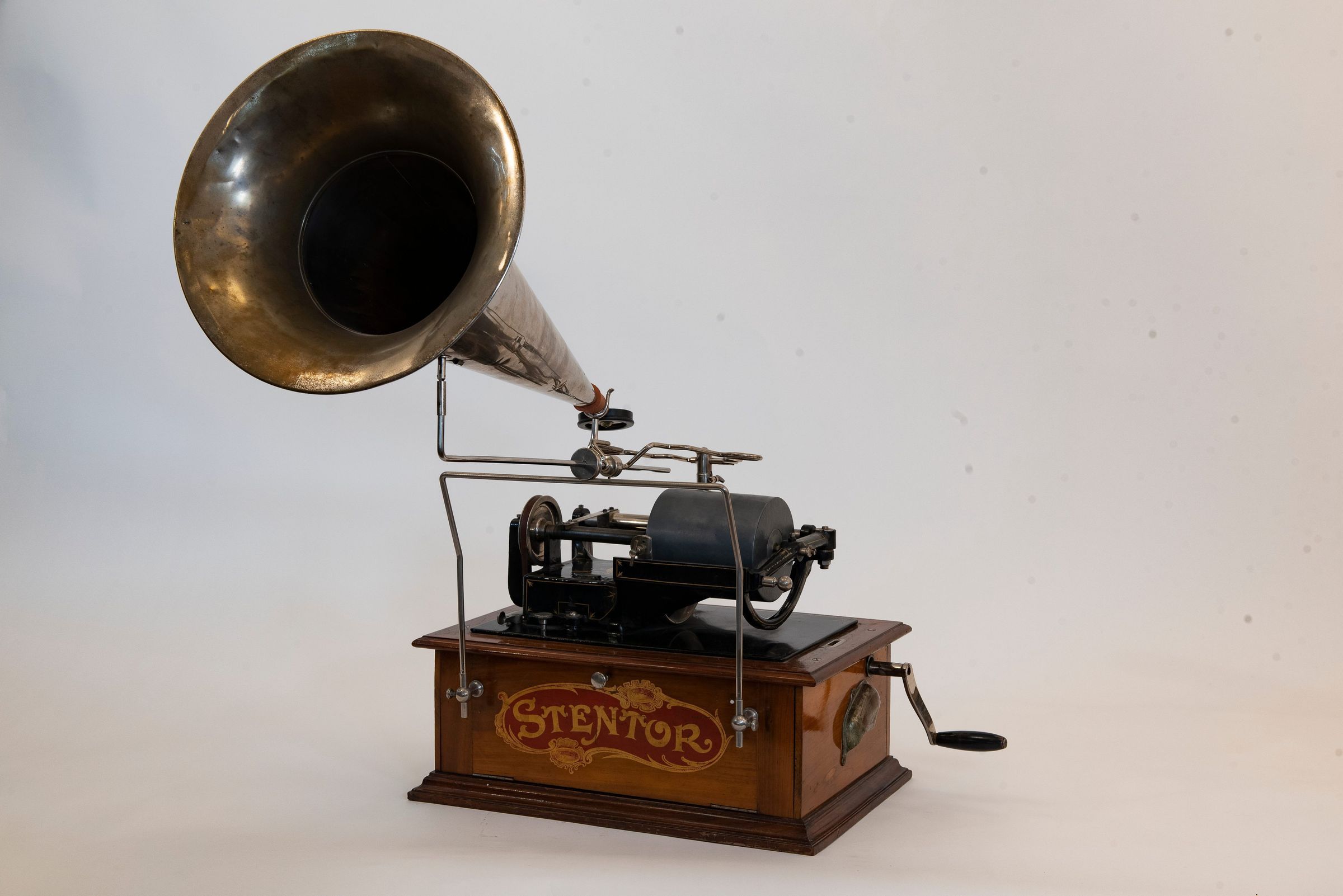
The Edison‑based “Stentor” represents a rare and technically fascinating phase in the history of Pathé’s high‑end phonographs. Unlike the first Stentor models, which were essentially based on the Columbia Graphophone Grand, this later version employs a modified mechanism derived from the Edison Concert Phonograph. The goal was to achieve the impressive acoustic performance of the Columbia‑based Stentor – but at a lower production cost.
Historical Background
At the turn of the 20th century, the Pathé brothers were not only leaders in the production of cylinders and records, but also in the distribution of high‑quality playback machines. In the early years, Pathé purchased complete machines or assemblies from U.S. manufacturers, re‑branded them, and installed them in French‑made cabinets.
The first Stentor models were virtually identical to the Columbia Graphophone Grand – Columbia’s flagship model – but were costly to source. To reduce costs, Pathé developed a new Stentor version around 1901/1902 using the proven, robust mechanism of the Edison Concert Phonograph. This could be produced more economically and adapted for the French market.
Cabinet and Branding
The cabinet is an original French Pathé design with a large red‑and‑gold “STENTOR” decal on the front – a design later used on other Pathé machines.
The name “Stentor” comes from the legendary herald of Greek mythology whose voice was said to be as loud as fifty men – a deliberately chosen name to emphasize the exceptional volume and carrying power of the instrument.
Technical Features
Mechanism: Based on Edison Concert technology, adapted to Pathé specifications.
Cylinder format: Primarily designed for large 5‑inch Concert cylinders (12.7 cm diameter).
Versatility: By fitting an adapter mandrel over the Concert mandrel, the machine could also play regular standard‑size cylinders – a clear advantage over the Columbia‑based Stentor.
Drive: Precision spring motor with governor, hand‑crank winding.
Horn: Large straight nickel‑plated horn (Pathé No. 150) or optionally larger “Grand” horns.
Reproducer: Pathé “Rex” reproducer with screw‑ring mount.
Système Vérité: Pathé’s patented carriage‑tracking system for precise stylus alignment – ensuring smooth travel, reduced wear, and optimum sound quality.
Advertising and Market Position
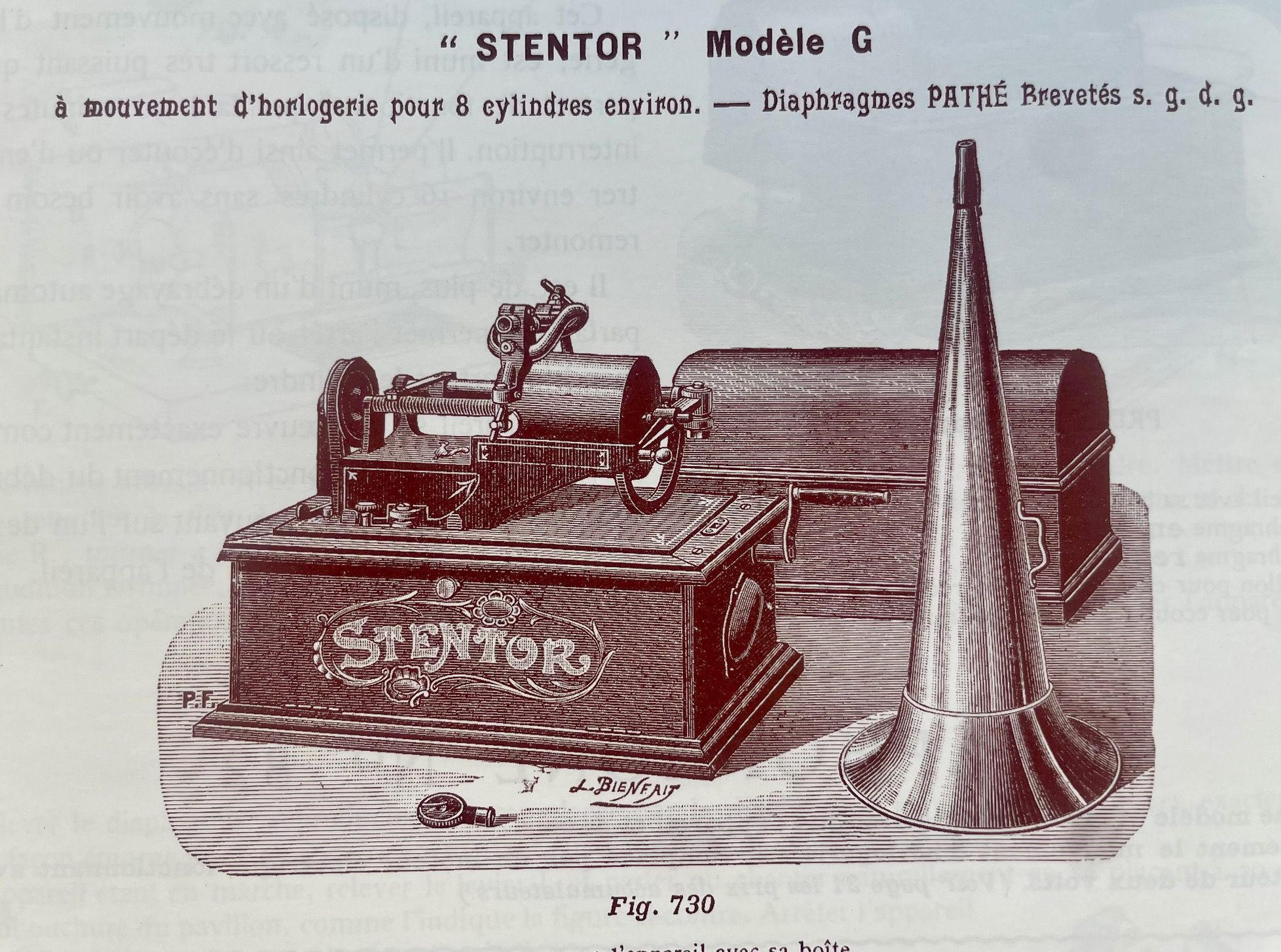
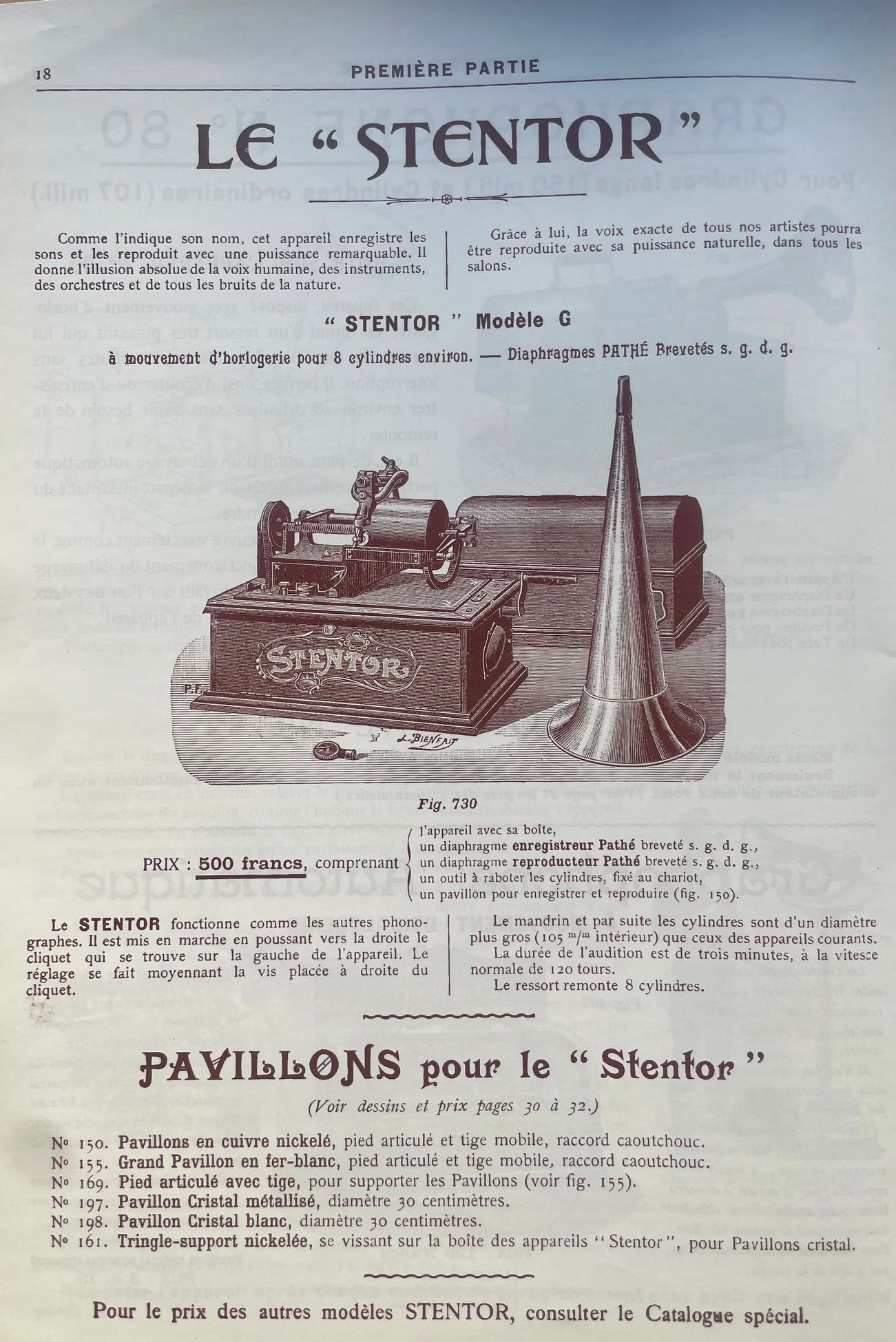
Period advertisements emphasized the remarkable performance of the Stentor, claiming it could reproduce the human voice, orchestras, instruments, and even natural sounds with lifelike power and clarity. It was marketed as a top‑tier salon and demonstration phonograph – ideal for large rooms, grand salons, or public exhibitions.
Price around 1900: 500 Francs, including:
Machine with cabinet
Pathé‑patented recording and playback reproducers
Shaving device for re‑using cylinders
Large horn for both recording and playback
Optional horns ranged from nickel‑plated copper to decorative crystal designs.
Rarity
All Stentor models are rare – the Edison‑based version especially so. Its ability to play both Concert and standard cylinders made it far more versatile in practical use than the Columbia‑based Stentor. Nevertheless, only a small number were sold, and today only a few examples are known worldwide.
Significance
The Edison‑based Stentor marks a turning point in French phonograph production: from a simple re‑labeling strategy to technically independent machines specifically optimized for the domestic market. With its imposing appearance, technical flexibility, and commanding sonic performance, it stands as one of the most powerful and exclusive phonographs Pathé ever built – alongside the famed Pathé Celeste.