Name/Title
Edison Opera Phonograph – Mahogany VersionEntry/Object ID
181Description
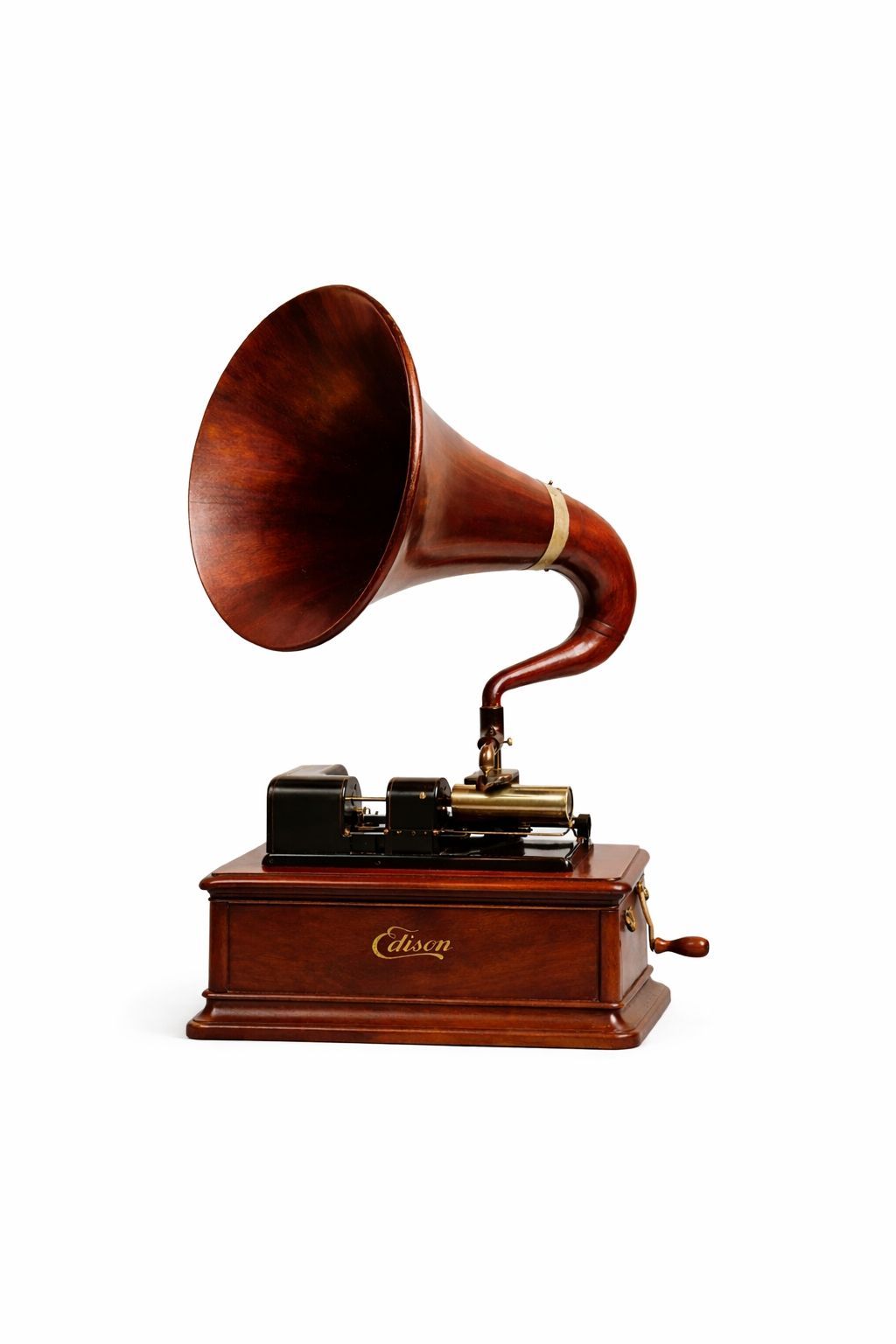
Edison Opera Phonograph – Mahogany Version
Manufactured ca. 1912–1913, Edison Phonograph Works, Orange, New Jersey
Edison's final and most successful luxury cylinder phonograph
Historical Background
Introduced in 1912, the Edison Opera replaced the earlier Edison Idelia as the top-of-the-line luxury model in the Edison product lineup. While the Idelia is now considered a rare collector's item (likely fewer than 500 units produced), the Opera was sold in significantly larger numbers, making it Edison's most commercially successful luxury cylinder machine.
The Opera represents the culmination of Edison’s acoustic phonograph development – one of the last elaborately built cylinder models before disc records and electric players took over the market.
Technical Features
Fixed Reproducer & Sliding Mandrel
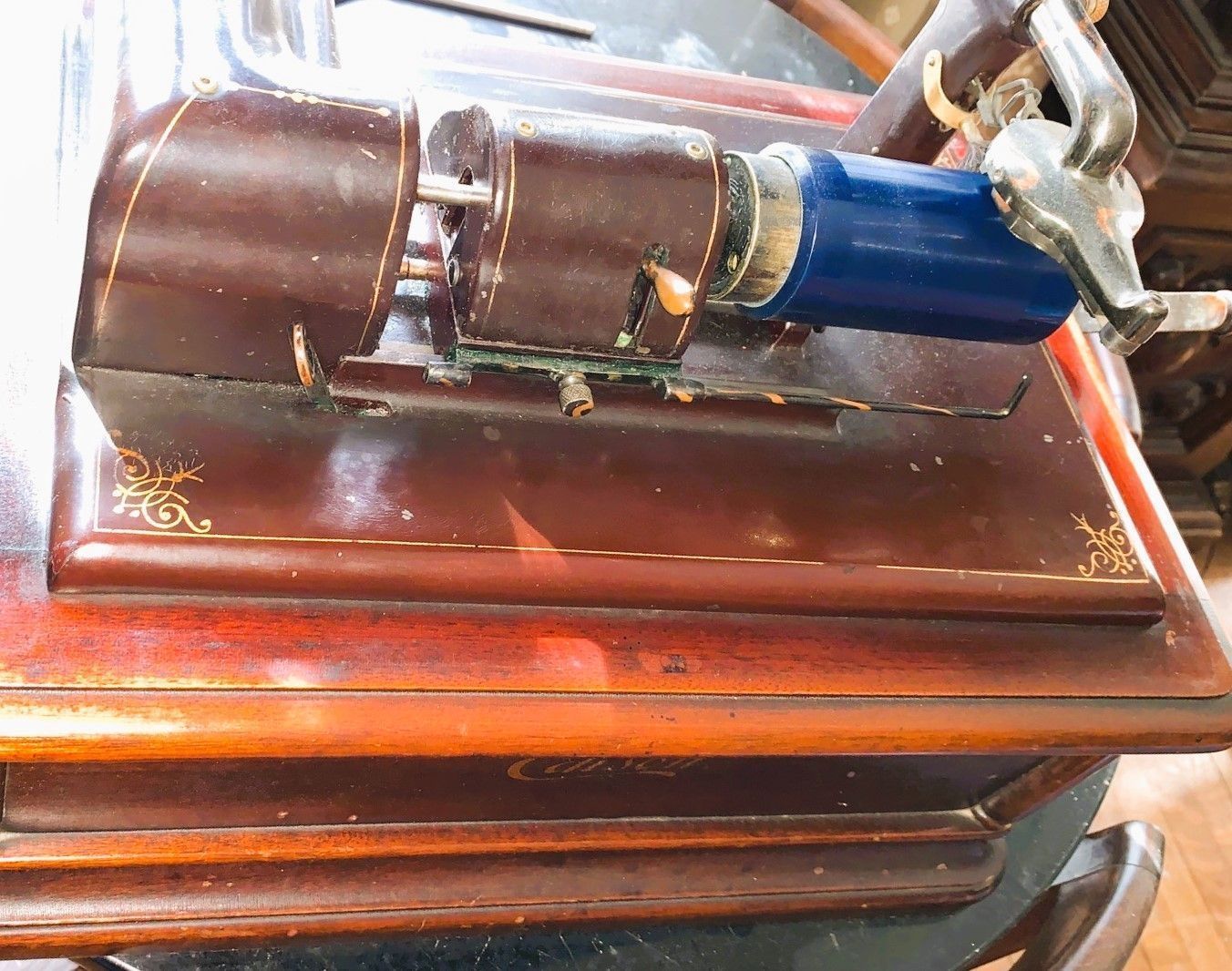
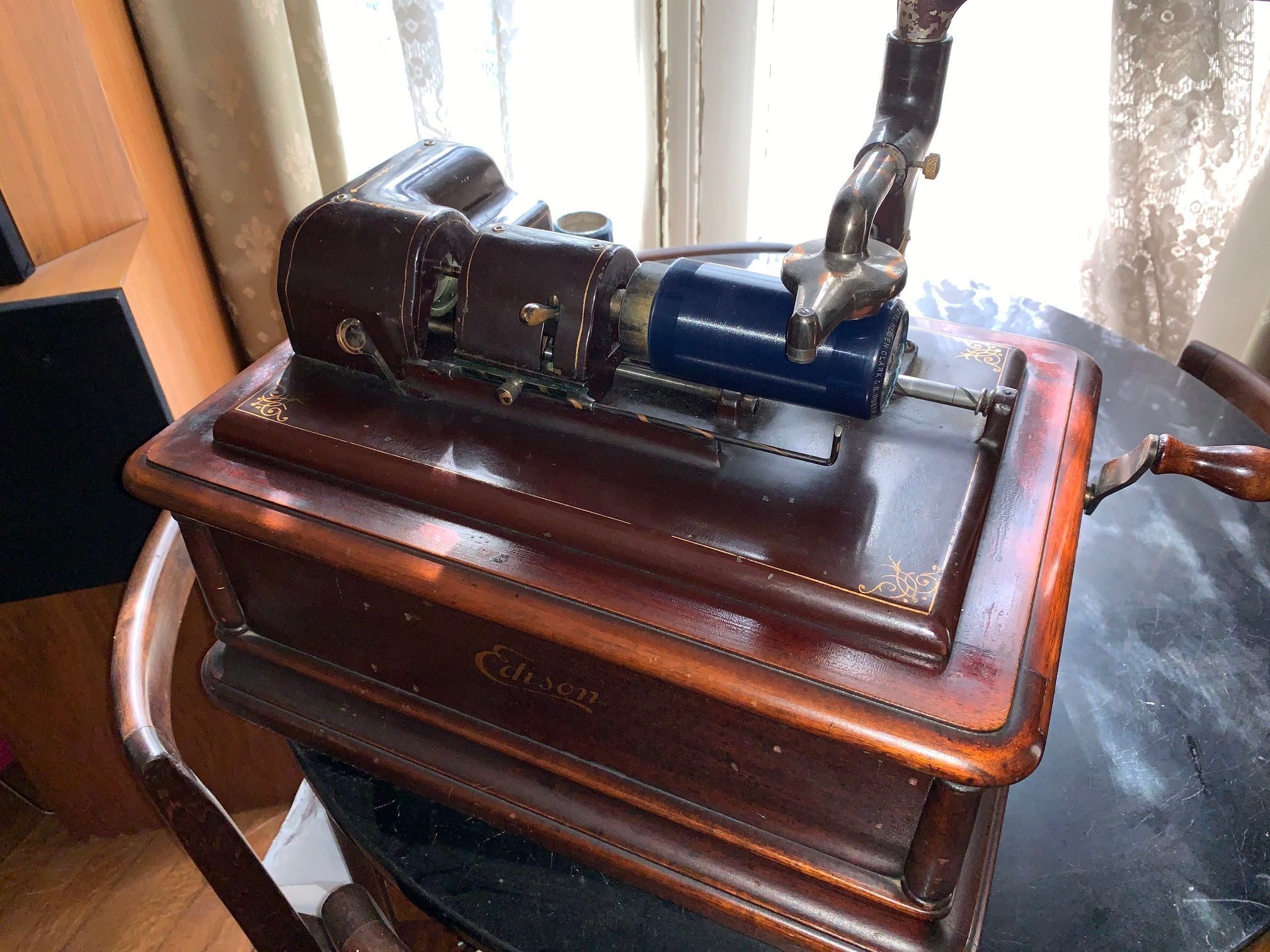
Unlike earlier models, the Opera features a stationary reproducer. Instead of moving the reproducer across the cylinder, the mandrel (cylinder shaft) itself slides side to side.
Advantage: The heavy wooden horn no longer required a delicate horn crane for support.
Self-Supporting Wooden Horn
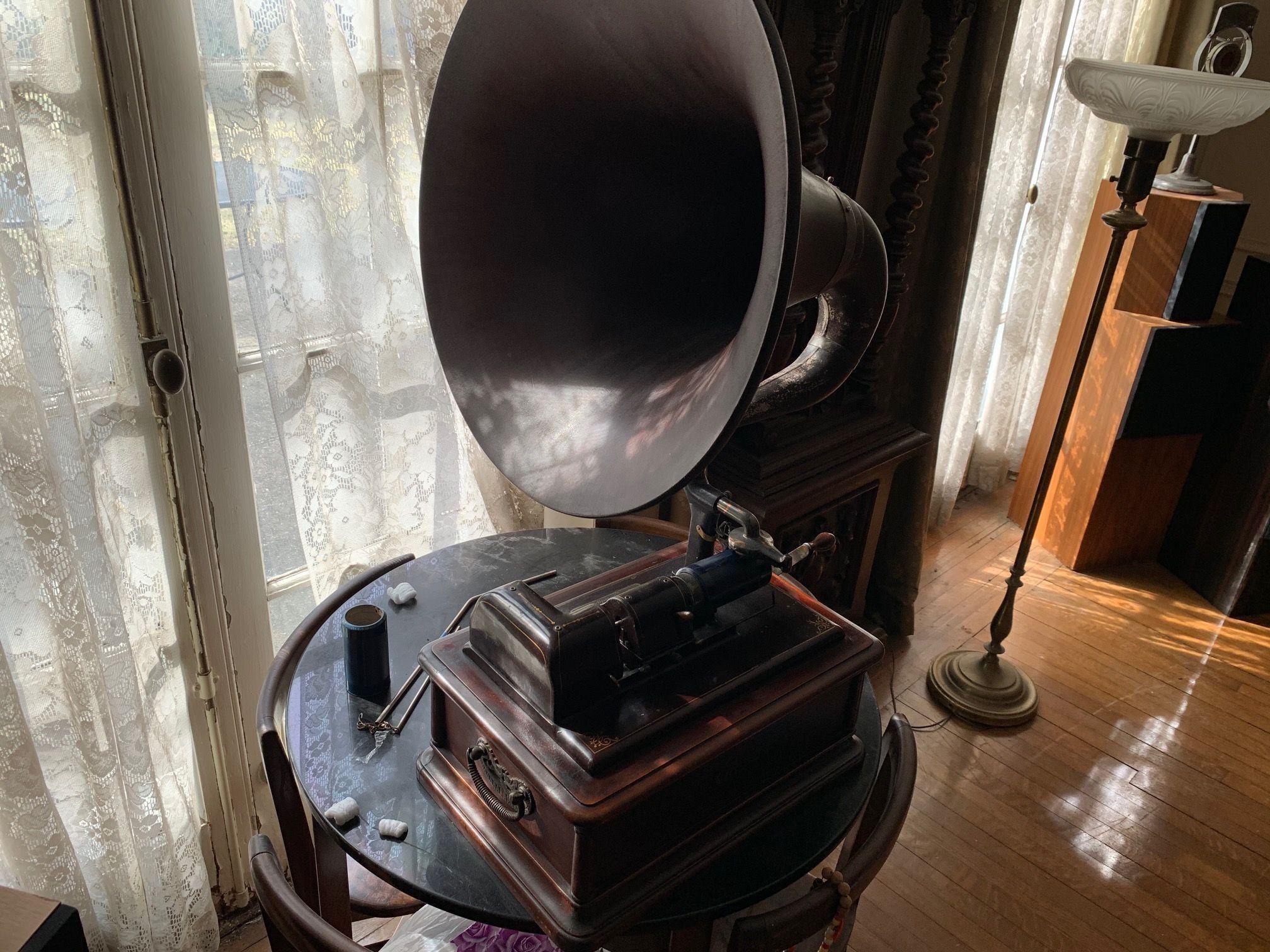
The Opera was Edison’s first phonograph equipped with a large, curved wooden horn mounted directly to the cabinet – available in either mahogany or oak. The horn’s rigid construction allowed it to be self-supporting, placing no strain on the playback system.
Enhanced Sound Quality
Thanks to its precision mechanism, fixed reproducer, and large horn, the Opera was among the loudest and best-sounding purely acoustic phonographs of its time.
Finish
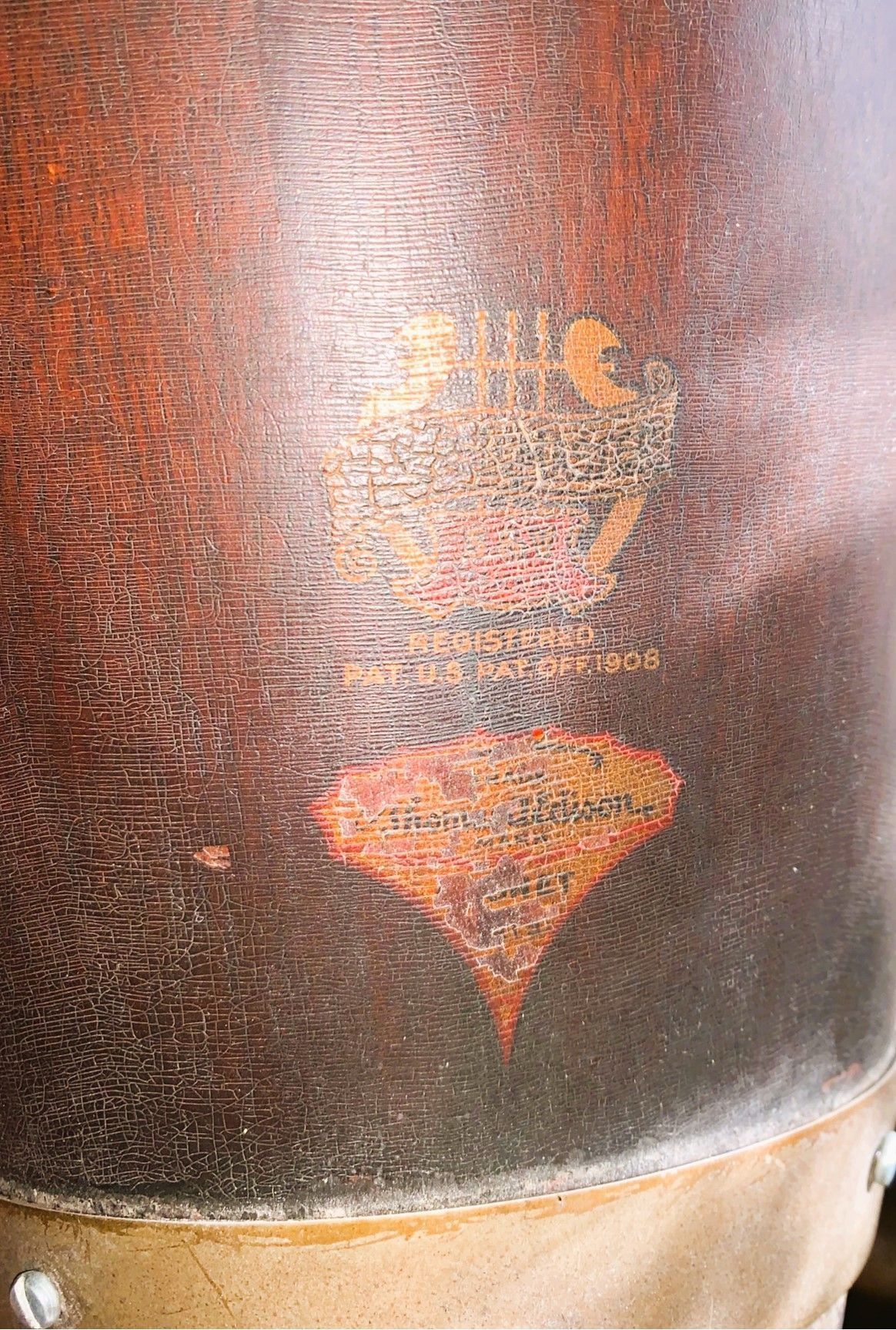
The Edisonium’s displayed model is the mahogany version, featuring elegant gold pinstriping and the classic Edison logo.
Not to Be Confused
The 1912 Edison Opera should not be confused with the much earlier Class M “Opera”. Despite the similar name, they are completely unrelated machines from different technological eras.
Significance
The Edison Opera is a technical and aesthetic masterpiece of the late cylinder era. Its design combines luxury, sonic performance, and ease of use at the highest level.
Technical Features
Fixed Reproducer & Sliding Mandrel
Unlike earlier models, the Opera features a stationary reproducer. Instead of moving the reproducer across the cylinder, the mandrel (cylinder shaft) itself slides side to side.
Advantage: The heavy wooden horn no longer required a delicate horn crane for support.
Self-Supporting Wooden Horn
The Opera was Edison’s first phonograph equipped with a large, curved wooden horn mounted directly to the cabinet – available in either mahogany or oak. The horn’s rigid construction allowed it to be self-supporting, placing no strain on the playback system.
Enhanced Sound Quality
Thanks to its precision mechanism, fixed reproducer, and large horn, the Opera was among the loudest and best-sounding purely acoustic phonographs of its time.
Finish
The Edisonium’s displayed model is the mahogany version, featuring elegant gold pinstriping and the classic Edison logo.
Not to Be Confused
The 1912 Edison Opera should not be confused with the much earlier Class M “Opera”, an experimental laboratory model from the early 1890s. Despite the similar name, they are completely unrelated machines from different technological eras.
Significance
The Edison Opera is a technical and aesthetic masterpiece of the late cylinder era. Its design combines luxury, sonic performance, and ease of use at the highest level.