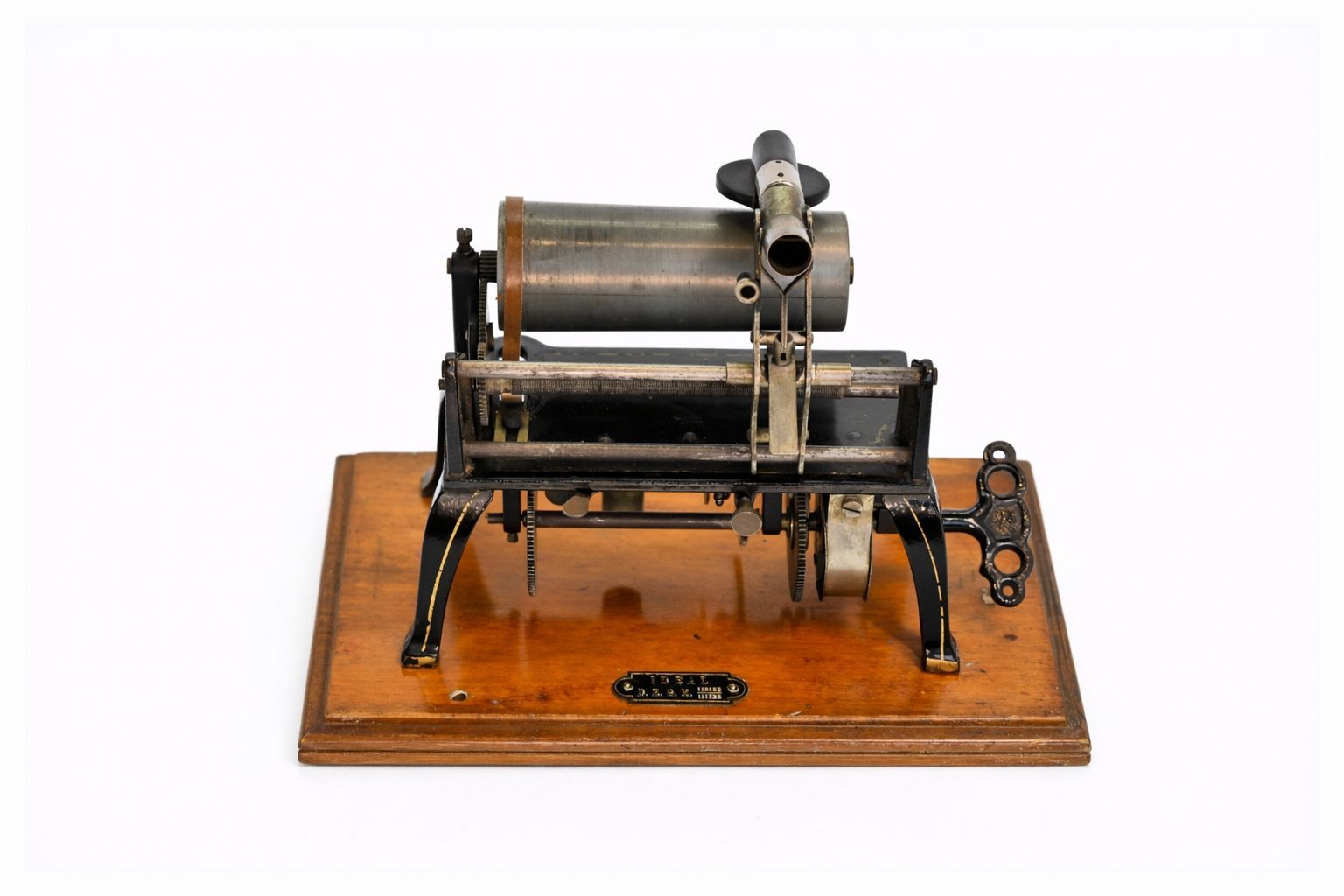
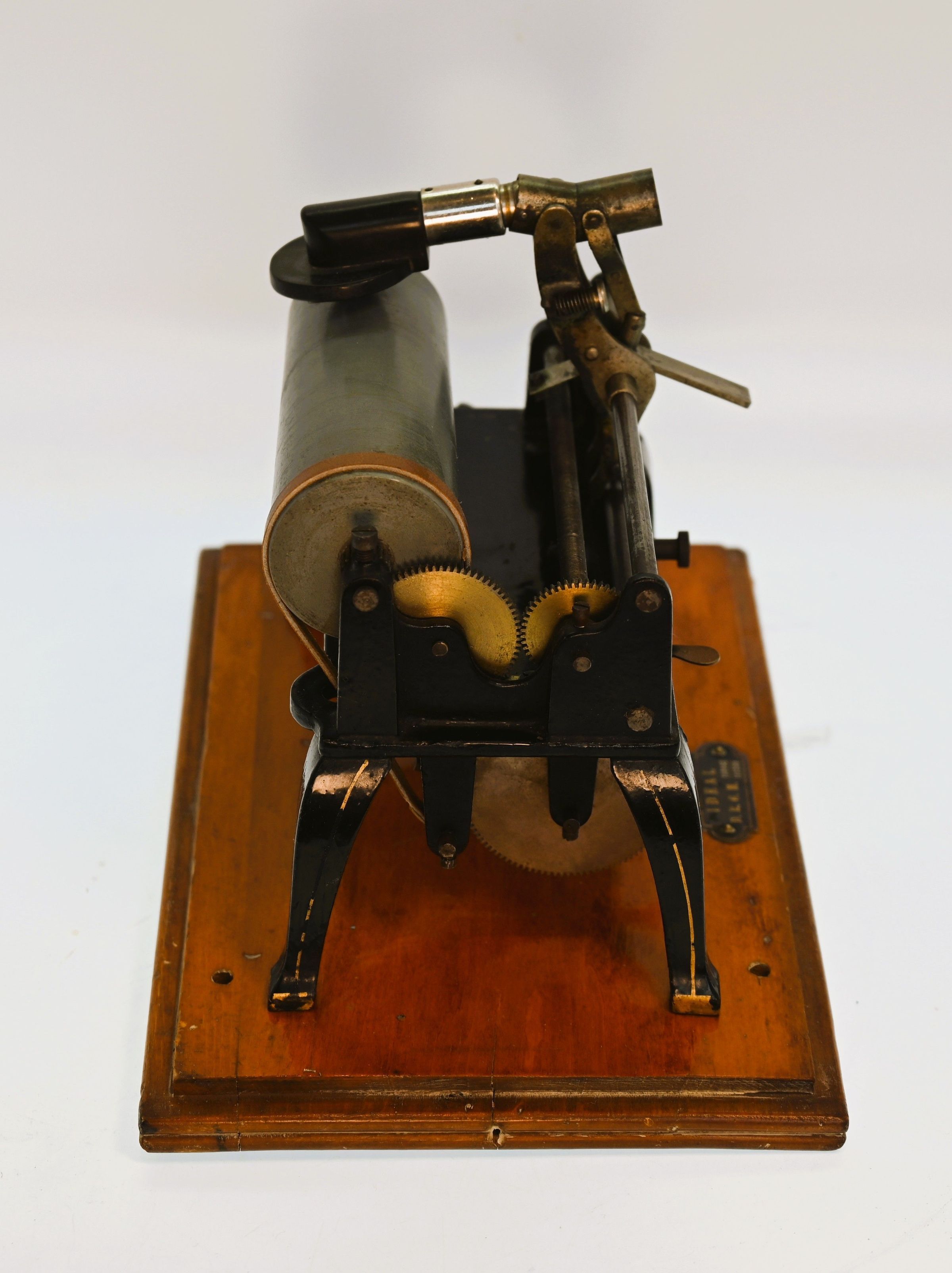
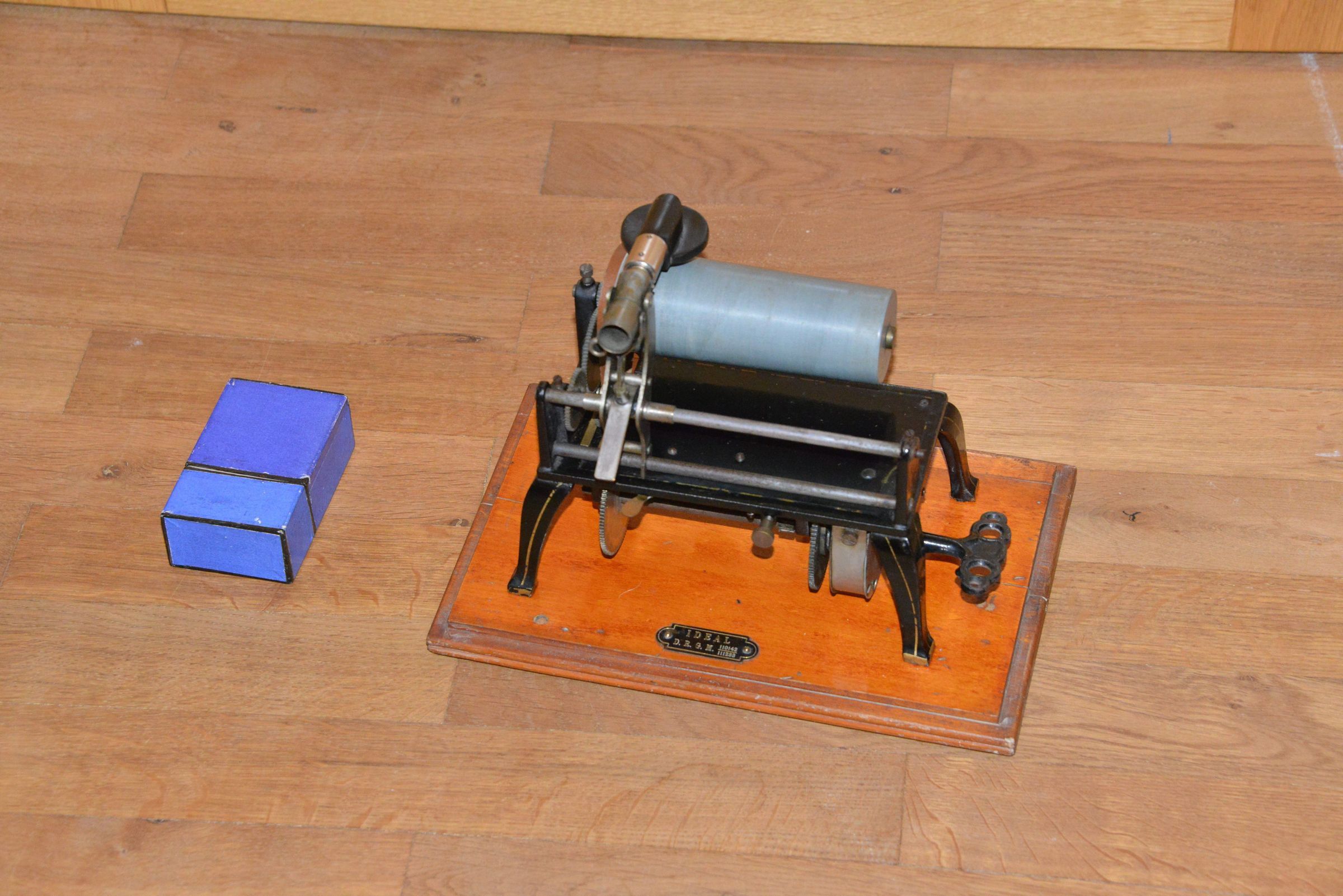
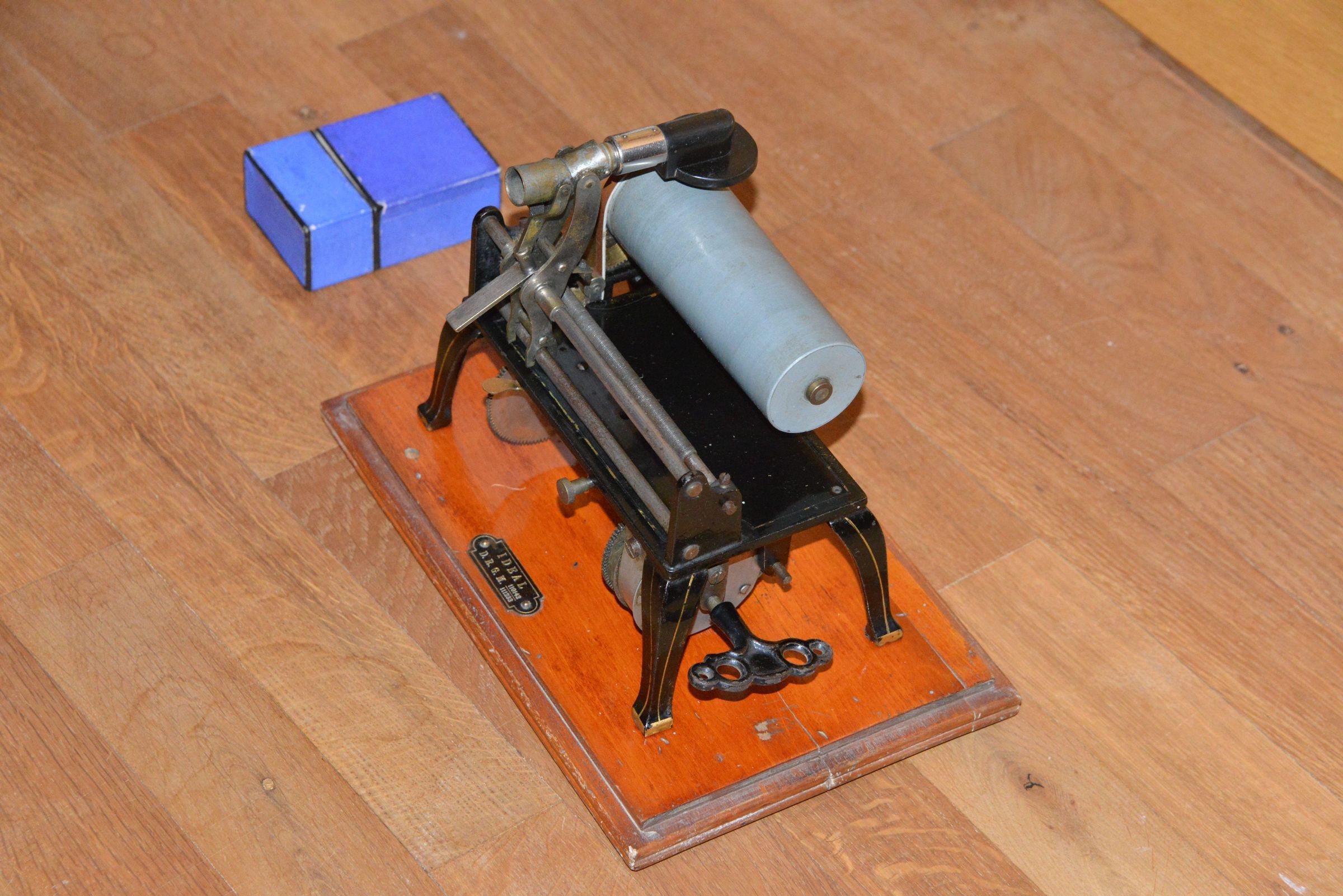
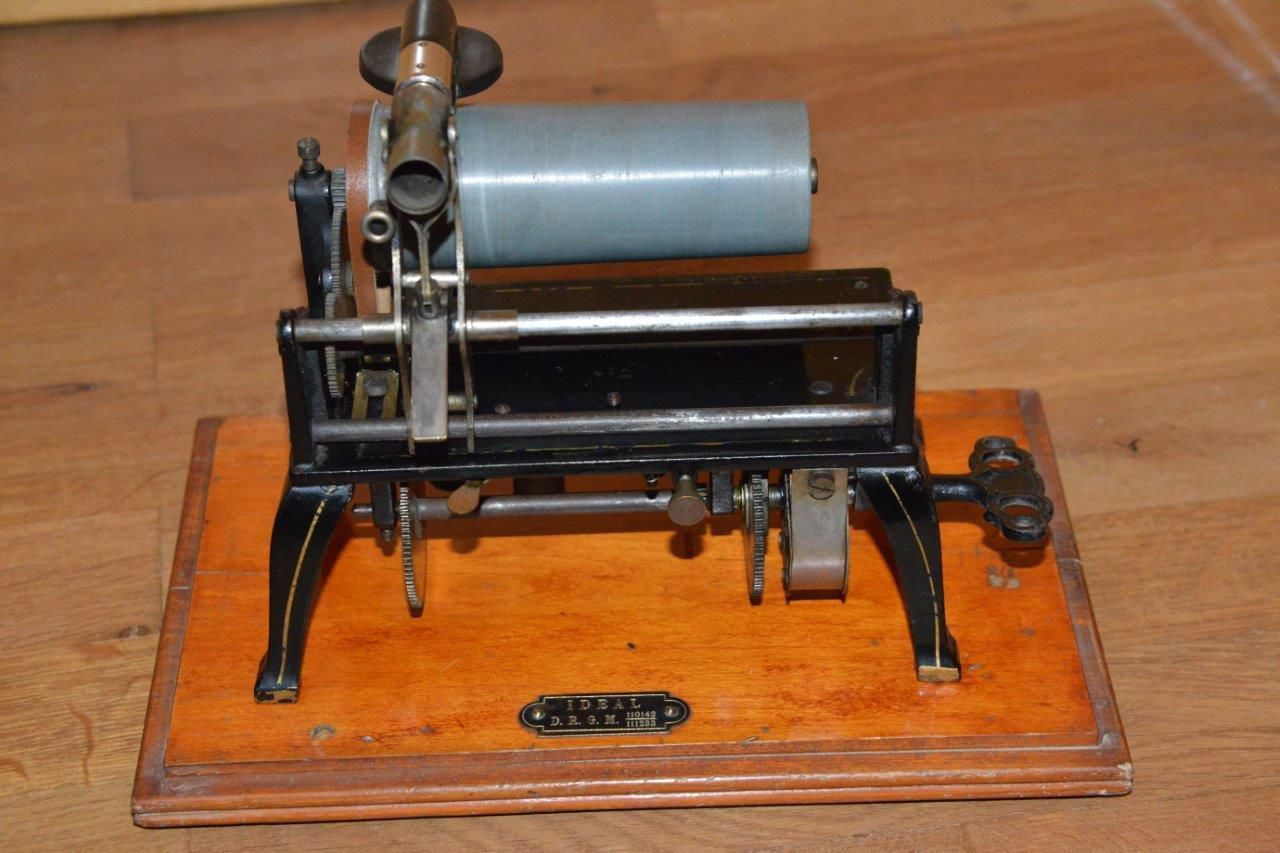
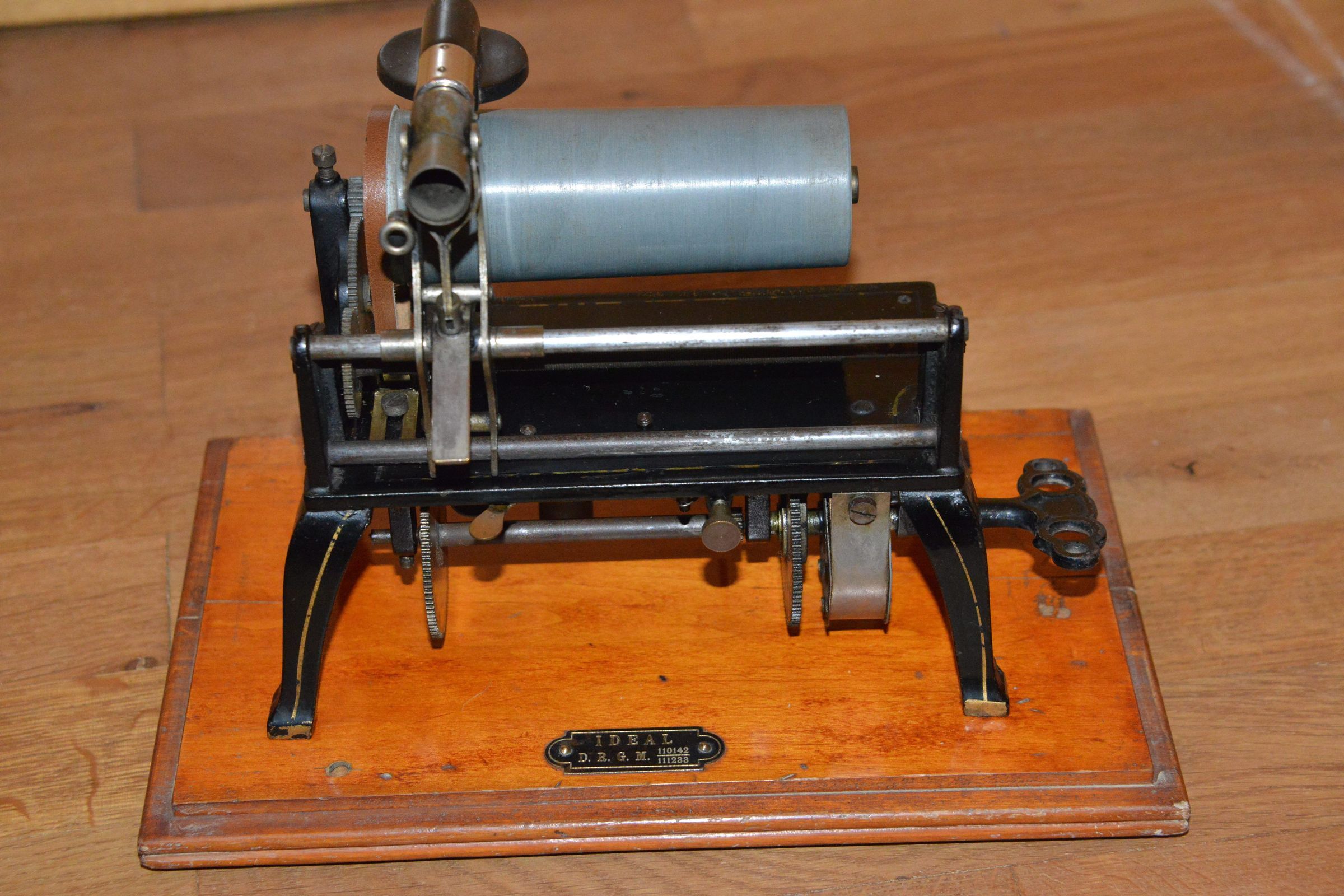
Berlin – c. 1899
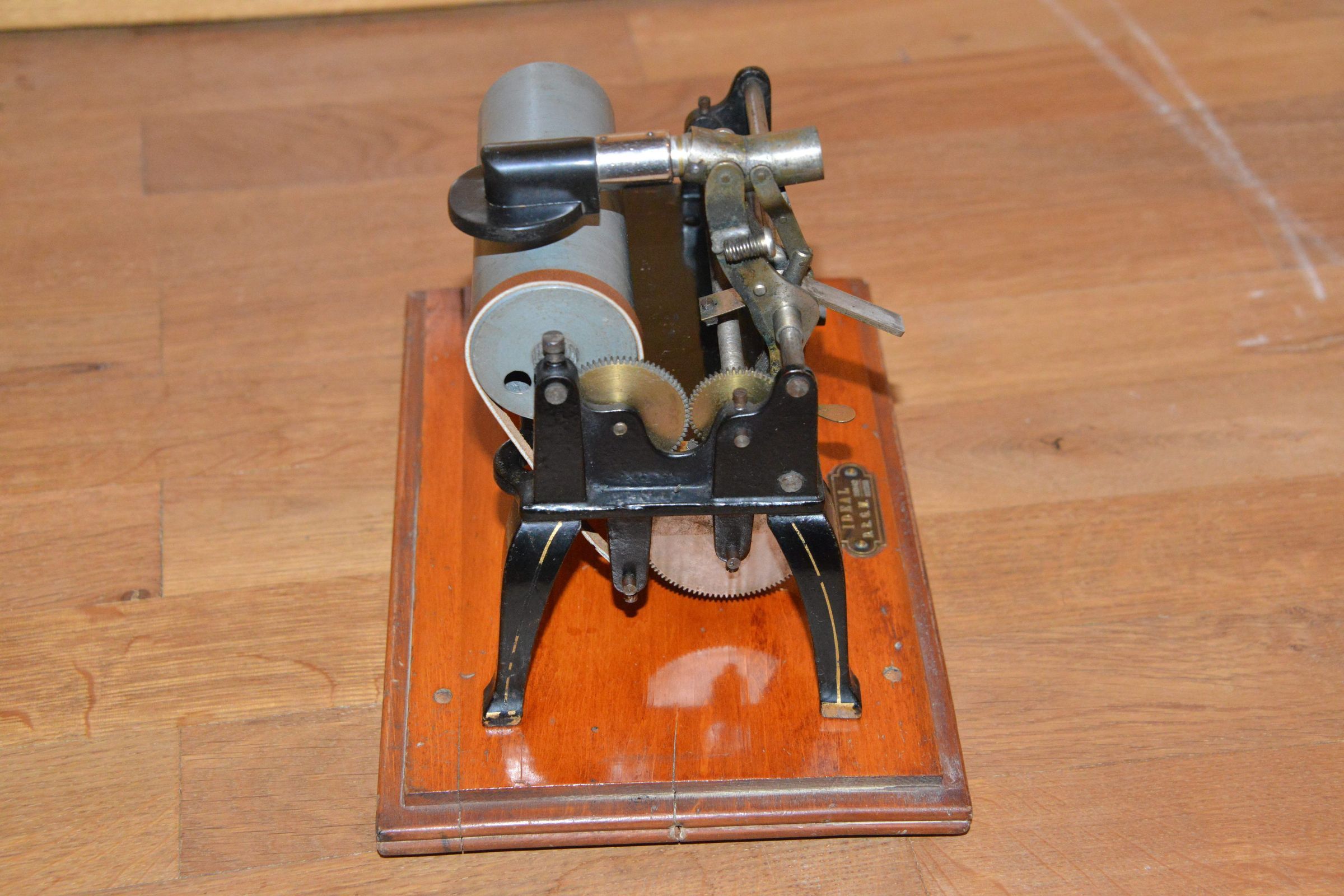
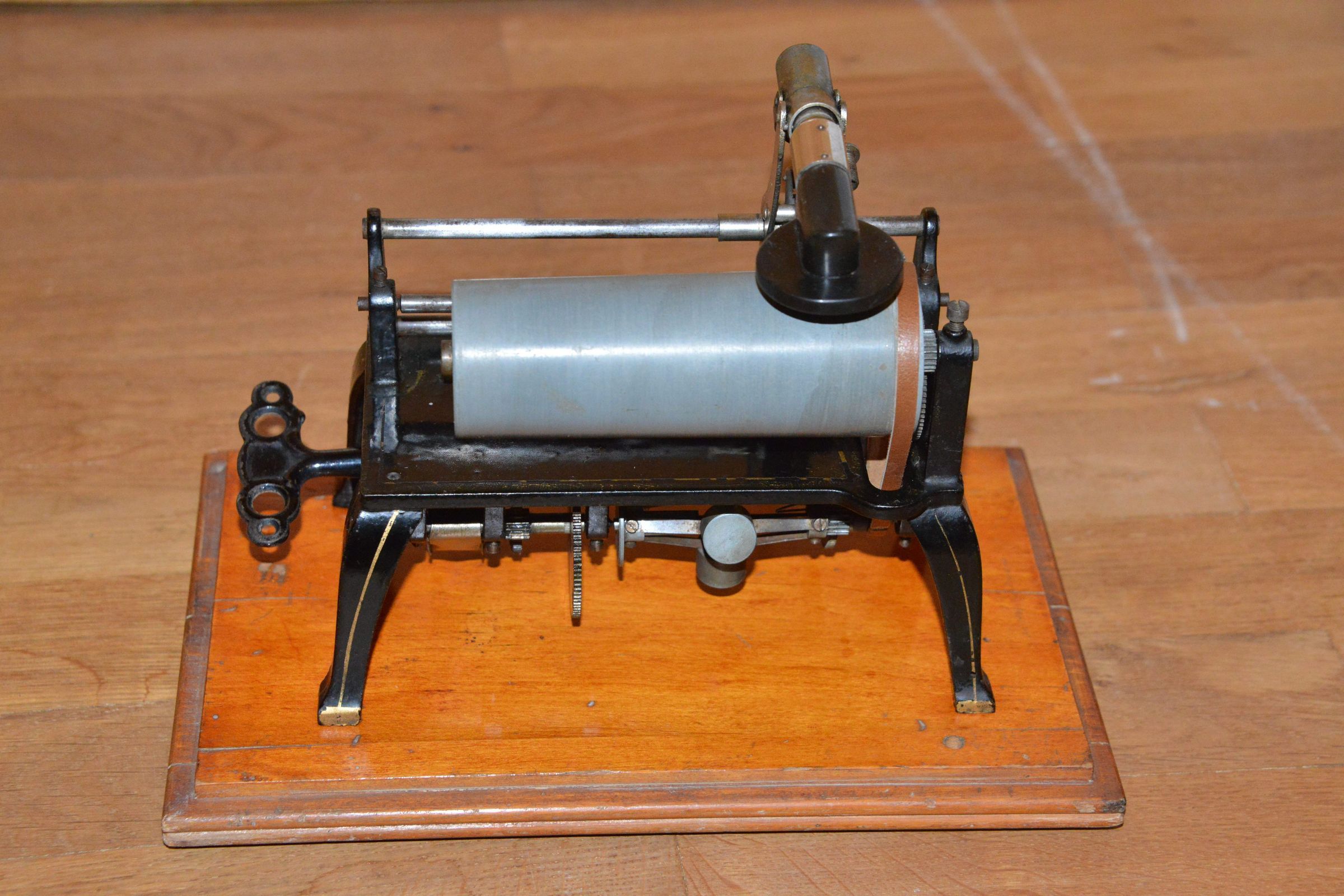
Early open-frame version with visible metal motor housing
Historical Background
Around 1900, the Berlin firm Czempin & Krug offered two main phonograph models: the “Familienphonograph” with a lyre-shaped bedplate, and the “Ideal” – a combined recording and playback phonograph. The “Ideal” was the first truly Lindström-designed phonograph, created under the direction of Carl Lindström, then chief engineer at Czempin & Krug’s factory in Dresdener Strasse.
The early version shown here, dating from around 1899, still features an open metal motor housing. This design exposed the complete mechanism and mainspring drive – a rare sight, as later versions adopted an enclosed motor compartment.
Technical Features
Dual-purpose: recording and playback
Open metal motor housing, fully exposing the mechanism
Sturdy four-legged cast-metal frame with black lacquer finish
Spring motor, wound by hand crank
Cylinder mandrel for standard-size wax cylinders
Horn mount for interchangeable listening or recording horns
Advertising & Context
Contemporary advertisements praised the “Ideal” as “superbly engineered” and offered it in several variations. It was sold both domestically and for export, appealing to private users as well as showmen and public entertainers.
Significance
This early “Ideal” marks the beginning of the close collaboration between Czempin & Krug and Carl Lindström – a partnership that would eventually lead to the formation of the world-famous Carl Lindström AG. Its open-frame motor design makes this version highly sought after among collectors and an important artefact of Berlin’s pioneering era in talking machine history.