Name/Title
Ronéophone – Wax Disc Dictation Machine with Dual-Head SystemEntry/Object ID
202Description
A collaborative development by Pathé and Roneo – for office, field, and archival use. (France/United Kingdom, ca. 1912)
The Ronéophone is a highly advanced and now extremely rare dictation device, developed around 1912 through a collaboration between two companies: the British Roneo Company, known for office and duplicating equipment, and the French firm Pathé Frères, a pioneer in sound recording.
The aim was to create a powerful alternative to Edison’s dictation machines, such as the Ediphone – offering faster access, more robust mechanics, and versatile usage options.
Technical Concept and Features
Recording on Wax Discs: Unlike cylinder systems, the Ronéophone used thick wax discs. Recordings could be played back directly or erased by shaving the surface, allowing the disc to be reused.
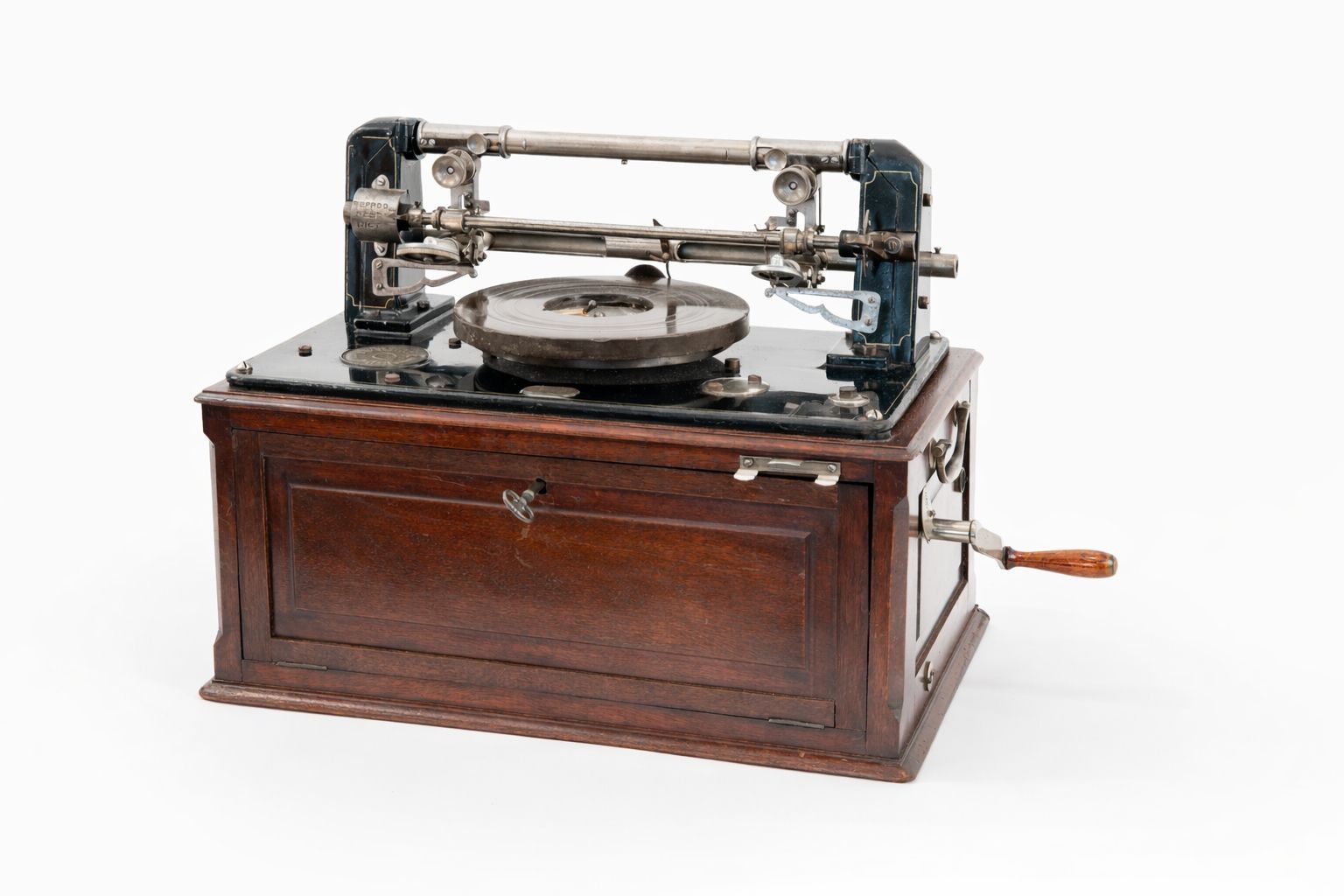
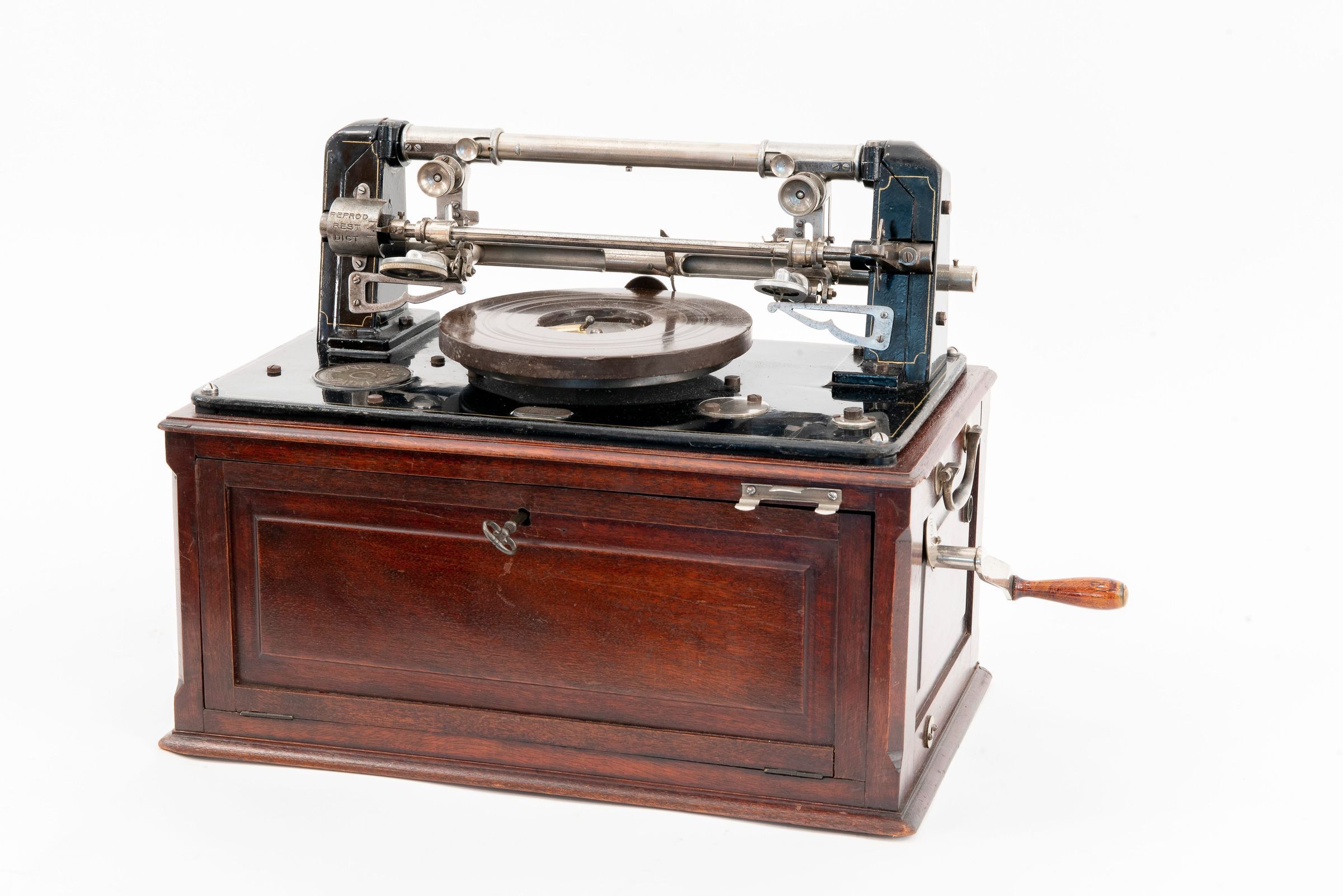
Dual-Head Carriage: The mechanism includes two separate heads – a recorder and a reproducer – mounted on a movable carriage. These could be positioned flexibly on the disc, allowing immediate playback or repetition of specific passages.
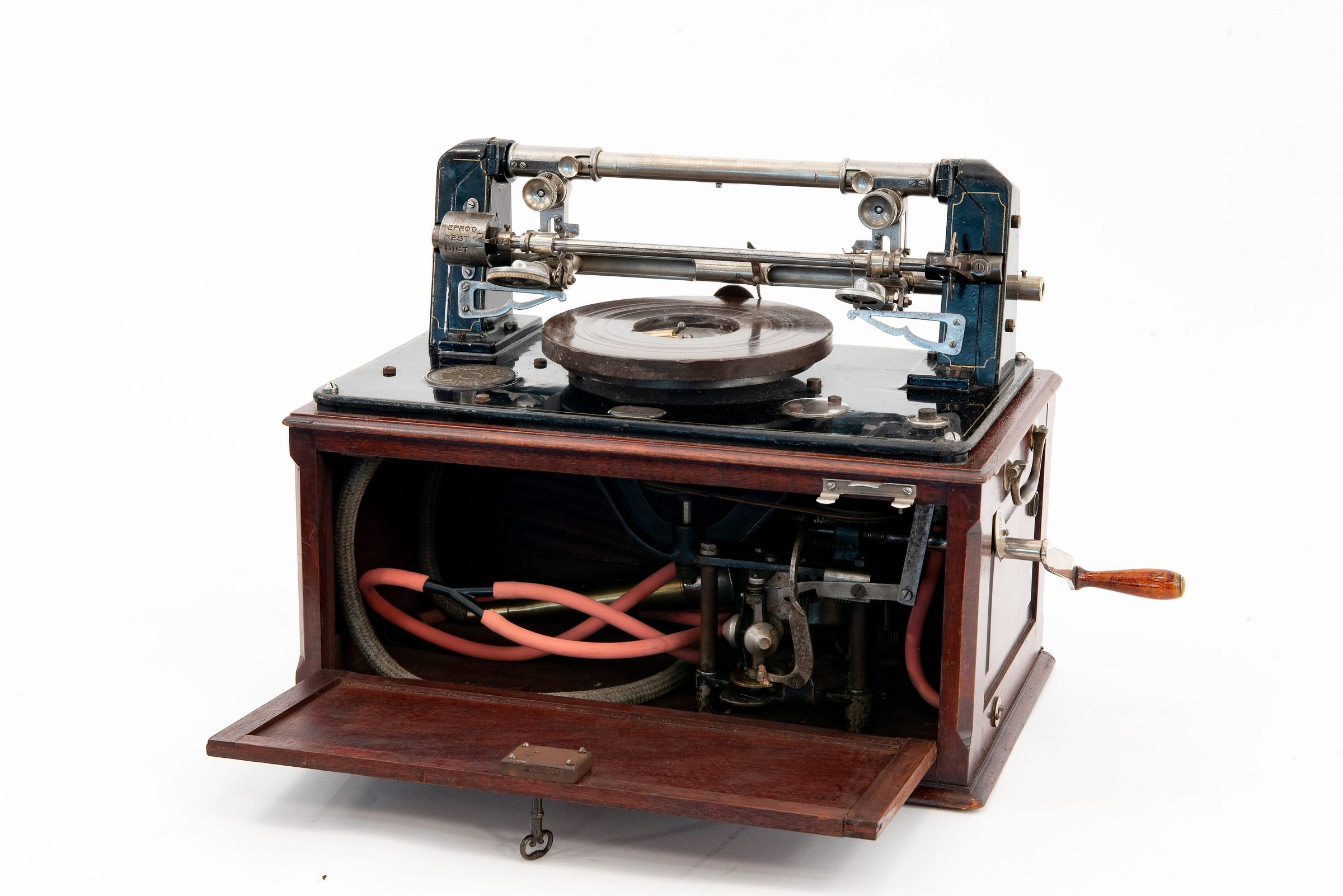
Spring Motor Instead of Electric Drive: While some versions used electric motors, the Edisonium’s example is equipped with a mechanical spring motor – ideal for use in locations without access to electricity.
Playback via Headphones or Horn: The audio output could be heard either through tube-connected earphones or via an external horn – a rare hybrid setup.
Use in the Field and Historical Importance
A particularly spectacular use case was documented in the Illustrated London News on August 31, 1912: the French military air force near Versailles used the Ronéophone to let pilots dictate reconnaissance reports during or immediately after flights – describing the machine as a “mechanical observer.”
The Ronéophone was also employed by early linguists: the Speech Archive in the Ardennes used it in 1912 to record oral traditions – one of the earliest known examples of spoken field research.
Rare Specimen in Original Cabinet
The model on display at the Edisonium Mariazell is particularly rare:
and features a custom-built wooden cabinet with access hatch and original mechanics.
Conclusion
The Ronéophone was far ahead of its time – serving as a dictation device, archival tool, and communication machine. It exemplifies the transition from purely mechanical recording to modern office communication. Only a handful of examples have survived worldwide.