Name/Title
Swiss Phonograph with Concert MandrelEntry/Object ID
211Description
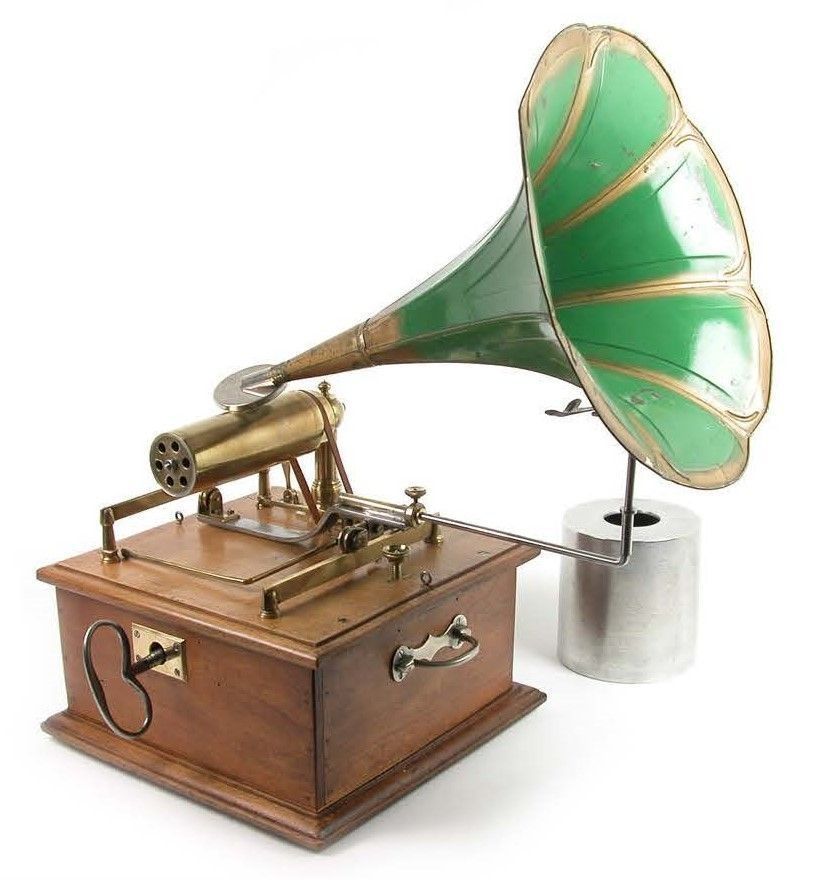
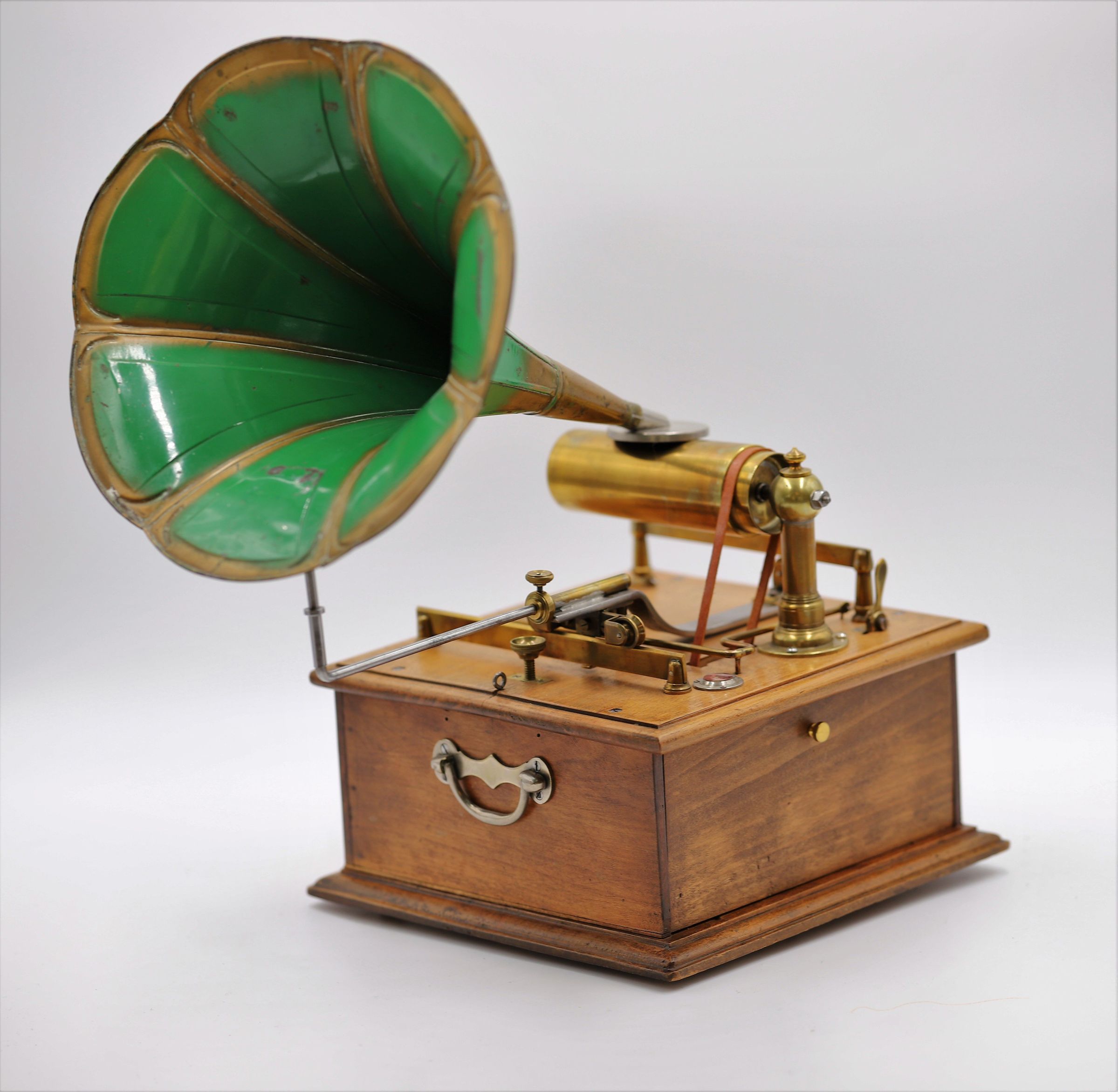
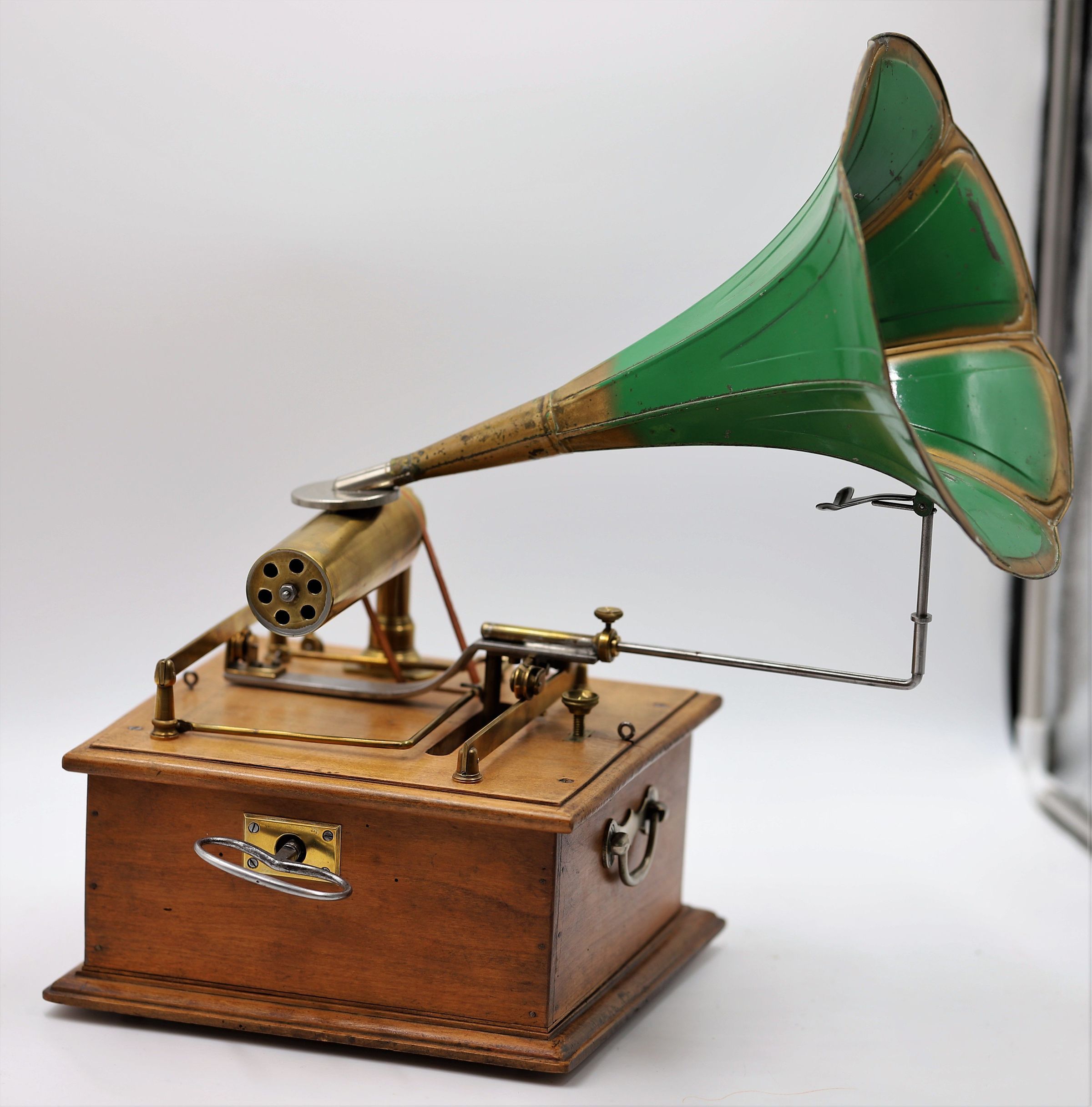
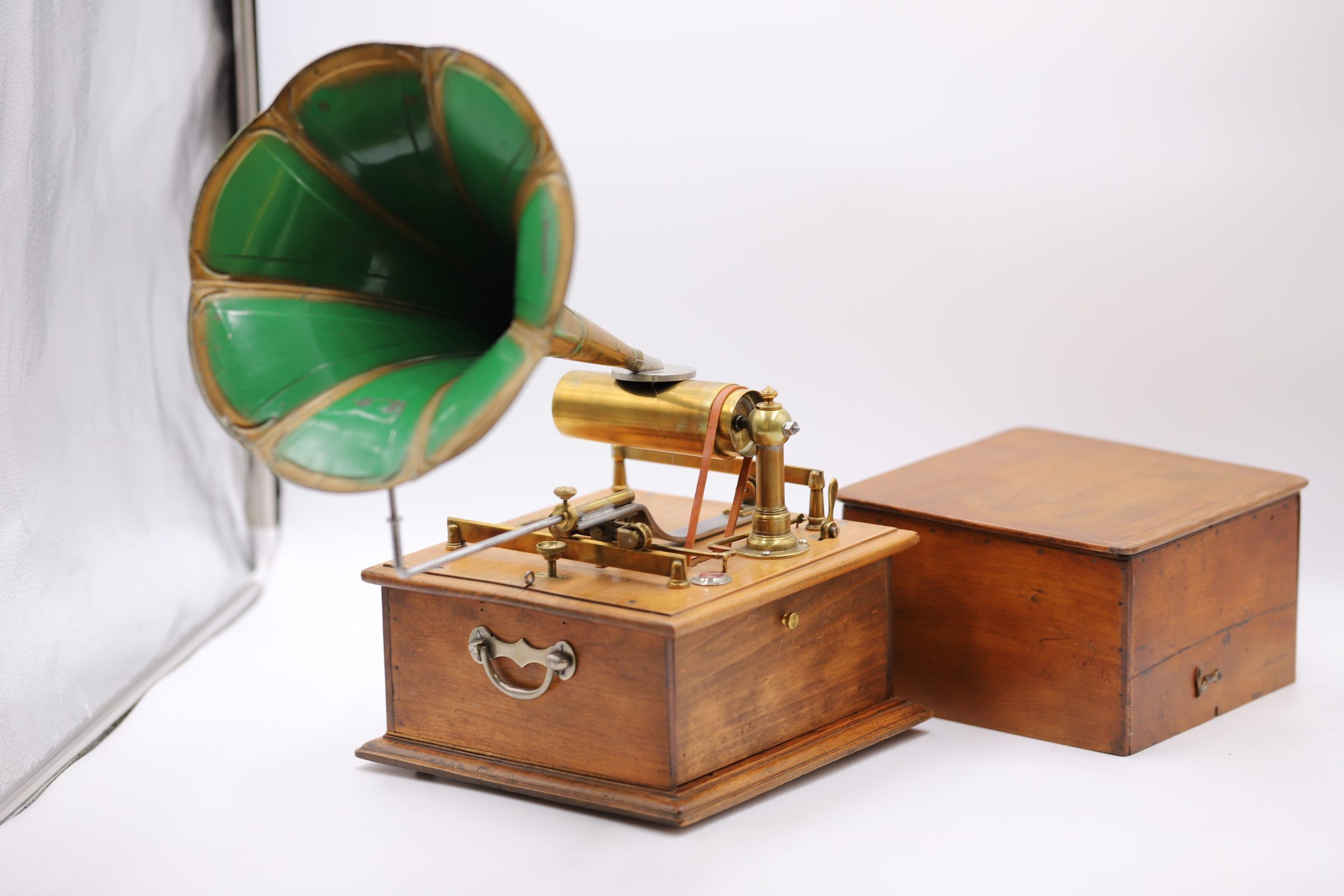
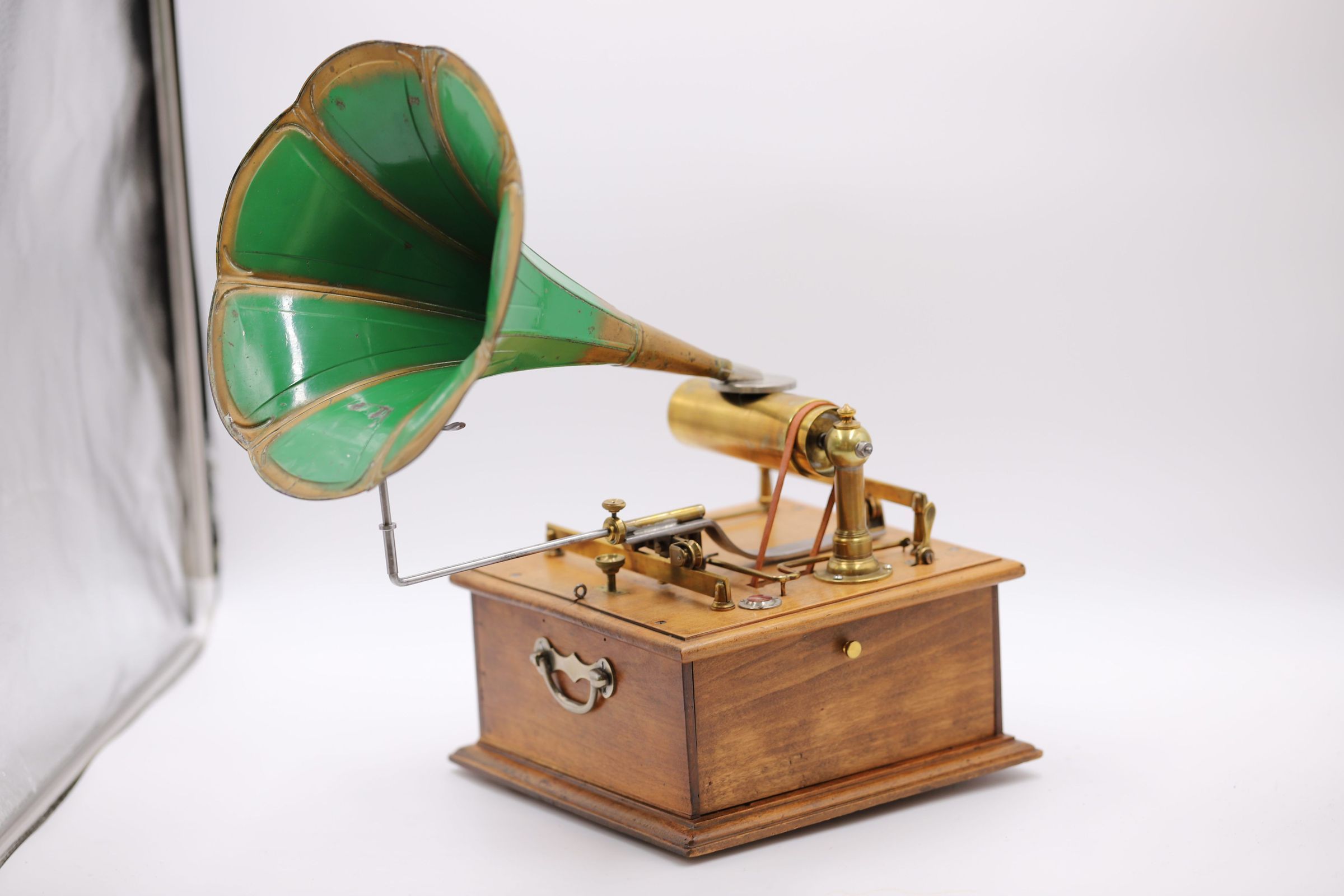
A brass clockwork, a floating horn – and a great deal of ingenuity from Sainte-Croix (Frères Ullmann ?, ca. 1900–1905)
This extraordinary, unbranded cylinder phonograph was likely manufactured in Switzerland around 1900–1905, possibly by the Ullmann brothers in Sainte-Croix. It combines exceptional craftsmanship with innovative mechanical design.
Technical features:
The entire mechanism is made of solid brass
The green and gold horn, of the “Puck” type, is laterally guided by a brilliantly concealed internal lever system – making the horn appear to float
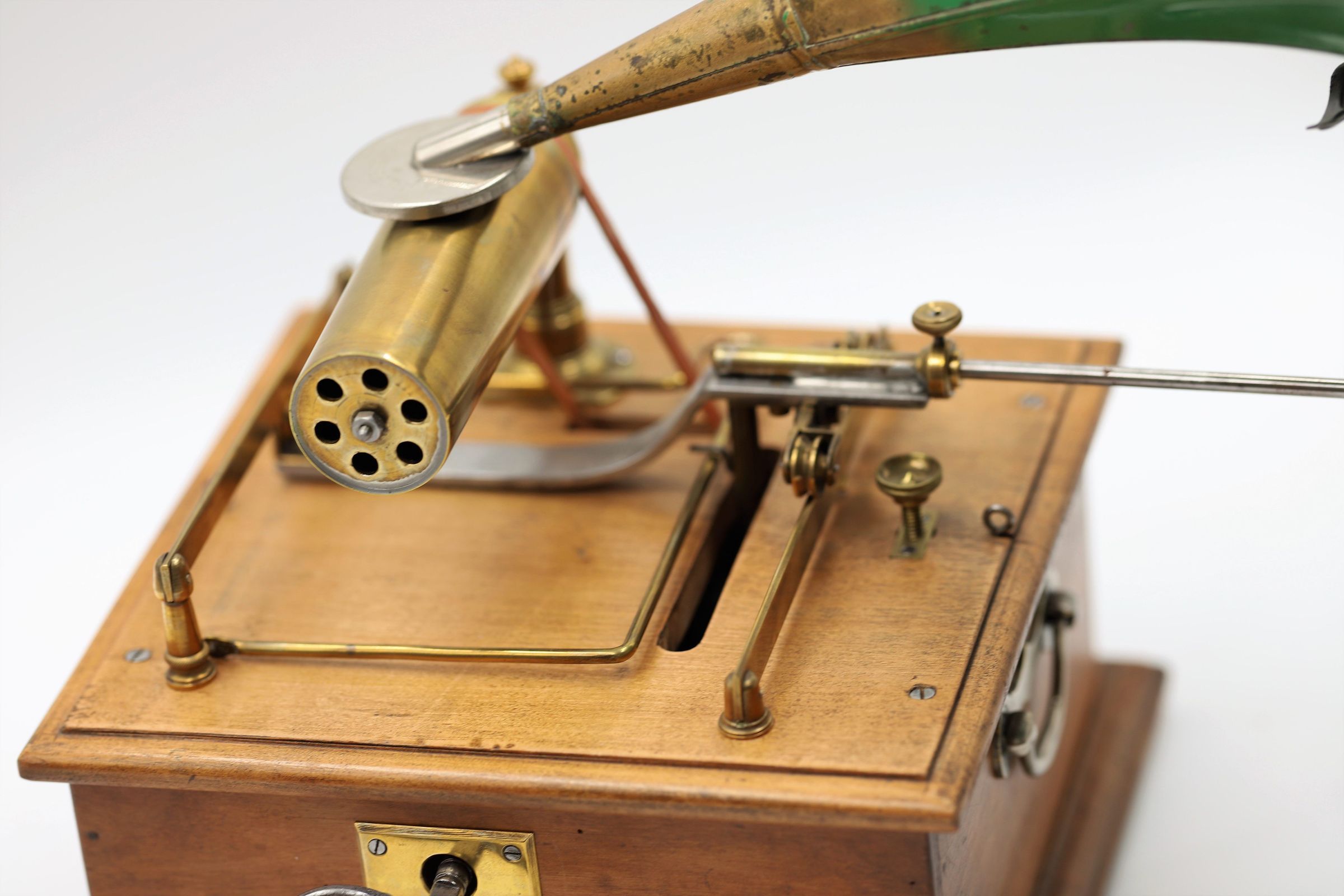
An optional Concert mandrel allows the use of larger wax cylinders
The tonearm is not pivot-mounted, but instead guided by the horn movement – a completely independent engineering solution
Historical classification:
The construction closely resembles the design described in German Patent No. 110,107 of July 18, 1899, filed by Auguste Cadot and Jacques Ullmann, which outlines a side-shifting horn guidance system. This patent inspired a series of experimental machines that deliberately deviated from the Edison standard.
Origin and context:
Several features suggest that the phonograph was made in or near Sainte-Croix, a renowned hub of precision mechanics and music box manufacturing. The device may have come from a small batch production that was never officially branded. Its quality points to manufacturers with experience in high-grade mechanical musical instruments.
Unique example at the Edisonium:
The exhibited model is fully intact – including the original horn, Puck-style reproducer, concert mandrel, and internal mechanism. It represents a remarkable example of Swiss experimental spirit, standing between horological craftsmanship and phonographic innovation.