Name/Title
Excelsior “Standard”Entry/Object ID
222Description
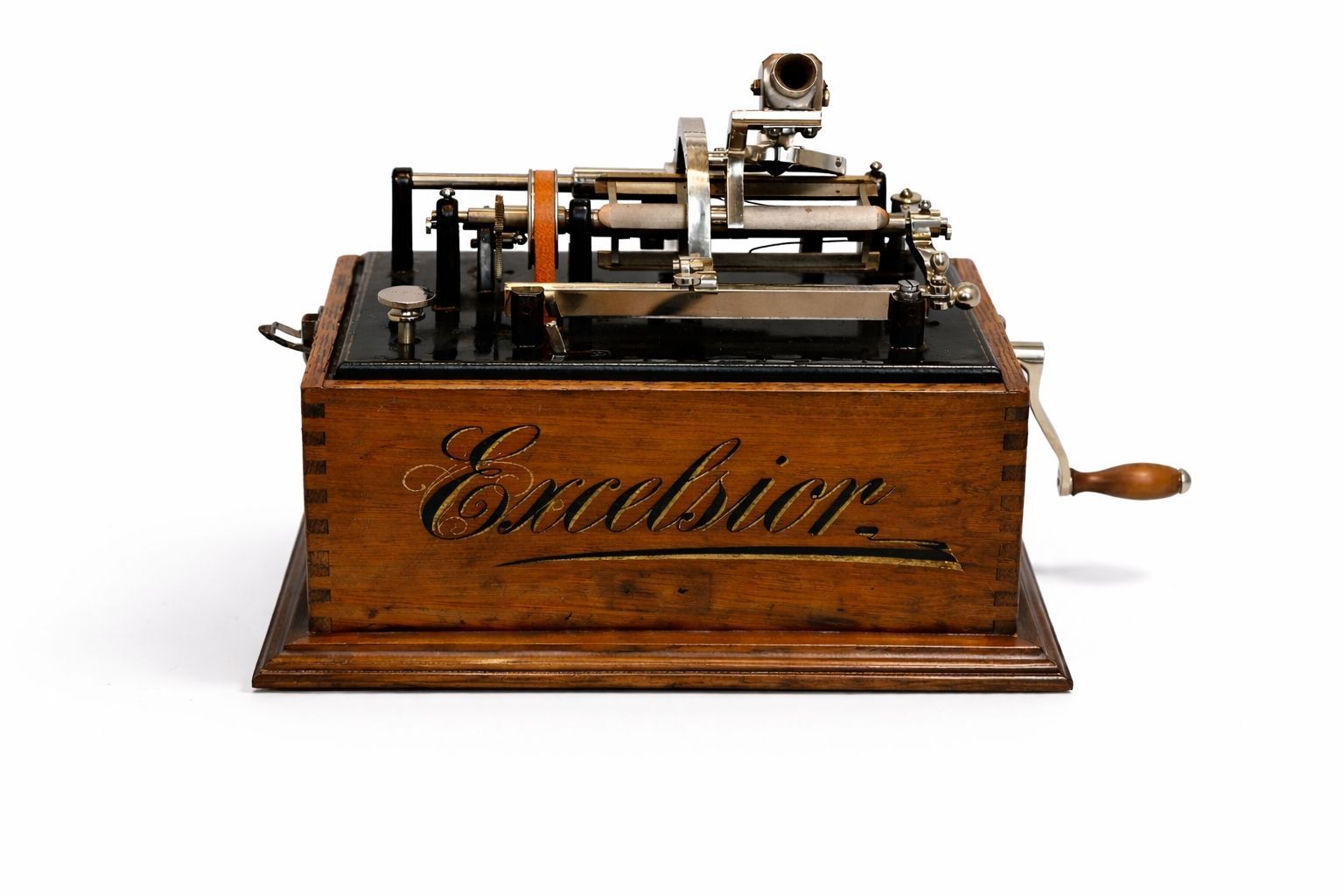
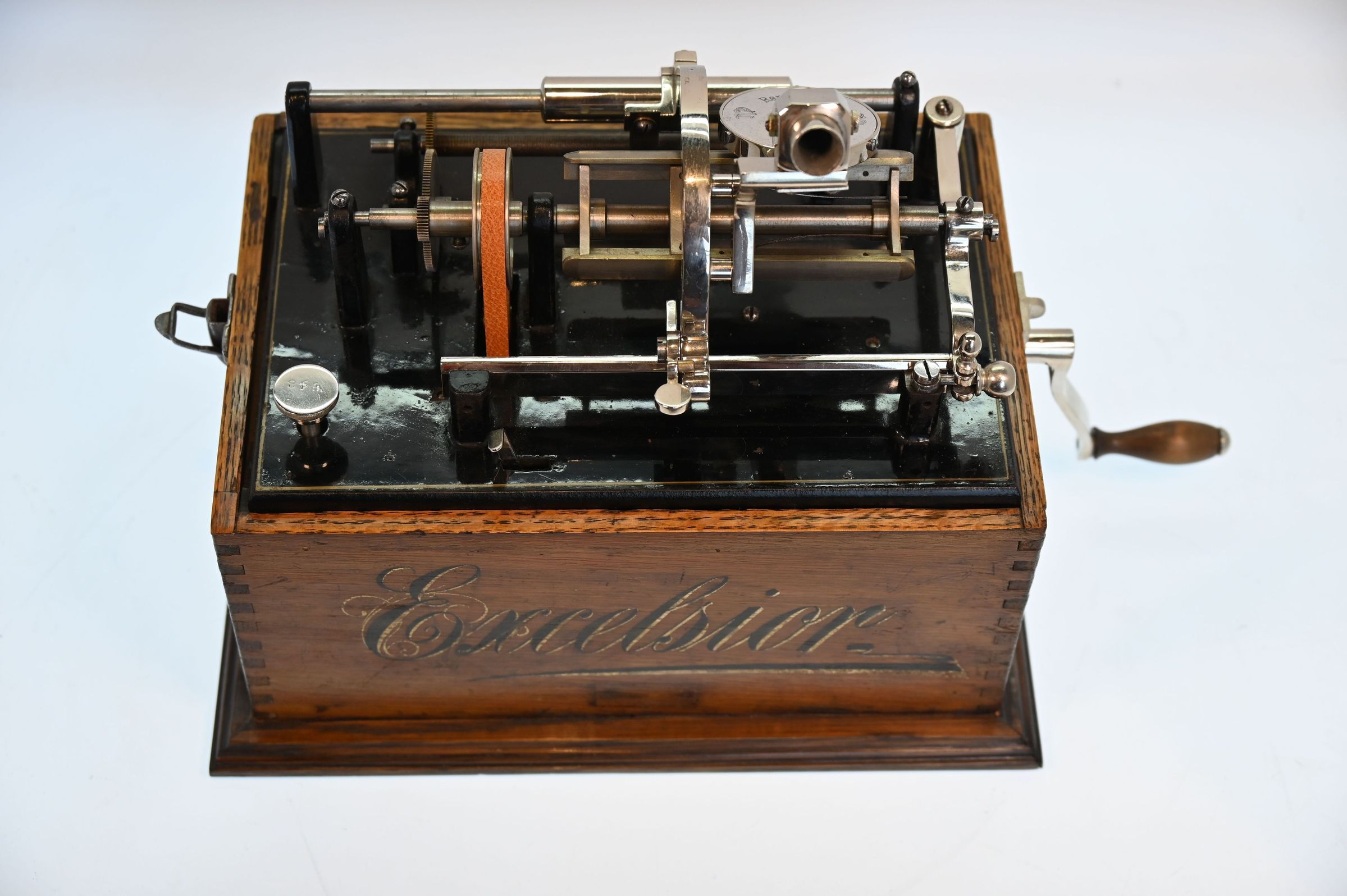
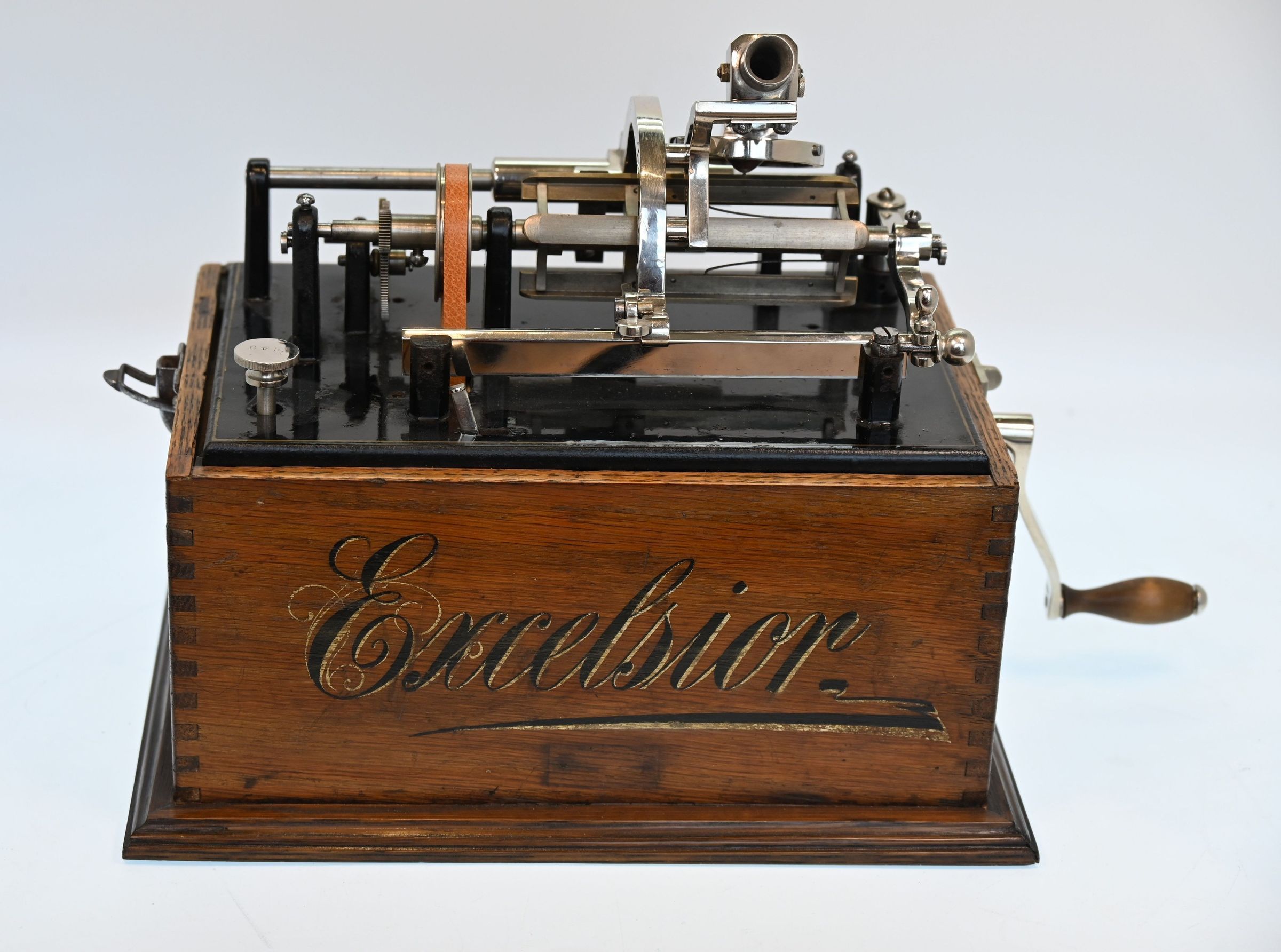
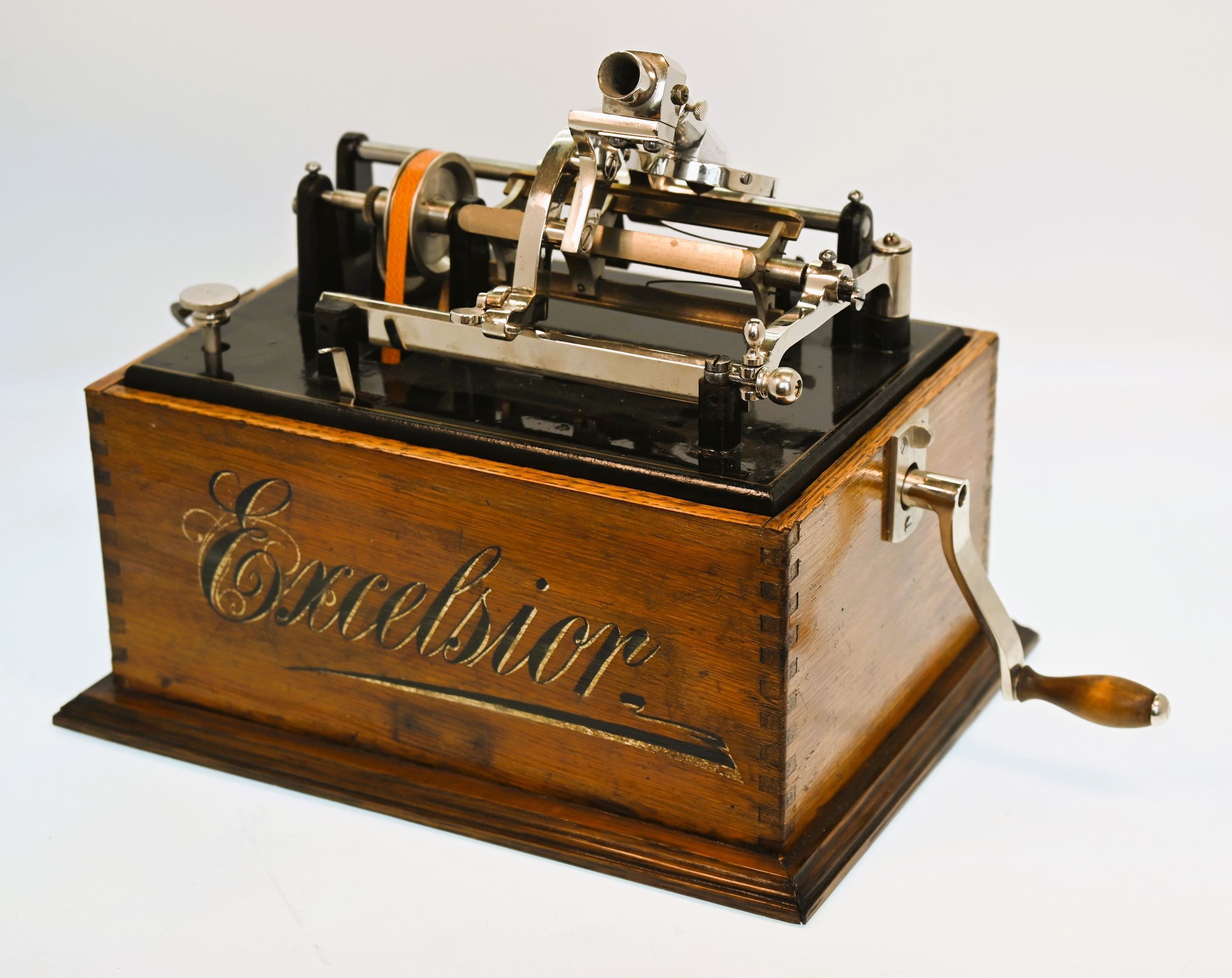
Manufacturer: Excelsior-Werke, Cologne (Phil. Richard)
Model designation: not securely documented (conventionally referred to as “Excelsior Standard”)
Date: ca. 1898–1901
Type: Mechanical cylinder phonograph, tabletop model
Drive: Spring motor
Origin: German Empire
Historical Background
With the Excelsior-Werke in Cologne, an independent German phonograph industry began to take shape around the turn of the twentieth century. Whereas the market had previously been dominated largely by American manufacturers, Excelsior developed into one of the leading European producers of phonographs and phonograph cylinders.
The Excelsior cylinder phonograph displayed here originates from the company’s earliest developmental phase, at a time when the patents held by Thomas A. Edison and the Columbia Phonograph Company severely restricted the manufacture of conventional cylinder phonographs in Europe. German manufacturers were therefore compelled to design technically innovative solutions that circumvented these protective rights.
Design, Size, and Technical Classification
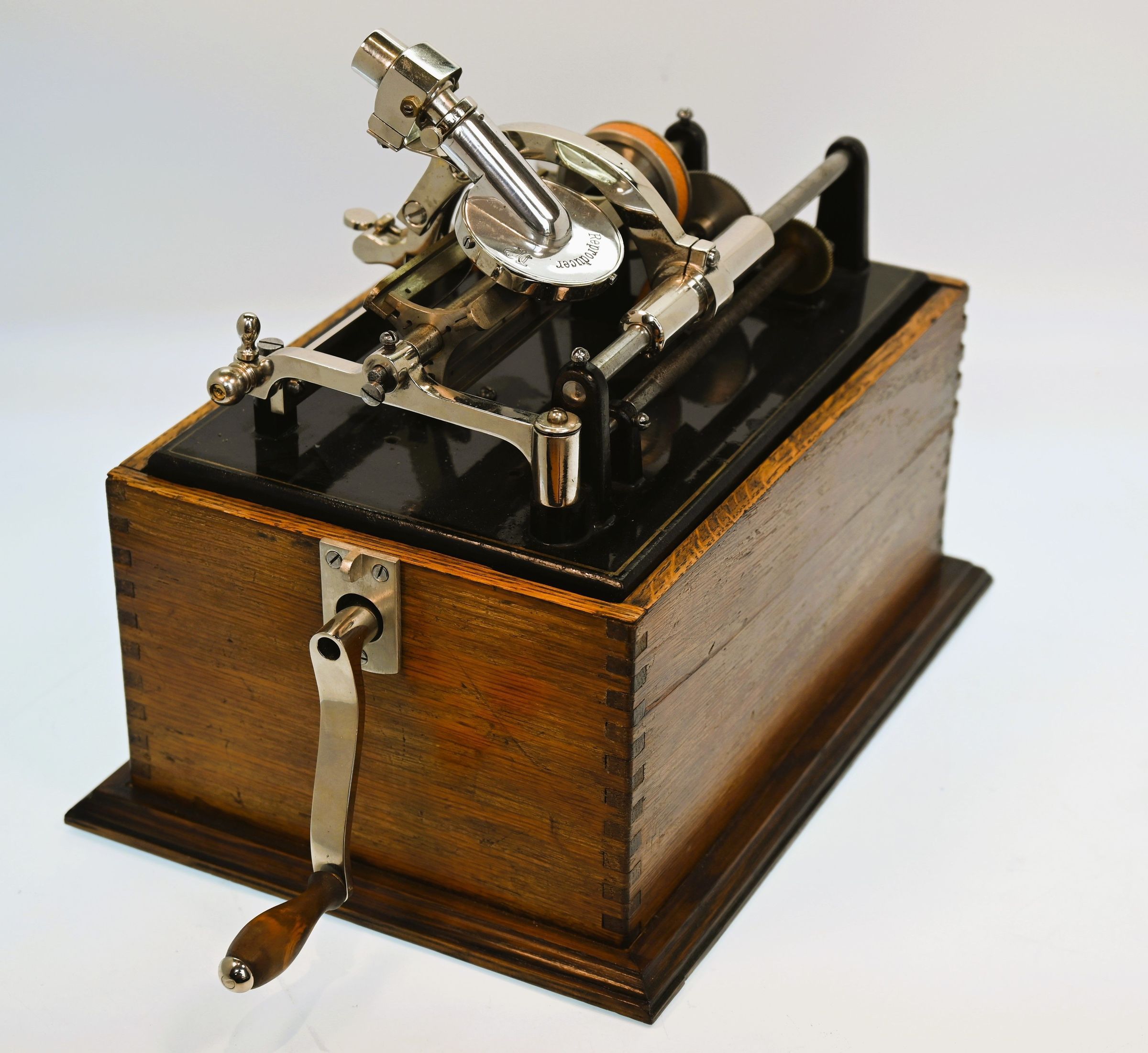
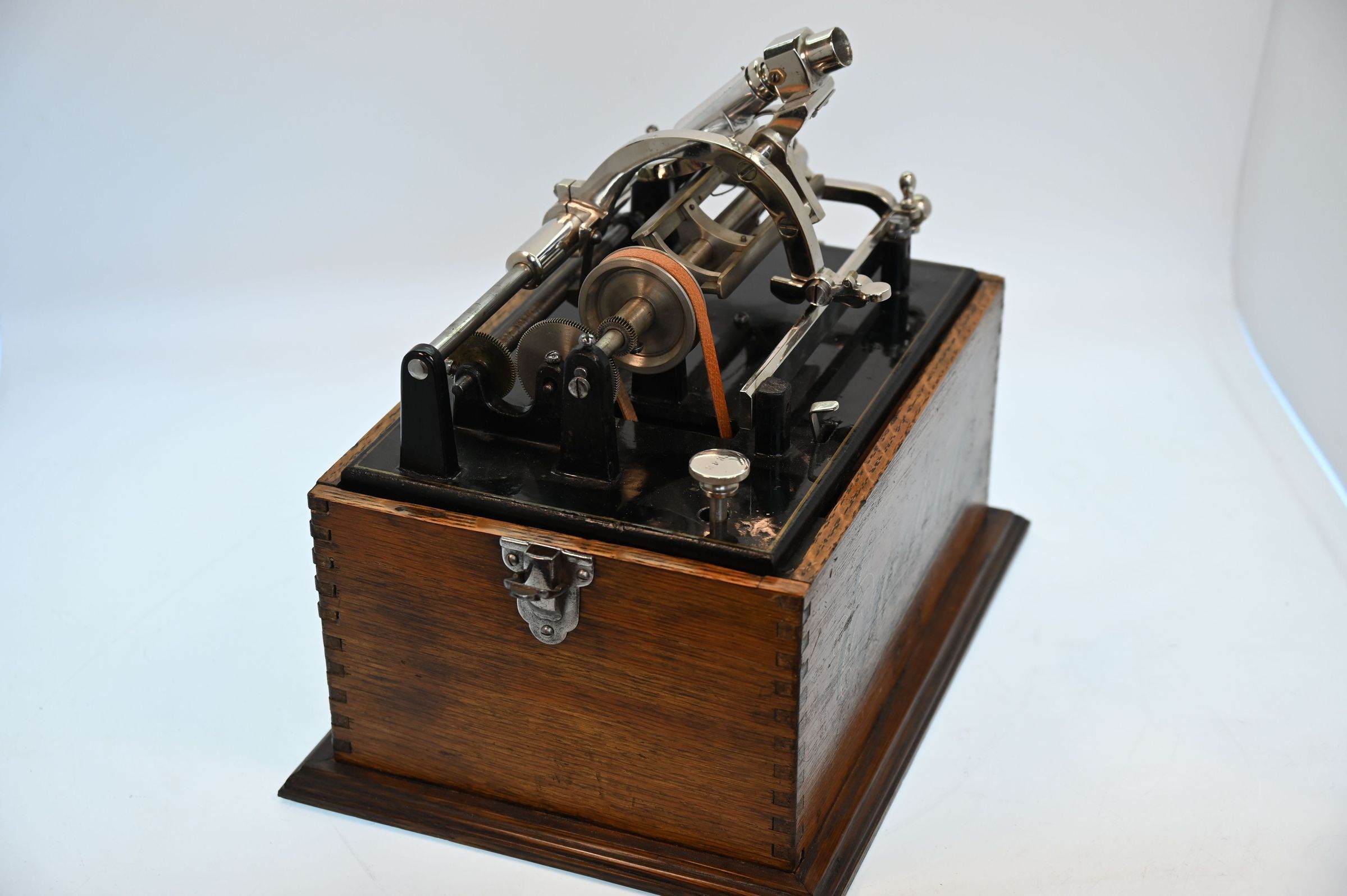
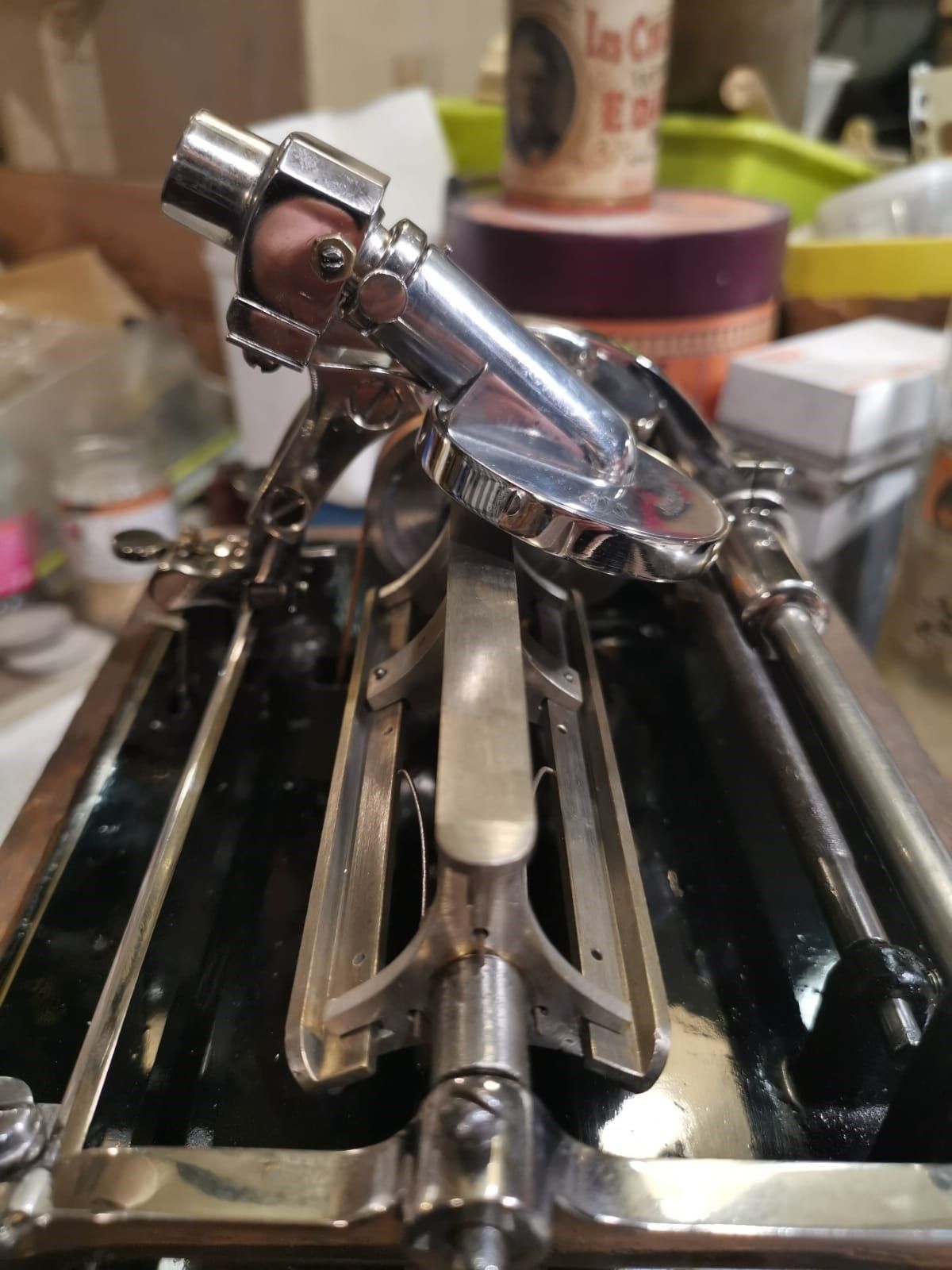
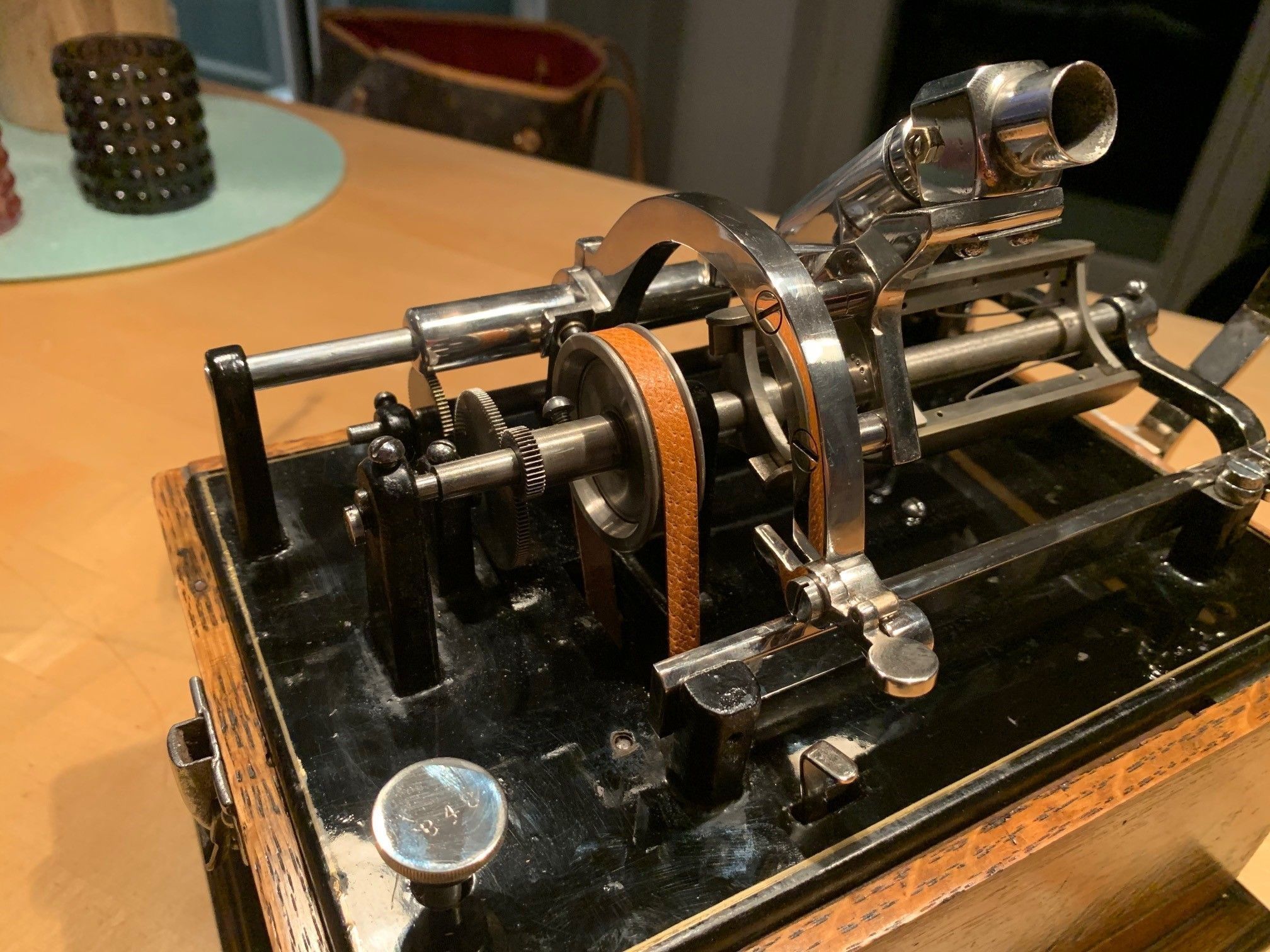
Particularly striking is the unusually large format of this machine, which clearly distinguishes it from the smaller Excelsior models and, in its proportions, recalls the American Edison Standard phonographs. This makes the device an exceptional example within German production around 1900.
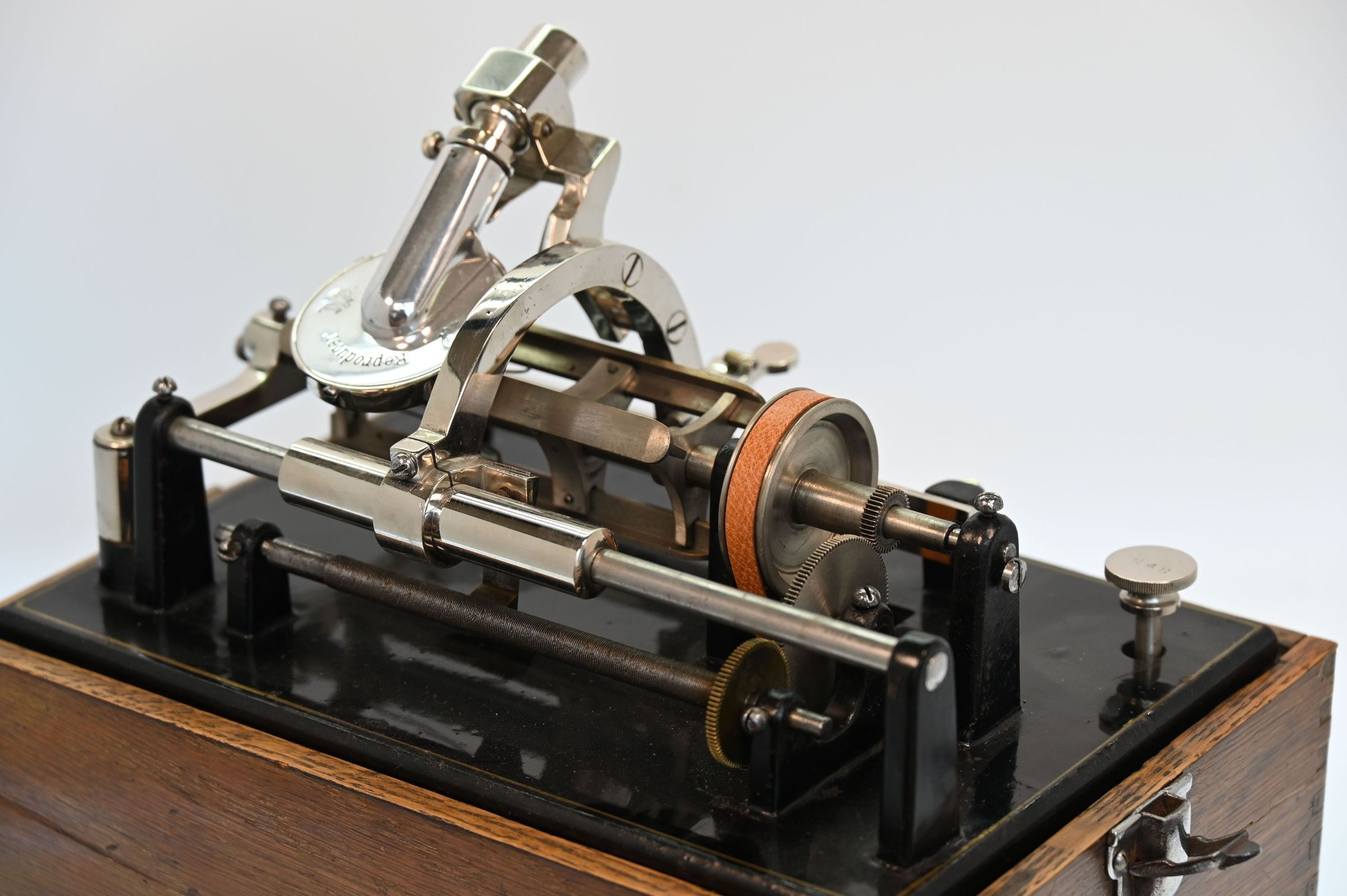
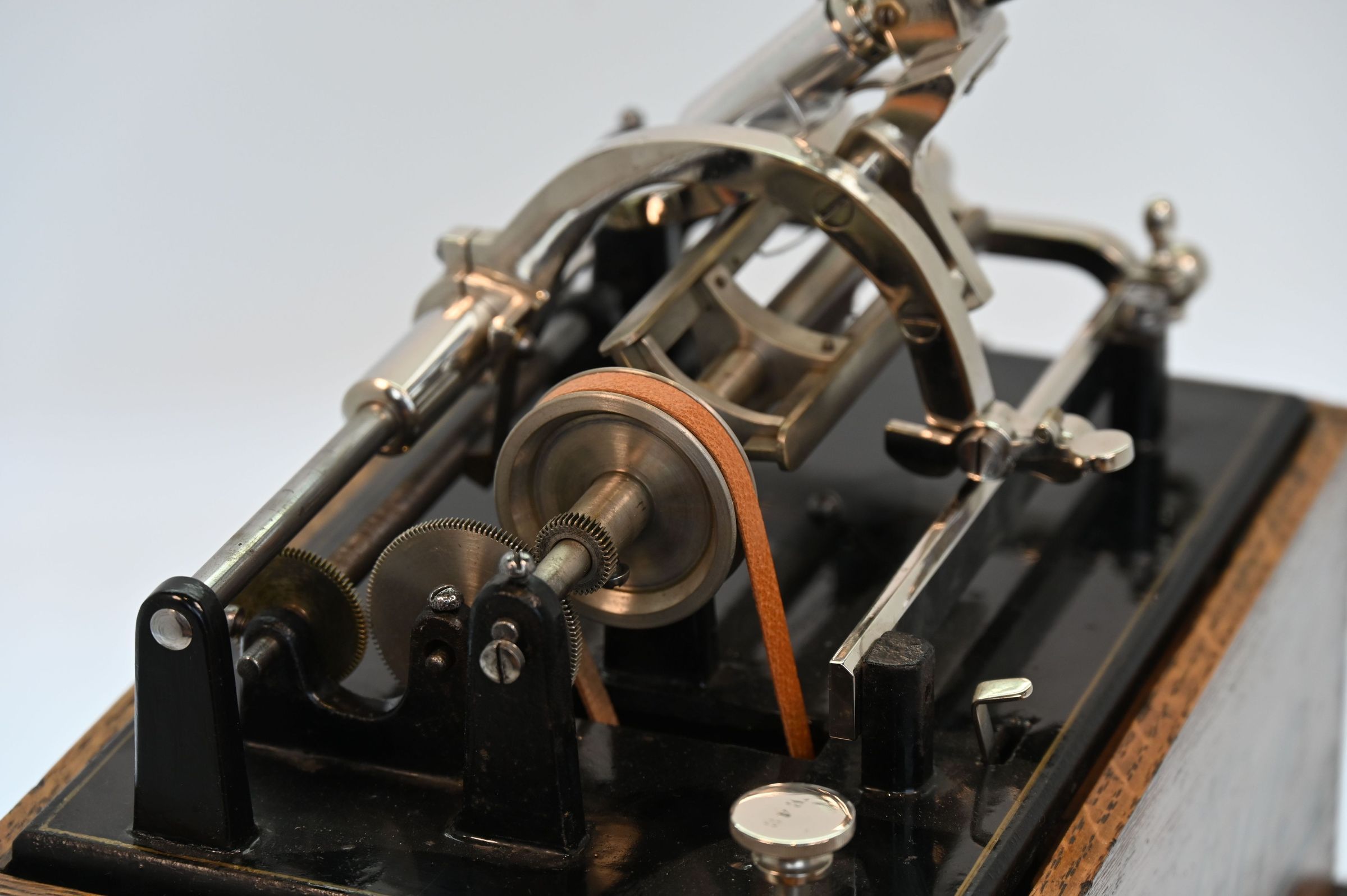
As was typical for early Excelsior machines, the cylinder holder is not constructed as a closed mandrel. Instead, a patent-circumventing design was employed that allowed the playback of wax cylinders without directly infringing Edison’s protected constructions. This technical solution is characteristic of the earliest phase of German phonograph development.
Excelsior, Edison, and the German Cylinder Industry
Through a later licensing agreement with Thomas A. Edison, the Excelsior-Werke in Cologne established their own cylinder factory and successfully supplied the market for several years with phonograph cylinders, including Gold Moulded cylinders.
This collaboration, however, was highly controversial within the German industry and dealer community. In 1906, the trade journal Die Sprachmaschine published a sharply worded critique of Excelsior’s policy:
“A justified storm of indignation within the German trade has been unleashed by the conduct of the Excelsior-Werke. (…) It is most regrettable that Excelsior did not attempt to join forces with the German moulded-cylinder industry in the struggle against the Edison Company.”
This contemporary commentary vividly illustrates the tensions between national industrial policy and international licensing practices that shaped the phonograph industry of the period.
The present machine clearly predates Excelsior’s cooperation with Edison and documents the phase in which the company was still forced to develop independent technical solutions beyond the boundaries of existing patents.
Design, Quality, and Market Strategy
Despite—and in some respects because of—these legal constraints, Excelsior phonographs are distinguished by an exceptionally robust construction. Their soundboxes are regarded as high quality, enabling a powerful and clear sound reproduction.
Particularly attractive is the black-lacquered cast-iron housing, which in later Excelsior models was often richly decorated with hand-painted ornamentation, underscoring the ambition to present phonographs not merely as technical devices, but also as aesthetic objects.
Through a sophisticated marketing strategy, Excelsior also succeeded in penetrating the British market. There, models were marketed under evocative names such as “Ruby,” “Pearl,” and “Diamond”—a deliberate effort to enhance the brand’s prestige in international competition.
Rarity and Significance
Excelsior cylinder phonographs of this type are extremely rare. According to current knowledge, only two to three comparable examples are known worldwide. Their limited survival can be attributed to:
the short production period,
the legally sensitive, patent-circumventing construction, and
their later displacement by fully licensed Edison models.
The preservation state of this example allows for a detailed analysis of its mechanism and makes it an important reference object for scholarly research.
Significance within the Edisonium
The Excelsior “Standard” documents a decisive chapter in European phonograph history:
the transition from improvised, patent-circumventing constructions to an internationally interconnected, licensed phonograph industry.
As a technically ambitious and today nearly unique German cylinder phonograph, this machine ranks among the rarest and most informative objects in the Edisonium collection.