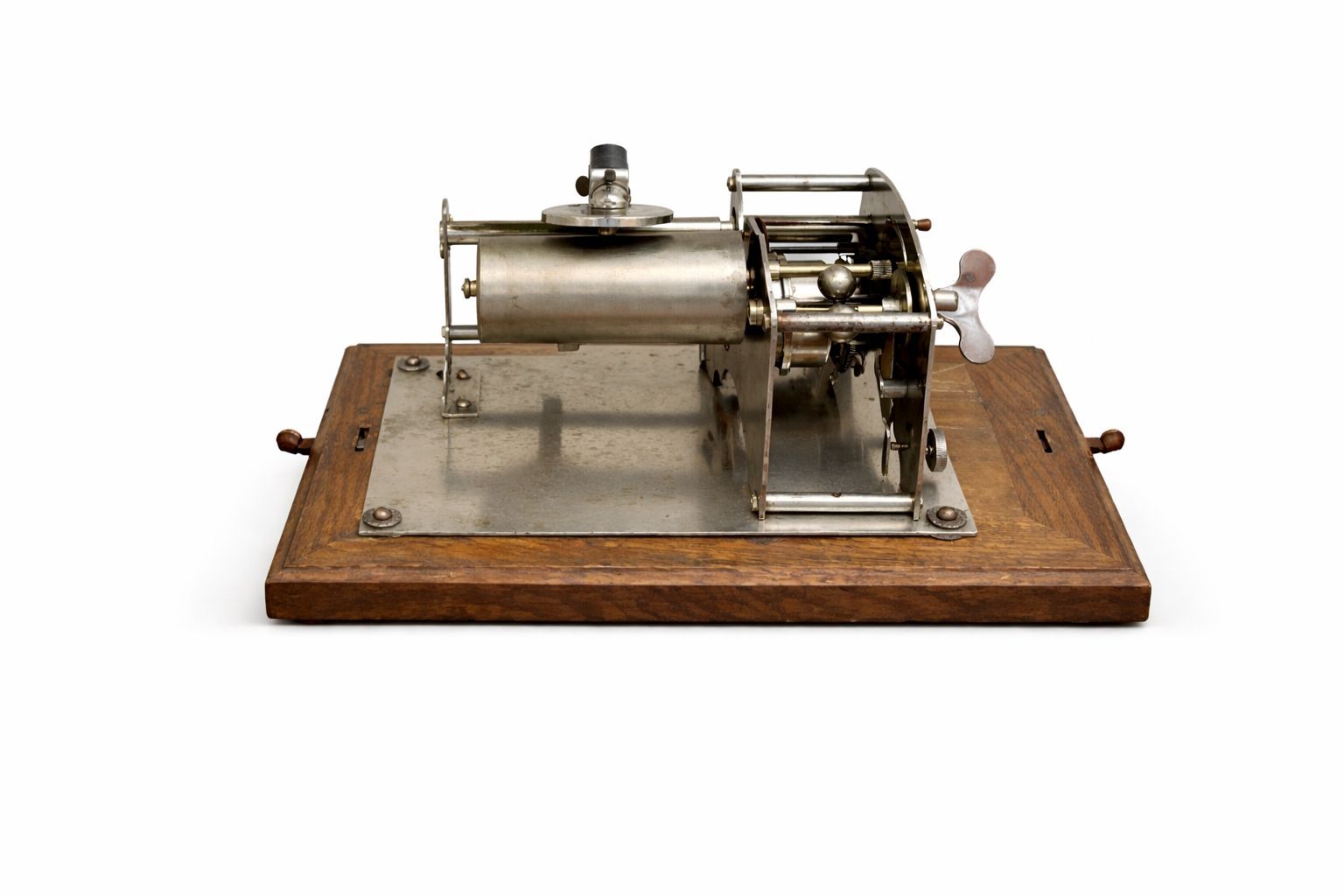
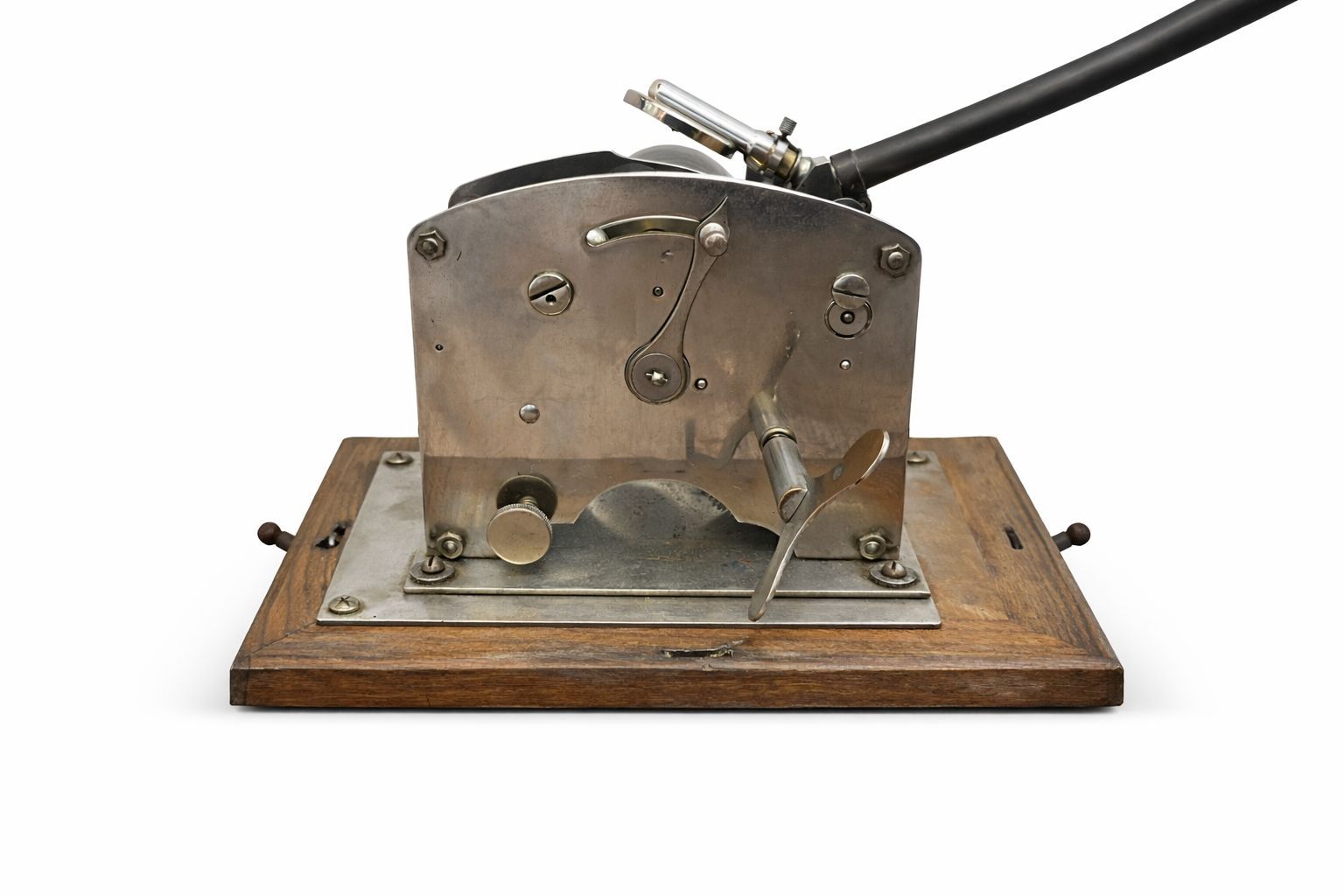
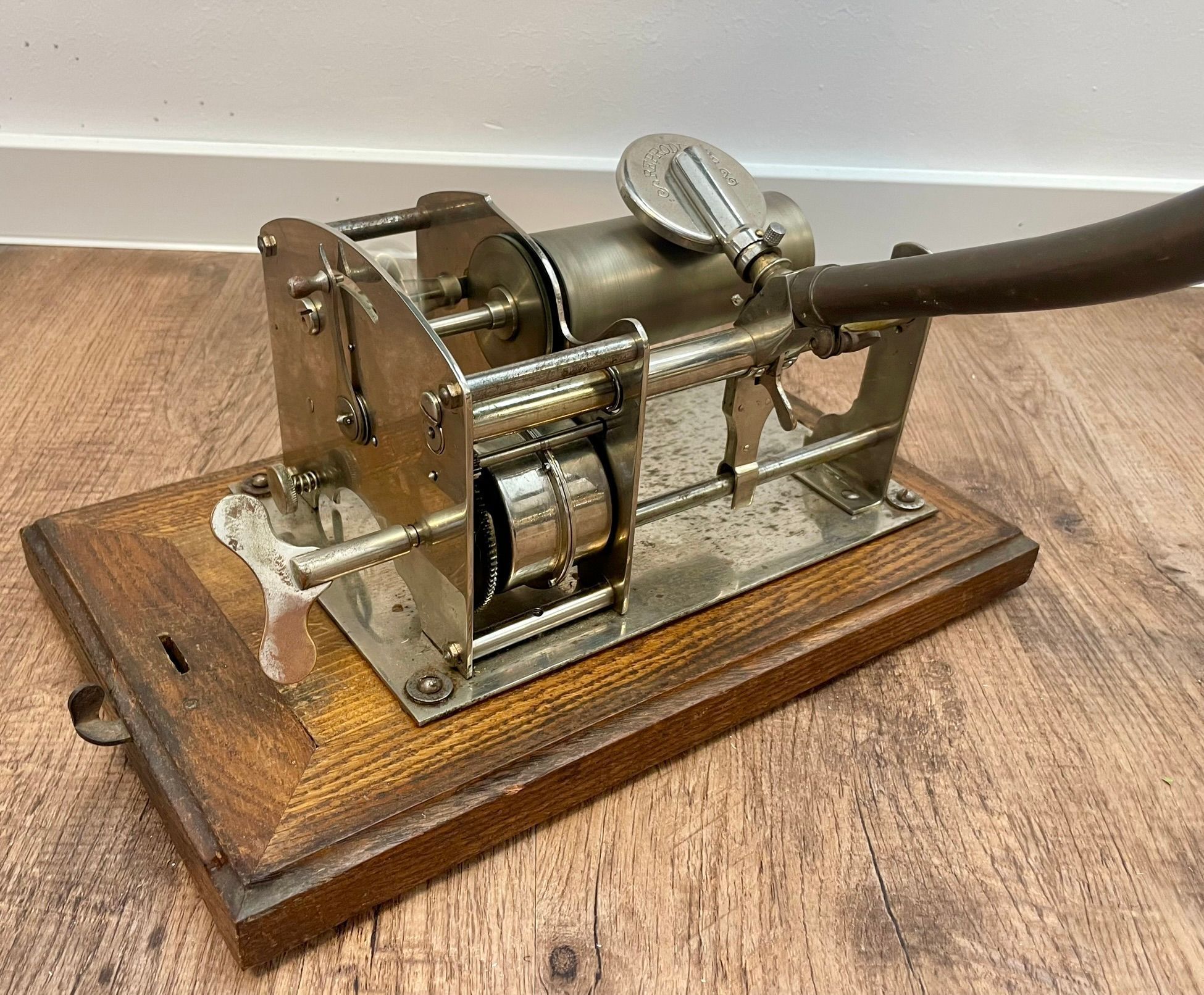
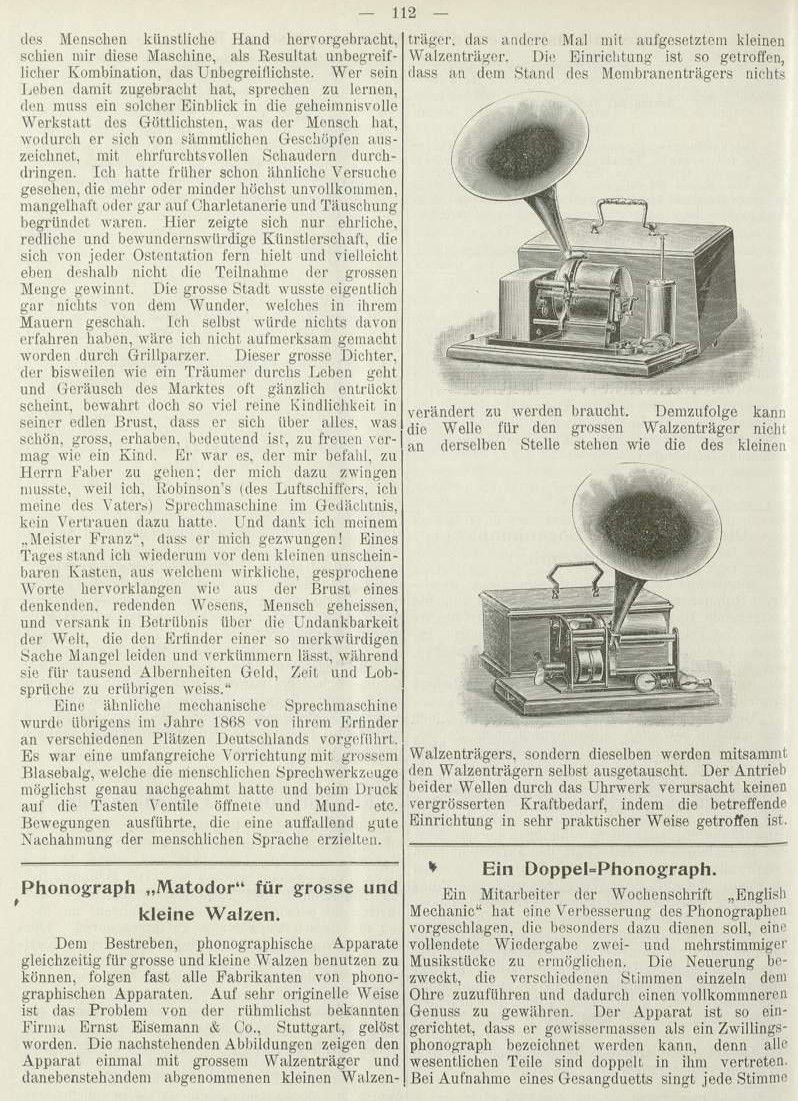
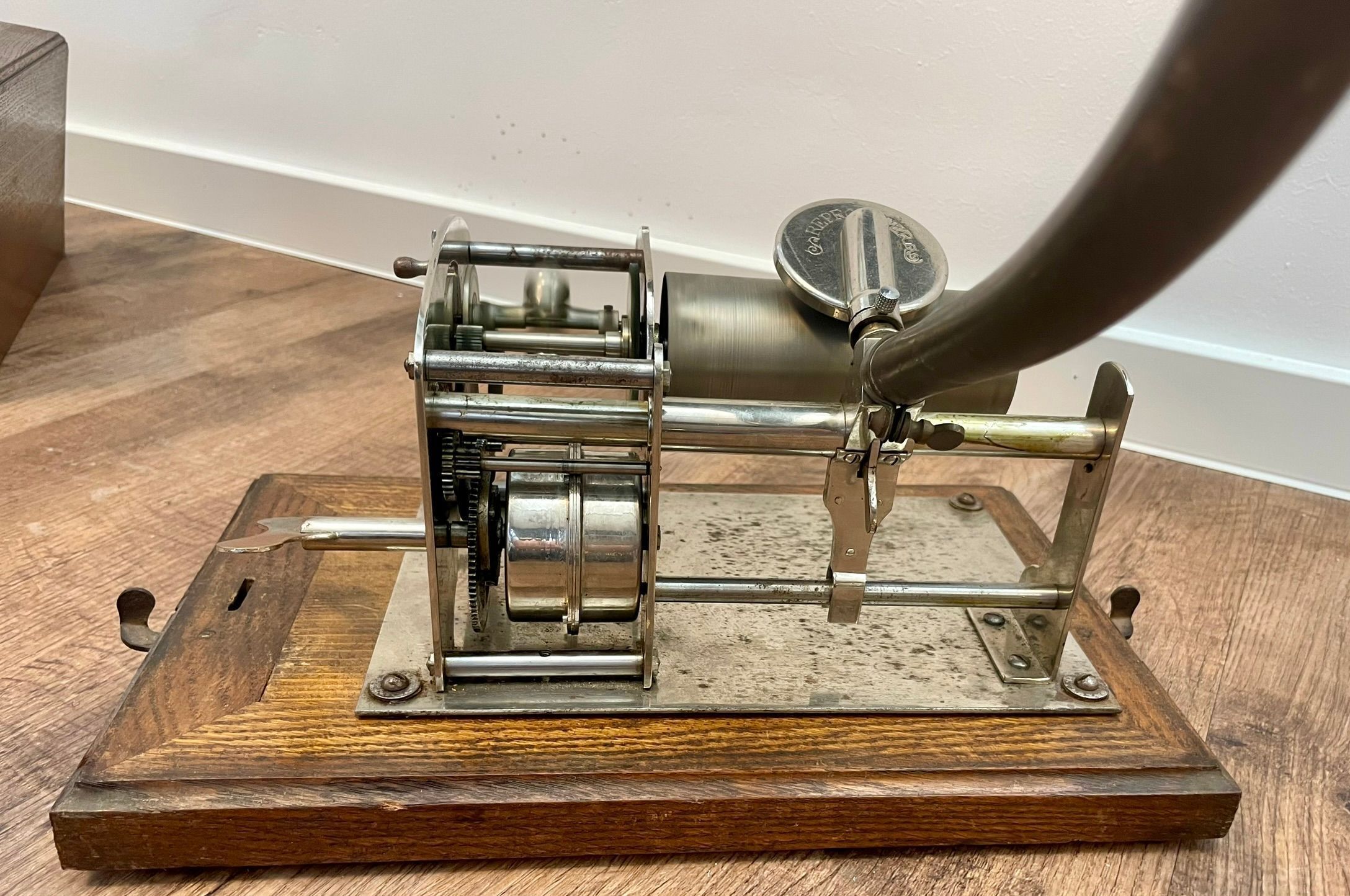
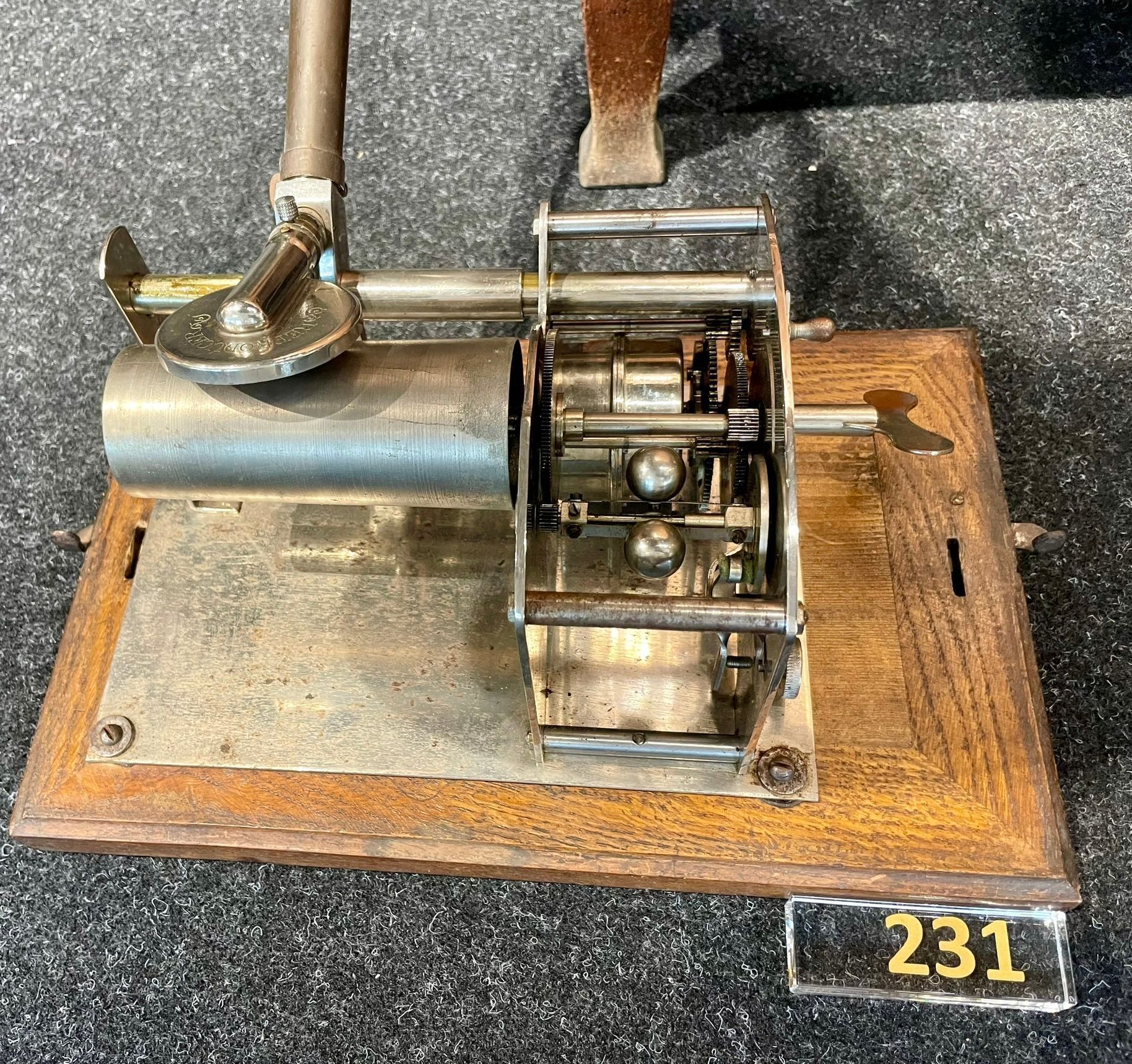
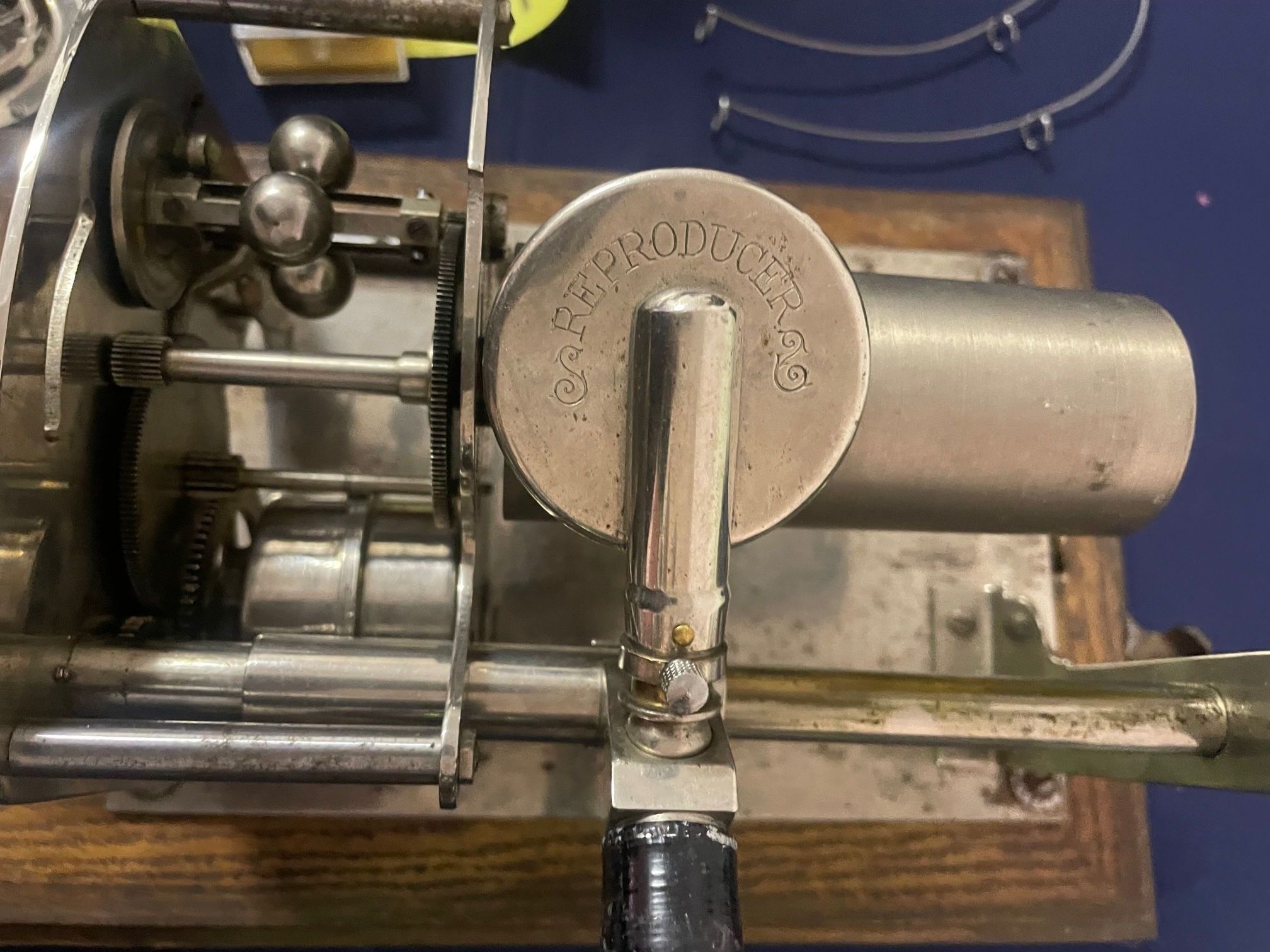
Phonograph “Matador” for large and small cylinders
Entry/Object ID
231
Description
Ernst Eisemann & Co.
Stuttgart, Germany
ca. 1897–1900
Historical Context
The “Matador” phonograph belongs to the technically ambitious German phonographs of the late 1890s. It was developed at a time when phonograph technology was spreading rapidly and European manufacturers began to pursue independent solutions beyond the American originals by Edison and Columbia.
Ernst Eisemann ranks among the early German entrepreneurs who regarded the phonograph not merely as a curiosity, but as a serious technical and commercial product.
Ernst Eisemann and the Company
In 1889, Ernst Eisemann, together with Eugen Jung, founded the firm
Eisemann & Jung, Electrotechnical Workshop in Stuttgart. The company initially manufactured low-current installations and electrical apparatus. According to later sources, it began producing phonographs no later than 1893.
After the death of Eugen Jung, Eisemann found a new partner in Rudolf Wölz. Together they founded Ernst Eisemann & Co., Factory of Electrical Apparatus, on September 1, 1897. The phonograph Matador presented here was developed within this context.
Technical Concept: Large and Small Cylinders
A defining feature of the Matador phonograph is its design for use with both large and small cylinders.
This was achieved by:
exchanging the cylinder carrier
adapting the mechanical arrangement accordingly
Contemporary technical literature emphasizes that not only the cylinder carrier itself, but the entire cylinder unit was replaced. This ensured correct tracking geometry and reliable drive for both large and small cylinders.
This solution reflects a high level of mechanical sophistication and demonstrates that German manufacturers were actively engaged in advancing phonograph technology.
Classification and Significance
The Matador phonograph represents:
early independent German developments in phonograph construction
the attempt to accommodate multiple cylinder formats within a single machine
the transition from experimental apparatus to serially produced phonographs
the close integration of electrical engineering and precision mechanics at the end of the 19th century
As a product of Ernst Eisemann & Co., this machine vividly documents Stuttgart’s role as an important center of early electrical and acoustic innovation