Name/Title
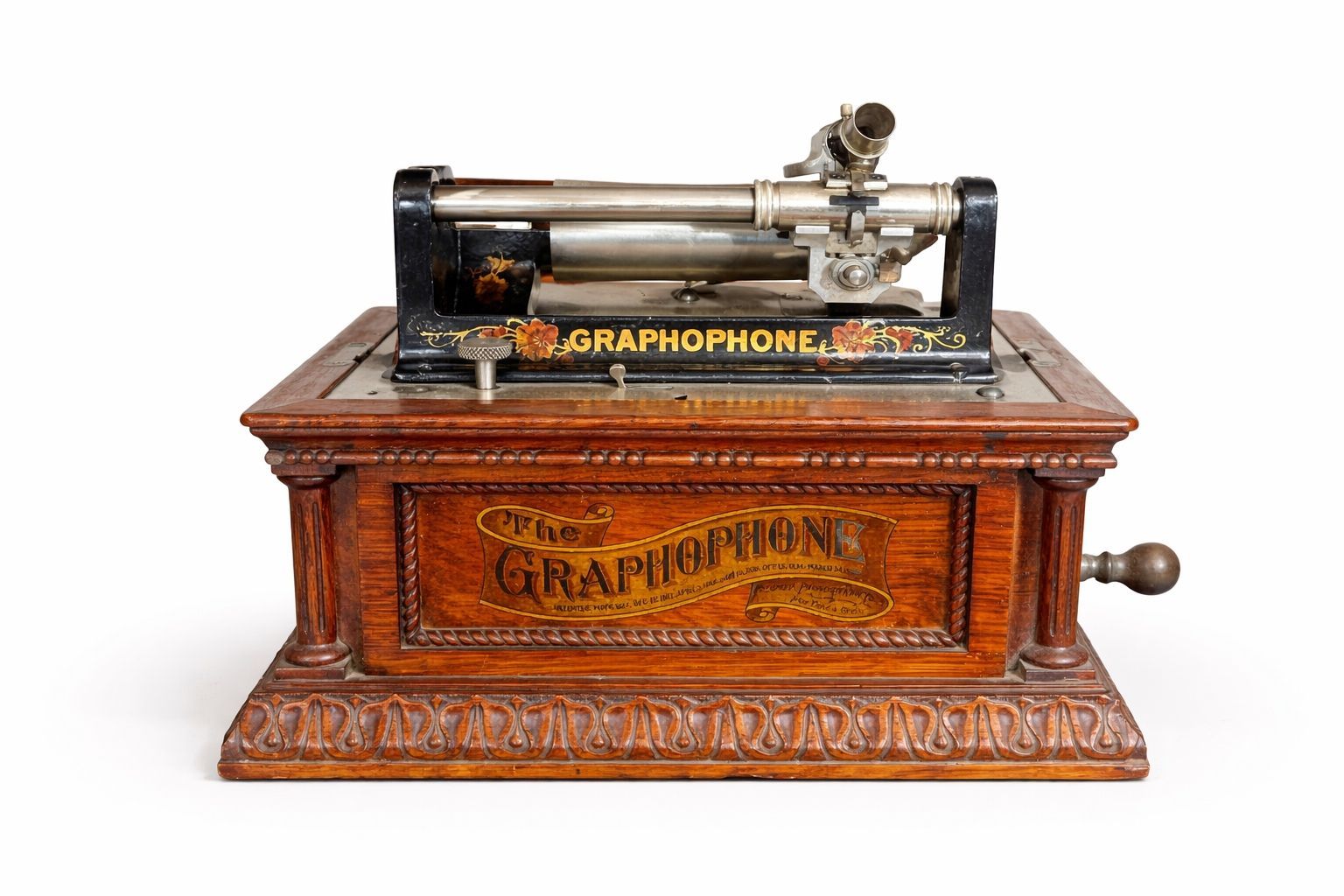
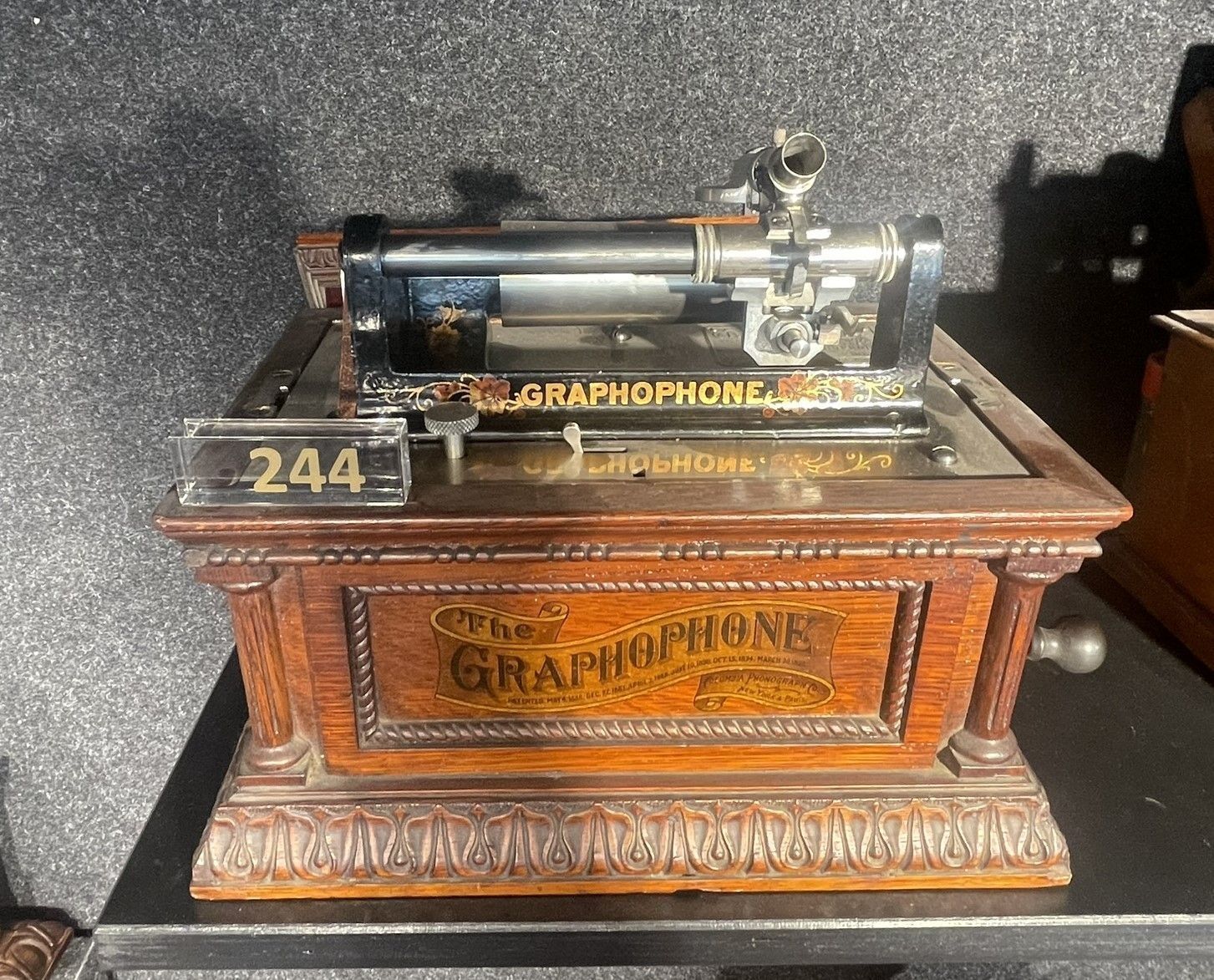
Graphophone Type AOEntry/Object ID
244Description
American Graphophone Company / Columbia Phonograph Co., ca. 1902–1903
Serial Number: 290,880
Historical Background
The Graphophone Type AO was introduced in late 1902 or early 1903 and marked a late but important step in the development of Columbia’s cylinder machines. At this time, the American Graphophone Company was already shifting its focus toward disc records, yet it still launched this elaborately designed cylinder model.
The AO can be seen as a “hybrid”: technically and stylistically a blend of the ornate machines of the 1890s and the more modern B-series, which remained in production until 1909. Equipped with a newly developed triple-spring motor and the heavier “D” reproducer, it represented a clear improvement over earlier designs.
It first appeared in Columbia’s 1903 catalog priced at $30, making it far less expensive than the large “Home Grand” or “GG” models, yet still offering a richly decorated and impressive cabinet.
Technical Features and Specialties
Motor: powerful triple-spring motor, capable of playing about 8 cylinders per winding.
Reproducer: new, heavier “D” reproducer with sapphire stylus; the last in Columbia’s line of floating reproducers.
Mechanism: “drop frame” design, positioning the reproducer directly over the cylinder – an important technical advance.
Cabinet: ornate case with moldings, carvings, and solid feet – among the most elaborate cabinets of Columbia’s cylinder era.
Shaver: integrated shaver, allowing cylinders to be shaved and re-used directly on the machine.
Compact design: despite its weight and features, the AO was unusually space-efficient for a luxury machine.
Price: about $30 in 1903.
Rarity and Significance
The Type AO was produced only for a short time (1903–1904) before being replaced by the Type AW, which introduced an entirely new reproducer design. While the AW was already moving toward louder sound and more modern styling, the AO represents the transition point – combining older decorative traditions with newer technical advancements.
Today, AO models are considered highly collectible. Built in limited numbers, they mark the end of an era and Columbia’s last major investment in high-grade cylinder phonographs before disc records fully took over.
The example on display at the Edisonium, serial number 290,880, is a particularly well-preserved specimen of this rare and historically significant model.