Name/Title
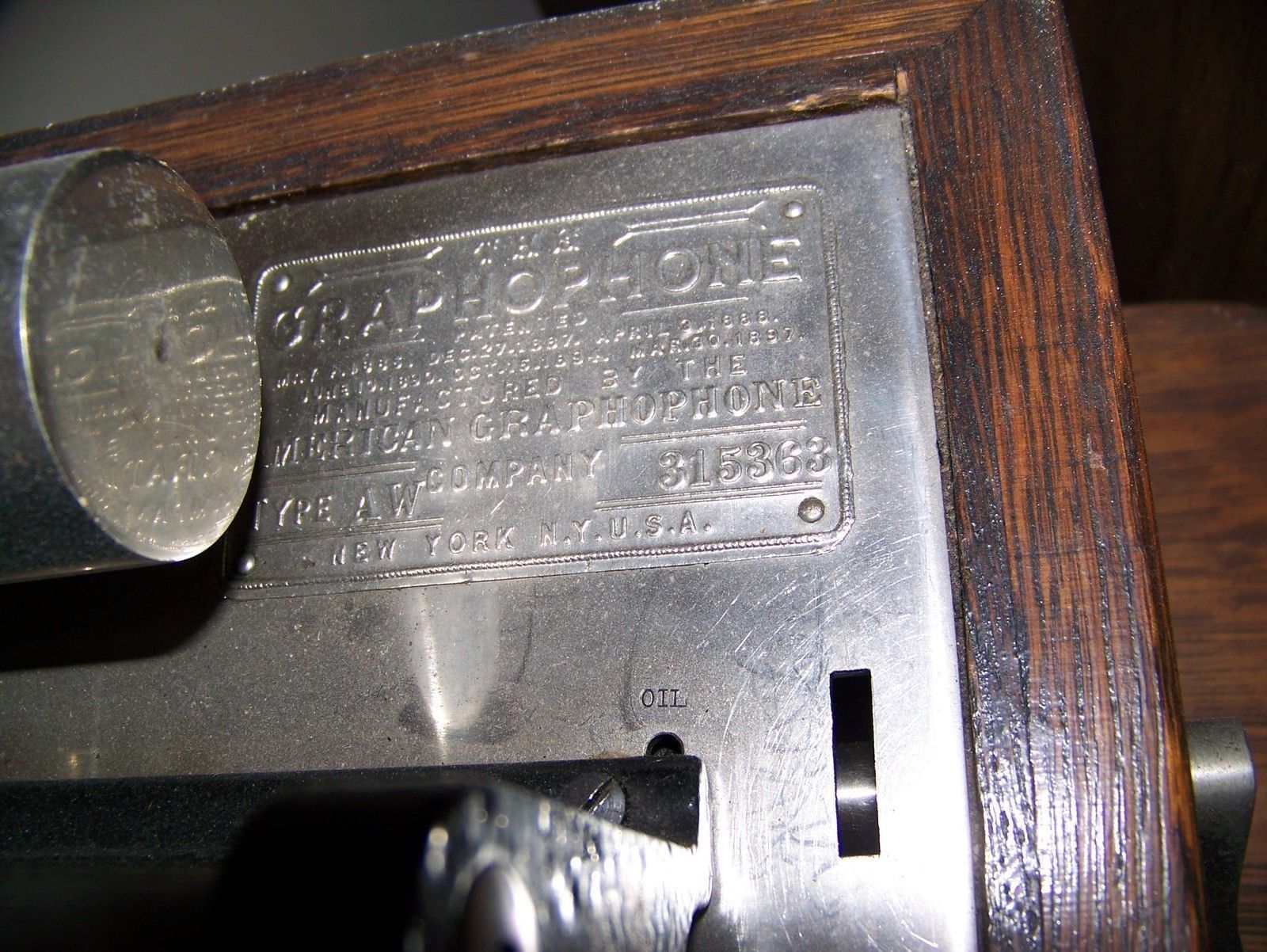
Graphophone Type AWEntry/Object ID
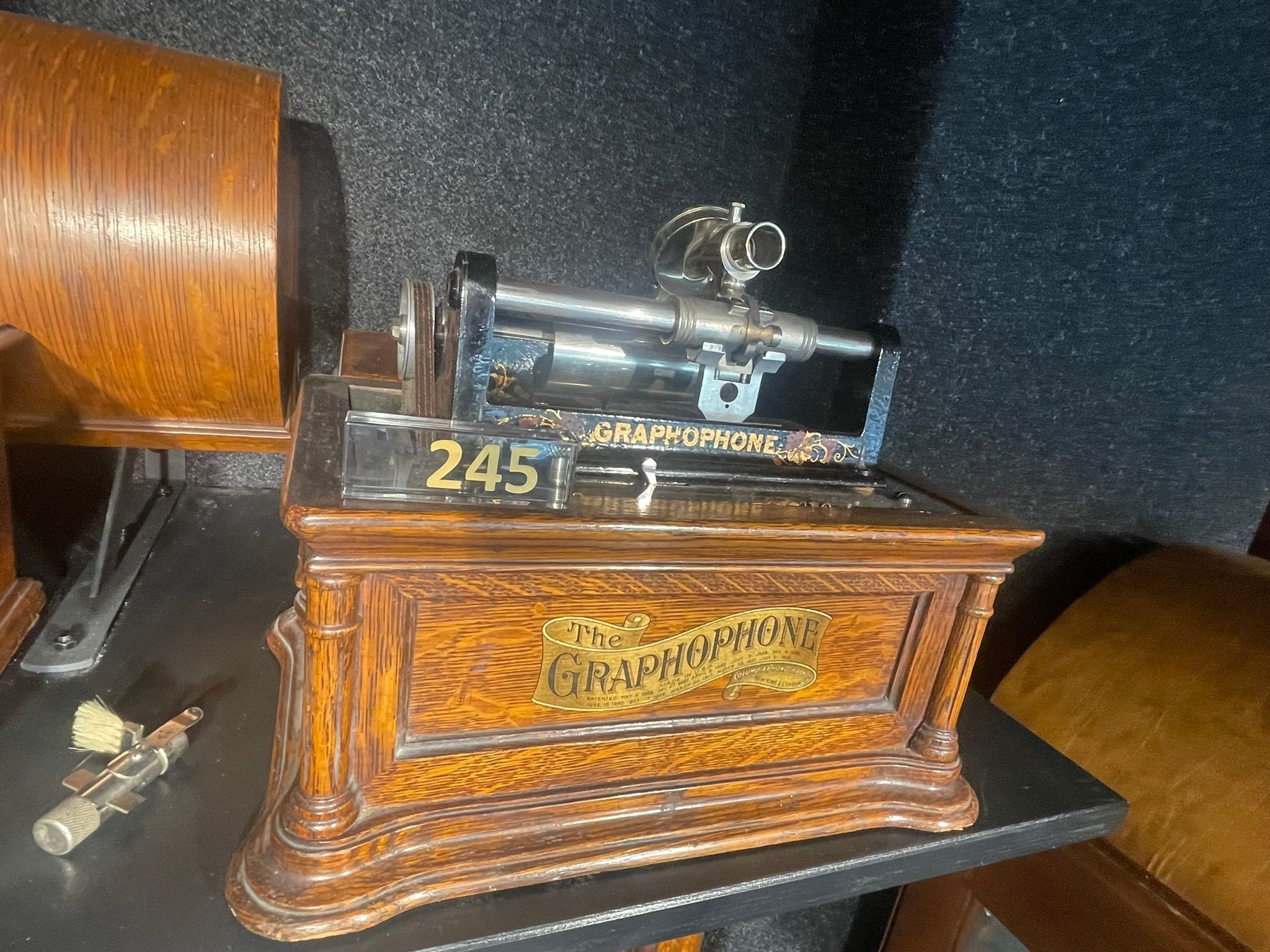
245Description
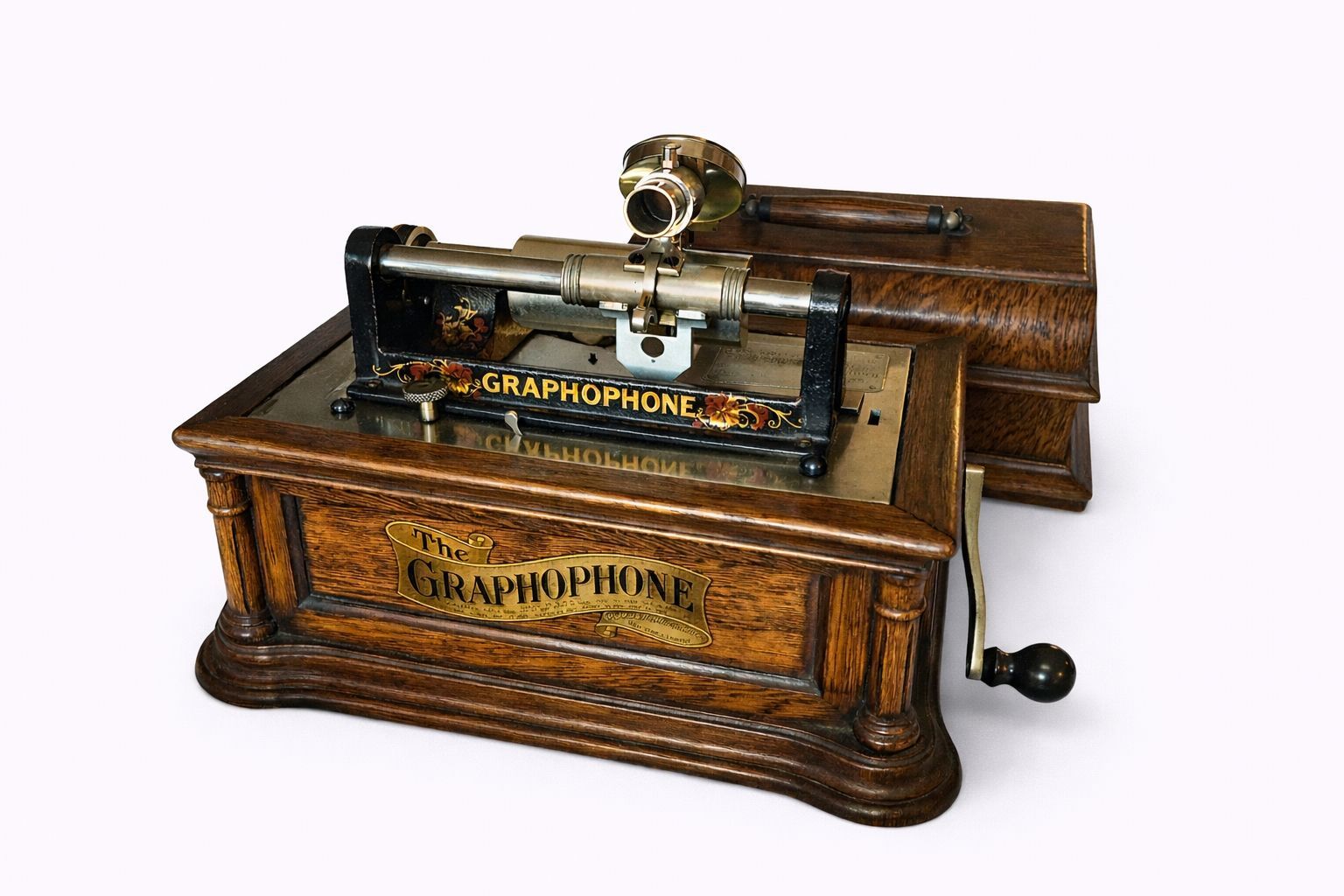
American Graphophone Company / Columbia Phonograph Co., ca. 1904
Serial number: 315,363
Historical Background
The Graphophone AW, introduced in 1904 as an evolution of the Type AO, represented the American Graphophone Company’s attempt to give its cylinder machines one final technical and aesthetic upgrade. While the AO had been distinguished by a lavish yet traditional cabinet, the AW was offered in a newly designed case that already echoed the more elegant style of contemporary disc machines.
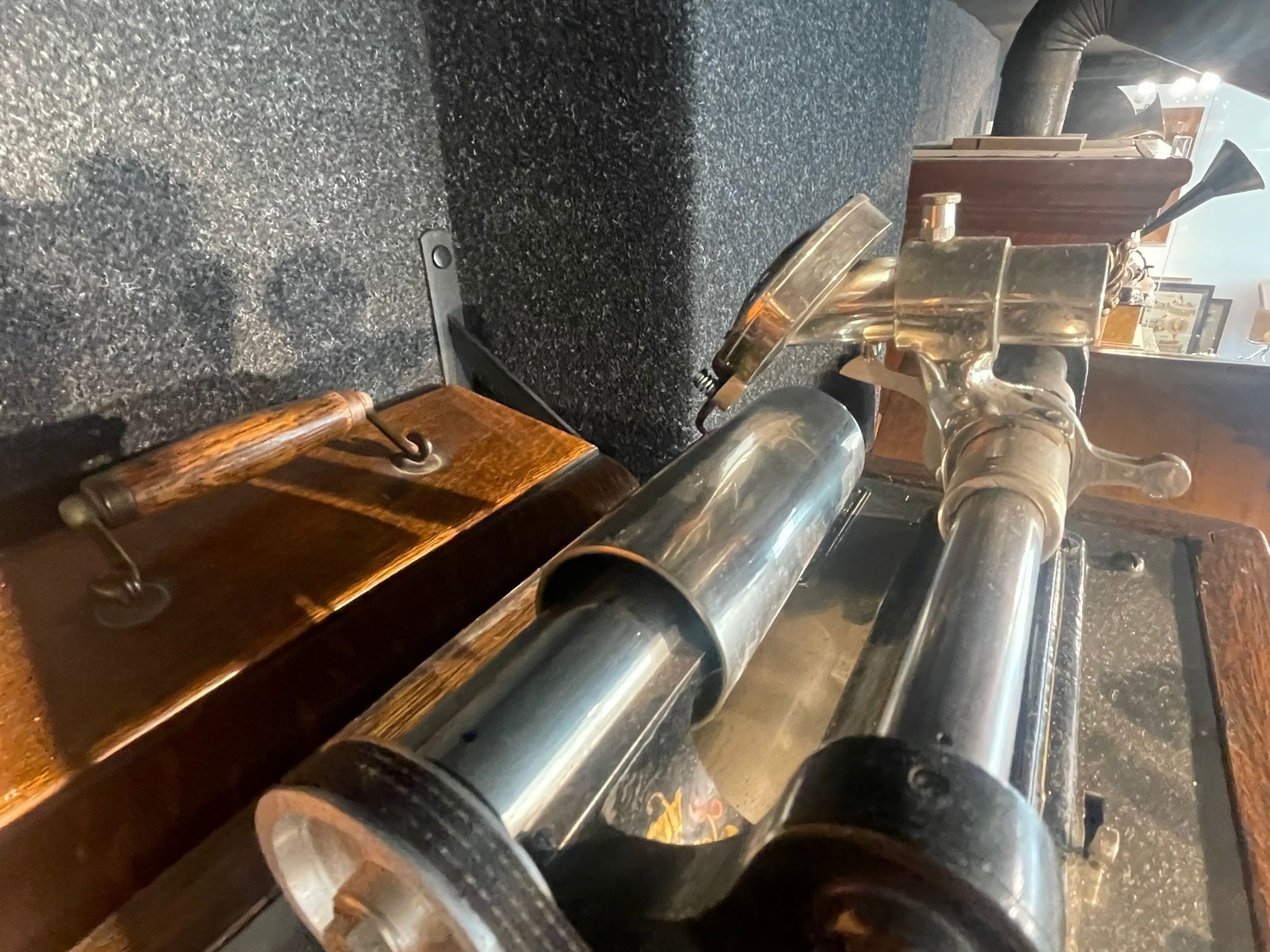
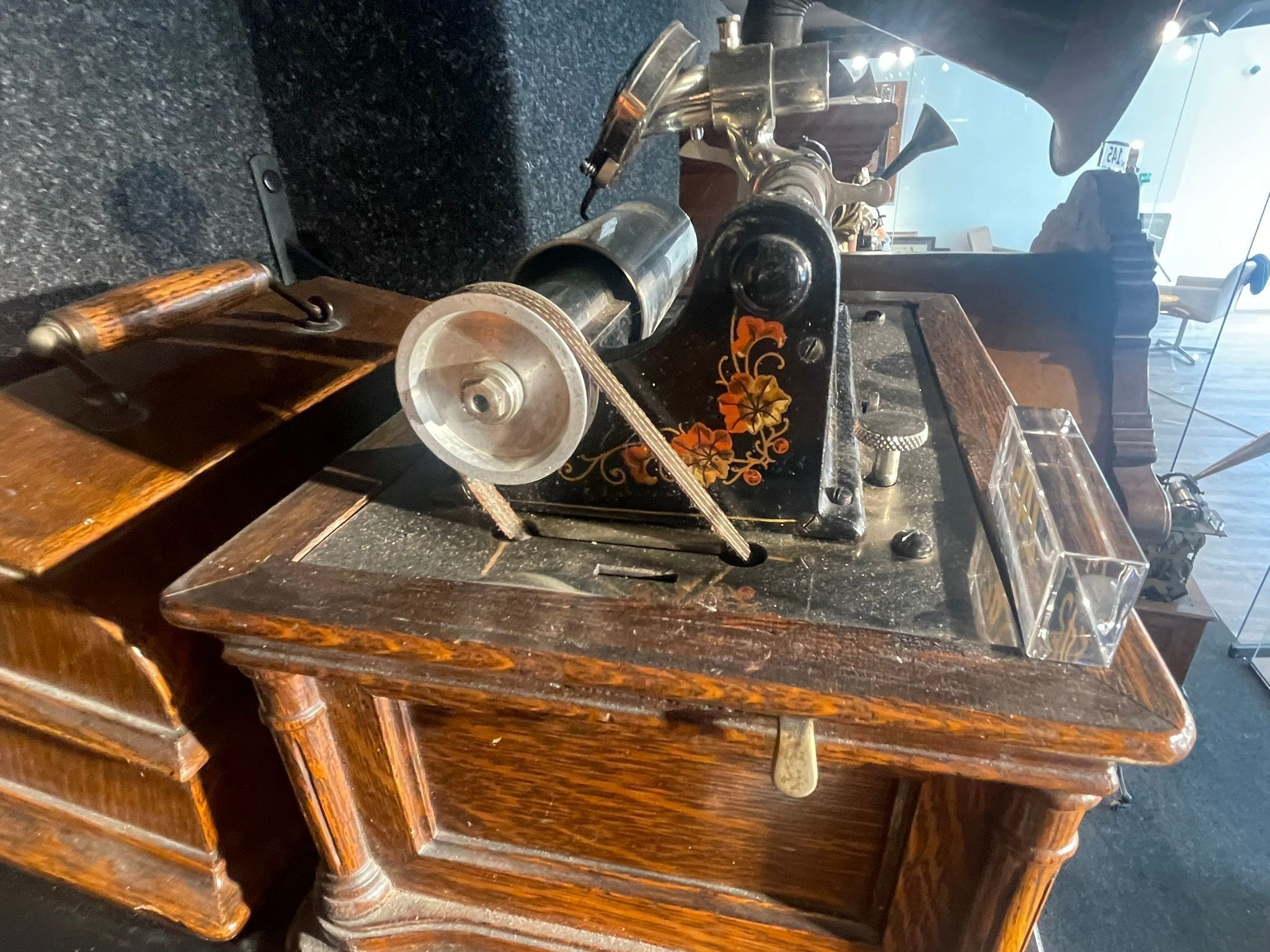
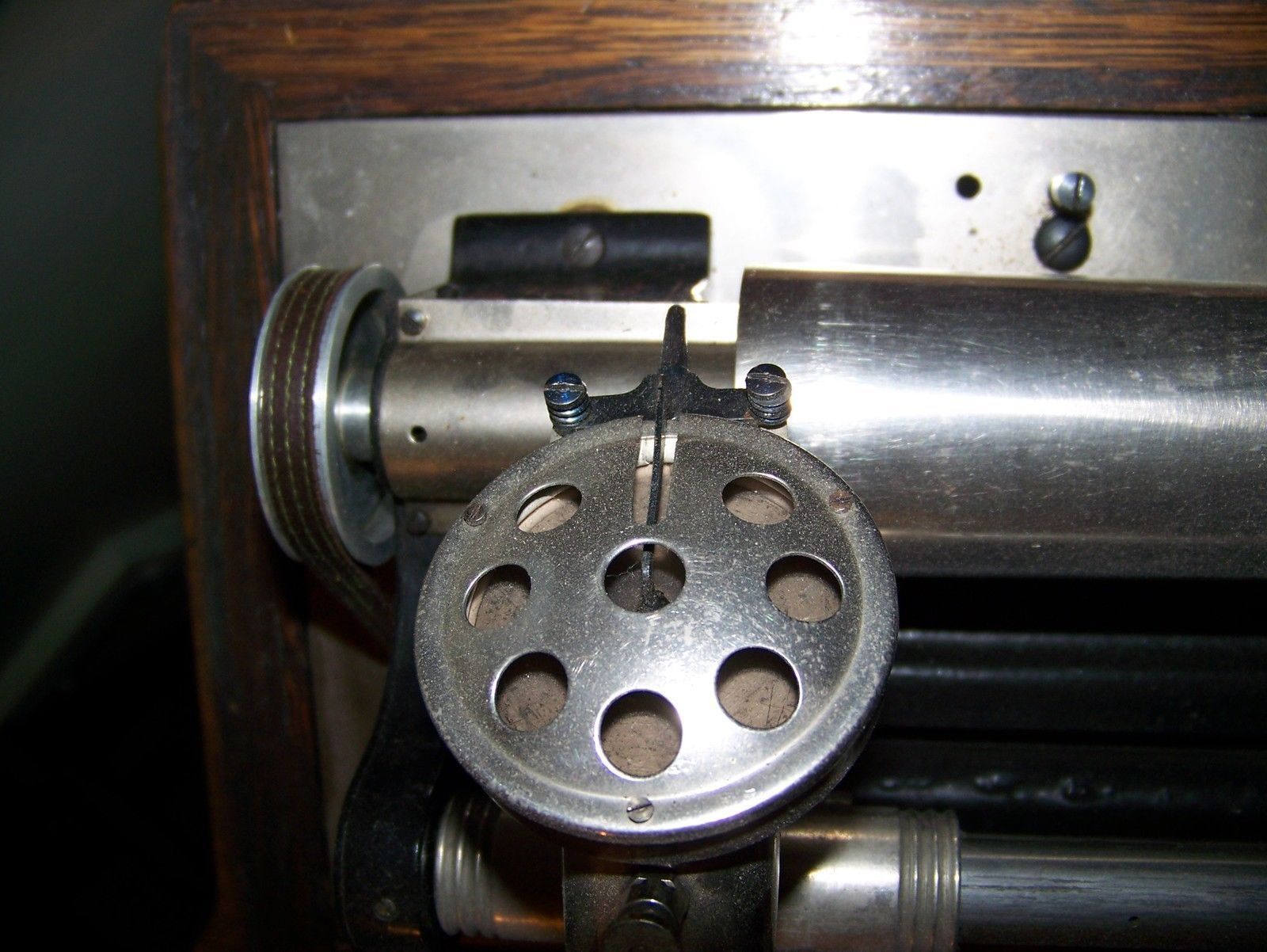
At its heart was the completely new AW reproducer, reminiscent of disc sound boxes of the time. Columbia promoted it as especially powerful, promising “greater volume and purity of tone”—a crucial step in competing with the superior loudness of disc record players.
The AW retailed at $35—five dollars more than the AO—positioning it as a premium instrument for discerning buyers who valued both fine cabinetry and improved sound quality.
Technical Features
Motor: robust triple-spring motor, capable of running up to 8 cylinders per winding.
Reproducer: newly developed AW reproducer with sapphire stylus, inspired by disc sound boxes, offering far greater volume than the earlier floating reproducers.
Cabinet: redesigned, more elegant case with curved lines, decorative moldings, and a lighter, modern appearance compared to the AO.
Horn: typically equipped with a 14-inch aluminum horn.
Compatibility: designed for standard 2-minute cylinders, also suitable for recording with a recorder.
Rarity and Significance
The Graphophone AW was produced only briefly and is today considered one of the rarest Columbia cylinder models. It marks the end of an era: a final investment in high-grade cylinder technology just as the market was rapidly shifting toward disc records.
The Edisonium’s example (serial no. 315,363) belongs to the second production series, with the modernized cabinet design. It stands as tangible evidence of Columbia’s last efforts to defend the cylinder market with technically ambitious, loud, and prestigious machines against the rising dominance of the disc phonograph.