Columbia Type AH Disc Graphophone
USA, 1901–1904
An Early Milestone in Disc Technology – Columbia’s First Machine Designed for Flat Records
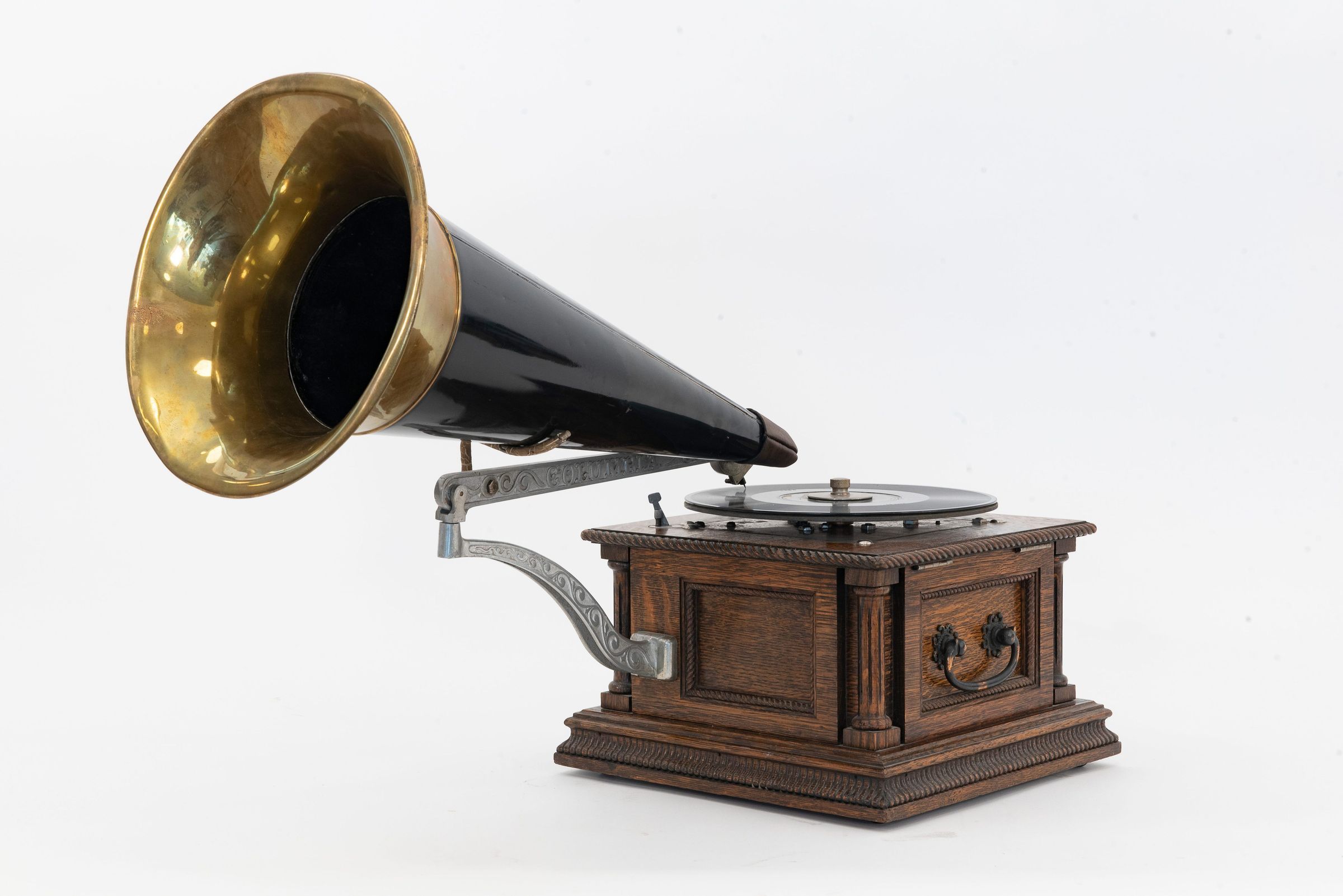
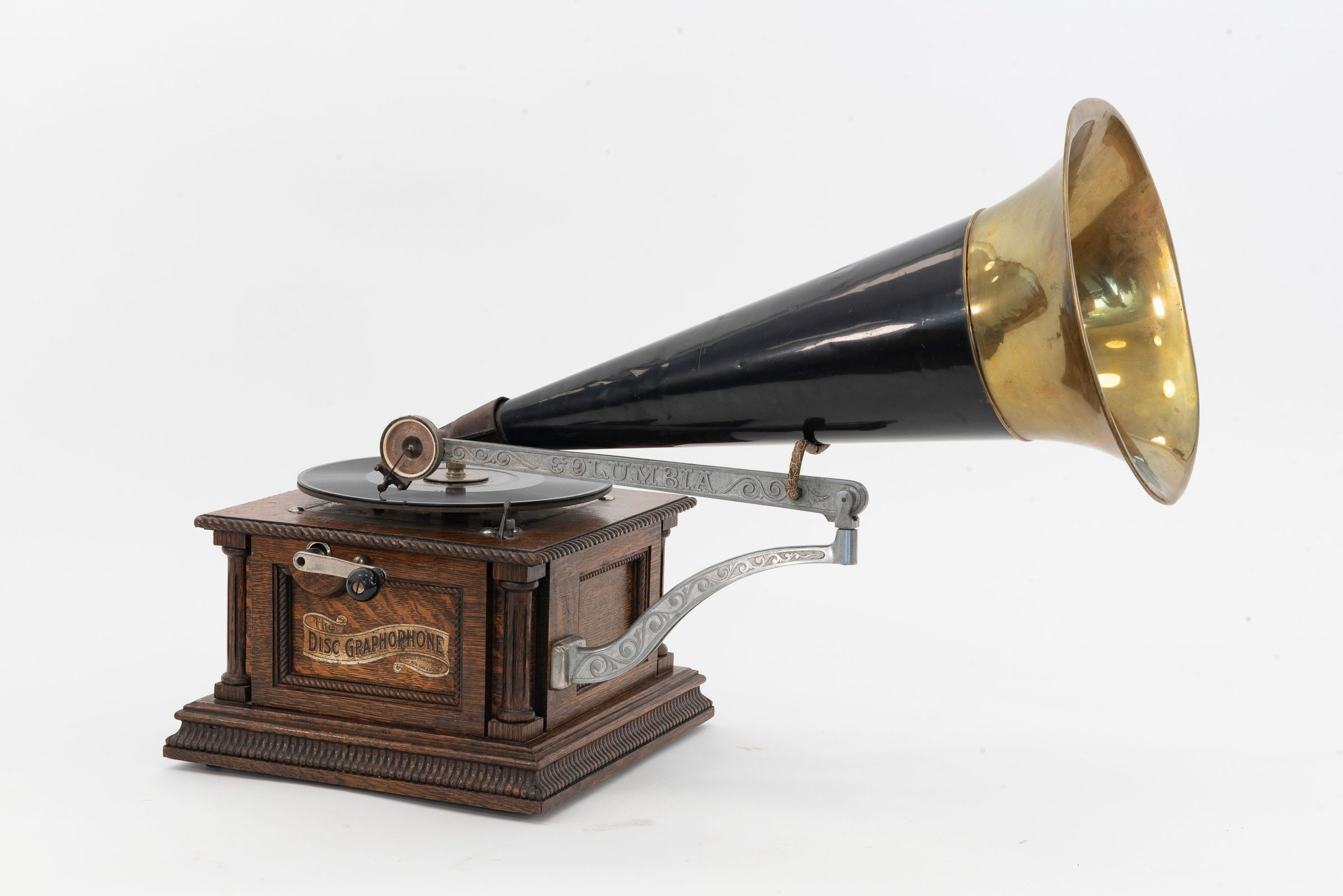
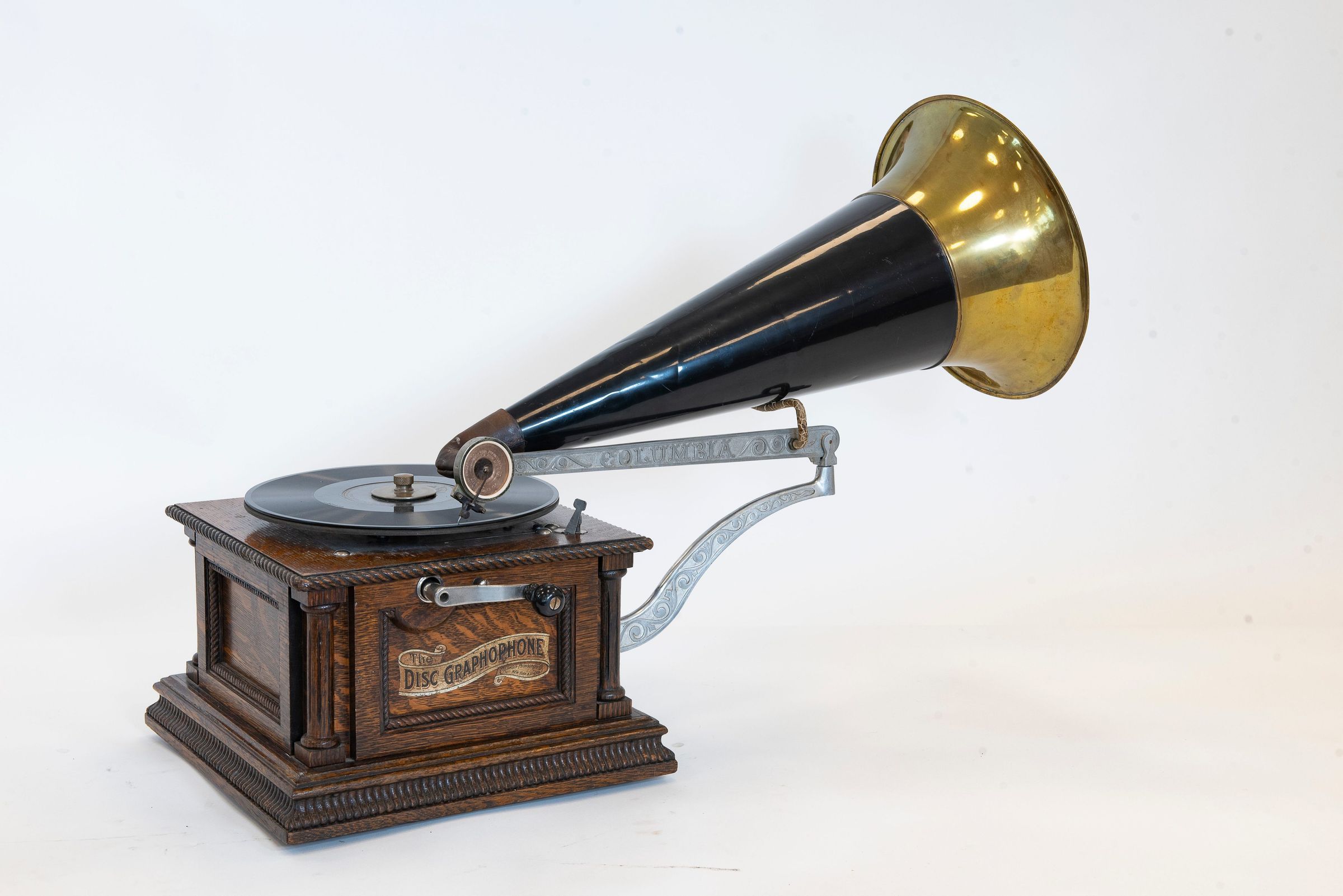
The Columbia Type AH displayed here marked a groundbreaking development in 1901 by the Graphophone company. It was the first mass-produced machine by the Columbia Phonograph Company designed exclusively for playing flat shellac discs – ushering in the era of Columbia’s disc talking machines.
Technical Innovations and Notable Features
Double Spring Motor: The powerful clockwork mechanism was comparable to that of the “Victor Monarch,” Victor’s top model at the time. It allowed for smooth and extended playback durations.
Oak Cabinet: The solid, finely crafted oak cabinet, with paneled sides and prominent corner columns, defined a design language that would influence the appearance of many later disc machines.
Aluminum Arms: The AH was among the first machines to feature decorative support and tonearms made of aluminum. Early models had plain arms, while later ones proudly displayed the engraved “COLUMBIA” name.
Record Mounting System: Early AH models used a screw-on disc clamp, which was replaced around 1903 with a more conventional turntable and spindle design.
Horn Mount: The external horn support was typical of Columbia’s high-quality engineering and aesthetic style.
Model History
The Type AH was first advertised in October 1901 at a retail price of $30 – a considerable sum that positioned it clearly in the premium segment. Columbia also offered more affordable versions with smaller horns or simpler arm designs for $15 and $20.
Between 1901 and 1904, the AH was produced in several variants (Types 1 through 4), with changes over time in motors, crank types, and the design of tonearms and fittings.
Historical Context
With the AH, Columbia successfully entered the rapidly growing disc market – a field previously dominated by Berliner and Victor. The launch was considered so significant that a 1903 Columbia advertisement proudly proclaimed the beginning of a “new era in the art of sound,” announcing that grand opera could now be brought into the home.
Significance at the Edisonium Mariazell
The exhibited machine is preserved in exceptionally fine original condition. It represents a key moment in recording history – the transition from cylinder to disc – and the onset of mass-market sound reproduction. While the Type AH is not among the rarest machines today, early and complete examples like this remain noteworthy artifacts – vivid reminders of Columbia’s spirit of innovation around 1900.