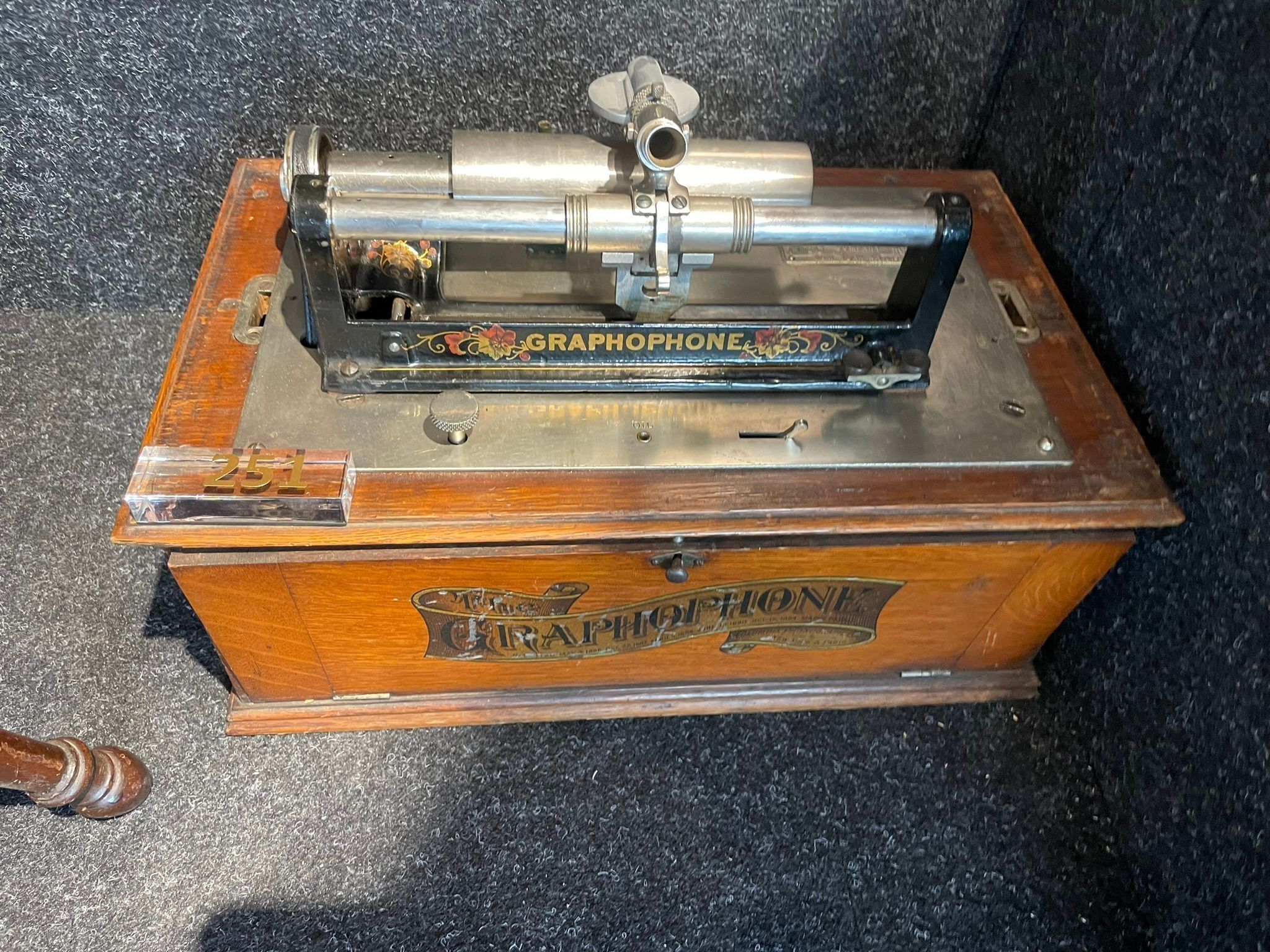
Name/Title
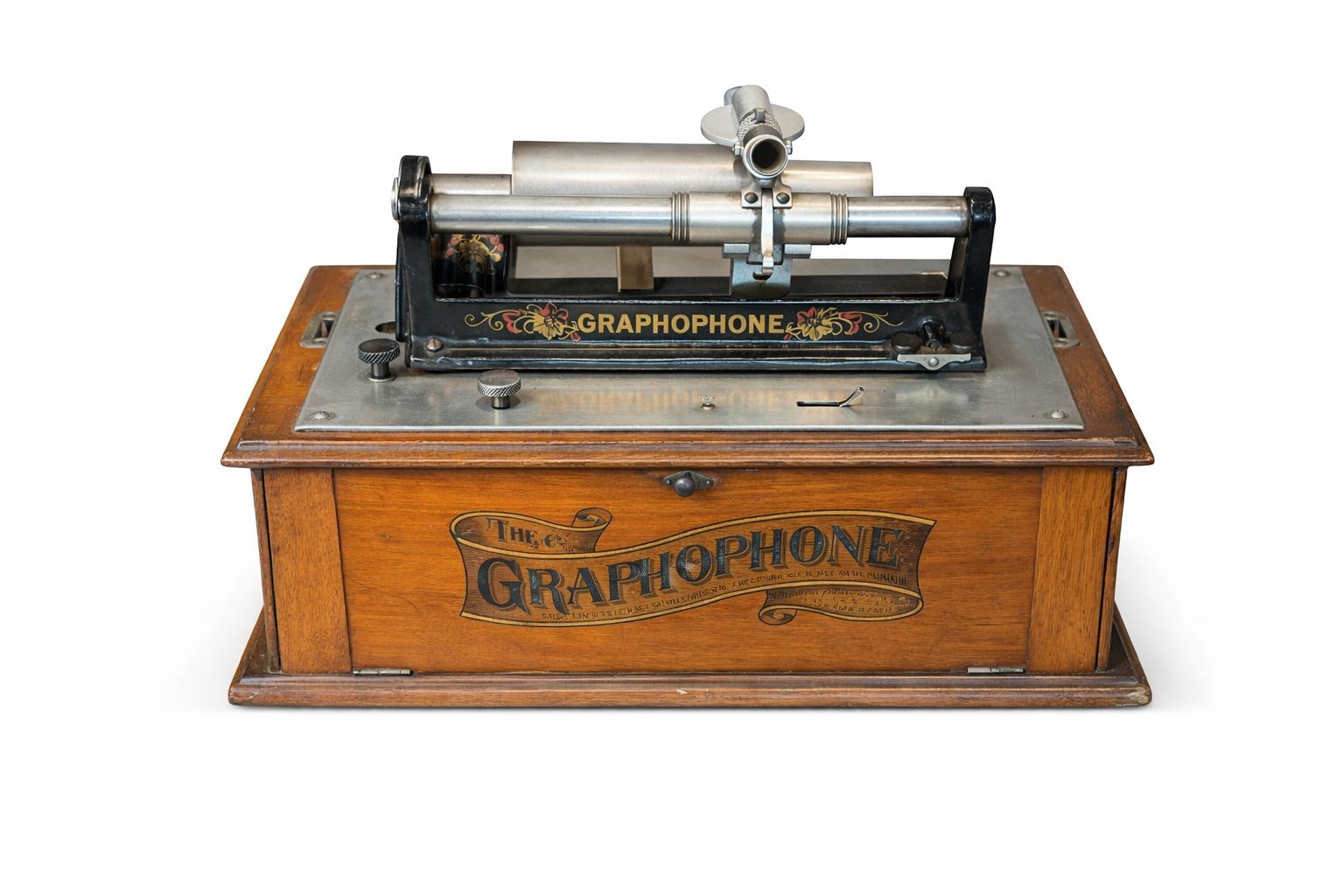
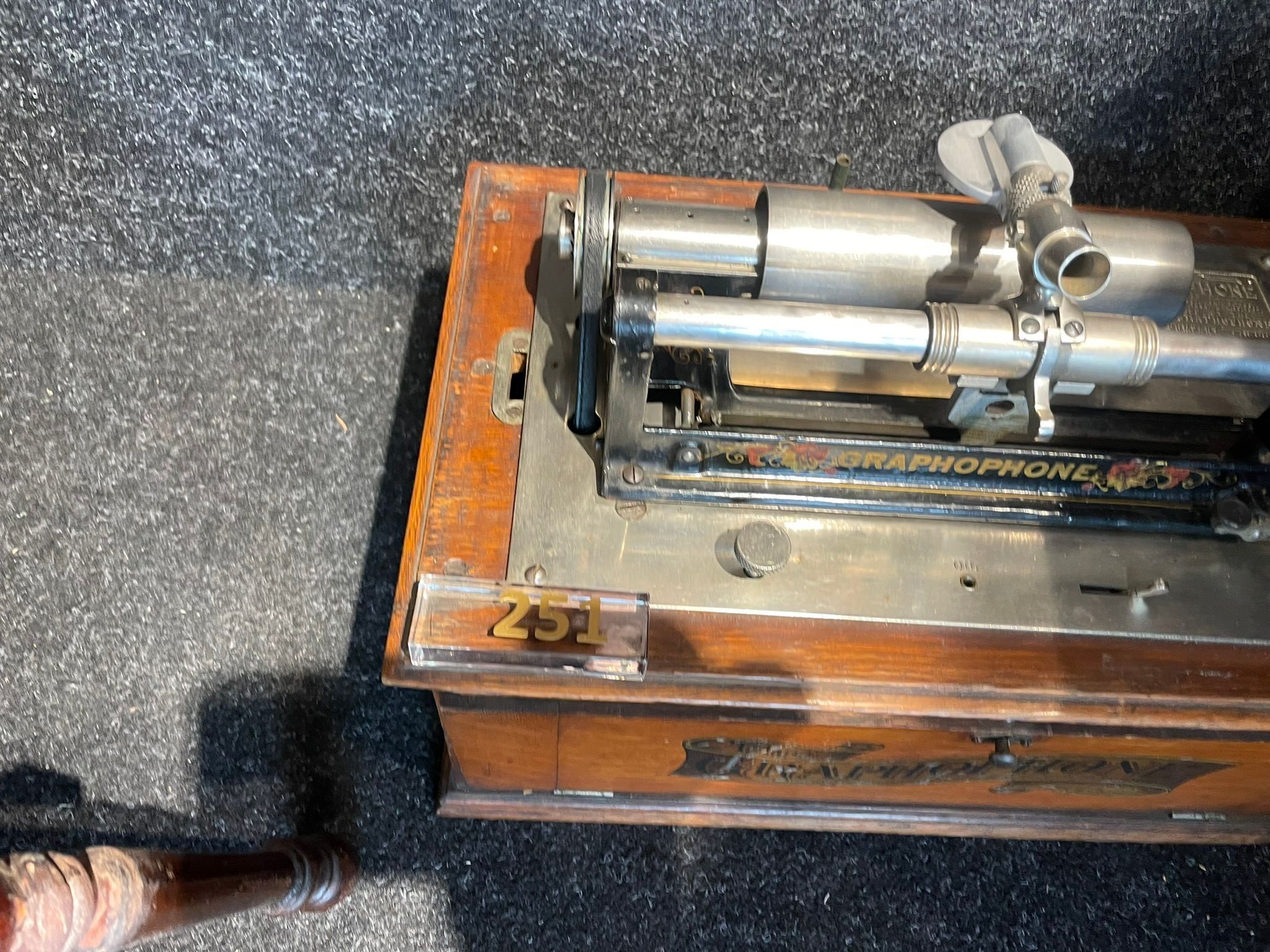
Graphophone Type C – Second StyleEntry/Object ID
251Description
American Graphophone Company, Bridgeport, Connecticut – ca. 1897–1899
Advanced business-class phonograph with updated enclosed gearwork
Historical Context
The Graphophone Type C was Columbia’s premium long-playing spring-motor machine of the late 1890s, developed by the American Graphophone Company. The Type C marked an important evolutionary step from early dictation devices toward more versatile machines suitable for both business and home use.
The “Second Style” shown here is a refined version of the original design. It retains the mechanical advantages of the first version – such as the extended mandrel and long-running motor – but incorporates important constructional improvements aimed at reliability, maintenance, and user safety.
Technical Features
Enclosed Gear Mechanism
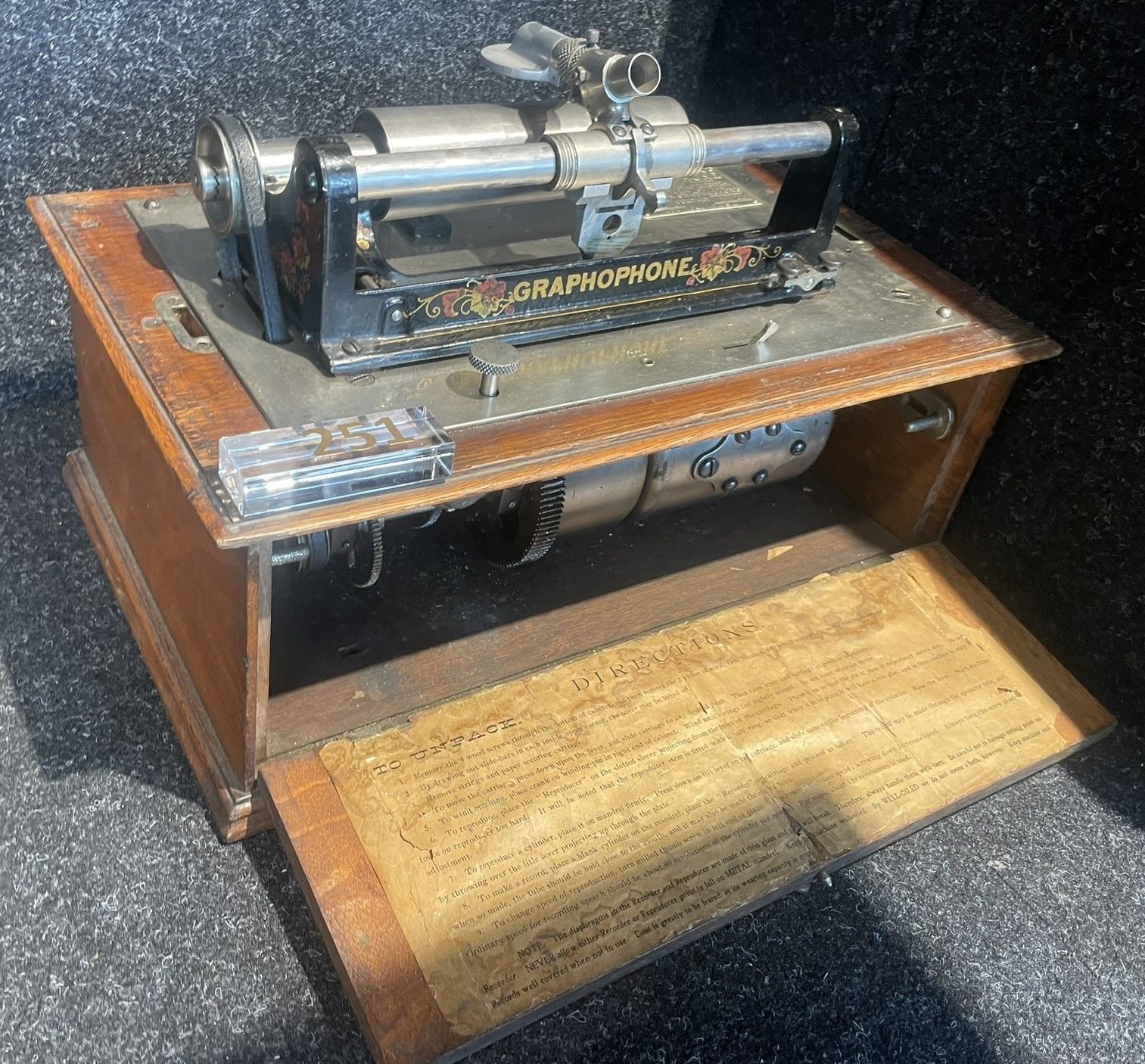
Unlike the earlier “First Style” models which had fully exposed gear trains, this “Second Style” features an enclosed upper gear assembly, protecting the mechanism from dust and reducing the risk of mechanical damage or operator injury.
6-Inch Mandrel
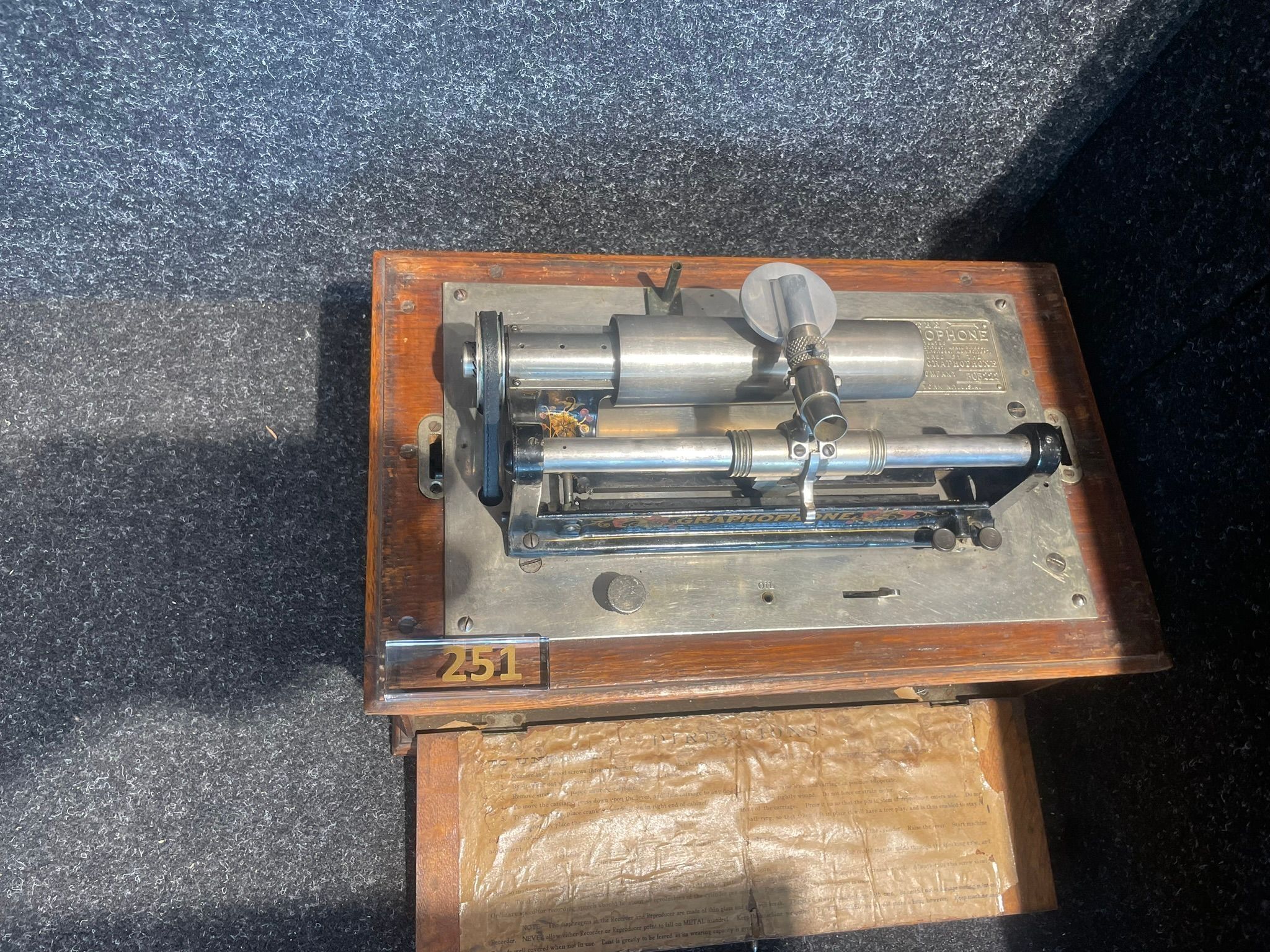
Plays special Type C cylinders up to 6 inches in length. These longer wax cylinders offered extended playtime of up to 4 minutes, depending on groove density – compared to just 2 minutes on standard cylinders.
Three-Spring Motor
A robust triple-spring mainspring system allows for continuous play of nearly 60 minutes on a single winding. This made the machine suitable for uninterrupted presentations, music demonstrations, or dictation.
Rocker Pause Mechanism
Features a dual-button “rocker” system using gutta-percha buttons to pause the cylinder mid-play while allowing the motor to continue running.
Oak Cabinet
Light oak wood with front-mounted hinged inspection panel for easy access to the motor. Large “Graphophone” gold banner decal prominently displayed on the front panel.
Reproducer & Recorder
Uses interchangeable heads for recording and playback. This machine is equipped with a #2 aluminum reproducer, standard for later Type C units.
Importance & Legacy
This Graphophone represents the second generation of Columbia’s effort to create universal machines capable of handling office dictation, exhibitions, and musical performances. It showcases the transition from open laboratory-style mechanisms to more enclosed, user-friendly designs.
Though the long-playing six-inch cylinder format had great potential, Columbia failed to promote or supply pre-recorded material for this size until 1905 – by which time disc records were dominating the market. As a result, many Type C machines, including this “Universal” model, remained underappreciated and often unsold.