Name/Title
Graphophone Grand – Turn‑of‑the‑Century High‑End PhonographEntry/Object ID
253Description
Columbia Phonograph Company, USA – ca. 1898
Serial No. 49
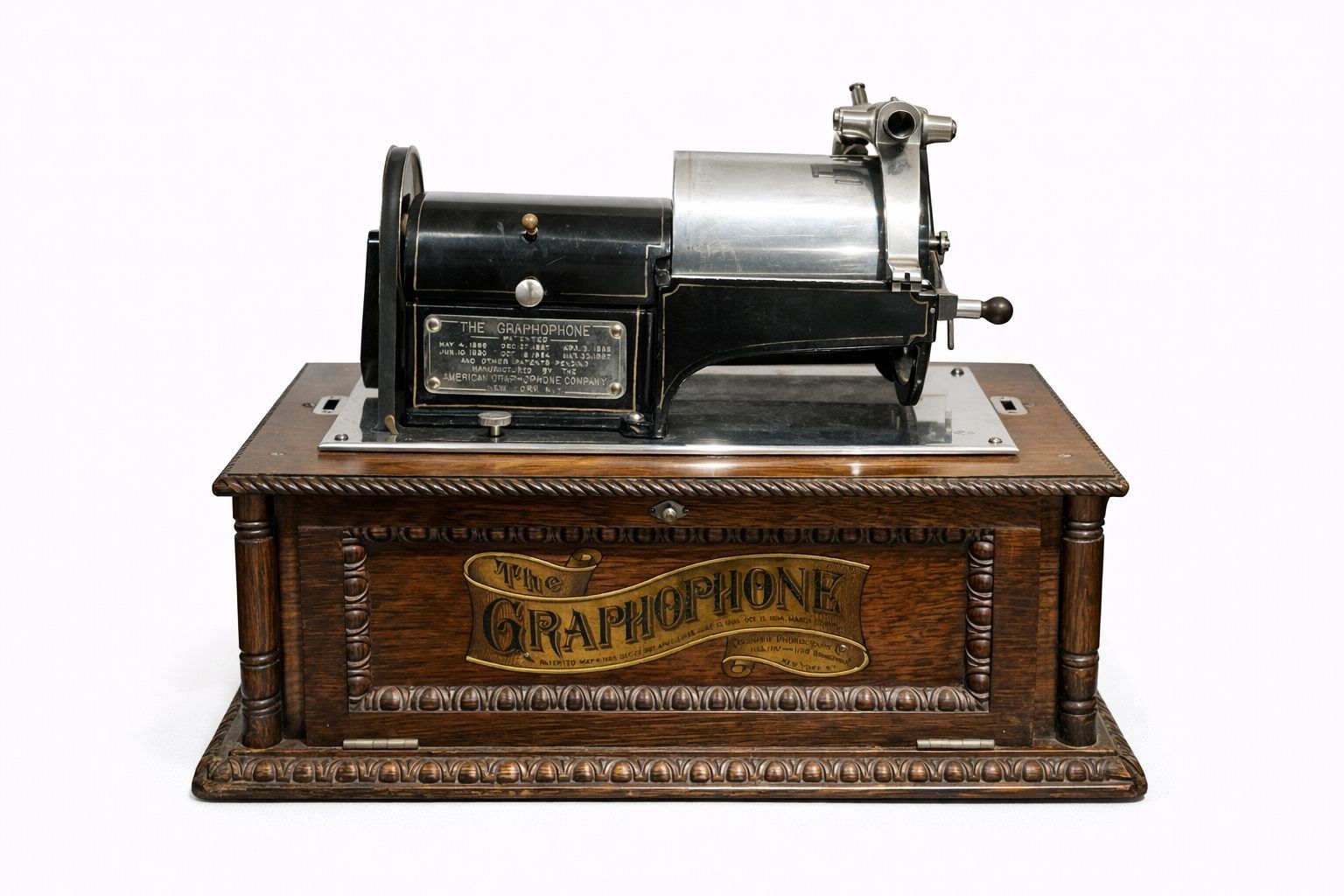
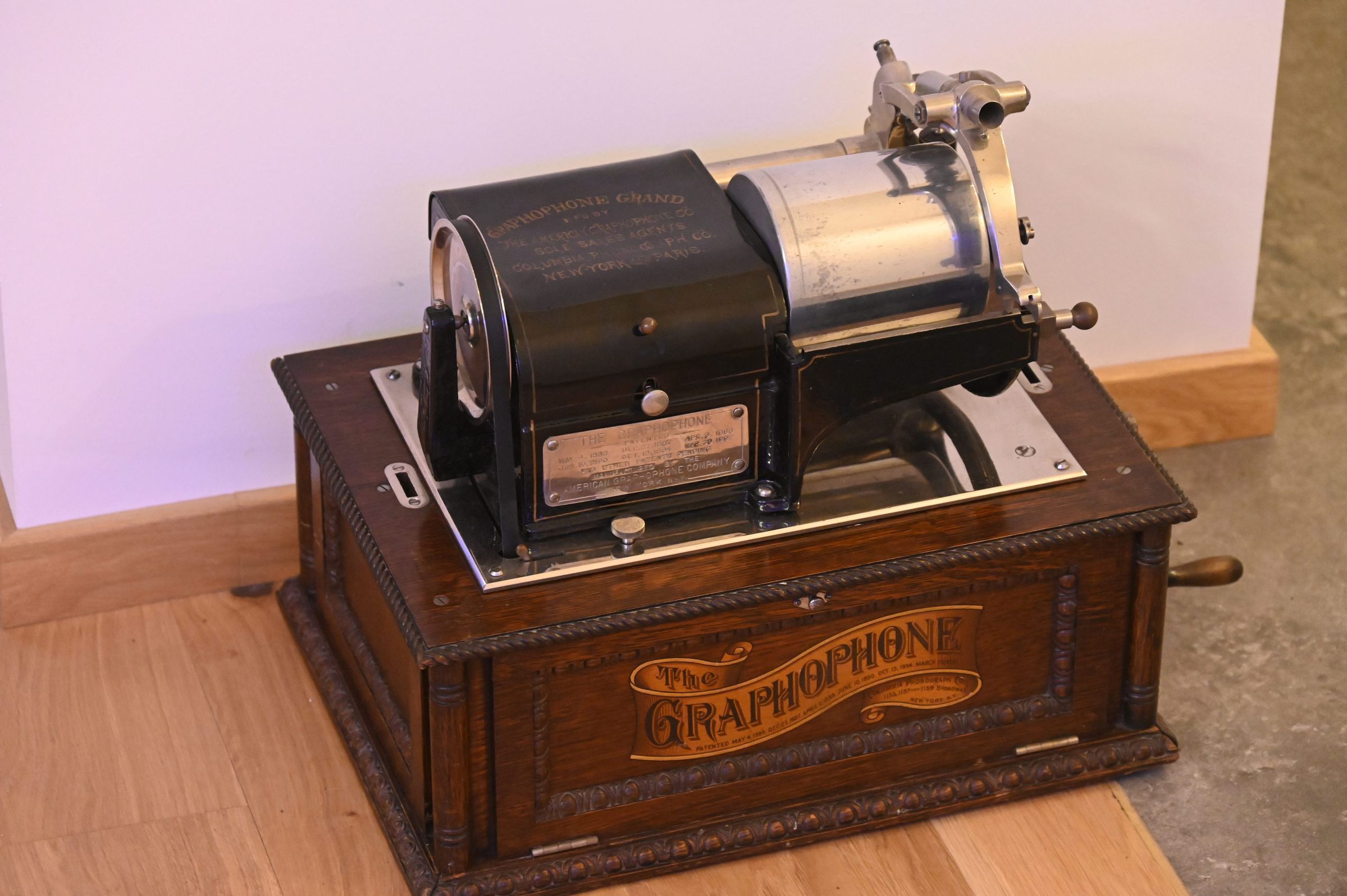
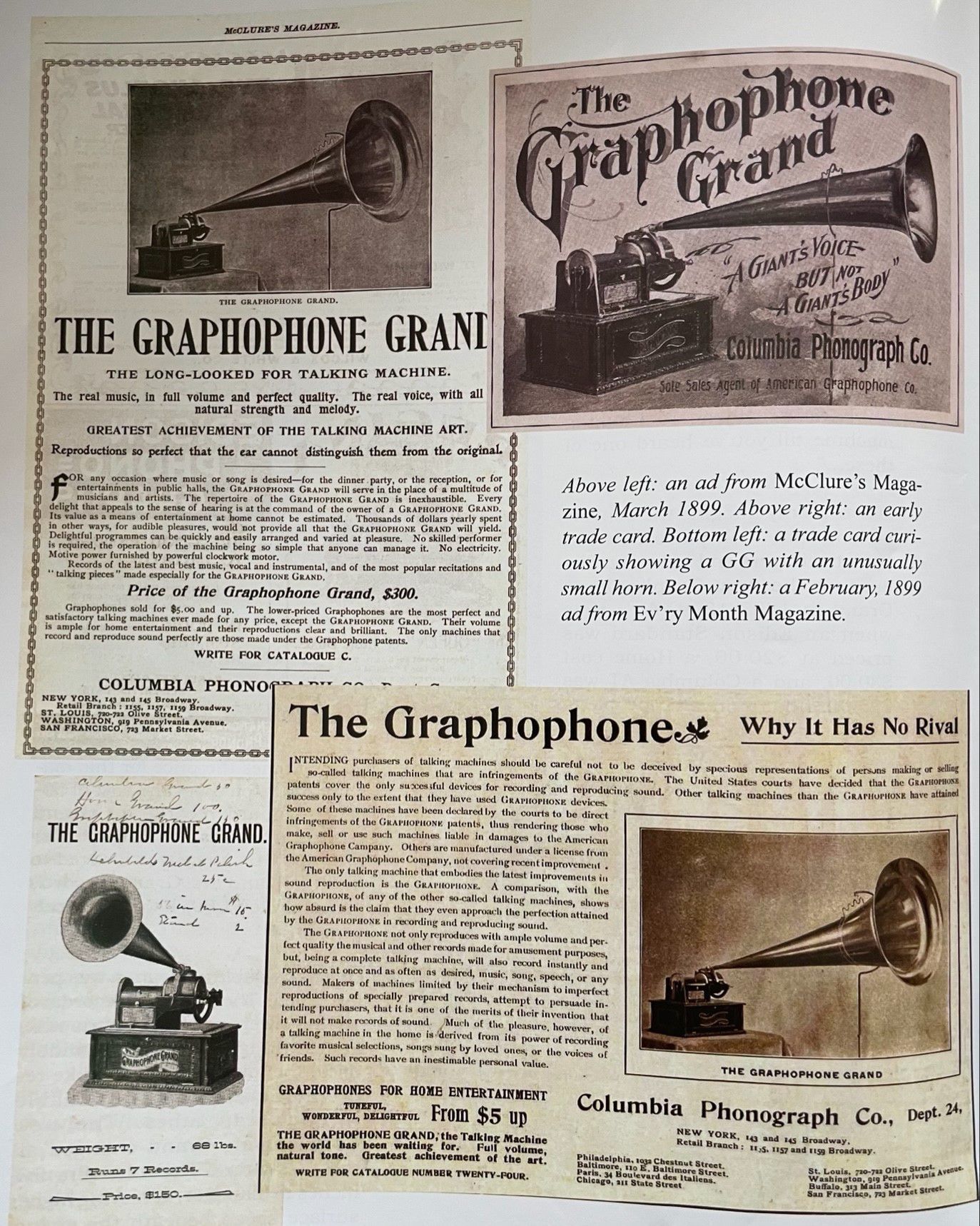
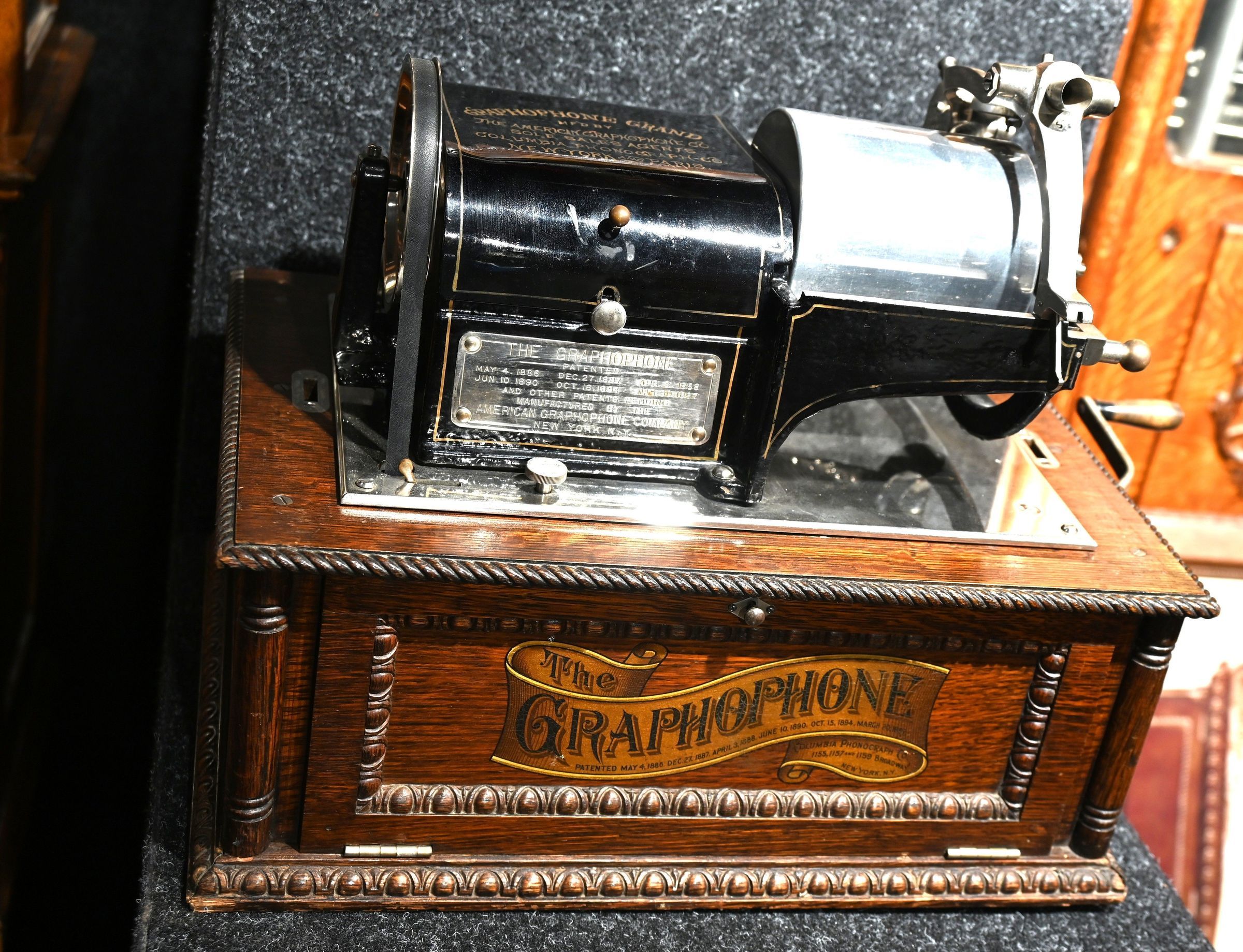
The Graphophone Grand stands as one of the most impressive and expensive talking machines of the 19th century. Released in time for the 1898 Christmas season, it was aimed at a wealthy, luxury‑oriented clientele with a price of $300 – equivalent to around €7,000 today.
Technical Features
Cylinder format: Special Grand or Concert cylinders, 12.7 cm (5 in) in diameter – twice the size of standard cylinders.
Advantage: The larger recording surface allowed longer grooves, higher volume, and greater fidelity.
Drive: Precision triple‑spring motor (taken from the Graphophone C), governor, large endgate carriage – mechanically closer to the Edison phonograph than to other Graphophones.
Reproducer: Early machines fitted with the #2 “Eagle”‑type reproducer with knurled thumbscrew, later replaced by the heavier #4 “Heavy Eagle”‑type.
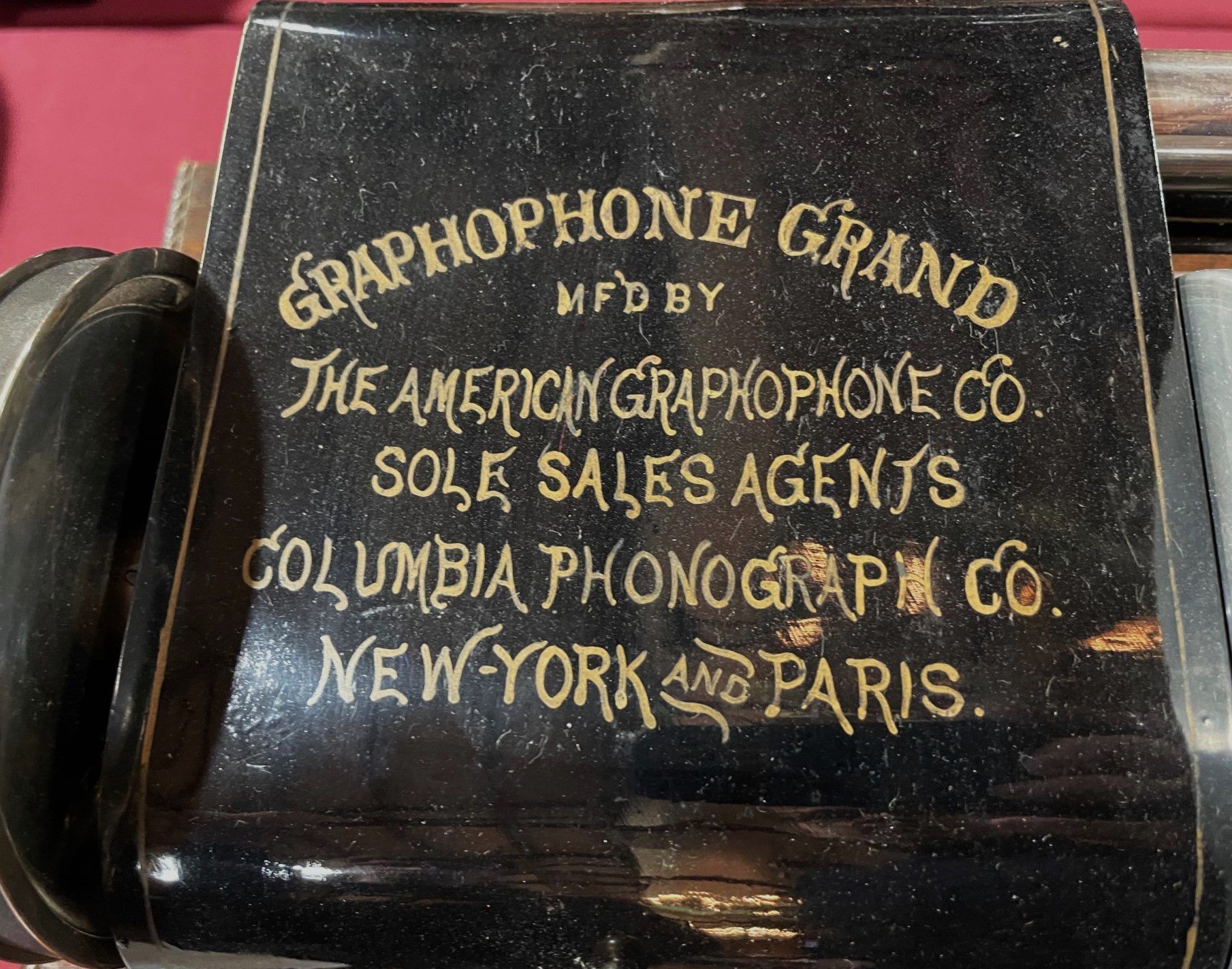
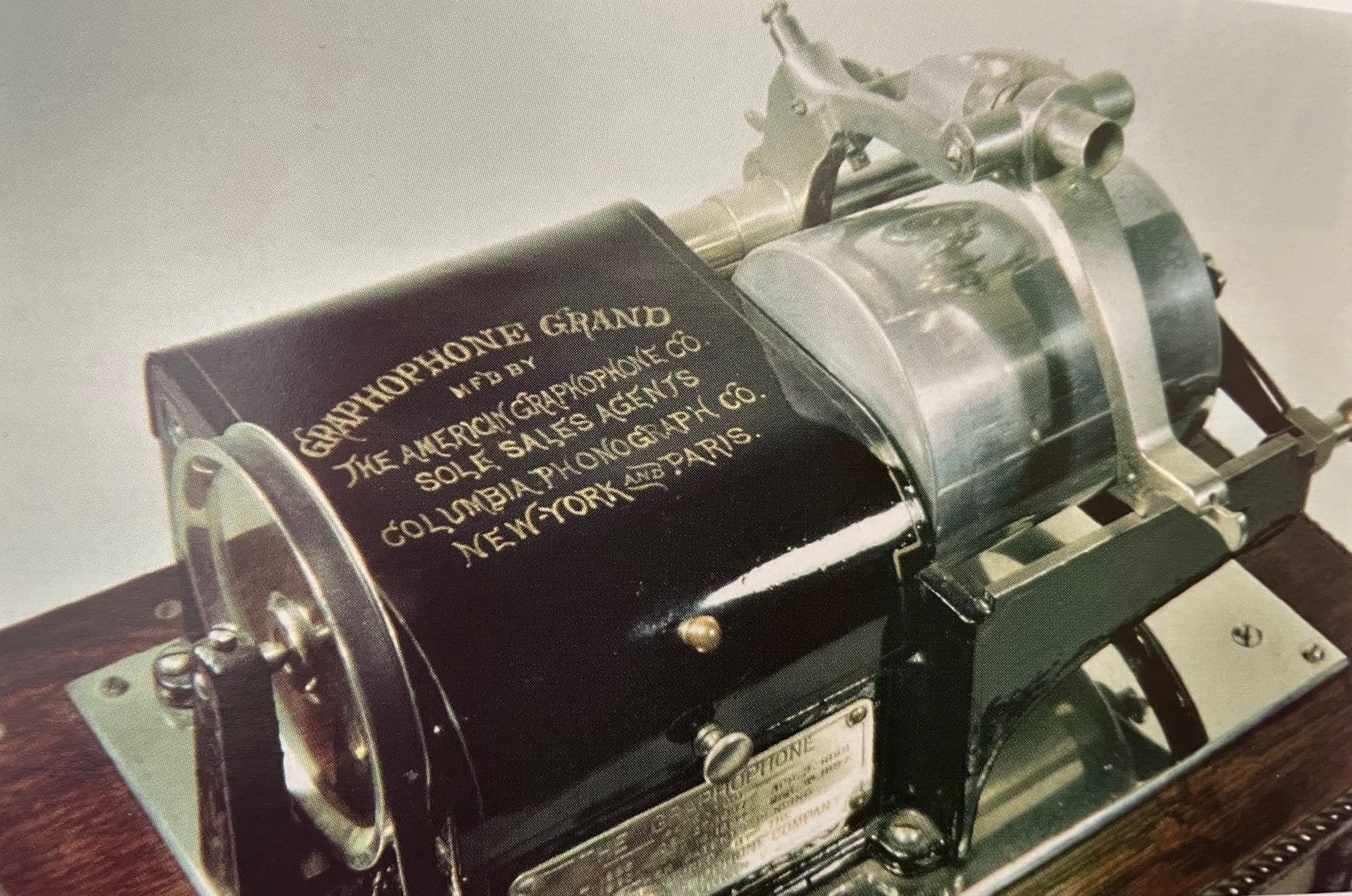
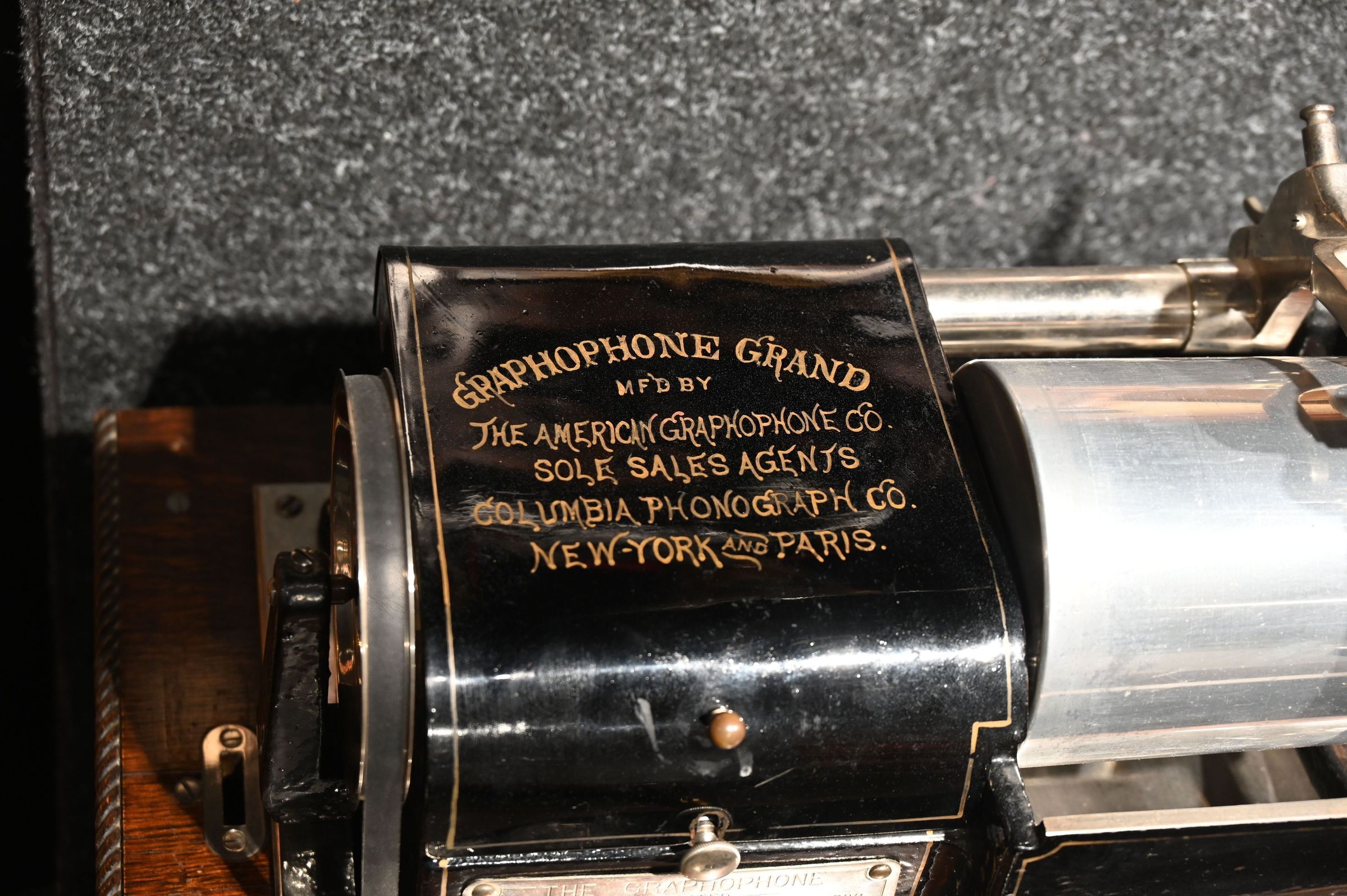
Decoration: Early serial numbers feature a hand‑painted script on the feedscrew cover, later replaced with a stenciled block‑letter design.
Historical Context
The public unveiling took place on November 23, 1898.
Positioned as Columbia’s ultimate premium model, the Grand was intended to cement the company’s status as a luxury‑market innovator – in direct competition with Edison.
Initially, Grand cylinders sold for $5 each (about €125 today) but soon dropped to $1. Despite the high price, the Graphophone Grand was regarded as unmatched in both volume and sound quality.
Production Figures
Only about 400 units were produced before the less expensive Home Grand was introduced in 1899, effectively replacing the Graphophone Grand. Surviving serial numbers confirm the extremely limited production, underscoring its exclusivity.
Distribution in Germany
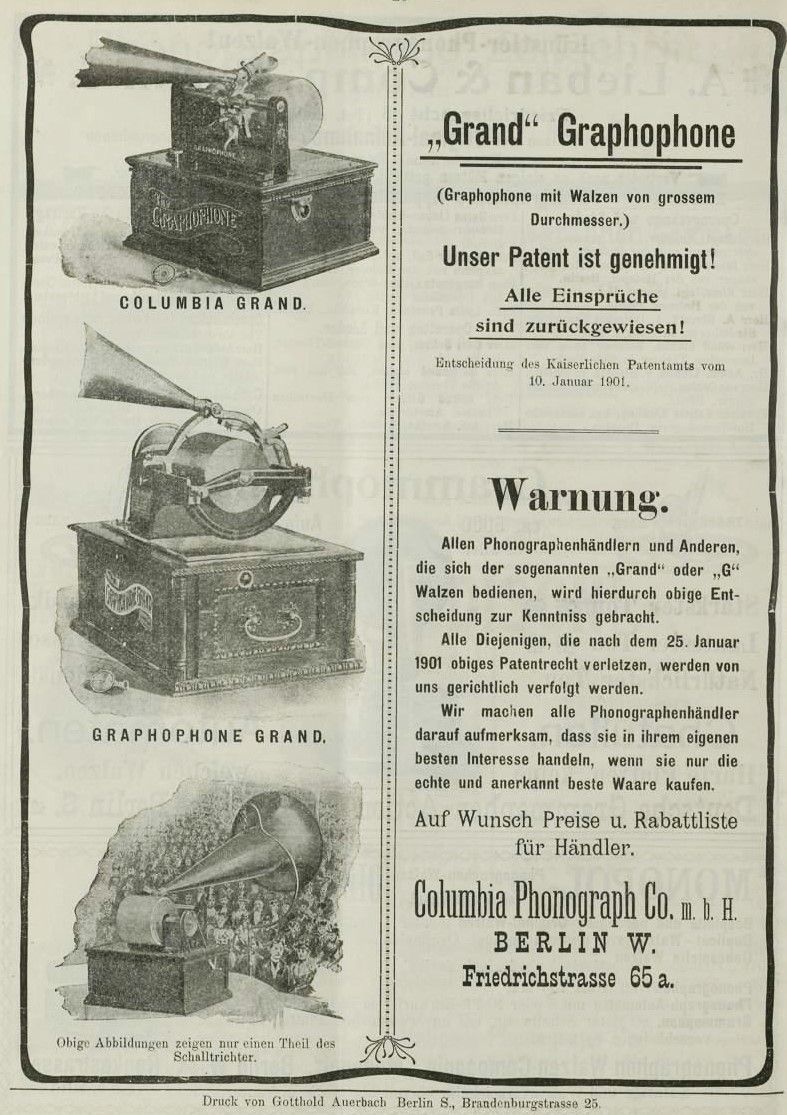
In Germany, the model was officially sold by Columbia Phonograph Co. m.b.H., Berlin W., Friedrichstraße 65a.
An advertisement from January 1901 proudly announced that Columbia’s patent for Grand‑sized cylinders had been confirmed by the Imperial German Patent Office. It also carried a strong warning to dealers and users that unauthorized use of Grand cylinders would result in legal action.
Competition and Price Reduction
February 1899: Edison launches the Concert Phonograph at $125.
November 1899: Columbia cuts the price of the Graphophone Grand to $150 to remain competitive.
Significance and Rarity
The Graphophone Grand No. 49 in the Edisonium is among the earliest known surviving examples. With its high‑precision mechanics and remarkable sonic performance, it epitomized the concept of technical luxury at the turn of the 20th century.
Today, original, fully preserved machines are exceedingly rare – especially early versions with the hand‑painted script on the feedscrew cover.