Name/Title
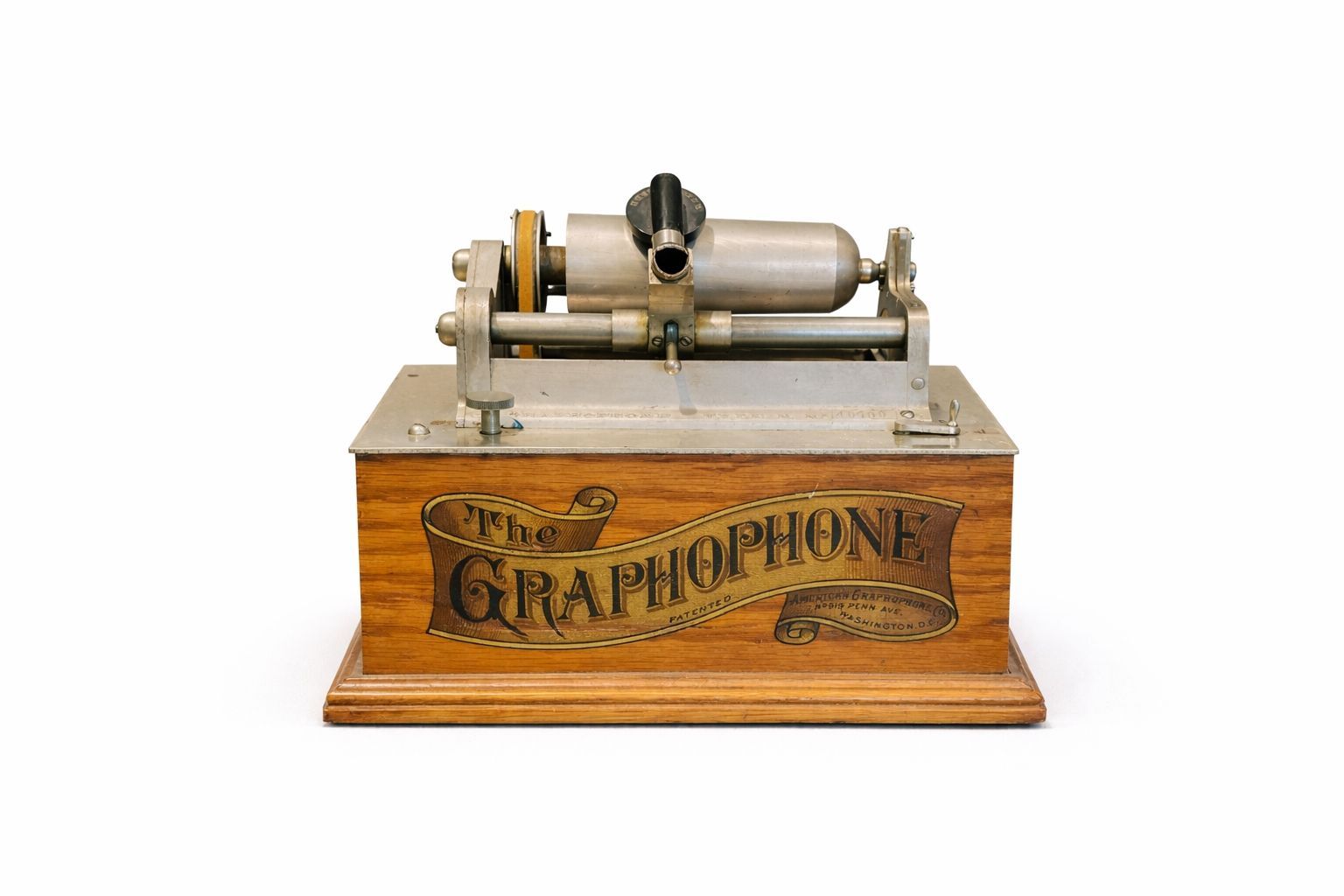
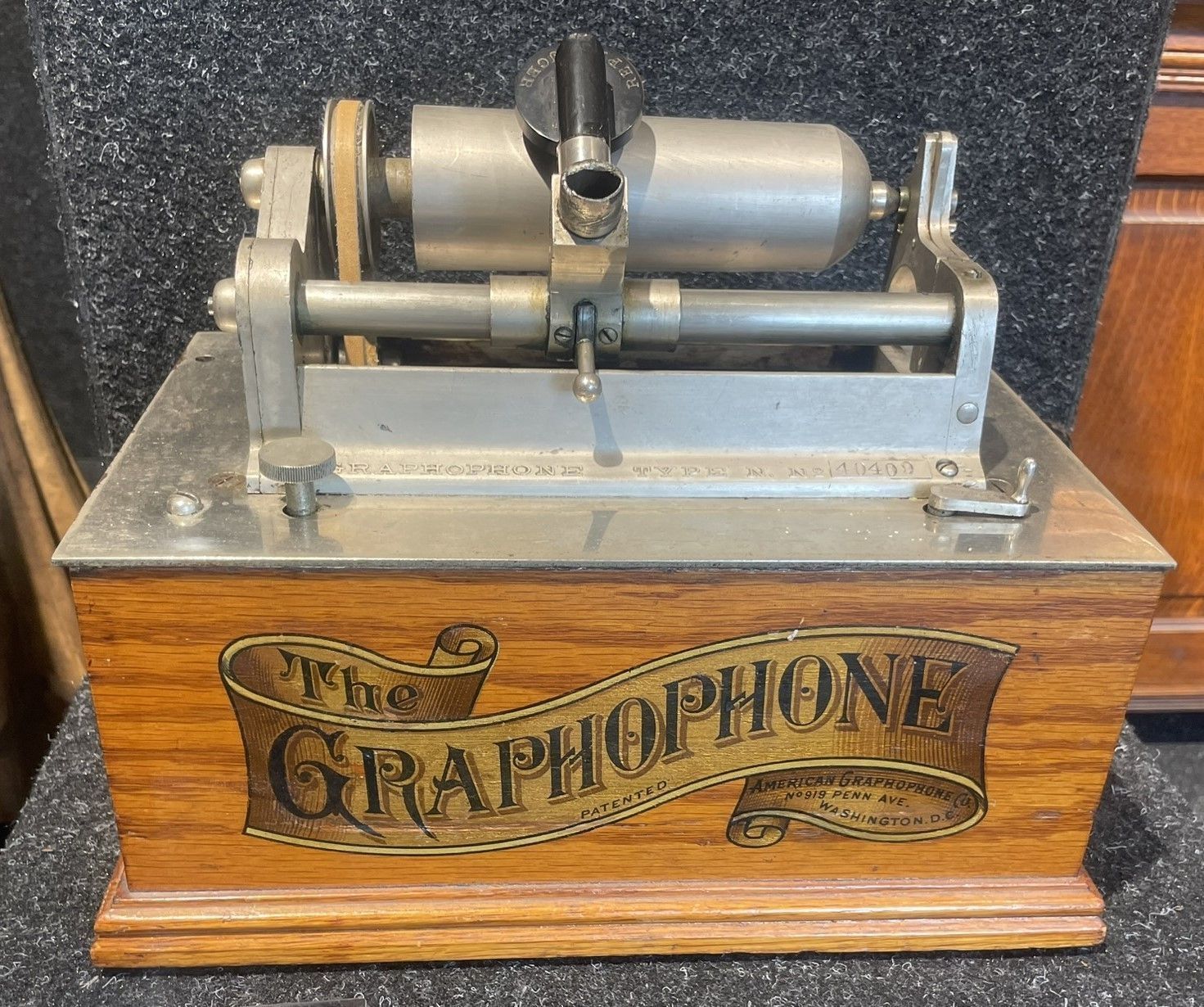
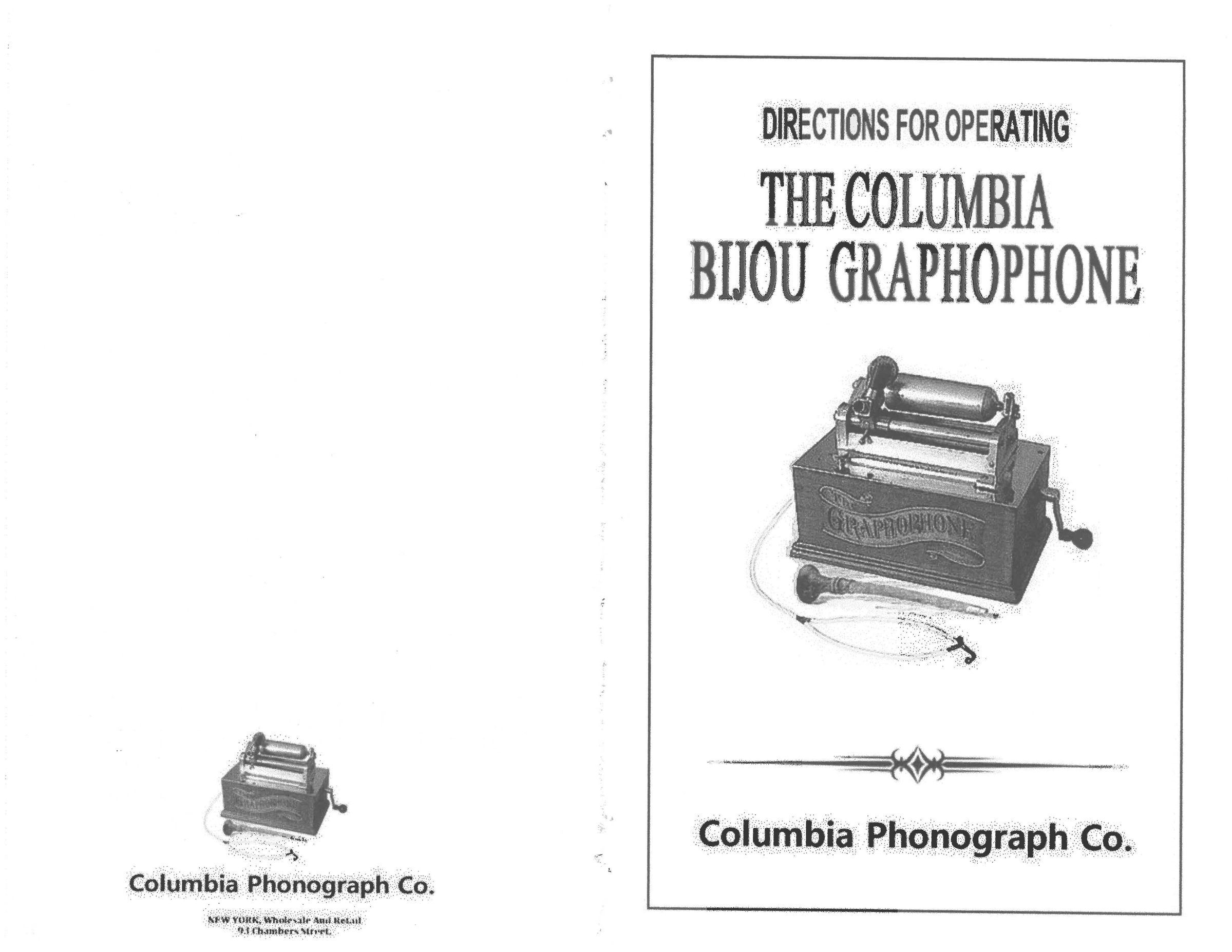
Graphophone Type “N” BijouEntry/Object ID
257Description
Thomas H. Macdonald
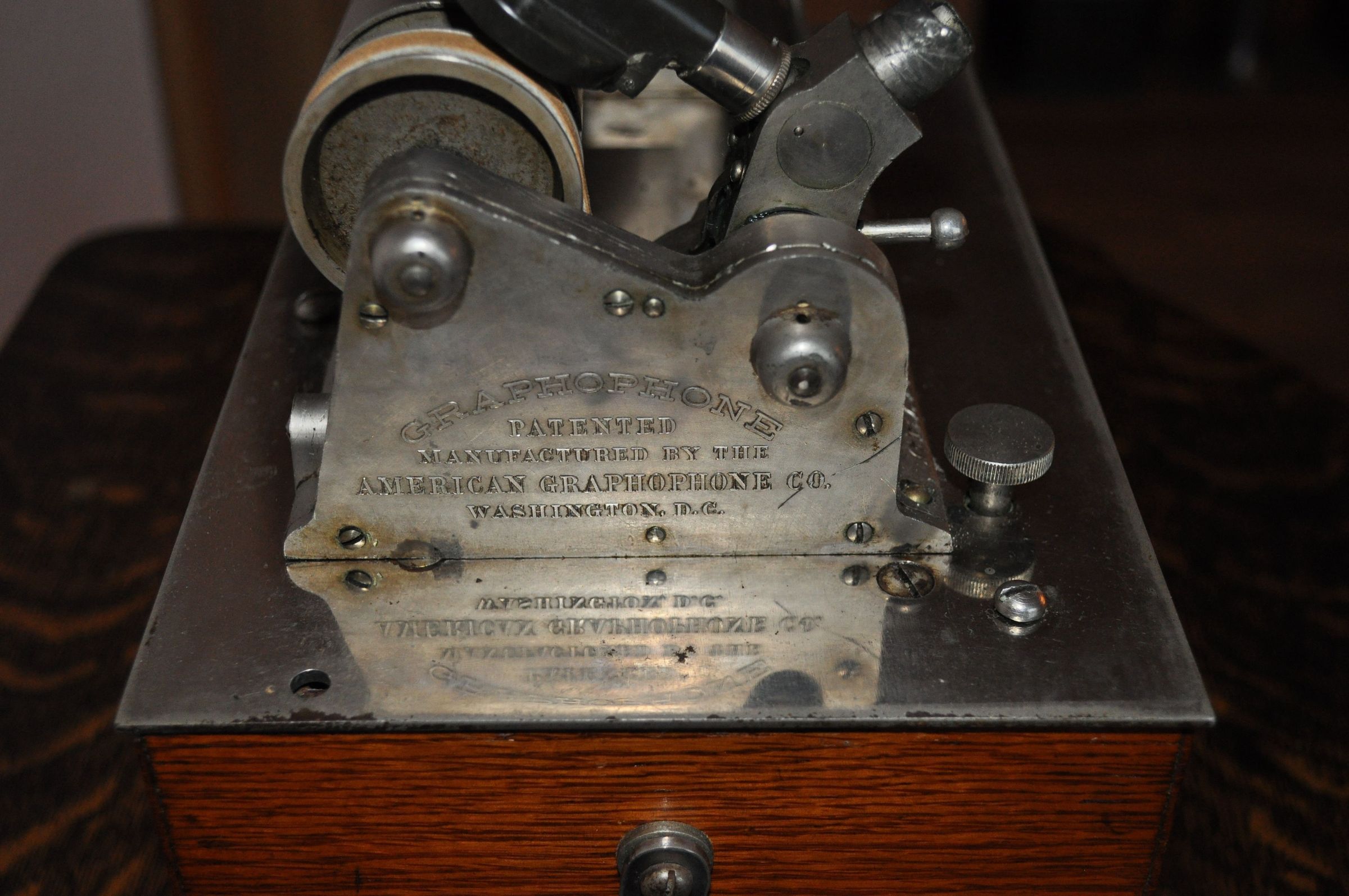
American Graphophone Company (Columbia)
USA, introduced 1895
Historical Context
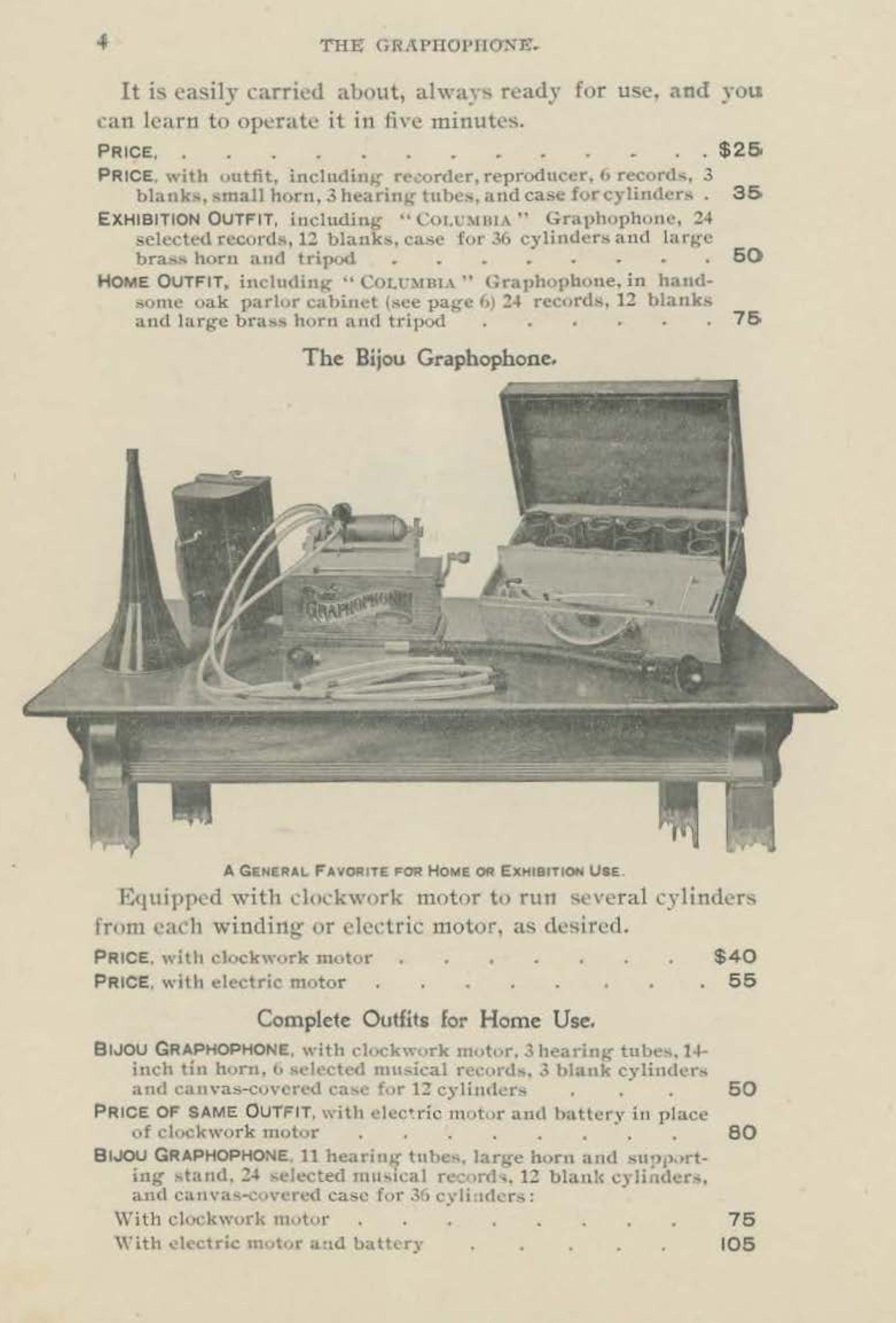
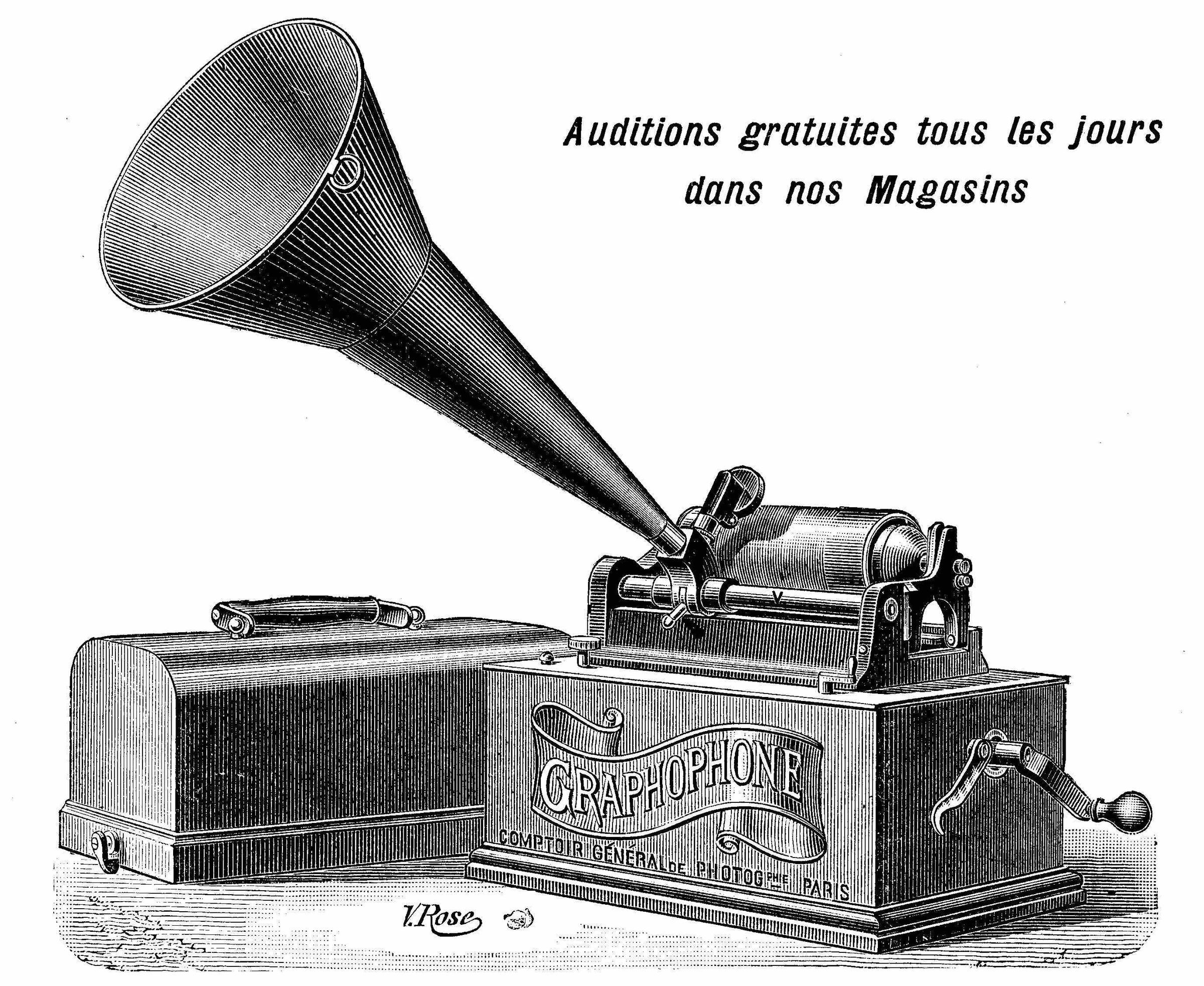
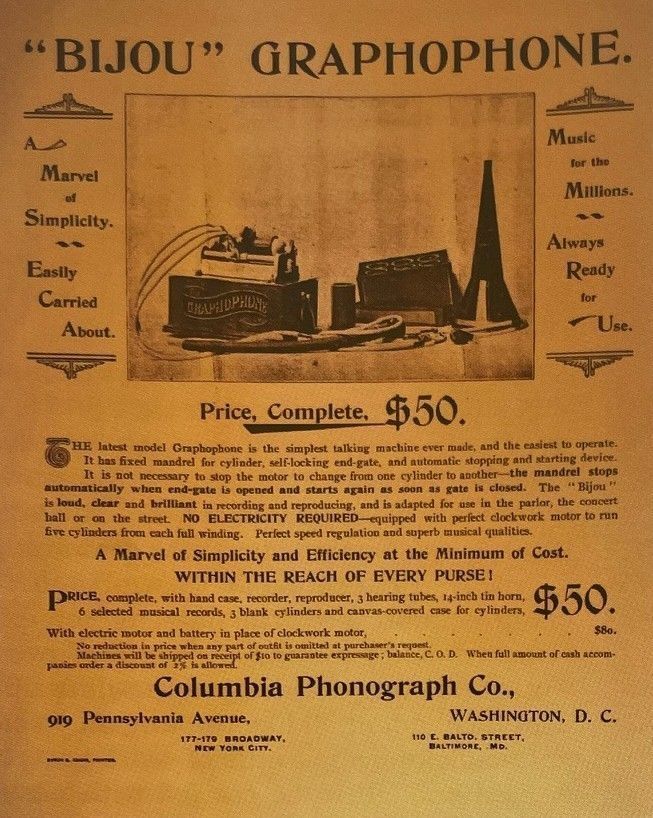
The Graphophone Type N “Bijou” was the second Graphophone model developed specifically for the home entertainment market, following the so-called Baby G. With this machine, Columbia took a decisive step away from earlier, still highly experimental designs toward a compact, modern talking machine intended for private domestic use.
The Type N thus marks the beginning of a generation of machines that firmly established the Graphophone in the bourgeois living room.
Technical Significance
The Type N “Bijou” was groundbreaking in several important respects:
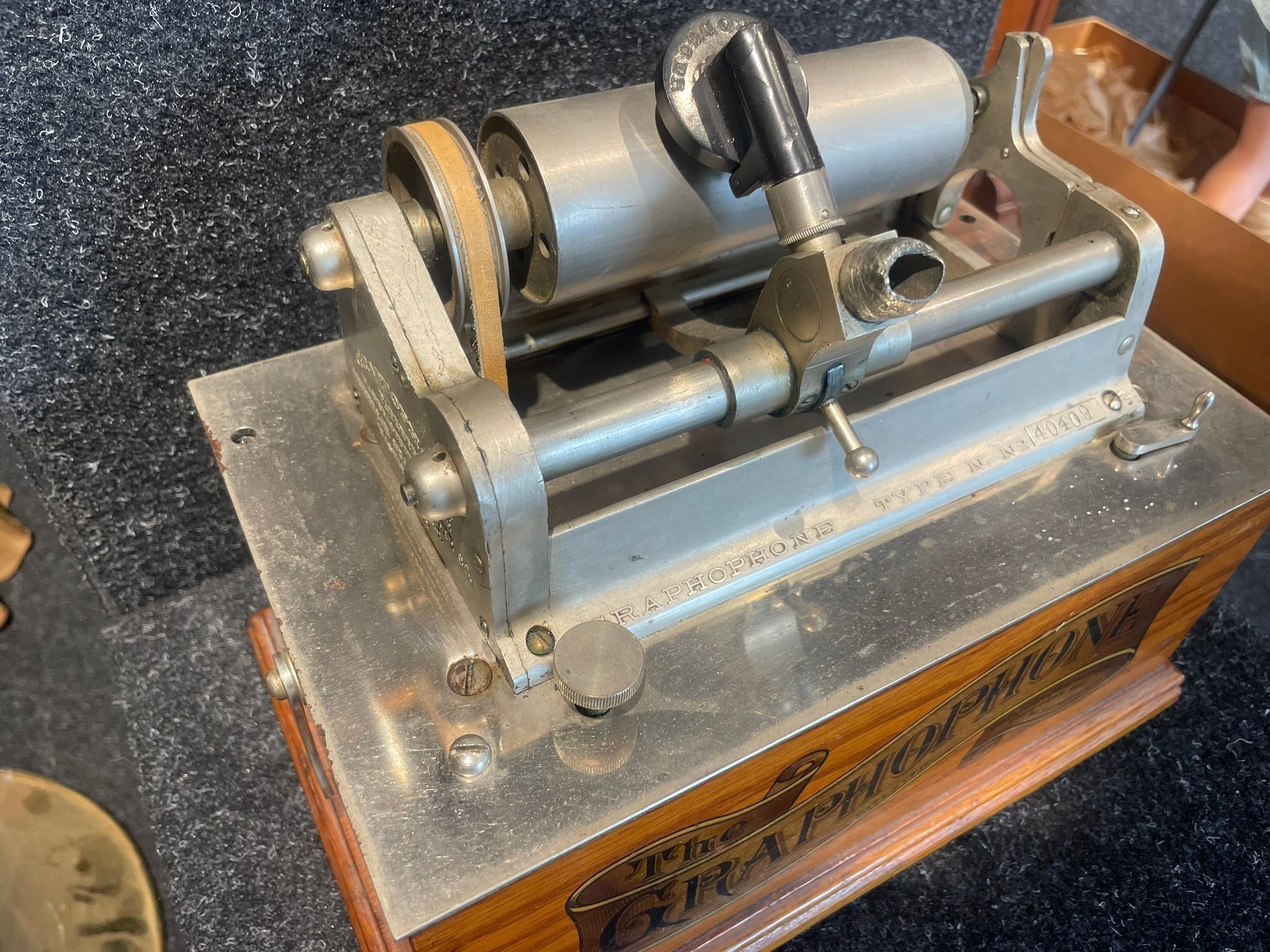
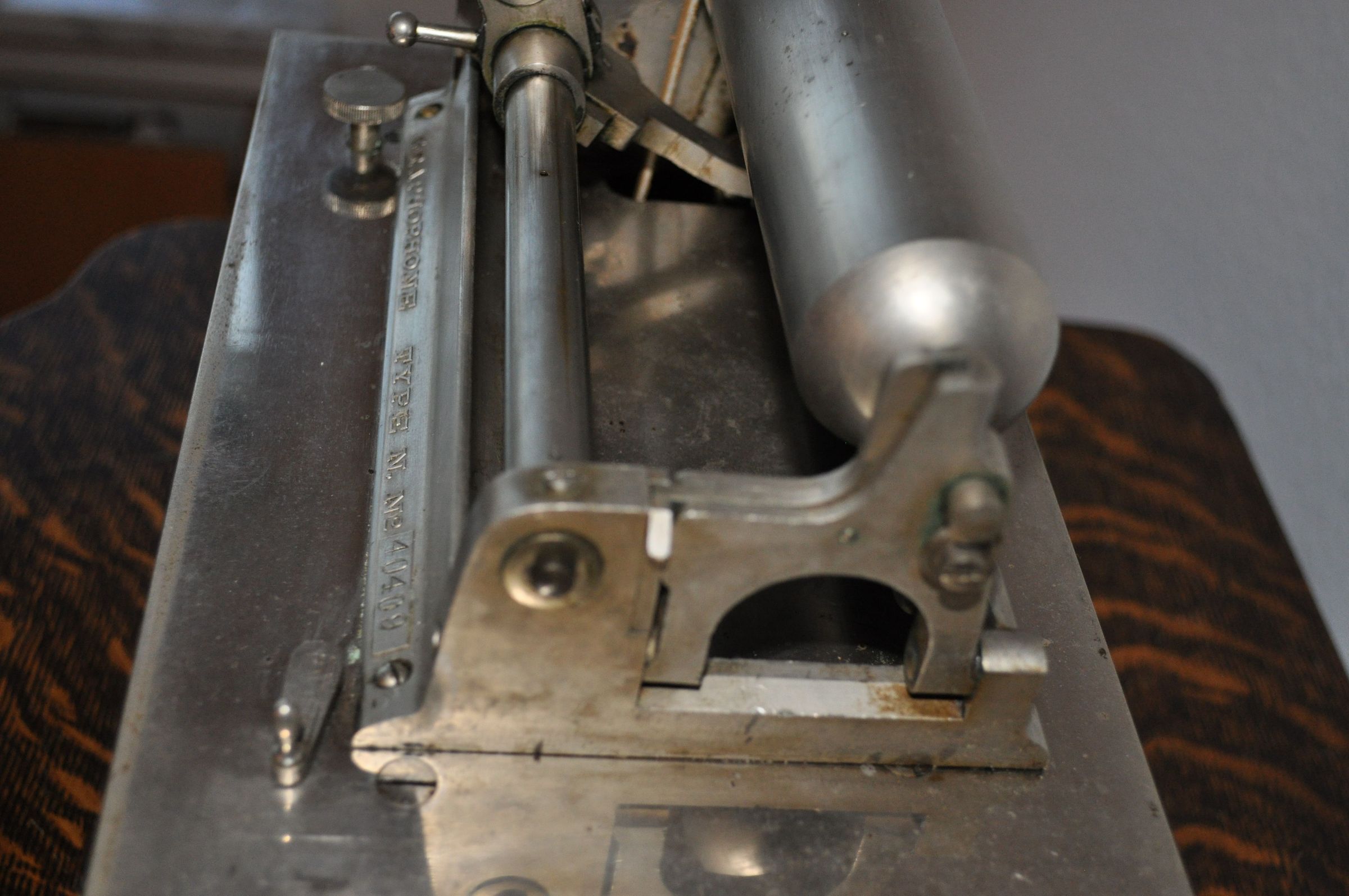
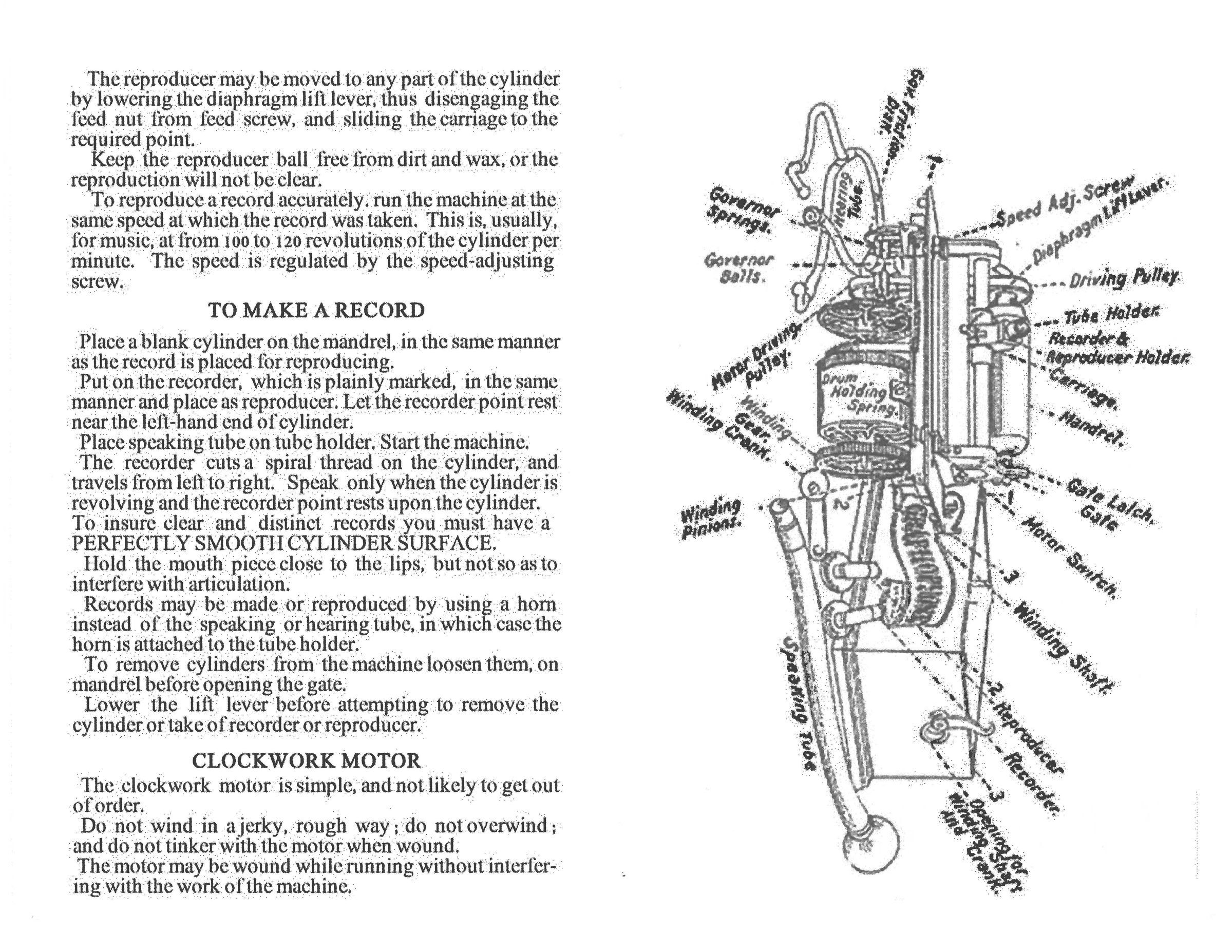
First Columbia Graphophone with a fixed mandrel
The cylinder was no longer placed on a removable shaft, but played on a permanently mounted mandrel—an important advance in stability, precision, and ease of operation.
Access via hinged “end gate”
The mandrel could be reached by folding down the side end gate, an elegant and user-friendly solution that would influence later designs.
Newly developed aluminum chassis
In contrast to earlier, heavier constructions, the Type N employed a modern aluminum upper works. This significantly reduced weight while allowing more precise manufacturing.
Originally equipped with a black gutta-percha reproducer
This early reproducer type is characteristic of the transitional period of the 1890s and documents the rapid technical evolution of acoustic sound reproduction.
Design and Classification
The Type N “Bijou” clearly combines the Bell–Tainter tradition of early Graphophones with the emerging classical Columbia design language:
compact overall form
clean, restrained lines
functional reduction to essential elements
Among collectors, the Type N is regarded as a key transitional machine, marking the moment when the form, mechanics, and operating concept of modern Graphophones first fully crystallized.
Further Development: Type AN
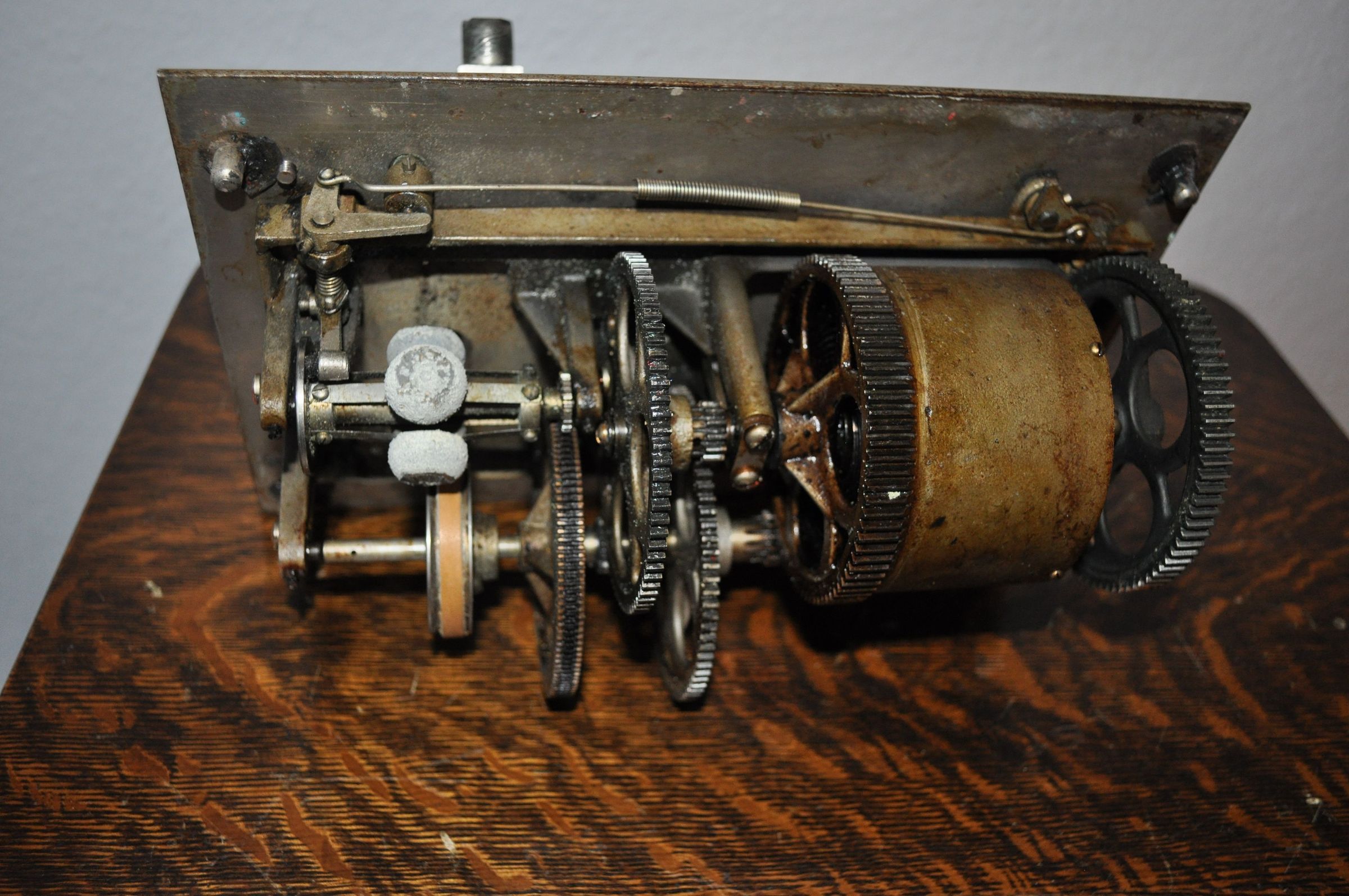
The Graphophone Type N formed the constructive basis for the subsequent Type AN, introduced shortly thereafter. In the Type AN, the basic layout, fixed mandrel, and aluminum construction were further refined and paired with a more powerful motor.
The Type N “Bijou” therefore represents the technical starting point of a family of machines that would shape Columbia’s production for several years.
Significance
The Graphophone Type N “Bijou” stands for:
the breakthrough of the Graphophone as a home entertainment device
the introduction of the fixed mandrel at Columbia
the transition to modern chassis and machine architecture
the direct evolutionary line leading to the Type AN and later series models
It is a technically and culturally significant link between the early Graphophones of the 1880s and the fully developed home machines of the turn of the twentieth century.