Name/Title
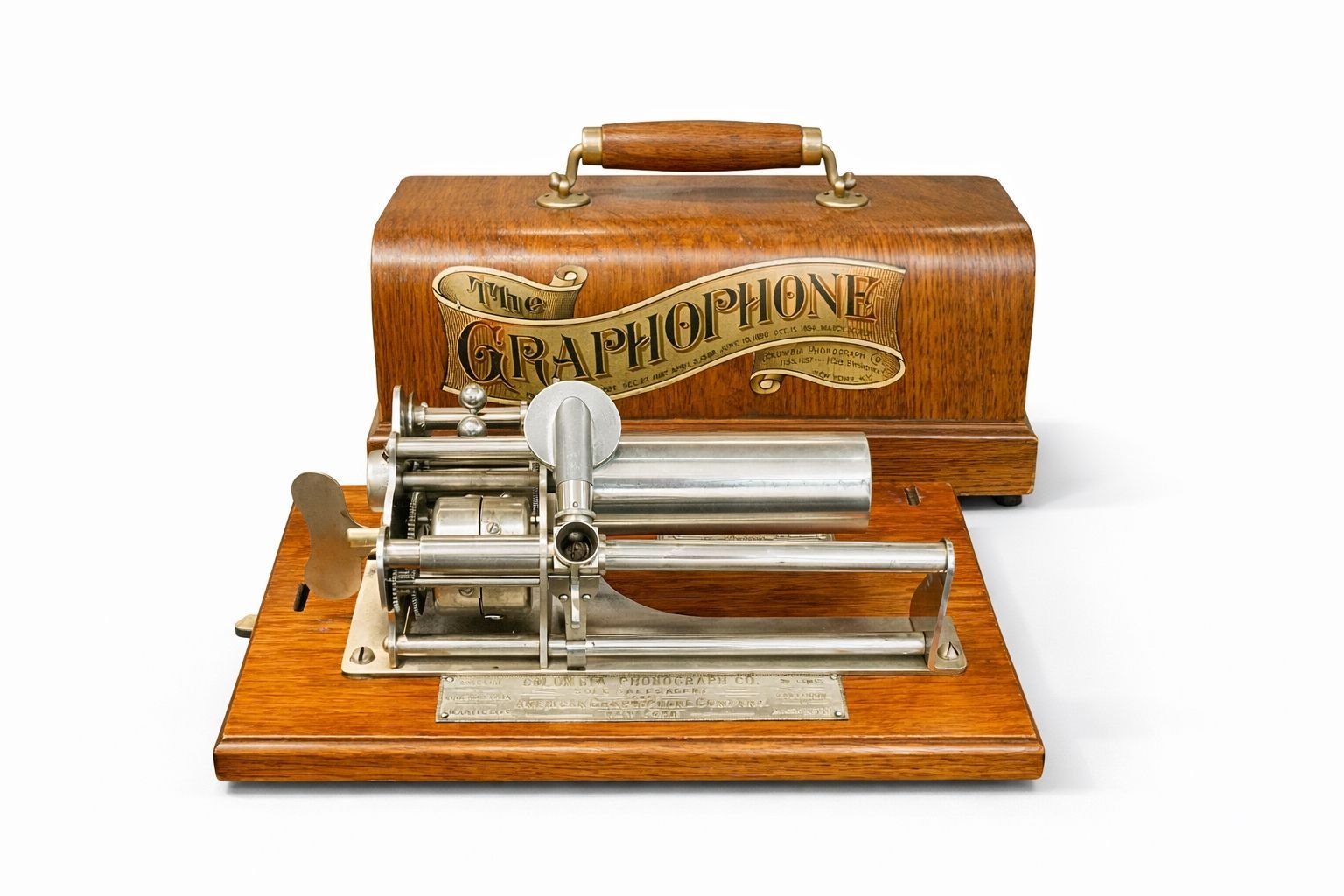
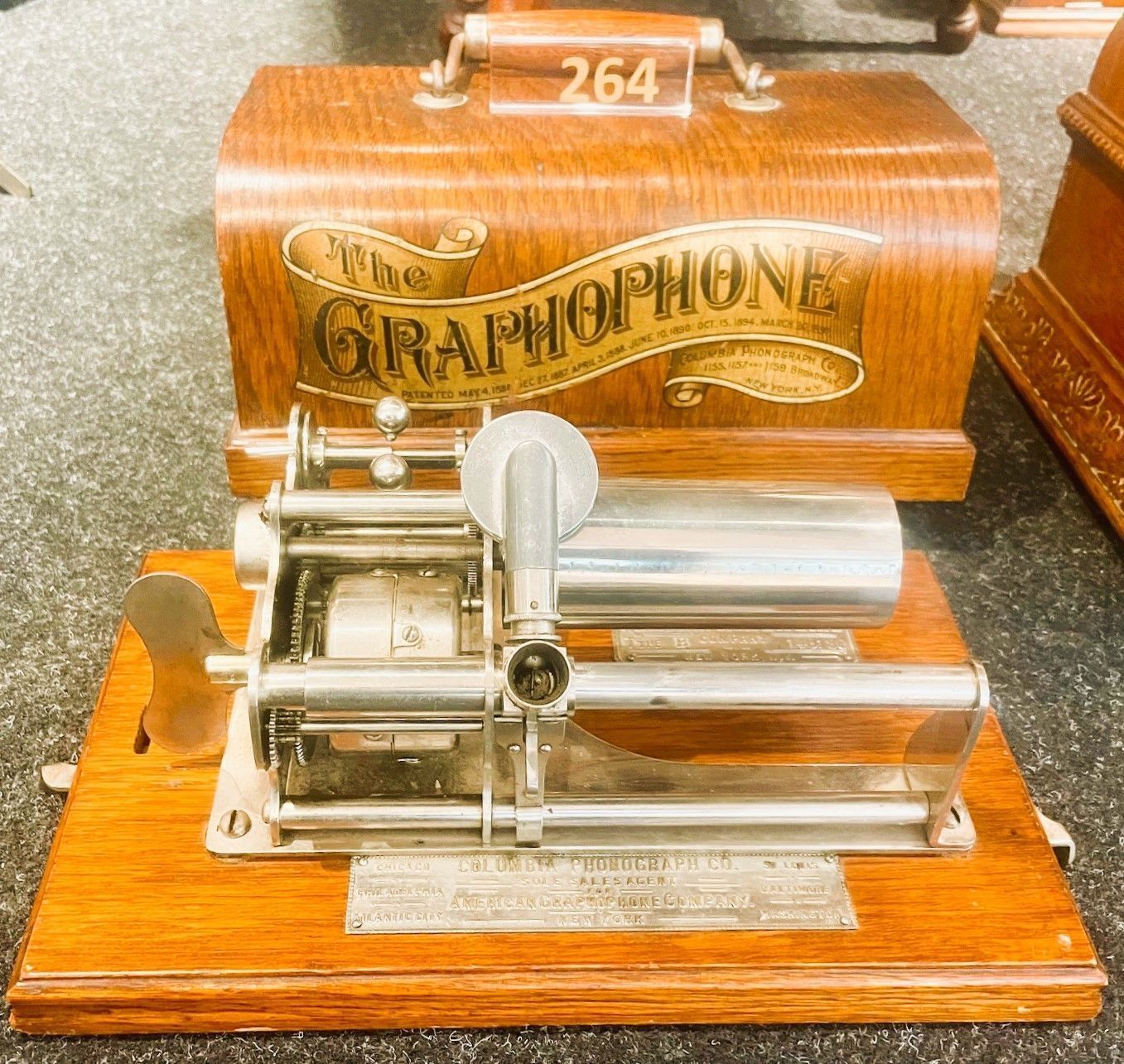
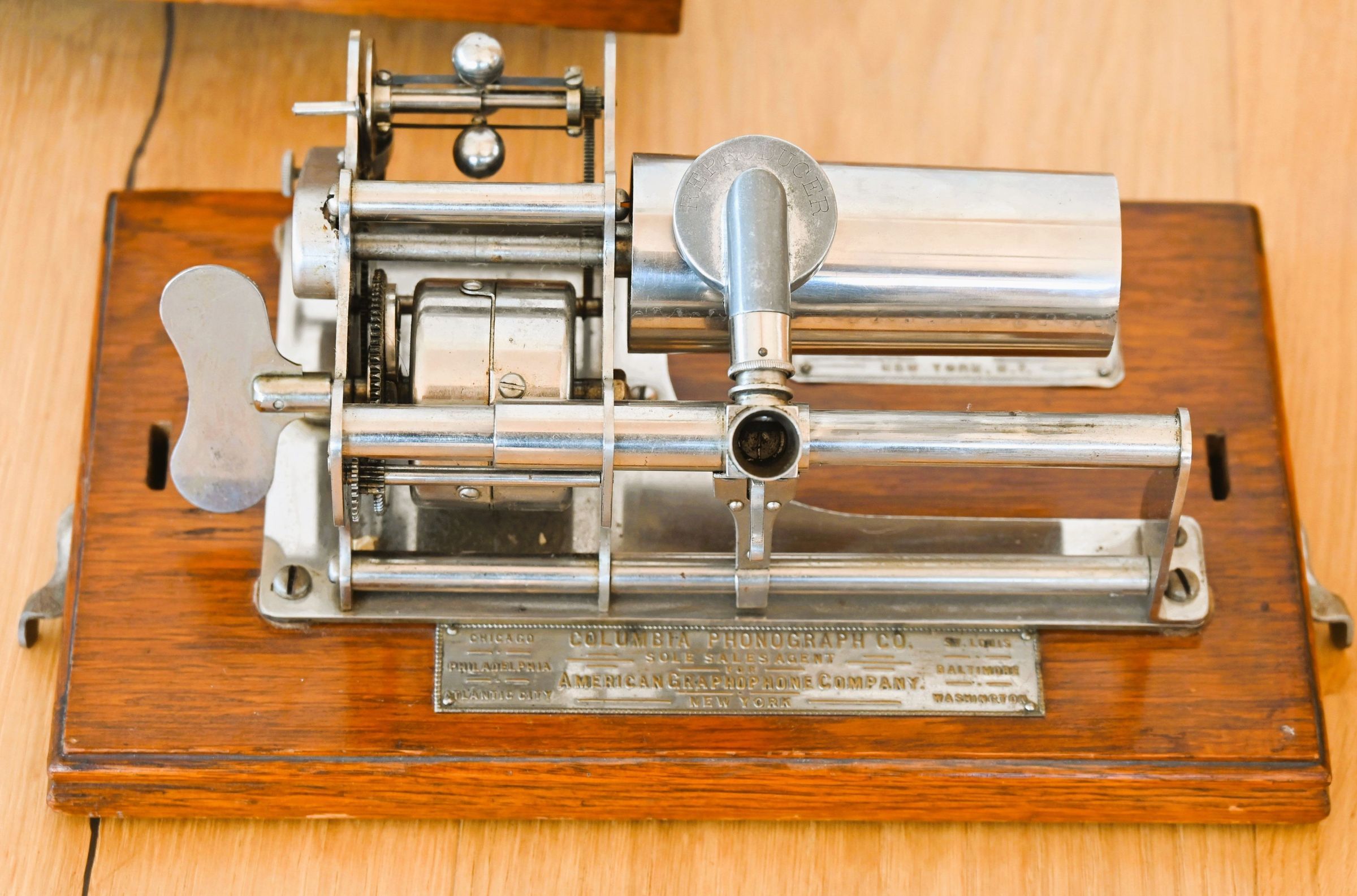
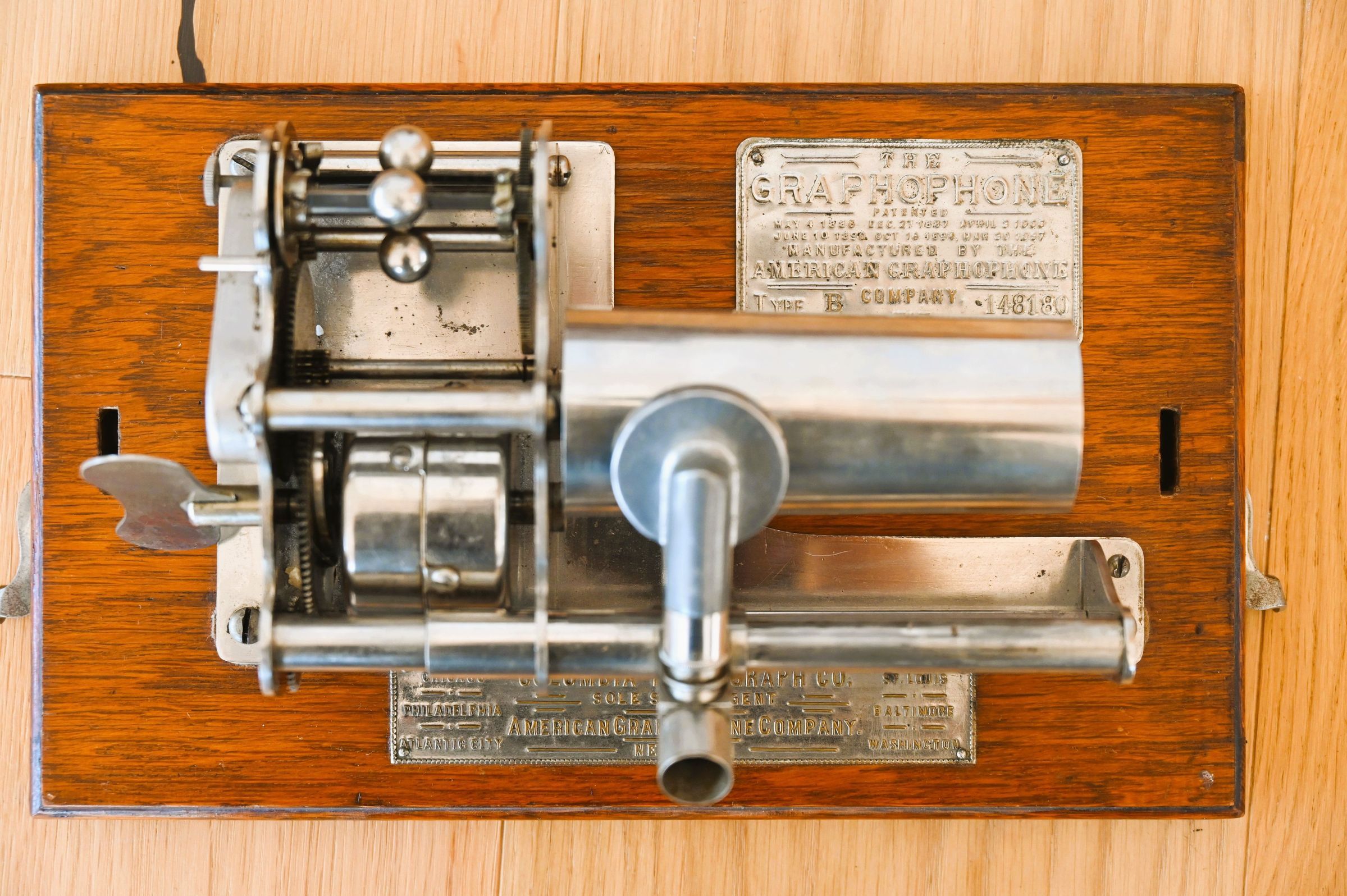
Graphophone Type B – “Eagle”Entry/Object ID
264Description
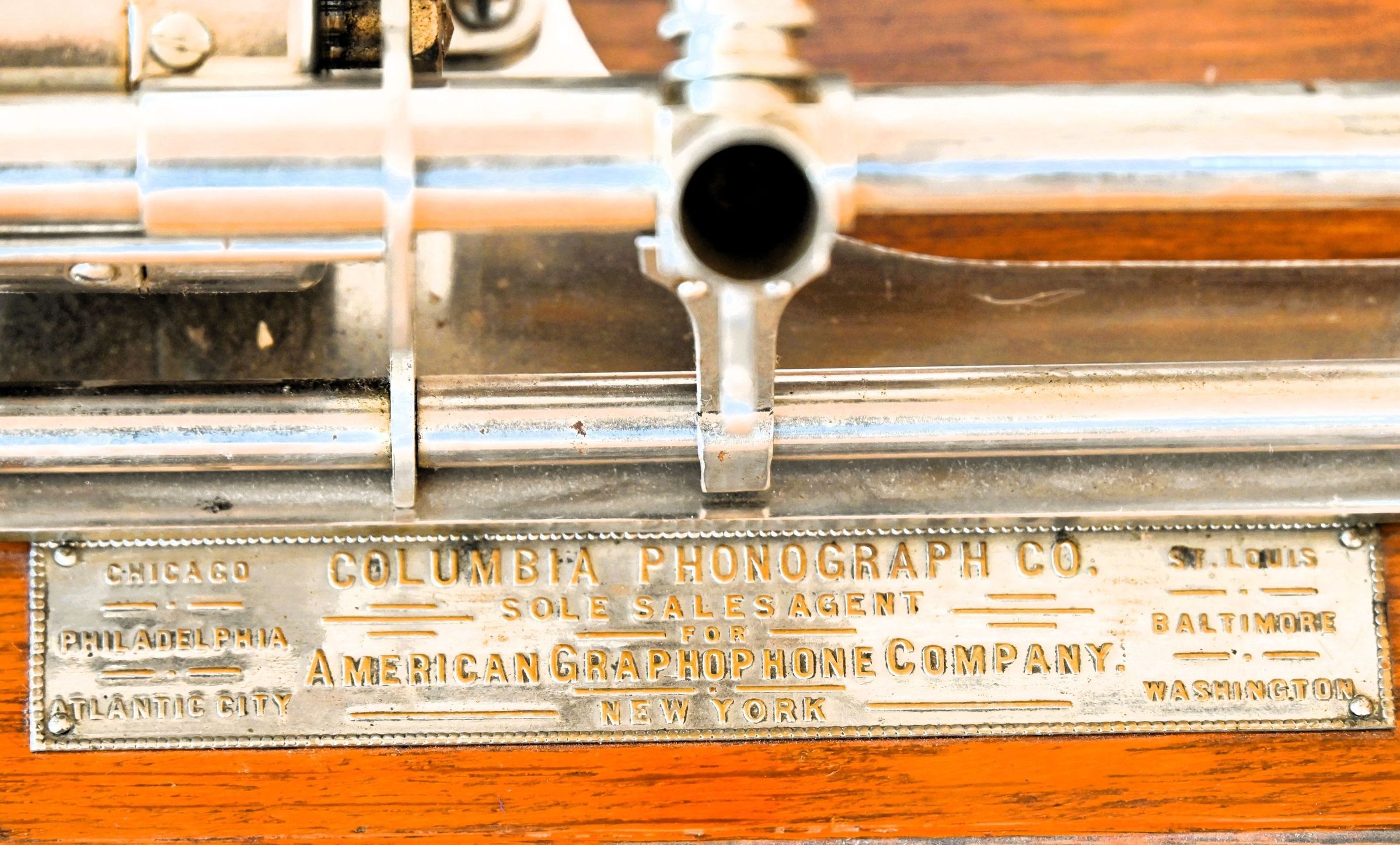
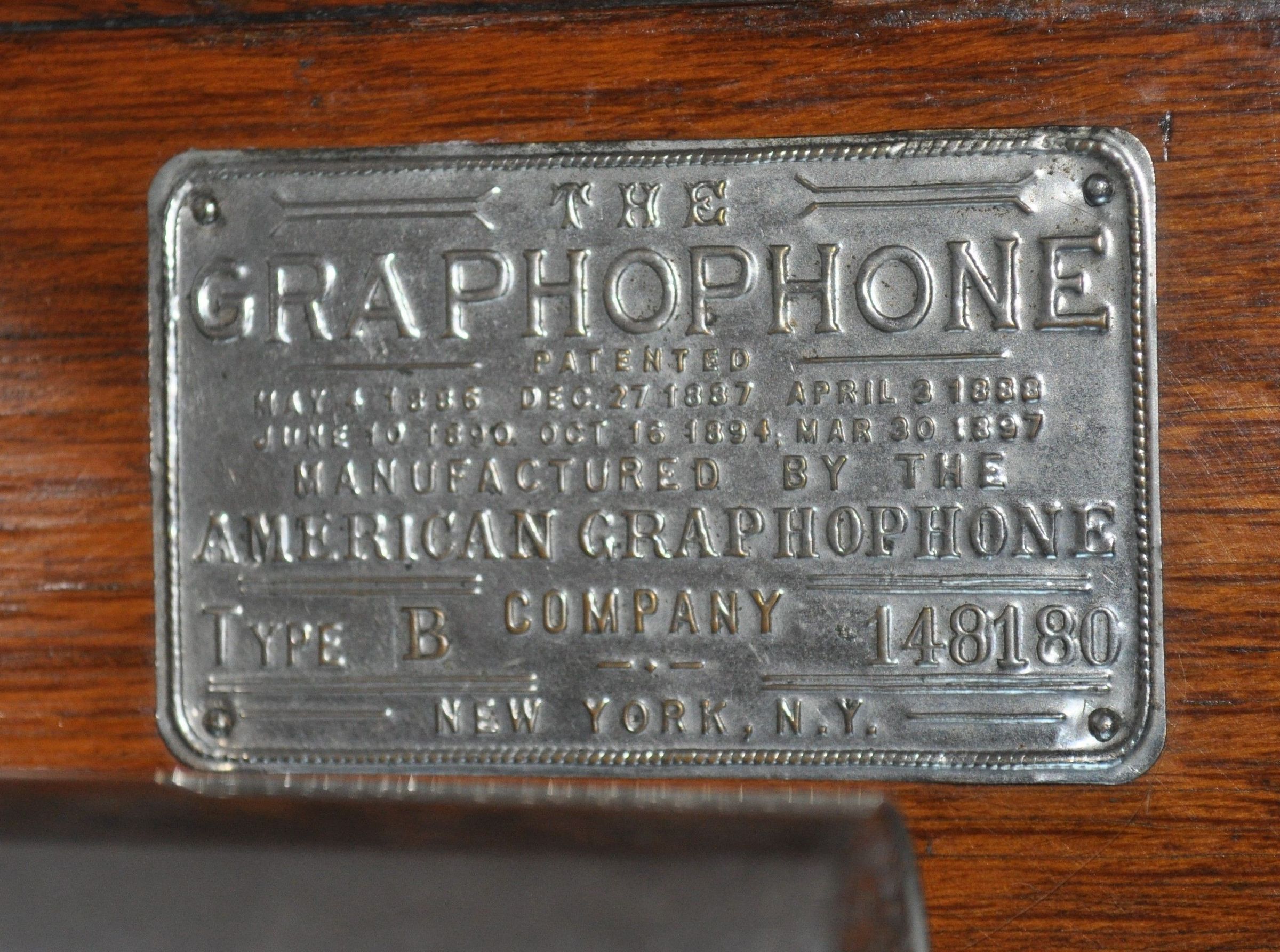
Columbia Phonograph Company, USA, 1897–1907.
Serial Number: 148180 (Type 2)
Historical Background
The Graphophone Type B, widely known as the “Eagle,” was launched in 1897 and soon became the most successful popular phonograph of its era. With a retail price of only 10 US dollars, it was the first phonograph truly affordable to the general public – about a quarter to a third of an average monthly wage.
Its name derived from the American 10-dollar gold coin, commonly called an “Eagle.” Alongside Edison’s “Gem” (7.50 dollars), this model marked a turning point: phonographs were no longer exclusive luxury goods, but mass-market products.
Between 1897 and 1907, more than 140,000 units were produced – an enormous number compared to the costly models of earlier years.
Technology and Features
This example, with serial number 148180, belongs to the second design version (from approx. no. 146,125 onward).
Typical features: spring tabs on the barrel covers, metal end caps on the case handle, and a mandrel tag with serial number.
Drive: robust spring motor, playing time about 2 minutes per cylinder.
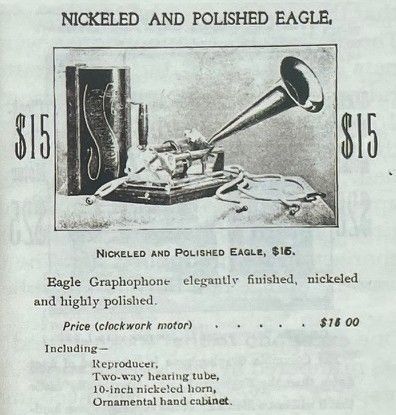
Equipment: originally supplied with reproducer, 10-inch nickel-plated horn, and sturdy wooden case.
Price: 10 US dollars (1897) – by comparison, the Graphophone “Q” cost 5 dollars, but without cover and horn.
Rarity and Significance
The “Eagle” was not a luxury model but a true people’s phonograph – sturdy, affordable, and mass-produced. It played a decisive role in the popularization of recorded sound, bringing phonographs into thousands of homes.
Its success also led to it being widely copied in Europe, where many manufacturers imitated its compact design and low price.
Today, Eagles in fine condition are sought-after collector’s pieces, especially those with original case decals and unaltered mechanisms. The example displayed at the Edisonium, serial number 148180, is an outstanding survivor of the second design version and an important witness to the transition from the pioneering age of the phonograph to true industrial mass production