Name/Title
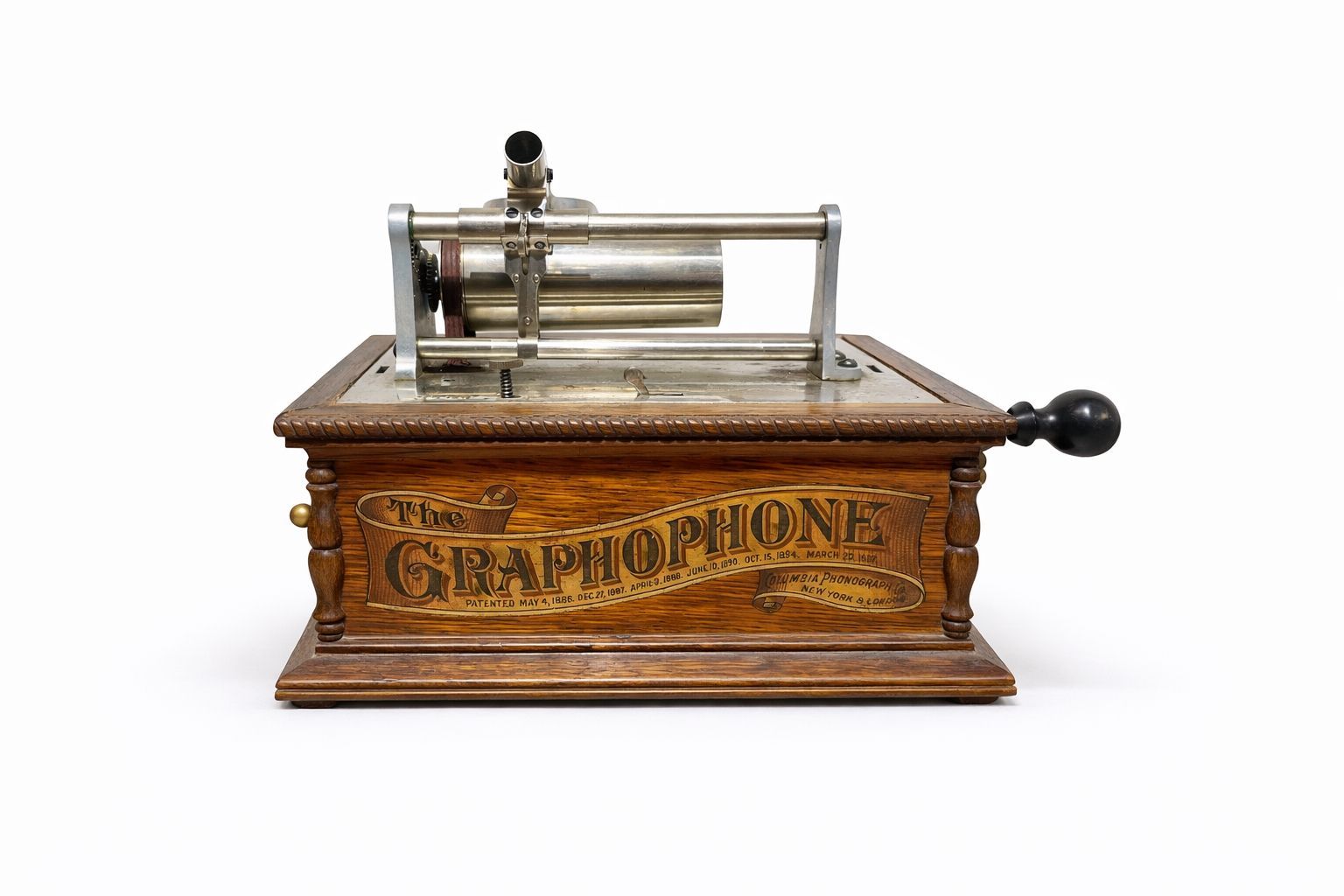
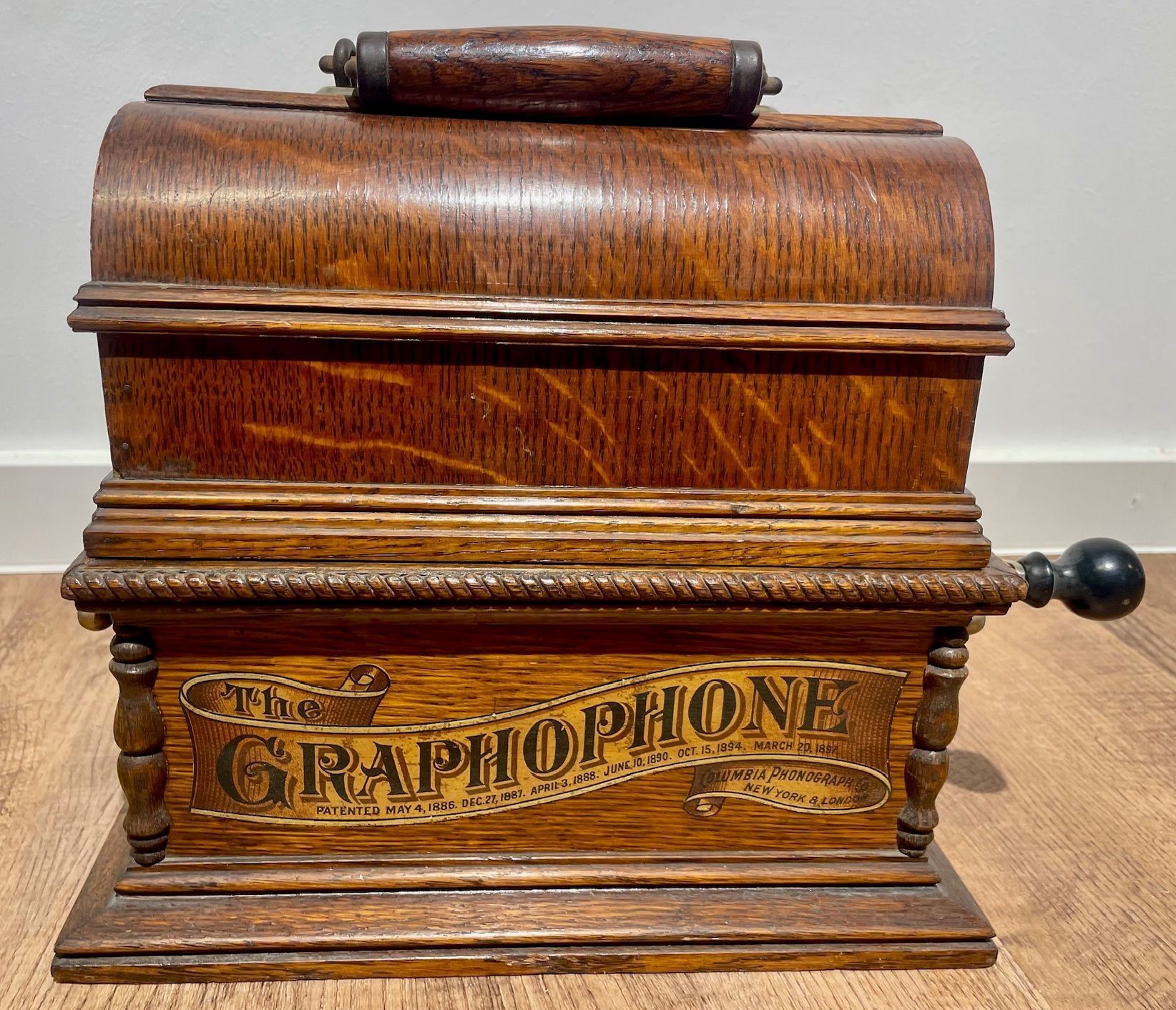
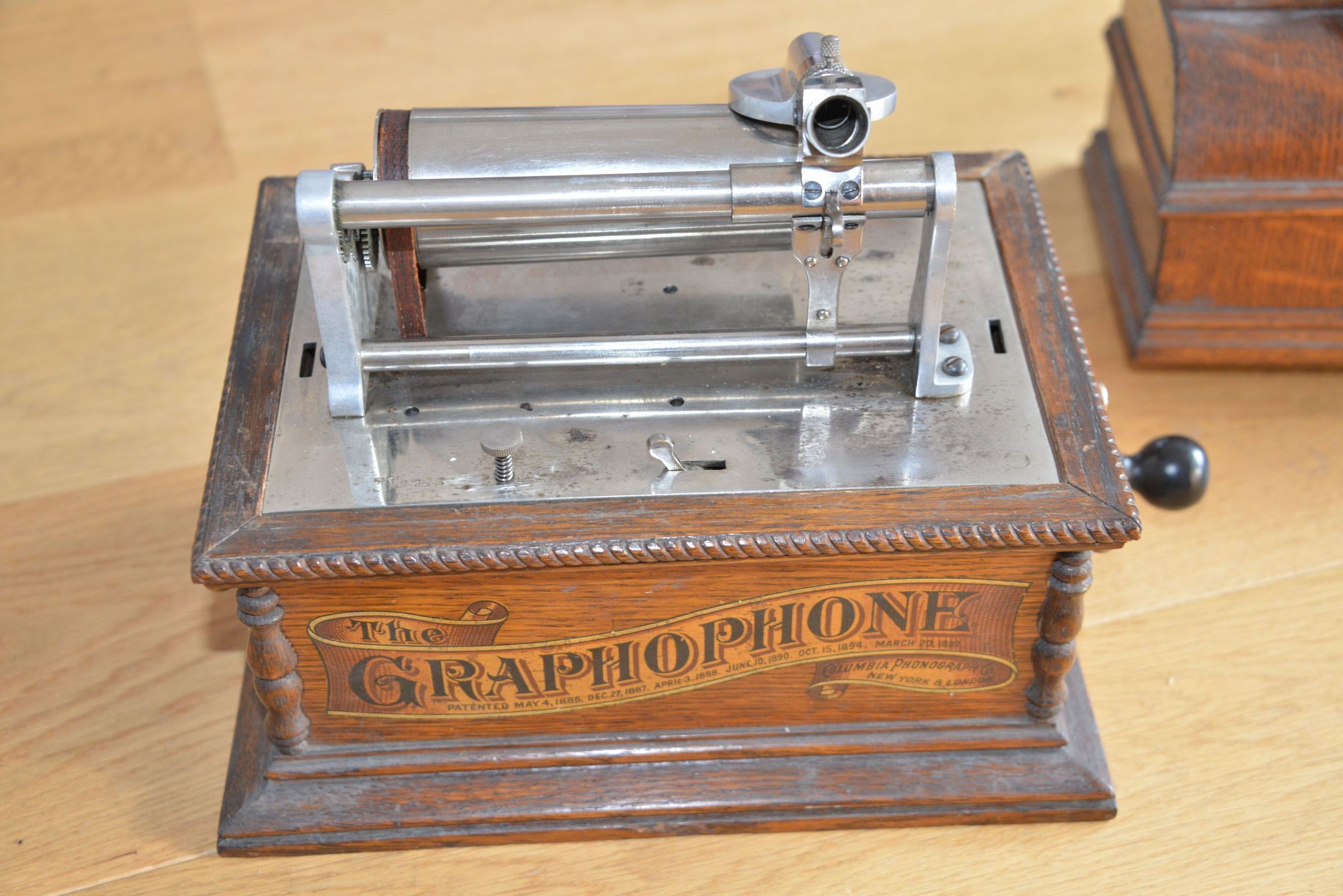
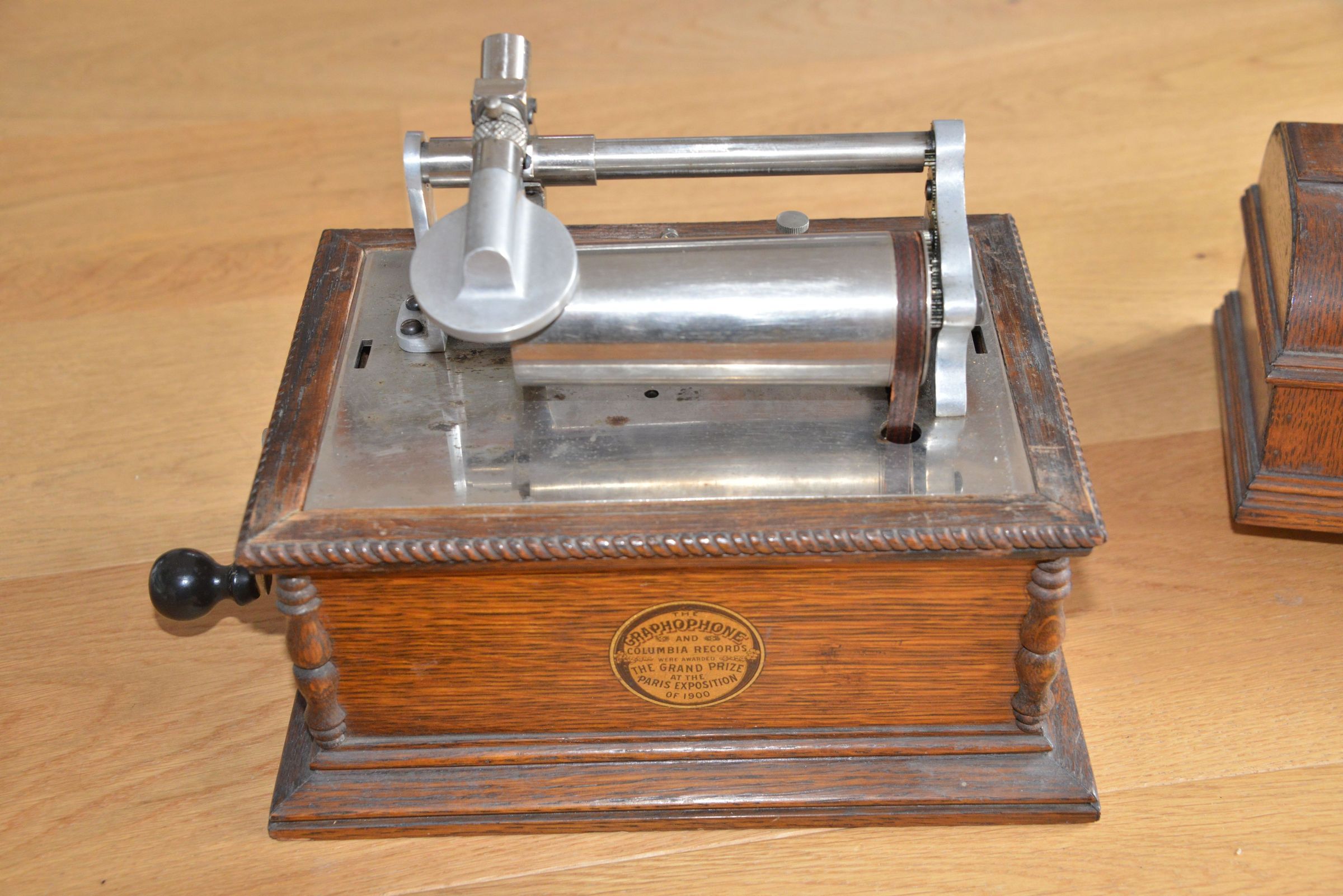
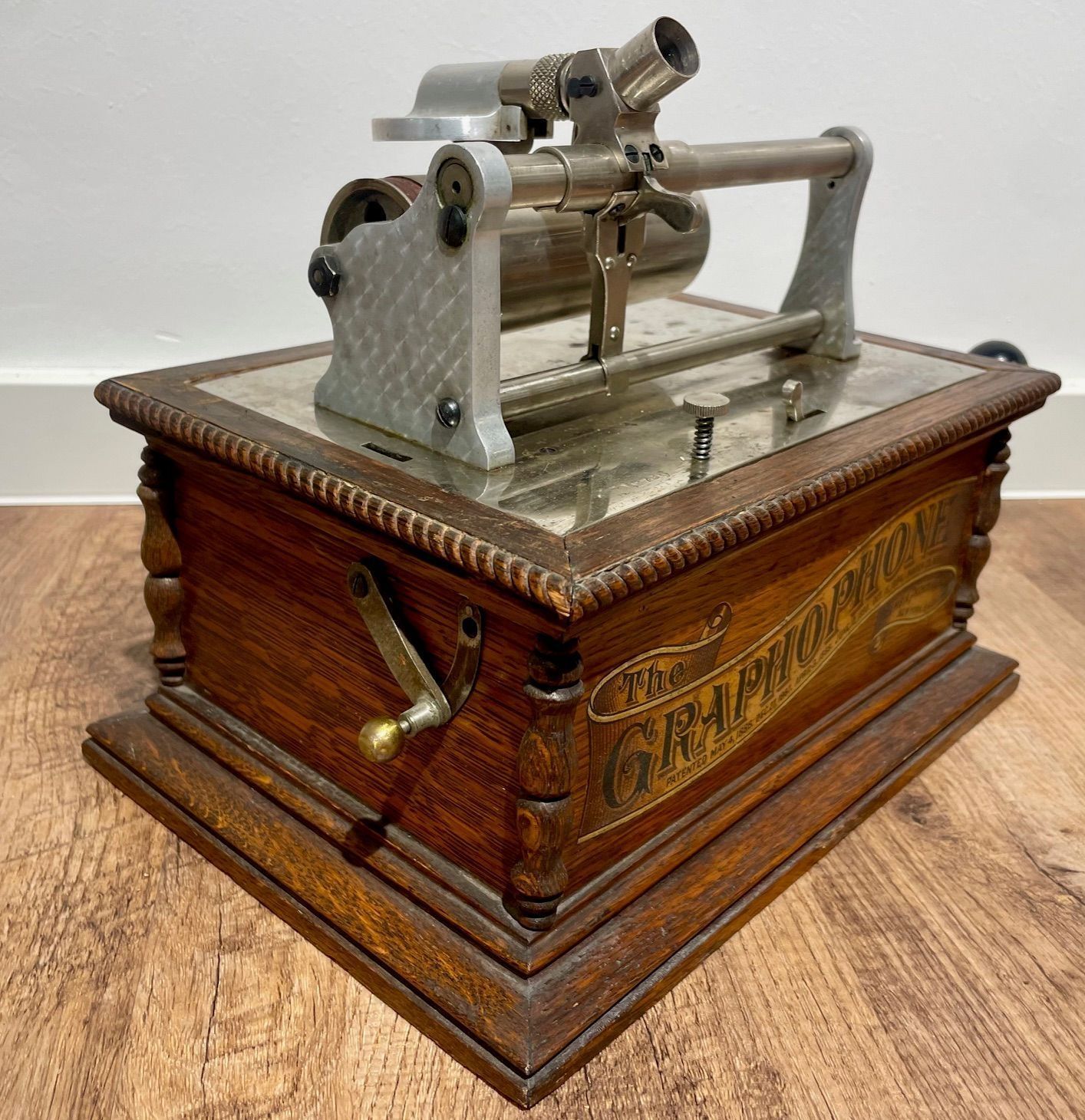
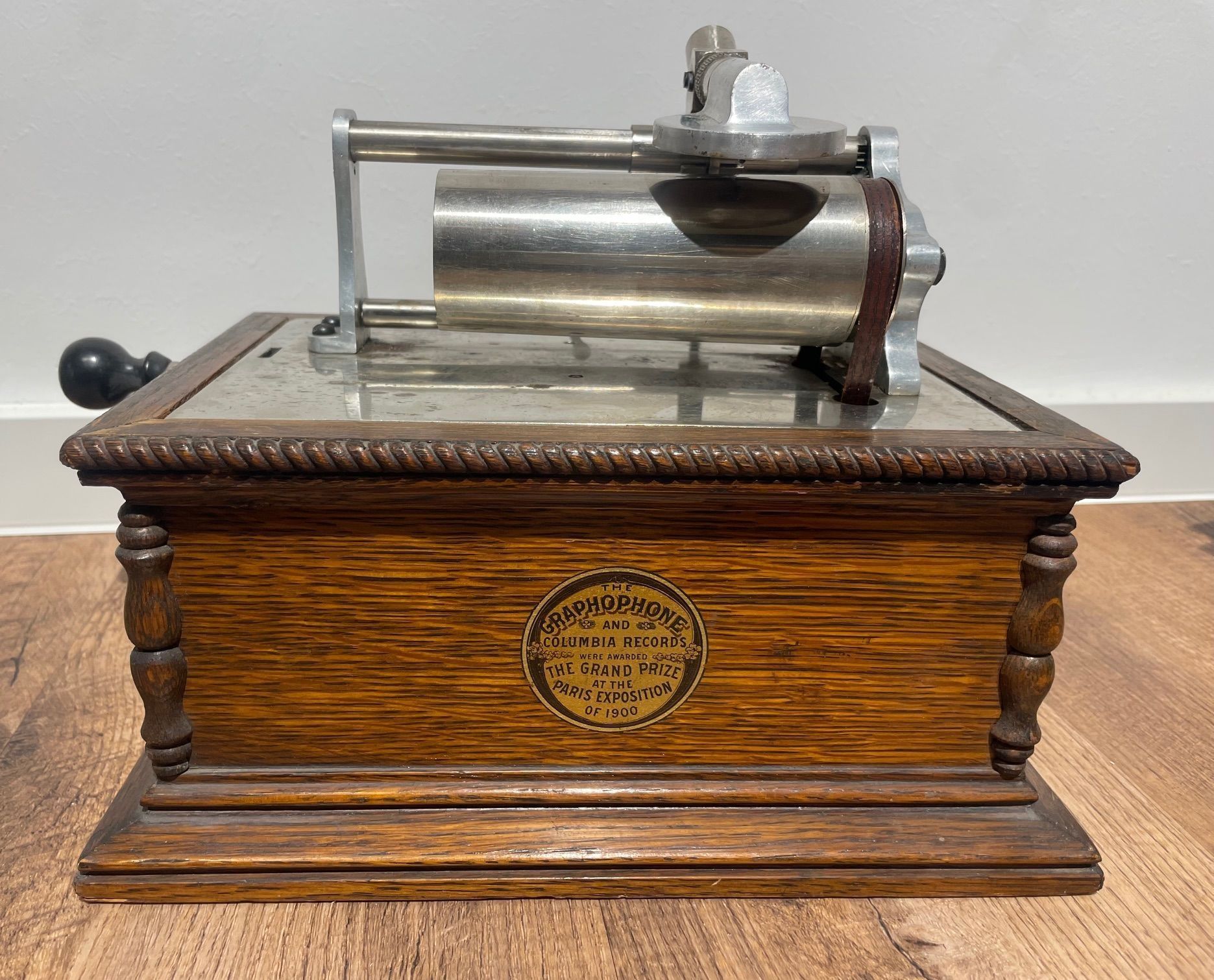
Graphophone "Type AA" – Large DecalEntry/Object ID
274Description
American Graphophone Company / Columbia Phonograph Co., ca. 1901–1903
Serial No. 712,720
Historical Background
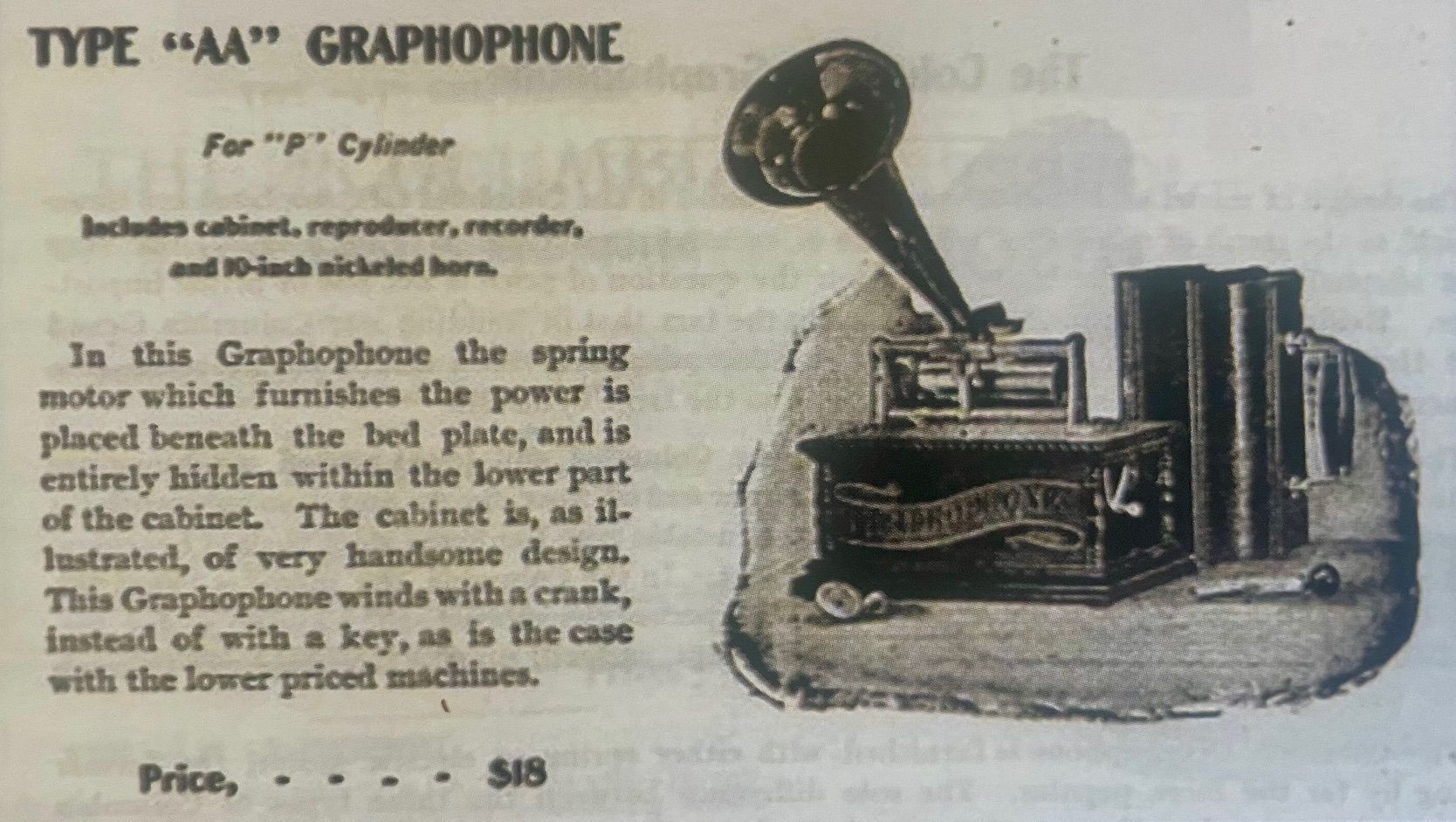
The Graphophone Type AA was first mentioned in the Columbia catalog of July 15, 1901. It was positioned as an affordable alternative between the simple “Eagle” ($12) and the more powerful Type AT ($25). Priced at $18, it offered strong value for money: both a recorder and a 10-inch nickel-plated horn were included—extras that cost considerably more with the Eagle.
However, the AA was quickly overshadowed by the emergence of the Disc Graphophones. By 1902, its price had already dropped to $20, leaving it only two dollars cheaper than the technically superior AT. As a result, it lost market appeal and disappeared from Columbia’s main catalogs by 1903. Still, a few late-production examples surfaced with St. Louis Award decals (1904) and even Milan 1906 labels, likely sold through language schools or mail-order dealers.
Technical Features
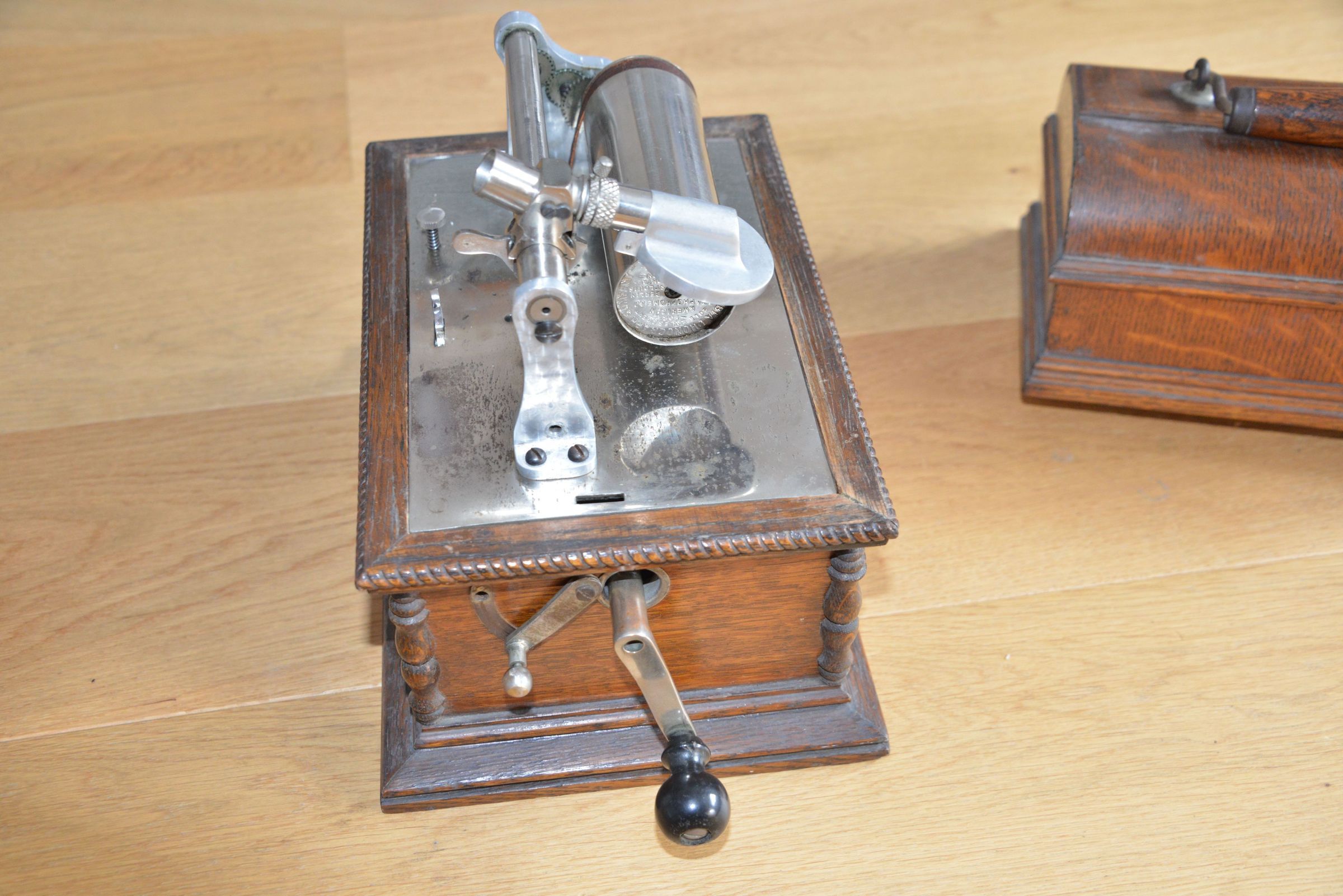
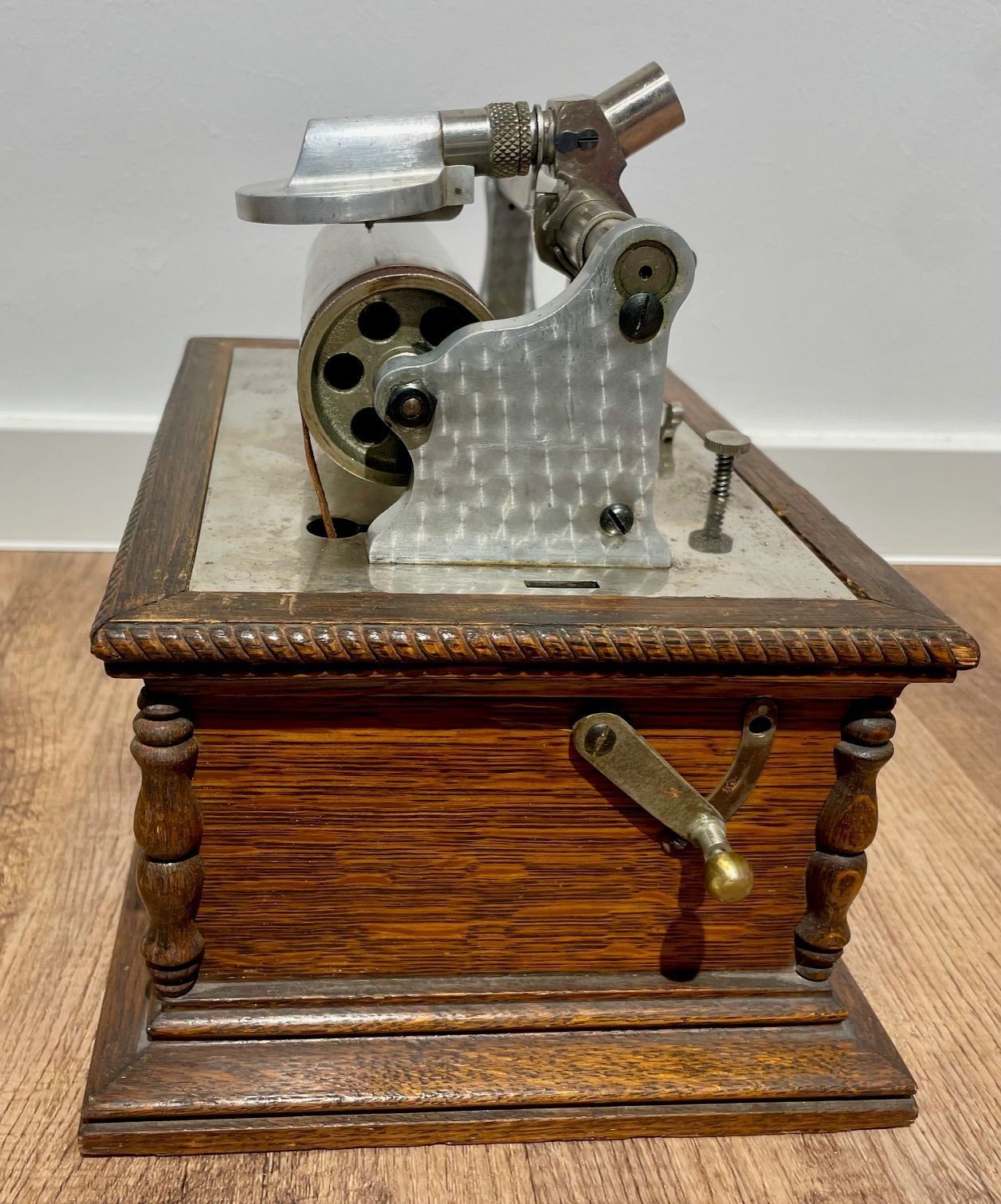
Motor: Single-spring motor, concealed beneath the bedplate – the first Columbia machine to adopt this layout.
Reproducer: Standard Eagle-type “floating reproducer.”
Cabinet: Handsomely designed case with large front decal, more elaborate than the Eagle.
Mechanism: Early use of the “drop frame” system, allowing the reproducer to rest horizontally on the cylinder for improved tracking and fidelity.
Price: $18 (1901), later $20 (1902).
Accessories: Recorder and 10-inch nickel-plated horn included.
Rarity and Significance
The Type AA was a transitional model: it introduced an important mechanical improvement (drop frame), but failed commercially. With an estimated production of only about 13,000 units, it is among Columbia’s scarcer models today.
The example on display at the Edisonium Mariazell (serial number 712,720), with its distinctive large front decal, is a particularly fine representation of this “forgotten” model—Columbia’s short-lived attempt to offer a stylish, mid-range cylinder machine at the dawn of the disc era.